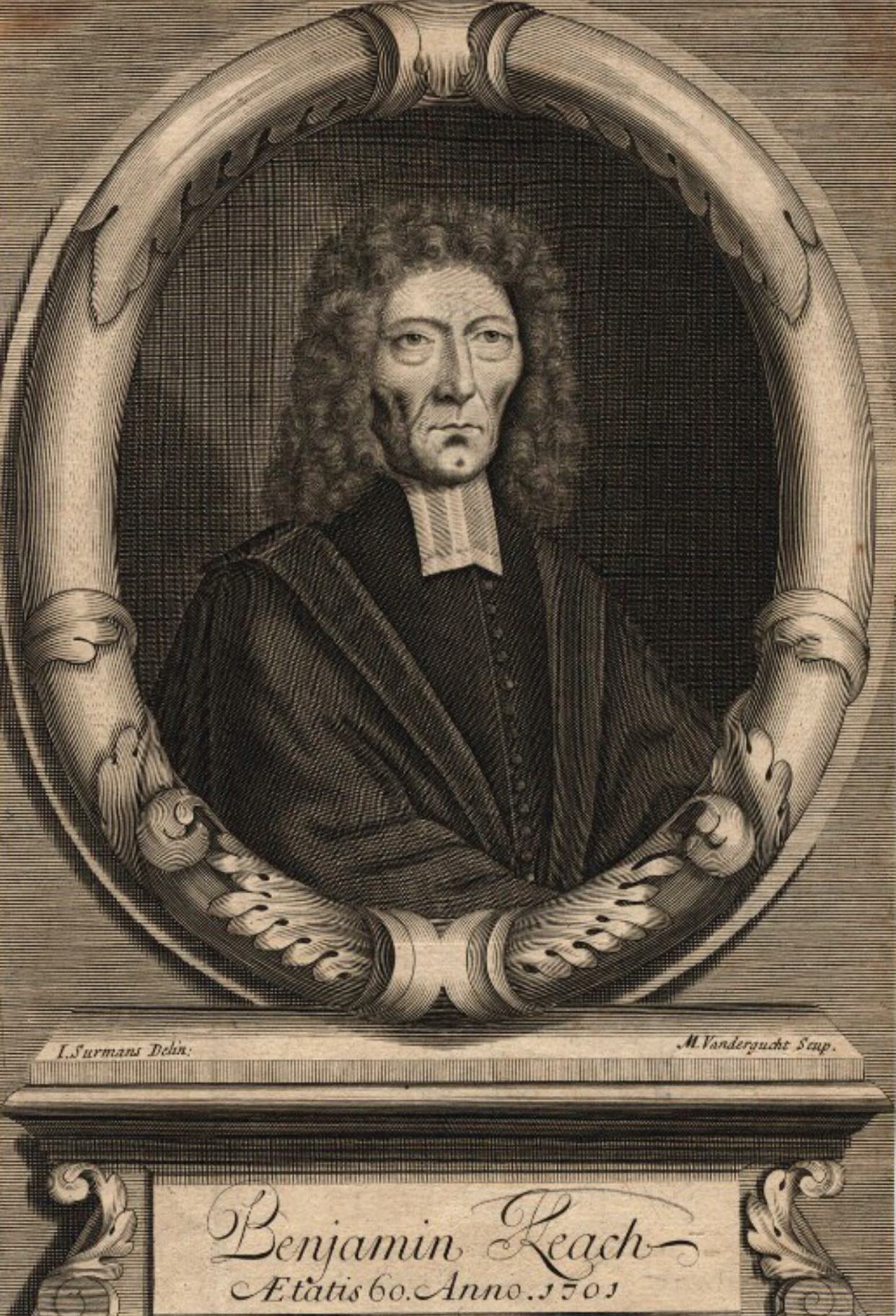
The theological summary addresses the doctrine of prosopopeia, a literary device where inanimate objects or abstract concepts are personified in Scripture. Keach argues that Scripture frequently employs this metaphor to convey profound truths regarding God, humanity, and the created order. He presents various examples, such as references from Genesis, Job, Psalms, and the Prophets, illustrating how these metaphors serve to express divine attributes, human conditions, and spiritual truths. For instance, the personification of the earth and other inanimate objects is seen to communicate God's justice and providence. The practical significance of this teaching lies in its ability to enrich the believer's understanding of Scripture, encouraging deeper reflection on the nature of God and His relationship to creation.
Key Quotes
“Prosopopeia is when any thing which is not a person is metaphorically introduced or proposed as a person... for things for likeness and agreement's sake.”
“The very earth... will account thee as execrable... the horror of his guilty conscience rendering the very senseless creatures his enemies.”
“The heavens declare the glory of God and the firmament showeth his handy-work that is they exhibit show and demonstrate to the eyes of all things a real testimony of the glorious power of God.”
“Bless the Lord, O my soul and all that is within or my bowels bless his holy name.”
What does the Bible say about prosopopeia?
Prosopopeia is when inanimate objects are given human-like qualities in Scripture, illustrating deeper truths.
Genesis 48:14, Job 29:11, Psalm 35:10
How do we know the use of metaphors in the Bible is important?
Metaphors in the Bible convey spiritual truths and deepen our understanding of God's character and His creation.
Psalm 46:10, Job 12:7, Romans 1:20
Why is understanding literary devices like prosopopeia important for Christians?
Understanding prosopopeia enhances our interpretation of Scripture and deepens our relationship with God.
Psalm 103:1, Proverbs 10:32, Matthew 6:3
CHAPTER IX.
OF METAPHORS WHEREBY THINGS ARE PROPOSED, AS PERSONS, WHICH ARE NOT PERSONS, WHICH KIND THEY CALL PROSOPOPEIA.
PROSOPOPEIA is, when any thing (which is not a person) is metaphorically introduced or proposed as a person: or when the properties of a man are attributed to other things, for things, for likeness and agreement's sake. Profane authors use very elegant metaphors of this kind, as that of Cicero---"What did that drawn sword of yours do in the Pharsalian field? Whose side did that point seek? What was the sense of your arms?" Aristotle defines this metaphor, "that which is in act, bringing in inanimate things doing something, as if they had life and sense;" but we will follow the distinct classes of scripture examples.
Some things are said of the members of a human body, which are properly the act of the mind, as Ge 48:14, "He made his hands to understand," (so the Hebrew[1] ) that is, (as Vatablus and our translation notes) he guided or laid his hands knowingly skilfully, and wittingly, when his eyes were dim with age, that he could not discern by seeing, which was the eldest son, therefore of set purpose did he lay his hands crosswise; and therefore Moses says, that he made his hands to understand, as if they (viz. his hands) could tell things to come, because he did not hastily nor gropingly put them forth; but as one well knowing directs his right to Ephraim the youngest, and his left to the first-born, &c., see Tract. Cap. 2. following towards the end.
[1] XXXX
Job 29:11, "When the ear heard, then it blessed me, and when the eye saw, it gave witness to me." Here to the ear and eye is attributed, what belongs to man. Job 28:4, "The flood breaketh out from the inhabitant; forgotten of the foot:" where forgetfulness is attributed to the foot, that is, (as Junius and Tremellius note) such floods as no foot ever experienced, because so deep as not to be waded or gone through.
Ps 35:10, "All my bones shall say, Lord, who is like unto thee?" Ps 51:8, "The bones which thou hast broken shall rejoice," (so the Hebrew;) here glorying and rejoicing in God is attributed to the bones which is the property of man; as if he had said, I will inwardly and heartily glorify thee, and rejoice in thee. By the same reason it is said, Ps 103:1, "Bless the Lord, O my soul, and all that is within, (or my bowels), bless his holy name." Ps 68:31, "Ethiopia shall make her hands to turn to God," (so the Hebrew) that is, shall with speed stretch them out in prayer; as the Chald. expounds it: or shall quickly extend her hands to give gifts of gold to the Lord, as R. Aben Ezra; and R. Salomon expound it. See Ps 72:15. Some take this metonymically, where extending the hands is put for a gift, as before.
Ps 73:9, "They set their mouth against the heavens," (that is, the foolish and wicked, as verse 3,) and their tongue walked through the earth," that is, they do rashly and licentiously throw reproaches upon God and man, neither sparing heavenly or earthly things. Ps 137:5, "If I forget thee, O Jerusalem, let my right-hand forget" (that is, as Junius and Tremellius say, itself,) viz., "let it be rather dead or withered, than I should give over singing," or as Illyricus says, "let my right-hand forget its musical dexterity," as in the next verse, "Let my tongue cleave to the roof of my mouth; if I prefer not Jerusalem above the head of my joy;" that is, let the Lord vouchsafe, that I may never play upon music, or sing more, 'ere I should admit so great a wickedness, as to desert Jerusalem, and its religion and ministry, and give over to celebrate it with hymns, music, and voice; yea, I will prefer thee to the chief esteem before all other things, joys, comforts, &c.
Pr 10:32, "The lips of the righteous, know what is acceptable;" that is, they speak so prudently, as if knowledge resided in them, which Job 34:35, is in the negative expressed, "Job hath spoken without knowledge, and his words were without wisdom." Mt 6:3, "But when thou givest alms, let not thy left-hand know what thy right-hand doeth;" this is spoken to prohibit the vain glory of almsgiving, when done for praise, &c. Theophilact expounds it, "if it be possible, you are even to forget all your own good deeds, or at least by no means to glory in them, or rest upon them, lest you be vainly lifted up." To this may be referred, where anger is attributed to the eyes, Ge 31:35; 45:5; Isa 3:8; and concupiscence, pleasure, or desire, 1Ki 20:6; Eze 24:16,21; 1Jo 2:16, (hence the phrase of the heart's walking after the eyes, Job 31:7; that is, the desires and lusts follow, which the eyes moved by outward objects, endeavour to stir up in the heart. "The abominations of the eyes," Eze 20:7; that is, which were the object and scope of desire;) and adultery, 2Pe 2:14, and compassion, as when the eye is said to pity, De 13:8; Isa 13:18, (&c).; the hope or expectation, Ps 119:82,123; 145:14-15, vid. Gram. Sacr. p. 282.
2. Words are used of brutes which properly belong to man, as Job 12:7, "But ask now the beasts, and they shall teach thee; and the fowls of the air, and they shall tell thee: or speak to the earth, and it shall teach thee; and the fishes of the sea shall declare unto thee." To ask and speak in this place signifies to meditate, search into, or contemplate; for the teaching, telling, or narration, of beasts, fowls, the earth, and fishes, intimates that they are a real testimony and evidence of the wisdom of the Creator. What he said, verse 2, that he had understanding and skill in what his friends discoursed of, he prosecutes here, as if he had said, ye have talked much of the wisdom and power of God, and that he creates and preserves all things, as if they were unknown to me, but the very creatures tacitly inform me of that. See Job 9:10; Ro 1:20.
Job 41:29, "He (the leviathan or whale) laugheth at the shaking of a spear," that is, he cares not for it. Pr 30:25, "The ants are a people not strong, &c.; verse 26, "The conies are but a feeble people," &c.; Joe 1:6, "For a nation is come upon my land, strong, and without number," &c. The speech here is of canker worms, locusts, or caterpillars, mentioned, verse 4, and which by the same metaphor are called the great army of God, chap. ii. 11, 25. By the same reason the multitude of locusts are represented as an army, Pr 30:27; Ne 3:17. Hieron.upon Joe 2., thus writes, "This we saw lately in this province (viz. Palestine,) for when whole troops of locusts came, and filled the air between heaven and earth, they flew with so great an order by the disposal of God, who commanded them, so that like square stones placed by the hand of an artificer in a pavement, they kept their places, that not one was observed to incline to the other, by any transvere or irregular motion." This was a great punishment upon enormous sinners, which Moses in God's stead threatens, De 28:38-39; and Solomon prays against, 1Ki 8:37; and Pliny himself, a heathen writer, Lib. xi. Cap. 29, acknowledges the anger of the gods by the multitude of these insects; some with these words of scripture, parallel Virgil's words, of bees, Lib. 4. Georg.
"Magnanimosque duces, totiusque ex ordine gentis,
Mores et studia, et populos, et prælia dicam."
And of Ants,
"It nigris campis agmen, prædamque per herbas
Convectant calle angusto, pars grandia trudunt
Obnixe frumenta humeris, pars agmina cogunt,
Castigantque moras, &c." Lib. 4. Æneid.
To this class may be referred when the word son is ascribed to beasts, as Ex 29:1, "Take a young bullock the son of a cow," so the Hebrew, that is, a sucking calf or one not as yet weaned: Ge 49:11. The son of an ass is put for its colt or foal,[2] Ec 9:6. "A colt the son of asses,"* that is, one of the she asses, according to the idiotism of which see below.[3]
[2] Note, that in the places marked with the asterisk it is not so in our English; but it is so in the original Hebrew.
[3] Gram. Sacr. P. 138.
By another reason rams are called the sons of Bashan,* De 32:14, that is, fat rams of the breed of Bashan, because that was a good place for fattening. A hand is attributed to a dog,* Ps 22:20; "to a lion and a bear," 1Sa 17:37. In general a hand is ascribed to every beast, Ge 9:5. In which places power and strength is to be understood, especially and more eminently in the last. See Gram. Sacr. p. 138. It is said, Pr 30:28, "The spider taketh hold with her hands," that is, with her feet, which are on either side so pliable as a man's hand to spin their web, and seize upon their prey. Junius.
3. Some things are spoken of things growing out of the earth, which properly belong to man, as Le 19:23, "And when ye shall come into the land, and shall have planted all manner of trees for food, then ye shall count the fruit thereof as uncircumcised; three years shall it be uncircumcised unto you; it shall not he eaten of." The meaning is, that the fruit of the three first years shall be accounted unclean and rejected, as an uncircumcised man was accounted unclean before God, and was not to be received among the people. And in the fourth year that fruit was to be offered to God as a sign of thanksgiving, verse 24; but the fifth year the common use of it was allowed, verse 25.
Job 14:7-9, Hope, old age, death, the scent of waters, are applied to the bough of a tree, which is cut off, and buds again; and compared to a man once dead, who cannot return to revive again, viz., into this life, which was the scope of Job, as Job 7:7,9-10; 13:15-16; 19:25-27, where he evidently declares the resurrection of the dead to the enjoyment of everlasting life.
Ps 78:4, killing and death is attributed to plants, as "he killed (so the Hebrew,) their vines with hail, and their sycamores with great hail stones." Contrary to this is that zwopoihsiv, (zoopoiesis) quickening or living of the seed cast into the earth, by which its budding or growth is noted, as in the following verses, Eze 31:9, envy or emulation; verse 14, exalting or elevation of heart and drinking of water; verse 15, mourning or grief of mind; verse 16, consolation and comfort are attributed to trees, by a certain prosopopeia, and in a way of comparison of a goodly tree with the king of Assyria. See Ho 9:6; Joe 1:10. "The new wine is ashamed or blushed;" that is, there is so bad a vintage or wine harvest, that it is ashamed, because it did not answer the people's expectation. In the same verse languishing or a disease is attributed to oil, which properly belongs to man, Ps 6:2-3, but metaphorically denotes a spoil and devastation of the fruit of the earth, as Isa 16:8, (&c.) It is said, Hab 3:17, "That the labour of the olive shall lie," so the Hebrew, when it answers not the desires of men, but fails their expectation of much fruit, which is also ascribed to new wine, Ho 9:2. It is said, Ps 58:9, "Before your pots can feel the thorns, he shall take them away as with a whirlwind;" that is, before your pots grow hot with a fire of thorns (which were wont to be used,) for that fire lasts but a little while, and will not boil the flesh, so shall they quickly perish, &c.
4. Some things are spoken of inanimate creatures, which properly belong to a living man (or more generally to living creatures.) As,
(1.) Of dead men, Ge 4:10, "The voice of thy brother's blood crieth unto me from the ground." Here a voice and crying is attributed to the blood of slain Abel by a very weighty emphasis. As to the phrase of a voice and crying directed to God, it manifestly intimates these two things. First, that he is a just judge, and the avenger of wickedness; and therefore the violent murder of Abel, could not but come to him for justice on the assassin, as it is said in the like case, 2Ch 24:22, "The Lord look upon it, and require it," viz., the blood of Zechariah. The second is, that he is a gracious loving Father, and Defender of such as are his, and minds them as well in life as in death; for he had not only a respect for Abel when alive, but hearkens also to the cry of his blood when dead, according to Ro 14:8, "Whether we live, or die, we are the Lord's."
Some put an emphasis in bloods being in the plural number, intimating, as it were, that there were many slain in Abel, that is, such offspring as he might have had, which tacitly call for justice, hence the Chaldee translates it "The voice of the seeds of thy brother's blood, which were to come, and issue from thy brother," but seems to be far stretched. By the plural word of bloods, are noted slaughters, because the blood gushing from the veins scatters into diverse parts. Ps 5:6, "The Lord will abhor the man of bloods, and deceit;" so the Hebrew, Ps 51:14, "Deliver me from bloods;" we translate it blood-guiltiness; Ho 4:2, "They break out and bloods touch bloods." But here, blood violently shed is understood by a synecdoche, and Mt 23:35, the blood of Abel is expressed in the singular number, aima, (haima.) As to the sense and connexion, because Cain did not only not confess his sin, but also impudently denied that he was concerned in the care or keeping of his brother. God deals more openly, saying: "The voice of thy brother's blood cries to me from the earth," that is, thy brother is slain: I do not vainly inquire where he is, his blood demands vengeance of me, and I am concerned to call his murderer to account, therefore speak plainly; what hast thou done? that is, why didst thou dare or presume to lay violent hands on him? Thou sayest, thou art not his keeper, as if the question were whether thou hast kept him? Tell rather what thou hast designed against him;" this is the paraphrase of Musculus upon the place.
To this place, Heb 12:24, refers, where the crying blood of dead Abel is fairly compared to the living blood of Christ our Mediator and Intercessor.[4]
[4] Gram. Sacr. P. 261.
Isa 14:9-10, the dead, are feigned to come from hell, or the graves, to deride the pride and haughtiness of that inhuman king of Babylon, speaking to him when fallen from his greatness, and upbraiding him for his monstrous pride, and shameful downfall.
Jer 31:15, Rachel, the mother of Joseph and Benjamin, long before dead, is brought in as bitterly weeping for the captivity of the people; which prophecy is alledged to express the cruelty of Herod's massacre of the infants, Mt 2:18, for the agreement of that tyrannical fact with that place. Rachel's sepulchre was near Bethlehem, in which and the adjacent places, that most cruel villany was committed, &c. See also Eze 32:21, (&c.)
2. Of other things void of life and soul, Ge 4:11, "And now art thou cursed from the earth, which hath opened her mouth to receive thy brother's blood from thy hand;" by this prosopopeia the wickedness of Cain is aggravated, as if he had said, the very earth, though destitute of sense and reason, yet was more humane and kind to thy brother than thou wert, because it received and laid up that blood which thou hast spilt, from the sight of men, lest it should cause horror in them. Others say, that this speech denotes the extreme grievousness of his wickedness, and the horror of his guilty conscience, rendering the very senseless creatures his enemies, as if he had said, the very earth which (as it were) with open mouth received the blood of thy brother from thy hand, will account thee as execrable, which agrees fairly with the following words.
Ge 47:19, "Death is attributed to the land," which denotes desolation; Ex 19:18, it is said of mount Sinai, that Jehovah appearing, it quaked, that is, it had such commotions, as if, like a man, it had trembled for fear---Le 18:28, "Spuing out its inhabitants," is attributed to the land, which signifies their expulsion for their wickedness; De 32:42, God is said to make "his arrows drunk with blood," that is, that out of his just wrath, he would send the enemies of the land, to kill the wicked and rebellious people. See Isa 34:5; Jer 46:10.
Jos 24:27, "And Joshua said unto all the people, behold, this stone shall be a witness unto us: for it hath heard all the words of the Lord, which he spake unto us:" &c. The stone erected there is by a prosopopeia, said to hear, because it was present, (as it were a witness) and was appointed, as a memorial and testimonial sign of the covenant God then made with his people.
Jg 5:20, "They fought from heaven, the stars in their courses (or degrees) fought against Sisera."---The stars are said to fight, because they were instruments of exciting those hails and storms, which God probably used against his enemies. Josephus says, that when the Canaanites encountered with the Israelites, a violent shower fell, and much rain and hail by the force of the wind, was fiercely driven into the Canaanites' faces, so that their bows and slings became unprofitable and useless, neither could they, being so benumbed with cold, handle their swords; which tempest, nevertheless, did no way prejudice the Israelites. Brentius thus expounds it, "we simply expound it that God was no way favourable, but an enemy to the enterprise of Sisera, because he dwells in heaven, and terrified the host and chariots of Sisera," &c., chap. iv. 15. And whereas the stars are said to fight, it carries the show of a proverb, signifying that no prosperous fortune was on Sisera's side, for when any ill luck betides men, they are wont to say, that no star shines upon them, or that the stars resist them, by which is meant, that all creatures both earthly and heavenly threaten their destruction. Junius and Tremellius translate "that the stars (e suis aggeribus) from their sconces or bulwarks, fought against Sisera," that is, from the superior regions of the air, a speech translated from soldiers fighting from higher places.
Job 3:8, eye-lids, in the Hebrew text, are attributed to the morning, by which its early beams are understood, or the first shining of its rays arising from the approaching sun; a metaphor taken from one newly awake that lifts up his eye-lids, or, as others say, from the swift motion and vibration of the eye-lids, because the sun-beams move swiftly, till they are diffused to the ends of the hemisphere.
Job 31:38, "If my land cry against me, or that the furrows thereof weep." The good man declares that he is ready to bear judgment, censure, or curses, if any person can justly complain, that he has done them injury; which by an elegant prosopopeia he expresses; the explication follows, verse 39, "If I have eaten the fruits thereof without money, or have caused the souls of the owners thereof to expire," breathe out, or grieve, so the Hebrew. Illyricus says, "that the land and furrows are put metonymically for the husbandmen," but the former explication is the best. See Job 38:7, with Ps 148:2-3, (&c.)
A nativity, or birth, is attributed to rain, dew, ice, and frost, Job 38:28-29, for their production from God, where there is also an anthropopathy.
Ps 19:1, "The heavens declare the glory of God, and the firmament showeth his handy-work," that is, they exhibit, show, and demonstrate, to the eyes of all things, a real testimony and instruction of the glorious power of God, verse 2, "Day unto day uttereth speech, and night unto night sheweth knowledge," that is, by that succession and vicissitude of days and nights, which is so certain, so constant, and so profitable, for men and other creatures, the glory of God, the Workman, is most evidently celebrated, see Ps 104:20-24.
Some by a metonymy, understand day and night of those things which are done or happen by day and night, that the sense may be, that every day and every night, some new thing is discovered by which, to right observers, the glory of God may be illustrated, verse 3, "There is no speech nor language where their voice is not heard;" that is, there are no people, though of different languages, whom that speech of the heavens, and their real publication of praise, may not instruct in the glory and power of God. See Ro 1:19-20, "Because that which may be known of God, is manifest in them, or to them; for the invisible things of him from the creation of the world are clearly seen, being understood by the things that are made, even his eternal power and Godhead, so that they are without excuse," verse 4; "Their line is gone out through all the earth, and their words to the end of the world," that is, to the extremest parts of the earth, that stately fabric of celestial bodies is seen, as if it were exactly done by line and square, which serves instead of words, &c. Ro 10:18. For their line we read their sound, because what is said in the Psalm of the motion of the celestial bodies, the apostle elegantly accomodates to the course of evangelical preaching. Genebrard says, that the Hebrew word signifies indeed a line, but the Septuagint respects the sense, whom the apostle followed, (that being the most used and received version). Verse 5, "The going forth of a bridegroom out of his chamber, and his rejoicing," is by the same metaphor ascribed to the rising sun, to his never ceasing, and most swift course.
Ps 55:12, "The little hills are[5] girded with joy on every side;" verse 13, "The pastures are clothed with flocks, the vallies are also covered over with corn; they shout for joy, they also sing." The ornaments of the earth, which by the blessing of God it every where enjoys, are expressed by this metaphor. Mathesius says, "that the metaphor of girding, verse 12, is to be expounded of the various and winding veins of metals in the bosom of the earth."
[5] Exultatione colles accinguntur.
Ps 77:16, "The waters saw thee, O God, the waters saw thee: they were afraid; the depths also were troubled." He speaks of the Red Sea's being divided, and the people of Israel's marching through the middle of it, which is described, Ex 14. But the sense of seeing, and the passion of fear, is attributed to the waters by a prosopopeia, for to see here signifies to experience; as if he had said, they have experienced thee, and felt thy power, when by a strong wind they were cut, and the bottom of the sea became naked, to make a way, or passage for thy people. They are said to fear; when at the command of God, like trembling persons, they fled from their place, against their nature, and by the tremendous omnipotency of God stood as a wall on either side, as it is said of the same miracle, Ps 114:3, "The sea saw it, and fled," &c., verse 5, '"What ailed thee, O thou sea, that thou fleddest?" &c.
Ps 98:8, "Let the floods clap their hands: let the hills sing," so the Hebrew, These things are ascribed to inanimate creatures, to stir up men to a desire after the coming of the Lord. So Ps 96:11-12, (&c.) More examples you may see, Ps 103:16, with Job 7:10; 8:18; Ps 104:19; Song 1:16; Isa 3:26, with Job 1:20; 2:13.
Isa 5:14, "Hell (others translate it sepulchre) hath enlarged her soul," so the Hebrew, "and opened her mouth without measure." By a prosopopeia he compares the insatiable condition of hell, or the grave, with the unsatisfied gluttony and luxury of the Jews, and foretels the punishment, that God in his wrath will therefore inflict upon them. Jerome in his commentary upon this place says, "Hell is said to have a soul, not that it is a living creature, as some erroneously conceive, but because by words of human custom we may express the affection of things insensible: it is insatiable because it can never be filled with the multitude of the dead. See more examples, Isa 24:4; 33:9; Jer 4:28; 12:4; La 2:8; Ho 4:3; Joe 1:10; Am 1:2, (&c.)
Isa 24:23, "Then shall the moon blush, (so the Hebrew,) and the sun shall be ashamed, when the Lord of Hosts shall reign in Mount Sion," &c. This prosopopeia intimates the light of divine grace in the church; as if he had said, the glory of the sun or moon will be nothing, if compared with the glory of him that rules in the church of God. Isa 55:12, "The mountains and the hills shall break forth before you into singing, and all the trees of the field shall clap their hands." By this most elegant prosopopeia likewise spiritual joy in the kingdom of Christ is figured, as ch. 49:13, where the heavens and mountains are excited to singing, by the same prophetical voice. And Jer 51:48, "Then the heaven and the earth, and all that is therein, shall sing for Babylon," &c.; by which hyperbolical prosopopeia, an immensity of joy for the destruction of Babylon, and the deliverance of all true Israelites is set forth; La 1:4, "The ways of Sion do mourn, because none come to the solemn feast." This intimates a forsaking of the solemn worship of God.
Ho 1:11,11, "And it shall come to pass in that day, I will hear, saith the Lord, I will hear the heavens, and they shall hear the earth; and the earth shall hear the corn, and the wine and the oil: and they shall hear Jezreel." Besides the gracious blessing of God, the connexion of first and second causes is fairly intimated by this speech. Jezreel, that is, the congregation of the faithful, (which according to this name, is the seed of God,) does as it were cry, that is, expects corn, wine, and oil; and these, as it were, cry to the earth, that they may receive juice and nourishment from it, for their nourishment and increase. And the earth, as it were, invokes heaven for heat, rain, showers, dew, snow, winds, and celestial influences: and the heavens, as it were, invoke God, the chief Cause of all things, without whom no second causes can effect or produce any thing, and who when be hath a mind to punish, can "make the heavens as brass, and the earth as iron," De 28:23, and detain the fructifying rain, Jer 14:22; but here being gracious and propitious to men, he is pleased to hear, giving power to heaven, that by clouds made of collected vapours, and by various fructifying ways it should influence the earth; and "the heaven shall hear the earth," by giving rain, and other things needful to make it fruitful "And the earth shall hear the corn, the wine, and the oil," and other things growing upon the earth, whilst moistened from heaven it gives them juice and vigour: "and these shall hear Jezreel," that is, they shall answer the prayers or desires of the godly, and so shall divine blessing be conveyed to them, &c.
Jon 1:4, "But the Lord cast forth a great wind into the sea, and there was a mighty tempest in the sea, so that the ship thought to be broken," so the Hebrew, that is, it was like to be broken, as if the ship had a mind. Some explain this by a metonymy of the thing containing; that is, they that were in the ship thought that they must speedily suffer shipwreck.
Joh 3:8, "The wind bloweth where it listeth, and thou hearest the sound thereof, but canst not tell whence it cometh, nor whither it goeth;" &c. A will and walking is attributed to the wind and air, to signify its various wonderful vicissitudes unknown to man; upon which Erasmus in his paraphrase excellently says, "This air by which we are vegetated, and whose power and utility we only feel, is very subtle, and is called a spirit or wind; and this spirit is not restrained at the pleasure of men, but is carried by its own force, by which it is known to diffuse itself through all things, having a wonderful power over all corporeal things: sometimes giving life, sometimes death. Now calm and silent, then more violent, sometimes blowing from the East, sometimes from the West, and sometimes from other different quarters of the world. And discovers itself by the effect: you hear its voice, when you see nobody, neither can it be grasped by hands; you feel it present, but you see it not coming, neither can you tell whither it goes at its departure. The new birth is like it. The minds of men by the Spirit of God are carried away, and transformed by secret breathings. The ineffable power and effect of it is felt, but what is done is not discerned by the eyes. And so they that are born again, are not now actuated by a human and carnal spirit, but by the Spirit of God, who quickens and governs all things. See Ro 8:22.
To this class belong some Nouns, and some Verbs.
1. Nouns, as when arrows are called the sons of the quiver, La 3:13, because they lie hid there, as a child in the womb, Ps 127:3-4; so sparkles are called "sons of burning coals," Job 5:7, (for in both places the Hebrew is so.) A tongue is ascribed to fire (Isa 5:24,) and flame, because of some similitude betwixt a tongue and the tapering flame. See Ac 2:3. A tongue is also attributed to the sea, Jos 15:2,5, which is to be understood of a bay in form like a tongue; so the tongue of the Egyptian sea, Isa 11:15, is a certain bay or river, &c. The (oblong) wedge which Achan took, is called, in the Hebrew, "a tongue of gold," Jos 7:21. A hand is attributed to a sword, Job 5:20; to a flame of fire, Isa 47:14; to hell, Ho 13:14, by which (as in our translation) their power is understood. The beginning of a party-way is called the mother, and head of the way, Eze 21:21.
2. Verbs, bread is said "to be gone away," when it is spent, 1Sa 9:7, see Re 18:14. A city is said to cry, Isa 14:31; so is a stone, Hab 2:11. "The hire of labourers defrauded," Jas 5:4, which denotes the grievousness of the sin or punishment. See Lu 19:40. ''To eat,"is ascribed to consuming fire, Le 10:2; Job 1:16; Na 3:15; to the destroying sword, 2Sa 2:26; Isa 1:20; Jer 2:30; and to a land or region, Nu 13:30, either because being hard it wasted men's strength in tilling, or because of the unwholesomeness of the air. To heal, cure, or revive, is put for repairing decayed buildings, 1Ch 11:8; 2Ch 24:13; Ne 4:2; 1Ki 18:30. Healing is put for blessing the land, 2Ch 7:14; Ps 60:3-4; for making the waters wholesome, 2Ki 2:21-22; Eze 47:8. See more examples, Ge 18:10,14; Song 5:5; Jer 23:9; 5:28, (&c.)
5. Sometimes kingdoms, provinces, and cities, (which are, as it were, incorporate bodies) are spoken of, as if they were a single person, as
(1.) The people in general, as Isa 1:5-6, expounded ver. 7, 8, 9, De 33:12; Isa 7:20; 8:8; 30:28.
(2.) Of the whole people more specially, but less frequently, La 3:1; Isa 7:20.
(3.) Of a whole city the scripture speaks as of a woman, Isa 32:9. An evident example of this prosopopeia you will find, Isa 1. and La 2., see also Isa 32:11, with verse 9. Hence the people of the Jews are proposed as a faithless and adulterous woman, Jer 3:1,3-4, and Jer 4:30; Eze 16 and Eze 23 by which the conjunction of the church with God is compared to human wedlock. God himself is proposed in this allegory as the husband, the commonwealth of Israel as the mother, out of which sprung the two kingdoms of Israel and Juda, which are compared with daughters (Eze 32:2, "There were two women, the daughters of one mother;" verse 3, "and they committed whoredoms in Egypt;)" and when they were espoused in a covenant-way to God, they most wickedly forsook him, and committed frequent adulteries, &c., for they are spiritual adulteries, and whoredoms, which Jehovah so often reprehends and detests by his prophets, when joined by impenitence, Ex 34:15-16; De 31:16; Jg 2:17; Isa 1:21; 57:3; Na 3:4, (&c.,) Isa 23:15-17.
(4.) The name of mother is attributed to a city, 2Sa 20:19, by which the chief, or metropolitan city, is understood, from whence the rest derive their original, and owe subjection to, Jos 17:16; Nu 21:25; Jg 11:26; 2Sa 8:1. The Whole people of God are called mother, Isa 50:1; Ho 2:2, because it begets, or ought to beget spiritual sons to God. Hence it is translated to the heavenly "Jerusalem," the New Testament church, Ga 4:26.
(5.) The name of daughter and virgin, is often attributed to a people or city, either distinctly or conjunctly, Ps 45:12; 137:8, "Daughter of Babylon," is put for the kingdom of Babylon; so La 1:6; 2:1, (&c.,) "Daughter of Sion," for the people of the Jews, and hence, La 2:2, she is called the "Daughter of Juda," so Ec 9:9; Isa 1:8; 10:32; 16:1; 37:22; Jer 4:31; 6:2; Mic 4:10,13; Zep 3:10,14, (&c.) So the virgin of Israel, Jer 31:4,21; Am 5:2,; sometimes virgin and daughter are joined, as Isa 23:12; 37:22; 47:1; Jer 46:11.
1. When the name of virgin is attributed to the people of God, some say it is with respect to the true worship of God, observed by them, without corruption, because such as depart from its purity, are called whorish and adulterous, upon which Jerome[6] says, "Sion and Jerusalem is therefore called a virgin and daughter, because when all other nations adored images or idols, this alone preserved the chastity of religion, and the adoration of one divinity;" but Drusius denies this (Lib. 16. obser. cap. 5,) from two reasons, first, because with respect to Israel she is rather called the wife of God, and when she worships other gods, a whore. Secondly, because the scripture calls Israel a virgin, even when she adores false gods, Am 5:2, and Jer 18:13, "The virgin of Israel hath done, a very horrible thing;" others, and a third reason, because Babylon and Egypt are also called virgins as before, which yet were full of idolatry and impiety. But Drusius thinks she was called a virgin before the captivity; and was so no more when she was subjected to a strange yoke. Brentius[7] says, "That Jerusalem was called a virgin, either because its kingdom was a free monarchy, and did not serve any foreign king, but had a king of its own nation, as a virgin is not subject to the yoke of any strange man: or because, as a virgin yet untouched or uncorrupted by man, the city Jerusalem was not yet spoiled by any enemy, nor her citizens translated elsewhere." But Drusius objects that place, Jer 18:13, to himself, for Jeremy prophesied after the ten tribes were carried away, and yet he calls Israel a virgin, which doubt, says he, may be resolved, by understanding by virgin, the people of the Jews, so called in specie, as not yet exhausted by a total carrying away, as verse 11. But although this may satisfy that doubt, yet La 2:13, strongly confutes this interpretation of Drusius, where Jerusalem is called the virgin and daughter of Sion after its total devastation by the Babylonians. So that virgin is put for the congregation of the people, under what circumstance soever they were, by a prosopopeia. And hence the Chaldee translates it a congregation; people, or kingdom.
[6] Commentary upon Isa 37.
[7] In Isa 37:22
2. By Israel we are to understand the land, and by virgin or daughter the inhabitants; for the ancients were wont to call their country, their mother.
6. The scripture speaks of certain accidents, as if they were men, and had a body, which kind they call Somatopeia, as Ge 4:7, "And if thou doest not well, sin lieth at the door." Sin is here proposed as lying at the door like a night watchman; whereby is noted that a sure punishment will follow ill-doing, as a watchman sleeps not, but observes all things and discovers what is evil or hurtful, in order to punishment.
There are other places where the body, as it were a person, and its actions are attributed to sin, as Isa 59:12; Jer 14:7; Ac 7:60; Ro 6:6, It is emphatically called the "body of sin," because it struggles with so great, force, soliciting us strongly to do evil, as if it were a living body, or something existing by itself.
Ro 7:9, "Sin revived and died." By the knowledge of the law, sin is known, then conscience makes a man tremble, and a fearful consternation follows, by which man sees nothing before his eyes, but eternal death, as the reward of his sin, for the consideration of the commandment broken by it, makes it "exceeding sinful," verse 13; and in the following verses it is brought in as a cruel tyrant detaining the miserable sinner captive, dwelling in him, and warring against the spirit, not that it will be a perpetual conqueror in the regenerate, for that will not be, Ro 6:6,12,14, (&c.,) but for that unavoidable repugnancy which naturally remains in the flesh against the Spirit, whilst the regenerate man lives in this life, verse 24, see Col 2:11; 3:5; where the members of this body of sin, are recited as fornication, uncleanness, inordinate affections, evil concupiscence, covetousness, &c., by which the will and reason are depraved, as the body by its members. Compare the following texts together, Jas 1:14-15,18; 1Pe 2:11; Jas 4:1; Re 18:5.
To this class also belong, Ge 30:33, "So shall my righteousness answer (or witness) for me, when it shall come for my hire before thy face;" that is, the future event shall declare that God has an account of my righteousness, which you shall then evidently see, &c., here witnessing which is the proper action of a person is attributed to righteousness. Punishments are called witnesses, Job 10:17, with Job 16:8.
Ps 85:10, "Mercy and truth are met together, righteousness and peace have kissed each other;" affinity and conjunction of those virtues or graces is set before our eyes by the similitude of Persons, who after the manner of their country, do at meeting embrace and kiss each other, in testimony of friendship. He speaks of the kingdom of Christ, expressing its blessings and manner of administration by this prosopopeia; verse 12. It is said, that "righteousness shall look down from heaven; that is, the righteousness of Christ, through whose merits we become justified before God, Ro 1:17-3:22. It is said, verse 13, "That righteousness shall walk before him," that is, to testify his gracious coming and presence; Isa 59:14, "Judgment is turned away backward, and justice standeth afar off: for truth is fallen in the street, and equity cannot enter." Here is an elegant prosopopeia of virtue and piety, intimating how scarce they are, and how rarely found amongst men.

Comments
Your comment has been submitted and is awaiting moderation. Once approved, it will appear on this page.
Be the first to comment!