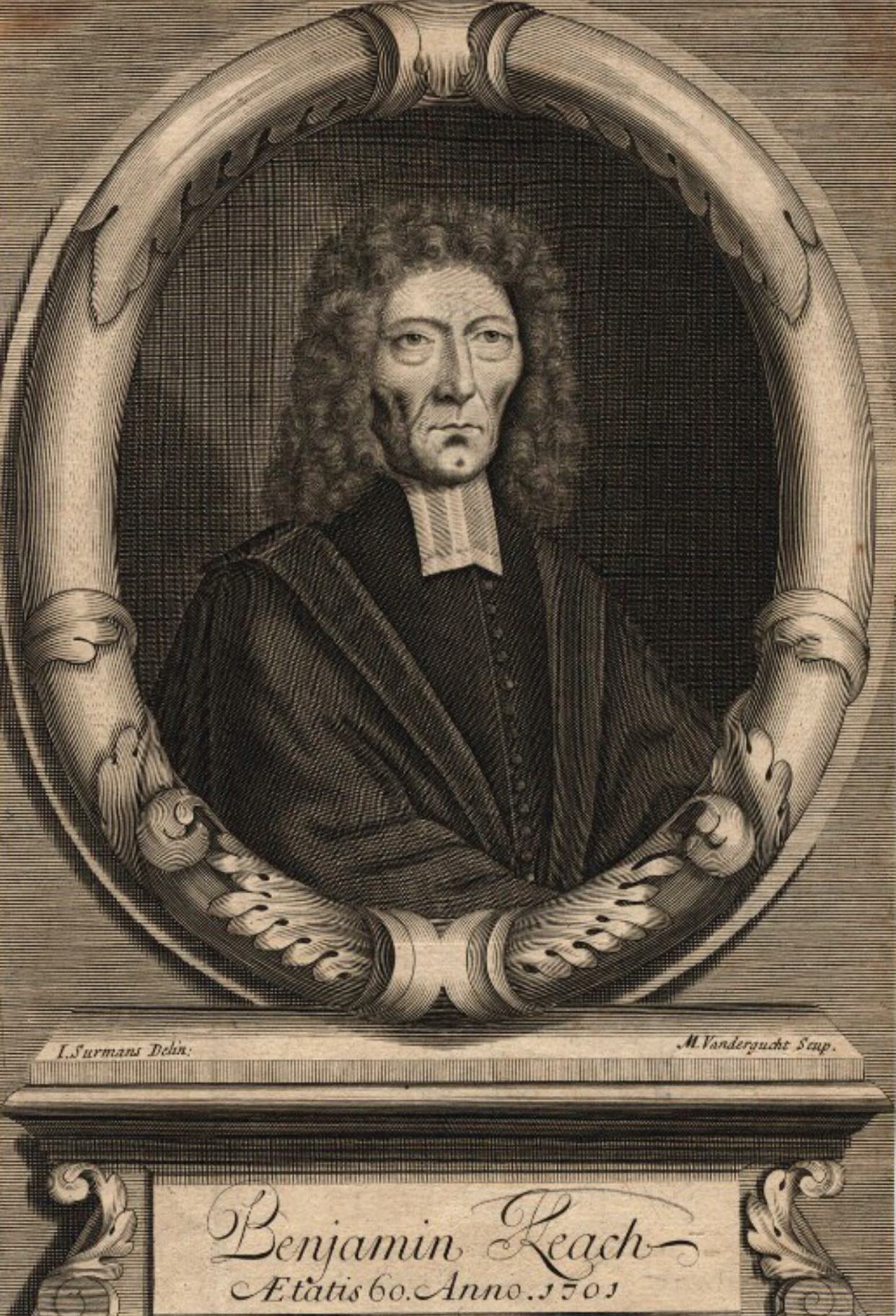
The article by Benjamin Keach explores the theological significance of metaphors derived from the nature of God, angels, heaven, and various elemental forces in Scripture. Keach argues that metaphors illuminate the understanding of divine attributes and actions, emphasizing the relationship between God, created beings, and the unfolding of redemptive history. He supports his arguments with numerous Scripture references, notably discussing how the Hebrew name Elohim points to the plurality within the Godhead and how the term is metaphorically applied to both angels and eminent humans, emphasizing their subordinate nature under Christ (Psalm 8:5, Hebrews 2:7-9). Keach’s examination of metaphors serves both a doctrinal and practical purpose, illustrating how these linguistic devices convey profound truths about salvation, divine sovereignty, and moral conduct, thus enriching one’s theological reflection and application in faith.
Key Quotes
“The chief division of universal beings is into the Creator and the creatures.”
“This name is also attributed to the belly Php 3:19, whose god is their belly—that is such as account their chief good and felicity to consist in the satisfaction of the desires of the flesh.”
“The love of God in regeneration is frequently expressed by the metaphor of light... because it represents the difference and knowledge of things to the eyes.”
“Heaven is metaphorically taken for the spiritual kingdom of God and that state of happiness wherein he manifests and communicates himself to angels and men.”
What does the Bible say about metaphors used for God and angels?
The Bible uses metaphors to describe God and angels, depicting their divine qualities and roles.
Genesis 1:26-27, Psalm 8:5, Hebrews 2:7-9
How do we know that God is metaphorically described in the Bible?
The Bible frequently uses metaphors to convey complex divine truths about God's nature and actions.
Genesis 1:1, Isaiah 40:12
Why is understanding the metaphors of heaven important for Christians?
'Heaven' as a metaphor is crucial for Christians because it symbolizes God's kingdom and ultimate fulfillment of faith.
Psalm 19:1, Revelation 21:1
CHAPTER X.
OF METAPHORS TAKEN PROM GOD, ANGELS, HEAVEN, AND THE ELEMENTS.
IT was said, chap, vi., that there should be a general division of this trope into the distinct fountains and classes of metaphors, which with divine help, shall be essayed in the following chapters. The chief division of universal beings is into the Creator, and the creatures. From the Creator we shall produce some. But from the creatures there are abundance of metaphors taken in scripture, which we shall endeavour to make plain.
Metaphors taken from God.
As, sometimes from, his name, sometimes from his actions. His Hebrew name XXXX, Elohim, when taken properly, belongs to none, but the only true and eternal God, and because it is of the plural number, it intimates the mystery of a plurality of persons in one most simple Deity. See Gram. Sacr. p. 87, 376. But metaphorically this name is attributed to creatures also, as,
1. To Angels who are endued with more eminent power, and more abundant happiness, than any other creatures, as Ps 8:5, "Thou hast made him a little lower than (Elohim[1] ) the angels," as the Chaldee, the LXX interpreters, Pagninus, and our translation render it; but we have a most certain interpreter, Heb 2:7, viz., the apostle, who expressly quoting this text says, "But thou hast made him[2] a little lower, ti par aggelouv, (ti par Angelous) than the angels," see verse 9, where the same is repeated. In both places, it is spoken of Christ, with respect to his state of humiliation; an evident specimen is the angel's comforting him, in his agony in the garden, Lu 22:43. So Ps 86:8; 97:7,9, where the word, Elohim, is put for angels, as it expressly appears, Heb 1:6. The meaning is, that there is no power so sublime but must be subject to the sovereignty of Christ's kingdom.
[1] The Gods.
[2] Or a little while inferior to.
2. To men of eminent dignity and his substitutes on earth, by whom God governs, judges, informs, and helps men, as if he had metaphorically called them divine men, Ge 6:2, "The sons of God saw the daughters of men," &c. The Chaldee renders it, [sons of great men] or grandees: Pagninus, the sons of princes. Brentius in his comment, upon this place, thus expounds it, "the sons of God,[3] are the principal sons and heroes of the Patriarchs, in whose hands, because of the right of primogeniture and other gifts of God, the chief authority was lodged, and who in doctrine and example ought to go before others, as the princes and heads of the people, as judges and princes are in other places of scripture, called gods. But the daughters of men were either women of the families of the Cainites, or without difference, any maids or women of the common and vulgar sort, that you may understand that the princes, who ought to be an honest example for others, took to themselves at their pleasure, any that they met and liked, whatever they were, whether kinswomen, or such as were of affinity to them, whether honest or dishonest. These things were wickedly done, for here was a neglect of consanguinity, which the law of nature commands, contempt of parents, and superiors, and an indulgence of polygamy, or having many wives, and rash and causeless divorces, &c."
[3] Filii Dei sunt filii Patriarcharum præcipui, et Heroes, penes quos evat, &c.
Ex 4:16, "He shall be to thee a mouth, and thou shalt be to him a God" (we translate instead of a mouth, and instead of a God,) the Chaldee renders it "for a prince or captain," that is, thou shalt be his chief magistrate, telling him what he shall say to the people. So God speaks to Moses, Ex 7:1, "See, I have made thee a god unto Pharaoh," the explication follows, verse 2, "Thou shalt speak all that I command thee; and Aaron thy brother shall speak unto Pharaoh." Moses is called a god because of the commission or embassy he had to perform, in those wonderful works before Pharaoh. So judges are, in the Hebrew, called gods, Ex 21:6; 22:8-9,28, so 1Sa 28:13, that spectrum or apparition in the likeness of Samuel, is so called, Ps 82:1, "He judgeth among the gods," that is, among the judges. See verse 6, "I have said ye are gods," from which Christ argues, Joh 10:34-36, that he, was much more the Son of God. See Ps 138:1,4, and Ps 119:46, "I will speak of thy testimony before kings, and not be ashamed:" which kings are elsewhere called gods, &c.
It is also attributed to idols, Ex 23:24; Isa 36:18. But it is by a metonymy of the adjunct, by which the opinion of men is put for the thing itself, as chap, iv. before-going. For idols are really things of no value, as Le 19:4; Ps 97:7; Isa 10:10; 19:3. Yea, no gods, 2Ch 13:9, (1Co 8:4, "an idol is nothing in the world") but they are worshipped by idolaters as gods, or at best, by them they pretend to worship God. Hence they are called gods, with the addition of another word, as Ex 20:3, strange gods, De 5:20; 32:16; gods besides the Lord, Ex 22:20; molten gods, Le 19:14; new gods, Jg 5:8.
The Greek name of God is Qeov, Theos, which is metaphorically ascribed to the devil, 2Co 4:4, "The god of this world hath blinded the minds of them which believe not," &c. For as the true God administers the kingdom of grace to such as believe in him, and is by them religiously worshipped: so Satan infuses his malignity into unbelievers, Eph 2:2-3; who obey his will, command, and seduction. Upon which Erasmus in his annotations, says thus, "the devil is not really a god, but he is so to them, who prefer him before Christ, just as to covetous men, their money, or mammon is a god, and to their heirs their luxury is a god, and (homo homini Deus] a man is a god to a man, as the proverb runs." And in the paraphrase---"whatsoever any person hearkens to (obeys or prefers,) before, or more than God, he makes that his god."
This name is also attributed to the belly, Php 3:19, ""Whose god is their belly," that is, such as account their chief good and felicity to consist in the satisfaction of the desires of the fiesh, and prosperity in this world, without suffering any persecution for the sake of Christ. Whatsoever any person puts the chiefest value upon, is to him a god, if he slights his true God. In the New Testament also the name of God is attributed to idols, Ac 7:43; 14:11, by a metonymy, as was said of the name, Elohim, by the opinion of men, as Ga 4:8, mh fusei ontes Qeoi, (me phusei ontes theoi)) qui natura non sunt Dii, "who by nature are not gods," but by the depraved imagination of idolaters, 1Co 8:5, legomenoi Qeoi, (legomenoi theoi) who are called gods by idolatrous men, but are not really so. And to these that one and true God is opposed, verse 6. So much for the name of God. To which metaphor some refer when the names of God, XXXX (Elohim) XXXX (Jehovah) XXXX (El) are added in the room of an epithet for divine, chief, or most excellent. Vide Gram. Sacr. P. 58, seq.
As to the actions of God, the word creation XXXX (Bara) properly signifies to make any thing of nothing, which God alone can do. But metaphorically it is translated to the other great works of God, as Ex 34:10, "I will do marvels, which were not created in the whole earth," &c., that is, such wonders, and so many, as never yet were done in the world. Nu 16:30, "If the Lord will create a creation," so the Hebrew, that is, if he will afford a new and unheard of miracle, such as was the swallowing up of the earth, which then happened to the seditious. See Isa 45:8.
More especially it is taken for the restoration, and renovation of men, whether in this life by the word of faith; or in the future, by a clear and beautiful vision of God, Ps 51:10, "Create in me a clean heart, (the explication) and renew a right spirit within me." It is as well the work of God to create a pure heart, that is, to convert and regenerate a man, cleanse him from sin, justify, and save him, as it is to create him. The impurity therefore, of our hearts can with no human strength or art be purged away, but we have need of the Creator's work, and the Redeemer's virtue and power to make us new creatures, Joh 1:12, "But to as many as received him, to them gave he power to become the sons of God, even to them that believe on his name."
Ps 102:18, "and the people that shall be created shall praise the Lord," that is, the church that shall be restored and gathered by Christ. For this Psalm treats of that and his kingdom of grace, as is alleged, Heb 1:10-12; Isa 65:18, "Be ye glad and rejoice for ever in that which I create: for, behold, I create Jerusalem a rejoicing, and her people a joy." That he speaks of the glory of Christ's kingdom and church here, is evident by the following verses; for its restitution and the whole celestial administration is expressed by the word creation, to indicate the omnipotency and most powerful operation of Christ; verse 17, there is mention of the creation of a "new heaven, and a new earth," in the same sense, which promise shall be most perfectly fulfilled in eternal life, as Isa 66:22, and 2Pe 3:13;---Eph 2:10, "For we are his workmanship, created in Christ Jesus unto good works," &c.; that is, regenerated, and renewed, in the image of God. See Ps 100:3; Isa 29:23, (&c.) This is that new creature of whom it is said, 2Co 5:17, "If any man be in Christ, he is a new creature;" that is, he is renewed by the Holy Spirit, to lead a new and holy life in the faith of Christ. What is corrupt in man by sin, is restored and reformed by regeneration and renovation; and so the image in which man was at first created, but lost it because of his sin, begins to be restored; very fitly therefore is the regeneration and renovation of a man expressed by the term creation, for God alone is the Author and cause of both.
Of Metaphors taken from Angels.
The creatures of God are divided into invisible and visible. The invisible are spirits aswmatoi, (asomatoi) without bodies, and by them we understand angels, because being in their own nature incorporeal, they cannot be seen by human eyes. The visible are whatsoever things have an existence in this whole universe, whether they be simple or mixed bodies. There are good and bad angels, and from both, some, though not many metaphors are taken.
1. From the good angels, some think that the ministers of the gospel are by a metaphor called angels, Jg 2:1; Hag 1:13; Mal 2:7; 3:1; Mt 11:10; Mr 1:2; Lu 7:27; 1Co 11:10; Re 1:20; 2:1,8,12,18; 3:1,7,14; and hence, not improperly imply an analogy, from the holy angels of God to the prophets, and other preachers of the Word. But the Hebrew word XXXX (Malac,) and the Greek aggelov, (Angelos} being an indifferent and common noun, denoting any messenger or legate, it is better to understand that term properly, because ministers of the gospel are really, and not metaphorically God's ministers.
Eze 18:14, The king of Tyrus, is called by a metaphor, the anointed XXXX (Cherub) by which term angels[4] are called, Ge 3:24, and Eze 28:14, "the covering Cherub." As if God had said, as angels amongst created things are by nature and ministry commissioned by me, for the protection of men, so thou, (king of Tyrus) didst in thine own conceit and fancy, judge thyself. This metaphor alludes to Ge 3:24; as Junius and Tremellius in their notes say. "This is a most elegant description of that Royal Majesty, by comparing it to that cherub, which was placed by God in the garden of Eden, Ge 3:24, for as an angel was appointed to keep that garden, and armed with that flaming sword which turned every way, it was a terror to all, so thou, king of Tyrus, since the kingdom became thine, didst fancy thyself equal to the angels of God in glory." Some think it has respect to those angelical figures placed in the sanctuary, Ex 25:20, "covering the mercy-seat." Riding upon a cherub is attributed to God, Ps 18:10; 2Sa 22:11, when the speech is of "winds, storms, clouds, and tempests," to which this name is ascribed by reason of their vehement swiftness, and dreadful effects. The Chaldee renders it, "And he is revealed in his magnificence upon the most swift cherubs, and he is led in strength upon the wings of the wind."
[4] They are called Cherubims, from the Hebrew word Rahcabh, to ride, because the Lord rode betwixt them, Ps 18:10.
2. As to what respects evil angels or devils, Christ calls Peter Satan, when he would dissuade him from suffering, Mt 16:23; Mr 8:33, "Get thee behind me, Satan." Some[5] take this as a noun appellative, and so, XXXX (Satan) signifies any adversary, as if Christ had said; "give over to contradict the will of my Father: it is thy part to follow., not to go before. Now thou gainsayest, studying to hinder what will save mankind, what the Father will have done, and what becomes me to do. Thou desirest to be a partaker of the kingdom, and yet thou hinderest me, that am hastening willingly to the cross whereby it is to be purchased; where you see me go, (viz. the kingdom of heaven,) there you ought also to bend your course. Thou dost not yet savour of God, but led by human affections, resistest the Divine will. Hinder me not therefore, thou unprofitable monitor, but follow behind me, and rather act the part of a disciple than a master." But because our Saviour uses not the Greek antikeimenov, (Antikeimenos) or antidikov (Antidikos) which signifies an adversary, or opposer, but the Hebrew, or Syriac, Satan, by which always the devil is understood in the New Testament, and Christ uses the same phrase to the devil, Lu 4:8. It is more rightly said that Christ calls Peter Satan by a metaphor, because in his opposition he acted the devil's part, in giving satanical counsel, directly contrary to the will of God. From whence Luther[6] fairly infers this maxim, "that whatsoever Peter, with the universal college of apostles, speaks from his own sense, in divine matters, and not by divine authority and revelation, as verse 16, 17, 18, is to be accounted diabolical and opposite to Christ: see 1Co 3:11; 16:22; Ga 1:8-9; 2Pe 1:19-20, (&c.) And then he adds, that Christ in this passage, with Peter and his apostles, prefigured the future history of his whole church, to wit, that there should be some true confessors of Christ, viz., good bishops, and martyrs, who should confess and preach Christ the Son of the living God purely, by the example of Peter speaking from the Revelation of the Father. But because the same Peter and the apostles a little after savour of the flesh, yea, and as Christ says, become Satans, it signifies that after the successors of the apostles and good bishops, there would come devilish bishops: and that at length he that would usurp the title of Peter's sole and only successor, should follow Satan as his Father for revelation, and would seek not the kingdom of God, but of the world. Which prophecy we see most palpably and horribly fulfilled," so far Luther.
[5] Erasm. Paraphrase.
[6] Tom. 4. lat. Fol. 363.
Joh 6:70, Christ calls Judas Iscariot a devil, because he was like him in lies and treachery, and so signally malicious that the scripture says, he was of the devil, Joh 8:44; 1Jo 3:8; "And the son of the devil," Ac 13:10.
Metaphors taken from Heaven.
Corporeal or bodily creatures, according to their physical distinction, are either simple or mixed and compounded. The simple are heaven and the elements, or the ethereal, and elementary region of the world.
Heaven properly signifies that uttermost celestial body that incloses or compasses the elements, and is the receptacle of the stars and constellations, Ge 1:8,14, (&c.,) Ge 15:5. Ps 8:3; 19:1,5; Isa 14:13.
Also the airy region which is above us, and this either in conjunction with the ethereal or starry heaven, Ge 1:6-9, (where by the mention of the "waters being gathered together unto one place under the heavens," is intimated, that also, to be a heaven, which is next and immediately above them, which is the lower region of the air) or separately from it, and so only the air, De 28:23; 1Ki 8:35; 2Ch 7:13; Job 1:16; 2:12; Ps 8:8; Mt 6:26; Lu 9:54; 12:56. But metaphorically heaven is taken:
1. For divine glory, and infinite majesty, which is called fwv aprositon, (phos aprositon,} light inaccessible, or "which none can approach to," 1Ti 6:16, by reason of similitude, from the greatness, splendour, beauty, and elegance of heaven, to which we may refer the words of Bonaventure,[7] "Corpus quod est sursum dicitur Cælum" &c. "The body which is above is called heaven, because it is capacious, secret, and quiet; and because this threefold propriety is found in the celsitude of the divinity, it is therefore called heaven; it is capacious, in the immensity of power; secret, in the depth of knowledge; and quiet, in the tranquility of delight. This is superior to all heavens, not by situation, but dignity, and greater than every heaven, not by extension, but from his own immensity, by which he is beyond all, but not excluded," &c.
[7] Lib. sentient. Dist. 2. n. 33
So it is taken when "God is said to dwell in heaven," Ps 2:4; 1Ki 8:39,43, (&c.,) so De 26:15, "Look down from thy holy habitation, from heaven, and bless thy people," &c., so it is said of Christ that "He came down from heaven," Joh 3:13; 6:33,50-51; 1Co 15:47, that is, he went forth from that inaccessible light of divine majesty, and manifested himself in the flesh. And the same throne of majesty is in the heavens, Heb 8:1; 1:3, to which Christ as (God-man) in his state of exaltation went. See Joh 17:5; Heb 7:26, "Made higher than the heavens;" Eph 4:10, "ascended up far above all heavens, that he might fill all things." See Ps 8:1-2; 108:5, (&c.) By which places, not so much the height of the place, as the sublimity of the divine majesty is expressed.
2. Heaven is metaphorically taken for the spiritual kingdom of God, and that state of happiness wherein he manifests, and communicates himself to angels and men. And that is,
(1.) Of grace, viz., the gathering and gracious government of the church militant in this life, to which belongs the appellation of the kingdom of heaven, oftentimes attributed to the church, Mt 13:11,24,31,33; 20:1; 22:1, (&c.) So when it is said, "To plant a heaven," Isa 51:16, "and to create a new heaven," Isa 65:17, by which phrase the restoration of the church by Christ is noted, which is begun in this life, and completed in eternity, 2Pe 3:13; the reason of the comparison is, because as the natural heaven is very far distant from the earth, so the ways of God in ruling his church, and giving blessedness to believers, do exceedingly surpass the manner of earthly administrations, Isa 55:9. And as in the natural heaven all things are in the exactest order, full of light and radiance: so God in his church, is the God of order and peace, 1Co 14:33, leading, teaching, and saving his people by a most convenient order of mediums, and that by the light of his saving word.
(2.) Of glory, viz., the eternal and unspeakable felicity of angels and holy men, in the beholding and perfect fruition of the glorious God. To which belong those phrases, Mt 18:10, "Their angels in heaven behold the face of my Father," the speech is of the angels appointed as keepers of the little ones; by which it appears that the angels, though acting on earth for the good of Christians, are nevertheless really in heaven, that is, in a celestial state of blessedness. Mt 6:20, "Treasures are said to be laid up in heaven;" Lu 12:21, "To have treasures in heaven;" Php 3:20, "To have our conversation in heaven;" by which phrases faith, and Christian hope, aspiring, and tending to eternal blessedness is to be understood. From this heaven Satan is said to fall like lightning, Lu 10:18. "Satan (says Illyricus) fell not from a place, but from his degrees of dignity, to wit, from the favour of God and spiritual blessedness, into the greatest wickedness, punishments, and eternal and spiritual calamities." Of the scope of these words of Christ, Erasmus says thus, "Jesus, that he might fortify their minds, against that disease of vain glory, which even the saints are sometimes tainted with, proposes the example of Lucifer to them, who for his pride was suddenly cast down from so great felicity. I saw (says he,) Satan falling from heaven like lightning. His dignity in heaven was very eminent, and yet for the swelling pride of his mind, he is slung from the highest (glory,) to the lowest (wretchedness;) how much more ought you to beware of pride, who carry a mortal body about you, obnoxious to all perils." But others understand this of the power and efficacy of Christ, which by the preaching of the apostles he put forth, to which Satan against his will was forced to give way, and was, as it were cast down from the height of that power which he exercised over men.
In heaven, we are also to consider the ornaments of it, as the luminaries, as they are called, Ge 1:14; the sun, moon, and stars, which are the organs of light. The sun and moon constantly shining, do metaphorically denote eternal blessedness in heaven. "Thy sun shall no more go down, neither shall thy moon withdraw itself:" Isa 60:20, the explication follows, "for the Lord shall be thine everlasting light, and the days of thy mourning shall be ended." See Re 22:5. Such things as concern the state of the church in this life, and heaven, are mixed in this chapter of Isaiah, as an accurate inspection into it will show. The Chaldee in translating these words of the sun and moon, does (not inelegantly) expound them, "Thy kingdom shall no longer be abolished, nor thy glory transferred." The light of the sun denotes prosperity, as shall be shown hereafter; therefore on the contrary the setting or darkness of the sun, metaphorically denotes calamity, sorrow, and misery, Jer 15:9, "Her sun is gone down while it was yet day;" Chaldee, "their glory is translated in their life-time;" that unexpected and most heavy calamities are treated of here, the foregoing and following verses show. Am 8:9, "I will cause the sun to go down at noon, and I will darken the earth in a clear day;" that is, I will suddenly overwhelm you with heavy strokes and calamities. So Mic 3:6; Joe 2:10; 3:4; Isa 13:10. On the other side an increase of the sun and moon's light, metaphorically signifies great spiritual happiness; Isa 30:26, "The light of the moon shall be as the light of the sun, and the light of the sun shall be seven-fold, as the light of seven days," &c., as if he had said, the help which I will afford you shall be so great and illustrious, that in that time the two luminaries of the world, the sun and moon (as if they would congratulate the deliverance of the people) will be more cheerful, and more shining than they were wont to be. Some refer this to an hyperbole.
By the name of Stars, illustrious and principal men are understood, Da 8:10, "And it (viz., that little horn by which Antiochus is understood) waxed great, even to the host of heaven; and it cast down some of the host and of the stars to the ground, and stamped upon them." By the host of heaven, the people of God, or the church, sometimes circumscribed in Judea, is understood; but by stars, the princes or chief men, who by their administration in the church or commonwealth were of more eminency than others, are noted; hence in verse 24, it is so expounded, "he shall destroy the mighty and the holy people;" that is, he shall destroy, the highest and the lowest. See 1 Mic 1:16.
2. By the name of stars, the teachers of the word of God, and Church rulers, are figured, Re 1:16,20; 3:1, which consideration fairly leads us to know;
(1.) Their Lord and Master, whose countenance is said "To shine as the sun in its strength," Re 1:16.
1. As the sun communicates his light to the stars in heaven: so "Christ the sun of righteousness," Mal 4:2, imparts the light of saving knowledge to his faithful servants, 2Co 4:6.
2. "The Lord brings forth the host of the stars by number, and calleth them all by names," Isa 40:26. So Christ leads forth his ministers in his church as a sacred host, against Satan, and the world, and calleth them also by name, Ps 68:11.
(2.) Their office: God placed "The stars in the firmament, to enlighten the earth," Ge 1:17.
3. The light of doctrine, which the ministers bring to the church is from heaven, and taken out of the heavenly and divine word alone, 2Pe 1:16,19, which is sweeter than honey, to the souls of such as are taught of God," Ps 19:10; 119:103; but to others, as wormwood, Re 8:11, because they taste nothing but bitterness and a denunciation of damnation in it.
4. A Star led the wise men to Christ, Mt 2:9; ministers propose only that end in preaching, 1Co 2:2.
5. It is said, Ecclesiasticus(Douay-Rheims Catholic Bible) 43:10, "that at the commandment of the Holy One, they (viz., the stars) will stand in their order, and never faint in their watches." Of the ministers of the Word it is said, Heb 13:17, "that they watch for the souls of men;" nor ought they to be discouraged in their watches, nor faint because of the world's ingratitude, but both by doctrine and good example to keep the same order constantly, and so, they shall be quite different from these "wandering stars, to whom is reserved the blackness of darkness for ever," Jude 1:13, they are to take care that "all things be done decently, and in order" in the church, 1Co 14:40.
6. It is said of the stars "that they fought from heaven, against the enemies of the people of God," Jg 5:20. So a most grievous fight against devils is proposed to the ministers of the Word, Eph 6:12; let them look to it therefore, that they manage their warfare rightly, 2Co 10:3-5; that they may be able to glory in the Lord, for the heavenly reward that will follow, 2Ti 4:7-8.
7. It is said of the stars, that together with the sun and moon "they divide between the day and between the night, and are for signs, and for seasons, and for days, and for years," Ge 1:14; so it is the duty of gospel ministers to divide between the day and night, light and darkness; that is, to inculcate and diligently show the difference between good and evil, piety and wickedness, Isa 5:20; Jer 15:19; Ro 13:12-13; 2Co 6:14-15, (&c.) "Also to give signs and seasons," that is, to provide so as that the public worship of God be kept up timely and seasonably; and in their ministerial function to impart their gifts, suitably to the wants of the flock in the respective seasons, that so, there may be no disorder or confusion---to show also days and nights, that is, "to proclaim the acceptable year of our Lord," Isa 61:2, and earnestly to inculcate the appointed day in which the "Lord will judge the world in righteousness," Ac 17:31.
8. It is said of the stars, that "they differ from one another in glory." "So there is a great diversity of the gifts of the Spirit, in the ministers of the Word," 1Co 12:4, (&c.)
9. All the stars of light are commanded "to praise God," Ps 148:3, with Job 38:7. So all the ministers of the word, what measure of grace soever they have received, or whatsoever gift they exercise in the church, ought with ardour of spirit to praise the Lord, to serve him heartily, and without selfishness or envy, to preserve mutual peace and concord among themselves, and their reward shall be certain, if they behave themselves faithfully, and not only in this world, but also in eternity.
10. Stars were seen by John, worn in the right-hand of Christ, Re 1:20. So let the faithful labourers of the gospel, be certain of a most gracious protection by the omnipotent hand of Christ, Isa 51:16, (&c.); and in the life to come "they that turn many to righteousness shall shine as the stars for ever and ever," Da 12:3.
So much for ecclesiastical stars. The stars being obscured, sometimes denote calamity, Isa 13:10; Eze 32:7; Joe 2:10, as was said before of the sun and moon.
The brightest star that shines in our view is called in Greek fwsforov, (phosporos,) in Latin, Lucifer, both which words signify a bringer of light; in Hebrew it is called XXXX of the root, XXXX (halal,) which signifies to shine, and is metaphorically translated, to describe the unexpected ruin and overthrow of the king of Babylon, Isa 14:12, "How art thou fallen from heaven, O lucifer, son of the morning." That star is called, son of the morning, because while it accompanies the morning, it seems, as it were, to be born of it. Its course is perpetual and constant, so that it was not feared that it should fall from heaven. And therefore to appearance, it seemed impossible, and incredible, that so great a king, illustrious, and splendid, in power and majesty, beyond other kings, (as the morning star is before other stars) should fall from his lofty and magnificent grandeur. Pope Gregory (upon Ezekiel,) and other school doctors, expound this of the devil's fall, because the prince of devils is called lucifer. But this epithet does not belong to that malignant spirit in this place, for God himself confirms our explication, verse 4, saying, "thou shalt take up this parable, (proverb, or taunting speech, for so the Hebrew is) against the king of Babylon," not against the devil, &c. Where Christ our Saviour, is called Lucifer, is expounded before in the chapter that treats of an anthropopathy. Besides the phrase asthr prwinov, (aster proinos) stella matutina, the morning star is a symbol of the glorious light in eternity, Re 2:28. See also Da 12:3; 1Co 15:41-42.
Metaphors taken from Light.
There are two principal effects of the luminaries and ornaments of heaven, viz., to give light to the world, and to distinguish times. In metaphors taken from light we will distinctly treat of nouns and verbs, which are sometimes joined together.
Generally light is taken,
1. For life itself, Job 3:20, "Wherefore (has God) given light to the miserable;" so the Hebrew; the explication follows, "and life to the bitter in soul;" verse 21, "Which long for death, but it cometh not." Hence comes the phrase, "to see the light," that is, to live, or be born alive, Job 3:16. "To walk in the light of the living;' that is, to act amongst the living, or to live, either a corporeal or spiritual life in God, Ps 56:13. So David prays, Ps 13:3, "Lighten mine eyes, lest I sleep the sleep of death.''
2. For any prosperity and joy of mind arising from thence, Es 8:16, "The Jews had light, and gladness, and joy, and honour;" where the synonomous terms make out that it signifies the eminency of the Jews' prosperity, and joy for their divine deliverance. Job 29:3, "By his light I walk through darkness;" that is, being free from calamities I led a happy life; verse 24, "The light of my countenance they cast not down;" that is, they grieved me not, but studied to please and gratify me in all things. Ps 97:11, "Light is sown for the righteous," the explication follows, "and gladness for the upright in heart." The word sowing is also emphatical, as if he had said, it is reposited and hidden, as seed is in the ground, but in its own time it will certainly come forth. See Isa 61:11; Col 3:3-4. It is sown with the seed of the heavenly word, and a most full and bright harvest of this celestial seed will follow in the resurrection to eternal life. So light is also taken, Ps 112:4; Pr 13:9; Isa 45:7; 58:8; 59:9. The reason of the comparison in this, and the foregoing passage is to be sought in the profitableness and pleasure of light, Ec 11:7, (&c.)
3. For the open and manifest state of things, Mt 10:27, "What I tell you in darkness, that speak ye in the light;" another metaphor of this publication follows, and "what ye hear in the ear, that preach ye upon the house tops." The sense is, you are therefore called by me, that you may preach publicly to the whole world, what you privately heard from me. So Zep 3:5; Joh 3:21; 1Co 4:5.
4. For grace, benevolence, or favour, Pr 16:15, "In the light of the king's countenance is life;" the exposition follows, "and his favour is as a cloud of the latter rain." So it is taken of God, as was said in the chapter of an anthropopathy.
More especially the mystery of regeneration, renovation, and salvation, is frequently expressed by the metaphor of light, and that respecting,
1. The organical cause, which is the word of God, which is frequently called so, by a reason deduced from the quality of light, which represents the difference and knowledge of things, to the eyes, Ps 43:3; Pr 6:23; Isa 2:5; 5:20; 2Co 4:6; 1Jo 2:8. Thus the apostles, because of their preaching the word of God, are called the "light of the world." Mt 5:14; and their light is said "to shine before men," verse 16; that is, the light of doctrine, by diligent preaching, as also the light of a good life and example.
2. The formal cause, which is the saving knowledge of Christ and true faith manifested by love and good works, Ac 26:18; Eph 5:8; 1Pe 2:9; 1Jo 1:7. Hence believers are called "Sons of light," Lu 16:8; Eph 5:8; 1Th 5:5. And good works, "the armour of light," Ro 13:12.
3. The final case, and the last scope and effect of faith, which is life eternal, often noted by the term of light, Isa 55:13,13; Joh 8:12; Ac 26:23; 2Ti 1:10, (&c.) From thence there may be an easy judgment made of certain verbs belonging to light.
Ps 13:3, "Lighten mine eyes, lest I sleep the sleep of death." He prays for the light of heavenly wisdom from the word of God, also the light of watchfulness, and circumspection, whereby he may avoid the snares of the adversary. He alludes to human sleep, which easily overcomes those that sit in darkness, or shut their eyes, whereas, if the light shines in our eyes we can hardly sleep.
Ps 19:8, "The commandment of the Lord is pure, enlightening the eyes," that is, the mind, by giving understanding and knowledge as well of the divine will, as of our own corruption, and prudence, in the management of affairs, that a man may not be like a brute, which is void of rational intellectuals; Ps 34:6, "They looked unto him, and were enlightened," that is, believers, were made glad by the Lord, by his gracious and saving deliverance, lest they should be dejected and derided by the wicked. See Pr 4:18-19; Ec 8:1, with 2Co 3:18; Isa 60:5; Joh 7:37-39.
Joh 1:9, "That (viz., Christ) was the true light, which lighteth every man that cometh (or coming) into the world:" upon these words Erasmus very fairly paraphrases, "In this darkness of the world, men, eminent for holiness shined, as little stars in the thick obscurity of night, and as it were through a cloud showed some light, but only to the Jews, and the adjacent parts. But this true light imparted its splendour not to a single nation only, but to all men, that come into this dark world. He came, that by a Gospel faith he should shine in, and give light, to the hearts of all men in the world. No Scythian, no Jew, no Spaniard, no Goth, no Briton, is excluded, neither king nor servant. There is a sufficiency of light for all, and if they remain in darkness, it is not the light's fault but their own, who perversely love darkness and abhor the light. He shines to all, lest any one should have a pretext of excuse; for if they perish, they do it wilfully and knowingly, as if one would dispute against the sun-shine at noon, and will not lift up his eyes to be confuted," &c., 2Co 4:6. There is an eminent description of spiritual illumination. See Eph 3:8-9.
To light by way of privation is opposed sometimes a shadow, which is light hindered from a total shining, by the interposition of some body. This metaphorically, signifies protection, and defence, against adversaries of any sort, as a shade defends from the sun's intemperate and scorching heat, Isa 16:3; 30:2-3; La 4:20, (&c.) For so it is attributed to God as before, chap. 8 towards the end.
But where the ceremonies and types of the Old Testament are called shadows with respect to Christ, Col 2:17; Heb 10:1; it is not to be understood that they are naturally so, but artificially, and like a picture, for painters first draw a shadow or an umbratile kind of delineation, and afterwards, perfect their picture with lively colours, the former vanishing out of sight. So it was with the sacrifices and ceremonies of the ancients, which figured Christ, and ceased when he came, which explication is evident by the opposition of shadows, and the very image of things, Heb 10:1.
Sometimes mists, fogs, and darkness, are opposed to light, which hide the splendour and beauty of things, and hinder men from making a right distinction, separation, or definition, of objects, begetting disturbance and confusion in the mind, and contain in themselves nothing pleasing or laudable, and therefore signify evil in scripture. But because there is the same reason of contraries, (which mutually answer each other,) we shall be able by the consideration of light to pass a judgment upon its opposite.
1. As light signifies life, so darkness and a shadow, metaphorically denote death; Job 10:21, "Before I go whence I shall not return, to the land of darkness, and the shadow of death;" verse 22, "A land of darkness, as the gloominess of the shadow of death, and without order, and it shineth as darkness." This is a periphrasis of death and the grave. Ps 88:12, "Shall thy wonders be known in the dark?" see verse 10, 11, Job 28:3.
2. As light signifies prosperity and joy; so darkness denotes evils, unhappiness, and calamity, and consequently that sorrow, mourning, and grief, that follows. See Job 5:14; 15:22; 17:12; 18:5-6; Ps 44:19; 88:18; 143:3; Isa 5:30; 47:5; 50:10; 59:9; Jer 8:21; 13:16; La 3:2,6; Eze 32:8; Joe 2:2; Am 5:18; Mic 7:8. Na 1:8; Zep 1:15, (&c.)
3. As light is put for that which is manifest and apparent, so darkness is put for that which is hidden, secret, and unknown, Job 12:22; Ec 6:4; Isa 45:19; Mt 10:27. See Joh 3:20-21; Eph 5:11-13. So, obscure or the meanest sort of men, is put for such as are of no eminent note or fame, Pr 22:29.
More especially as the mystery of regeneration, and the restoring of man to eternal salvation is expressed by light; so by opposition, darkness denotes a state of corruption, sin, and damnation, and that also with respect to,
(1.) The organical cause, which is the truth revealed in the word of God, in which respect, darkness signifies errors, lies, and perverse doctrines, Isa 5:20; 9:2; 60:2-3; Joh 12:35; Ro 1:21-22. Although by way of consequence the things that follow are also noted in these places.
(2.) The formal cause, which is the knowledge of Christ, and faith which works by piety; in which respect darkness signifies infidelity, and an indulgence in sin, Ps 82:5; Pr 2:13; Joh 1:5; 3:19; Ac 26:18; Ro 13:12; 2Co 6:14; Eph 4:17-19; 5:8,11; 1Jo 1:6; 2:9,11. Although the antecedent member is also noted in these sayings, all infidelity, impiety, and sins, arising from ignorance and errors in doctrine.
(3.) The final cause and last effect; in this respect darkness signifies eternal death and damnation, Mt 8:12; 22:13; 2Pe 2:4; Jude 1:6. And whereas the devil is the author of all those evils, he with his whole infernal society are called the power of darkness, Lu 22:53; Eph 6:12; Col 1:13.
Metaphors taken from Time.
The other effect of the luminaries of heaven is the differencing of time, from which differences some metaphors are deduced.
( 1.) A day, is taken for the profit and benefit of the time allotted, or granted, by God, 1Sa 25:8, "We come in a good day," that is, seasonably and for our profit; your preparation and store being such as that you can relieve our want. Joh 9:4, "I must work the works of him that sent me, while it is day," that is, while the allotted season lasts, for that purpose given by heaven. Upon which Erasmus paraphrases, "I am therefore sent into the world, that I should by deeds of this kind purchase glory for God, by convincing unbelievers that I speak true, that they may believe, and be cured of their blindness. This command I must diligently follow, while it is day; for men that have any thing to do, work by day, the night being unseasonable for labour, in the meanwhile therefore, while the present day affords an opportunity of acting what is necessary for the obtaining of eternal life, I must not give over. For the night is coming, wherein men neither will nor can work." See Lu 13:31,33; Joh 11:9-10; 12:35; Ro 13:11-13; 2Co 6:2.
2. For the knowledge of God and the season of grace. Ro 13:12, "The night is far spent, the day is at hand." Here is an opposition between an unconverted state, which is compared to night, and a state of conversion to the kingdom of Christ, which he calls day, for the reason before given, 1Th 5:5,8, "Ye are the children of light, and children of the day: we are not of the night, nor of darkness. But let us who are of the day, be sober." In this text there is an elegant antanaclasis, for the word day, verse 2, 4, is to be understood of the day of judgment, and verse 5, of the gift of gospel restoration by Christ, to which verse 7, the mention of the natural night opposite to the day is subjoined. 2Pe 1:19, "until the day-dawn arise," &c.; here life and eternal glory seem to be noted, that in the words of the apostle there may be an opposition between this life, and that which is to come; this life being compared to an obscure place, which needs a candle to light it; (which candle is the prophetical revelations,) but life to come is compared to a clear day, in which Christ our fwsforov (phosporos or) light-bringer, shall illuminate the eyes of believers with a most full and bright radiance. And thus the great perfection of the prophetical scriptures (as also of the apostolic, which are exactly conformable to them, and as it were an explanatory light to them) is proved, because most sufficient, (with the help of Divine grace,) for the obtaining of everlasting life, &c.
The parts of the day are the morning, noon, and evening, Ps 55:17, "Evening, and morning, and at noon, will I pray," &c. The morning season metaphorically denotes diligence, sedulity, and care, because men rise early to go about such business as they are careful of, and have much upon their hearts, Job 8:5-6; Ps 5:3; 91:5-6; 101:8; Pr 8:17; 2Ch 36:15; Jer 35:14; Zep 3:5,7; Isa 21:12, "The watchman said, the morning cometh, and also the night," &c. Some understand that the morning is here put for prosperity, as if he had said to Dumah, or the Idumeans, "The yoke of the Israelites being shaken off of thy neck," (as it is said, Ge 27:40;) thou shalt enjoy liberty, prosperity, and plenty, of good things: but another calamity hangs over thee from the Assyrian, by which, as with the darkness of night, thou shalt be obscured." Others take the word morning, properly, but not unlike the former sense; the morning indeed comes, (as ye ask, verse 11, "Watchman, what of the night?" that is, when shall the day-dawn come? and what will happen then?) but together with it, that night comes, which is more dark and terrible. For when the days are calamitous, there arises with the sun, as it were, a new light, yet ending in a night more full of calamity than the former. Illyricus says, "Although the morning properly taken will come, yet the metaphorical morning will not come, but it will be a metaphorical night."
The Chaldee takes it metaphorically, but applies it more generally; thus it paraphrases the whole verse. "The prophet said, there is a reward provided for the just, and vengeance for the wicked; if you will repent, do it, while you may."
Isa 47:11, "Therefore shall evil come upon thee; the morning thereof thou knowest not;" (so the Hebrew,) that is, whose sudden coming, or beginning, thou that shalt not at first mind, as in the morning betimes, the sun rises, and darts out its beams upon a sudden. Some think that the prophet derides the vanity of the Chaldean astrologers. Others thus, the morning or day-break gives an indication of the sun's coming, so this evil that was to come upon Babylon, was not without its marks and tokens that went before it, which were as illustrious as the dawn that ushers in, or harbingers, the day. But not known to Babylon because of its blindness and conceited security, Ho 10:15. "In a morning shall the king of Babylon be utterly cut off," that is, swiftly, and suddenly. He speaks of Hosea, the son of Elah, 2Ki 17:1,5, (&c.)
This term, moreover, denotes divine grace to believers, because of the beauty and sweetness of the springing and arriving light. For as the morning brings the beginning of day-light after the tedious sadness of a dark night, and is no little comfort to them, especially if sick, they are weary of darkness, and earnestly long for day; so the grace of divine consolation does wonderfully re-create and refresh the hearts of such as are troubled and afflicted, &c. Of which take two examples, Ps 110:3, "From the womb of the morning: thou hast the dew of"---Of which place many have said many things. It is certainly to be expounded by a metaphor, denoting the grace of God given in his word, which is compared to the morning, Isa 58:8; Ho 6:3. A womb is attributed to the morning, because of the mystery of God, in his spiritual begetting of his children. The unfolding of this trope is thus, as the dew by a wonderful and invisible way is, as it were, born of the womb of the morning, that is, it plentifully falls at that time, without any help or assistance of man, Job 38:28; so by the grace and mercy of God, and by the power of his heavenly word, (but in a far more abstruse and mystical manner,) the youth of the Messiah, that is, that willing people in the day of his power, and in the beauties of holiness, of which the Psalmist speaks in the same verse. See Ps 22:30-31; 87:4-5; Isa 53:10; 54:1; Mic 5:7; Joh 1:2,13; 3:5,8; Jas 1:18, (&c.)
The other place is Isa 8:20, where the morning is put for the grace of God, and that comfort and peace of spirit which flows from it; the words in Hebrew are, "because there is no morning in him." But interpreters do not agree whether this is to be understood of men, or the perverse doctrines of such, as consulted them that pretended to foretel things to come, by a devilish or familiar spirit. If it be referred to men, it bears this sense. "To the law and to the testimony:" if they speak not according to this word, they shall have no morning, that is, true light. This is true in itself, but the letter of the text is not altogether conformable to it, for it is not in the plural of them, but in the singular to him (or it). But others expound this text better thus,[8] "To the law and the testimony," that is, recourse must be had thither, for the law and testimony must be consulted according to the will of God, otherwise, (that is, if they do not speak the truth of divine grace there,) let them speak, an ironical confession joined with indignation: "Let them speak," because they will not do otherwise, though seriously and frequently admonished, "let them speak, I say, according to this word," viz., "in which there is no morning;" that is, no light of divine grace or comfort; verse 21; "And let him pass through it (the earth) hardly bestead and hungry;" the singular for the plural, "and it shall come to pass, that, when they shall be hungry, they shall fret themselves, and shall curse their king and their God," &c.
[8] That this is the explication of the Hebrew text, which is word for word as her Englished.
Now whereas the prophet calls this speech, of that wicked people, (viz., that they were to seek counsel of them that had familiar spirits, &c., and not of the law and testimony) a word "without a morning," or void of the light of divine grace and consolation, it certainly follows, according to the intention of the prophet, that that morning of grace and comfort is to be found in that word of the law and testimony alone, with sure and safe counsel in tribulations and afflictions, which to distressed minds is like the morning sweetness, or the pleasure of a lovely day-spring. Such as neglect or reject this word, walk in darkness, and are involved in errors, and perish everlastingly. The other interpretation in substance agrees with this.
Noon is taken for things most evident, De 28:29. The Latins have a proverb, meridiana lux, noon-light, which is put for a most clear and evident thing. There is a comparison with the noon-time, when there is mention made of the light and splendour of felicity, Job 11:17, "And (thy) time shall arise above the noon-day," (so the Hebrew) that is, thy most illustrious glory shall shine all round or about thee. See Ps 37:6.
The Evening is elegantly opposed to the Morning, when the speech is of the vicissitude of calamities and comfort which God observes in believers; Ps 30:5; ""Weeping may endure for a night," or as the Hebrew, may lodge for an evening, "but joy (cometh) in the morning:" that is, the godly are compelled to weep in the darkness of the cross and sufferings, but the most joyful morning and light of divine help will come again. See Joh 16:20,22; Ps 126:5-6. So the word vesperascens, drawing towards an evening, is used for ceasing, Isa 24:11. The sun-setting in the evening leaves the darkness of night to succeed it; so when joy ceases, it leaves calamity and mourning.
To the day, is opposed Night, by the same reason almost as darkness is, which in a moonless night and cloudly sky invades us, Job 17:12; "They change the night into day: the light (they said) is near because of darkness;" he speaks of his thoughts, which verse 11, he called the possessions of his heart, because of his hope and expectation of good, as Christ commands us, Lu 21:19, "in patience (and hope) to possess our souls." Therefore he said that his thoughts or possessions of his heart, were broken off, denoting that all hope of good perished; and then adds, that the same cogitations turned night into day, and that light was near, with respect to those dark dispensations (that is, he certainly hoped that those calamities, which he compares to an obscure night should be turned into prosperity,) which he shows by the word day, and that the light of long expected peace is near. This explication agrees with what follows, verse 13, "If I wait, the grave is mine house," &c.; verse 15, "And where is now my hope? As for my hope, who shall see it?" verse 16, "They shall go down to the bars of the pit, when (our) rest together is in the dust." As if he had said, my expected hopes, together with my body, shall ere long be carried to the grave, and expire with this life; Job 35:10, "But he said not where is God my Maker? who giveth songs in the night;" that is, who in adversity giveth help and deliverance, for which praise and glory becomes due to him. See Mic 3:6, (&c.)
Sometimes the night signifies the reign or dominion of impiety and hell, Ro 13:12; but what we find, 1Th 5:7, "For they that sleep, sleep in the night; and they that are drunken are drunken in the night," is understood by some of natural sleep and night; but others interpret it of spiritual sleep, that is, carnal security in wickedness (Ro 13:11; Eph 5:14) and the night of infernal power. Erasmus in his paraphrase elegantly joins both, and thus unfolds this apostolical text: "The day of the last judgment is to be dreaded, by those who are blinded by vice, and lead a life like night. But you that are brethren are not to fear it, because it shall not find you unprovided; for all you that follow Christ, do not belong to the kingdom of darkness, but to the kingdom of light, and God; especially if in piety and reality ye walk close to the rule of your profession, and so live as that it may appear, that ye watch in the light and not snort in darkness. Therefore if we would not be oppressed, let us not sleep as others do, who have not known the light of Christ: but let us be watchful and sober, having always a circumspect mind, that we admit not any thing through incogitancy, which may prove offensive to the eyes of God or men. For as such as sleep a natural sleep, do it by night, and such as be drunk with wine, are usually so in the night: so they that sleep in sin, are involved in darkness of mind, and such as are drunk with carnal desires and delights (so called), are entangled in the mists of a dark mind. But it becomes us to whom the light of the gospel-day hath shined, to be sober and watchful," &c.
Metaphors taken from fire.
So much for heaven and what belongs to it. We shall now treat of the elements, which are four, viz., fire, air, water, and earth; and produce what metaphors are taken from them. The metaphors taken from fire shall be considered with respect to its quality and effects, viz.,
1. Its clearness, purity, splendour, and other attributes, and in that respect it is translated to angels, Ps 104:4; Heb 1:7. Fire in its efficacy of acting and penetrating, in agility and celerity, is eminent before other creatures of God, which qualities may be fitly applied to those holy ministers of God. The fire always moves upwards: so all the actions of angels tend to the glory of God. By a flame of fire, charity or love is signified, Ec 9:6. Angels are wholly inflamed with a divine love.
From fire angels are called, XXXX Seraphim, that is, flaming or fiery, from XXXX Saraph, in Latin, incendit, cremavit, in English, he burnt. Arias Montanus[9] says, "that Seraphim, signifies purity from any spot, filth, or heaviness, for so fire is, and therefore those ministers of God, which Isaiah saw, have a purging and purifying efficacy, in their divine ministrations for the profit of men, Isa 6:3,6-7. In that vision one of the Seraphims, exercised his purifying virtue by applying the external symbol of a live coal to the prophet's lips. Musculus in his comment says, "That this vision of angels standing about the Lord sitting in his throne, was in fire, that they may be called burning (Seraphims,) which is very suitable to the thing in agitation. The Lord was angry with his wicked and rebellious people. To judge whom he sat in his judicatory throne. And therefore as that great session and tribunal is an argument of his wrath, so the fiery appearance of his ministering angels betokens his dreadful anger; for that conflagration which was to consume the wicked, was then and there burning."
[9] In lib, Joseph. Seu de arcano sermone, p. 13
2. Fire also denotes the word of the gospel of Christ published among the Gentiles, Lu 12:49. In treating of this we must have respect to the virtue and efficacy of fire, as well to its shining and enlightening quality, (wherein it agrees with what we said about light, which betokens conversion and the mystery of salvation,) as also its kindling quality; for the word of Christ kindles the love of God, holiness, and heavenly desires in the hearts of men, to which is referred, Jer 20:9; Lu 24:32. And the appearance of the Holy Spirit in the likeness of fire, Ac 2:3; Mt 3:11. And lastly, its consuming and destroying quality. For the word of Christ shall consume all its adversaries, judge, condemn, and destroy them, Joh 12:48. To which may be reduced, Jer 5:14; 23:29. To this divine fire, there seems to be another strange fire opposed (as in the type, Le 10:1,) viz., of false doctrine and human traditions, Isa 50:11; "Behold, all ye that kindle a fire, that compass yourselves about with sparks; walk in the light of your fire, and in the sparks that ye have kindled," &c. Junius and Tremellius upon the place say, "That Christ in this place convinces the proud spirit of the Phariseees, and almost the whole Jewish church, of impiety, because in their spiritual darknesss they went about to kindle lights for themselves, neglecting the light of God's word, and that gospel illumination which Christ offered them, &c. They esteemed that a profitable fire and light, which really brought the fire of divine wrath, and eternal damnation, upon them.
3. Because of its burning quality, fire is attributed to them who bring perdition, hurt, loss, or utter destruction; hence fire is said to be before God the best judge, and avenger of his enemies, Ps 50:3; 97:3; Isa 26:11; 29:6; 30:33; 66:15-16,24; 2Th 1:7-8. But there is no doubt but in these and other places respect is had to hell-fire, of which Illyricus[10] says, "in the description of hell and eternal punishments, the scripture frequently inculcates that there is an eternal and unquenchable fire of brimstone, whether there be really any material fire, or that something bitter and direful is metaphorically signified is left to inquiry; because in this life there is nothing more violent, more tormenting, or more terrible, than a raging and prevailing fire. But it is far better to endeavour the avoiding of that hellish fire, than in a spirit of contention to be too curiously inquisitive into its nature."
[10] Clav. Script. P. 404.
Hither must be referred those places where by the term (fire) we are to understand invading enemies and desolating wars, Ps 78:63; Isa 42:25; Jer 48:45; 50:32; Eze 21:32; 30:8, (in which place the Chaldee for fire, puts "a people strong like fire,") Am 1:4,7,10,12,14; 2:2,5. Some think there may be a synecdoche, because wars are for the most part managed by fire and flame.
It is also attributed to other things, by means of which terror, hurt, and death, are brought upon any, as Jg 9:15,20; Isa 33:11-12; Ob 1:18; Jas 3:5-6; Jude 1:23. See Pr 16:27, and compare Jer 51:58; Joe 1:20, together.
4. It agrees to this, that fire generally denotes any adversities which are the effects of divine wrath, as also calamities and afflictions, as Ps 66:12; 140:10; Isa 9:18-19; 10:16; 24:6,15; 43:2; La 1:13; 4:11, by which signification sometimes, respect is had to the purifying qualities of fire, for God tries and cleanses believers by crosses and calamities, as gold is tried in the fire, Ecclesiastes 13:9; 1Pe 4:12. See also Ps 17:3; 66:10; 1Pe 1:6-7 To this also are the two following texts referred, Mr 9:49, "For every one shall be salted with fire, and every sacrifice shall be salted with salt." The particle kai, (kai,) and, is frequently put for as, or, even as. It is therefore an inverted similitude which is to be resolved in this sense. As every sacrifice in the Old Testament was wont to be salted with salt, by the appointment of God, Le 2:13, so every man that would avoid sin, or offences, and hell-fire, the consequence of it, (as appears by the foregoing verses, which have a coherence with this,) must be salted with a certain wholesome fire, that is, seasoned by crosses, and afflictions: or, this fire will have the same efficacy on him, as salt has on flesh, viz., to preserve him from the putrefaction of security in sin. Elegantly therefore is salting attributed to fire, and both are joined, to denote the mystery of the cross; because there is an agreement betwixt those two, both causing pain, and both abstracting and consuming that which is corrupt or putrefied; as also because they were joined together in sacrifices. Scaliger in his Notes thinks that this should be read pasa puria alisqhsetai, that is, "every sacrifice shall be salted," that it may be the same with what follows, pasa qusia alisqhsetai, "every oblation shall be salted with salt," because Le 2:13, there is a repetition of the same.
The other place is, 1Co 3:13-15. Upon which Chemnitius thus expresses himself---"There is a fire of probation, or trial, sent by God, either by outward troubles, or inward temptations, or by a clearer manifestation of truth by the word; that they should not remain in the darkness of error and ignorance, who hold the fundamental articles of truth, but that such opinions as are disagreeable to the foundation shall be purged away, either in life, or at the hour of death." Some by the terms day, and fire, understand, truth, shining from the word of God by the Holy Spirit, and enlightening the mind, Mal 3:3, but others, the day and fire, of the last judgment; 2Th 1:8. Of which obscure place, we are not concerned here to treat much. But the reader may peruse, Tom. 8, locorum. Theolog. Dn. D. Gerharni, de morte, sect, 254. seqq.
To the element of fire belong other things, which bear analogy or relation to it, as well nouns as verbs.
Of nouns; a flame by a metaphor signifies a bright and shining blade, or plate, of that form, as Jg 3:22; 1Sa 17:7, where what we translate spear's-head, is in the Hebrew [spear's-flame.] So Job 39:23, "The flame of the spear," we translate it "glittering spear." So also XXXX (flame,) is attributed to the sword, which turned every way, with which the cherubims, which were the keepers of paradise, were armed, Ge 3:24, See Isa 13:8; Song 8:6. Love is called the flame of the Lord, that is, such as the Lord by the light of his Spirit kindles, so as that it shall last perpetually. And for its continual energy, because it always tends upwards, and darts its splendour, and increases that way. What are the properties of a natural flame of fire, agree also to love. Isa 47:14, A flame signifies most heavy punishments inflicted by God.
Lanthorn, candle and lamp, (1.) Denote prosperity, and a happy success of things, Job 29:3; Ps 17:15. Hence the extinction, or putting out of a candle or lamp, signifies approaching adversities, Job 21:17; Pr 13:19; 20:20.
(2.) It more especially denotes the happiness of a kingdom, or government, 2Sa 21:17, "Thou shalt go no more out with us to battle, that thou quench not the candle or lamp of Israel." The sense is, lest thou be slain, and the kingdom of Israel, and its tranquility perish. So the conservation of David's kingdom in his posterity is called a lamp or candle, 1Ki 11:36; 15:4; 2Ki 8:19; 2Ch 21:7; Ps 132:17. In which last place there is respect had to Christ, the heavenly king, and David's son according to the flesh. Some refer to this head, Nu 21:30, "and their lamp perished from Heshbon to Dibon," so the Hebrew, that is, their kingdom or sovereignty.
(3.) This word is elegantly translated to signify the word of God, Ps 119:105; Pr 6:23; 2Pe 1:19, of which we have treated before in the chapter of an anthropopathy. John the Baptist, that eminent preacher of the word of God, and forerunner of Christ, is called a burning and shining candle, Joh 5:35. For between him, (who was a candle lighted by the divine wisdom,) and Christ, the true Light of the World, there is a manifest difference put, Joh 1:8-9. To this notion, that passage which our Saviour inculcates, Lu 12:35, is very agreeable, viz., "Let your loins be girded about, and your candles (so the Greek,) burning;" by which phrase the serious study of watchfulness and holiness is commanded, in pursuance to God's prescriptions.
Burning coals sometimes denote calamities, and grievous punishments, Ps 140:10, see Isa 47:14. Sometimes they signify lightning, Ps 18:8. An holy son is called a coal, 2Sa 14:7; because as coals raked up in ashes are, as it were, a seed of fire so that one son would be a means to propagate a posterity, and continue a family, so that it should not be wholly extinguished. Pr 25:21, and Ro 12:20, it is said that when we do good to an enemy we heap coals of fire upon his head; that is, it will aggravate that guilt which will bring severer vengeance upon him, because of his causeless and ungrateful malice to such as do him good.
A coal is put for the plague or any disease, that is, fiery and inflamed, like burning coals, De 32:24; Hab 3:5. For arrows which grow hot by motion, and pierce like fire, Ps 76:3. For lightnings which burn like coals, Ps 78:48, and for love that is very fervent, Song 8:6.
A firebrand (or burning wood, taken out of the fire that it should burn no longer,) sometimes denotes contempt, because of the privation of fire and light, as Isa 7:4, "Let not thy heart be tender, or faint, for the two tails of these smoking firebrands;" as if he had said, they are like firebrands, which (when extinguished) smoke but cannot burn. Neither are they barely called firebrands, but the tails of firebrands, as if he had said, they are like brands that are consumed even to the very ends, or extremes, which have nothing but smoke, the remains of fire, which shall speedily cease. So it is with tyrants who oppose Christ, and his Gospel, who seem like great fires to us, that in a moment would consume all: but to God and faith, they are as the tails of smoking firebrands, who for all their threatening will in a miserable manner at length be destroyed. Yet Jerome in his comment upon this place gives another reason why the term tail, which is the extremest member or part of a beast, is attributed to these two kings; viz., that in them should be ended the kingdom of Syria, that is, Damascus, and the kingdom of Samaria, that is, of the ten tribes, which by another name were called Ephraim, according to what is related, 2Ki 15:29; 16:7-9; 17:5, and the following verses.
Sometimes it denotes divine deliverance from evil, as it were from fire, Ec 3:2, "Is not this a brand plucked out of the fire?" he speaks of Joshua the high priest, who by the favour and grace of God, was delivered from the Babylonian captivity, came to Jerusalem, restored the temple, and exercised the priesthood. See Am 4:11; Jude 1:23; Job 12:5; Isa 42:3.
Smoke, the excrement of fire, and a sign of it, is metaphorically put for punishments inflicted by God, and calamities, Isa 14:31, "There shall come from the north a smoke;" the Chaldee renders it vengeance, revenge; some understand this speech of Uzziah with his host, who subdued the Philistines, 2Ch 26:6-7. But Jerome in his comment upon the place, by smoke understands the king of Assyria, who, amongst other nations destroyed the Philistines, and he quotes, Jer 47:2.
Smoke is used to signify any enemy, because it is very swift in invading, very penetrating and searching, and can by none be resisted, and being a certain token of fire: so the fire of God's wrath once kindled, smokes after the same manner. See Ps 37:20; Isa 65:5; 34:10; Re 14:11; Ac 2:19, in which places smoke is a symbol of wrath and divine punishments, &c.
Some verbs belong to this head, as to be hot, which is an effect of anger, which, as fire inflames the heart, De 19:6; Ps 39:3; 57:4. The anger of a godly man, proceeding from a holy zeal against sin, is said to burn, 2Co 11:29. The like is said of lustful and depraved affections, 1Co 7:9. So Virgil says, Est mollis fiamma medullas, that is, a soft flame eats my marrow, and elsewhere et cæco carpitur igni, &c. The Syriac renders it, to burn with lust.
Thus the Jews are said to inflame themselves with idolatry, which is spiritual whoredom, Isa 57:5; whereby they are sharply reproved for their vehement pursuit of idolatry, which was like burning lust, whereby the whore is inflamed with desires after the adulterer, whence verse 3, they are called the seed of the adulterer and whore.
To this may be referred what is spoken of heretics forbidding the use of marriage viz., kekauthriasmenwn thn idian suneidhsin, "having their consciences seared with a hot iron," 1Ti 4:2, which imports two things,
(1.) The hurting and wounding of conscience, as if he had said, they teach and compel others to observe such things, which they themselves very well know, to be not only impossible but wicked, and therefore their own consciences reproach and check them, for the falsehood of what they deliver and impose, and hence in the same verse, they are said to "speak lies in hypocrisy."
(2.) The cause of that hurt, viz., the heats or burning of various lusts, or both, as I said, are comprehended in that word, for it is delivered of kauthr, (cauter) that is, an instrument, whereby stigmatized persons are burnt; which hurts and pains both flesh and skin; and the manner of it is by fire and burning. Besides the apostle seems to have respect to spiritual infamy, which cannot but, in a matter of so great moment, wound the conscience; as wicked men. that were stigmatized, carried a brand of infamy about them. Eph 6:16, "fiery darts" are attributed to the devil, by which inward temptation, and outward persecution, scandals and sins stirred up by the devil, are intimated.
There is an emphasis in that word of Paul's translated from fire, 2Ti 1:6, "Wherefore I put thee in remembrance that thou [11] stir up the gift of God which is in thee," &c. The Greek word properly signifies to stir up fire, lest it go out, that it may flame. Beza upon the place says, "The gift of God is a certain live flame kindled in our hearts, which the flesh and Satan endeavour to suffocate or smother, but on the other side we are so much the more concerned to cherish it, and stir it up when it is as it were asleep. Where this divine little flame is not stirred up, love and charity waxes cold, Mt 24:12; and then the fountain of love, which is saving faith, and eternal salvation, is lost, &c. Thus Paul exhorts not to "quench the Spirit," 1Th 5:19. The saving light of the knowledge of God kindled by the Holy Spirit, is extinguished by neglects of the word of God, and devout, prayer; by security, impiety, and ingratitude; hence an exhortation to follow that which was good, verse 15, and to pray without ceasing, verse 17, was premised; and despising prophesyings, that is, the interpretation of the word of God is immediately prohibited, verse 20.
[11] Anazwpurein, suscitare ignem instar sopiti, &c.
The word XXXX Zaraph, which properly signifies to melt metals, in order to purify them from dross; but is translated by an elegant metaphor to signify the purification and trial of the godly, which is done by crosses and sufferings. "Whence the similitude of melted, or burnt metal, is sometimes expressly added, Ps 66:10; 105:19; Isa 1:25; Jer 9:7; Da 11:35, Ecclesiastes 13:9. Hence the furnace, where metals are melted and purified, is put for afflictions sent by God, De 4:20; 1Ki 8:51; Jer 11:4; in which place the epithet of iron is added, to denote the tribulation, severity, or cruelty nature of servitude.
A passage more notable than the rest we read, Isa 48:10, "Behold, I have refined thee, but not with silver; I have chosen thee in the furnace of affliction;" Jehovah intimates that he purges his people moderately and gently, not as silver or gold are purged, because such are wont to be most exactly and wholly melted in order to their purifying, as if he had said, I do so temper and qualify corrections, that I suit them rather to their weakness, than proportion them to your wickedness, I do not deal with you with the utmost severity, for if you should be purged as silver and gold from all dross, you should totally perish. See 1Co 10:13.
In general it is put for the inward proof or trial of the heart, which God alone can do, Ps 26:2; 17:3; see Pr 17:3. It is put for outward choice of some from others, which is done by an outward trial, Jg 7:1. The word of God is said to be refined, or as it were tried in the fire, 2Sa 22:31; Ps 18:30; Pr 30:5; Ps 119:140; that, is most pure, most true, and most certain. Which is emphatically declared, Ps 12:6, "The words of the Lord are pure words; as silver tried in a furnace of earth, purified seven times;" which passage without doubt respects the quick and lively experience of the saints, in whose hearts the truth of God's word is experimentally felt and approved to be of undoubted efficacy, by the fire of tribulation. Whence some, by furnace of earth, understand godly men, in whom the words of God are tried. The furnace burns in the fire; the godly are seasoned by the fire of afflictions. By the same metaphor the office of Christ is described, Mal 3:2-3.
Metaphors taken from Air.
The Hebrew word Ruach, a spirit, signifies air or wind. And whereas the motion of the air is uncertain, inconsistant, and vanishing, and that there is nothing solid or substantial in the wind, therefore they are metaphorically put to signify things that are vain and vanishing, Job 6:26, "Do ye imagine to reprove my words, and turn the speeches of one that is desperate into wind?" that is, do ye think that I utter vain words and despise them as things of no weight or sense? Job 15:2, "Should a wise man utter knowledge of wind?" that is, vain as the wind which has nothing but an empty sound resolving into wind; he adds, "or fill his belly with the eastwind?" that is, admit vain and fluctuating thoughts in his mind inwardly. Ec 5:16. "What profit hath he that hath laboured for the wind?" that is, who hath heaped together much riches, with great labour which is in vain, when he can have no benefit or profit by them. Jer 5:13, "The prophets shall become wind," that is as the Chaldee renders it, vain, and of no worth. Jer 22:22, "The wind shall eat up all thy pastors," that is, they shall vanish and perish. So on the other side, it is said, Ho 12:1, "Ephraim feedeth on wind and followeth after the east-wind;" the meaning is, that the people of Israel shall feed upon a thing of nothing, viz., they shall commit idolatry, with great earnestness, which has no soul-feeding virtue in it; (but the contrary,) for it proves as pernicious as it is to follow the east-wind; which is immediately expounded of their making covenants with the Assyrians, a wicked and idolatrous people.
Mic 2:11, "A man walking in the wind and falsehood," is put for a vain and lying person. See Isa 41:29; 57:13; Ho 8:7. To this belong the words of the apostle, 1Co 14:9, "For ye shall speak into the air," that is, in vain and to no purpose.
He speaks of that prophesied in the church in an unknown tongue, and therefore could not be understood by the hearers, 1Co 9:26, "To beat the air," signifies when one undertakes a vain and unprofitable work. The metaphor is taken from men that fight, who when they miss their stroke, spend their strength vainly against the wind or air. Eph 4:14,"That we henceforth be no more children, tossed to and fro, and carried about with every wind of doctrine;" by this tossing to and fro in the wind instability and inconstancy of mind is denoted; a metaphor taken from a ship, which is tossed and driven here and there by the violence of the winds and waves, as Heb 13:9, "Be not carried about with divers and strange doctrines; for it is a good thing that the heart be established with grace."
More because vehement winds are hurtful, therefore enemies which annoy and commit devastations on the earth are called by this appellation, especially the east-wind, which blasts corn, and suffers it not to ripen, and if ripe scatters and blows it down, Ps 4:8; Isa 41:16; Jer 4:11; 51:1,. Ho 13:15; Job 27:21; see also Isa 27:8; Jon 4:8; Jer 18:17, (&c.) Job says of God when he punished him, Job 30:22, "Thou liftest me up to the wind; thou causest me to ride upon it, and dissolveth my substance," that as a whirlwind scatters chaff or stubble; thou dost vigorously toss and consume me.
To this class we shall reduce meteors, which are imperfect mixtures condensed in the air. The Hebrew XXXX (Æid) and the Greek atmiv, (Atmis,) signifies a vapour or exhalation, but metaphorically denotes calamities and destruction; because such things as vaporate, may be said to perish or be reduced to nothing: or as others say, because vapours cause darkness, and obscure the splendour and shining of the sun: or lastly, because vapours beget a certain sweet dew (commonly called mill-dew) which is very hurtful to corn and plants. So XXXX (Æid,} a vapour is put for vengeance or destruction, De 32:35; Job 18:12; 21:30; 30:12; 31:3,23; Ps 18:18. Pr 1:26; 6:15; Jer 18:17; 46:21; 49:8,32; Ac 2:19, (&c.) So it is put for a thing that is frail and vanishing, Jas 4:14,"What is your life? It is even a vapour, that appeareth for a little time, then vanisheth away?" See Ps 144:4. A vapour and smoke ascending into the air, at length vanishes and perishes; hence XXXX (Gnolah), to ascend, sometimes signifies the same with perishing and death, Ps 102:24; Jer 48:15, (&c.)
Clouds, because of their diverse attributes, have also different metaphorical notations, as,
1. Calamities and ruin, because men are deprived of the light and splendour of the sun and firmament by them, and cloudy days make men dull and melancholy, La 2:1, "How hath the Lord covered the daughter of Sion with a cloud, in his anger? Some think that by a tacit antithesis, allusion is made to the cloud of glory which first appeared in Jerusalem at the dedication of the temple, 1Ki 8:10, to which this cloud and fog of present calamity is plainly contrary. Hence a day of clouds, or a cloudy day, is put for times of calamity, Eze 30:3, and Eze 34:12; Joe 2:2; Zep 1:15; by which metaphor the poet said, Tempora si fuerint nubila, solus eris; that is, if times be cloudy, thou shalt be alone; because seeming friends will then forsake the distressed.
2. Because of the number and multitude of the clouds, for in tempestuous weather a great plenty of thick clouds appear, Heb 12:1, "Wherefore seeing we also are compassed about with so great a cloud of witnesses," &c.; that is, so numerous a company of witnesses, which are like a thick cloud. He speaks of those holy men of God mentioned particularly, Heb 11, who by their own example are testimonies that we are justified, and please God by faith. Clouds are likewise used in comparison, Jer 4:13, "Behold, he shall come as clouds;" that is his army will make a vast appearance. The Targum says, as a cloud which comes and covers the earth. See Eze 38:9. In the same sense the Chaldee interprets that passage, Eze 30:18, "A cloud shall cover her," (viz. Egypt) thus it renders it---A King with his hosts shall cover her, as a cloud which comes up and covers the earth. This may be also referred to the first signification. For by clouds and darkness calamity is denoted, whence it is said before "at Tehaphnehes also the day shall be restrained," that is, its light.
3. Because of their vanity and inconstancy, as some clouds seem to promise rain, but being chased away by the wind, give none, 2Pe 2:17. These are---"Clouds that are carried away with a tempest." He speaks of false teachers, who fluctuate or are uncertain in their preachings and confessions, not affording the rain of saving doctrine and consolation, Jude 1:12, such are called clouds without water. The apostle therefore has respect to those clouds which seem to us to be rainy, but are condensed exhalations without water, as chap. iv. sect. 4, before: for false teachers seem to be orthodox to many, &c. The other appellations in each text do confirm this exposition.
4. Their celerity or swiftness, because we see the clouds to be carried under heaven with very quick speed, as if they did fly, being hurried on by the impetuosity of the wind, Isa 19:1, "Behold the Lord rideth upon a swift cloud, and shall come into Egypt," that is, he will speedily and unexpectedly punish the Egyptians as if he did fly upon the clouds, see Isa 60:8; Ps 104:3; Na 1:3. Some think that the prophet used this phrase because the Egyptians looked upon clouds of this kind to be ominous, whereas Egypt was not wont to be troubled with clouds.
A tempest (which properly signifies a sudden and very strong wind or whirlwind, sometimes accompanied with thunders, rain, and hail,) when attributed to God, signifies that his dreadful wrath and tremendous punishments shall be poured out upon sinners: but if attributed to men, it metaphorically denotes disturbance, and violent invasions. There are [12] two principal words in the Hebrew, which are sometimes joined together, as XXXX, a whirlwind, or tempest, which denotes the wrath of God and punishment, Job 9:17; Ps 83:15; Isa 41:16; Jer 23:19; 30:23; Eze 13:11; Am 1:14, [13] Job 27:21; Ps 50:3; 63:9; Ec 7:10.
[12] XXXX XXXX
[13] El verbum XXXX procellosum esse.
The church is said "to be tossed with tempest," (or overwhelmed with whirlwind) Isa 54:11, that is, it was afflicted and destitute of comfort. The other word XXXX, is of the same signification, Ps 83:15; Isa 29:6; Ho 8:7; Na 1:3; Am 1:14, (&c.) And storms, (or an horrible, or burning tempest) Ps 11:6. Whence come terrors or storms of famine, La 5:10; that is, a most vehement famine by which men are cruelly agitated and consumed, as if it were by a whirlwind or tempest. But if the word be attributed to men, it denotes confusion of mind, as the air is disturbed and troubled with whirlwinds and storms, 2Ki 6:11, and an hostile attack or ruinous invasion, Da 11:40, see Ps 55:3,8.
Thunder, (to which lightning is joined) because they terrify, penetrate, and sometimes destroy the creatures, is only attributed to God, and by a metaphor signifies,
1. His majesty and glory, Ps 81:7, "I answered thee in the secret place of thunder." The Chaldee, "in a hidden place, in the house of my majesty, where the spheres of fire resound before me." Illyricus: "The sense is, in my hidden seat, or hiding place, in a thick cloud, I heard thee in the Red sea, terrifying the Egyptians with thunder and lightning." See Ex 19:16,18; Ps 77:18-19.
2. His wrath and punishment, 1Sa 2:10, "The adversaries of the Lord shall be broken to pieces: out of heaven shall he thunder upon them;" that is, in his anger he will grievously punish and destroy them. See Isa 29:6; Ps 18:8, and the following verses, Re 16:18,21.
3. His word, because in old times, Jehovah for the most part made known his will by thunder, as in the promulgation of the law, Ex 19:16; his manifestation to Job, (Job 37:2, and Job 38:1. And his voice to Christ, Joh 12:28-29. Thunder itself is often called a voice, Ex 9:23; Jer 10:13; Re 4:5; 6:1; 10:3, (&c.) Sometimes the voice of the Lord, Ps 29:3, (&c.) Thus the word of God is styled, with respect to his inward or efficacious decree of creating things, Ps 104:7, compared with verses 5, 6, Ge 1:9; as also with respect to the Gospel of Christ, Ps 68:34, (by the term voice, respect is had to the voice of thunder, Ps 29.) pursue verse 12, 19, Eph 4:10-11. To this belong the surnames which Christ gave John and James, Boanergeiv, sons of thunder, because they were principal and powerful preachers of his word.
Lightning, XXXX by a metaphor signifies the bright or furbished blade of a lance or sword, which shines and terrifies like lightning, Eze 21:13; Na 3:3, to denote the anger of God, a glittering sword is attributed to him by an anthropopathy, De 32:41; so is a glittering spear, Hab 3:11. So it is said, Job 20:25, the lightning cometh, (so the Hebrew,) that is, as our translation gives it, "a glittering sword," or, as Pagninus renders it, "iron, or a sword like lightning."
Hail likewise, (as thunder and storms do,) carries the notion of anger, vengeance, and most heavy punishments; and hence in that description of God in his great majesty and manifestation of his power and wrath, Ps 18:12-14, hail is joined with lightnings and thunder; Isa 28:17, "And the hail shall sweep away the refuge of lies, and the waters shall overflow the hiding-place;" that is, the vengeance to come, shall overthrow the refuge in which you vainly hope, just as if a storm of hail and overflowing of waters, should overthrow, and overwhelm the tents you inhabit in the fields. Isa 32:19, "And it shall hail in the descent (or steep part) of the wood, and the city shall be utterly abased." This has a coherence with the foregoing description, of the celestial happiness of the godly by an antithesis: as if he had said, although the whole world (which the prophet expresses synecdochically by a wood and city, that is, unmanured and habitable places) should be terrified for their wickedness, or should threaten, yet the godly shall be preserved safely from all the impending or menacing mischiefs. See Ps 46:2-3, and the following verses.
Rain, because it brings great profit to the earth, and yet if it be immoderate or unseasonable, becomes hurtful, is therefore metaphorically used in a two-fold manner, viz., in a good and bad sense. Examples of the former are to be seen; Eze 22:24, "Thou art the land which is not cleansed, nor rained upon in the day of indignation," that is, thou shalt not feel any ease or relaxation of the pains or punishments which shall be inflicted on thee from on high. Eze 34:26; the spiritual blessing in the kingdom of Christ is set down in the similitude of a shower (or rain) in season, as the fruitfulness of the earth is, verse 27. Ho 10:12, "It is time to seek the Lord, till he come and rain righteousness upon you:" or, as the Hebrew is, [wet you with the rain of righteousness,] viz., of Christ, the Redeemer and Saviour, the sense and application of whom in the hearts of men, refreshes, rejoices, and makes them fruitful in good works, as rain refreshes the earth and renders it fruitful. The word is emphatical, and signifies both raining and teaching, (and therefore some translate it, that he may teach you righteousness,) to intimate that true saving righteousness cannot be obtained but through the word of God, which is a shower of ram in season to refresh contrite sinners; and hence it is compared to rain because of the rain's usefulness, Isa 55:10-11, but that it signifies rain in the place cited, the foregoing allegory of raining derived from fertilizing the earth is very clear. See Ho 6:3; Ecclesiastes 14:7.
2. Examples of the latter are to be read, Job 20:23, "When he is about to fill his belly, God shall cast the fury of his wrath upon him, and shall rain it upon him while he is eating." By this and the following metaphors the plenty, of punishments inflicted on the wicked, as the effects of God's anger, are denoted, Ps 11:6, "Upon the wicked he shall rain snares, fire, and brimstone," that is, he shall copiously exercise dreadful judgments upon them. See Ec 12:2; Ps 42:7, "Deep calleth unto deep at the noise of thy water-spouts." By the conduits or water-conveyances, for so the word signifies, are understood clouds which pour down much rain; the meaning is, that one trouble brings on another; and whilst the former is scarce over, another stands at the door, as if invited or called by the first. And as the clouds send down great showers upon the earth, with much fierceness and noise, causing hurtful floods and sometimes dangerous deluges: so one calamity ushers another upon me, so that I am afflicted and terrified with great perils.
Snow is put for glory, prosperity, and pleasantness, of Canaan when delivered from enemies, Ps 68:14; 51:7. For cleansing from sin, Isa 1:18. And the eternal felicity of believers.
Dew which falls from the air, moistening and fertilizing the earth, in two places denotes the state of believers.
(1.) In this world, as, Ps 110:3 "The dew of Christ's youth" is mentioned, that is, the church of believers adopted by the Spirit of Christ, which like dew is born again by the word and gospel ministrations, and may be fitly compared to dew, because a faithful concession and pious conversation are edifying to others, and win them for Christ, rendering the church fruitful as the dew does the earth; as also with respect to the mutual commiseration, love, and benefits, with which Christians comfort each other, as dew sweetly refreshes, and as it were cheers the earth when scorched and dried up by the sun's intemperate heat. See Mic 5:7; Ho 14:5; Ps 133:3.
(2.) In the world to come, and resurrection from the dead, Isa 26:19, "Thy dew is as the dew of herbs." This is an acclamation to God, whose gracious-power and most powerful grace which he exercises in the resurrection of believers is called dew, and compared to the dew that falls upon herbs: as if he had said, as the dew of heaven refreshes and raises up those herbs which were as it were ' dead and withered because of the sun's heat: so thy power, God, shall raise up and make thy dead to live, &c. For the connexion of the whole verse, and propriety of the words, show that the resurrection of the dead is here treated of. The Chaldee interprets it, the "dew of light," which gives the light of eternal blessedness. The paraphrase upon the whole verse is thus "Thou art he which quickens the dead, thou raisest the bones of their carcasses; they shall live and praise thee before all, who were before converted into dust; because the dew of light is thy dew to such as observe thy law; but the wicked to whom thou gavest power, and yet transgressed thy law, thou wilt cast into hell."
Metaphors taken from Water.
These metaphor may be thus distinguished,
(1.) Such things as concern the name or appellation of waters.
(2.) The subjects or things containing water.
(3.) Its adjuncts or qualities.
(4.) Its operations or actions.
1. As to what concerns the first, in waters two things are especially remarkable, viz.,
First, their plenty, multitude, and depth, in which respect they are oftentimes prejudicial and hurtful.
Secondly, their profit and usefulness. So that the metaphors deduced from water signifies sometimes good, and sometimes hurt or evil.
In the latter sense, (1.) It signifies a strong and numerous people, especially such as invade a country in an hostile manner, ravaging and spoiling it: Isa 8:7, "Behold, the Lord bringeth up upon them the waters of the river, strong and many." The Chaldee "An host of many people like a rapid and strong river" The interpretation follows, "even the king of Assyria and all his power:---the allegory is continued, "and he shall come up over all his channels, and go over all his banks;" verse 8, "And he shall pass through all Judah; he shall overflow and go over; he shall reach even to the neck," that is, the king of Assyria, with his numerous armies, like swelling and strong waters, shall over-run and destroy all; first the land of Israel, and afterwards the land of Judah, in which those waters are said to overflow into the neck; that is, even to Jerusalem, wherein was the head of the kingdom, by a prosopopeia, whereby a kingdom is compared to a human body, &c. Jer 47:2, "Thus saith the Lord, Behold, waters shall arise up out of the north, and shall be an overflowing flood, and shall overflow the land, and the fulness thereof." Chaldee: "Behold a people shall come from the north, and shall be as a strong flood, and shall prey upon the earth." The hosts of the Babylonians are meant, See Isa 17:12-13; Eze 26:3,19, where an hostile people are expressly compared with water. Also, Re 17:1,15, the vision of a multitude of waters signifies many people.
(2.) It denotes any great calamities and tribulations, 2Sa 22:17; Ps 27:14; 32:6; 66:12; 124:4-5; 144:7; Isa 28:17; 43:2; La 3:54.
We are also to note, that the most bitter and exquisite passions of our Saviour are metaphorically compared to deep and overflowing waters, Ps 69:2-3,14-15. See Ps 40:2, see also Ps 73:10. Some by the "waters of a full cup" would have the same thing understood; but the usual exposition is, that it rather gives a description of the wicked, who enjoy prosperity and plenty. And this leads us to the acceptation of water wherein it signifies good, in which, as in the foregoing particular, we must consider it.
(1.) As it refers to men.
(2.) To things themselves,
(1.) Water metaphorically signifies posterity, which is propagated from its own stock or head, as water flows from a fountain. Nu 24:7, "He shall pour the water out of his buckets;" that is, God shall so bless the people of Israel (represented by Jacob) as that they shall have a numerous offspring, and increase into a great posterity. Another metaphor taken from water follows, "And his seed shall be in many waters;" which the Chaldee expounds of peoples: according to the above signification; thus he paraphrases, "a King shall spring up who shall be magnified by his sons, and he shall rule over many people." But R. Salamon says, "That this signifies prosperity, as seed increases best that is sown beside the waters."
To this sense we are to refer, Isa 48:1, "Hear ye this, house of Jacob, called by the name of Israel, and are come forth out of the waters of Judah;" that is, such as are descended of Jacob and Judah as from a fountain; as De 33:28, and Ps 68:26.
2. By the metaphor of waters the blessings of God and our Saviour are often noted, as in the chapter of an anthropopathy.
2. The subjects, or things containing waters, are various. The chief is the sea, which for the plenty of waters, the violence and impetuosity of its waves and storms, metaphorically denotes a multitude of enemies, Jer 51:42, "The sea is come up upon Babylon: she is covered with the multitude of the waves thereof." Chaldee: The king with his numerous hosts, in plenty, like the sea came up against Babylon. So it is to be understood, Ps 65:7; 89:9; 93:3-4. See also Isa 17:12-13; 57:20; Jer 6:23; 50:42, where there is an express comparison.
When our iniquities are said "to be cast into the depths of the sea," Mic 7:19, it signifies a total remission and utter oblivion of them.
Waves of the sea denote calamities and punishments, because they rush upon us, and are noxious, as the waves are troublesome to ships and seamen, Ps 42:7; 88:7, to which that phrase, La 1:20; 2:11, relates, Ps 3; Isa 7:24.
Jude 1:13, "Raging waves of the sea, foaming out their own shame." This is spoken of unquiet, untamed vagabonds, or impetuous violent men, who, possessed with a spirit of giddiness by false doctrine, and wicked lives, disturb the church and raise scandals. A metaphor taken from a turbulent and frothing sea. See the express similitude, Isa 57:20-21, to which place the apostle seems to have respect.
Fluctuating, or being tossed to and fro, klodwnizesqai, Eph 4:14, is attributed to men unstable in the profession of Christianity. See Jas 1:6.
A Stream, XXXX (Nachal) which runs in a valley, (which is also denoted by the same Hebrew word,) and suddenly increases in tempestuous rainy weather, and brings not only terror, but loss and damage to men and other creatures, metaphorically signifies great afflictions, terrors, and dangers, Ps 18:4, "The floods of Belial terrified me." Chaldee; "The multitude of oppressors made me afraid"---Junius and Tremellius: The floods of wicked men affrighting me; he compares the persecutions and violence of the wicked who would prosecute him even unto death to floods, which violently, and, ere we are aware, break upon us." Musculus upon the place: "This flood of the wicked rightly agrees with the valley of Kidron, that is, the kingdom of darkness."
Ps 110:7, "He shall drink of the brook in the way." This is diversely expounded, but most fitly of the passion of our Saviour Christ, which is elsewhere compared to drinking, for the drinking of his cup is in this place called "a drinking of the brook in the way." By the brook or torrent, the multitude and bitterness of Christ's sufferings are noted, and also their shortness. For these torrents or streams quickly pass away, because they have not their source from a lasting fountain, but from showers and snow: and therefore it is added, "Therefore shall he lift up the head;" that is, he shall be gloriously delivered from death and passion or suffering, and shall most eminently triumph in the resurrection. And the Prophet says, that Christ should drink [in the way], by which the course of this earthly life is signified, which is called the "day of the flesh," Heb 5:7. Elias when banished and persecuted, and dwelling in a desert, drank of the brook by the command of God, 1Ki 17:4,6; Christ in his passion was placed as it were in a wide wilderness, and spiritually drank of the greatest torrent of all tribulations and dolours, which by his passing over the brook Kidron, (which had its name from its blackness and darkness,) is noted, Joh 18:1. So much of that.
Sometimes a stream or brook is taken metaphorically in a good sense, either because of the abundance of waters, which are transferred to plenty of good things, Job 20:17; by the "brooks of honey and butter" (to which rivers and floods are added) is signified a confluence of prosperous, pleasant, and desirable things, even to full satisfaction, Ps 36:8, "God is said to make believers drink of the rivers (or brooks) of his pleasures," that is, to bestow a plenty of blessed, sweet, and heavenly good upon them, which is that life and overplus (or more than abundance) which Christ promised to his sheep, Joh 10:10.
Pr 18:4, "The well-spring of wisdom," is called a flowing brook, that is, the mouth of a wise man does largely and abundantly utter and communicate wisdom. See Isa 66:12; Am 5:24; where there are express comparisons.
Or else the reason of their being taken in a good sense is because in dry and unwatered countries, the inundation of brooks are very seasonable and profitable; Isa 35:6, "In the wilderness waters shall break out, and streams in the desert;" he adds, verse 7, "And the parched ground shall become a pool, and the thirsty land springs of water." This is a metaphorical description of the blessings of Christ's kingdom, and with respect to their sweetness and abundance.
A river, if taken in an evil sense, signifies the frequent eruptions and invasions of enemies, Isa 18:2, "A nation whose land the rivers have spoiled." Here is divine vengeance foretold upon the wicked Ethiopians, by armed enemies, who (like mighty currents which none can resist) were to overwhelm their land. Some take this properly, because there are frequent inundations in Ethiopia, a country full of rivers. Others metonymically understand it of enemies, who by the rivers would invade the country, as the Turks often do Hungary upon the Danube. See Isa 8:7.
If it be taken in a good sense, it denotes the favour and blessing, of God, Ps 46:4, "There is a river, the streams whereof shall make glad the city of God." The holy habitation which God placed in that city, is intimated to be like a most sweet and pleasant river, whose rivulets or streams exhilarate and rejoice the whole city; and therefore it is added, "The holy of the tabernacles of the Most High."
By river, Jehovah himself (by his grace and protection inhabiting there) may aptly be understood; and his streams are the special blessings or benefits we receive from his divine protection, which flow from his grace as rivulets from a river. Neither would it be any error, if it should be referred to the word of God, for where that is purely taught and flourishes, God himself cannot but be graciously present there, &c.
Isa 41:18, "I will open rivers in high places, and fountains in the midst of the vallies: I will make the wilderness a pool of water, and the dry land springs of water." This is a metaphorical description of the kingdom of Christ. Brentius upon the place: "By this metaphor of the desert, waters, fountains, and trees, verse 19, is understood; that God was to give the Gentiles, who are called by the name of dry ground and desert, a most large and capacious fountain, that is, the preaching of his word in great plenty, that they who are thirsty may drink of the Fountain, that is, Christ and eternal blessedness."
Joh 7:38, "He that believeth on me, as the scripture saith, out of his belly shall flow rivers of living water." Christ speaking of his being to give the Spirit to his believing apostles by a wonderful effusion, as verse 39, therefore flowing of water must be understood of the plentiful gifts and operations of the Holy Ghost, by which, the apostles and other ministers by preaching of the Gospel converted many unto Christ, and filled them with living comfort. "What Christ adds, viz., "as the Scripture saith," belongs to the following words, and the flowing of living waters out of their bellies, is inferred from some certain places of the Old Testament, such as Isa 58:11, "Thou shalt be like a watered garden, and like a spring whose waters lie not," that is, fail not, or do not wax dry;) or from the whole substance of the universal gospel promises expounded or set forth by the allegory of rivers, fountains, and waters, such are, Isa 44:3; 49:10; Eze 36:25-26; Joe 3:1,21; Ecclesiastes 12:10; 14:8.
But Heinsius[14] elegantly joins the words, "as the scripture saith," with the words immediately going before: "He that believeth on me, as the scripture saith." Christ has respect to that place, De 18:15,18, where the prophet is promised. Neither was there any place which was then more in their minds, Joh 1:21; 6:14; Ac 3:22; Joh 4:14.---So that the words which follow, "Out of his belly shall flow rivers of living waters," are really the words of Christ himself, as is clear, verse 39. See Joh 4:14, so far he.
[14] In Aristarcho sacro, p. 406
The Hebrew word XXXX (Peleg) which signifies a rivulet, river, or stream, with a gentle or natural current, is much of the signification of the former, Job 29:6, "Rivers of oil," signifies abundance of good things; Pr 21:1, "The king's heart is in the hand of the Lord, (as) the rivulets of water," that is, he will incline it to what he pleases. This similitude shows that kings are carried with great impetuosity, where their inclinations prompt them. But yet that it is in the power of God to convert them from evil to good, as he dealt with the waters in the beginning, directing the way where every river must run.
A fountain is generally taken in a good sense, with respect to temporals and spirituals. Examples of the former are De 33:28, "The fountain of Jacob, (that is, the people of Israel, which sprung from Jacob,) shall remain like a lasting fountain." Jer 9:1, The eye is called a fountain (or a vein) of tears, that is, it sheds tears plentifully. See Mr 5:29; Le 12:7; 20:18, (&c.)
Examples of the latter are, Ps 36:9, "For with thee is the fountain of life;" that is, thou, God, art the cause of all life and heavenly blessedness. Ps 87:7, "All my springs, (or fountains,) are in thee." The sense is, that believers regenerated by the Spirit of God, (of whom he speaks, verse 4, 5,) should celebrate and sing praises to God in the kingdom of Christ, using this argument---"All the fountains of our life are in thee, oh our blessed Saviour: thou alone art the Author, Fountain, and Original of temporal, spiritual, and eternal life."
Pr 13:14, "The doctrine of the wise is a fountain of life," that is, wholesome, or health-bringing, and full of comfort, like a clear fountain, which never wants refreshing or cooling water. The like, chap. x. 11, is said of the mouth "of a just or righteous man." And chap. 14:27, of the "fear of the Lord;" whence it is manifest that this is to be understood of the preaching of the saving word of God by just and wise men, that is, believers.
The word of Christ the Saviour is called a Fountain and Spring, Isa 12:3, (where the word is in the plural number, to denote abundance) Ecclesiastes 13:1; Joe 3:18. With respect to this saving word, the church of Christ is called "A fountain of gardens, a well of living waters, and streams of Lebanon," Song 4:15, Chaldee: "the words of the law are compared to a well of living waters." This fountain is only in the Church of Christ, and therefore this name is also attributed to it, and it is also called "A spring shut up, (or locked,) a fountain sealed," verse 12, because it is sealed and kept by the Holy Spirit through the word to eternal salvation; 2Co 1:22; Eph 1:13, and that in a manner utterly unknown to all human sense and reason. Peter calls false teachers, "wells without water," 2Pe 2:17; that is, such as make a specious show of divine truth, but really have no grace, or heavenly doctrine. God is called the "Fountain of life," but of that we have treated in the chapter of an anthropopathy. That life eternal is called fountains and springs of living water is plain, from Isa 49:10; Re 7:17; 21:6, (&c.)
More especially the fountain of water of Siloah is memorable, Isa 8:6, which is called the dragon or serpent's well, Ne 2:13; from its slow stream and windings like a serpent, whose stream made a pool, Ne 3:15, called kolumbhqra tou Silwam, the pool of Siloam, Joh 9:11. From this well a metaphor is taken, Isa 8:6, "Forasmuch as this people despiseth the waters of Siloah that go softly," &c., by which some understand divine promises given to the Jewish people of a sure defence and protection against their enemies, in which the Jews having no confidence or acquiescence, betake themselves to the protection of foreign arms. Others by the waters of Siloah understand the kingdom of Sion instituted or appointed by God, which was but small and weak in comparison of the kingdom of Syria and Israel, as the fountain glided with an easy and silent current. The Chaldee, "Forasmuch as this people despise the kingdom of the house of David leading them quietly, as Siloah flows quietly," &c. Of this fountain Jerome in his comment says, "that Siloah is a fountain at the bottom of the hill Sion, which bubbles out not with continual springs, but at uncertain hours and days, passing through the concaves of the earth and dens of hard stone, with much noise, we especially that dwell in this province cannot doubt."
The fountain Siloah by another name is called XXXX Gihon, 1Ki 1:33,38, as appears by the Chaldee paraphrase upon the place, which turns it XXXX Siloah. It is called Gihon from breaking or bursting out, hence called a brook overflowing; 2Ch 32:4, it is also observable that Solomon, David's son, was anointed king of Israel, by this fountain, so that there is reason for the allusion, that by this well is meant the kingdom of the house of David.
Brentius upon the place says, "Metaphora hujus fontis familiam Davidis intelligit, idque admodum apte. Nam Siloah" &c. By the metaphor of this fountain, he understands the family of David, and that in a manner aptly; for Siloah, though it comes with a great sound, yet it flows not always, but at certain days and hours: and when it bubbles forth, it overflows not the whole land, it destroys not the fields, but keeps itself in the concaves or hollow places of the earth, without danger to any, but flows almost hiddenly: so as the family of David, which for the government of the kingdom of Judah was sanctified by God. And although there be a great unlikeness between the kings of Judah, one being more merciful, more clement, and more godly than another, yet they were tolerable kings; neither were they hitherto over grievous to the people, but behaved themselves in the administration of the government modestly and temperately. Yet the common people in cities and country, desirous of novelty, would rather have strange kings though enemies, than the poor family of David, which was ordained by God himself to rule that people, &c. It appears in that war, that some would gladly have been disengaged from danger, and others resolved to repel it any way; but the commonalty, especially husbandmen, of Judah, would have the family of David dethroned, and that the king of Israel, or the king of Syria, should rule, &c. Against these Isaiah sharply inveighs, and prophesies that the time will come, that because they would not be contented to live with satisfaction under the peaceable reign of their own kings, they should be exposed to endure the storms, and bear the scourge of tyranical, great, and turbulent enemies." To this interpretation R. Kimchi, Vatablus, and Jerome agree.
A well, XXXX is sometimes taken in a good sense, as Pr 5:15-18, "Drink waters out of thine own cistern, and running water out of thine own well. Let thy fountains be dispersed abroad, and rivers of water in the streets, let them be to thee only: (so the Hebrew) and not to strangers with thee; let thy fountain be blessed." This continued metaphor respects wedlock and its lawful familiarity. Aben Ezra thus expounds it---"The sense is, that we must keep to our own proper wife, and to no other besides her, and by fountains dispersed abroad a multitude of children is noted"---Munsterus, "The Hebrews expound it, forsake a stranger, and adhere to thy own wife, then shall thy fountains multiply a broad, that is, thy children with honour shall appear in public: for they shall be thine own, whereas if thou goest to another thy children will be bastards." &c.
Others expound this text of two doctrines proposed to a pious man.
First, that he should make good use of his proper goods, and by the blessings of God augment them, verse 15, 16, 17, 18.
Secondly, that he should live chastely and continently with his own wife, and abstain from others, verse 18,19, &c. Franzius says, "drink water out of thine own cistern, &c., that is, keep thy goods to thyself, and thine, and to help objects of charity; but do not consume them upon whores," &c.
A well is sometimes taken in a bad sense, as great perils and mischief, Ps 55:23, "And thou, O Lord, shalt bring them into the well, (so the Hebrew,) of destruction." The Chaldee, "into a deep hell," Ps 69:15, "Let not the well, (so the Hebrew,) shut its mouth upon me;" Chaldee, "hell." Christ speaks there of his most bitter passion.
Jer 2:13, "Broken cisterns that will hold no water," (out of which fractions the water goes not, as it comes in, failing the expectation of men that want water) this signifies the idolatries or apostacy of the people, to which God, the fountain of living water, is opposed.
3. The qualities of water; of these we will note two.
(1.) It is fluid and liquid, and if congealed by cold, it is resolved and liquified again by heat. Hence a metaphor is taken, for when to melt, or to be liquid, is spoken of men, it signifies fear, consternation, anxiety, and griefs, Ex 15:15; De 1:28; 20:8; Jos 7:5, (where liquid water is added,) Jos 7:5; 9:13; Ps 75:3; 107:26; Isa 10:18; 13:7; 31:8, (where XXXX signifies melting, the Chaldee, "breaking;" consternation for fear. Others render it tribute, which is the other signification of the word,) Isa 6:4,7; Eze 21:15; Job 30:22, So Ovid de ponto.
Sic mea perpetuis liquescant pectora curis.
"So may my breast with constant sorrows melt."
See Ps 58:7-8; 22:14-15. Where there is an express comparison, Ps 119:28, "My soul melteth," in the Hebrew, [droppeth] "for heaviness," that is, consumes as if it were liquid---The Chaldee, "my soul is sad for sorrow." Some say that this is an hyperbolical description of his tears, as if his soul was liquid and resolved into weeping. See Job 6:14-15; Jg 15:14.
(2.) Water is capable of cold and heat, Ro 12:11, tw pneumatic zeontev, "fervent in spirit," by which spiritual ardour, and the zeal of faith and piety, is denoted; the Syriac expresses it by a word, XXXX, which signifies boiling water, Job 41:22; Eze 24:3,5, see Job 30:27; Re 3:15, "I know thy works that thou art neither cold nor hot; I would thou wert cold or hot;" verse 16, "So that then because thou art lukewarm, and neither cold nor hot, I will spue thee out of my mouth." In this text there is a manifest translation from the qualities of water. He calls the cold such as are without any interest in Christ, or the unconverted; and the hot he calls such as are endued with the true knowledge of Christ in an eminent degree; and the lukewarm are such as would be called Christians, but do not seriously stand by, or plead, the cause of religion; nor lead a life conformable to their holy profession; Zestouv, that is, God loves such as are hot or fervent with the zeal of piety: but the lukewarm, who are only Christians in name, and not in reality, he hates; nor will he reckon them among his, which by a metaphorical allusion to warm water, is here expressed---For by that a man is easily provoked to vomit; so that Christ by the term vomiting expresses that he will reprobate such.
Object. But what means this, where he wishes that he were cold? Does that frame of spirit also please God?
Answer. This is to be understood respectively, or by way of comparison, in that yuxroi the cold, with respect to the lukewarm, are more praise-worthy, because they openly profess what they are, not counterfeiting that sanctity which they have not, pretending one thing and doing another, but being under the blindness of a natural state, if they are taught, they frequently amend, and prove good men; whereas the lukewarm, making a specious show of godliness, but denying the power, are in a far more hopeless condition. The sense therefore is, "it is fit that thou be put into the extreme degrees, that thou mayest be judged," &c. Pr 17:27, "A man of understanding is of an excellent spirit," (the Hebrew is,) "of a cool spirit;" that is, of a sedate and quiet mind, who is not easily provoked to be disturbed with the fiery sallies, and intemperate heat of anger.
4. The actions of water are of two sorts, some (its own actions) as to "break forth," Job 28:4, which signifies abundance of wealth, and a plentiful offspring, Ge 18:14; 30:43; Ex 1:12; Job 1:10; Ho 4:10; also a publishing of speech, 1Sa 3:1; 1Ch 13:2; 2Ch 31:5; when the waters are said to "overflow," it signifies an irruption, or attacks of a multitude of enemies, and also, the celerity and speed of the invasion. Examples of the former are, Isa 8:8; 28:15,17-18; Da 11:22; Na 1:8; of the latter, Ps 90:5; Isa 10:22; Jer 8:6; Isa 20:2, "All nations shall flow together to it;" Jer 51:44; Mic 4:1; here the prophets treat of the conversion of the Gentiles to Christ, by a very significant metaphor. In the means of conversion, which is the evangelical word by his divine efficacy, the people willingly, without any compulsion, flock to him. Waters naturally descend, if they ave made to ascend, it is by engines or art. and not from any spontaneous motion or peculiar quality so inclining them; so this people when they tend Sionwards, and ascend that holy hill, are acted, animated, or strengthened, by the aid, art; and efficacy of the Holy Spirit by the Gospel of Christ. In men converted,
(1.) This denotes diligence and fervour in piety, as waters gather together with celerity and impetuosity.
(2.) It denotes frequency and plenty, as many waters flow together.
(3.) It denotes concord or agreement, as many streams come from, divers places, and when they meet make up one homogeneous body, whose parts cannot be discerned from each other, &c. See Ps 19:3; 79:2; 119:171; Pr 1:23; 15:2,28; 18:4.
Ps 45:1, "My heart is inditing a good matter;" the Hebrew is, "my heart bubbleth up a good word." The LXX, echreucato, eructavit, prompsit; this is an elegant metaphor of the speech of the heart well premeditated, which by the mouth and lips is uttered, as water when it boils, oftentimes bubbles over.
To distil is put for speech, doctrine, or prophecy, either because like rain, or dew, it is every moment instilled into the ears, for all words and sentences are not proposed at one and the same time, but distinctly, and as it were by drops: or because, as rain and dew, water, refresh, and fructify the earth, so does heavenly doctrine render a soul fruitful &c. Examples are to be seen, De 32:2; Job 29:22; Eze 20:46; 21:2; Mic 2:6,11. The heavens and skies are said "To drop down righteousness," when God gives blessings from heaven, Isa 45:8. See Joe 3:18; Am 9:13, "The mountains shall drop new wine, and the hills flow with milk;" by which is understood that plenty of celestial blessings purchased by the merits of Christ.
Some actions of a man about waters, as to pour out, which signifies evil, sometimes with respect to God, when he is said to "pour out his wrath," that is, when he grievously punishes, 2Ch 12:7; Isa 42:25; Ps 79:6; Jer 42:18; Eze 9:8; 22:31; Da 9:11; La 2:4; Ho 5:10. God is said "to pour contempt upon princes," Ps 107:39-40; that is, he will divest tyrants of all authority, and make them contemptible in exiles or banishment, as it follows there. See Job 16:13; Ps 141:8. As it respects men, it signifies the evil of guilt and punishment, or afflictions, &c. See examples, Job 30:16; La 2:11-12; Ps 22:14-15; 73:2; Eze 16:15.
Sometimes it is taken in a good sense, sometimes of God, sometimes of man: of God, as when he is said "to pour out his Spirit and his grace," when he plentifully bestows the gift of the Holy Ghost upon believers, and exhibits his grace, Isa 32:15; 44:3; Joe 2:28; Ec 12:10; Ac 2:17,33; Ro 5:5; Tit 3:6, see Ps 45:3; 1Sa 1:15; Ps 62:8-9; La 2:19; Job 3:24.
To wash and make clean, (which is wont to be done with water) is often translated to signify the justification of sinful man before God, and his sanctification and renovation. "To be washed from sin," (as from sordid filth) is to obtain remission of sins through the Mediator, Christ, Ps 51:8-9; Isa 4:4; Eze 16:4,9; 36:25; Ac 22:16; 1Co 6:11; Heb 10:22; Re 1:5,7,14; or that which is always joined with the antecedent benefit of God, to abstain from sin and practise holiness and purity of life, Job 9:30; Ps 26:6; 73:13; Pr 30:12; Isa 1:16; Jer 4:14; Jas 4:8, (&c.)
Of Metaphors taken from the Earth.
In the globe of the earth two things are to be considered, which afford as many metaphorical acceptations.
(1.) That it is opposite to heaven with respect to quantity and qualities. Hence as heaven denotes the spiritual kingdom of God, and the state of eternal felicity; so on the contrary the earth denotes the state of corruption and sin in which man after the fall was involved, Joh 3:31, o wn ek thv ghv, ek thv ghv esti, kai ek thv ghv lalei, "He that is of the earth, is of the earth, and speaketh of the earth." A very fair antanaclasis! The first phrase of the earth is properly taken and denotes an earthly original, that is, to be begotten by a natural man in a natural way, (to which is opposed that Christ is anwqen erxomenov kai ek tou ouranou, "Come from above, and from heaven." See 1Co 15:47.
The second phrase, of the earth, metaphorically taken, is to be carnally wise, ignorant of divine things, lost in sin, and an absolute stranger to heaven and the spiritual kingdom of God, which elsewhere is phrased, ta epigeia fronein, "to mind (that is, to only take care for) earthly things," Php 3:19; ta thv sarkov epigeia fronein, "to take care for those things which are of the flesh," Ro 8:5. See Joh 3:6; 1Co 2:14. To which in this place of John, viz. Joh 3:31, is opposed that Christ, epanw pantwn estin, "is above all," that is, the heavenly Lord and most holy God, void of all imperfection and worldly spot.
The last phrase, "to speak of the earth," is conformable to the first, and is to speak those things which are contrary to the kingdom of God, erroneous and lying. See 1Jo 4:3,5; (to which is opposed that Christ testifies that which he saw and heard, and speaks the words of God, which whosoever receives, he seals or witnesses that God is true, the like opposition Christ uses, speaking to the carnal Jews, Joh 8:23.
(2.) Because the earth affords men houses and convenient habitations, in that respect eternal life, and the heaven of the blessed is called "a new earth or land," Isa 65:17,22; 2Pe 3:13; Re 21:1; because in it are those many mansions which are provided by Christ for believers, Joh 14:2; in this sense some of the fathers expound, Mt 5:5, "Blessed are the meek, for they shall inherit the earth." But this may be fitly interpreted of the earth on which we dwell: for this sentence seems to be borrowed from Ps 37:11, "The meek shall inherit the earth, and shall delight themselves in the abundance of peace." The meaning may be, they who do violence to none, and when injured easily forgive, who choose rather to lose their right than vexatiously to wrangle or contend, who value concord and tranquillity of mind before great estates, to whom a quiet poverty is more welcome, than brawling riches; these, I say, will truly, and with a mind full of tranquillity, inhabit and possess this earth, and in it will enjoy the grace and blessing of God, to them and their posterity, whilst the goods of the wicked are by divine vengeance scattered as it were into the light winds, so that these (viz., the meek) are the true possessors of the land, and as it were the props or pillars that preserve it, whereas the wicked, together with the devils, are but possessors of a bad faith, and unjust ravishers, for whose malice every creature groans, and does, as it were, tacitly implore deliverance of the great Creator, Ro 8:20-22, (&c.)
So much in general, now we shall briefly show what metaphors are taken from the several parts of the earth. As,
1. A mountain or hill, being a more high and elevated part of the earth metaphorically denotes,
(1.) Heaven, the habitation of God, so called by an anthropopathy, as he is elsewhere said, "to dwell in the highest," Ps 3:4, "I cried unto the Lord with my voice, and he heard me out of his holy hill," that is, from heaven: as if he had said, "I am cast out from the place of the terrestrial sanctuary appointed in Jerusalem, but there is yet an open access to the holy hill of God, his heavenly habitation, where my prayers shall be beard, and shall implore the wished help against those rebellious and stubborn enemies." So Ps 99:9; 121:1; 123:1; 15:1; 18:9; 2Sa 22:8.
2. Kingdoms and empires, which like mountains, have a pre-eminence in the world. Ps 30:7, "Lord, by thy favour thou hast made my mountain to stand strong;" that is, thou hast given my kingdom strength and tranquillity. Ps 76:4, "Thou art more glorious and excellent than the mountains of prey;" that is, the kingdoms of the wicked, who unjustly plunder and prey upon the world. Jer 51:25, "Behold I am against thee, O destroying mountain, saith the Lord," &c. Illyricus, "So he calls Babylon, although it was situated in a plain, because of the loftinesss of its dignity and power, by which, as a very high mountain, it hung over other cities and people." But others think, that by the vast circuit and thickness of its walls it rose like a mountain; for Herodotus, Strabo, Pliny, and Diodorus Siculus, affirm that the walls of Babylon were 50 cubits thick, and 200 royal cubits high. And that which is added in the same place, that "Babylon should be made a burning mountain," is to be understood of the rubbish and ruinous heap which was left like a mountain after the burning of that great city. Hab 3:6, "The everlasting mountains were scattered, and the perpetual hills did bow;" that is, the kingdoms of the people were suddenly shaken and overthrown: he speaks of the blessing of God, which expelled the Canaanites and distributed their lands to his people by his ministers, Moses and Joshua. See Ex 15:14, (&c.)
3. Any proud enemies of the kingdom of God, Isa 2:14, The day (of the anger) of the Lord, "upon all the high mountains, and upon all the hills that are lifted up;" that is, upon all such as are proud and lifted up, because of their power, as appears, verse 11, 12, 17. Also by "the cedars of Lebanon that are lifted up, and the oaks of Bashan," verse 13; "And the high towers and fenced walls," verse 15. Isa 40:4, "Every valley shall be exalted, and every mountain and hill shall be brought low," &c. This is a metaphorical description of the effect of John Baptist's preaching, of which the prophet speaks here. Upon which Musculus,[15] "The doctrine of repentance humbles mountains and hills, and makes plain the uneven and crooked, that is, brings down the proud, depraved, and wicked; and the consolation of the kingdom of God, which is joined to the doctrine of repentance, lifts up the vallies, that is, it comforts and refreshes the humble, the poor in spirit, and the dejected." The forerunner of the Lord did exactly prosecute both these parts in preparing the way of our Lord, saying, "Repent, for the kingdom of heaven is at hand." Mt 3:2, (&c.) Isa 41:15, "Thou shalt thresh the mountains, and beat them small, and shalt make the hills as chaff;" that is, thou shalt destroy thine enemies, though they be most proud and powerful, notwithstanding thou dost seem but as a worm, verse 14. He speaks by the Spirit to the church of Christ, which by virtue of the heavenly word, works these things gloriously: the Chaldee renders it, "Thou shalt slay those people, destroy their kingdoms, and make them as chaff." See Ec 4:7, (&c.)
[15] In Comment. H. L.
More especially there is mention of Bashan, (Ps 68:15,) which was a mountainous country, famous for excellent pasture, the beasts that fed there being very fat, strong, and great hence the bulls, rams, or heifers of Bashan are metaphorically put for fat, De 32:14; which is also referred to men, Ps 22:12, "Strong bulls of Bashan have beset me round," that is, the enemies of Christ who were strong and fierce, &c. See Am 4:1. The oaks of Bashan are used in the same sense, Isa 2:13; Ec 11:2.
Carmel was a mountain famous for fields, vines, olive-trees, and fruit bearing shrubs, and is by a metaphor put for any good and fruitful country, Isa 16:10; Jer 2:7. Some think this translation is made because of the etymology of the word, alleging that XXXX Carmel is compounded of XXXX Kerem vinea, a vineyard, and XXXX plenus, full, that is, full of vineyards. The word is also translated to spiritual things, Isa 32:15, and mention is made of it in the description of the New Testament church, and its vigour and glory, Isa 35:2.
Lebanon, a mountain, denotes the grandees in the king of Assyria's army, because of the height, stateliness, and plenty, of the trees there, Isa 10:34, "And Lebanon shall fall by a mighty one;" that is, even the stoutest and most valiant in that army shall be slain by the angel of the Lord. In the foregoing part of the verse it is said, "and he shall cut down the thickets of the forest with iron," where we are to understand the other part of the army, who together with their chief captains and champions were to be cut off.
Hill, if added to mountains, is sometimes taken metaphorically in the sense given before. Some by "everlasting hills," Ge 49:26, understand patriarchs, prophets, and illustrious saints, who exceed others as hills do vallies, but it is thought that the phrase "unto the utmost bound of the everlasting hills," is better expounded unto the end of the world; that is, until the hills be moved, which are always immoveable. And by this reason also, Isa 54:10, the covenant of divine grace is compared to hills and mountains immoveable.
A rock (which is a great stone, in height resembling a mountain,) by a metaphor denotes a firm, stable, or secure place from dangers, and consequently refuge and protection, Ps 40:2; 27:5; 61:2; Isa 31:9; 33:16; Jer 51:25, (&c.)
A den is a cavity or hollow place of stones, or great rocks, in which thieves and robbers hide themselves, hence Christ calls the Temple of Jerusalem, "a den of thieves," Mt 21:13; Mr 11:17; Lu 19:46, which is taken from Jer 7:11, because of their false doctrine, perverse lives, oppressions, unrighteousness, &c., each of which is spiritual robbery. Neither is the allusion of a den to that spacious and vast temple insignificant; for we find recorded by Josephus, Lib. xiv., c. 27, and by Strabo, Lib. xvi., "that there were dens in that country so great and spacious that 4000 men may at once hide themselves in one of them."
A valley, because of its lownesss and the obscurity of its shade, which broken and hanging hills and trees cause, metaphorically denotes humiliation, griefs, and oppressions, Isa 40:4; Lu 3:5. Jerusalem is called "the valley of visions," Isa 22:1, because it was the seminary of the prophets, &c. Ps 23:4, "Yea, though I walk in the valley of the shadow of death, I will fear no evil;" that is, although I should fall into the utmost perils of death. The metaphor is taken from sheep, who when they stray in those obscure and desolate vallies are in danger of being destroyed by ravenous beasts. See Ps 119:176, "I have gone astray like a lost sheep," &c.
Ps 84:6, "Who passing through the valley of Baca make it a well: the rain also filleth the pools."---This text in the Hebrew is thus: "Passing through the valley of mulberry-trees they make him a well, and the rain with blessings (or most liberally) covereth them;" that is, although the godly (whom verse 4, 5, he calls blessed, because they dwell in the house of the Lord, still praising him, and with a strong faith cleaving to him, &c..) should be involved in divers calamities, which is metaphorically expressed by passing through the valley of mulberry-trees, that being a barren and dry place, mulberry-trees usually growing in such ground, 2Sa 5:22-24,) yet they trust in God and make him their well, by whom as from the living stream of health and comfort they are abundantly refreshed, raised up, and comforted, and as it were with a wholesome rain made fruitful. It follows, verse 7, "They shall go from strength to strength;" that is, by the power of God they shall subdue and overcome all enemies and evils that annoy them. It follows in the Hebrew thus: "The God of gods shall be seen of them in Sion;" that is, in the church of believers, he will graciously manifest himself to them, both by the word of life, and by his excellent help; compare Ps 50:23, with this text.
There are other vallies metaphorically made use of, as Ho 2:15, "I will give the valley of Achor for a door of hope." This is a promise of Jehovah to the church; by which phrase the consolation of his Spirit in adversity, and the comfort of hope is understood. Achor signifies perturbation or trouble, and received that name from the great perturbation of the people of Israel, Jos 7:24-26. It was in that valley which borders upon Jericho, that they had the first hope of possessing the land of Canaan. So they believing in the valley of Achor, that is, being full of trouble and disturbance, they are raised up by a gracious consolation out of God's word, and are comforted by the hope of eternal life.
The valley of Jehoshaphat is put for the church, Joe 3:2. The valley of Gehinnon or Hinnon, from whence Gehenna (put for hell) comes, affords no other metaphors.
A desert, which is a part of the earth little inhabited and manured, wanting pleasant rivers, elegant trees, fruits, &c., is often put for the Gentiles, who are strangers to the kingdom of God, and are destitute of the means of eternal life. Hence fountains of living waters, and good trees, are promised to the desert, by which the calling of the Gentiles to the kingdom of Christ is intimated, Isa 35:1-2; 41:18-19; 43:19-20, and by those fountains the saving doctrines of Christ; but by trees the teachers of the word, and true believers, are to be understood.
The lower parts of the earth, Ps 139:15, signify the mother's womb, and so the Chaldee translates it. By this phrase we are fairly informed what our original is, viz., the earth.
Some say that the phrase, Eph 4:9, "He also descended into ta katwtera merh thv ghv, the lowest parts of the earth," is to be taken in this sense: but this is most properly to be understood of the state of his deep and profound humiliation; "his ascending on high," is to be understood of the state of his most super-eminent exaltation. Brentius upon Ac 1, Pag. 19, says---"See the miseries and calamities which man must of necessity endure for his sin, and you will find him as it were in the lowest part of the earth; what is lower than the pit of death? What is deeper than hell? When David said, 'Out of the depths have I cried to thee, O Lord,' surely he cries from no other place, than from the sense of death and hell, in which for his sins, he was comprehended," &c.
The deep of the earth and the terms that are analogical to it, as a pit, an abyss, or swallowing deep, metaphorically denote,
1. The grievousness of evils, miseries, and calamities, Ps 55:23; 71:20; 88:6; Pr 22:14; Isa 24:17,22; La 4:20; 3:47,53; Ec 9:11. Hence the phrase "to dig a pit for another," that is, to conspire mischief, and "to fall into the pit he digged for another," that is, to be overwhelmed with the same evil he provided for another. See Ps 7:15-16; 9:15-16; Pr 26:27; Jer 18:20; Ps 94:12-13; 2Th 1:5, (&c.)
By sepulchres, which are under the earth, great calamities are likewise signified, Ps 86:13; 88:3-4, (&c.)
2. That which is abstruse, hid, or inscrutable, as an abyss, or bottomless pit, cannot be seen or known through, Ps 36:6; Ro 11:33; 1Co 2:10; Re 2:24. See Isa 29:15; 31:6; Ho 5:2; 9:9; 1Ti 6:9, (&c.)
From mud, dirt, dust, and dung, also, metaphors are taken which denote,
1. Men in a vile and contemptible condition, 1Sa 2:8; Ps 113:7. Hither may we refer where the apostle calls himself periyhma, 1Co 4:13, "Made as the filth of the world, and the offscouring of all things," because of the ignominy and contempt which he suffered. Erasmus in his paraphrase, "Others are much honoured by you, but we for your sake to this day, are accounted as the trash of this world, than which nothing can be more abject, or trampled upon." See La 3:45, to which place a great many say the apostle had respect.
2. Evils and adversities, Ps 69:2,14; Jer 38:22; La 4:5.
3. Death, or a most ignominious casting away, Ps 83:10, which is called the burial of an ass, Jer 22:19. See 2Ki 9:37; Jer 16:4, (&c.)
4. A thing had in great esteem among men, but is really vile, sordid, and noxious; Hab 2:6, "That ladeth himself with thick clay or mud." By this is to be understood a vast power of riches, which do not profit, but rather prove grand snares and hurtful impediments to the wicked possessors, as if they had been emerged in thick mud, or would take it along, as their burden. As mud is an impediment to a traveller, by how little he can go forward, and by how often he endeavours to dispatch, by so much is he involved in a more dangerous intricacy: so great wealth, in the way of godliness, is a hindrance to him that sets his heart upon it, Mr 10:23-24; Lu 8:14. See Isa 24:20.
Php 3:8, "I count all things but loss, and dung, that I may win Christ." He speaks of those things, which before his conversion he magnified, and put his confidence of salvation in: but now being converted to Christ, he despises them as the most sordid and vilest things, being not only unprofitable for salvation, but most pernicious if confided in. Others expound skubala, as if he had said kusibala, that which is thrown to dogs---so Suidas takes it. And it is to be noted that in the second verse false apostles are called "dogs," whose corrupt works the apostle cautions against. By mud, dirt, and other filth, the members and apparel of a man are polluted and contaminated; which contamination is brought frequently to denote the filthy nature of sin, Isa 64:6; 2Co 7:1; Eph 5:27; Tit 1:15; 2Pe 2:10,20, ( with verse 13, 22,) Jude 1:23; Jas 1:21; Re 3:4. To this washing and cleansing are contrary, by which the taking away of sin is noted.
The dust of the earth likewise signifies contempt, abjection, misery, and mourning, 1Sa 2:8; Job 15:16; Ps 7:5-6; 22:15-16,29; 44:25-26; 113:7; 119:25; Isa 47:1; 52:2; La 3:16,29.
Ashes, in a metaphorical signification, and by allusion of the name, agrees with dust, with which it is sometimes joined, sometimes not. For the dust is indeed ashes, only that is a grosser matter into which a thing burnt is reduced. By this is signified frailty and vileness, Ge 18:27; Ec 10:9, where nevertheless there is respect had to man's first original, which was dust and ashes sometimes it signifies great calamity, and the sadness and mourning that ensue, Isa 61:3; Eze 28:18; Mal 4:3; La 3:16; for mourners were formerly wont to throw ashes upon their heads, yea, to lie in it, as appears, 2Sa 13:19; Job 2:8; 42:6; Isa 58:5; Jer 6:26; Eze 27:30; Joh 3:6; Mt 11:21, (&c.) The same metaphorical signification is in the phrase, to feed on ashes; Ps 102:9, "I have eaten ashes like bread," that is, I am in very great grief or trouble. Isa 44:20, "He feedeth on ashes: a deceived heart hath turned him aside." He speaks of the idol, which can bring nothing but mourning and all evil to its adorers. So much of simple bodies and what bears analogy with them. Of compound we will treat in the following chapters.

Comments
Your comment has been submitted and is awaiting moderation. Once approved, it will appear on this page.
Be the first to comment!