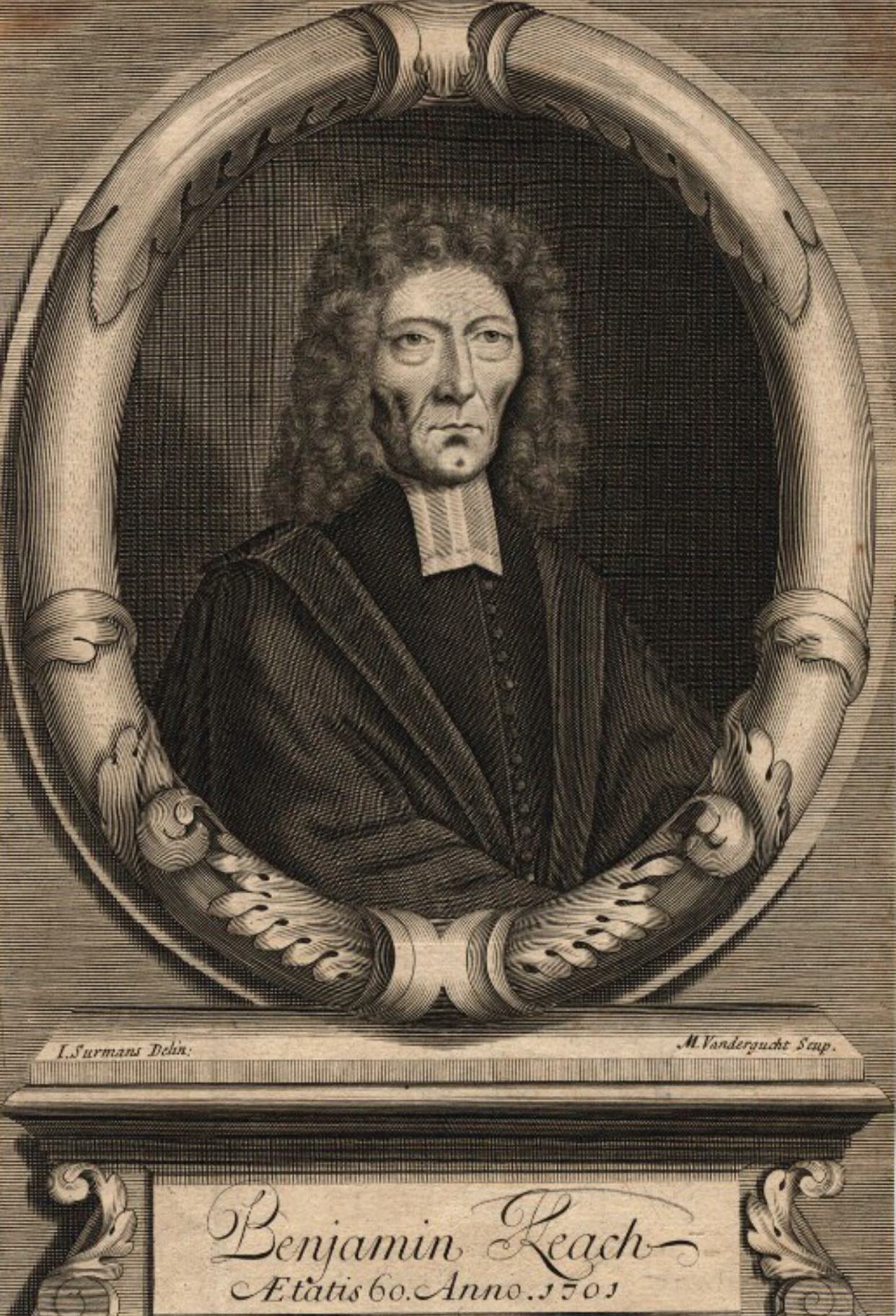
In Benjamin Keach's article titled "XI. of Metaphors Taken from Minerals, Plants, and Living Creatures," the main theological topic addressed is the use of metaphors from the natural world to convey deep spiritual truths in Scripture. Keach identifies a range of metaphors derived from minerals, plants, and living creatures, explicating their meanings and biblical applications. Specific Scripture references, such as Psalms 12:6, Isaiah 1:22, and 1 Peter 2:5, serve to elucidate how elements like gold, silver, seeds, and olive trees symbolize the gospel, spiritual truths, and the nature of God's people. The significance of these metaphors lies in their ability to illuminate the character of God, the transformative power of the gospel, and the spiritual realities of the Christian life, inviting believers to reflect on their identity in Christ.
Key Quotes
“Gold signifies the pure doctrine of the gospel as silver and precious stones do...”
“A plant... signifies the word of God by the power and virtue of which a man is new-born and becomes an acceptable tree or plant to God.”
“The ministers of the Gospel... preserve men from being putrified in sin.”
“The church of Christ... is called a garden enclosed or barred.”
What does the Bible say about metaphors in scripture?
The Bible uses metaphors extensively to convey spiritual truths, with elements from nature, such as minerals and plants, symbolizing deeper concepts.
1 Corinthians 3:12, Psalm 12:6, 1 Peter 1:23, Isaiah 61:3
How do we know that the metaphors in the Bible are meaningful?
Metaphors in the Bible are meaningful as they are inspired by God to illustrate complex truths about His nature and our relationship with Him.
Psalm 23, Galatians 6:7-9
Why is understanding biblical metaphors important for Christians?
Understanding biblical metaphors enhances spiritual growth and deepens one's relationship with God by revealing profound truths.
Matthew 5:13-16
OF METAPHORS TAKEN PROM MINERALS, PLANTS, AND LIVING CREATURES.
COMPOUND bodies, according to the physical distinction, are either inanimate or animate.
Inanimate are metals, stones, and concrete juices, as salt---
Animate are either vegetative, sensitive, or rational.
Of the first kind are plants, or things growing out of the earth.
Of the second kind, brutes.
Of the third kind, men and women. Of which distinctly and in order.
Metaphors taken from inanimate Bodies.
Gold metaphorically signifies quoad naturalia, as it respects naturals,
(1.) A clear and shining liquor like gold, viz., pure oil, Ec 4:12.
(2.) Serenity of sky, when it is of a yellowish red, Job 37:22, "Fair weather cometh out of the north"---in the Hebrew, it is gold cometh out of the north, that is, as Schindler says, "a clear air without clouds," or a wind pure as gold, and purifying the air, making it as pure as gold: the north wind, hence called by Homer, aiqrhgenithv, the causer of serenity. The Septuagint render it, nefhsaugounta, clouds shining like gold.
As it respects spirituals, gold signifies the pure doctrine of the gospel, as silver and precious stones do, 1Co 3:12. Also the grace and benefits of Christ our Saviour; or, which is the same thing, true wisdom received by the word of Christ, Re 3:18; and even life eternal, Re 21:18.
Silver is taken or put for an excellent or very fair thing, whence the word of God is said to be as silver tried in a furnace of earth, purified seven times, Ps 12:6, where respect is had to its great purity. Hence our Saviour is said, Mal 3:3, "To be a refiner and purifier of gold and silver," that is, to institute a repurgation of his heavenly doctrine. The phrase in Isa 1:22, "Thy silver is become dross," denotes corrupt doctrine, and a depraved life. The rebellious people of the Jews are called reprobate silver, as if it were said; overmuch corrupt, and therefore good for nothing but to be reprobated, or cast away.
The excrements of silver, as dross, tin, and lead, denote idolaters, wicked and reprobate people, Isa 1:25, (see Ps 119:119; Pr 25:4-5; Eze 22:18, and the following verses, XXXX a fragment, or (by a syllepsis) fragments, Isa 1:28, are called the particles or refuse, of that dross, with which the prophet compares the wicked, because, like that, not to be healed, &c.
Brass and iron denote hardness and solidity, De 28:23; Isa 48:4; Jer 1:18; Mic 4:3. Iron also denotes great troubles and crosses, if a furnace (which because of the fire it contains, is a symbol of calamity) be added, De 4:20; 1Ki 8:51. The like is to be understood if it be added to a yoke, as De 28:48, and to a rod, Ps 2:9; each of which by itself, signifies a iction.
There is an obscurer place, Jer 15:12, "Shall iron break the northern iron, and the steel or brass?" which some expound, that the northern enemy, viz., the Assyrian army was plainly invincible. Others on the contrary, that there would assuredly come another enemy, who should break and chastise the Assyrians, to wit, the Persians, &c. Vatablus chooses the former sense, "By the first iron understanding the Jews: he compares, says he, the strength of the Jews to pure iron and the strength of the Chaldeans to iron, which is mixed with much steel, and therefore stronger: as if he had said, shall the Jewish iron sword break the Chaldean, well-tempered with iron and steel? No; iron and brass, he calls iron mixed with brass, that is steel."
Junius and Tremellius take it as a confirmation of the foregoing promise, verse 11, which God made by the prophet, that he would defend them from the hostility of the Chaldeans, and would make them intreat them well; and therefore they expound "the first iron, the Chaldeans, and the latter iron and brass, (that is steel from the north of Chalybes, for there was a people of that name in the northern parts of Pontus, from which Chalybs or steel, took its name, as Virgil in the 2nd book of his Georgics, and Strabo in his 12th book of Geography, witness) Jehovah himself; as if he (viz., Jehovah) had said, these are iron, but I, who interpose or come to relieve thee am a wall of steel to thee; therefore you have no cause to fear, that you should be broken by those enemies."
It is said, Isa 60:17, "For brass I will bring gold, and for iron I will bring silver, and for wood brass, and for stones iron,"--which signifies the restoration or redemption of mankind, and the change of the legal into an evangelical dispensation by the Messiah.
A Stone, if transferred to a man, sometimes denotes a great stupidity of mind, 1Sa 25:37: sometimes hardness of heart, and the state of the sinner before conversion to God, Eze 11:19; 36:26. To which the contrary is, that such as are converted and believe are called living stones, 1Pe 2:5, with respect to Christ, who is called the precious and elect stone, upon which they are spiritually built, Eph 2:20-22. This word stone is also used in a good sense, Ge 49:24, "But his bow abode in strength, and the arms of his hands were made strong, by the hands of the mighty God of Jacob; from thence is the shepherd, the stone of Israel:" that is, Joseph stood and was sent by the most powerful God to feed Israel and his family as a pastor, and to prop them as a stone, to wit, when he supplied and preserved his father's whole house from Egypt. Some think that this man of God did prophesy of times to come, and that by pastors we should understand prophets, and by a stone, eminent kings and princes that were to come of the family of Joseph among the people of Israel, which people they were to lead forth, and teach, and to support them, as a rock or foundation-stone supports a building.
It is said, Ec 12:3, that Jerusalem will be made "a stone of burden for all people;" upon which words Jerome notes, "Formerly in little villages, little towns, and little castles, they were wont to place round stones of great weight, which the youth for exercise sake, were wont to strive who could lift them highest; some could lift only to their knees, some to their navels, some to their shoulders and head, some (that made an ostentation of their strength) with erected hands, threw them over their heads," &c. Hence the prophet alludes (say they) that if any nations will adventure to assault the church, to remove it from its place, and toss it at their pleasure, they shall sink under their burden, and be even crushed to pieces; even by the power and strength of the chief corner-stone of the church, Lu 20:17-18.
From quarries of stone an elegant metaphor is taken, Isa 51:1, "Look unto the rock whence ye are hewn, and to the hole of the pit whence ye are digged." He speaks of the godly Israelites sprung from Abraham and Sarah, as verse 2. The reason of this metaphorical phrase, Junius and Tremellius fairly deduce from the argument of this chapter. "Thus Christ argues, I promise that I will comfort and restore the church, although it be wasted and almost nothing, verse 3; and that you may the easier believe this, remember that ye are come of parents, that had never begot children, if God by his powerful word (as a hammer breaks stones out of a rock) had not done it: and therefore you who are in the same covenant, are to experience the same virtue and power of God." See Eze 4:1; Ex 24:10; Pr 17:8,23.
More especially there is a metaphorical mention of gems in the description of the glory and the inward splendour of the church of Christ, Isa 54:11, "Behold I will lay thy stones with fair colours, and lay thy foundation with sapphires"---And verse 12, "I will make thy windows of crystal, and thy gates of carbuncles, and all thy borders of pleasant stones," that this relates to the New Testament times, appears by the following words, verse 13, "And all thy children shall be taught of the Lord," which words, Joh 6:44-45, are cited by Christ, application being made to his church. Its foundation is said to be laid in sapphires and carbuncles, that is, in the true knowledge of Jesus Christ, who is the only foundation of the church, Mt 16:16,18; 1Co 3:12; Isa 54:11, and withal the most precious and resplendent gem. It is expounded, Isa 54:14, "In righteousness, shalt thou be established," which is the righteousness of Christ applied by true faith in order to salvation. Its windows are said to be of crystal, by which the apostles, evangelists, and other faithful preachers of the word of God, and their sacred preaching of Jesus Christ, are to be understood, through which, as by crystalline and most transparent windows, heavenly light gets into the church. It's gates are said to be of carbuncles, (a gem of a flaming colour which derives its name from XXXX kindling,) by which the continual preaching of the word is understood, that door of utterance, Col 4:3; 1Co 16:9, "The gates that shall be open continually," Isa 60:11, by which such as enter are enlightened as by a sparkling gem, and kindled by a divine fire, Lu 24:32, "Did not our heart burn within us?" &c.
Lastly, "All its borders are said to be of pleasant stones," that is, most lovely and desirable; by which the amplitude or largeness of the Church of Christ, gathered by the preaching of the Gospel in the whole world, built upon Christ himself, and his saving knowledge, is understood. But we must observe, that these things are to be most completely fulfilled in the heavenly Jerusalem and life eternal, as in its description, Re 21:10-11,18, (&c.) appears.
By the metaphor of a pearl the saving word of God is expressed, Mt 7:6, so the kingdom of heaven, that is, the church gathered by the word, is compared to a pearl, Mt 13:45-46.
An adament or diamond XXXX Adamas (a precious and most hard stone) is brought to denote the depravity and diabolical hardness of man's heart, Ec 7:12.
Salt, that good creature of God, so called by the Evangelist, Lu 14:35, because of its virtue to preserve from putrefaction; and season, or give a relish unto meat, is by a metaphorical translation applied sometimes to the apostles, and other teachers of the word of God, Mt 5:13, whose office it is to take care that by sound doctrine, and a blameless example of life, their auditors he preserved from any corruption, as well in the fundamentals of religion, as also, (as far as may be,) from any blemish in external life and conversation. For as salt applied to meat consumes the depraved or corrupt humours, and so preserves from putrefaction; so the ministers of the Gospel by sound doctrines, and by a prudent application of legal reprehension preserve men from being putrified in sin, and are instruments to make them savoury, that is, that they may please God, and so obtain (through his mercy in Christ) eternal blessedness.
Theophilact [1] on Mr 9:50, says, "that as salt hinders the generation of worms in meat; so the preaching of the Gospel, if quick and home, seasons carnal men so that the worm of restlessness shall not generate in them."
[1] Quemadmodum sal carnes cohibet, &c.
Sometimes it signifies wisdom and prudence, Mr 9:20; Col 4:6; upon which Illyricus, "Wisdom keeps the actions, lives, and manners of men, from any fault, as salt does flesh and other things: and makes life, manners, and speech grateful and acceptable to all, as salt gives a grateful relish to meat."
To this speech seasoned with salt, "corrupt communications" are opposed, Eph 4:29, that is, obscene, foolish, or impious talk, which for the want of this spiritual salt, as it were, stinks, and is unsavoury to God and holy men. What we translate Job 1:22, "In all this Job sinned not, nor charged God foolishly," is (word for word) in the Hebrew thus, "In all these Job sinned not, nor gave unsavouriness [2] against God," viz., sinful words, as the Chaldee renders it. Impiety is noted by the same word, Job 24:12.
[2] XXXX insulsitas, unsavourness.
We have mention of a "covenant of salt," Nu 18:19; 2Ch 13:5; which signifies that which is lasting and perpetual; the reason of this speech is, because things salted last very long and do not putrify. See Luth. Marginal. School, in Nu 18:19
Sulphur or brimstone joined with fire, denotes most heavy punishments, De 29:23; Job 18:15; Ps 11:6; Isa 34:9; Eze 38:22; hence it is put in the description of hell, Isa 30:33; Re 14:10; 20:10; 21:8; all which places (some say) allude to the destruction of Sodom and Gomorrah by fire and brimstone, Ge 19:24.
Metaphors taken from things growing out of the Earth.
THINGS growing out of the earth are to be considered distinctly, with respect to their parts, as also with respect to their kinds and species. The parts are these,
1. Seeds, of which a plant grows, metaphorically signifies the word of God, by power and virtue of which a man is new-born, and becomes an acceptable tree or plant to God, (Isa 61:3,) 1Pe 1:23, "Being born again, not of corruptible seed, but of incorruptible, by the word of God which liveth, and abideth for ever," 1Jo 3:9, "Whosoever is born of God, doth not commit sin; for his seed remaineth in him; and he cannot sin because he is born of God," which is expounded, Ps 119:11, "Thy word have I hid in my heart, that I may not sin against thee;" and Lu 8:15, "But that sown in the good ground, are they, which in an honest and good heart, having heard the word, keep it, and bring forth fruit with patience." To this may be compared the 5th and 11th verses of this chapter, where it is expounded, that the seed is the word of God.
By the same metaphor, it is called logov emfutov, sermo insititius, "the engrafted word," Jas 1:21, (mention being made of regeneration, verse 18,) that is, which God by the power of his Spirit, does, as it were, sow and plant in the hearts of men, that it may take root there, and bring forth fruit acceptable to God.
(1.) Seed as to outward appearance is but a mean thing, neither is its virtue apparent or visible: so the word of God is much despised and contemned in the world, 1Co 1:21.
(2.) Good seed, cast into good ground, does germinate, and put forth a plant, by whose virtue and power it continues its kind: so the word of God, received in a good heart, makes a man such as itself is, that is, spiritual, and quickened with a divine life, because that seed "is spirit and life," Joh 6:63.
(3.) That seed may grow, there is need of the sun's heat, and rain or dew: so God himself gives increase to the seed of the heavenly word, 1Co 3:6-7, "The sun of righteousness" influences it with his celestial heat, and waters it with the rain or dew of his Holy Spirit, Isa 44:3, (&c.)
When the verb to sow is attributed to God, it denotes a multiplication of blessings to men, Jer 31:27; Ho 2:23; Ec 10:9, to which the phrase, Na 1:14, is contrary, "The Lord hath given a commandment concerning thee, that no more of thy name be sown," that is, thou shalt be slain, and shalt perish without recovery.
When attributed to men, it signifies such things as are done in our life-time, from which good or evil is to be expected. And so expresses either the exercise or practice of piety or impiety. Examples of the former are to be read, Ps 126:5-6; Pr 11:8; Ho 10:12; 2Co 9:6; of the latter, Pr 22:8; Job 4:8; Jer 4:3; Ho 8:7; of both, Ga 6:8-10.
When it is said of human bodies that they are sown, it denotes their death and burial, 1Co 15:42-44, to which the resurrection from the dead is opposed; for the apostle metaphorically changes the word speaking, verse 36, of the seed as of the body: but here of the body as of seed.
A root, which is the basis or lower part of the plant, and the principle or beginning of ancretion, is put for any original or foundation of a thing, De 29:18; Isa 14:30; Ro 11:16-18; 1Ti 6:10; Heb 12:15; and for a prosperous state of things, Job 29:19. Hence comes the phrase, to take root, or to root, that is, to be in a good condition, or to multiply or thrive in any outward blessing, Job 5:3; Ps 80:9; Isa 27:6; 37:31; Jer 12:2. And, on the contrary, the "drying up of the root," denotes the destruction of the wicked, Job 18:16; Isa 5:24; Ho 9:16; Mal 4:1.
More especially "the roots of the feet," for so it is in the Hebrew, Job 13:27; but in our English translation, "heels of my feet," an exposition rather than a translation, signify the heels or knuckle bones, because they are the lowest part, as a root is to a plant. The root of Jesse, Isa 11:1, seems to note the patriarchs from which Jesse and David were sprung.
To be rooted, is spoken of the mystery of our regeneration, and a corroboration or strengthening in faith and piety is signified thereby, Eph 3:17; Col 2:7, to which we may fitly compare Job 19:28, "But ye should say, why persecute we him, seeing the root of the matter is found in me?" that is, when rooted by faith in God I keep mine integrity, as Junius and Tremellius expound it.
A branch, with many synonymous terms, is frequently proposed in allegories, signifying by the similitude of a growing, green, and thriving tree, prosperity; and, on the contrary, by the similitude of a withering tree, misfortune, and calamity, Ge 49:22; Job 15:32; 29:19, (where XXXX, signifies a branch, as chap, 18:16,) Ps 80:10-11; Isa 25:5; Eze 17:6, (&c.,) and Eze 31:3, (&c.,) Mal 4:1, (&c.) By the term branches, Paul understands the Israelites of that time, Ro 11:16-17, (&c.,) who were descended (or proceeded) of the first patriarchs as from a root. The Church is called the "branch of God's planting," Isa 60:21, because, (as it were planted in Christ the tree of life,) he has a singular love and care for it, vegetating, comforting, and preserving it, by his Spirit, and at last eternally saving it.
A leaf, because it easily falls and withers, carries the notion of vileness and vanity, Job 13:25-26; but in regard the leaves of some trees are always green, under the similitude of such a tree, eternal life is described, Eze 47:12. See Re 22:2; also the righteous, who are heirs of eternal life, Ps 92:12-14, with Ps 1:3; 52:8.
The greenness of leaves is called a budding or germination, which word (viz.,[3] XXXX) is by a metaphor brought to signify, sometimes natural things, as "the hairs of the head and beard," Le 13:37; 2Sa 10:5; Jg 16:22; Eze 16:7. The word flourishing, reviving, or more properly growing green again, is elegantly translated, Php 4:10, to signify the mind of man stirred up by love and benevolence to do good. On the contrary, to "be dried up or withered," is put for death, or being taken away, Joe 1:12.
[3] Dicitur proprie de terræ nascentibus et plantis.
A flower denotes prosperity, Isa 5:24. See Job 15:33. But because a flower is easily cut down, and withered, it is put for any thing that is frail, uncertain, or transitory, Isa 28:1,4; Ps 103:15-16; Jas 1:10-11; 1Pe 1:24; Isa 40:6-8.
To flourish is put for a prosperous state of men, Ps 72:7,16; 132:18; Pr 14:11; Isa 27:6; Ho 14:8. See also Isa 66:14; Eze 22:24. What is said. Eze 7:10, "The rod hath blossomed; pride hath budded;" is understood by most interpreters of the king of the Assyrians, now growing to the height of his empire and authority, and preparing to besiege Jerusalem. The Chaldee, "The empire flourishes, and the wicked is got up." But Junius and Tremellius refer it to the people of Israel, translating it thus, "That tribe flourishing did bud out pride, for XXXX signifies both a rod and a tribe"---to flourish is also used of ulcers and leprosies, Ex 9:9-10; Le 13:39, (&c.)
Fruit, the metaphorical acceptation of this word is well known, and obvious every where, viz., that it is put for the consequent or effect of a thing, whether for good or evil: It is put for the consequent reward of godliness, Ps 58:11, "Verily there is a fruit for the righteous," (so the Hebrew.) The Chaldee, "certainly there is a good reward for the just." So Isa 3:10; Heb 12:11; Jas 3:18.
It is put for the punishment of impiety, Jer 6:19, "Behold I will bring evil upon this people, even the fruit of their thoughts, because they have not hearkened unto my words, nor to my law, but rejected it." The Chaldee says, "the retribution or reward of their works."
Good or evil works, are also called fruits, the good so called, Mt 3:8, see Ac 26:20; Ro 6:22; Ga 5:22; Eph 5:9; Php 1:11. Bad works, so called, Isa 10:12; Jer 21:14; Ro 6:21. The reason of the metaphor, is, because godly and wicked men are compared to good and bad trees, of which the one bring forth good, the other bad fruit, Mt 3:10; 7:16, and the following verses, chap. 12:33, Jude 1:12.
Hence the verb to fructify, is put for the study of piety and good works, Ho 13:15; Lu 8:15; Ro 7:4; Col 1:10; and inasmuch as that is the effect of the word of God, implanted by faith in the hearts of men, therefore fructifying is attributed to it, Col 1:6. Hence the apostle Paul says, Ro 1:13, "Now I would not have you ignorant, brethren, that oftentimes I purposed to come unto you, (but was let hitherto,) that I might have some fruit among you also (or in you)," &c.; that is, that it may appear to me when present, to the comfort of my spirit, that the gospel is as fruitful among you, as others. As good masters repute that fruit theirs, when their disciples have commendably profited under their teachings. On the contrary, "to bring forth fruit unto death," is to be given up to wickedness, and perpetrate all evil works, Ro 7:5.
By another metaphor the word preached is called the "fruit of the lips;" Isa 57:19, "I create the fruit of the lips," the Chaldee, "the speech of the lips," as the verb to fructify is put for speech, Pr 10:31; Ec 9:17; so to be unfruitful is attributed to such as want faith, Tit 3:14; 2Pe 1:8; to evil works, Eph 5:11; to the word of God, where it is not rightly received and kept, Mt 13:22; Mr 4:19.
Hitherto we have treated of some parts of things growing out of the earth: now we shall proceed. 1. Generally. 2. Specially, of the rest, which we shall reckon in order.
A plant if attributed to God, his church and believers are to be understood, Isa 5:7; 60:21; 61:3; Eze 34:29. Hence Mt 15:13, "Every plant which my heavenly Father hath not planted, shall be rooted up," which denotes such as are heterodox, impious, or hypocritical, in the garden of the church, or in its outward communion without the root of the matter. The word planting attributed to God is sometimes taken generally, and signifies to form or make, Ps 94:9, "He that planted the ear, shall he not hear;" that is, he that formed it. Sometimes specially; and signifies to carry on, bless, and increase with felicity, Ex 15:17; 2Sa 7:10; Ps 44:2; 80:8; Isa 40:24; Jer 12:2; 18:9; Eze 36:36; Am 9:15.
On the contrary, to pluck up is put for to take away blessing, to destroy and punish, De 29:28; 2Ch 7:20; Jer 18:7; 31:28; Am 9:15.
Sometimes this plantation is most especially put to signify the restoration made by Christ, and the sanctification of men to life eternal, Isa 51:16; Ps 92:13-14; Ro 6:5; to which belongs the term engrafting, Ro 11:7,19,23-24, put for the communion of saints in the church. And in regard these things are effected by the preaching of the word of God, therefore planting, (and watering, necessary thereunto) is attributed to the ministers thereof, 1Co 3:6-8, where there is a most elegant subordination of these planters and waterers to ton aucanonta, him that gives the increase, viz., Jehovah, who by the ministry of the word effectually operates or works out, the faith and salvation of men. To plant is said of a tent or tabernacle, because the chords of a tent are fastened to stakes fixed in the ground, as plants are fixed, &c., Da 11:45.
A tree is often used by way of similitude; but in a metaphor, which is a short or concise similitude, sometimes it refers to man, Jer 11:19; Isa 61:3; Eze 17:24; Mt 3:10; 12:33; Jude 1:12, by which is signified his condition whether good or evil. Sometimes it relates to some certain, wholesome, or profitable thing, called for that reason the tree of life, Pr 3:18; 11:30; 13:12; 15:4.
More especially some certain names of good trees are put, Isa 41:19; 55:13; 60:13, to signify the amenity or pleasantness of the kingdom of Christ, and the variety of its heavenly gifts, Ec 11:1-2. Men of various or indifferent estates in Israel; cedars, fir-trees, oaks, the trees of the wood are expressed by name, By cedars and oaks mentioned, Isa 2:13, the nobility and great ones of the kingdom who were proud and elevated, are noted. Hence the Chaldee renders it, "The kings of the people strong and mighty, and the tyrants of the provinces." The royal family of David, from whence Christ according to the flesh was descended, is proposed by the allegory of a cedar, Eze 17:22. "The lopping off boughs, and cutting down the thickets of the forest," denotes the destruction of the people, Isa 10:18,33-34; 40:24; Ec 11:1-2.
That part of a cut tree, which is left above the earth is called the stock, stem, or trunk.[4] Which word is metaphorically translated, to denote the mean and humble original of Christ according to the flesh, or his temporal nativity from the progeny of David, Isa 11:1, "And there shall come forth a rod out of the stem of Jesse, &c."
[4] XXXX stripes, truncus.
A beam dokov, and the disparate term karfov, a mote, (which is a small splinter flying out of a cleft piece of wood; Hesych. & Athen. Lib. 13) are used to express the difference and degrees of sinners, Mt 7:3-5, where Christ allegorically demonstrates the craft of calumniators, who are mighty curious and inquisitive into the failings or infirmities of others, (although slight like motes,) but very blind and dull in examining their own faults, (though grievous, great and weighty, like a beam.) Here we have also an admonition concerning our duty, which is first to search our own wallet, which hangs at our back, and having well shaken it, and cleared it, we may proceed to the examination of our brother's crime.
Thorns sometimes signify wicked and mischievous men, Numb, 33:55, Jos 23:13, (in which the enemies are emphatically called "thorns and prickles in their eyes;" that is, such as are of all things most troublesome and hurtful, so as that the eyes cannot endure, so much as a little chaff, mote, thorn, or prickle, without horrible torment,) Ps 58:9; Isa 9:18; 10:17; 27:4; Eze 2:6; 28:24. See also because of the similitude, 2Sa 23:6-7; Isa 33:12; Na 1:10; Mt 7:16; Lu 6:44, (&c.) Sometimes thorns signify impediments met withal, Ho 2:6, "I will hedge up thy way with thorns," &c. Jer 4:3; Mt 13:7,22.
A reed is a weak shrub, easily agitated or shaken by a small gust of wind, 1Ki 14:15; sometimes denotes men that are inconstant, light, and of a doubtful faith, Mt 11:7; Lu 7:24; sometimes men afflicted and penitent, called a "bruised reed," Isa 42:3, viz., a reed of itself frail and weak, is much more weak if it be shaken and bruised. Our Saviour therefore promises that he will not by any means break such, but rather strengthen, consolidate, and heal them.
Sometimes it signifies men, great indeed, but unable to help, that are more mischievous and nought, on which some are apt to rely or depend, though to their loss, as such do, who lean on a weak and broken reed, to their own destruction, 2Ki 18:21; Isa 36:6; Eze 29:6-7. A rush or bulrush signifies men of the basest and lowest condition, Isa 9:14; 19:15.
Wormwood, because of its ungrateful taste and extreme bitterness, is by a metaphor brought to signify sometimes sin and evil, De 29:18; Am 5:7; 6:12. See De 32:32; Isa 5:20; Re 13:11. Sometimes punishment or torment, Jer 9:15; 23:15; La 3:15,19. See Pr 5:4.
So much of the species of things growing out of the earth, which yield any metaphors, to which we may fitly subjoin, where mention is made of the containing subject; which is,
(1.) A wood.
(2.) A garden.
A wood, inasmuch as it contains many barren trees, is a symbol of infidelity and impiety, Isa 32:15; and because it is full of trees and shrubs, it carries the notion of an entire army, Isa 10:34, of both of which we have spoken before in the 10th chap., where we spoke of Carmel and Lebanon.
A garden is the place of the most eminent and choicest plants and trees, especially that first garden which we call Paradise. The church of Christ, Song 4:12, is called "a garden enclosed" (or barred.) A garden, because of it's spiritual fruitfulness; barred because hid to the world, "hid with Christ in God," Col 3:3, "The world knoweth us not," 1Jo 3:1. The same church with its fruits of the Spirit, verse 13, is called Paradise. Of which elsewhere.
Heaven, or eternal life is called paradise, Lu 23:43; 2Co 12:4; Re 2:7; the reason of the metaphorical appellation being drawn from the extraordinary pleasantness of that garden, and the great plenty of good things there.
Metaphors taken from the Olive Tree and its fruit.
Amongst the things growing in the land of Canaan, three are most eminent, by which its goodness, fruitfulness, and other excellencies may be known, viz., the olive, which is a tree---the vine, which is a shrub---and grain or corn of all sorts. All which are joined together, De 14:23; 18:4; Ps 104:14-16, (&c.,) Jer 31:12; Ho 2:8,22; Joe 2:19, and in the common version, Ge 27:37; Ps 4:7-8, where the Syriac interpreter expresses all three.
From each of these, and things that bear affinity or relation to them, there are a great many delicate metaphors deduced in Scripture.
The people of Israel are called an olive, because of the great dignity with which they were invested by God, Jer 11:16, "The Lord called thy name, a green olive tree, fair, and of goodly fruit;" as if he had said, thou hast been like a green and leafy olive, which most beautifully flourishes, giving extraordinary hope of its fruit. But the antithesis follows---"With the noise of a great tumult, (or tempests,) he hath kindled fire upon it, and the branches of it were broken; that is, as Junius and Tremellius have interpreted it, "They shall be like encountering storms of winds, which rushing into this place shall shake down the flowers, break the branches, that is, they will destroy small and great. Afterwards they will consume with fire the very town, as if it were the stump of a tree. That these things Were transacted, the last chapters of the Kings, Chronicles, and Jeremiah do fully make it out; verse 17, this olive is said to be "planted by the Lord," &c.
Ec 4., what are called "the two olives," verse 3, 11, 12, are said to be the "two sons of oil," so the Hebrew, verse 14, that is, two olives, plentiful, fat, having as it were, a spring of oil, continually flowing. This metaphor signifies the perpetual supplies of spiritual gifts to the Church through Christ, who was beyond measure anointed "with the oil of gladness," Ps 45:7, from whom believers have this unction, 1Jo 2:20,27. But this was spoken to in the chapter of anthropopathy.
Ro 11:17, "the church of Israel" is called an olive, eminent for fatness, whose root Abraham may be said to be, with respect to the covenant God entered into with him, and the promise of a blessed seed, divine benediction, and eternal life, made to his believing posterity, (that is, his sons by faith, who believe as he did, such being only the sons of Abraham), whether Jews or Gentiles, Ga 3:29. This being observed, it is easy for any one to understand why the Gentiles are compared to a wild olive, and what this engrafting into the olive is; and the partaking of its root and fatness, (that is, the fatness proceeding from the root, and diffused to the branches, by the hendiadys) as also the cutting off the branches.
Re 11:4, "the two witnesses" raised by God (by whom those sincere few teachers of the Church, in the midst of the antichristian tyranny and fury preserved by God, are understood, expressed by the number two, because "In the mouth of two or three witnesses shall every truth be established," De 19:15; 2Co 13:1,) are called "two olives and two candlesticks standing before the God of the earth." In the former metaphor we are to understand the consolation of the word of God, given by the Holy Spirit, the oil of gladness, as also fruitfulness in good works, as the olive is a most fruitful tree; and constancy and perseverance in the faith under persecutions, as the leaves of the olive do not wither, but are always green, and the wood of the olive-tree never rots through age. In the latter metaphor divine illumination from the word of God is understood; that this is taken from the fore-cited place of Ec 4. is evident.
Oil, the fruit of the said tree, is much valued, and much used amongst all sorts of people and nations. In scripture-metaphors, sometimes it denotes an abundance of pleasant and acceptable things, De 32:13; Job 29:6. Sometimes joy and refreshment of mind, if considered with respect to the anointing, Ps 92:10; 141:5; Song 1:3; Isa 61:3. The reason of the metaphor is taken from the fragrancy and wholesomeness of this fruit. From hence we may in a manner give a reason for the name of Christ and Christians, it being derived from the unction or anointing of the Holy Spirit, which is compared to oil.
Isa 10:27, there is mention made of oil, "And it shall come to pass on that day, that his burden shall be removed from off thy shoulder, and his yoke from off thy neck, and the yoke shall be destroyed from the face of oil, or from before the oil"---which the Chaldee expounds of the Messiah; Junius and Tremellius follow that expression: "Propter oleum, because of the oil, (or anointing,) that is, thou shalt be delivered by Christ, or for the sake of Christ, in whom rests the Spirit of Jehovah, who anointed him, chap. 61:1." The cause of that deliverance and vengeance is intimated, viz., the promise sometimes made to this people, of sending Christ to them, who is signified by the word oil, because he was to be anointed with, "the oil of gladness above his fellows," &c.
Metaphors from the Vine, &c.
A vineyard, the place where vines are planted, in a continued metaphor and parable signifies the Church as well of the Old as New Testament, Song 8:11-12; Isa 3:14; 5:1, (&c.,) Isa 27:2-3,6; Mt 20:1, (&c.,) of which pleasant similitude many have written much. The quiet or free plantation of vineyards, exhibits the notion of spiritual peace in the kingdom of Christ, Isa 65:21-22. See De 28:30,39; 1Ki 4:25; Mic 4:4, (&c.)
A vine sometimes signifies good, sometimes evil. Examples of the former are to be read, Ps 80:8-9, (&c.,)_Isaiah 5:2,7; Jer 2:21, where the people of Israel introduced into the land of Canaan, received as the people of God, that they may serve him constantly in righteousness and piety, is understood. But this becomes degenerate, offending God with foul idolatry and impiety; all which by the metaphor of a vine, well planted but much corrupted, is expressed in the two last places.
It is taken in an ill sense, De 32:32-33, where mention is made of a vine, grapes, clusters, and wine, expressing the cruel abominable wickedness of sinners.
Expositors are not agreed in what sense to take a vine, Ho 10:1; but the most proper interpretation seems to be this, "Israel is an empty vine," that is, it plentifully brings forth fruit like a luxuriant vine, as if it would at once empty itself of all its fruit. Yet it produces not good but bad fruit (it is the vine of Sodom and Gomorrah, De 32:32-33, plentifully bringing forth wild grapes, Isa 5:2,) for it follows, "He bringeth forth fruit unto himself: according to the multitude of his fruit he hath increased the altars, &c. See metaphor of a vine in the second book.
The phrase to sit under his own vine and fig-tree, is a description of security, peace, and tranquillity, 1Ki 4:25; 2Ki 18:31, for the Jews were wont to love their vines and fig-trees beyond any other trees; partly for the sweetness of the fruit, Jg 9:11,13, and partly for the conveniency of the shade. For (as Pliny[5] calls them,) branched or spreading vines, or (as Columella, Lib. 3:cap. 2, calls them,) such as are perched upon rails or galleries in the form of an arbour, covering it on all parts, do afford a cool and delightsome shade, for repose or bauquetting.
[5] Lib. xvii. Cap. 2. vites compluviatæ
As to the fig-tree, (as Pliny[6] has it) its leaf is very large, and consequently very shadowing, which may be gathered also from Ge 3:7.This phrase "to sit under his own vine and fig-tree" is metonymical, inasmuch as it is a sign of public peace and tranquillity; and synecdochical, inasmuch, as by these two species of trees and plants, all sorts of vineyards, gardens, fields, &c., are understood: but metaphorically the inward and spiritual peace of the kingdom of Christ is expressed by it, Mic 4:4; Ec 3:10, (&c.)
[6] Lib. xvi. Cap. 29
Wine, and new wine, signify as well the effects of divine mercy and grace, as of wrath and vengeance. Examples of the former are to be read, Pr 9:5; Song 2:4; Isa 4:1; Joe 3:18; Ec 9:17; in which places by the metaphor of wine, the blessings or benefits of the kingdom of Christ are expressed; which are righteousness, peace, and joy in the Holy Spirit. As natural wine is said "to cheer or make glad the heart of man," Ps 104:15, and that "it cheers the heart of God and man," Jg 9:13; so Jehovah is (as it were) cheered and delighted, with the conversion, faith, and piety of men, Isa 62:5.
Examples of the latter are to be read, Ps 60:3; 75:8, Illyricus says, that "by this similitude he signifies most heavy afflictions," &c. Re 14:10; 18:6, (&c.;) Isa 1:22, "Thy wine mixed with water," denotes the corruption of all orders in Israel, as the foregoing and following words show. The Septuagint renders it oi kaphloi, sou misgousi ton oinon udati, "thy taverners mix wine with water," from whence they say that metaphorical speech of Paul is deduced, 2Co 2:17, "For we are not as many, kaphlenontev, ton logon tou Qeou, taverning the word of God." This word kaphleuein (which our Bibles render corrupting the word of God) is very emphatical,[7] it is a metaphor taken from hosts, victuallers, innkeepers, or rather tavernkeepers, who corrupt and adulterate their wines;[8] by which the apostle elegantly inculcates two things,
[7] Arct.
[8] Dr. Selat.
(1.) Their adulterating the word of God by the mixture of their own fancies.
(2.) Their covetousness and study of filthy gain.
The verb kaphleuw is properly understood of wine-sellers, and is metaphorically translated to signify deceitful dealing, as it is expounded, 2Co 4:2.
Chrysostom Says, touto esti kaphleusai otan tiv noqeuh ton oinon, otan tiv xrhmatwn pwlh oper dorean edei dounai, in English, this is, (cauponari, to tavern, when any one adulterates wine, hen any one sells a thing of that kind for money, which he ought to give freely. The Syriac renders it, for we are not as the rest who mix, (or adulterate by mixtures, the of God, &c. Jer 23:28; 1Ti 6:5; 2Pe 2:3
The dregs or lees of wine are metaphorically used two ways.
1. Either denoting very great calamities, Ps 75:8; Isa 51:17; upon which Illyr icus:[9] "As the cup signifies its part of the cross and castigation, which God in his time distributes or gives out to every one: so the dregs of that draught do signify most bitter part of the calamity or punishment," see Eze 23:32-34.
[9] Sicut poculum, &c.
2. Sometimes signifying secure tranquillity, as Zep 1:12, "I will punish the men that are settled (or concrete, curdled, thickened,) on their lees;" that is, such as with great security, tranquillity, and self-conceited firmness stick close to their wickedness, mocking and deriding both God and men. See Jer 48:11, with Isa 25:6.
A vintage and gleaning, Jg 8:2, "Is not the gleaning of the grapes of Ephraim better than the vintage of Abiezer?" By the vintage he understands the fight itself; by the gleanings, the pursuit of the flying enemy; as if he had said, we Abiezerites have not acquired so much honour by fighting, as you Ephraimites have by your brave pursuit of those we routed, when ye took their leaders, who, had they been safe, (the enemy being not else truly overcome) might easily have recruited their army.
The text, Jer 49:9, is to be expounded by a metaphor, "If the grape-gatherers come to thee, will they not leave (some) gleaning grapes?" The Chaldee renders it thieves or robbers; like grape-gatherers. The same form of speaking, Ob 1:5, (properly to be understood) is proposed by way of interrogation: "If the grape-gatherers came to thee, would they not leave some gleanings?" as if he had said they would; but thine enemies sent by me, will carry away all that is yours, even to the very gleanings, see Jer 6:9. In that symbolical vision, the vineyard denotes the judgment of God against the church's enemies, Re 14:18-19. The reason of this metaphor is, because in a vintage or wine harvest, the vineyard together with its fruit is stripped of all, and left as it were desolate. Hence it is that little gleanings, (small clusters remaining on the vine, after the vintage is over, because hid behind the leaf,) denote a small remnant of people after war or other public calamity, Isa 17:6.
So the verb (racemare,) to glean, (viz., to gather the little clusters after the vintage, Le 19:10; De 24:21,) denotes the destruction of such as survived the former calamity, &c., Jer 6:9, (&c.) Jg 20:45.
A wine-press, (where the grapes are bruised, and the juice squeezed out,) denotes divine vengeance, Isa 63:3; La 1:15; Re 14:19; so Joe 3:13, "Come, get you down, for the press is full, the fats overflow," &c.; this is a divine call to the angels, (or strong ones of God,) to proceed to the execution of his vengeance against his impious enemies---of whom he subjoins, "for their wickedness is great."
Metaphors from Corn, &c.
A field, the place of the production of corn or grain, denotes in a parable the people of God or the Church of Christ, Mt 13:8,23-24,31,38; Lu 8:8,15, to which refers the similitude of the apostle, Heb 6:7-8, whose[10] Apodosis, (reddition, or answering part of the comparison,) is not expressly set down, yet it is tacitly hinted at by the terms rejection, cursing, and burning, verse 8, that is, that unbelievers and wicked men, who like a field untilled bring forth thorns and briars, and act nothing but evil, shall be reprobated of God, cursed and consumed in everlasting fire: whereas, on the contrary, believers and godly men shall receive the blessing of God, because like a fertile field of which he speaks, verse 7. The apostle Paul by a metaphor calls the church, the[11] husbandry or tillage of God, 1Co 3:9, or rather a field, which is spiritually tilled by the apostles and other ministers of the word, as verse 6, 7, 8, is intimated.
[10] apodosiv posterior pars comparationis opposita protasi. Cal.
[11] gewrgion, agricolationcm.
Ploughing is a preparation of the field for sowing; by which calamity and affliction are sometimes noted, Ps 129:3, (see the express similitude, Isa 28:24,26.) The reason is taken from the cutting or (as it were) wounding of the field, by the plough-share. Sometimes the life and actions of men whether good or evil.
Good, as Jer 4:3, "Break up your fallow-ground, and sow not among thorns." Ho 10:12, "Sow to yourselves in righteousness, reap in mercy: break up your fallow-ground," &c.; where by the term ploughing, true repentance, and the culture or dressing of piety is understood: the reason is taken from the end and effect of ploughing, which is to pluck up and destroy thorns, briars, and the roots of bad herbs, and rightly to dispose the field to bear good fruit. Examples are to be read, Job 4:8; Ho 10:13; Pr 21:4.
Jg 14:18, to plough with one's heifer, is to use another's help (where the reason of the continued metaphor is very congruous.) The speech is of the marriage of Samson, whose bride was fitly compared to an heifer, as being now under the same yoke with her husband, from whence the name, Conjugium, or yoke-fellow comes. Hence Horace Lib. ii. Carm. Od, 5, compares a proud and lascivious maid to an untamed heifer, &c.
To plough is properly to turn the divided earth, so as that the inner or under part may be heaved up to the superficies, or stop; and metaphorically (metaforikwv) denotes a search or thorough inquisition into secret or inward things. The sense therefore of Samson's phrase is, that it would be impossible for them to have, found out the meaning of his riddle, unless they had drawn out (by some subtlety) the original and sense of it from his spouse.
Lu 9:62, "No man, having put his hand to the plough, and looking back, is fit for the kingdom of God:" as if he had said (according to Erasmus's paraphrase,) "This is the most arduous and chief business, (viz., of my discipline and Gospel preaching,) that he who once enters into a profession, is concerned by continual care and study to proceed to more perfection, and not to suffer his heart or mind to decline, or draw back to the sordid cares or desires of things past." This metaphor is taken from husbandmen, who are obliged to a continual and uninterrupted care and study, in tilling and ploughing their fields, which agrees well with 1Co 3:9, as before.
Corn and wheat metaphorically denote whatsoever is good and profitable, Ps 72:16, "There shall be an handful of corn in the earth upon the top of the mountains; the fruit thereof shall shake like Lebanon," &c. The sense or meaning is, that in the time of the Messiah, (of whom the whole Psalm treats) all things will be happily and divinely blest, which by the increase, (or multiplication of little corn,) in unfruitful fields, such as by mountain-tops increasing with great plenty, is expressed. See Jer 23:28, "What is the chaff to the wheat? saith the Lord," that is, wherein do the false prophets and their doctrine agree with the prophets and the word of the Lord? The Chaldee expounds it of the righteous or believers: "Behold as chaff differs from the wheat; so the righteous differ from the wicked, saith the Lord." With which exposition, Mt 3:12, and Mt 13:29-30, agree. By wheat, the righteous and believers are understood, to whom in the first place chaff, in the latter tares, that is, impious, unbelieving, and condemned persons are opposed. In the former metaphor, manna rained from heaven is called the corn of heaven, Ps 78:24; because it was like corn or wheat, and was equally useful in point of nourishment.
Harvest is the seasonable time of gathering in corn or any other fruit; from which some metaphors are deduced, and that in a two-fold manner.
1. Men are proposed as the efficient cause or harvest-men. Or,
2. As the object, that is, handfuls or fruits measured.
In the first sense, harvest, answering the expectation or hope of the husbandman, denotes the reward of piety, or the punishment of the ungodly; for as every one sows so he shall reap, Ga 6:7, as the apostle speaks in general terms. And more especially subjoins the harvest and reward of good and bad works, verses 8, 9. The harvest is taken for the reward of piety, Ps 126:5-6, where the state of the godly sowing in this world, and the enjoyment of glory in the heavenly life, by harvest or reaping, is by a metaphorical phrase expressed. See Ho 10:12; 2Co 9:6, (&c.,) Job 4:8; Pr 22:8; Ho 8:7, to set an harvest for any, Ho 6:11, is to seduce to idolatry, &c., and so give cause for being divinely punished, upon which place see Tarnovius in his comment, Junius, Tremellius, and Piscator.
2. Because two things are most remarkable in harvest, viz.,
(1) That corn or fruits, are cut or plucked down, and so wither.
(2.) That they are deposited or placed in barns, &c., to be preserved for use, there arises a two-fold metaphorical notion from the term harvest.
1. To denote the judgments of God, Jer 51:33; Joe 3:13; Re 14:15-17, where it is evident from verse 19, that the wrath of God is noted.
2. The gathering of the church, Mt 9:37-38; Lu 10:2; Joh 4:35,38. In the former places the wicked are (as it were) mowed or reaped clown, and like tares cast into the fire, as Christ speaks of the harvest of the last or eternal judgment, Mt 13:39, (&c.) In the last place the godly are (as it were) placed in a garner fit for use, &c.
Besides what is spoken of harvest denotes the benefit of freedom, (or deliverance) Jer 8:20, "The harvest is past, the summer is ended, and we are not saved;" that is all the benefits of the hoped-for salvation and help fail us, and we consequently perish. For joy is commonly figured in scripture, by harvest and vintage, which is at the end of summer, Ps 4:7; Isa 9:3. In both those times, (viz., of the receiving corn and wine,) there is matter of joy to men.
The ministers and preachers of the word of God are metaphorically called by Christ harvest-men or reapers, in this spiritual harvest, which is the gathering of the church Joh 4:36-38, where there is an eminent comparison of those which sow and those which reap, &c., where, by sowers understands the prophets of the Old Testament; and by reapers the apostles he sent in Gospel-times. The prophets promulgated the promises of Christ's being to come, and so, as it were, did throw the seeds of universal Gospel-preaching. The patriarchs and prophets weeded, and cleared the field of God, of thorns and briars of idolatry, by the preaching of the law, as before, &c.
Mt 9:37-38; Lu 10:2. The ministers of the word are called ergatai labourers, in this spiritual harvest. In which places we are taught the great necessity of a ministry in the church, as well as of labourers to save and gather the harvest-fruit.
Threshing in scripture metaphorically denotes punishment and calamity, Isa 21:10, "O my threshing, and the son of my floor;" we render it "corn of my floor;" so by an apostrophe, he calls the people of God, who were grievously afflicted in Babylon, and as it were threshed and winnowed upon a floor, till separated from its chaff and husks. See Jer 51:33; Am 1:3; Mic 4:13; Hab 3:12; Jg 8:7; Isa 28:27-28.
Chaff and stubble which is separated from the corn by threshing, winnowing, or sifting, signifies the destruction of the wicked, Ob 1:18; Mal 4:1; Mt 3:12; Lu 3:17. It denotes false doctrine, 1Co 3:12, with which may be compared, Jer 23:28, see Ps 1:3-4; 83:13-14; Isa 17:13; 41:2; Jer 13:24; Ho 13:3; Zep 2:2, (&c.)
"Winnowing denotes the scattering of enemies, as chaff is blown away from the grain when winnowed, Jer 51:2; 15:7, also the separation of the godly from the reprobate, Mt 3:12, in which allegorical speech by alwna, the floor, we are to understand the church of Christ, scattered through Judea and the whole world; by ptuon, the fan, the means by which Christ separates believers from hypocrites and wicked men, which means are the preaching of the Gospel, the cross and tribulation, and lastly eternal judgment; by the purging of his floor, the very act of separating; by wheat, believers; by chaff, reprobates; by the garner or barn, the kingdom of heaven and eternal life: and by unquenchable fire, hellish and eternal punishment, &c.
Sifting denotes diabolical temptation, Lu 22:31. The grain thereby is jumbled and agitated, Am 9:9; and some get or drop through, and are lost among the chaff and dust. Thus Satan would confound the disciples of Christ, shake off their faith, and by his temptations pluck them away from Christ. And as sifting is a means to cleanse the corn, so Christ by these trials and afflictions purges his disciples, as grain is cleared from chaff, and most wisely converts those malignant artifices of the devil unto good, &c.
Grinding, by which grain is bruised, broken small, and reduced into meal fit to he made into bread, Isa 47:2, is used to describe most hard servitude and captivity---"Take the millstones and grind meal "---in the eastern countries, it was counted as great a slavery or servitude to be committed to the mill, or bakehouses, as men esteem it to be committed to the gallies. (See Ex 11:5; Jg 16:21.) By this speech the prophet would signify, that that queen of Babylon, the mistress of kingdoms, that is, tender and delicate, shall be obnoxious to most abject servitude, and that there will come an extreme change of her splendour, &c.
Job 31:10, "Let my wife grind to another," that is, as Illyricus expounds it, "let her be the basest of servants to another," or as Vatablus says, "let her be forced away from me and become another's," &c.
Bread, made of meal, that staff of life, sometimes denotes joyful, sometimes mournful things.
1. Joyful, as Ps 105:40, "He satisfied them with the bread of heaven;" manna is called the bread of heaven, because it was food for the Israelites, and served for bread; and Ps 78:25, it is called, "the bread of the mighty," (or of the strong,) that is, aggelwn trofh, Angelorum, esca. Sap. as the Chaldee, the Septuagint, the Vulgate Version, and Luther render it, the "bread of angels;" that is, such bread as the heavenly administrators of the divine will shall supply you with, and not any human help. And they are said to be strong, because God communicates such power to them, &c. When Christ calls himself the Bread of Life, having respect to manna, it is an evident metaphor, Joh 6:32-33. Life eternal is expressed "by the eating of bread in the kingdom of God," Lu 14:15; 22:30. By eating of "stolen bread or drinking of stolen waters," Pr 9:17, the breach of wedlock, or that short and wild lust of the flesh which is in adultery, is understood, and which destruction and eternal death accompany. See Job 20:5, (&c.)
2. It signifies mournful or sad things, Nu 14:9, "Fear not the people of the land, for they are bread for us;" that is, we shall easily overcome and consume them, as if they were our bread. It agrees hereto that bread, and war, or fighting, come from the same Hebrew root and original; and that the sword is said to eat when it kills, 2Sa 11:25. Affliction and calamity are expressed by the "bread of tears," Ps 80:5, in which sense also tears are said to be the bread (or meat) of man, day and night, Ps 42:3.
Leaven, (made of a sharp or sour mass) taken in an evil sense, denotes the corruption of doctrine, Mt 16:6; Lu 12:1, Hypocrisy, (that is, a dissembling of true religion,) sometimes wickedness and depravity of life, 1Co 5:7-8. The reason of both is evident from the operation of ferment or leaven, a little of which penetrates the whole lump, making it sour and acid: so false doctrine and impiety of manners, easily penetrates to the seduction of others, and unless speedily prevented, will quickly infect and contaminate the whole. The text which we translate, "My heart was grieved," Ps 73:21, in the Hebrew is, my heart is fermented, (leavened or grown sharp,) that is, it is embittered, and full of perturbation The Chaldee, it is anxious or saddened, &c.
Of Metaphors from the Parts and Members of living Creatures.
We are distinctly to consider of brutes. As,
(1.) Their parts and members.
(2.) Their general names, effects, and adjuncts.
(3.) Their several species or kinds.
Their parts and members, we will recite in that order nature has disposed of them. What concerns the head of brutes we shall expound, when we treat of their respective species.
The horn of some four-footed beasts, their principal ornament, and the instrument whereby they exercise their strength and defend themselves, is variously used in scripture metaphors.
1. It denotes power, strength, glory, and courage, 1Sa 2:1; Job 16:15; Ps 75:10; 89:17,24; 112:9; 148:14; Jer 48:25; La 2:3,17; Eze 29:21; Am 6:13. An iron horn is a symbol of great power and strength, Mic 4:13. So when the horn of the unicorn is mentioned, a beast of more strength than others, De 33:17; Ps 22:21; 92:10.
2. It denotes rule or government, the majesty of which consists in power, fortitude and strength, (some say, because the king is eminent in dignity above all his people, as the horn is above all the members of the creature) 1Sa 2:10, "He shall exalt the horn of his anointed," where the holy woman, (viz. Hannah) has respect to the kingdom of the Messiah. The Chaldee renders it[12] kingdom, both here and in Jer 48:25.
[12] XXXX
Ps 132:17, "There I will make the horn of David to bud;" that is, I will amplify, enlarge, and propagate the strength of his kingdom. This also most perfectly appertains to the Messiah, David's Son. Chaldee: "There will I cause to bud a precious king to the house of David." See 1Ch 25:5.
This signification of power, and a kingdom, is proposed, as it were, by a lively metaphor and similitude, in that symbolical action of Zedekiah the false prophet, 1Ki 22:11, also in the prophetical visions, Da 7:7-8,21; 8:3, (&c.,) Ec 1:18 (&c.,) where the fierce and strong enemies of the church are understood, Re 5:6; 12:3; 13:1,11; 17:3,7,12,16.
To push with the horn,[13] metaphorically signifies, an exerting or putting forth of strength or power against the enemy in fighting, De 33:17; Ps 44:5-6; 1Ki 22:11; Da 11:40.
[13] Cornupetere XXXX
In other things a horn signifies,
1. A more eminent place, Isa 5:1, "My beloved hath a vineyard, in the horn of the son of oil;" so the Hebrew, that is, in a sublime and very fat place. The land of Canaan, which flowed with milk and honey, seems to be signified by this description; for into this, the people of Israel were like a vine, transplanted or translated, Ps 80:8.
2. Sometimes angles, corners, or eminences, having the form of horns, Ex 27:2; 29:12; Le 4:7; 1Ki 1:51; Jer 17:1, and elsewhere; so in the Syriac and Chaldee tongues the extreme or angular point.[14]
[14] Buxtorf. In Lexic. Chald. Syriaco, p. 511,512.
3. Splendour or a sparkling ray, like a horn, Hab 3:4, "And his brightness was as the light, he had horns (or as the Chaldee has it, bright beams) coming out of his hand." Hence the verb XXXX signifies to diffuse beams in the likeness of horns, Ex 34:29-30,35, where the speech is of Moses, when his face shined. Chaldee: "The splendour of the glory of his face was multiplied;" to which version Paul seems to have respect, 2Co 3:7, (&c.)
A mouth, because it is hollow, concave, and open, and the beasts' instruments of biting, has therefore two metaphorical notions.
(1.) The orifice of any thing, an entrance or gaping hole, and so it is said, Ge 42:27, "The sack's mouth," Ge 29:2-3,8,10, "The well's mouth." Also of a den, Jos 10:18,22,27. Of the robe and habergeon, Ex 39:24, for so the Hebrew, Ps 133:2. Of the gate of a city, Pr 8:3. Of the brook, Isa 19:7. The "edge of the sword," by which (as it were it bites,) hurts and cuts, Ge 34:26; Ex 17:13; Nu 21:24; De 13:15, and elsewhere. Of the file it is said, 1Sa 13:21, "A file having mouths," that is, full of incisures, the better to sharpen iron. So when mouths in the plural are attributed to a sword, it denotes its two edges, Jg 3:16; Ps 149:5-6; Pr 5:4, so to a rake or harrow, Isa 41:15. See 2Ki 10:25; 21:16; Ezr 9:11, (&c.)
What are done by the mouth, tongue, and teeth of beasts, we will here together dispatch.
To bite[15] (for the most part attributed to serpents, Nu 21:6-8; Ge 49:17; Ec 10:8,11; Jer 8:17; Am 9:3, (&c.)) is put for hostile invasion, spoil, and tearing in pieces, Hab 2:7. For the pains of body or mind, by reason of drunkenness, or the relics of wine; Pr 23:32. For usury, Ex 22:25; Le 25:36; De 23:19; Ps 15:4-5; Pr 28:8; Eze 18:8,13,17; 22:12. So Lucian calls it devouring usury. It is said of false prophets that they "bite with their teeth," Mic 3:5, that is, like wild beast they tear and destroy the flock. Others think this phrase to be no metaphor, but to be understood of the eating of pleasant food.
[15] XXXX mordere.
To eat and devour, XXXX in a metaphorical signification, is the same with (to destroy and consume,) Ex 15:7; Isa 9:12, "The Syrians before, and the Philistines behind, and they shall devour Israel with the whole mouth" that is, after the manner of ravenous beasts, they shall most inhumanly treat them, captivate, spoil, and consume them
To swallow, gulch down, &c., is of the same metaphorical notation, 2Sa 17:16; Job 10:8; 20:18; 37:20; Ps 35:24-25; 52:5-6; 107:26-27; 124:3; Isa 3:12; 28:7; La 2:2; Ho 8:8; Hab 1:13; 1Co 15:54; 2Co 2:7; 1Pe 5:8; Nu 4:20; Pr 19:28. To lick, has the same signification, Nu 22:4, of which, and the tongue, we have treated before.
A tooth, metaphorically denotes a promontory or sharp rock hanging over or formed like a tooth, 1Sa 14:4; Job 39:28. But when teeth are attributed to men, it denotes virulence, and a hostile power; the metaphor being taken from beasts, who for the most part when they fight, use their teeth as offensive weapons to annoy those they set upon, Ps 3:7; 57:4; 58:6-7; 124:6-7; Job 29:17; Pr 30:14, (&c.)
A lip, metaphorically signifies a bank of a river, or the mouth of a vessel, Ge 22:17; 41:17; 1Ki 7:23-24,26. 2Ki 2:13; 2Ch 20:2.
The hinder part of the neck (cervix) if hard, [or to be hardened,] be added, metaphorically denotes contumacy, stubbornness, and a refractory mind; the metaphor being taken from horses, or other untamed beasts, who being wild and ungovernable, will not suffer their necks to be bended as the rider would have it, Ex 32:9; 33:3,5; 34:9; De 9:6,13; 31:27; 2Ki 17:14; 2Ch 30:8; 36:13; Isa 48:4; Jer 7:26; 19:15; Ne 9:17,29; Pr 29:1; Ps 75:5.
The word to behead, metaphorically signifies, to demolish or break down, Ho 10:2, "He (that is; God) shall behead their altars." They had certain altars placed, aloft, as if they had little heads, and also horns, &c.
The wings of a bird, because
1. They are its outward members. And
2. Because they sometimes expanded at large. And
3. Because they are the instruments of swift flight through the air; do yield a threefold metaphor.
(1.) They denote the extreme or outward part of a garment, Nu 15:38; Ru 3:9; 1Sa 24:5; Jer 2:34; Hag 2:12; Ec 8:17.
(2.) The sides or disposed ranks of a whole army, Isa 8:8; Da 9:27. The extreme or remote parts of the earth, Job 37:3; Isa 11:12; 24:16; Eze 7:2, (&c.)
(3.) The wings of the sun and the morning are the first rays of light suddenly (like wings) expanded over the whole earth, Ps 139:9; Mal 4:2. On the contrary, Virgil thus speaks,
"Nox ruit, et fuscis tellurem amplectitur alis."
Night rushes on, and does the earth embrace
With swarthy wings;
The wings of the wind denote its celerity and impetuous course, 2Sa 22:11; Ps 18:10; 104:3. These three attributes of wings meet in one text, Isa 18:1, "Woe to the land the shadow of wings," so the Hebrew. Where by those shadowing wings, are understood the sails of ships, which are the extreme parts expanded in form of wings, and when filled with wind, are the cause of the ship's swift motion; and are withal a shadow to the sailors: the Chaldee has it thus, woe to the land, to which men come from a far country in ships, and their sails are expanded like an eagle, which flies with his wings. Junius and Tremellius by wings understand the coasts of the land, that is, a land shady because of the great and opacous mountains that environ it, such being every where about the Red Sea, as Strabo in his last book of geography tells us.
To fly, which is the property of birds, signifies in a metaphor to be carried or sent with a swift and very speedy dispatch, Isa 6:6; 11:14; Da 9:21; Ps 91:5, it is elegantly attributed to the eyes, Pr 23:5, "Wilt thou cause thine eyes to fly unto that"---that is, wilt thou cast thine eye upon it, with most intent and earnest desire? And to a sword, Eze 32:10, "When I shall cause my sword to fly," so the Hebrew that is, when I shall flourish or brandish my sword. This is spoken of the true God by an anthropopathy, when he threatens destruction and death.
To fly signifies also to vanish and perish, Job 20:8; Pr 23:5; Ho 9:11. To fly upon, the property of rapacious creatures, signifies to rush suddenly upon a thing, as 1Sa 14:32, "The people flew upon the spoil," &c.
The heart of a living creature, because it is in a manner in the middle of the breast and within the body, by a metaphor is put for the middle of any thing, and also the inward part; De 4:11, "And the mountain burnt with fire unto the heart of heaven," that is, the middle of the lower heavens. 2Sa 18:14, "In the heart of the oak," i. e. in the middle, &c. See more examples, Ex 15:8; Ps 46:2-3; Pr 30:19; Eze 28:2; Jon 2:4; Jer 51:1. So the belly, is put for the middle place of a thing, 1Ki 7:20. The reins, for grains of wheat, as before, chap. vi.
The tail, the hindermost part of the creature, is put for the extremes of any thing, Isa 7:4, "The tails of the firebrands," that is, the very ends almost burnt, which can do nothing but smoke, and will be quickly consumed. By which the two kings that were adversaries to the Jews are understood as before. Sometimes the head and tail are joined together, the first signifying dominion, the other subjection and servitude, Isa 9:14, "The Lord will cut off head and tail,'' that is, high and low, the courageous and the abject, (which by another metaphor of branch and bush is also there expressed,) he adds, verse 15, "The eminent and honourable, he is the head: and the prophet that teacheth lies, he is the tail," which phrase renders them most abject and detestalble before God. Illyricus,[16] "The tail is interpreted of seducers, whether because of the extreme vileness of their life, or because they voided the venomous excrements of Satan, or because they wagged when they flattered men, so as dogs fawn with a motion of their tail." De 25:18, what we read in our English version, "he smote the hindmost of thee," in the Hebrew is, [he smote thy tail,] that is, the rear of the army. The Chaldee, Jos 10:19.
[16] Col. 110.
The heel, the extreme part of the foot, by a metaphor signifies, the ends, bounds, or limits of a thing, Ps 119:112, also the gain, fruit, of reward, which is the end of the work, Ps 19:11, (&c.) "To lift up the heel," Ps 41:9, is said of a refractory enemy, and a contriver of mischief, the metaphor being taken from the kickings of stubborn and angry horses. See Joh 13:18; De 32:15; 1Sa 2:29. Of the phrase to kick against the pricks, we will treat hereafter.
Here we will add some certain homogeneal or similar part of an animal, for what we have hitherto spoken of, are (according to a physical notion or distinction) heterogeneous, or dissimilar.
A bone, because it is hard and white, has two metaphorical notions: And,
1. Denotes hardness and inhumanity of mind, Pr 25:15,- "A soft tongue breaketh the bone;" that is, even the most hard-hearted and severe man, or the most grievous and rigid anger: so Gideon pacified the Ephraimites, Jg 8:1-3; and Abigail pacified David, when he intended to destroy Nabal, 1Sa 25:24, and the following verses.
2. It denotes white like a bone, 2Ki 9:13, "Then they hasted and took every man his garment, and put under him XXXX upon the bone of the stairs;" that is, a step white as a bone. Others interpret this phrase as metonymical, imagining the steps to be of ivory, or some other sort of bone. The Chaldee turns it, upon the step of hours: understanding (as Schindler thinks) a dial cut into the stone, in which were signed degrees, by which the hour of the day may be found by the sun-shine. E. Kimchi, "upon the highest step amongst the steps," &c.
Marrow, the inward fat of the bones, because it is the sweetest part of the flesh, communicating vigour to the bones, and all the body, affording it a grateful aliment, by a metaphor is put for any good thing, Isa 5:17, and is mentioned in the description of the heavenly banquet, Isa 25:6. Fat is of the same signification, Ge 45:18, Numb, 18:12, 29, 30, 32, De 32:14; Ps 81:16; 147:14, in both which last places the Hebrew text is, "the fat of the wheat."
Fat, is put for the goodness and fruitfulness of land, Ge 27:28, (&c.;) for rich and powerful men, Ps 22:29; and because fatness and full-feeding make beasts grow wanton and wild, therefore the term is translated to men enriched by God, and so grown rebellious and wicked, De 32:15; Job 15:27; Ps 17:10; 73:7, (&c.) See Isa 6:10. "The fatness of God's house," denotes plenty of heavenly blessings, the similitude taken from banquets. See Isa 34:6, (&c.)
Blood is metaphorically put for that which for redness is like a bloody colour, for which reason it is attributed to wine, Ge 49:11; De 32:14. Of the place in Eze 19:10, "Thy mother was as a vine [17] in thy blood," &c. Illyricus in Clave, Col. 1087, thus says, "I believe that blood is there to be taken for wine, and we have heard before that it is sometimes so taken." Others understand it of native, (or natural) juice. Some also understand the beginning or birth: that is, when she first brought thee forth, she was strong and flourished. Junius and Tremellius render it, "in thy quiet (as derived of XXXX siluit, quievit,} that is, in former tranquillity. Others, in thy likeness (from XXXX similis fuit, he was like,) which the Chaldee also respects. It is said when the moon is eclipsed, that it shall be turned into blood, Joe 2:31, with Joe 3:15, upon which Schindler,[18] in an eclipse, the moon is red like blood, because its proper light is mixed with the shadow of the earth, and causes redness.
[17] XXXX
[18] In eclipsi rubet luna instar sanguinis, &c.
Flesh, made and nourished by blood, denotes a frail and weak thing, as that which is frail, and obnoxious to death and corruption, Ps 56:4; 78:39; Isa 31:3; Jer 17:5. It is likewise put for that which is mild, tractable, and obsequious, Eze 36:26.
Milk, for its sweetness and very great use, is metaphorically brought to describe the blessings of the Messiah, Isa 55:1; Joe 3:18. In the New Testament,
1. It denotes the most sweet and sincere word of Christ, 1Pe 2:2. The word is called milk, and is compared to it in this place.
(1.) Because of its unmixed simplicity, and whiteness or candour; for as milk is not a liquor composed by human art, but made by nature itself, so the word of God owns not men for its author, or original, but Jehovah alone, 2Pe 1:21.
(2.) Because of its sweetness and pleasantness, of which see Isa 25:6; Ps 19:10-11; 119:103; Pr 24:13-14.
(3.) Because of its utility in feeding and preserving our souls to eternal life, 2Ti 3:16-17.
(4.) Because it tends to the destruction of such as abuse it. Milk is not proper to taken by such as are feverish or plethoric; because it exasperates the disease in a so ill disposed: so to such as are stubbornly wicked and unbelieving the word of profits nothing, but becomes their greater damnation, Joh 12:48; 2Co 2:16-17.
2. If it be opposed to solid or strong meat, it denotes the first rudiments of the Christian religion; 1Co 3:2; Heb 5:12-13, of which Beza says thus:[19] "Paul makes mention of childhood and milk in a diverse sense: for he opposes infancy to an adult age, and therefore by the word milk he signifies the initiation or first entrance into the Christian religion. But here, (that is,) 1Pe 2:2, "As new-born babes desire the sincere (or seasonable) milk of the word," &c., (he opposes infancy to the former corrupt life, and commends the perpetual use of milk, (that is) of the true and sincere doctrine of the Gospel).
[19] Paulus mentionem facit pueritieæ et
Of milk, butter is made, Pr 30:33, whence buttered words are mentioned, Ps 55:21, that is, smooth and flattering words, &c.
Metaphors taken from same Generalities of living Creatures.
Living creatures that are brutes, are distinguished into terrestrial, volatile, and aquatile. As to what concerns terrestrial generally, XXXX fera, bestia, a wild-beast, sometimes signifies a convention, meeting, or gathering together; which (Schindler says) is spoken by a metaphor taken from beasts gathered together, 2Sa 23:11, of the Philistines, gathered together in a troop. By wild beasts of the field, Ps 80:13, the unmerciful enemies of the church are metaphorically denoted. The Hebrew word here signifies a strong and fierce beast.
The Apostle Paul (citing the poet Epimenides) calls the Cretans kaka dhria, evil beasts. For this verse is found in his works which he entitled De Oraculis, as Jerome in his commentary upon the place notes. Paul calls him a prophet, either ironically, or from the argument of his writing, or because the Cretans, his countryman, thought him to be so, &c. See Ps 49:10; 73:22; 92:6; Pr 12:1; 30:2; Ps 94:7-8; Jer 10:8,14, (&c.) See also Ge 16:12.
The apostle Paul says, 1Co 15:32, that he did (qhriomaxesav) "fight with beasts at Ephesus." His words are Ei kata anqrwpon eqhriomaxhsa en Efesw, &c., si secundum hominem adversus bestias pugnavi Ephesi, &c., that is, if after the manner of men (or to speak after the manner of men, or according to man) "I have fought with beasts at Ephesus;" that is, as some say, with beastly men. Scaliger in his notes says, feros et præfracti ingenni viros quibuscum illi negotium et contentio fuit, vocat qhria, that is, "the men he had to do withal being of a stubborn and of an ungovernable mind, he calls them beasts." And therefore, for kat anqrwpon, as it is in our copies, should be read kat anqrwpwn in this sense: "If I have fought in Ephesus against men, as if against beasts," &c.
And whereas he makes an express mention of Ephesus, some understand these words of the tumult and uproar there mentioned, Ac 19. Others expound it of the disputes which he had for three months with the unbelieving and stubborn Jews at Ephesus, Ac 19:2,9.
1Co 15:29. "When he speaks of the resurrection of the dead, and such as deny it, (yet professing themselves Christians) he argues (in order to confute them) ek tou atopou from their own topic or maxim; "If the dead rise not at all? In vain was the baptism for the dead;" that is, if there be no resurrection, that baptism is idle which is made upon the graves of the dead for the confession of that article, viz., the resurrection, &c.; in vain are all my sufferings in Christ, verse 30, 31: in vain is all our controversy for the Christian religion with the adversaries of truth, (who are like beasts for fierceness and unruliness,) verse 32, with verse 14, 15, &c.---Such as understand these words of Paul properly, that is, as if he had really fought with beasts, may be confuted by what he recites, 2Co 11:23, and the following verses, where he gives a narrative of his great sufferings, in which enumeration there is no mention of this fight with beasts. And certainly if it had been really so, and that he had been exposed to such an extraordinary cruel treatment, more inhuman indeed than any he relates, he would not forget to reckon it amongst his sufferings. Now if the verb legw (I say,) be understood, (an ellipsis we meet with, 2Co 9:6; Isa 5:9; Ho 14:9,) as doubtless it is, the sense must be, as if he had said, si loquar secundum hominem, that is, if I speak according to (the manner of) men, viz., when they use similitudes, Ga 3:15; Ro 6:19, then this speech must be taken metaphorically, and so all is well.
A certain mixture of divers animals is proposed, Isa 11:6-9; 65:25, by which the calling of the wild and barbarous nations, and the gathering of the church from the diverse sorts of people is denoted, which elegant metaphorical hypotyposis, with, divine assistance, shall under its proper head be expounded.
To hunt, is almost every where taken in an ill sense, and is put for to ensnare, contrive, or devise mischief, Ex 21:13; 1Sa 24:12; Pr 6:26; Jer 16:16; La 3:52; 4:18; Eze 13:18,20; Mic 7:2. The reason of the metaphor is evident, for the various devices, traps, instruments, and arts, that are made use of by hunters to catch the beasts they seek for.
He is called a mighty hunter, Ge 10:9; who abuses his power violently to oppress and subdue men, or is a tyrant; Illyricus,[20] Venatio habet simile quiddam bello, &c., hunting has some resemblance to war, as Xenophon says in his instruction of Cyrus; "yea, it is a kind of war: and, on the other hand, war is a kind of hunting of servile and disobedient men," as Aristotle in his last book of politics says: "Therefore when Nimrod is said to be a mighty hunter," it is to be interpreted a warrior, which appears from the text itself, for it is applied in this place to the principal cities of that kingdom, which may not be properly said of a hunter, but of a king or general of an host who built strong cities, when he subdued the countries. The Chaldee plainly renders it, "a strong hero." Aben Ezra takes it properly of the hunting of beasts which Nimrocl offered in sacrifices to the Lord, from the phrase before the Lord. But Mercer notes, that all the Hebrews esteemed Nimrod as a tyrant, and that Aben Ezra should be rebuked, for that he alone would justify an impious man. But more rightly the phrase, "before the Lord," is to be understood, to denote an aggravation of his tyranny, because he did not act obscurely or privately, but openly and in the face of the sun, imposing his government without respect to men or dread of the all-seeing Divinity. See Ge 6:11; 13:13 (&c.) Lastly, it is to be observed, that 1Ch 1:10, Nimrod is said plainly to be "mighty" upon the earth, which is by any means to be understood of his rule over men.[21]
[20] In Clave script. Col. 1239.
[21] Vid. Zelmerum, Centur 1. Adag. Sacr. 1.
The term hunting is attributed to God, when he requites the persecutors of the godly with those punishments they designed or inflicted upon others, Ps 140:11, "The man of tongue (that is, one that curses or blasphemes) shall not be established in the earth," he (viz., God) shall hunt him, so the Hebrew, to precipices, or an overthrow, that is, as he hunted the godly, verse 5, so God will, as it were, with punishments hunt him, till he rushes or falls headlong into everlasting destruction. See verse 10, and Hab 3:17.
A snare, or to ensnare,[22] are of the same metaphorical signification with hunting, and signify to intrap or destroy, De 7:16,25; 12:30; Ps 9:15-16; 124:7; 140:5; 38:12; 91:3; 141:9; Ec 9:12; Mt 22:15.
[22] XXXX & XXXX
A snare is put for loss or destruction, or the cause or occasion thereof, Ex 10:7; 1Sa 18:21; Ps 69:22; 18:5; Pr 12:13; 13:14; 22:5; 29:6; Isa 24:17; Eze 17:20; Ho 5:1; 9:8; Ro 11:9; 1Ti 3:7; 6:9; 2Ti 2:26.
A net, such as hunters use, is of the same signification, Ps 9:15-16; 25:15; 35:6-7; 57:6; 141:10; Pr 29:5; Ec 7:26; Ho 5:1; 9:8. See Job 19:6; Ps 11:6; Jer 50:24; Eze 12:13; 32:3.
Of Metaphors taken from the kinds of living Creatures.
THESE we shall recite thus.
(1.) Wild or savage beasts, that live in deserts or woods.
(2.) Such as serve for man's use or feeding.
(3.J Serpents, worms, and other insects.
A lion, the king of beasts, Pr 30:30; sometimes is to be understood in a good, sometimes in an evil sense, as was mentioned, chap, vi., yet more seldom in a good, Ge 49:9, "Judah is called a lion's whelp," by which the holy patriarch denotes the strength, power, and eminency of that tribe beyond the others; but of this we have spoken, chap. viii., when we expounded the text that calls Christ a lion.
What we translate altar, Eze 43:15-16, in the Hebrew is, [Ariel,] that is, the lion of God, a compounded word, put for the altar whereon sacrifices were offered, because it always consumed the oblations as a lion does his prey. The city Jerusalem, is called by this name, Isa 29:1-2, "Woe to Ariel, to Ariel," (viz., the lion of God,) upon which Musculus, "Jerusalem is called Ariel, because she became fierce and cruel against God and his prophets, whom she had barbarously slain, as a lion does a lamb in the desert." And fitly applies to this sense what we read, Jer 12:8, of the people of the Jews. "In that place," he says, "there is an allusion, as if he had said, thou art not XXXX XXXX the city of God, as thou wouldst fain seem to be; but XXXX the lion of God," &c. The Chaldee well expresses the sense of verse 2, "And I will straiten the city in which the altar is, and it shall be desolate and empty, and it shall be environed with the blood of the slain, as the altar is covered and encompassed with the blood of sacrifices upon the feast day."
A lion is metaphorically put for fierce, outrageous enemies or tyrants, Job 4:10; Ps 22:21; 34:10; 57:4; 58:6; Jer 4:7; 5:6; Eze 19:2. Na 2:11-12; Zep 3:3; 2Ti 4:17. Hence the devil is compared to a roaring lion, 1Pe 5:8. See Isa 35:9; 11:6-7; Ro 8:38-39. Roaring, that is, the clamour or cry of the lion, is taken for violence or tumultuous hostility, Isa 5:29; Ec 11:3. For thunder, Job 37:4. For the groans and cries of the sorrowful, Ps 22:1-2; 38:8-9.
An unicorn, because of its fierceness and strength, is put for wicked and cruel enemies, Ps 22:21; Isa 34:7; but in an express comparison it is otherwise taken sometimes.
A boar signifies also the fierce enemies of God's people, Ps 80:13.
A bear, which is a cruel creature, denotes a cruel and merciless tyrant, Pr 28:15. Also God, when he executes heavy vengeance, La 3:10, but in both places it is rather an express comparison, there being an ellipsis of the comparative particle (as) which is to be understood, and so it is rendered in our English Bibles.
A wolf, which is a strong, cruel, and ravenous beast, denotes powerful, fierce, and covetous men, Ge 49:27; the tribe of Benjamin is called a ravening wolf, because strong and fierce, and is so described, Jg 20:21, (&c.) See Jer 5:6; Zep 3:3; Eze 22:27.
In the New Testament, by wolves are understood seducers, and authors of wicked doctrines, Mt 7:15; Joh 10:12; Ac 20:29. Franzius,[23] in his history of beasts, says that John 22, "by wolf, is meant the devil." Because,
[23] Historia Animal. P. 216. cap. 20.
(1.) As a wolf is apt and willing to execute mischief against man and beast; so the devil is the common enemy of mankind.
(2.) As the wolf is greedy and unsatiable; so the cruelty and rapacity of the devil is not to be satisfied.
(3.) As the wolf is so sharp sighted, that he can see even in the darkest night, and when hungry, smell his prey at the distance of half a German mile, (that is, an English mile and half;) so the devil by long experience and use is become still more wicked and cruel, and well versed in the scent of his prey, that is, of such as are apt to be tempted to sin.
(4.) As wolves sometimes devour whole sheep, sometimes only the flesh; so the devil sometimes hurts the corporeal faculties, sometimes destroys life, and sometimes (when God permits) health; and sometimes harries the wicked, soul and body, to destruction.
(5.) As the wolf is most crafty; so the devil wholly consists of deceit. The wolf invades the flock in a dark or cloudy time, the better to make his approaches undiscovered: so the devil sets upon men commonly in times of calamity and affliction, that by the advantage of their troubles, he may the better exercise his tempting power. The wolf uses baits and stratagems to allure a herd to come within the danger of his fellows, enticing goats with green boughs, and playing with young pigs, casting them with his tail, making them run along, till he seduces them to the ambush; so the devil presents false pleasures, to bewitch the senses of men, till they fall headlong into his snare. The wolf uses much policy when he sets upon bulls and horned beasts, and assaults them behind, where they are unprovided for defence; so the devil has peculiar slights and devices to entrap the strongest and more experienced Christians, seeming to retreat when he cannot prevail, but quickly returning (when he thinks they are secure) with a new stratagem to undo them.
(6.) It is said of a wolf that if he first sees a man, the man loses his voice and cannot cry out; so the devil, when he has set upon any unwary man that feared no danger, resisted not, makes an easy conquest and triumph.
(7.) But if a man sees a wolf first, the beast loses both voice and courage: so godly men, who fear devilish temptations, and prepare themselves for resistance, can easily by prayer and divine cries put that malignant enemy to flight.
(8.) The wolf mightily dreads fire and swords; so the devil fears the light of God's Lord and prayer, &c., which are the church's weapons. Hence Chrysostom said, that "Swords are not so terrible to wolves as the prayers of the godly are to the devil."
Seducers, and false teachers, are called wolves, Ac 20:29, "I know that after my departure shall grievous (or ravenous wolves) enter in among you," where we are to note the epithet, for it is not said wolves, but ravenous wolves, for there are some more rapacious than others. Oppianus and other learned men say that there are a certain kind of wolves, which are called arpagev, snatchers or ravening wolves. These are the swiftest sort, and go out very early to prey, and invade with a terrible onset, they are very unsatiable and craving, and inhabit mountains, yet of such impudence that in the winter they come to the very cities, and behave themselves quietly till an opportunity of seizing upon a lamb, young goat, or other prey, offers, which they carry away, to which the patriarch seems to allude, Ge 49:27.
1. As wolves are said to take away a man's voice; so false teachers take away the purity of the heavenly doctrine and worship of God.
2. The wolf is so cruel and devouring, that he kills not only what would serve his belly, but the whole flock, if let alone: so heretics aim not at the destruction of one or two, but the whole church.
3. As the wolf is most crafty, and silently approaches the sheepfold to know whether the clogs be asleep, or the shepherd wanting, or whether they are careless and negligent, and so watches a fit occasion to destroy the flock, and suck their blood; so hereticks, before they propose their manifest and apparent errors, slily insinuate themselves into the good opinion of men, and with wretched hypocrisy and sophistry counterfeit much piety, humility, and angelical sanctimony, boasting of peculiar illuminations and communion with God: thus when they have purchased a good repute they instil their venom into the minds of their unwary proselytes, till they wholly corrupt them.
4. It is said that even after death there remains a natural antipathy between a wolf and a sheep, insomuch that if the skin of each be made into a drum, (as a learned naturalist[24] observes) the very sound of the wolf's skin breaks the other, and that if their guts be made into viol (or lute) strings, it is impossible to tune them to unisons or one sound: so the perverse doctrine of heretics does mischief in the church, even when the heretics themselves are dead.
[24] Hist. Animal. Pag. 213.
5. As the wolf at the approach of peril betakes himself to fight privately; so heretics skulk in time of persecution, and withdraw most cowardly.
6. By the attic laws, (and so in Ireland at this day), wolf-killers were considerably rewarded; so they deserve praise and encouragement that detect the fraud, sophistry, and impiety of those wolves, that would destroy the flock of Christ. The wolf disappointed of his prey walks about with an open or gaping mouth; so heretics thirst for the blood of the orthodox. And as the cubs or whelps of wolves are killed, although they have yet committed no mischief; so the fry and disciples of wicked heretics ought to be bridled, and care taken to prevent, that they envenom not the church; so far Frangius.
A leopard is a fierce and swift creature, and carries the notion of cruelty and enmity in the scripture, Jer 5:6.
That a fox denotes heretics, and the church's enemies, Song 2:15; La 5:18, is the judgment of interpreters. As Fransius Hist. Animal, p. 191, &c. That Christ called Herod a fox is evident from Lu 13:32, by reason of his treacherous plots, with which he privately contrived to entrap him. Erasmus in his paraphrase---"Go and tell that fox who confides in human craft, and believes he can do anything against the majesty and counsel of God," &c. This was the fox that would betray that hen we read of Mt 23:37, which is produced by way of excellent similitude to denote the most gracious care and loving-kindness of God to his church, &c.
A hind is commonly taken in a good sense, Ge 49:21, "Naphtali is a hind let loose;" that is, which flies most swiftly. This is expounded of a ready promptitude and activity in the happy dispatch and management of affairs. The Hebrews refer this to Barak the Naphtalite, who made a very speedy levy of 10,000 men of the tribe of Zebulun and Naphtali, and together with Deborah pursued Sisera their enemy, Jg 4:10. It is added in that text. (Ge 49:21,) "he giveth goodly words," which they refer to the same history, and that sweet song of Barak and Deborah mentioned, Jg 5.
Pr 5:19, A good wife is called "a hind of loves, and a pleasant roe," so the Hebrew, that is, a hind beloved: because men take a singular delight in wild beasts, that are made tame and sociable, &c.
A horse and his neighing metaphorically denotes unbridled lust, Jer 5:8. See Eze 23:20.
To ride signifies to rule, or to be in an eminent condition, De 32:13; Ps 66:12; Isa 58:14, where it is ascribed to God, is already shown.
A bridle, or to bridle, which properly belongs to horses, Jas 2:5, by which they are restrained and guided, Ps 32:8-9, metaphorically denotes the curbing and averting the violence of enemies, sometimes when attributed to the tongue, it denotes a prudent and becoming moderation, Jas 3:2; 1:26. See Job 30:11; Ps 66:11-12.
An ass, besides the place cited, viz., Eze 23:20, is found in a metaphor, Ge 49:14, where the tribe of Issachar is called the "Ass of a bone," that is, of big bones, and so strong, that though dull by nature, it shakes not off but bears what burdens are laid upon it; hence it is subjoined, "couching down between two burdens," for they were wont to divide its load, and place it in two bundles on either side, the explication follows, verse 15. See Jg 5:16.
A bull denotes a violent, cruel, and proud enemy, that abuses and infests the miserable, Ps 22:12; 68:30; Isa 34:7. By the name of kine, the grandees of the kingdom are expressed, Am 4:1; about which see chap. x., where we have treated of the hill Bashan.
Isa 15:5, "An heifer of three years old," seems to be a metaphorical epithet of the city Zoar belonging to the Moabites; the same we read, Jer 48:34, and that it was near the city Horonaim. Upon which texts some expositors say, that it denotes the pride, luxury, and wantonness of the Moabites, because when a cow comes to be of that age, it begins to grow fierce and wanton. Others understand it, of plenty of pastures and other conveniences, with which that land abounded, as a heifer or cow of three years old, gives store of milk. Jerome in his Comment on Isaiah says, that we are to understand the "heifer of three years old, of perfect and full age. For as the thirtieth year completes a man's, so the third year does the like in those beasts."
Lyranus says, that it is so called because of its luxuriant petulancy. and that the feminine gender is used to denote their filthy sodomy, which is a far fetched exposition. Junius and Trenellius expound it of the bawling Moabites, (who are so called by an emphatical prosopopæia) when they laboured to confirm their flying and despairing friends. For as a heifer unaccustomed to the yoke, is therefore more impatient, and complains with louder and stronger bellowing at that age; so they impatient of servitude, cry aloud, &c.
Jer 46:20, "Egypt" is called "a very fair (or beautiful heifer,) but destruction cometh out of the north to it." Here is a comparison of its perfect felicity (by a metaphor taken from a fattened and plump heifer) with its future disgrace and ruin.
Ho 10:11, "Ephraim," or the people of Israel, is called "an heifer taught or accustomed, loving to thread out the corn.'" Which metaphor, Brentius thus expounds, "This labour of treading out the corn was easy and pleasing to the heifers, for they were not bound, nor yoked, nor burdened, but had a full freedom of dancing about, and had food enough, according to De 25:4. So is Israel hitherto unaccustomed to banishments, depredations, and utter devastations, but dwelling in their own kingdom, under their own vine and fig-tree, enjoying what they possessed in peace, &c.
A yoke, that instrument whereby oxen are tied, to draw a plough, or cart, or coach, &c,, Lu 14:19, is used metaphorically; as,
1. It denotes doctrine and institution, for as oxen are thereby tied up and appointed to some certain kind of labour, to which in time they become accustomed, so Christians are obliged to the practice of divine precepts. Jer 5:5, "But these have altogether broken the yoke, and burst the bonds," (wherewith the yoke was tied); the Chaldee renders it, "But these have altogether rebelled against the law, these have departed from the doctrine." See Ps 2:3; Mt 11:29, "Take my yoke upon you," verse 30, "For my yoke is easy and my burden is light." That the evangelical doctrine of Christ our Saviour is to be understood, is evident by the application added, "Learn of me; for I am meek and lowly in heart: and ye shall find rest for your souls." Now because the gospel is the doctrine or word of the cross, 1Co 1:18; therefore is this metaphorical phrase used by Christ. That there are three things comprehended here, is plain from the words.
(1.) Faith in Christ, begot by the word of the gospel.
(2.) A pious life, comformable to the life of Christ in humility, meekness, and other fruits of the Spirit.
(3.) Patience and constancy in bearing his cross. And where these are exercised the party shall find rest for his soul. Hence the devil is called [25] Belial, which signifies without yoke, because that apostate spirit cast off his allegiance to the laws of God.
[25] Belial absque jugo. Hier. XXXX, ex beli, id est non, el hol id est jugum. The Septuagint commonly translates it paranomov, altogether irregular.
2. It denotes trouble, anguish, and affliction, but especially the oppression of cruel masters, magistrates, or tyrants, as oxen yoked, are heavy loaden, and compelled by slashing and pricking to draw through the most difficult ways by their hard-hearted owners, Le 26:13; 1Ki 12:4; Isa 10:4; 9:21; 14:25; 47:6; Jer 2:20; 28:2,4,11,14; 30:8; La 1:14; 3:27; 1Ti 6:1, (&c.)
It is put for a heavy and troublesome burden in spirituals, Ac 15:10; Ga 5:1, (&c.)
3. It denotes conjunction, and conformity with others, as the oxen joined together by the yoke, draw the burden with the greater ease, because of their mutual aid to each other, 2Co 6:14, "Be ye not unequally yoked with unbelievers," by which idolatry, or any kind of impiety is understood. The word eterozugountev is emphatical, and signifies to bear a strange yoke, which believers are, of all men, most obliged to keep the remotest distance from.
The term suzugov, [26] Php 4:3, which is well translated "yoke-fellow," is diversely interpreted by the learned; Clemens Alexandrinus understood it of Paul's wife, and many follow him, as Erasmus, Musculus, Illyricus, and others: but Cajetan, Calvin, Beza, and Piseator, turn it socie, that is, companion, &c., the phrase is certainly metaphorical, whether it be understood of Paul's wife, or any assistant preacher. The Syriac uses a masculine word XXXX XXXX fili jugi mei, "son of my yoke;" by which it appears that they understood it of some man that was Paul's colleague.
[26] Masculini et feminini generis cst, significant Conjugatum, Zau.
I A dog, because he is ravenous and given to biting, metaphorically denotes a violent and bitter spiteful enemy, Ps 22:16,20; and because reputed a base creature among men, it is used as a term of disgrace, or vilifying, 2Ki 8:13; so a dead dog, 1Sa 24:14; 2Sa 9:8; 16:9; and the head of a dog, 2Sa 3:8; impudent whore-mongers or sodomites, are called so, De 23:17-18. Though some understand this phrase properly, yet by the 17th verse it seems to be meant of sodomites.
It denotes wicked men, who are stubbornly ungrateful and obstinate, Mt 7:6, where clogs and swine are joined, (as likewise in the proverb, 2Pe 2:22,) which metaphors emphatically set forth the qualities, and acts of the sons of this world, who are strangers to the kingdom of God.
1. Like ravenous curs, they bark at the heavenly doctrine, and its faithful ministers, whom they reproach with impudent scandals, and whose utter extirpation they study.
2. Like swine [27] Borborwdh Bion exousi, vitam impuram agunt, they led a filthy life, wallowing in beastly pleasures, as hogs do in mire. Christ therefore gives warning to his people, that they should take special care that the mysteries of his blessed sacraments should not be communicated to, or polluted by such blasphemers, persecutors, and epicurean hogs. But what the conclusion and reward of such dogs and swine will be appears, Re 22:15, (&c.)
[27] Theopilact.
Isa 56:10, "They are all dumb dogs, they cannot bark," this is a description of false teachers, who, when they ought to speak with respect to matter and time, were silent, and forsook their office. On the other hand, verse 11, it is said, "that they are greedy dogs, which can never be satisfied," which denotes their unsatiable covetousness.
Php 3:2, False apostles, and false prophets, are called dogs, because they have qualities like dogs, as impudence, calumny, or currish biting, and voracity, or covetousness. There are three kinds of dogs.
1. Such as are chained up, and bark at every passenger if known to them, bite the stones thrown at them, and yet are pacified by a bit of bread: so heretics that are the slaves or captives of Satan, bark to have the scripture theirs, though the sense be unknown to them, and quarrel with scripture objections made against them, and as it were bite it, by their false interpretations, but yet are satisfied by the fat morsels of benefices, &c.
2. Hunting dogs, who pursue and seize upon beasts: so the heretics persecute the orthodox.
3. Ravening or preying dogs, whom pertinacious arch-heretics imitate.
A sheep is frequently used in a metaphor, as well as an allegory and express similitude. And because the explication of this metaphorical speech is obvious everywhere, we shall dispatch what we have to say here about it briefly.
The faithful and godly are called sheep, and the church, the flock, Ps 78:52; 100:3; Isa 5:17; Eze 36:38; Joh 10:15-16,26-27; 21:15-17; Ac 20:28; Heb 13:20; 1Pe 5:2. To this belong entire allegories and parables, taken from the state and keeping of sheep, Ps 23. Eze 34. Joh 10.
Sometimes by way of opposition, as sheep signify believers, because of their simplicity, patience, purity, obedience, fruitfulness, and profit, Eze 34:16-17; Mt 25:32-33. So goats or rams signify unbelievers, in the texts last cited, because of their petulancy or boldness.
Goats or rams signify the captains or governors of the people, Isa 14:9; Ec 10:3, see Jer 50:8.
To feed, pascere, which term is properly spoken of flocks of sheep, is frequently translated to men, and signifies to rule and govern, if applied to magistrates: but if spoken of ministers, it denotes to teach, and govern according to the rule of God's word. Examples of the former may be read, Ge 49:24; 2Sa 5:2; 1Ch 11:2; Ps 78:71; Isa 44:28; Jer 12:10; 23:1-2,4; 50:6; Ec 10:3; 11:4,9; Re 2:27; 19:15. Of the latter, Jer 17:16; 3:15; Joh 21:15-16; Ac 20:28; Eph 4:11; 1Pe 5:2-3, (&c.) See Pr 10:21; 13:20; 29:3; 22:24.
A serpent is brought, Ge 3:13, to denote the devil, because (lurking in a natural serpent) he seduced man, and the head of the serpent denotes the chief power, rule, tyranny, and virulence of devils. The same appellation, as also that of a dragon, we meet with, Re 12:7,9; 20:2. Hence the wicked are called the generation of vipers, Mt 3:7; 12:34; 23:33; Lu 3:7. See Joh 8:44; 1Jo 3:8. The eggs of an asp, adder, or cockatrice, out of which those venomous creatures are produced, are metaphorically put to signify the malice and preverseness of their minds, Isa 59:5. The poison of asps, denotes filthy, naughty speeches, calumnies and blasphemies, Ps 140:3; Ro 3:13; Jer 8:17. Serpents, biting cockatrices, signify the Chaldeans, the cruel and implacable enemies of the Jews, Job 20:14,16; the gall, head, and tongue of asps, is put for a very mischievous and deadly thing: so the asp and the basilisk, are put for extreme perils. In two other places a serpent has a different signification from these, as Ge 49:17. The appellation and action of a serpent is attributed to the tribe of Dan, because of a certain likeness: for as a serpent hurts men by craft and treachery, so the Danites made use of subtlety and stratagems as the sacred history testifies, as when they went to surprise Laish, Jg 18. And Sampson by stratagem, not by open war, destroyed so many of the Philistines, Jg 14. The papists wrest this text to denote antichrist, which they say is to be of the tribe of Dan, and is the serpent here meant; but that conceit is grounded upon some obsolete figments of Jewish traditions, and upon no scripture foundation, &c.
By the root of the serpent, Isa 14:21, the progeny of king Uzziah is understood, who grievously afflicted the Philistines, 2Ch 26:6, and by the viper king Hezekiah, who yet afflicted them more, and almost involved them in incurable mischiefs, 2Ki 18:8. Betwixt those two Ahaz reigned, by reason of whose sloth (God punishing his impiety) the Philistines became insolent, harassing and wasting Judea without control, 2Ch 28:9-11. But the prophet here denounces that they should be no longer suffered to rage at that rate, but that they shall be destroyed, &c.
Scorpions denote most malignant and perverse men, Eze 2:6. Also most grievous and intolerable strokes, 1Ki 12:11,14. Spiders' webs denote the vanity of wicked designs, Job 8:14; Isa 59:5-6. Moles, to which bats are joined, Isa 2:20, denote such as are spiritually blind and ignorant of God; because moles live obscurely under ground; and bats in dark nights fly about, as if he had said, when they are converted to Christ, they will leave their idols which they worshipped, to such as are obstinately blind and unbelieving; but they themselves shall serve God, being divinely illuminated.
A worm denotes a thing vile and contemptible, Ps 22:6; Isa 41:14; sometimes perpetual affliction, Isa 66:24; Mr 9:44,46,48; because it is always gnawing and consuming the wood, or living creature wherein it is. A flea denotes extraordinary vilifying, extenuation of worth, 1Sa 24:14; 26:20.
Hitherto we have treated of terrestrial creatures: now of volatile or flying creatures, and aquatile, that is, such as live in waters; we will give what metaphors are met with, which are but few. Of the wings and flight of birds we have spoken before. Ec 10:20; fame or report (because of its swiftness) is expressed by the metaphor of a bird, "Curse not the king, no, not in thy conscience, and curse not the rich in thy bedchamber: for a bird of the air shall carry the voice, and that which hath wings shall tell the matter:" that is, because fame is an evil, than which nothing is, more swift, and shall with great speed, like a flying bird, convey thy words to the hearing of such as will create thee danger. Some refer this to a hyperbole, that the sense may be, that princes and great men are full of ears, so that there is scarce any thing done or said, but they have notice of it by their spies and observers. Hence came the Greek proverb, polloi Basilewv ofqalmoi, kai polla wta; the king has many eyes and many ears.
Of the warlike host of the king of Assyria, it is said, Isa 8:8, "That the stretching out of his wings shall be the breadth of thy land, O Immanuel:" upon which Musculus in his comment, h. l. says, "that by this metaphor of a great bird, the multitude of his host is denoted, which is of so vast a body, and of such large and spreading wings, that nothing in the whole land can escape its depredations, &c." The Lord says, Isa 46:11, that "he will call a[28] ravenous bird from the east," that is, Cyrus, a leader of a notable expedition, who subdues all difficulties, as if he had wings to fly over them. The epithet (ravenous,) denotes his cruelty which he exercised in the destruction of Babylon, as wings signify the swiftness of the execution.
[28] XXXX Rapax volucris. See Pliny's Nat. Hist. Lib. 11. c. 47.
Jer 12:9, "My possession is to me as a taloned bird," (or a bird with claws or talons.) In the former verse, he compared that stubborn people to a lion; and here to a rapacious fowl, which invades his prey with talons, as if they were fingers.[29] He proceeds in the metaphor, "the birds round about her, are against her; come ye, assemble all the beasts of the field, come to devour;" this is a summons to the Chaldeans and other Gentiles, to come against the Jews, &c.
[29] Lib. 5. de Hist. Animal. Cap. 13.
The chattering of birds is put for the groans of men in sickness, Isa 38:14, where some species of birds, as a crane, a swallow, and a dove, are mentioned. Also in the Hebrew text; Isa, 8:19, of wizards, or such as have familiar spirits, upon which place the paraphrase of Junius and Tremellius[30] is excellent: "Those seducers are not endued with such a faculty, as to show openly and with a clear voice, or expound in plain terms, what should be said, as we the prophets relate the judgments of God in an intelligible and most evident phrase: but they speak in their throat and keep a piping as chickens hardly hatched, or if they utter any thing with an audible voice, they do so mutter as the sybil out of her tripod:" which self-same reason the prophet explains, chap. xxix., verse 4, and historians almost every where.
[30] Non sunt isti seduolores tanta fa ultate præditi, &c.
Musculus upon the place says, "Ecquid aliud vocandi sunt, qui inter missandum sic mussitant, &c., what shall we otherwise call them who mutter and murmur at that rate when they are a massing, as if they designed of set purpose to conceal their words from such as are present, and attribute a certain hidden virtue to that mussitation (or muttering) by which the substance of bread and wine are converted into the flesh and blood of Christ: that species of muttering and antic gesture bespeaks not an apostolical and Christian spirit, but rather that which consists of magic and legerdemain," &c."
A nest, the habitation of a bird, is put for rooms or chambers, Ge 6:14, "nests shalt thou make in the ark," so the Hebrew, that is, separate lodgings for the respective kinds of creatures in Noah's ark. Sometimes it is put for the dwellings on men, especially such as are built in high places, as ravenous birds build their nests in steep and craggy rocks, Job 29:18; Nu 24:21; Jer 22:23; 49:16; Ob 1:4; Hab 2:9.
Of the kinds of volatiles, the turtle dove denotes the people of Israel, or the church, Ps 74:19, "0 deliver not the soul of thy turtle dove unto the multitude;" (of which he spoke verse 18,) that is, thy church and people, who worship none but thee, as a turtle dove, that never entertains conjunction with another, and who in their affliction, like a turtle dove, (Isa 38:14;) express their grief in solitary groans and sighs to thee: and which is unarmed, weak, simple, and meek like a dove, yea, like a turtle dove, which is esteemed the least among the species of doves as Aristotle says. The Chaldee renders it, "the soul of such as learn thy law," (that word XXXX a turtle dove, being of some affinity with XXXX law,) Christ calls his church a dove, Song 2:14; 5:2; 6:8. And its eyes, the eyes of doves, Song 1:15; 4:1, by which metaphor its simplicity, (as Mt 10:6,) its chastity, brightness, and its view and desire of heavenly things are denoted, &c.
Among insects, hornets denote terrors sent from God among men, by which the enemies of the people of God shall be as it were stung and rooted out, Ex 23:28, compared with verse 27, De 7:20; Jos 24:12. The enemies of the people of Israel are called flies and bees, Isa 7:18, because of their multitude and swiftness, or nimbleness as the flies, and the dunamiv, or power of hurting as in bees. The word flies is attributed to the Egyptians, and bees to the Assyrians, which metaphor Jerome in his commentary elegantly expounds thus; he calls the Egyptians flies, because of their filthy idolatry (see Ec 10:1,) and because they were a weak people: but the Assyrians he calls a bee, because they had at that time a powerful kingdom, and were very warlike, (as bees represent, as it were, a very well ordered monarchy, and are very resolute to annoy their enemies;) or because all the Persians and Assyrians went armed with darts, whose points were like the stings of bees. The metaphor is continued, verse 19, "and they shall come and rest all of them in the desolate vallies, and in the holes of the rocks, and upon all thorns, and upon all bushes." Because he once named these, enemies flies and bees, he keeps to the same metaphor in the rest, as if all places were to be filled with those insects. Of the fulfilling of this prophecy thus writes Jerome in the same place---let us read the books of the Kings and the Chronicles, and we will find that the good king Josiah was slain by the Egyptians, and the Israelites subdued to an Egyptian yoke, so that they appointed them a king. And not long after comes Nebuchadnezzar, with an innumerable multitude of soldiers, took Jerusalem, destroyed the other cities of Judea, burnt the temple, and planted Assyrian inhabitants in the land," 2Ki 24; 25; 2Ch 25; 26, (&c.) The sting of an insect metaphorically denotes the power of death, 1Co 15:55-56. Brentius upon the place says, "As a bee that has lost her sting may threaten to sting, yet cannot, so when sin is pardoned, which is the sting of death, death may terrify, but cannot hurt us."
Aquatiles follow. By the metaphor of fishing, a falling into the hands of enemies and captivity is understood. Am 4:2, "He (that is, the enemy) will take you away with hooks, and your posterity with fish-hooks;" as if he had said, you indeed are like fat kine, verse 1, but ye shall be dragged by the enemy, as if you had been little fishes, in spite of your pride and fatness. The same metaphor we find, Hab 1:15-17.
By fishers, Jer 16:16, are understood the Egyptians, Isa 19:8-10. See 2Ki 23:29. By hunters, the Chaldeans and Babylonians, so called from Nimrod, the builder of Babylon, Ge 10:9, which prophecy is fulfilled, 2Ki 24; 25.
Besides this translation of the terms fisher and fishing, the apostles are called fishers of men, Mt 4:19, and Mr 1:17; Lu 5:10, the explication is given elsewhere. See Eze 47:12.
Of the kinds of aquatiles XXXX (Thannin;) a huge serpent, and the leviathan, that is, a great dragon or whale, is used metaphorically, Ps 74:13, "Thou didst break the sea by thy strength, thou brakest the heads of whales in the waters;" verse 14, "Thou brakest the heads of the leviathan in pieces. By whales (or crocodiles, as Eze 29:3,) the grandees and captains of Pharaoh are understood; who persecuted the people of Israel, Ex 15:4. By the leviathan, Pharaoh himself, who with his entire host was swallowed up in the Red Sea. But that which follows, "thou shalt give it to be meat to the people inhabiting the wilderness," is not to be referred to the words immediately going before, but is a sentence by itself, and is to be understood of the manna and quails, which the people fed upon. See Isa 51:9; 27:1.

Comments
Your comment has been submitted and is awaiting moderation. Once approved, it will appear on this page.
Be the first to comment!