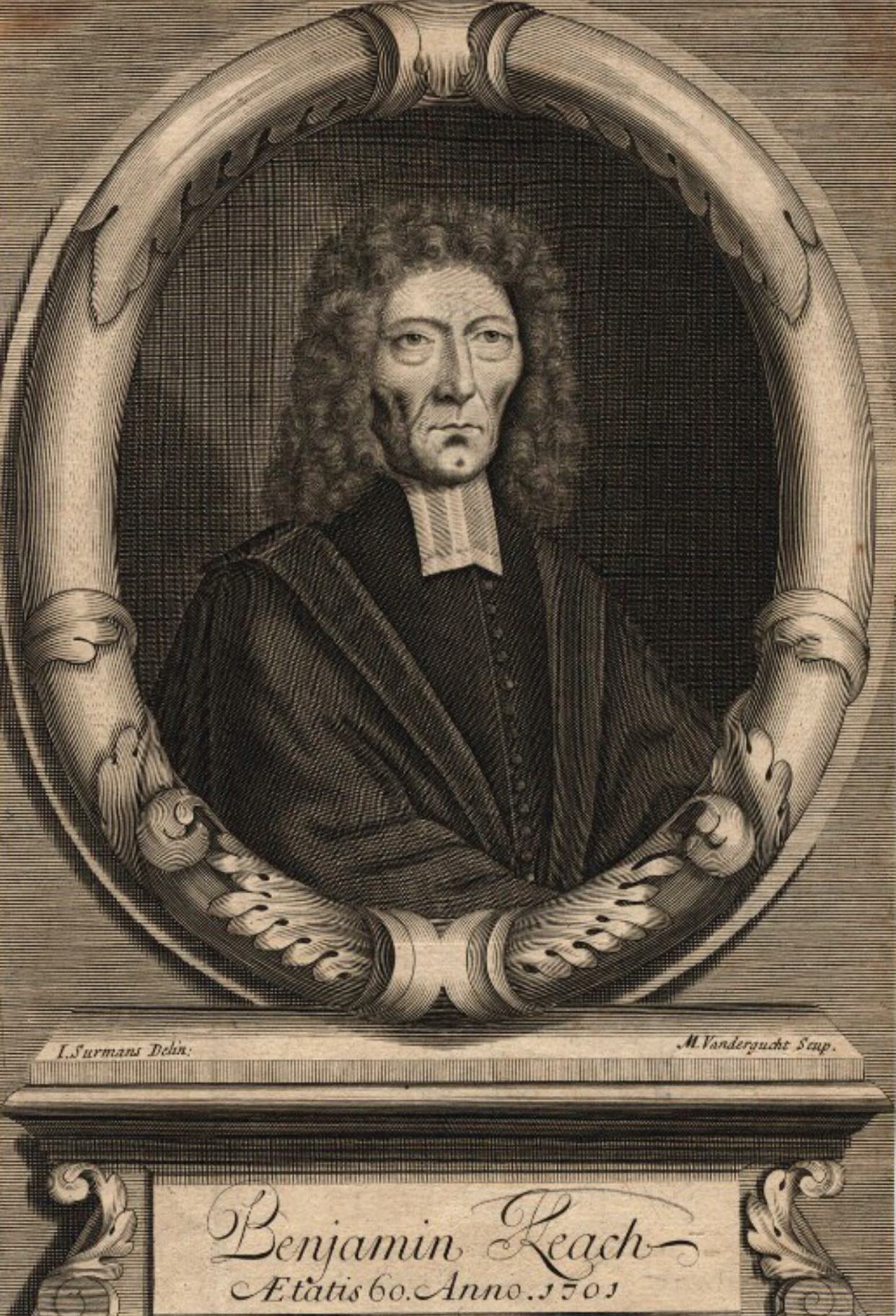
In "God a Builder," Benjamin Keach expounds on the doctrine of God as the divine Builder, utilizing various metaphors to illustrate His roles in creation and providence. Keach argues that God builds not just the physical world but also constructs the Church, the new heavenly city, and the entire invisible realm, which includes a thorough understanding of His wisdom and sovereignty in all His works. Scripture references such as Psalm 127:1, Proverbs 9:1, and Hebrews 3:4 are employed to substantiate these claims, emphasizing God's foundational role and the thoroughness of His acts as a Builder. This theological exploration reinforces the significance of understanding God as the ultimate architect of reality, assuring believers of His control and purposeful design in all things.
Key Quotes
“Except the Lord build the house, they labour in vain that build it.” — Psalm 127:1
“He that built all things is God.” — Hebrews 3:4
“God this great and Wise Master-Builder hath planted the heavens above and laid the foundations of the earth beneath.”
“None can mend the work of God nor take the glory from him; His works shall praise him for ever.” — Psalm 145:10
What does the Bible say about God as a Builder?
The Bible portrays God as the ultimate Builder, indicating He creates and sustains all things, as seen in Psalm 127:1 and Hebrews 3:4.
Psalm 127:1, Hebrews 3:4
How do we know God's sovereignty in creation is true?
God's sovereignty in creation is affirmed through His omnipotence and the orderly structure He established, as outlined in Genesis 1:1.
Genesis 1:1, Romans 11:33
Why is understanding God as a Builder important for Christians?
Understanding God as a Builder reassures Christians of His active role in their lives and the church, emphasizing reliance on His wisdom and plan.
Jeremiah 31:4, Hebrews 3:4
GOD A BUILDER
"Except the Lord build the house, they labour in vain that build it," Ps 127:1. "Wisdom hath built her a house" Pr 9:1.
"But he that built all things is God" Heb 3:4.
IN these scriptures, and many others, God is called a Builder, wliich is a metaphor taken from carpenters and masons, that build houses; the Hebrew word by which building is expressed, is derived from the root XXXX Oikodomein ædificavit, extruxit Domum vel Urbem, to build or rear a house or city, 1Ki 10:4. Metaphorically, it is put for procreation and education of children, of which families are as it were built, Ge 16:2. (2.) For repairing decayed places, 1Ki 12:25. (3.) For the restoration, preservation, and exaltation of God's people, Jer 31:4. The Greek word kataskeuazw præparo, instruo, to prepare or build up, is (Illyricus says) a military word, and signifies vasa instrumentaq; castrensia colligere, the gathering together of vessels of utensils of the camp, of kata and skenov a vessel. God may be said to be a Builder, in a fourfold respect.
1. He created or built the visible world.
2. He built or constituted the church militant.
3. The church triumphant.
4. The invisible world, the celestial city, or New Jerusalem, for the church triumphant to inhabit, when the visible world is dissolved.
In a Builder we are to consider three things, viz., skill, strength, action: 1. Skill to contrive; 2. Strength to provide; and, 3. Action to complete. All which are fairly applicable to God as a Builder, as appears in the following particulars.
METAPHOR
I. A Builder is an artist, a man of wisdom, to contrive the fittest model of the whole in general, and of the distinct rooms and parts, in particular.
PARALLEL
I. God, the first Founder and Builder of all things, is that great Master of wisdom, of whom it is said, that he finds out knowledge of witty inventions, that he is wise and perfect in knowledge; that his wisdom is unsearchable, and his ways, contrivance, and projections past finding out, in his works of creation, as well as providence; for not man only is fearfully and curiously made, but all his other works so well contrived, that it is not possible for any one to mend them: "In wisdom hast thou made them all."
METAPHOR
II. A master-Builder usually hath a principal or head workman, to whom he imparts his secrets in his great and weighty contrivances, who is to enter upon the chiefest part of the work; and not only to work himself, but to order and direct all subordinate workmen.
PARALLEL
II. God, the infinite and most wise Contriver, hath his Word or Son, who is called the Wisdom of God, and a wonderful Counsellor, to be his head Workman, who was in the bosom of the Father, and understood all his secrets, by whom he made the worlds, who is called the Son, the character, image, or Representative of God, without whom there was nothing contrived or made, that was made; either things in heaven, or things on earth, visible or invisible, whether thrones, dominions, or principalities; all things were made by him, and he was before all things, and from him came order and direction to all subordinate or secondary causes.
METAPHOR
III. A master-Builder hath the figure or idea of the materials in his mind, of which the fabric is to be compacted, and gives order for the bringing them forth, to answer his great project and design.
PARALLEL
III. God, the Builder of all things, had the idea in his own mind, and gave order for the bringing of them forth, in order to suit his most wise and wonderful purposes: for as known to God are all his works from the beginning, so he said, "Let the heavens, the earth, the water, the air appear;" and they did so.
METAPHOR
IV. A wise master-Builder, lays a foundation to set that fabric upon, that he intends to build for a house, city, or any kind of edifice, which cannot stand without it, as Christ tells us.
PARALLEL
IV. God, this great and Wise Master-Builder, hath planted the heavens above, and laid the foundations of the earth beneath: which when we consider, that they have no bottom, but the air and the water, we must resolve it into his own power, which can do every thing, or his word or Son, who bears up the pillars of the earth, and upholds all things: "He looked for a city which hath foundations, whose Builder and Maker is God.
METAPHOR
V. A Builder puts his workmen into order, and his materials into their proper places; the stone, brick, timber, lead, iron, brass, silver, &c.
PARALLEL
V. The God of the whole earth did at the first put all materials into their proper places, and assigned all his servants their respective work; the heavens above the air, and the air above the waters. Christ is Head-Workman above angels, angels above men, men in work and business above the fowls of the air, beasts of the field, creeping things of the earth, fishes of the sea. Men above one another, in respect of his church, (his spiritual building) Moses above Joshua, and ordinary prophets; Aaron above other priests; apostles above evangelists, and ordinary ministers; and to show his wonderful skill and wisdom. Angels to keep his commands, and sing praise; the heavens to declare his glory, and the firmament to show his handy works. Moses to manifest wonders on earth, Aaron to celebrate his worship, John Baptist to set forth Jesus, the apostles to plant churches, and preach the gospel to Jews and Gentiles.---Elders of a lower rank;---Apollos, and evangelists: all which have their peculiar work and place assigned, by the great Architect of the whole universe.
METAPHOR
VI. A Builder raises fabrics of several sorts; some of higher consideration and grandeur than others, as temples, the palaces and thrones of princes, noble and great men's houses, inferior dwellings, and dismal prisons.
PARALLEL
VI. "God hath set his stories in the heavens," Am 9:6, where his glorious Majesty dwells, and Jesus, our great High-Priest, sits at his right hand; where all the angels are seated in glory, and the spirits of just men made perfect surround the throne of God and the Lamb, Heb 12:22-24. The earth for men: the dismal prisons and regions of darkness, for disobedient spirits, and evil angels, 1Pe 3:19,22; Jg 6:13; Isa 30:33.
METAPHOR
VII. A Builder gives ornament, as well as form and being, to a house.
PARALLEL
VII. God hath not only beautified the meek with salvation, but adorned New Jerusalem, where the saints shall dwell, with so high and soul-ravishing excellencies, as the most sublime rhetorician set forth: as gold, pearl, diamonds, and other precious stones; the street, pure gold; the building of the wall, jasper; the foundations, precious stones; and the gates, pearls, Re 21:18-20.
METAPHOR
VIII. A Builder is a great benefactor to the world, in making places both for safety and conveniency.
PARALLEL
VIII. God is a great Benefactor, who hath made buildings both for safety and conveniency; he made the fountains to contain the great deeps to keep them from breaking out upon the world; he hath made windows in heaven, to keep the waters above from falling down too furiously, to the prejudice of man and beast: he hath made chambers, to keep in the roaring winds, from annoying mortals with constant and impetuous blasts: the raging element of fire he hath confined to its proper region, where it cannot harm us without his permission. He hath given us a pleasant and fruitful earth, a comfortable and refreshing air, a beautiful and delightful heaven, which he hath placed as a canopy over us. He hath constituted a good and holy church, which is as a wine-celJar to supply all our wants, where he has placed the Word, the Spirit, the ordinances, good counsel, and instructions, suitable comforts and consolations; there is the wine, the oil, the balm, the bread, where he feeds his lambs, and makes his flocks to rest at noon, satisfying with favour, and filling with the blessings of his bounty. He will abundantly bless Sion's provision, &c.
METAPHOR
IX. A Builder is pleased with his work, when finished, and is worthy of honour for it.
PARALLEL
IX. God is pleased with his work, when finished: "He looked upon all things which his hand had made, and behold it was very good"---Ge 1:31. He is worthy of honour for what he hath done, because they are great things, mighty things, wonderful things, without number: so that it might be said, as David, "give thanks to the Lord, who by his wisdom made heaven:" "Let all the host of heaven, and all the inhabitants of the earth, praise," &c. Ps 136:3,5.
METAPHOR
I. An earthly Builder is but a mortal man, subject to weakness and death.
DISPARITY
I. God, the heavenly Builder, is a mighty God, the everlasting and ever-living God, with whom is no beginning of days, nor end of life.
METAPHOR
II. The earthly Builder has but a small pittance or measure of skill and wisdom; it is but the wisdom of a son of man, as light as vanity, and next to foolishness.
DISPARITY
II. The heavenly Builder hath all the treasures of wisdom, he is full of wisdom and knowledge; he is essentially wise and skilful, and gives all the wisdom and skill that is possessed, enjoyed, or used by men or angels: it is unsearchable, past finding out, beyond all comprehension, so profound, that angels are fools in comparison of him:---"He charges his angels with folly," Job 4:18.
METAPHOR
III. Earthly Builders are fain to pause, study, and consider, before they bring forth their devices.
DISPARITY
III. The heavenly Builder (having all wisdom and knowledge) sees by one act, (uno intuitu) all things that are necessary and commodious, and needeth not to suspend actions till after study and consideration, nor stay for any one to be his help and counsellor, because there is none able or fit to teach him: "Who hath been his counsellor?" &c.
METAPHOR
IV. The earthly Builder must have materials to work upon, and servants to employ.
DISPARITY
IV. The heavenly Builder can make matter fit for his purpose, where he finds none; even as all things that are seen, were not made of things that do appear, but of matter that was void of form, Ge 1:1, of which there was no pre-existence, but it was made out of nothing, and then formed into a glorious globe, and most beautiful fabric, by him, "who alone (that is, without the help of any other) doth great wonders; that by wisdom made the heavens," &c., Ps 136:4-5.
METAPHOR
V. An earthly Builder cannot effect his purposes in point of building, by his word, without work and labour.
DISPARITY
V. God does all by a word of his mouth.---Let there be a heaven, and immediately it appears; let there be an earth, and it was so, &c. as Ge 1:1.
METAPHOR
VI. The earthly Builder must have much time allowed him to finish a great and famous fabric.
DISPARITY
VI. But God doth his works, which are exceeding, in a moment; he just pronounces the word, and it is done.
METAPHOR
VII. An earthly Builder lays the foundation of his work upon a brittle substance, or at best upon a rock, which is capable of dissolution.
DISPARITY
VII. But the heavenly Builder laid his work upon a sure and unshaken foundation, upon an impregnable rock, firm, and immoveable against all violence whatsoever, viz., his own almightiness, than which nothing can be more permanent, &c. Heb 1:3; Ps 104:5.
METAPHOR
VIII. An earthly Builder builds but little, comparatively, as some towns, cities, or part of them, &c.
DISPARITY
VIII. The heavenly Builder has been the erector of the whole fabric of the universe: "He that built all things is God," Heb 3:4.
METAPHOR
IX. An earthly Builder may be outdone by a successor.
DISPARITY
IX. But none can mend the work of God nor take the glory from him: "His works shall praise him for ever," &c. Ps 145:10.
METAPHOR
X. An earthly Builder builds for other men, all being not for himself.
DISPARITY
X. But all the buildings that God makes are for himself; he is no man's workman or servant, but hath made all things for himself: for his own pleasure they were and are created.
METAPHOR
XI. An earthly Builder is capable of improvement in his skill; for experiment, and second thoughts, instruct him in some points he was before ignorant of.
DISPARITY
XI. But God is perfect in knowledge, and therefore incapable of addition to it. None can tax him of hastiness, failure, or inadvertency. All sciences meet in him, as their proper centre.
METAPHOR
XII. An earthly Builder ofttimes undoes what he hath done, plucks it down to make it better.
DISPARITY
XII. No such thing done, or need to be done by God: no angels unmade, or heavens dissolved, or souls annihilated or extinguished, or seas dried up, to put them into a better form: "I know that thou canst do every thing, and that no knowledge is hid from thee," Job 42:2.
COROLLARIES.
1. From these particulars we may observe, that if God be the Builder of all things, then the work must of necessity be very well done, for no human architect can mend it.
2. That it is very rational, that he should be acknowledged and praised by his handy-work.
3. That there is good reason that all should be at his disposal, for he gave them being.
4. That men have no cause to murmur, because they have no greater part of this world than God allots, for they ought to acquiesce in his will.
5. That in all our wants we should apply ourselves to him, that gives liberally, and upbraideth not; for we can have no supply elsewhere.
6. That in all projects and undertakings we should seek counsel of this great and wise Master-Builder, and observe his leadings in all enterprises.
7. That good men have no reason to be troubled for worldly losses, for all is the Lord's, and he will surely give them what is fit for them.

Comments
Your comment has been submitted and is awaiting moderation. Once approved, it will appear on this page.
Be the first to comment!