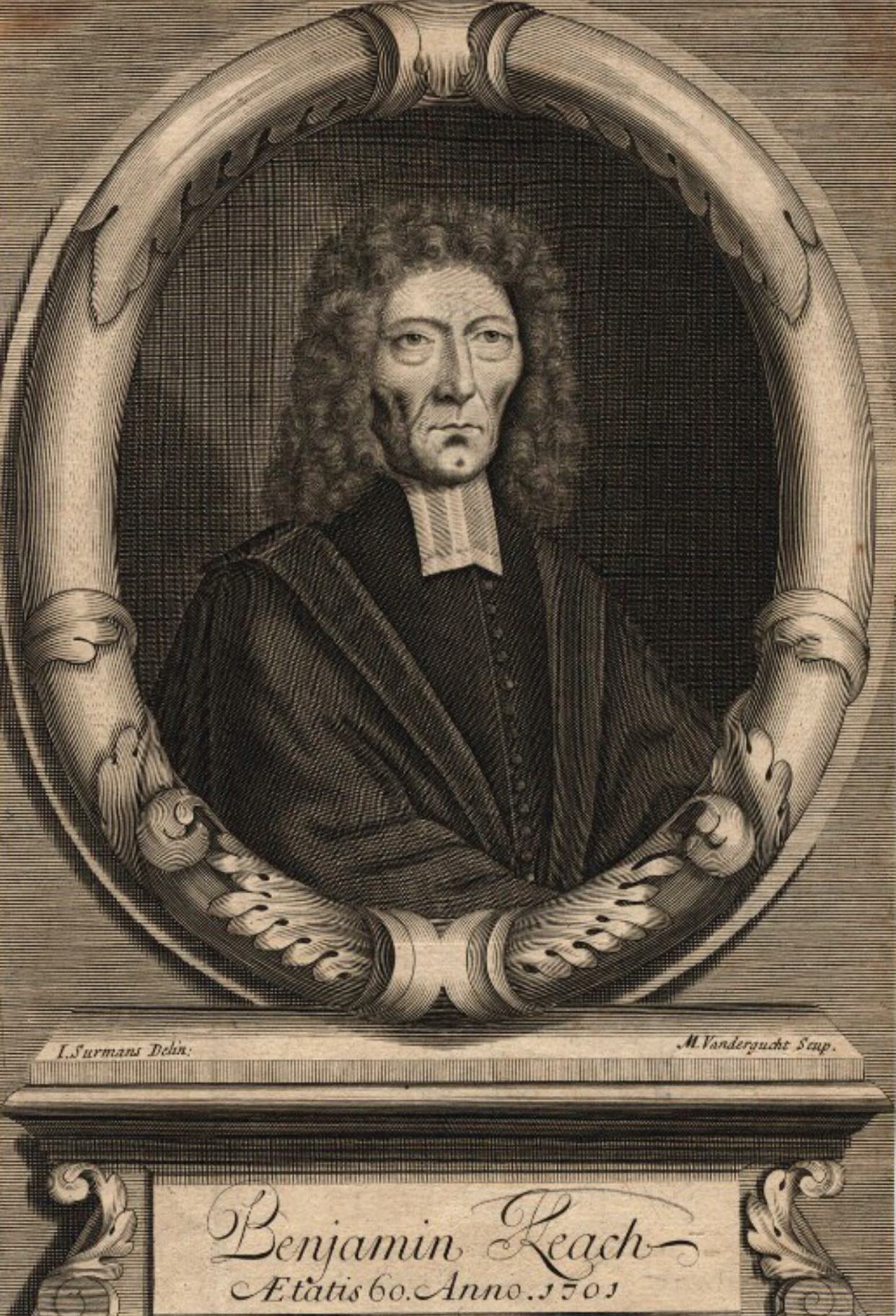
In "God an Husbandman," Benjamin Keach explores the rich metaphor of God as a husbandman, expounding on the nature and duties of both the divine cultivator and His creation. The article articulates key points including God's ownership over the earth (Psalm 24:1), His diligent care and provision, and His expectation of fruitfulness from His people, akin to a farmer relying on his field’s yield (Matthew 21:34). Scriptural references such as Isaiah 5:2 and John 15:2 reinforce the claim that God's church is His prized possession, receiving His constant attention and nurture. The practical significance of this doctrine lies in its encouragement for believers to live fruitfully in accordance with God’s expectations, highlighting the importance of being genuinely grafted into Christ to bear spiritual fruit.
Key Quotes
“The earth is the Lord's and the fulness thereof… He hath many fruitful fields... and many barren heaths.”
“Though the blessed God sees his people do not answer his unwearied pains... yet he gives them not over but with much patience waits year after year.”
“The heavenly Husbandman… uses various means… in order to that end by these he digs up those weeds by the roots…”
“Where much is given, much is required; where we have many means of increase of grace, the Lord will expect the fruits of holiness from his people.”
What does the Bible say about God as a husbandman?
The Bible describes God as a husbandman who cultivates and tends to His creation, seeking fruit from His people.
John 15:1, Psalm 24:1
How do we know that God's care for His people is true?
God's concern for His people is evident throughout Scripture, particularly in His promises and providential care.
Isaiah 5:2, John 15:2
Why is being spiritually fruitful important for Christians?
Spiritual fruitfulness is essential for Christians as it reflects their relationship with Christ and fulfills God's purpose.
John 15:2, Matthew 21:34
GOD AN HUSBANDMAN
"My Father is an Husbandman," Joh 15:1.
IN this metaphor four things are supposed.
1. That an husbandman[1] must have ground to work upon.
[1] Gewrgov a husbandman is compounded of gh terra, earth, and epgon opuv, work; that is, one that works the earth. The Latin Agricola, signifies a tiller of the field, of ager, and Colo.
2. A stock to defray the charges and expense requisite to manage it.
3. Skill and knowledge to perform it.
4. Instruments, and whatsoever else is needful for such an undertaking, or employment.
In these respects God may be said to be an Husbandman, because
1. He is a rich Husbandman; for all the world is his---"the earth is the Lord's," &c.
2. A great and honourable Husbandman; for all bow before him.
3. A skilful and wise Husbandman; for none can teach him.
4. A diligent and careful Husbandman; for no neglect can be charged upon him.
5. A generous and liberal Husbandman; for all partake of his bounty. For a further illustration take the following parallel.
METAPHOR
I. A rich Husbandman has not only fruitful fields, vineyards, gardens, orchards, &c., but also some barren heaths, commons, and wildernesses.
PARALLEL
I. God is a very rich Husbandman---"the earth is the Lord's and the fulness thereof," Ps 24:1. He hath many fruitful fields, vineyards, &c., where the Gospel is professed---And many barren heaths, mountains, and wildernesses, the pagan, heathen, and unconverted parts of the world, which yield little or no profit.
METAPHOR
II. A rich Husbandman has many beasts, some of which are of a hurtful and mischievous nature, which he fetters or ties up, restraining them by some invention or other from doing injury to his other cattle, and breaking into his gardens or orchards to spoil his precious flowers and tender plants.
PARALLEL
II. God lays claim to all the beasts of the field, the wild and devouring beasts of the forest. "Every beast of the forest is mine (saith the Lord,) and the cattle upon a thousand hills"---Ps 50:10. "The fowls of the mountains and the wild beasts of the field are mine," Eze 38:4; no man be he never so brutish, vile, and mischievous, but by right of creation is the Lord's, though strangely degenerate from what he was and should be; such he fetters, chains and ties up, that they cannot destroy the poor: The oppressors, persecutors and spoilers of the earth, would soon break in and spoil God's vineyard, "but that the Lord puts hooks into their jaws, and puts bounds to them which they cannot pass," Ps 89:11.
METAPHOR
III. A Husbandman puts some of his cattle into fat pastures to feed and fatten them against the day of slaughter.
PARALLEL
III. God suffers the wicked to feed in fat pastures, to wallow in plenty, eating the fat and drinking the sweet of the earth, but it is for the day of slaughter---Jer 46:21; Jas 5:5, and Ps 17:14; such as have all their good things here, Lu 16:25.
METAPHOR
IV. A Husbandman expects not that return and increase of precious and profitable fruit from the dry heath and barren wilderness, as from the rich valleys, gardens, fields, vineyards, &c., which he hath bestowed much cost and labour upon in manuring, sowing, planting, watering, dressing, &c.
PARALLEL
IV. The Lord does not expect, that heathens and infidels (who are like dry and barren ground,) should bring forth or yield him so much increase and fruit of grace and holiness as those people and nations to whom he hath afforded his blessed Gospel; and those churches that he hath planted and bestowed much cost and pains upon, where much is given a suitable improvement is required, and where but little the improvement of a little, Lu 12:14; 6:10; Mr 12:42; Re 3:8.
METAPHOR
V. A Husbandman divides and separates his land, De 27:17; Pr 22:28, (especially that which he designs for tillage and principal use) from other men's. Every one knows his own land, and to this end they have landmarks and the like, by which property is preserved.
PARALLEL
V. God separates his people of the world, to be a peculiar inheritance unto himself, De 7:7; 2Co 6:17; Re 18:4; Ps 4:3; 2Ti 2:19; De 33:16; Ho 7:8; Isa 27:2-3. There they have bounds set them, viz., holy laws and institutions, within which they ought always to keep, that they mix not themselves with the world; to pass which bounds is a high and provoking evil.
METAPHOR
VI. A Husbandman doth not only divide and separate the land that he designs for special use, whether orchard, field, or vineyard, from all other; but also makes a fence[2] or wall about it, especially if it be taken out of a waste wilderness, or a barren and common heath or field, otherwise the fruit might soon be eaten up or trodden down by the beasts of the field.
[2] Non minor est virtus qnam. quærera, tueri.
PARALLEL
VI. God takes especial care of his church, and of every branch and member thereof. And for their preservation hath made a hedge, a fence, yea, a glorious wall round about them. This the devil knows, and nothing troubles him more, "hast thou not made a hedge about him, and about all that he hath?" See more in the metaphors of a garden and vineyard, Isa 5:2, and Isa 4:5; Ec 2:5; Ps 18:2; Job 1:10; Ps 125:2; 34:7.
METAPHOR
VII. When a Husbandman hath fenced or walled in his ground, he digs or ploughs it up, in order to the manuring of it, and making it good soil, fit for the use intended, whether for choice grain, plants, or other things.
PARALLEL
VII. The Lord doth by his word plough up the fallow ground of our hearts. When he threatened spiritual judgments upon Israel (his ancient vineyard) he says by the prophet, it shall not be digged, but there shall come up briars and thorns. Isa 5:6; Lu 13:8. Before our hearts are digged up, they lie fallow; "break up your fallow ground, and sow not among thorns," Ho 10:12.
METAPHOR
VIII. A Husbandman finds some ground more hard, stony, and barren than others, and what the plough cannot break up, the spade and mattock must; if it he very rocky, a hammer is used to break it in pieces.
PARALLEL
VIII. The Lord finds all our hearts naturally very hard, yet some more hard and obdurate than others. And that he may effectually break them into pieces he uses divers instruments; some of his ministers come with the smooth plough of the Gospel---Others with the mattock of the law from mount Sinai, Isa 7:25. Some denounce the threatenings in God's word like a hammer to break the rock in pieces, Jer 23:29.
METAPHOR
IX. A Husbandman finds by experience that no ground until it be well manured and planted, brings forth any thing but what naturally grows of itself. Choice plants must be set, and seed must be sown if we will expect fruit.
PARALLEL
IX. The Lord shows us in his word that no person whatsoever can bring forth good and acceptable fruit, till by the word and Spirit of grace they are wrought upon, and planted or sown by him, Joh 3:6; 1:4; Ro 7:4.
METAPHOR
X. When a Husbandman has ploughed or digged up his field, he discovers the nature and quality of the ground; and finds much filth, worms, weeds, and loathsom trash are turned up, which before lay hid; so that we many times wonder, that land so fair in appearance should prove so naught.
PARALLEL
X. When God hath through his word and Holy Spirit broken up the sinner's heart by powerful convictions, so that the inside of the soul is (to its own sight) as it were turned outward, as in the case of the woman of Samaria who cried out, "Come, see a man, which told me all things that ever I did," Joh 4:29. And as it was with the Jews Peter preached to, who cried out, "What shall we do?" Ac 2:37; Ro 7. Then the filthiness of the soul and its horrid pollution appear, and the poor man cries out, I did not think there had been so much abomination in my heart, that I had been such a rebel against God. O the pride, the lust, the blasphemy, hard-heartedness, vanity, folly, and unbelief I find there; who could think I had such a prodigy of wickedness?
METAPHOR
XI. The Husbandman takes much pains, and bestows great cost to make his barren ground fruitful, and destroy those hurtful weeds which would choke the seed, deprive it of nourishment, and so spoil its growth---He also lays on much dung to fertilize it and make it yield the greater crop.
PARALLEL
XI. The Lord takes great pains, uses many ways, and bestows great cost to make his people bring forth fruit unto him; he sends his word, his Spirit, his ministers, sets conscience on work, and if all will not do, but that weeds of corruption still spring, and roots of bitternesss remain, he sends afflictions to humble and cleanse them, and destroy the power of sin, Isa 5:4; Ga 4:6.
METAPHOR
XII. Though the Husbandman doth not find his ground immediately so good and fruitful, as to answer his just expectation, considering his labour and cost about it; yet for all that he gives not over, nor slacks his hand, as if it would never be good; but on the contrary pursues his endeavour, in hopes that what fails in one year, may be effectual in another.
PARALLEL
XII. Though the blessed God sees his people do not answer his unwearied pains, but that abundance of earthliness, barrenness, and unprofitableness still remains in them, yet he gives them not over, but with much patience waits year after year, Joh 15:2; Ho 11:9, not sparing continual labour in order to their reformation, that so they may bring forth more fruit unto him.
METAPHOR
XIII. The Husbandmen grudges not at the cost he is at, to make his ground fruitful, but does it with a willing mind and very cheerfully.
PARALLEL
XIII. The Lord bestows his choicest mercies upon his heritage with the greatest cheerfulness---"I will rejoice over them to do them good, and I will plant them in this land assuredly with my whole heart," &c., Jer 32:41. It is freely given, and without grudging he hath done as much as could be done to his vineyard, 1Co 2:12; Isa 5:4.
METAPHOR
XIV. A Husbandman sees when his field is ploughed and sowed, that it must be watered with the dew of heaven, or it will not thrive. The earth cannot bring forth, unless the heavens distil their precious drops, and refreshing showers upon it---therefore he prays for rain, and if it rains not, he opens his sluices to water his meadows, and other low ground to make it fruitful.
PARALLEL
XIV. The Lord God knows that though the church (his spiritual vineyard) be sowed with good seed and planted with choice plants; yet they cannot grow nor prosper unless watered from heaven with divine showers and refreshing dew. And therefore God opens the sluices or windows of heaven, and makes the fruits of the earth flourish and wonderfully increase; the rain, &c., watereth the earth, and maketh it bring forth and bud, "that it may give seed to the sower and bread to the eater," &c., Isa 5:7.
METAPHOR
XV. The Husbandman finds that low grounds, valleys and meadows by rivers' sides, are most fruitful; whereas mountains, heaths, and hilly grounds, how lofty soever they seem, are commonly barren and unfruitful: and though they rnay for a time bring forth, yet by the scorching heat of the sun, and for want of moisture by which it should take deep root, it is so parched and burnt, that it rarely (if at all) comes to maturity.
PARALLEL
XV. The Lord declares in his word that the lowly and humble soul is the most fruitful. Christ says he went down to see the fruits of the valley, Song 6:11; his chief expectation is from them that lie low in their own sight. Trees planted by the water-courses thrive best and bring most fruit. The rain glides off from hills and mountains, and the valleys receive it. The lofty, proud, self-conceited person is barren and fruitless, the savour of God's grace abides not on their hearts, "To this man will I look, that is poor and of a contrite spirit;" he that sees his own emptiness, and has no confidence in the flesh, but whose trust and dependency is upon Christ, is the thriving and fruitful person, that (like the tree of the waterside spreading his roots by the river) "shall not see when heat cometh; but his leaf shall be green, and he shall not be careful in the year of drought," Jer 17:8.
METAPHOR
XVI. A Husbandman takes much pains to weed his gardens and prune his trees, and if he finds the weeds come up thick, especially such as are of a hurtful and mischievous kind, he uses all ways and proper means to destroy them, lest they should spoil the fruit of his garden, field, or vineyard, &c. Yet, notwithstanding, some relics of the old roots are left, which are apt to spring up afresh, unless continually cropt off and kept short.
PARALLEL
XVI. The heavenly Husbandman bestows much pains that he may destroy the weeds of indwelling sin and corruption in his people. He uses various means, as his Word and Holy Spirit, trials, afflictions, &c., in order to that end; by these he digs up those weeds by the roots, as worldly-mindeclness, unbelief, and sensual lusts, which else would choke the good seed. Though some remains of them are left behind, (to keep us humble and watchful) such ill weeds grow apace, aad are ready to spring up when the least liberty is given. Heb 12:15. By these also this blessed Husbandman prunes and pares off suckers or superfluous branches, which feed upon that sap which should nourish his tender plants, such are, carnal divisions, strife and unnecessary contention among saints, busying themselves about idle and unprofitable notions, or matters of slender consequence, neglecting in the mean time those serious and practical parts of Christianity which are of absolute and undoubted necessity: these are the spiritual suckers of our time, and are the cause that so many lean and barren souls are found in this spiritual vineyard.
METAPHOR
XVII. A Husbandman, in consideration of all his labour and charge, expects fruit answerably from his husbandry. Jas 5:7.
PARALLEL
XVII. The heavenly Husbandman waits for the fruit of his fields also. He looked that it, (viz., his ancient vineyard) should bring forth grapes, Isa 5:2. Went three years, seeking fruit on the fig-tree, &c., "And when the time of fruit drew near, he sent his servants to the Husbandmen that they might receive the fruits of it," &c., Lu 13:7; Mt 21:34. Where God sows plentifully he expects a suitable crop, where much is given, much is required, where we have many means of increase of grace, the Lord will expect the fruits of holiness from his people.
METAPHOR
XVIII. A Husbandman often goes to see the success of his labour, and how his corn and other plantations thrive, and is much delighted and comforted to find a good increase and fair hopes of a great crop, to reward his pains. How he rejoices, when he finds every vine full of thick clusters, every tree laden with fruit, and the valleys covered with precious corn.
PARALLEL
XVIII. The Lord loves to visit his vineyard often, and delights to behold the flourishing grace of his people---"He is gone down into his garden, into his beds of spices," &c., Song 6:2, and Song 4:16. He eats his pleasant fruit, he takes pleasure in his saints, and will beautify the meek with salvation. "Let us see (says he, Song 7:12,) if the vine flourish, whether the tender grape appears, and the pomegranates bud forth: there will I give thee my loves." He rejoices to find his people abound with graces, which are the blessed fruits of the Spirit. No ambrosia so sweet to this heavenly Husbandman, as the holy performances of his saints, which is the effect of his own cost and labour.
METAPHOR
XIX. The Husbandman is exceedingly grieved, when, (on the contrary,) he finds his fields barren or blasted, and his hopes of a plentiful harvest disappointed.
PARALLEL
XIX. The Lord expresses great grief when his people bring forth no fruit, or, which is worse, wild fruit---"He looked that it should bring forth grapes, and it brought forth wild grapes," Isa 2:2. How he complains "by the prophet---"She (viz. the vineyard, Jerusalem) was plucked up in fury---(Eze 19:10,12,14;) the east wind dried up her fruit---fire hath devoured her fruit, this is a lamentation, and shall be for a lamentation." Ho 9:6. How it grieves the Lord to the heart, when his servants (his ministers,) return this account, "We have laboured in vain, and spent our strength for nought," &c., Isa 49:4.
METAPHOR
XX. When the Husbandman finds many trees and branches barren, or without sap or life, after all the means he hath used, he cuts them down for fuel, because they should not cumber the ground, nor hurt others.
PARALLEL
XX. When the Lord finds any barren or withered branch in his husbandry past hope of recovery, he cuts them off. "Every branch in me that beareth not fruit he taketh away," Joh 15:2. Christ cursed the fruitless fig-tree, and immediately it was dried up: this cutting off may be done by the immediate hand of God, either in spirituals or temporals, or by the censure and excommunication of the church.
METAPHOR
XXI. A Husbandman hath many servants which he employs to work in his vineyard, or as labourers in his harvest.
PARALLEL
XXI. God hath also many workmen in his churches, divers painful labourers in his harvest; ministers of the gospel are spiritual harvest-men, "We then as workers together with you, beseech you also that ye receive not the grace of God in vain." 2Co 6:1.
METAPHOR
XXII. A Husbandman that hath in his house, a faithful, laborious, and experienced servant, highly prizes him, he is esteemed above any that are unskilful, slothful, or negligent in their business.
PARALLEL
XXII. A faithful, experienced, and laborious minister the Lord values above thousands of slothful, false-hearted, and self-seeking ones, who care not for the flock, so they have the fleece, and if they have the wages care not for the work. Moses was faithful in his house, and therefore esteemed: but Corah and his company, (that fain would have been looked upon as appointed by God, like Moses) were swallowed up.
METAPHOR
XXIII. The Husbandman oftentimes finds his pleasant trees, choice plants, and fruitful fields annoyed and greatly damaged by caterpillars, and other hurtful vermin.
PARALLEL
XXIII. The church of God often suffers, and is much spoiled by those innumerable swarms of locusts or caterpillars that came out of the bottomless pit, by which, according to the opinion of divers eminent writers, are meant the great swarms of Popish Priests, Friars, Monks, Jesuits, and even all the whole tribe of the Romish Hierarchy, who are fitly likened to locusts, Re 9:3, which, as naturalists say, are a little vile kind of vermin that spring out of smoke, flying together in vast numbers, gnawing, eating up or destroying all green things and fruits of the earth, being a very slothful and idle creature, resembling the Popish clergy exactly, who are bread out of the smoke and darkness of hellish ignorance; they are show bellies living upon the sweat of other men's brows. To such kingdoms or countries as abound with pleasant plants they flock in swarms, where they make havoc and lay waste all green things in the church of God (as this and other nations have felt and still feel) infecting thousands with their damnable devices, superstitious practices and inventions.
METAPHOR
XXIV. When the Husbandman finds his fields or vineyards quite barren, and that no manuring will help, but thorns, briers, and weeds abound, he plucks up the hedges, and lets it lie fallow and common to all.
PARALLEL
XXIV. When God finds a church or people without the life and power of grace and religion, cold and lukewarm, having only the carcase of external profession, and that no calls nor endeavours will reclaim them, he withdraws his presence, removes his candlestick, takes away the hedge, and lays it waste---Re 3:16, and Re 2:5, "Go to my place in Shilo, where I set my name at first, and see what I did to it for Israel's wickedness," Jer 7:12. So Sardis, Ephesus, Smyrna, Philadelphia, &c., and the rest of those once-famed Asiatic churches, are become a barren and waste wilderness.
METAPHOR
XXV. A Husbandman fans or winnows his corn to separate the chaff from the wheat.
PARALLEL
XXV. The Lord by his word and Spirit (which is as a fan in his hand, Mt 3:12; Jer 15:7,) separates the chaff and refuse part of his children, that nothing but the pure grain and seed of grace may remain in them, and oftentimes by affliction winnows his church, separating the true Christian from the dross and chaff of hypocrisy---"I will sift the house of Israel---as corn is sifted in a sieve," &c., Am 9:9-10.
METAPHOR
I. Some Husbandmen hire their ground, and pay rent for what they have.
DISPARITY
I. But God is the Proprietor and proper Owner of all the nations and people of the earth. "Whatsoever is under the whole heavens (saith the Almighty) is mine," Job 41:11.
METAPHOR
II. A Husbandman may be dispossessed of his farm, and turned out of all his estate, by an enemy, or the injustice of a party stronger than himself.
DISPARITY
II. God cannot be dispossessed, or turned out of his inheritance: for no strength or power is able to stand before him: none can oppress him, or take his right from him, against his will---He can destroy at once all that rise up against him.
METAPHOR
III. The Husbandman thrives or grows poor, according as his husbandry gives good or bad returns.
DISPARITY
III. God, though he lays out very much to cultivate a nation, church, or people, is never the poorer; his treasure is inexhaustible, and can receive no addition nor diminution. "Can a man be profitable to God? Job 22:2. "My goodness (says David) extends not to thee," Ps 16:2. All that he doth is for his creature's profit.
METAPHOR
IV. Husbandmen often fault, and grow weary of working.
DISPARITY
IV. God in a proper sense cannot be weary, therefore in scripture when we read of his being weary, it is spoken (by the figure anqrwpopaqeia) after the manner of men, by way of condescension to our capacities, after much patience and forbearance; and finding no fruit, he is said to be weary, not properly but as before---"The everlasting God, the Lord, the Creator of the ends of the earth, fainteth not, neither is weary," Isa 40:28.
METAPHOR
V. Husbandmen know not the success and event of their labour, nor the nature of some ground till they try it.
DISPARITY
V. But God knows all things, the hearts and spirits of all men. He knows what nation or people will prove fruitful or otherwise, before his Word and Spirit are employed to cultivate and try them.
METAPHOR
VI. Husbandmen cannot rain to water their fields, it is God that gives the increase, for which their dependance must be upon him.
DISPARITY
VI. God can cause it to rain when he pleases externally upon the earth; and spiritually upon his people: he can cause his precious dew to distil upon the tender herb, and showers of rain to fall upon the grass.
METAPHOR
VII. The Husbandman cannot make bad trees bring forth good fruit, nor barren trees bear, nor some sort of ground good, let him do what he can.
DISPARITY
VII. God can make the vilest and worst of sinners to bring forth good fruit, when his grace converts them, and the barrenest souls to be fruitful souls.
METAPHOR
VIII. Storms, tempests, excessive rain, snow, heat or cold, often force the Husbandman to a cessation of his labour, and an enemy may compel him from his work.
DISPARITY
VIII. None can hinder the Almighty from his labour---"I will work and who shall let it," Isa 43:13.
METAPHOR
IX. A Husbandman grows old, and dies, and leaves his husbandry.
DISPARITY
IX. God, the spiritual Husbandman, never grows old, and can never die, but is ever taking care of his husbandry.
COROLLARIES.
1. This shows the wonderful condescension of the great and almighty God in comparing himself to an Husbandman, an employment of great toil and very hard labour, yet profitable and honest.
2. Shows the great privilege, dignity, and security of the church of Christ, being the plantation of the great God, in which he takes delight; the rest of the world being like a barren and howling wilderness to it "Woe is me that I sojourn in Mesech and dwell in the tents of Kedar," Ps 120:5.
3. It shows the necessity of being truly grafted into this vineyard; a bare profession will not do, as in the foolish virgin's case He has a quick eye, and will soon find out such as bear no fruit, or are rotten at heart, such he cuts down and burns.
4. Here is cause of joy to those that are truly implanted into Jesus Christ, they are under his special care and watch, they shall flourish, and bring forth fruit in old age walled in on every side, and so very safe, Joh 15:2; Ps 92:13-14.

Comments
Your comment has been submitted and is awaiting moderation. Once approved, it will appear on this page.
Be the first to comment!