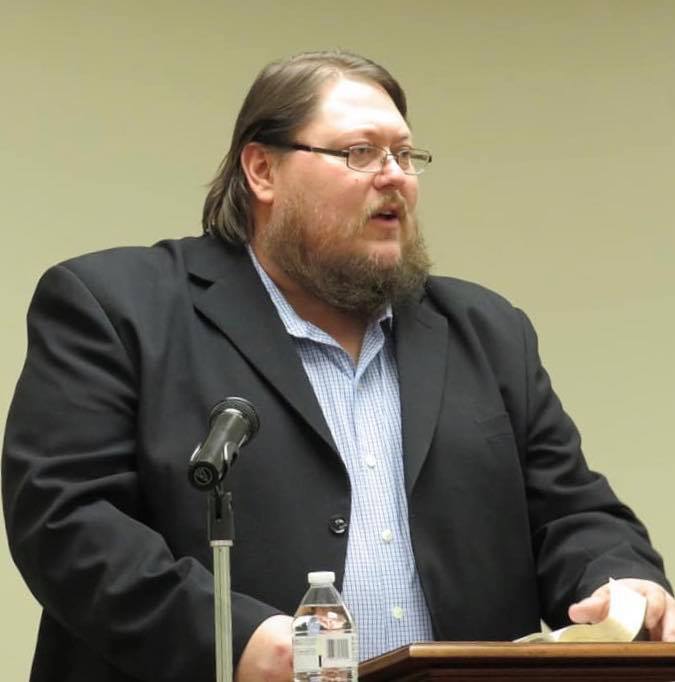
In the sermon "Origin of the Church Pt 4," Mikal Smith addresses the centrality of Jesus Christ in the origin and sustaining of the church. He argues that the church did not begin with notable figures such as Abraham or John the Baptist, nor did it start at Pentecost; rather, its foundation was laid with the ministry of Jesus who called the apostles and began building His church (Matthew 16:18). Smith emphasizes that it is not the responsibility of congregations or organizations to build the church; Christ alone is the builder and perpetuator, a concept supported by passages like 1 Corinthians 3:9-11. The practical significance of this doctrine is that understanding Christ's unique role instills confidence in the church's divine authority and mission, shifting the focus from human efforts to reliance on the sovereign grace of God.
Key Quotes
“Jesus is the one who builds the church. Now, sometimes people think that we're the builder.”
“The building can't build itself. Right? It takes a builder to build the building.”
“Jesus said that he will build his church... Not the saints, not the denominations.”
“The message is Christ. Whenever we're in here, the message is Christ.”
The Bible teaches that the church originated with Jesus Christ during His earthly ministry, not at Pentecost or with any individual prior to Him.
According to Scripture, the origin of the church is found in the earthly ministry of Jesus Christ. It did not begin with the first person saved, nor did it start with Abraham, John the Baptist, or at Pentecost. Jesus, after His baptism, called out the twelve apostles, establishing the foundation of the church. As He proclaimed the gospel and taught, He laid the cornerstone for the church, which would be built upon His teachings and the Holy Spirit's guidance.
Matthew 16:18, Acts 2:41-47
Jesus explicitly states in Matthew 16:18, 'I will build my church', affirming His role as the builder.
The assurance that Jesus builds the church is firmly grounded in His own words found in Matthew 16:18, where He declares, 'I will build my church.' This reinforces the understanding that the church's establishment and growth are not dependent on human efforts but solely on Christ's divine authority and presence. Throughout the New Testament, it is evident that He governs both the institutional aspect and local congregations, affirming that the true church is made manifest where His gospel is preached and where believers gather in His Name.
Matthew 16:18, 1 Corinthians 3:9-11
The Holy Spirit empowers and instructs the church, guiding believers into all truth and serving as the Comforter.
The role of the Holy Spirit in the church is crucial as He is the agent through whom Christ promises to empower, teach, and guide His people. As stated in John 14:26, the Holy Spirit is sent to teach believers all things and to bring remembrance of Christ’s teachings. Additionally, the Spirit convicts the world of sin, righteousness, and judgment (John 16:8), equipping the church for its mission. Without the Holy Spirit's work, the church cannot fulfill its calling, as He is essential in guiding believers into all truth and ensuring they remain anchored in the teachings of Christ.
John 14:16-17, John 16:8-13
Local churches are essential as they are the primary context where believers are taught, baptized, and grow in faith.
Local churches hold a significant role in the life of believers, as they provide the gathered assembly where worship, teaching, and fellowship occur. Acts 2:41-47 illustrates how the early church gathered together for instruction, prayer, and breaking of bread, demonstrating the importance of community. The church is where believers are baptized into the faith and receive necessary teachings to grow spiritually. Additionally, the local church serves as a witness of Christ in the world, fulfilling the Great Commission as collective bodies of believers who support and encourage one another in faith.
Acts 2:41-47, Matthew 28:19-20

Comments
Your comment has been submitted and is awaiting moderation. Once approved, it will appear on this page.
Be the first to comment!