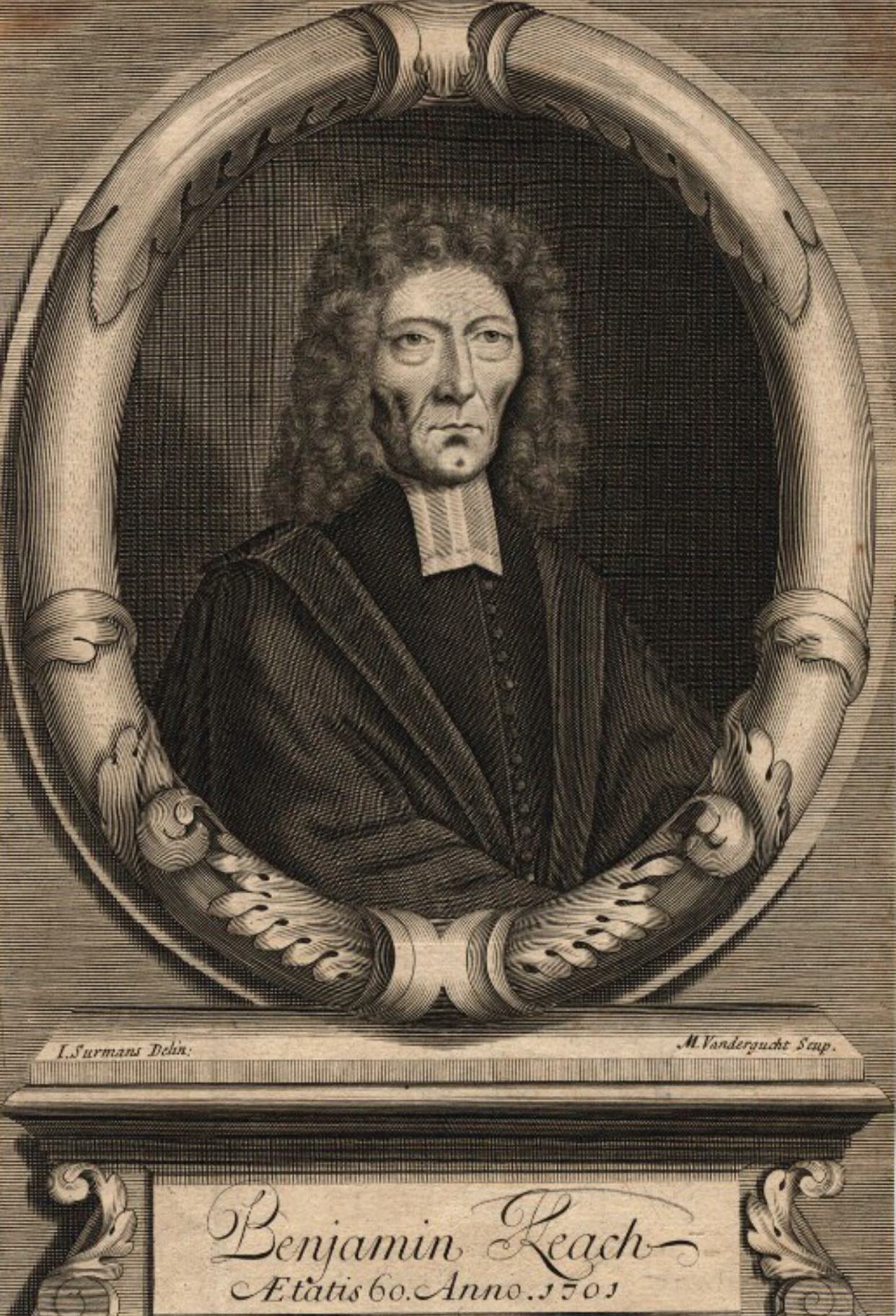
The article "God a Judge" by Benjamin Keach addresses the theological doctrine of God's justice and authority as the Supreme Judge over humanity. Keach outlines key attributes of God as a judge, drawing parallels between earthly judges and the divine, emphasizing that God's character includes goodness, wisdom, knowledge, impartiality, and justice, all supported by various Scripture references such as Genesis 18:25 and Psalm 82:1. He highlights the universal need for divine judgment in a world fraught with human self-interest, moral corruption, and chaos, thus asserting that God’s judgment is essential for maintaining order and righteousness. In doing so, Keach enriches the reader's understanding of the balance of mercy and judgment, ultimately affirming the practical significance of recognizing God’s perfect justice in the lives of believers.
Key Quotes
“Shall not the Judge of all the earth do right?” - Genesis 18:25
“God standeth in the congregation of the righteous; he judgeth among the gods.” - Psalm 82:1
“The chief Judge of all the earth hath an ancient statute-book that is suited to all times and seasons.”
“He will do justice according to right and law whether it be upon angels emperors kings princes.”
What does the Bible say about God as a Judge?
The Bible affirms that God is the supreme Judge of all the earth, as seen in Genesis 18:25 and Psalm 58:11.
Genesis 18:25, Psalm 58:11
How do we know God's judgment is just?
God's judgment is just because He embodies goodness and wisdom, as stated in Psalm 25:8 and Proverbs 11:23.
Psalm 25:8, Proverbs 11:23
Why is it important for Christians to understand God as a Judge?
Understanding God as Judge reinforces the truth of His justice and the gravity of sin, essential for Christian faith.
Romans 14:10-12, Hebrews 9:27
GOD A JUDGE
"Shall not the Judge of all the earth do right" Ge 18:25.
"Verily he is a God that judgeth in the earth" Ps 58:11.
"God standeth in the congregation of the righteous, he judgeth among the gods," Ps 82:1.
GOD is real and properly a Judge, for he is the Judge of all the world, and therefore he is not brought here under the notion of a metaphorical Judge: hut in regard this term seeins to be allusive to earthly Judges, we think it may not be unprofitable to draw a parallel, for the edification of the reader.
As there is nothing more frequently attributed to Almighty God in the holy scriptures, than the title of Judge; so there is scarce any attribute or action of the Most High grounded upon more reason: of which take the following account.
1. There is in the world, viz., on the whole earth, a great and mighty people, for number like to the stars of heaven, or sands by the sea-shore.
2. There this numerous people are almost as various in their humours, as they are in their numbers, ages, sizes, and complexions: it is very rare, if not impossible, to find two that in all points do exactly accord.
3. That this numberless multitude are all addicted to run bias to a particular thing called self-love; and this too from an indissoluble principle or impression of nature: it is natural for all men to love themselves.
4. That after they are grown up to some degree of ripeness and maturity, they have ready prepared to their eyes the bad examples of ill-living souls, which too often have too great an influence upon green and tender plants, to wind them into extreme and irregular designs and motions.
5. There is, by divine permission, a most troublesome and pernicious adversary, suffered to range up and down the whole earth, to try his art and skill, how far he can prevail to bring this vast body into tumult and disorder. And it is not seldom that he doth prevail, to divide not only emperors, kings, princes, judges, nobles, and peasants; but dukedoms, principalities, cities, corporations, villages, families, brothers, sisters, husbands, wives, fathers, and their own children.
Now these things being premised, what unspeakable need is there of one supreme and universal Judge, to curb exorbitances, to umpire, decide, and put a period to dissentions. Without whose moderation, the world would be intolerably perplexed, harrassed and plagued with perpetual and endless wars, broils, disorders, and confusions; and would hardly keep its station for any long period of time. For the moderating and preventing of all which, the God of the whole earth hath undertaken to associate with the rulers, and to judge amongst the god's: in which passage he is represented to us by the similitude of a Judge, which carries a lively figure and resemblance of the supreme Lord of the whole earth, and that in these divers respects following.
EARTHLY JUDGE
I. It appertains to a Judge to be good, and the best of Judges are so. Moses was advised to choose thus by his father-in-law Jethro. "The desire and fruit of the righteous is good," Pr 11:23,30.
HEAVENLY JUDGE
I. This God is by way of eminency, he is essentially good, good without any mixture of evil. He is originally good; there is no good in the whole universe, but what he is the root, spring, and fountain of. There is no evil to be found in him; and as Seneca, he can do no evil nor hurtful thing. He is good in the abstract, goodness itself, 1Ch 16:24; Ps 25:8, and Ps 119:68.
EARTHLY JUDGE
II. It appertains to a Judge to be wise and prudent, or, as Jethro words it, to be able, Ex 18:21. A foolish ruler is a shame and reproach to any nation or people: and there is not a more uncomely sight in the world, than to see a fool upon the throne of a kingdom, or judgment-seat.
HEAVENLY JUDGE
II. This God is, beyond comprehension or expression; for all the angels receive their wisdom from him, all the emperors, kings, princes, nobles, and Judges of the earth: "In him are all the treasures of wisdom," and therefore called, "wisdom past finding out."
EARTHLY JUDGE
III. It appertains to a Judge to he a man of knowledge, and well skilled in the laws and statutes of a kingdom, because he is to be the expounder of the law to the people.
HEAVENLY JUDGE
III. God, the Judge of all the earth, is a God of knowledge: "Known unto the Lord are all his works from the beginning." He gives knowledge to the simple, and makes the foolish of an understanding heart; he makes known unto men the great things of his law; his Spirit searches into all mysteries; he gives skill in all arts and sciences, and there is no searching of his understanding: when he undertakes to dispute, none can answer him one of a thousand.
EARTHLY JUDGE
IV. It appertains to a Judge to be a man of prudence, not only for the setting of right methods, but to do justice in a fit season.
HEAVENLY JUDGE
IV. In this the Lord, the great Judge, is beyond comparison; for he dwells with prudence, and finds out knowledge of witty inventions; his ways are perfect altogether. His actions are so fitly timed, that he doth nothing out of season: It is in due season he delivers the needy, avengeth the cause of his elect, and plentifully rewards the proud doers.
EARTHLY JUDGE
V. It appertains to a Judge, to have good and right laws to judge the people by, that there may be no cause of grievances or complaints.
HEAVENLY JUDGE
V. The chief Judge of all the earth hath an ancient statute-book, that is suited to all times and seasons, to all ages, sexes, conditions, and constitution of men whatever: every part of it is tried and proved, and found to be a perfect law, in which are contained wondrous things, Ps 19:7, and Ps 119:103, ever free from deceit arid falsehood. It is marvellous, pleasant, and refreshing, sweeter than honey, or the honey-comb; the delight of good men; a sure guide to them in all their ways; and none of its commands are grievous, but all duties required by it are reasonable.
EARTHLY JUDGE
VI. It appertains to a Judge to be impartial, and judge uprightly; not to know the faces of any in judgment, not to be corrupted by flattering words, nor biased by bribes, nor misled by the place and dignity of persons, of what rank or quality soever they be.
HEAVENLY JUDGE
VI. In this there is none so holy and upright as the Lord, who is no respecter of persons, hates flattering words, and giving of bribes; will spare none for the dignity of their birth, or antiquity of their lineage; but will do justice according to right and law, whether it be upon angels, emperors, kings, princes, priests, prophets; his church, that are his professed friends, as well as upon the world, his professed enemies: He will destroy his own anointed ones, if they stand in opposition to justice and equity. Cities, kingdoms, towers, temples, all shall fall, rather than law and justice be jostled out of place. He spared not angels, overthrew kings, mighty kings, with kingdoms and nations: Pharaoh, king of Egypt; Og, king of Bashan: Nebuchadnezzar, king of Babylon; Darius, king of Persia; Alexander, king of Greece; and Herod, king of Judea; Jerusalem and Samaria, with both their kings. When once they come to be laid in the balance, and the Lord enter into judgment with them; when he ties judgment to the line, and righteousness to the plummet: Noah, Daniel, and Job shall not save, when truth, law, and justice call for a cutting off. He will by means spare the guilty, when the time of forbearance is expired.
EARTHLY JUDGE
VII. It appertains to a Judge, to be just and equal in the proportions of punishment and severity, not lay any beyond due desert, nor favour, when there is no reason for it. The reward of murder, treason, rebellion, witchcraft, blasphemy, is not to be given to petty offenders.
HEAVENLY JUDGE
VII. Of this no man shall have wherewith to accuse God, for he will not do more than is right, that man should enter into judgment with his Maker; nay, he will rather make abatement, than overdo. And this hath been owned in his act of judgment: "Thou hast not dealt with us according to our iniquities."
EARTHLY JUDGE
VIII. It appertains to a Judge, to take nothing upon trust, but to be satisfied that matters are true. A Judge is not to act doubtfully, but see the offender be clearly cast before he gives sentence.
HEAVENLY JUDGE
VIII. In this case the Lord our Judge hath sufficiently approved himself; first, in respect of the old world; secondly, in respect of Sodom and Gomorrah, where he would take nothing upon trust, but come down himself, to see if things were so bad as they were represented to him. And for Israel and Judah, their sins did testify to their face, before he did execute judgment upon them, Ho 5:5.
EARTHLY JUDGE
IX. It appertains to a Judge upon due proof and trial, to pass a definitive sentence: "If one man sin against another, the Judge shall judge him."
HEAVENLY JUDGE
IX. To this in respect of God it is said, "In the day thou eatest thereof, thou shalt surely die," Ge 2:17. "I will destroy man from the face of the earth;" and it was done, Ge 6:7. "Pharaoh and his host, that thou hast seen this day, thou shall see no more for ever." "Because thou didst not restrain thy sons, I have rejected thee from being a priest." "Because thou hast caused my name to be blasphemed; the sword shall not depart from thy house." Because Nebuchadnezzar was lifted up with pride, he shall be driven from his throne. Because his son did not humble, but harden his mind, his kingdom was numbered, finished, and translated to the Medes and Persians, Da 4:24; 5:22-23.
EARTHLY JUDGE
X. It appertains to a Judge to be firm and steady to the rules of law and justice, as immoveable as a rock, a right way.
HEAVENLY JUDGE
X. As for God, his way is not only perfect, and his word tried; but he is of one mind, and there is none can turn him, in a case of right, truth, and justice. His counsel shall stand; for he "Is not as the son of man, that he should repent." Nu 23:19; "With him is no variableness, nor shadow of turning," Jas 1:17. "He is the same yesterday, to-day, and for ever," Heb 13:8. He changeth not, will not alter the thing that is gone out of his mouth.
EARTHLY JUDGE
XI. It appertains to a Judge to consider the cause of the poor and needy, to plead for the widow and fatherless, and them that have no help, and deliver them out of their distress, where justice calls for it.
HEAVENLY JUDGE
XI. In this Jehovah is not behind-hand, for he is a God with whom the fatherless find mercy, Ho 14:3; pities the poor when he sees they have no helper, breaks the teeth of the old and young lion, smites the enemy upon the cheek-bone, avengeth their cause when they cry to him, and hath destroyed them, and their posterity, who made long prayers to devour widows' houses.
EARTHLY JUDGE
XII. It appertains to a Judge, to have a people under him to be judged.
HEAVENLY JUDGE
XII. The Almighty hath a great and mighty people under him, even all the inhabitants of the world, Europe, Asia, Africa, and America. He is God of all the kingdoms of the world, and Judge of the whole earth, Ps 24:1; 98:9.
EARTHLY JUDGE
XIII. It appertains to a Judge to be provided of officers to execute his sentence, else Judge and law are of little signification; for according to the old maxim, execution is the life of the law.
HEAVENLY JUDGE
XIII. In this our high and mighty Judge doth overmatch all other Judges: for he is provided with legions of angels, all ready to observe his dictates and obey his commands. The devils are all subject to him; so that if he say, go, they go; "Do this, and they do it." Millions of men are under his influence; and as many fowls of the air, beasts of the field, and creeping things of the earth, to do his will, to execute his judgments; when he speaks the word, or lifts up his hand unto them. They shall invade the courts of kings, enter the chambers of princes, fetch emperors off their thrones, bring them to chains, blocks, and gibbets, when he passes sentence, and gives order to do it.
EARTHLY JUDGE
XIV. It appertains to a Judge to be feared, and had in reverence.
HEAVENLY JUDGE
XIV. God is to be feared, not only as a Creator, who can annihilate and dissolve, make men cease to be; as a Father, who can love and rebuke; as a Lord, who can command, and give orders: but as a Judge, who can punish in this world, and bring men's sins before-hand to judgment, 1Ti 5:24.
EARTHLY JUDGE
XV. It appertains to a Judge, to be clothed or arrayed with majesty and terror.
HEAVENLY JUDGE
XV. With God is terrible Majesty, and he rideth upon the high places of the earth, Job 37:22.
EARTHLY JUDGE
XVI. A Judge hath power to reprieve or suspend the execution of a sentence.
HEAVENLY JUDGE
XVI. God doth often reprieve and put off the execution of sentence, so that delinquents are not speedily executed, but a time given them to consider their ways, Ge 6:3. The old world had one hundred and twenty years given them, before judgment was executed. Judea, Jerusalem, and Samaria, continued a long time, before the fury of the Almighty broke out.
EARTHLY JUDGE
XVII. It appertains to a Judge to give orders for execution, to deliver to the officers when sentence is past.
HEAVENLY JUDGE
XVII. God sometimes gives orders to angels to punish, and execute his sentence, when men are out of the reach of human hands; as in the case of Nebuchadnezzar, the host of the Assyrians, and Herod the king, Ac 12:23. Though great men join hand in hand for wickedness, yet shall they not go unpunished.
EARTHLY JUDGE
XVIII. It appertains to a Judge to punish officers, if they exceed their due bounds in punishing others.
HEAVENLY JUDGE
XVIII. God will punish those that himself employs, in case they exceed their commission in any case that concerns his act of justice. He punished Assyria and Babylon, for going beyond their bounds in his own works of judgment against the Jews, Isa 47:6.
EARTHLY JUDGE
XIX. It appertains to a Judge to vindicate his own honour, and the justice of the law he executes.
HEAVENLY JUDGE
XIX. God, the great Judge, doth vindicate his own honour, and the justice of the laws he executes, by giving liberty to the people to testify against him, if they have wherewith to accuse; and demands of them what evil their fathers have seen in him, Jer 2:5; requires them to testify to his face, if his ways are in any point unequal, 18:25.
EARTHLY JUDGE
XX. It appertains to a Judge to mix mercy with judgment, where the case will fairly admit of it.
HEAVENLY JUDGE
XX. God, when he comes forth in a way of judgment, doth not execute the fierceness of his wrath; he is far from rendering to men more than they deserve; he doth not reward according to their full demerit, but in the midst of judgment remembers mercy, Hab 3:2.
EARTHLY JUDGE
XXI. A Judge in this world hath others to plead before him, as counsel or advocates for the prisoner, to extenuate the crime, and plead the privileges allowed by law.
HEAVENLY JUDGE
XXI. God hath assigned an Advocate to plead, before he proceeds to judgment. "If any man sin, we have an advocate with the Father," 1Jo 2:2.
EARTHLY JUDGE
XXII. It appertains to a Judge in this world, to have not only rules of law, but a register of bypast actions, that he may know what to do, if like cases fall in future times.
HEAVENLY JUDGE
XXII. God hath not only made laws, and published them, and will judge men for wilful and reiterated rebellions; but keeps a register for the great day, to be then opened; as it is written, "Some men's sins go before hand to judgment, and they that are otherwise cannot be hid," "the judgment shall sit, and the books shall be opened, and the dead shall be judged out of those things which are written in the books."
EARTHLY JUDGE
XXIII. A Judge usually hath great attendance to bear him company in the time of judgment.
HEAVENLY JUDGE
XXIII. God never judges alone: The Son is with him, the Holy Spirit is with him; the angels, and the whole court of heaven do acquiesce in the judgments that he executes.
EARTHLY JUDGE
XXIV. A Judge, when he peremptorily passeth sentence, doth not recede and go back; the sentence past abides.
HEAVENLY JUDGE
XXIV. God when he peremptorily pronounces judgment, without reserve it stands, and must abide. If he say, Pharaoh and his host shall be seen no more for ever; Babylon, the glory of the Chaldean kingdom, shall be overthrown; Israel shall he removed; the land shall be forsaken of both her kings: If he publish the decree, there is no changing his determinations; his judgment is like the laws of the Medes and Persians: Abraham cannot save Sodom; nor Noah, Daniel or Job, Judah and Israel; but when a decree of judgment is gone forth, they must die by the sword, "For the mouth of Lord hath spoken it."

Comments
Your comment has been submitted and is awaiting moderation. Once approved, it will appear on this page.
Be the first to comment!