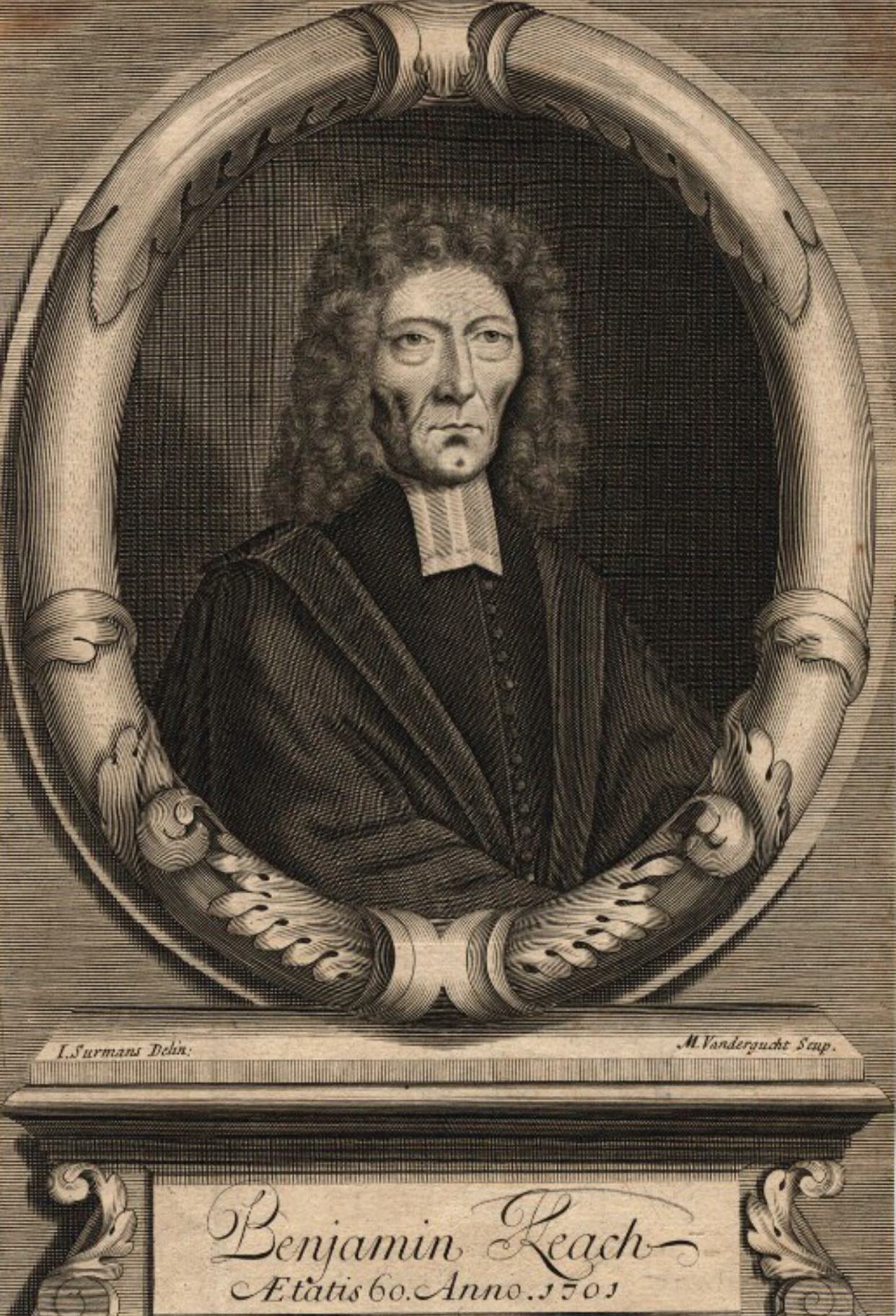
In "Christ a King," Benjamin Keach explores the theological significance of Christ's kingship, emphasizing the divine authority and qualifications of Jesus as King of kings. He articulates how Christ's ascent to sovereignty is rooted in His incarnation, anointing, and proclamation, all while drawing parallels between earthly kings and Christ. Key arguments highlight metaphors comparing Christ to earthly monarchs, underlining qualities such as inheritance, wisdom, selection by God, and His divine right to rule. Scripture references such as Hebrews 1:4, Matthew 28:18, and Revelation 1:18 bolster his arguments by ascribing supreme authority and perpetuity to Christ's reign. The practical significance lies in the recognition of Christ's authority, leading to obedience, worship, and the assurance of ultimate peace and justice in His eternal kingdom.
Key Quotes
“The Lord Jesus Christ our great King comes to this dignity by birth; He is eldest Son to a mighty Emperor and so right Heir to Kingship.”
“Jesus Christ was likewise proclaimed first by the angels… Afterwards by the wise men at Jerusalem and at Herod's court by a star.”
“All power is given to me in heaven and earth, though at the first entrance upon his kingdom in the days of his flesh his power did not appear so resplendent and glorious as it will hereafter.”
“He will overthrow the dragon with all his infernal force so that there shall be no more place found for them.”
What does the Bible say about Jesus as King?
The Bible declares Jesus as the King of kings and Lord of lords, affirming His supreme authority and regal role in God's kingdom.
Moreover, Jesus’ kingship is demonstrated through His qualifications and actions during His earthly ministry. In Matthew 12:42, He is proclaimed as greater than Solomon, receiving divine wisdom and authority to govern. His anointing by the Holy Spirit, as seen in Isaiah 61:1-3, further confirms His role as the Messianic King, set to bring glad tidings and justice to the oppressed. Through these Scriptural references, believers can see that Jesus embodies the role of King through His divine nature, fulfillment of prophecy, and works of redemption.
How do we know Jesus' kingship is true?
Jesus' kingship is affirmed in Scripture through prophecy, His actions, and His divine appointment by God the Father.
Additionally, the affirmation of Jesus’ kingship is seen through the evidence of His life and ministry. His miracles, teachings, and ultimate resurrection from the dead not only validate His divine authority but also symbolize His triumph over sin and death, securing His position as sovereign. In Matthew 28:18, Jesus proclaims, 'All authority in heaven and on earth has been given to me,' further asserting His exalted status. Therefore, we recognize Jesus’ kingship not only through Scripture but also through His life and the fulfillment of His redemptive mission.
Why is the concept of Christ as King important for Christians?
Understanding Christ as King is vital for Christians as it affirms His authority and encourages submission to His divine rule.
Moreover, the kingship of Christ offers a perspective on the trials and tribulations of life. With Jesus reigning, believers can find comfort in knowing that their King has ultimate control over circumstances and that His will is being accomplished throughout history. His reign assures Christians of their identity as citizens of His kingdom, called to represent His values and teachings in a world that is often contrary to His rule. Thus, understanding Christ as King is essential for living out a faithful and fruitful Christian life.
CHRIST A KING
"And the Lamb shall overcome them, for he is Lord of lords, and King of kings" Re 17:14: see 1Ti 6:15; Re 19:16.
BY the Lamb is meant JESUS CHRIST, which is evident and indisputable; the dignity to which he is advanced is the highest among the sons of men, Potentate, Son or Man of Power, King of kings, &c. There is no higher name or title to set forth dignity amongst men, than kings or mighty potentates. It is one of the titles of the Most High, the God of this blessed Lamb, and indeed it originally belongs to him, he is pleased to bequeath it unto men, for which reason they are called gods on earth: "I said, ye are gods, but you shall die like men, and fall like the mortal princes." "God is in the congregation, he judgeth among the Gods." This King, invisible, immortal, the only wise God, hath chosen a Vicegerent to represent him to his subjects, hath placed his name in him, not only "Wonderful, Counsellor, and the man that is his fellow, but as King, the chief of titles in this lower world. By this the royal and most renowned Branch, that ever sprung from the loins of Jesse and David is set forth. Upon which we note, that JESUS, the Lamb of God, is compared to, and represented by the most magnificent title of King, the highest and chiefest of kings. And indeed there is nothing doth more fully set forth the glory, power, and splendour of Christ, than this; as will appear, if we consider these following particulars.
METAPHOR
I. A King is usually very highly descended, comes to his dignity by inheritance, is the son of a noble.
PARALLEL
I. The Lord Jesus Christ, our great King, comes to this dignity by birth; he is eldest Son to a mighty Emperor, and so right Heir to Kingship: "When he bringeth the First-begotten into the world," &c., Heb 1:6. "He is the first-born of every creature, and thereby Heir of all things," Col 1:15. "He hath by inheritance obtained a more excellent name than they," (viz., the angels.) Heb 1:4.
METAPHOR
II. A King hath, or ought to have great qualifications, having the advantage of such education; to his natural wisdom is added skill in politic affairs, even the knowledge of the laws of his kingdom.
PARALLEL
II. The Lord Jesus Christ hath glorious qualifications. He is not only endued with natural wisdom, and that far beyond Solomon, ("a greater than Solomon is here;" Mt 12:42;) but hath had the advantage also of such education that none ever had, being brought up with God himself. He hath "All the treasures of wisdom in him," Pr 8.: is skilled in all politics, hath knowledge in all laws; nothing passeth his skill; "Thou knowest all things," Joh 21:17. He is called the wisdom of God; "Christ, the power of God, and the wisdom of God," 1Co 1:24.
METAPHOR
III. Kings are sometimes chosen or appointed, as Solomon was by David his father: 1Ki 1:32-33, (&c)., or as Alexander by Philip his father; or else by the people, as was David, and many others, 2Sa 5.
PARALLEL
III. Jesus Christ was chosen to be King by God the Father, as it is said, "I have exalted one chosen out of the people," Ps 89:18. And though the fathers or elders amongst the Jews refused him, yet the children gave their vote for him, crying, "Hosannah to the Son of David."
METAPHOR
IV. Kings are anointed as well as chosen. Samuel anointed Saul. It was a divine ceremony, much in use at the consecrating of Kings in the kingdom of Israel.
PARALLEL
IV. Jesus Christ was "Anointed with the oil of gladness above his fellows," Ps 45:7, He was by the Holy Spirit consecrated King for ever: "The Spirit of the Lord is upon me, because the Lord hath anointed me," &c., Isa 61:1,3.
METAPHOR
V. Kings are proclaimed at their instalment. Samuel said to all the people, "See him whom the Lord hath chosen: and all the people gave a shout, and said, God save the King," 1Sa 10:24.
PARALLEL
V. Jesus Christ was likewise proclaimed; first, by the angels, "To you is boin in the city of David a Saviour, which is Christ the Lord," Lu 2:11. Afterwards by the wise men, at Jerusalem; and at Herod's court, by a star, and by the shepherds at Bethlehem.
METAPHOR
VI. A King, after he is anointed and proclaimed, enters upon his government.
PARALLEL
VI. This did Jesus Christ in three eminent cases: 1. In speaking comfortably to all his loyal subjects, as you may see in Mt 5., at large. 2. In giving laws, and expounding difficulties, as you may see in Mt 6, at large. 3. In bestowing his bounty upon the poor, releasing prisoners that were bound, and in appointing an hospital for the sick.
METAPHOR
VII. Kings (de jure) have a palace by right belonging to them, whether they are in immediate possession or not.
PARALLEL
VII. Jesus Christ hath a right to the highest palaces in this world, as he was born heir to the universal Emperor, by whom he was at last advanced to the great palace of the highest heavens, called the holy palace.
METAPHOR
VIII. Kings have great attendants belonging to their courts, though they be not visible in all parts of his dominions.
PARALLEL
VIII. Jesus Christ, our great King, had the attendance of angels, who showed their allegiance, and paid their homage and service at sundry times, as there appeared occasion for them.
1. They proclaimed him. 2. They attended his Person, to assist him in his straits. 3. They assisted his other servants. 4. They declared his resurrection from the dead. 5. They assured his coming in glory after his ascension. 6. They are appointed to bear him company, and to attend him at his coming from heaven the second time. "The Son of man shall come, and all the holy angels with him," Mt 25:31.
METAPHOR
IX. Kings are invested with power; they have sometimes some of them less at the first entrance upon their kingdom than afterwards; as David's was, who had but two tribes at his entrance.
PARALLEL
IX. Jesus Christ is invested with power, "All power is given to me in heaven and earth," Mt 28:18; though at the first entrance upon his kingdom, in the days of his flesh, his power did not appear so resplendent and glorious, as it will hereafter.
METAPHOR
X. Kings have many subjects, who subscribe to their power.
PARALLEL
X. Jesus Christ hath many subjects assigned him by God, which subscribe to his power: some voluntarily, as the angels; others by force, as the devils; and by virtue of his commanding power, as the winds and sea, which obeyed him.
METAPHOR
XI. Kings have laws and rules to govern by.
PARALLEL
XI. Jesus Christ received commandment from the Father, from which he would never swerve; and also published and established laws, to be observed as rules of government to the end of the world, Mt 28:18-20.
METAPHOR
XII. Kings, though they rule well, are not loved and honoured by all, are often troubled with rebels, and sons of Belial.
PARALLEL
XII. Jesus Christ rules and governs so well, that his worst enemies could not, cannot charge him with evil; yet they did not, do not love and honour him; but the sons of wickedness rose up and still do rise up in rebellion against him: "I honour my Father, but you dishonour me, a man which hath told you the truth; this did not Abraham," Joh 8:40, "Bring out those mine enemies," &c., Lu 19:27.
METAPHOR
XIII. Great Kings have large dominions, as Nebuchadnezzar, the golden head who was over an hundred and twenty-seven provinces.
PARALLEL
XIII. Jesus Christ hath great and large dominions, all power in heaven, earth, and hell. He is the Head of all principalities and powers in heaven, He is the Head of every man on earth and hath the command of all the infernal spirits in hell, Eph 1:21; Col 1:18-19; Re 1:18.
METAPHOR
XIV. Kings have a prerogative in their own dominions, to make peace and war when they please.
PARALLEL
XIV. Jesus Christ hath this great and high prerogative, to make peace, or to proclaim peace to all the sons of men upon submission; and to send a sword, where his just prerogative is resisted, "Into whatsoever house ye enter, first say, peace,---if the Son of peace be there," &c., Lu 10:5-6. "I came not to send peace, but a sword."
METAPHOR
XV. Kings have a crown to wear, a sceptre to wield, and a throne to sit upon.
PARALLEL
XV. "Jesus Christ, that was made a little lower than the angels, for the suffering of death, is crowned with glory and honour," &c., Heb 2:9. "The sceptre of thy kingdom is a right sceptre," Heb 1:8. "As I have overcome, and sat down with my Father upon his throne," Re 3:21.
METAPHOR
XVI. Kings have the privilege of a grand council, to advise with in matters of importance.
PARALLEL
XVI. Jesus Christ hath the Father and Holy Spirit, without whose counsel he acteth nothing, either in the affairs of heaven, earth, or hell. "There are three that bear record in heaven, the Father, the Word, and the Spirit; and these three are one," 1Jo 5:7. Of this council offenders are in danger, and to this council grand criminals are delivered up for punishment.
METAPHOR
XVII. Kings have the privilege and high prerogative of sending ambassadors, to treat with states and kingdoms about affairs of public good.
PARALLEL
XVII. Jesus Christ hath the peculiar prerogative to send ambassadors. He sent the twelve apostles to the world, who said, "We are ambassadors for Christ," 2Co 5:20. And he sent his angel to the churches, to treat with them about their present and eternal welfare: "I Jesus have sent mine angel," &c., Re 22:16.
METAPHOR
XVIII. A King ordains and constitutes officers, or makes substitutes, to whom he doth delegate power to execute his will and laws to all his political body.
PARALLEL
XVIII. Jesus Christ makes substitutes to this end. "By him Kings reign, and princes decree Justice: by him princes rule, and nobles, even all the judges of the earth;" these for the world, Pr 8:15-16, "And when he ascended up on high, he gave some apostles, and some prophets, and some evangelists, and some pastors and teachers, for his church;" Eph 4:8,11, by this, sbowing that he is supreme Head in all causes, ecclesiastical as well as civil.
METAPHOR
XIX. Kings do vouchsafe security and protection to their subjects (sometimes,) by good counsel, and eminent acts of providence.
PARALLEL
XIX. Jesus Christ saved the Gospel Church before the destruction of Jerusalem, by giving them counsel to fly upon the sight of signs; and the legal church in the wilderness, by the convenient providences of a pillar of fire by night, and a pillar of a cloud by day. He was the angel of God's presence that saved them, and marvellously hath he, and doth he now save and preserve his Church from Popish rage and cruelty, in this and other nations.
METAPHOR
XX. Kings have courts of judicature, both high and inferior, for the punishment of offenders, according to their rank and degree.
PARALLEL
XX. Jesus Christ hath a high court of judicature in heaven, where he judgeth emperors and Kings, that are out of the power and reach of a human hand; from whence he sends angels, who are higher than they, to punish them for pride and oppression; as in the case of Nebuchadnezzar, who was by the holy ones cast from his throne, Da 4:23, and Herod, who was smitten by an angel for his pride, Ac 12:23, and a lower court, where his Church, for him, and in his name, judgeth delinquents of a low rank.
METAPHOR
XXI. Kings have many and great prerogatives, rights, privileges and excellencies pertaining to them; as to receive petitions, and pardon offenders; to confer honour, and give commissions; to have tribute paid, and keep an exchequer; to shut out and scatter wicked persons, and thereby become a terror to them that do evil, and a praise to them that do well, Ro 13.
PARALLEL
XXI. Jesus Christ hath many greater prerogatives, rights, privileges, and excellencies pertaining to him. 1. He receives petitions: "Lord Jesus, receive my spirit," Acts 7:59. 2. He pardons offenders: "The Son of man hath power to forgive sins," Mt 6:3. He confers honour: "I thank Christ Jesus, who hath put me into the ministry," 1Tim 1:12. 4. He gives commission: "Go ye into all the world." 5. He receives tribute: the honourable women ministered unto him, not without reason, for he was Lord of all. 6. He keeps an exchequer, called the "unsearchable riches of Christ." 7. He shuts evil persons out of the Church, as he served Judas, and will shut them out of the New Jerusalem at the last day. He scatters wickedness by his laws and doctrine of holiness. He takes care of his subjects, and smites those that persecute his Church. He is a praise to all them that do well, and much more will be, when he advanceth his saints to be rulers over many cities, and sets them upon thrones; and he pronounces the sentence, "Well done, good and faithful servant, enter into the joy of thy Lord.
METAPHOR
I. The Kings of the earth do not create their subjects.
DISPARITY
I. Jesus Christ, the King of kings, created his subjects, both angels and men: "Whether they be principalities or powers, things in heaven, or things on earth, all things were made by him, and for him," Col 1:16.
METAPHOR
II. The Kings of the earth are naturally weak, and many ways defective in point of qualification.
DISPARITY
II. Jesus Christ hath more than the strength of an unicorn, is called the Lion of the tribe of Judah, hath "All the treasures of wisdom and knowledge," yea, all fulness, Col 2:3.
METAPHOR
III. The Kings of the earth are ordinarily made and instituted by men.
DISPARITY
III. Christ is a King made and set up immediately by God himself, who hath made him higher than the Kings of the earth, and "Set him King for ever upon the holy hill of Zion," Ps 2:6. "He hath exalted one chosen out of the people."
METAPHOR
IV. The Kings of the earth have their political power, strength, and maintenance from their people.
DISPARITY
IV. Christ's riches and strength are of and from himself. He that has the power of the Godhead dwelling bodily in him, needs not strength or maintenance from others.
METAPHOR
V. Kings have their power limited and confined to a certain part of the earth.
DISPARITY
V. Jesus Christ is Lord of all, hath all power in heaven and earth committed to him. He hath an unlimited power. Angels and principalities are subject to him; he is set up over all the works of God's hands.
METAPHOR
VI. The Kings of the earth may be over-reached in their politics, as Solomon was by women.
DISPARITY
VI. Jesus Christ is the wisdom of God, and could not be circumvented by great Beelzebub, who is the most subtle politician; all his mysterious stratagems were to him, but as the cords of tow to Sampson, in the mightiness of his divine strength. This great captivity Jesus led captive; "And having spoiled principalities and powers, he made a show of them openly," Col 2:15, and was with a most majestic triumph attended to his throne in heaven.
METAPHOR
VII. The Kings of the earth may alter from better to worse, and turn tyrants, as too many have formerly done.
DISPARITY
VII. But Jesus Christ being naturally and essentially good, abides immutably so, is "The same, yesterday, to-day, and for ever," Heb 13:8.
METAPHOR
VIII. The Kings of the earth may be tossed from their thrones, and have their kingdoms taken from them by an invincible force, which they cannot withstand; as in the case of Nebuchadnezzar, and many others, Da 4:31-32.
DISPARITY
VIII. But Jesus Christ is for ever set down at the right hand of God, upon the throne of his excellency, and there will continue till the end of time, till all his enemies shall be made his footstool. He will overthrow the dragon with all his infernal force, so that there shall be "no more place found for them," Re 12:8, and in a short time will swallow up death in victory: "the last enemy that shall be destroyed is death," 1Co 15:26.
METAPHOR
IX. The Kings of the earth are mortal, and must die: I "said, ye are gods, but you shall die like men, and fall like one of the princes," Ps 82:7.
Mors pulsat cequo pede pauperum
Tabernas,
Regumq; Turres.---Horat.
DISPARITY
IX. But Jesus Christ being raised from the dead by the glory of his Father, dies no more, "Death hath no more dominion over him," I am he that was dead, and am alive; and behold, I live for evermore, and have the keys of death and hell, Re 1:18. To him it is said, "Thy throne, O God, is for ever and ever; a sceptre of righteousness is the sceptre of thy kingdom," Heb 1:8.
METAPHOR
X. The Kings of the earth, even the greatest and highest amongst them, are but the sons of earth, earthly, very low and meanly descended, in comparison of Christ.
DISPARITY
X. Jesus Christ is highly descended, the immediate offspring of God, greater in point of pedigree that all the sons of nobles, called in scripture the "Man of God's right-hand," his fellow, Ps 80:17. "He thought it no robbery to be equal with God," Php 2:6. "The second man, Adam, is the Lord from heaven," 1Co 15:47. Therefore truly called the Lord of glory: "Had they known him, they would not have crucified the Lord of glory," 1Co 2:8.
METAPHOR
XI. The best and greatest honours and favours the Kings of the earth can confer on men, are temporal and fading.
DISPARITY
XI. But Jesus Christ, the King of heaven, can confer honours, and enrich with such favours, as are everlasting: "With him are durable riches, and righteousness." He hath promised "a crown which never fadeth away," 2Ti 1:8.
METAPHOR
XII. The Kings of the earth, in their execution of wrath, and taking revenge, can but hurt and kill the bodies of their enemies; the soul is out of their reach.
DISPARITY
XII. But the Lord Jesus can destroy both the bodies and souls of men, whether Kings, or mighty ones of the earth, that are enemies; and make them "Cry out to the rocks to fall on them, and to the mountains to cover them, and hide them from the wrath of the Lamb," who can cast the dragon, the beast, and the false prophet, with all their adherents, into the lake that burns with fire and brimstone, Re 6:16.
INFERENCES.
I. From hence we may plainly see the clear and undoubted right which the Lord Jesus Christ hath to all the works of God's hands. 1. By his great descent, he is the natural Son of God: "The word was with God, and the word was God; and, being in the form of God, thought it no robbery to be equal with God;" called, the man that is God's fellow. 2. He is qualified; 3. He is chosen; 4. Anointed; 5. Proclaimed. All which may challenge a right to a regal power.
II. From hence we infer the undoubted duty of all, (both angels and men) to obey him. Emperors, Kings, princes, nobles, and all the judges of the earth, owe homage and service to him, therefore commanded to "kiss the Son," &c., Ps 2:12.
III. From hence we infer the good and happy state of all his friends and favourites; he both can and will do great things for them, gives great things unto them, saves them from sin, death, and the devil: he will invest them with a kingdom, a crown, a throne, and unspeakable glory: "Which eye hath not seen, nor ear heard, neither hath it entered into the heart of man to conceive, the things which God hath laid up for those that love him," 1Co 2:9.
IV. Moreover, from hence we may infer, what the sad and miserable state of his enemies will be without repentance, and the necessity of their submission to him, even emperors, Kings, princes, nobles, captains, armies, freemen, bondmen, even all both small and great. He hath power to punish all treasons, rebellions, affronts, misdemeanors, and indignities, whatsoever. All that will not hear and obey him, shall be destroyed. "He will speak to them in his wrath, and vex them in his sore displeasure." "His enemies shall be clothed with shame." "All that hate him shall be confounded, and fly before him." "They shall be like the dust, how great soever," Ps 2:5. "They shall call for the rocks to fall on them, and to the mountains to cover them, from the face of him that sits upon the throne, and from the wrath of the Lamb," Re 6:16.
V. From hence we are taught to observe, that it is our duty,
1. To adore, reverence, and honour him,
2. To obey and keep his law.
3. To trust in him only for defence and protection.
4. To pray, that he would take to him his great power, and reign. O blessed Son of David, King of the Jews, King of Israel, Lord of the Gentiles, Governor of nations, and King of kings, "Thy kingdom come, that thy will may be done in earth as it is in heaven."
VI. From hence we infer the happy state that the whole universe shall be in, in God's appointed time, when this good, great, and mighty Potentate shall take to him his great power, and obtain a full Possession of all his right. When the heavens shall rain down righteousness, and out of the earth shall spring forth joy, Isa 61:11. The mountains shall drop new wines, and the hills shall flow with milk. The light of the moon shall be as the light of the sun, and the light of the Sun as the light of seven days. The heavens shall rejoice over us, and drop fatness; the weary shall be at rest, and break forth into singing. A jubilee shall be proclaimed, and persecution no more heard. Judgment shall run down like water, and righteousness like a mighty stream, Every man shall sit under his own vine, and under his fig-tree, and none make him afraid. Peace to all the ends of the earth. Swords beaten into ploughshares, and spears into pruning-hooks; no nation lifting a sword against its neighbour, no levying war any more. No more earthquakes, nor famine, but a fruitful and peaceable earth. The poor man shall overtake the reaper, and the treader of grapes him that soweth seed; And the mountains shall drop sweet wines, and the hills shall melt. The captivity of Israel shall be brought again, they shall build the old waste places, and plant vineyards, and drink the wine thereof, make gardens, and eat the fruit thereof. Come to Zion with songs, and everlasting joy, where this king shall sit, and appear in his glory. Israel shall rejoice, and Judah shall be glad. It shall fare well with the whole creation; for the ox and the ass, that ear the ground, shall eat clean provender, winnowed with fan and shovel. The effect of his kingdom shall be peace; for the righteous shall flourish, and have abundance of peace, and the fruit of it righteousness and assurance for ever. For not only the people shall be all righteous, but "upon the bells of the horses there shall be, holiness to the Lord," Ecclesiastes 14:20. And the ransomed shall come to Zion, with everlasting joy upon their heads. They shall obtain joy and gladness; and all sorrow, heaviness, and sighing shall fly away: for as the earth bringeth forth her bud, and as the garden flourisheth with things that are sown in it; so shall the Lord God make righteousness and praise spring forth before all the nations. Blessed be God.

Comments
Your comment has been submitted and is awaiting moderation. Once approved, it will appear on this page.
Be the first to comment!