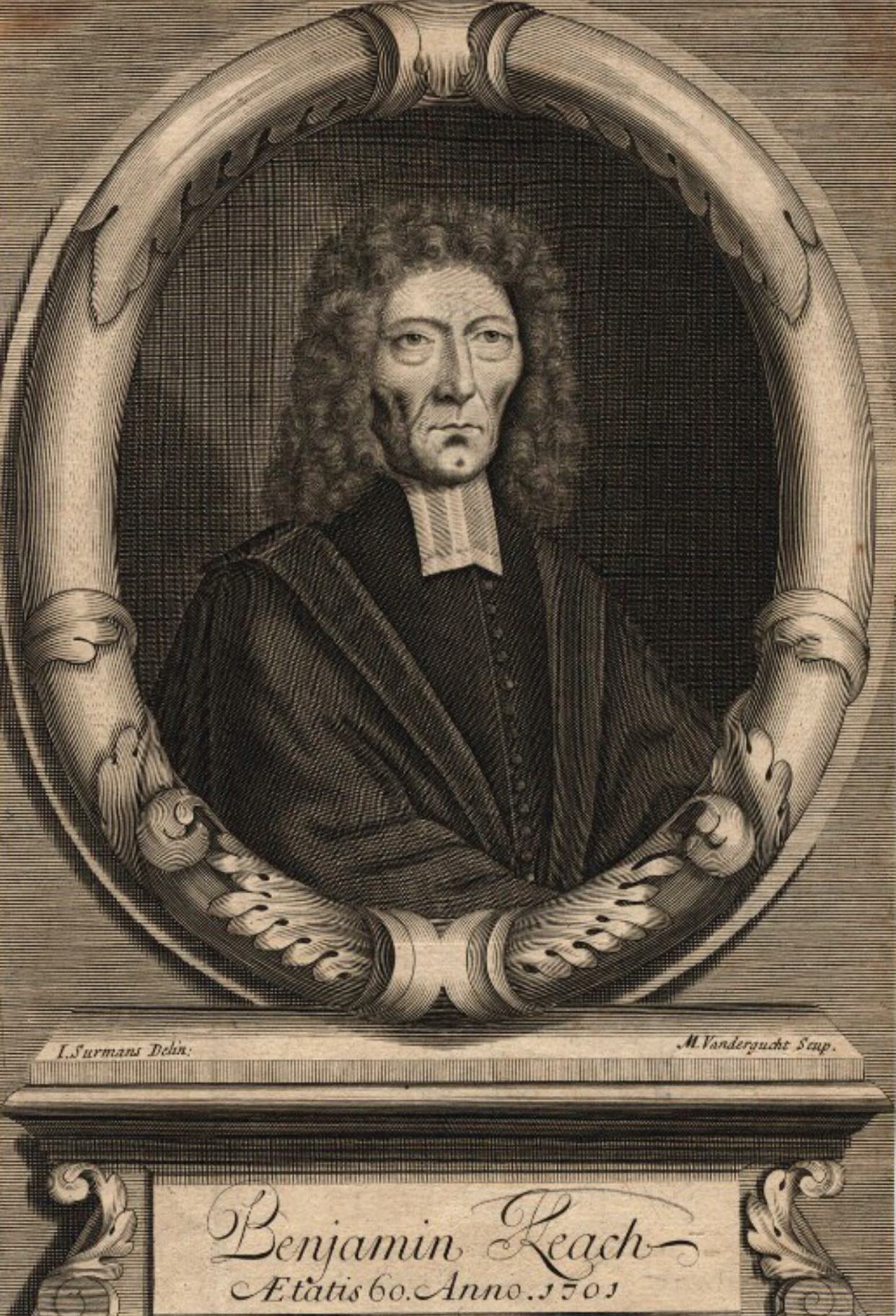
The article "Christ an Apostle" by Benjamin Keach explores the theological significance of Christ's dual role as both Apostle and High Priest. Keach argues that the designation of Christ as an Apostle is distinctive because it signifies his divine commission, unique qualifications, and foundational work within the Christian faith. Scripture references such as Hebrews 3:1 highlight that Christ was uniquely sent by God, emphasizing his authority and the necessity of his mission (John 8:16, John 18:37). The article further asserts the practical significance of this understanding, advocating that believers should recognize Christ as their sole Apostle and High Priest, which negates the need for any human intermediaries in the faith. This perspective underscores the reliance on Christ as the ultimate authority and mediator between God and mankind.
Key Quotes
“An Apostle signifies in the Greek one sent and it hath something peculiar to it to distinguish the office from other offices appertaining to the Gospel and the Church…”
“Christ Jesus was not alone but the Father was with him in an extraordinary manner beyond what he ever was with any mortal.”
“We own none but Christ to be the apostle and High-priest of our profession…”
“How shall we escape if we turn away from him that speaks from heaven.”
What does the Bible say about Christ as an Apostle?
The Bible portrays Christ as the supreme Apostle sent by God to fulfill His mission of salvation.
Hebrews 3:1, John 3:34
How do we know Christ's apostleship is true?
We know Christ's apostleship is true because He was sent by the Father with divine authority and fulfillment of prophecy.
John 8:16, John 18:37
Why is Christ being an Apostle important for Christians?
Christ's role as an Apostle is vital because He embodies the truth and provides salvation, serving as our direct access to God.
John 9:4, Hebrews 5:9, Matthew 18:5
CHRIST AN APOSTLE
"Consider the Apostle and High-Priest of your profession, Christ Jesus," Heb 3:1.
AN Apostle signifies in the Greek, one sent; and it hath something peculiar to it, to distinguish the office from other offices, appertaining to the Gospel, and the Church: for though John Baptist was one sent, with many others, yet were they not called Apostles, but dignified by some other names, titles, or epithets; as Fore-runner, Disciple, and Servant of the church, &c. Now inasmuch as one rank and order of men have this title given them, and by it are distinguished from others concerned in divine service, we may suppose it to signify their commission and qualification for their designed work; which commission, qualification, and designed work, seems to be comprehensive of these three things, viz., 1. Immediately sent. 2. Marvellously inspired. 3. The master-builders of the Gospel foundation for the Christian religion. That all these are declared and set forth concerning Jesus Christ, is evident. Therefore in that Christ is here called an Apostle, it must or may signify, that he was sent after a higher and more extraordinary manner than common messengers.
METAPHOR
I. An Apostle was immediately sent by Christ.
PARALLEL
I. Christ Jesus was immediately sent by God: "He came not of himself, but the Father sent him."
METAPHOR
II. The Apostles in pursuit of their commission, went up and down preaching the Gospel, &c.
PARALLEL
II. Christ Jesus went about preaching the Gospel, doing good, and healing all that were oppressed, Ac 10:38.
METAPHOR
III. The Apostles had Christ always with them in their work, in an extraordinary manner.
PARALLEL
III. Christ Jesus was not alone, but the Father was with him, Joh 8:16. God was with him in an extraordinary manner, beyond what he ever was with any mortal.
METAPHOR
IV. An Apostle was to bear witness to the truth, and to Christ's name.
PARALLEL
IV. Christ, as the great and chief Apostle, bore witness to the truth: "For this cause came I into the world," &c. Joh 18:37.
METAPHOR
V. The Apostles were to open mysteries that had been kept hid.
PARALLEL
V. The Lord Jesus came, as the chief Apostle, to open mysteries that had been kept hid, Lu 4:18.
METAPHOR
VI. The Apostles were endued with divine power to do wonders and mighty works.
PARALLEL
VI. Christ Jesus had not the Spirit by measure, but was filled with the Spirit to do and speak mighty things, Joh 3:34.
METAPHOR
VII. The Apostles were to take care of the church whilst they lived, and after their decease Paul had the care of all the churches upon him; "he sent for the elders, and gave them charge," &c., Ac 20:17. St. Peter took care, that after his decease the churches might be secured from danger.
PARALLEL
VII. Christ more especially took care of his Church before he left them. He forewarned them of evils to come, he cautioned them against fears and apostacies, and committed them to the care of his Father: "keep through thine own name those that thou hast given me," Joh 17:11.
METAPHOR
VIII. The Apostles had a dispensation committed to them from which they were not to depart. "A dispensation of the Gospel is committed to me. Woe is me, if I preach not the Gospel," 1Co 9:17. They also ordained other ministers.
PARALLEL
VIII. Jesus Christ, as the great Apostle had a dispensation committed to him: "The work that my Father gives me to do, shall I not do it?" Joh 9:4, "I must work the works of God." "Tell that fox, I do miracles this day, to-morrow, and the third day I shall be perfected," Lu 13:32. He had power also to ordain other officers and ministers.
METAPHOR
IX. The Apostles went through good and evil report unweariedly, till they had finished their course, and then committed themselves to him that judgeth righteously, in expectation of a crown of endless glory, 2Co 6:8. "Henceforth is laid up for me a crown of righteousness," &c. 2Ti 4:8.
PARALLEL
IX. Christ "suffered great contradiction of sinners against himself," Heb 12:3: fought as the captain of our salvation, with all difficulties and enemies, till he had finished his work, and could say, "Father, it is finished, into thy hands I commend my spirit. "He for the joy that was set before him, endured the cross, despised the shame, and is set down at the right-hand of God," Heb 12:2.
SIMILE
I. The Apostles were but mere men, whose original was from the dust.
DISPARITY
I. Christ was Emmanuel, Isa 7:14, the eternal Son of God, God, very God, of God, Lord of all, whose descent was from heaven, "I came down from heaven," Mt 1:23. "The second man was the Lord from heaven." 1Co 15:47; Joh 6:38.
SIMILE
II. The Apostles had but a small measure of the Spirit, and were not without sin and infirmities, 1Co 13:9.
DISPARITY
II. Christ had the fulness of the Divine Spirit dwelling in him, and resting upon him, "God gave not the Spirit to him by measure," Joh 3:34, "Through the eternal Spirit he offered himself to God without spot," Heb 9:14. "The prince of this world came, and found nothing in him," Joh 14:30, "He was holy, harmless, and undefiled, separate from sinners," Heb 7:26.
SIMILE
III. The Apostles were but fellow-servants, and "not lords over God's heritage," 1Pe 5:3, not like some we have had since their time.
DISPARITY
III. But Christ is Master, Head, Lord, Ruler, and Governor, a complete Prince and King, as well as Priest, Prophet, and Apostle. He is Lord of all, "over all, God blessed for evermore," which made Mary say, "they have taken away my Lord," Joh 20:28, and Thomas say, "my Lord and my God."
SIMILE
IV. The Apostles did but show and direct to a Saviour, to salvation, and eternal life; they were not able to save, nor could they give salvation to any: "was Paul crucified for you?" &c.
DISPARITY
IV. But Christ did more than show and direct to a Saviour: he was that Saviour himself, and the Author of eternal salvation to all them that obey him. He had help laid upon him, being mighty to save, Heb 5:9; was born a Saviour: "To you is born in the city of David a Saviour, which is Christ the Lord," Lu 2:11. And that great salvation is not to be neglected without imminent danger: "How shall we escape, if we neglect so great salvation?" Heb 2:3.
INFERENCES
I. Behold the great goodness of God to the church and world! that he should send so great an Apostle, so wise an Ambassador, to treat with souls, and for souls, and to settle, govern, and establish the Church.
II. What great love Christ had to sinners, that he should leave his riches and glory above, to come down to be an apostle, a fellow-servant, for our sakes. "He that was rich became poor, that we would through his poverty might be made rich," 2Co 8:9.
III. What need have we of the pope and his cardinals, seeing God hath been so kind, to give us Christ to be our Apostle and High-priest? We own none but Christ to be the apostle and High-priest of our profession," Heb 3:1, who can do all things for us by his word, Spirit, and ministers. Away therefore with that grand antichrist, and vile impostor, whom they call his holiness, with all his antichristian crew.
IV. This may serve to inform us, that we ought to listen to him, and be taught by him, for there is great reason for it.
1. God sent him: "I came not of myself, the Father sent me."
2. "He spake so as never man spake," Joh 7:46. No man ever yet, nor ever will speak like the man Christ Jesus. He spake like one that had authority, and not like the scribes, learned doctors, and wise men among the Jews, Mt 7:29. Many were astonished at his understanding and answers in his tender age.
3. God commands us to hear him: "This is my beloved Son, hear him," Matt
18:5.
4. God threatens us if we do not hear him; it is dangerous to refuse to hear him; "How shall we escape, if we turn away from him that speaks from heaven?" Heb 2:3.

Comments
Your comment has been submitted and is awaiting moderation. Once approved, it will appear on this page.
Be the first to comment!