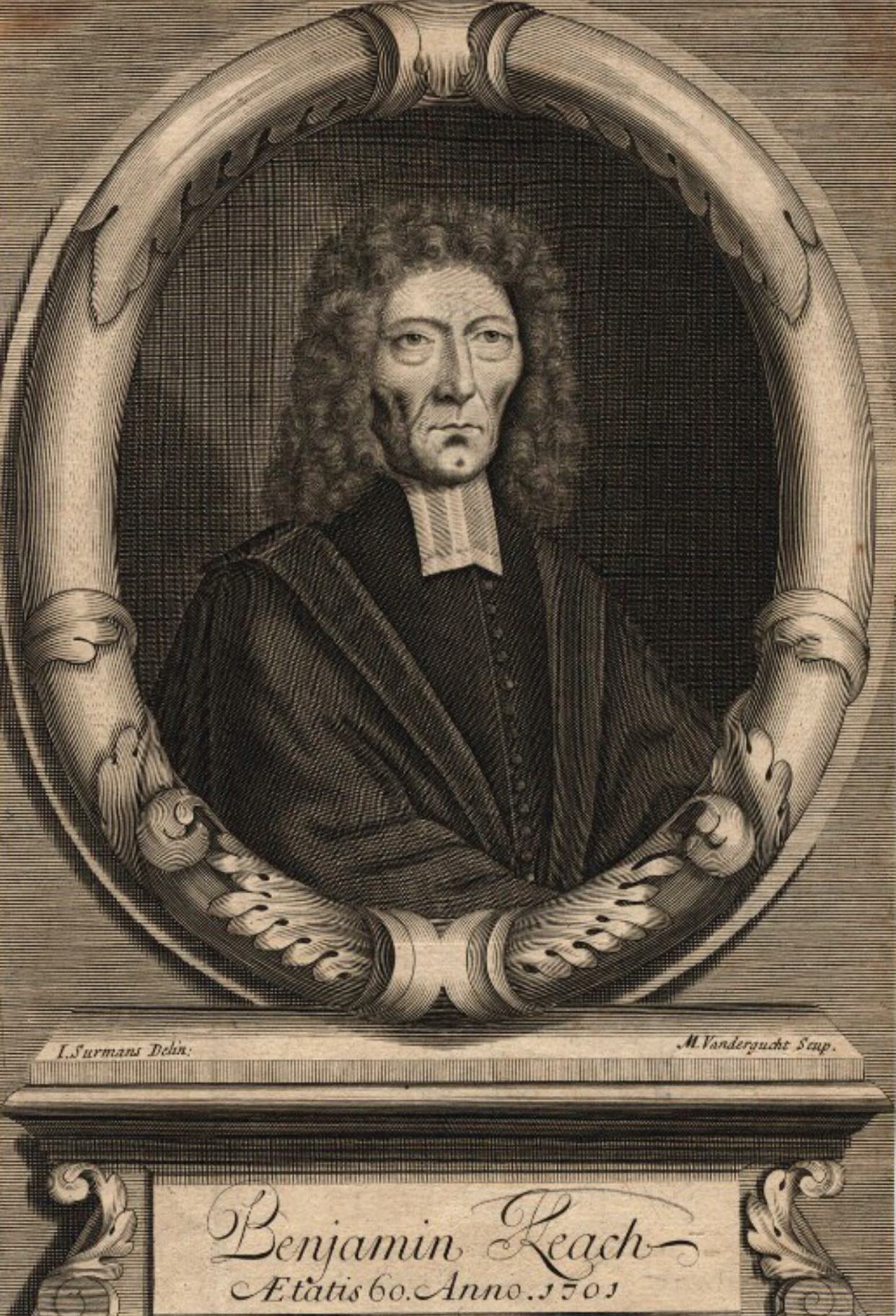
In "Christ Heir of All Things," Benjamin Keach expounds on the theological doctrine that Jesus Christ is the appointed Heir of all things, relying on Hebrews 1:2. He argues that the term "Heir," derived from the Greek "klhronomov," indicates Jesus’ entitlement to an inheritance that encompasses the entire universe, as determined by God the Father. Keach employs various metaphors to illustrate Christ's multifaceted role as Heir, such as being the firstborn, the head of the family, and the supreme lord, supported by Scripture references including Psalm 89:27 and Matthew 28:18. The practical significance of this doctrine lies in the believers' dependence on Christ as their support and resource, highlighting the importance of abiding in Him to partake in the fullness of His inheritance.
Key Quotes
“God the Father being the Sovereign Owner and Proprietor of all things devolves the inheritance upon his only-begotten Son Jesus Christ.”
“Christ as he hath absolute right or Is Heir of all things... hath granted unto the Son as incarnate and Mediator.”
“He is both King of saints and King of nations.”
“Let us cry Thy kingdom come thy will be done in earth as it is in heaven."
What does the Bible say about Christ being the Heir of all things?
The Bible declares that Christ is appointed Heir of all things, highlighting His authority and supreme position over creation (Hebrews 1:2).
Hebrews 1:2, Psalm 89:27, Ephesians 1:21-22
How do we know Christ's Heirship is true?
Christ's Heirship is affirmed through Scripture, demonstrating His unique relationship with the Father and His fulfillment of Old Testament prophecies (Acts 2:36).
Acts 2:36, Psalm 2:8
Why is Christ's Heirship important for Christians?
Christ's Heirship is crucial for Christians because it assures them of His ultimate authority and the inheritance they have through Him (Romans 8:17).
Romans 8:17
CHRIST HEIR OF ALL THINGS
"Whom he hath appointed Heir of all things" Heb 1:2.
THE term Heir, (in Greek Klhronomov, from klhrov, sors, or a lot, and nomov, lex, the law) is one that inherits an estate, lot, or portion by law; and therefore God the Father being the Sovereign Owner and Proprietor of all things, devolves the inheritance upon his only-begotten Son Jesus Christ. And so, though he is really and properly an Heir, yet the term is by a metaphor borrowed from worldly heirs. This word klhrov, is appropriated by custom to the clergy, or ecclesiastical persons; but it really signifies God's lot or inheritance, which is all the faithful, and therefore, 1Pe 5:3, should not be translated God's clergy, but God's inheritance, Weemes' Divin. Exercit. The most probable derivation of the word klhrov, is from the Hebrew XX Goral, which by a transposition of letters, and the letter Gimel changed into the Greek Kappa, will be XX Coral, which is of near affinity in sound and signification to the Greek klhrov, whence, as was said, comes klhronomov, an Heir. Now the universal body of believers is the inheritance or clergy (if we must so call it) of God, Isa 19:25, which universal Church is distributed into particular churches, as it were by lots or parts; neither is the term any where in scripture peculiarly attributed to the pastors of the churches; as Laurentius and Gerhard, upon 1Pe 5:2, demonstrate.
METAPHOR
I. AN Heir is the first-born usually, though it holds not universally so; for all right to estates, kingdoms, and possessions are not hereditary.
PARALLEL
I. CHRIST, the Heir of all things, is the Father's first-born. "I will make him, my first born, higher than (or high above) the kings of the earth," Ps 89:27.
METAPHOR
II. An Heir is the head of a family, the chief and supreme of all his father's house.
PARALLEL
II. Christ is the Head of the heavenly family, He hath put all things under his feet. "And gave him to be Head over all things to the Church," Eph 1:21-22.
METAPHOR
III. Sometimes a person is made Heir, and hath both title and possession, by virtue of a grant and surrender made by another that is allied, or bears good-will to him.
PARALLEL
III. Christ, as he hath absolute right, or, "Is Heir of all things." As he is the first-born among many brethren, he hath also a delegated right, he hath his title and possession by grant from the Father; hence it is said: "He is appointed Heir of all things," Heb 1:2. God the Father, in the pursuit of the sovereign purpose of his will, hath granted unto the Son, as incarnate, and Mediator of the new covenant, according to the eternal counsel between them both, a sovereign right or Heirship, the possession of an absolute Proprietor to dispose of all things at his pleasure.
METAPHOR
IV. An Heir is the support and stay of a family, all depend and rely upon him, the whole estate and inheritance being his.
PARALLEL
IV. Christ is the only support and bearer up of the whole Church, by whom the whole family in heaven and earth are named, so all the faithful depend and rely upon him for all things; "In whom are hid all the treasures of wisdom and knowledge," Col 2:3. "It pleased the Father that in him all fulness should dwell," Joh 1:14,16.
V. An Heir is lord of all, he hath headship, dominion, and power over all whatsoever he is the Heir of, whether persons or things, one or more kingdoms, See Ga 4:1.
PARALLEL
V. Christ, who is the true and undoubted Heir, is Lord of all: "That in all things he might have the pre-eminence," "All power in heaven and earth is given to me; the Father hath subjected all things unto him," Mt 27:18-20; 1Co 15:27. And it is reasonable that Christ should have this sovereign power and Headship; since all things were made by him and for him, it was meet he should be Lord of all, Re 4:11; besides, this made good the promise made to Abraham, which was that his seed should be Heir of the world. Moreover, hereby is the grant of that request of Christ to the Father; "He shall have the whole world for his inheritance, the ends of the earth for his possession," Ps 2:8. He is both King of saints, and King of nations.
1. He is Lord over angels, he is Head of principalities and powers, thrones, and dominions; he hath power and authority over the good angels, these are part of his inheritance. "Let all the angels of God worship him."
2. He hath pre-eminence and dominion over the evil angels, they fly before him, "He hath spoiled principalities and powers," &c., Col 2:15.
3. He is the Head, and hath pre-eminence over men, he is Lord both of the dead and living; all the elect are given to him, they are his in manifold respects, children, servants, brethren, disciples, subjects, spouse, &c., Ro 14:9.
4. The power and Headship of Christ, as Heir of all things, extends to all mankind universally, all owe him homage, and shall submit and bend their knees to him, Php 2:10-11. He hath an absolute, unlimited, and universal power; may pull down and setup at his pleasure, kill and make alive; all mighty monarchs are but tenants at will to him.
5. He hath power and Headship in an especial manner over all things to the Church. First, judicial or Old Testament things. Secondly, Christian or New Testament things; Christ, being Heir and Lord of all things whatever; the sovereign Disposer of all those rights and ordinances of worship, about which the Jews contended, must needs be in his hand, to change and alter them as he saw good. "The Son of man is Lord of the sabbath;"[1] and as he is Head over all things, he hath right and sovereignty to make, ordain, or appoint laws, ordinances, and institutions; and to prescribe rules how and after what manner God is to be worshipped, belongs only to Christ the Heir of all things, and Head of the Church.
[1] Dr. Owen on Heb 7:2.
METAPHOR
VI. An Heir distributes portions to others, he enricheth all his younger brethren and sisters, and gives gifts (if a kingly and mighty Heir) to all his friends and favourites.
PARALLEL
VI. Christ distributes in a glorious manner to others, he gives large portions to the saints, whom he is not ashamed to call brethren: "He that doeth the will of my Father, the same is my brother, sister, and mother," Mt 12:50. Regenerating, quickening, sanctifying, assisting, comforting, and sealing grace is bestowed and freely given to believers, with pardon, peace, sonship, and eternal life; yea, all things are given that appertain to life and godliness, to such that are Heirs and joint-Heirs with him; when he ascended on high, he gave gifts unto men, Eph 4:8.
METAPHOR
VII. A princely Heir, or one that is an Heir to a crown and kingdom, is proclaimed, and his right asserted.
PARALLEL
VII. Christ, the Heir of all things, when he first came into the world, was proclaimed by the angels of God, as the rightful Heir of the crown and sceptre of both worlds; "He shall be great, and shall be called the Son of the Highest, and the Lord God shall give unto him the throne of his father David: and he shall reign over the house of Jacob for ever and ever, and of his kingdom there shall be no end," Lu 1:32-33. His right was often asserted by himself; as Mt 28:18; Joh 13:3; and by others, his apostles, &c.
METAPHOR
VIII. An Heir at a certain time comes to the inheritance, or takes actual possession of that which he is Heir of.
PARALLEL
VIII. There was a set time agreed upon, when Christ as Mediator should come to his inheritance, who is appointed Heir, &c. Eqhke, may denote either those special acts, whereby he came into the full possession of his Heirship, or it may be extended to other preparatory acts, that long preceded them, especially if we should take it to be of the same importance, with eqeto in the second Aorist. In the former sense, it denotes the glorious investituture of Christ in the full possession of his kingdom after his resurrection, with the manifestation of it in his ascension, and token of its stability in his sitting down at the right hand of God. By all these God made him, placed him with solemn investiture, Heir of all. The grant was made to him upon his resurrection, Mt 28:18, and then fully declared to others. The solemnization of it was in his ascension, all was sealed and ratified when he took possession of the throne, by all which he was made and declared to be Lord and Christ, the true Heir of all things, Ac 2:36; 4:11; 5:30-31. And such weight doth the scripture lay upon the glorious investiture of Christ in his inheritance, that it speaks of his whole power, as then first granted unto him, Ro 14:9; Php 2:7-10; and the reason of it is, because he had then actually performed that work and duty; upon consideration whereof that power and authority were eternally designed and originally granted unto him. God's actual committing all power over all things and persons in heaven and earth, to be executed and managed for the ends of his mediation, declaring this act, grant, "and delegation, by his resurrection, ascension, and sitting at his right hand, is that which this word denotes; notwithstanding the time of the visible possession of his right is not yet come, he will take unto him his great power, that is, the visible exercise and execution of it, and reign, Re 11:17. [2] "Wilt thou at this time restore the kingdom to Israel? and he said unto them, It is not for you to know the times and seasons, which the Father hath in his own power.
[2] Dr. Owen.
METAPHOR
I. An Heir many times is one that succeeds in the possession of the right and goods of one deceased, and till then cannot possess the inheritance.
DISPARITY
I. Christ enjoys all, as he is "Heir of all things," with the Father, who dieth not, but is like the Son, immortal, eternal, not subject to any change. The Son, being Heir, doth not eclipse nor diminish the glory of the Father.
METAPHOR
II. An Heir is many times disinherited of his right, cut off, excluded, and utterly deprived of his crown and kingdom by an usurped power.
DISPARITY
II. Christ shall not, cannot be disinherited, Though wicked men take counsel together to obstruct and hinder his visible exaltation, yet all is in vain, "He that sits in heaven shall laugh; the Lord shall have them in derision, and will set his king upon his holy hill of Zion. I will make my first-born higher than the kings of the earth," Ps 2:2-6.
METAPHOR
III. An Heir among men, hath comparatively but small possessions.
DISPARITY
III. Christ (you hear) "is Heir of all things;" he is Head and chief Lord over angels and men, over all ranks and degrees of men, emperors, kings, and all the nobles of the earth, over all persons civil and ecclesiastical, over devils and all the powers of darkness. He is Heir of the world to come, the new heaven and earth, and of all the glory of it, as of the earth, or the kingdoms of this world.
INFERENCES.
I. From hence we may perceive how exceedingly God hath honoured the Lord Jesus Christ as Mediator. He hath a name above every name in this world, or that which is to come, Php 2:9.
II. Moreover, it is evident from hence, Christ is very rich. Who would not marry such an Heir, or choose the Lord Jesus for their Husband? The riches of his kingdom, the good things of his house, the revenues of his dominion, are infinite and inexhaustible, and he is very gracious and bountiful in his communication of them unto all that take hold of him.
III. It is easy to conclude from hence, that those that intend to be partakers of any good in heaven or earth, in a way of right, in a way of love and mercy, must get an interest in Christ, and abide in continual obedience to the Gospel.
IV. In vain are all the endeavours of wicked men in keeping him from the possession of his right: he will soon "dash them, in pieces," Ps 2:9; and tread them under his feet, who oppose his coming to the throne, and the taking full possession of his inheritance.
V. Let us have our eyes continually up unto him, and pray that he would make haste to lay claim to his right, and take unto him his great power, and reign. Let us cry, "Thy kingdom come, thy will be done in earth as it is in heaven," &c.

Comments
Your comment has been submitted and is awaiting moderation. Once approved, it will appear on this page.
Be the first to comment!