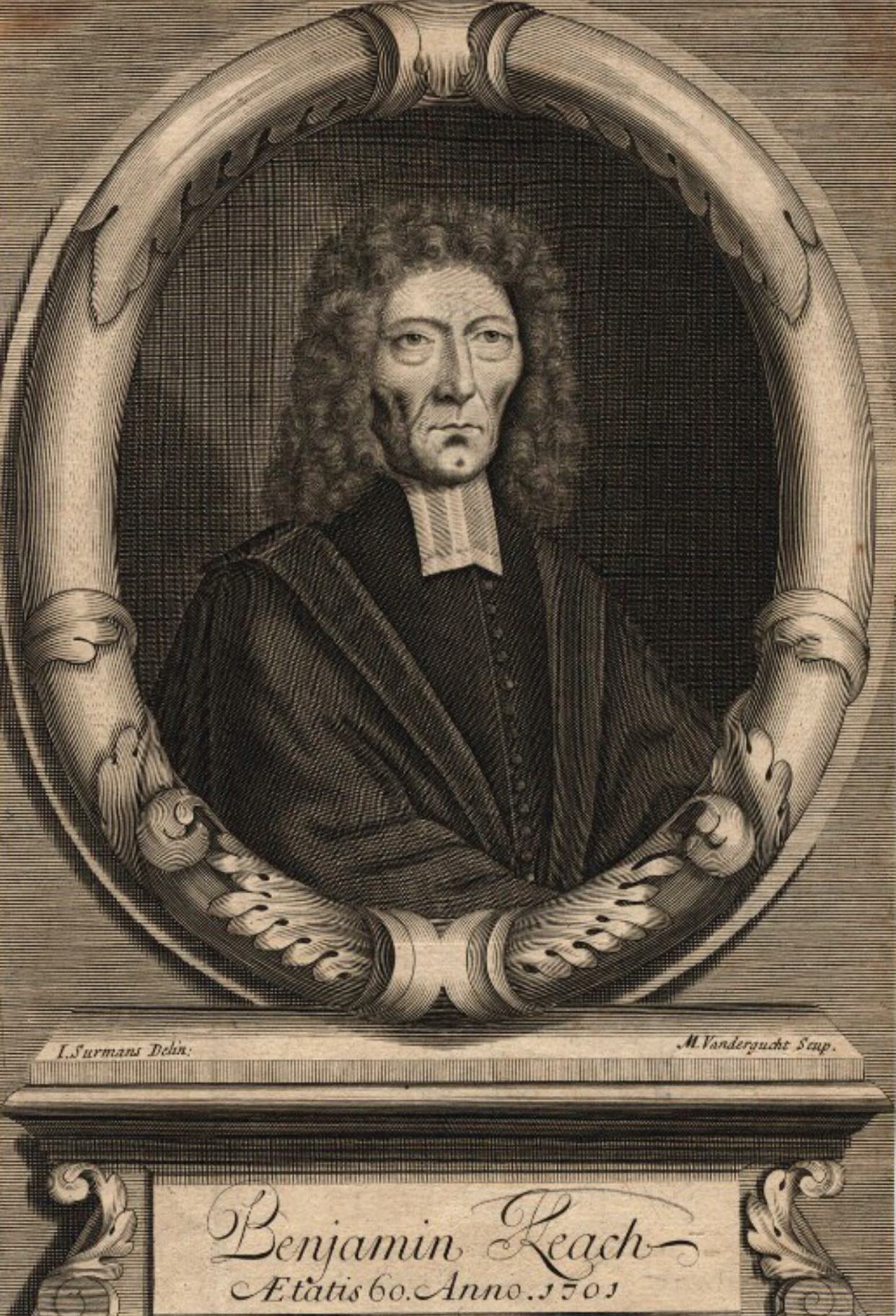
The article "The Church the Temple of God" by Benjamin Keach explores the theological concept of the church as the antitype of Solomon's Temple, emphasizing its role and significance in the context of God's covenant community. Keach draws direct parallels between elements of the Temple and attributes of the Church, arguing that both are divinely built structures, with living stones in the Church being prepared by the Holy Spirit and the Word of God (1 Peter 2:3-6). He supports his position with a range of Scripture references, such as 1 Corinthians 3:16 and Ephesians 2:21, to illustrate the spiritual preparation and unity found within the Church, which includes both Jews and Gentiles as co-builders of God’s holy dwelling. The doctrine of the Church as God's temple carries practical significance, underscoring the importance of maintaining ecclesiastical purity and the expectation of the Church's future glorification, emphasizing that even amidst present challenges, God's ultimate plan for His Church assures its continued existence and glory.
Key Quotes
“The Church is the anti-type of Solomon's Temple and we shall therefore run the parallel with respect to that TYPE.”
“So in the building of the Church there should be no need of the hammer or the axe to square and hew by repentance.”
“The glorious presence of God is in his Church; he dwelleth in Sion and from thence the perfection of beauty shines forth.”
“The builders of God's Church in these latter days have had much Popish rubbish to remove.”
What does the Bible say about the Church as the Temple of God?
The Bible depicts the Church as the Temple of God, built with living stones that reflect God's presence and glory.
1Co 3:16, 2Co 6:16, 1Pe 2:3-6
How do we know that the Church cannot be destroyed?
Scripture assures that the gates of hell shall not prevail against the Church, confirming its eternal security.
Mt 16:18, Re 11:2
Why is it important to understand the Church as God's dwelling place?
Understanding the Church as God's dwelling place emphasizes His presence among believers and their collective role in glorifying Him.
2Co 6:16, Eph 2:21
THE CHURCH THE TEMPLE OF GOD
"Know ye not that ye are the Temple of God," 1Co 3:16.
"For ye are the Temple of the living God,, as God hath said, I will dwell in them, and walk in them" &c. 2Co 6:16.
THE Church is the anti-type of Solomon's Temple, and we shall therefore run the parallel with respect to that.
TYPE
I. The Temple was built with costly stones, well hewed, squared, and polished, before they were laid into the building.
PARALLEL
I. So the Church of God is built with spiritual stones, who are well hewed and polished by the Word and Spirit, before added to, or laid into the heavenly building, 1Pe 2:3-6; Ac 2:40-41.
TYPE
II. In the Building of the Temple there was no noise heard of hammer or axe; and the house, when it was in building, was built with stones made ready before they were brought thither, 1Ki 6:7, so that there was neither hammer, nor axe, nor any tool of iron heard in the house, whilst it was in building.
PARALLEL
II. So in the building of the Church, there should be no need of the hammer, or the axe, to square and hew by repentance, the stones of this building, being every way prepared, and made fit before. Conversion is the polishing work, and those that receive unconverted persons, violate the holy rule of God's word, for that maketh work for the hammer and axe in the Temple. Hence Solomon saith, "Prepare thy work without and make ready thy things in the field, and after build thy house," Pr 24:27.
TYPE
III. Others besides Solomon were concerned in the building of the Temple, as Hiram King of Tyrus, and the Zidonians, who hewed the timber for it.
PARALLEL
III. To show, that in the building of the Church of God, the Gentiles as well as the Jews, are concerned; they all concur together, to build up an holy Temple in the Lord, Eph 2:21
TYPE
IV. The Temple was a most rare and glorious structure; it was over-laid with fine gold upon carved cedar, 1Ki 6:21.
PARALLEL
IV. To show the beauty and glory of the Church, which is adorned with the gifts and graces of the Spirit. The Church is inwardly pure, very rich and beautiful. Hence the king's daughter is said to be all glorious within, Ps 45:13.
TYPE
V. In the temple were many windows, to let in light abundantly, 1Ki 6:4.
PARALLEL
V. So in the Church, the light of the Gospel, and the blessed Spirit, shines gloriously; these let light in great abundance.
TYPE
VI. In the Temple were several degrees of galleries or lofts, each one above another, and larger each than other.
PARALLEL
VI. So in the Church, God hath placed degrees of officers, some greater and higher in glory than others; as apostles, pastors, teachers, &c., Eph 4:11.
TYPE
VII. The walls of the Temple were covered round about with Cherubims, palm-trees, and flowers.
PARALLEL
VII. To note, saith Mr. Guild, the protection of the Church by the ministry of angels, though they be not seen, and its peaceable, victorious, and flourishing state under the same.
TYPE
VIII. Solomon consecrated the Temple unto the Lord.
PARALLEL
VIII. So did Christ his Church unto the Father. Joh 17.
TYPE
IX. There was music used in the Temple.
PARALLEL
IX. Which signifies that joy of the heart, and heavenly melody, that is in the Church, amongst the faithful and sincere converts thereof, Eph 5:19.
TYPE
X. In the Temple was the ark of the testimony, and in the midst of the house it is said he set it.
PARALLEL
X. So in the Church is God's word and covenant of grace, borne by Christ, and by his true ministers, by preaching and publishing the same.
TYPE
XI. The glory of the Lord filled the Temple; God promised to dwell therein, and hear the prayers that should be there made. "I have hallowed this house, saith God, that thou hast built, to put my name there for ever; and mine eyes and my heart shall be there perpetually," 2Ch 7:15.
PARALLEL
XI. So the glorious presence of God is in his Church, he dwelleth in Sion, and from thence the perfection of beauty shines forth; and the promises, of blessed grace, peace, pardon, and acceptance, are made to them who dwell therein. His eye is always upon the righteous, his ears open to their cry, and his tender compassion is ever toward them, 1Pe 3:12.
TYPE.
I. The Temple was built with dead and senseless stones.
DISPARITY
I. The Church is built with living, sensible, and lively stones, 1Pe 2:5.
TYPE
II. The stones were polished and hewn by the hands of men.
DISPARITY
II. These stones are hewn and polished by the hand of the Spirit.
TYPE
III. The temple that was built by Solomon, was utterly destroyed by the Babylonians.
DISPARITY
III. The Church of God can never be destroyed; the gates of hell shall never prevail against it, so as utterly to overthrow it, Mt 16:18, though it is not denied, but the outward courts have been trodden down by the Popish Gentiles, Re 11:2.
A PARALLEL,
Between the second temple, built in the days of Nehemiah, and the Church of God built in the latter days.
METAPHOR
I. The Temple that was built in the days of Nehemiah, was first destroyed by the literal Babylonians.
PARALLEL
I. Signifying the Church of God should be greatly defaced and spoiled, and the outward courts trodden down by the mystical Babylonians, and afterwards rebuilt, or rather, repaired again, Re 11:2-3.
METAPHOR
II. The Temple was built in a troublesome time; they wrought with one hand, and held a sword in the other.
PARALLEL
III. The Temple was rebuilt by such as had been for many years in the Babylonian captivity, Ne 4:13.
PARALLEL
III. Signifying, that the rebuilding of God's Church should be of such as had been a long time in spiritual captivity, under the mystical Babylonians, or mother of harlots.
METAPHORS
IV. The builders of this second Temple were looked upon as poor, weak, and contemptible persons, in comparison of Solomon, and those that built with him, Ne 4:2.
PARALLEL
IV. Signifying, that those whom God would raise up to repair the waste places of Sion, in the latter days, should be poor, weak, inconsiderable persons, very unlikely to perfect so great a work as reformation is. What was Luther, and others whom God employed, to the holy apostles, who were the first builders?
METAPHOR
V. The builders of this Temple were greatly mocked and jeered. There were Sanballat, Gesham, Tobiah, and others, who in a reproachful manner said, "What will these feeble Jews do? Will they make an end in a day? If a fox go up, he shall even break down their stone wall," Ne 4:2-4.
PARALLEL
V. So the rebuilders in these latter days have been greatly reproached and contemned by the enemies of Christ; those that are truly religious, called feeble, weak, and foolish ones, &c., nay heretics, schismatics, and many other reproachful names have been, and still are daily given to them, and their work much slighted and despised also.
METAPHOR
VI. The builders of this Temple had much rubbish to remove, before they could go on with their work, Ne 4:2.
PARALLEL
VI. So the builders of God's Church in these latter days, have had much Popish rubbish to remove, much filth of human inventions, and traditions of that Church being in their way; some stones being almost quite lost amongst this rubbish, and others ready to mistake,
and instead of a stone of Sion, they take a stone of Babylon.
METAPHOR
VII. The builders of this Temple were hindered, and for a time the work ceased.
PARALLEL
VII. So the builders of God's house, or reformers in religion, have often been hindered or obstructed in these latter days,
METAPHOR
VIII. Many people were very backward about rebuilding the Temple, in the days of Haggai and Nehemiah, crying, the time was not come that the house of the Lord should be built, Hag 1:2.
PARALLEL
VIII. So have many souls been very backward about the work of reformation, or repairing the house of God: they have dwelt in their ceiled houses, and let the house of God, as is were, lie waste.
METAPHOR
IX. Though many cruel enemies endeavoured to hinder the rebuilding of the Temple, yet the work went on, and was finished in some time, to the joy of the faithful.
PARALLEL
IX. So the enemies now, as in former times strive to hinder the repairing of God's house; yet, the work of reformation shall in due time be perfected, to the joy of all sincere Christians.
METAPHOR
X. That work was carried on, "not by might, nor by power, but by the Spirit of the Lord," Ec 4:6.
PARALLEL
X. So the work in these days goes on, not so much by the power of men, or human help, as by the power of God, and his Spirit.
TEMPLE
XI. God promised that the of the second house should exceed the glory of the first, Hag 1:9. which some conceive was, made good by Christ's coming, whose personal presence in the temple greatly added to its glory.
DISPARITY
XI. So the Church of God in the latter day will be far more glorious than it was ever yet since the beginning of the world, which will be accomplished, as will be showed in respect of these things following.
1. God will destroy all the enemies of his Church. "The adversaries of the Lord shall be broken in pieces, out of heaven God will thunder upon them; for evil doers shall be cut off:" "Yet a little while, and the wicked shall not be, but the meek shall possess the earth," &c. "And all that lift up a hand against Zion, shall be torn in pieces." God will plead the controversy of his Church, and undo all that afflict her. "The stone cut out of the mountain without hands, shall smite the image upon his feet, that were of iron and clay, and break them to pieces; then the iron, and the clay, the brass, the silver, and the gold, shall be broken together, and become as the chaff of the summer threshing-floor," 1Sa 2:10; Ps 37:10-11; Ec 12:2; Da 2:34.
2. God will utterly destroy all idolatry, and all false worship, and by this means will restore his own appointments, in the purity of them. Re 14:8; 18:1-21; Isa 60:1-2; 25:6-7; 58:12.
3. God, to make her glorious, will unite all her children together in love: "They shall serve the Lord with one consent; and no more divisions shall be amongst them," Isa 11:13; Eze 37:16-19; Zep 3:8-9; Ecclesiastes 14:9, "There shall be one Lord, and his name one.
4. God will enlarge her borders. "The children of the barren shall say again in my ears, the place is too strait for me, give me room that I may dwell," Isa 49:20. The fulness of the Gentiles shall be brought in, they shall come like doves to the windows, Isa 60:3-5.
5. The Jews shall be called, and both Jews and Gentiles shall make but one sheepfold: "And there shall be one sheep-fold, and one shepherd," Eze 37:22; Joh 10:16; Isa 19:19 to the end.
6. The glory of the Church will be great in respect of knowledge. "All the earth shall be filled with the knowledge of the glory of the Lord, as the waters cover the sea," Nu 14:21; Isa 11:9; Hab 2:14.
7. Her glory shall be great in respect of the abundance of peace which shall be in the world in that day: God will make wars to cease to the ends of the earth; such a day never was in the world yet, Ps 46:8-9, and Ps 72:7; Isa 2:4; Mic 4:3-4.
8. "The mountain of the Lord's house shall be exalted above the mountains, and lifted up above the hills, and all nations shall flow unto it," Mic 4:1; Isa 2:12. The saints in that day shall possess the gates of their enemies, Jer 30:20.
9. The glory of the Church will be great in respect of holiness. God will bring his people into the fire, and make his Church very pure, Isa 1:25-27; Mal 3:2; Ps 110:2-3; Ecclesiastes 13:8-9. "There shall be no Canaanite in the house of the Lord, no unclean person shall dwell therein."
10. Her glory shall be great by Christ's coming to her. "Thine eyes shall see the King in his beauty," Isa 33:17. "He shall be King over all the earth. I have set my King upon my holy hill of Sion." God will dwell with men in a more glorious manner than he ever yet dwelt with them.
11. In that her glory shall abide, and the kingdom shall not be left to another people, Da 2:44; 7:27.
INFERENCES.
I. Let us pray for the day of Sion's glory, and never give God rest, until he hath made Jerusalem a praise in the whole earth: "Thy kingdom come," &c.
II. Let not the godly be discouraged, whatever troubles they are now attended with; clouds of darkness shall soon fly away: "At eventide there shall be light," Ecclesiastes 14:7.

Comments
Your comment has been submitted and is awaiting moderation. Once approved, it will appear on this page.
Be the first to comment!