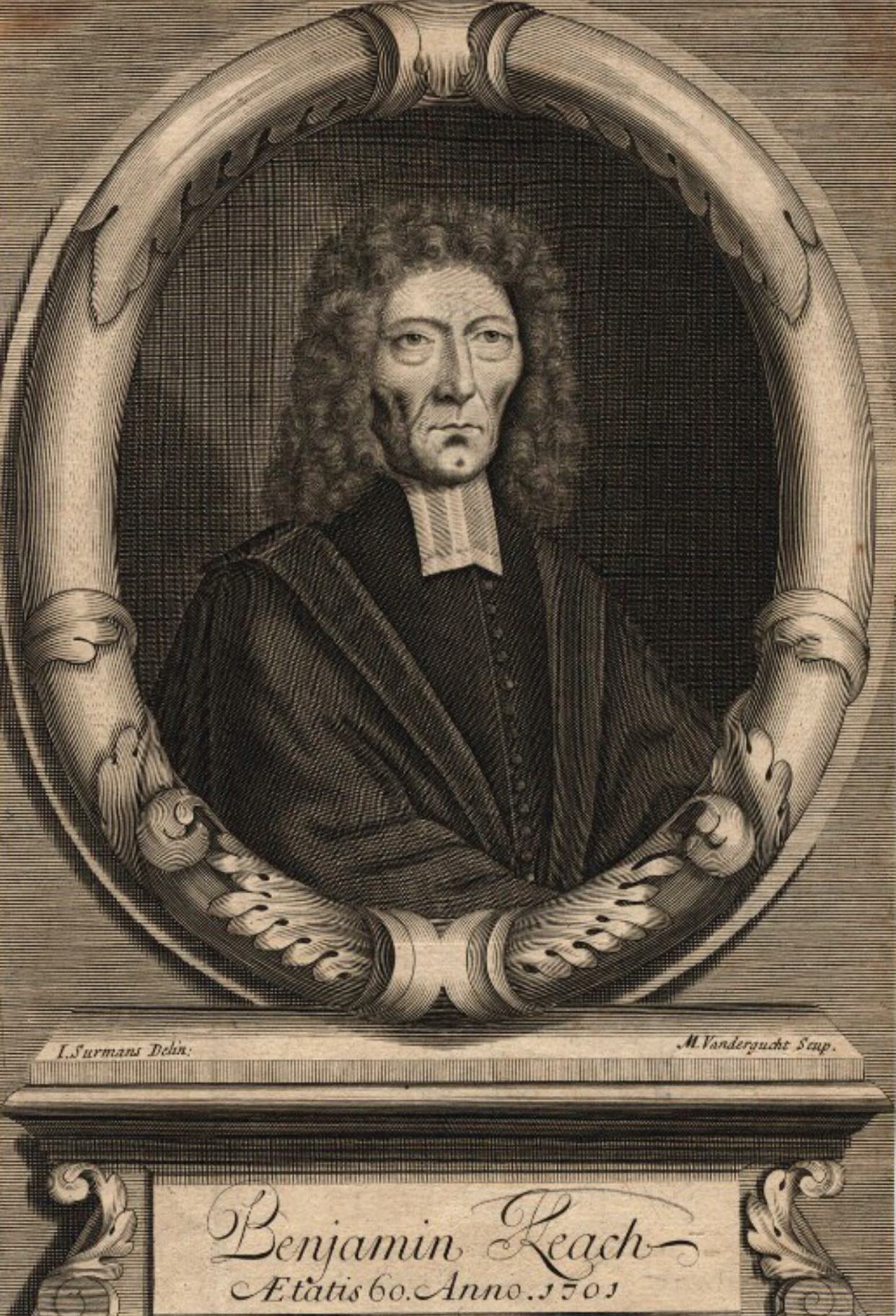
The article "Wicked Men Compared to Lions" by Benjamin Keach explores the metaphorical comparison between wicked men and lions within a biblical context. Keach argues that Scripture often depicts oppressive tyrants as lions, highlighting their qualities such as pride, strength, cruelty, and cunning, which parallel the nature of lions in the wild. Key Scripture references include Job 4:10, 2 Timothy 4:17, and Psalm 57:5, which illustrate deliverance from the 'lion' of peril and the fear instilled by wicked men. The doctrinal significance lies in God's sovereignty over these tyrants; although they may seem powerful, God is ultimately stronger and will silence and scatter them, thus providing hope for the faithful and affirming His justice.
Key Quotes
“Though these Lions are very strong and powerful yet God is stronger than they and he is against them.”
“Such as have made others want shall at last come to want themselves.”
“When God sees the hearts of Men swollen to this height of insolent madness he delights to show himself and grapple with them.”
“The Lions shall lack and suffer hunger but they that fear the Lord shall not want any good thing.”
What does the Bible say about wicked men compared to lions?
The Bible often likens wicked men to lions, emphasizing their fierce and predatory nature, as seen in Psalms and Proverbs.
Psalms 57:5, Job 4:10
Why is understanding wicked men as lions important for Christians?
Understanding wicked men as lions underscores the reality of evil and the need for dependence on God’s protection.
Psalm 34:10, Job 4:17
How do we know that God will deliver His people from wicked men likened to lions?
God's deliverance of His people from wickedness is assured through His promises in scripture.
Psalm 34:10, 1 Peter 3:14
WICKED MEN COMPARED TO LIONS
"The roaring of the Lion, and the voice of the fierce Lion, and the teeth of the young Lions are broken," Job 4:10.
"I was delivered out of the mouth of the Lion" 2Ti 4:17.
"My soul is among Lions," Ps 57:5.
THE Lion in Hebrew, as writers observe, hath several names, as Ari, and Ariel; they call the male Lion Labi, and the female Lebia. Behold, my people shall arise like Labi, and be lifted up like Ari. There the Chaldee translation rendereth Labi, Leta; the Arabian, Jebu; the Persian Scher; and Munster saith, that Labi, is an old Lion. In Job 38., Labaim signifieth Lions; in Ps 57., Lebaat signifieth Lionness; in Na 2., Laisch is by the Hebrews translated Lion; and the same Word, Isa 30., is by the Chaldees translated Lion's whelp. The word lewn is derived apo Toulai, which signifies to see.
The common epithets of a Lion are these, viz., wrathful, maned, fierce, deadly, stout, great, preying, ravening, stubborn, snatching, cruel, bloody, terrible, swelling, stonyhearted, frowning, violent, &c.
Expositors seem to be of a mind, that Paul, in saying, 2Ti 4:17, "He was delivered out of the Lion's mouth," means Nero, who with open jaws was ready to devour and destroy him. However, it is evident, Wicked Men, or cruel tyrants, are often in holy scripture called Lions, in respect of some of the properties of a Lion; for one metaphor, as Glassius well observes, is brought to signify several things, with respect to their different qualities and attributes. Thus, saith he, 1. Christ is called a Lion, Re 5:5, because noble, heroic, and unconquerable. 2. The devil is called a Lion, because roaring and devouring. 3. Wicked Men and tyrants are called Lions, because they are fierce, outrageous, and cruel to the weaker men, as Lions are to weaker creatures, &c.
METAPHOR
I. The lion is a proud and stately creature.
PARALLEL
I. So some Wicked Men and tyrants are very proud and stately.
METAPHOR
II. Lions are courageous and undaunted in their acts of cruelty; they will do what they list, let who will look on.
PARALLEL
II. So some Wicked Men and tyrants seem to act in ways of oppression and cruelty undauntedly, with great courage and boldness. Courageousness, saith Mr. Caryl, in any noble or good way or cause, in which sense, Pr 28:1, "The righteous are as bold as a lion," is the courage of saints; but to be valiant and courageous in doing mischief, in wronging and oppressing the weak and innocent, is the courage of a beast. That courage which is out of the way of truth and justice, is a Lion-like courage.
METAPHOR
III. Lions are very strong, the strongest of all creatures; what is stronger than a Lion?
PARALLEL
III. Some tyrants have been very strong; tyranny must have strength to back it. Hence they who mean to oppress, fortify themselves with titles and privileges, with honours and relations: Solomon considering the oppressions that were under the sun, observes tears on the one side, and strength on the other; "On the side of the oppressor there was power," Ec 4:1.
METAPHOR
IV. A Lion is a crafty and very subtle creature; and hence said to lurk in secret places, and lieth in wait secretly in his den.
PARALLEL
IV. So tyrants, as hath been showed, are very subtle, they have a great stock of policy as well as power. Though, as Mr. Caryl notes, we usually oppose the Lion's skin, and the fox's sin, yet many times they meet both in one; some are double skinned as well as double clothed. Hence we have that phrase, when David compares a wicked Man to a Lion, "He lieth in wait secretly as a Lion in his den; like as a Lion that is greedy of his prey, and as it were a young Lion lurking in secret places:" Ps 10:9; 17:12. They will, as naturalists observe, hide themselves in the dens, lest passengers should be affrighted at them.
METAPHOR
V. Lions, especially, are cruel, blood-sucking, and devouring. Polybius affirmeth, that he saw them besiege, and compass about several cities of Africa; they will devour both man and beast, setting upon troops of horse-men, destroying flocks and herds of cattle, carrying some alive to their young ones, killing five or six at a time, &c.
PARALLEL
V. So Wicked Men are great tyrants, and have always been very cruel and blood-thirsty. What bloody wretches were Nero, Caligula, &c. And what tyrants and devouring monsters have the Popes and bloody Papists been! For besides the many thousands of innocent Christians they have inhumanly butchered, history shows,[1] they destroyed in America, no less than fifteen millions of poor heathens, sparing no sex, young nor old, cutting men, women, and children in pieces, flaying their skins off, and roasting them alive, and burning them to ashes, making children to kill their own dear parents, &c.
[1] See Clark's Examples, Vol. II.
METAPHOR
VI. Lions will roar terribly. When the Lion roareth, all the beasts of the forest tremble. The naturalists observe,[2] that though many creatures are swifter of foot than the Lion, yet when he roars they all fall down, and he overtakes them with his astonishing voice; when a Lion is angry he beateth his tail against the ground.
[2] Gesner.
PARALLEL
VI. So tyrannical Men with their roaring words, their loud and terrible threatenings, often affright and daunt poor timorous Christians; what said the tyrannical king of Babylon? "Whosoever falleth not down and worshippeth the golden image, shall be cast into the midst of a burning fiery furnace," Da 3:11. "And now, Lord, behold their threatenings," &c., Ac 4:29. "Be not afraid of their terror," &c., 1Pe 3:14.
METAPHOR
VII. Lions are of a fierce, sour, and stern countenance; and in the sight of men,[3] it is said, he is seldom found without rage.
[3] Gesner. Topsel. p. 370.
PARALLEL
VII. It is said of the fourth beasts, his looks were more stout than his fellows. Wicked persecutors, and tyrants, look oftentimes upon the godly with an angry countenance, Da 7. Much of Man's heart is known by his face; frowns are as blows, hence we call it brow-beating. The love of God, saith Mr. Caryl, is expressed by the pleasantness of his face, and the light of his countenance; so also is the love of man. And we may see what the intent of a person is, by his looks; many are in this respect Lion-like: they have, as Aristotle saith of the natural Lion, clouds and storms hanging about their eye-brows; it was a threatening against the Jews, in case of disobedience, that God would send against them, "A nation of a fierce countenance, which should not regard the person of the old, nor show favour to the young," De 28:50
METAPHOR
VIII. Lions are hungry and greedy creatures.
PARALLEL
VIII. So are Wicked Men and tyrants, "They have set their eyes bowing down to the earth: like as a Lion that is greedy of his prey," Ps 17:11-12.
DISPARITY
There are many excellent qualities in a Lion, which no way agree to Wicked Men and tyrants, which we shall leave to the reader to find out; upon which account God and Christ are compared in the scripture to a Lion: see page 263, and 337.
INFERENCES
Though these Lions are very strong and powerful, yet God is stronger than they, and he is against them: "And he in a special manner desires," saith Caryl,[4] "to be dealing with these, for they in the pride of their spirits think themselves a match for God; though indeed their strength is but weakness, and their wisdom, notwithstanding their fox-like craft, but foolishness, yet in their own conceit they are stronger and wiser than God himself. Hence, like Pharaoh, they send defiance to heaven, and say, 'Who is the Lord?' Ex 5:2. When God sees the hearts of Men swollen to this height of insolent madness, he delights to show himself, and grapple with them that their pride may come down.
[4] Caryl, on Job, Ch. iv. p. 66, 67, 68.
"What are all these Lions to the Lion of the tribe of Judah, if the Lord do but roar, if the Lion of the tribe of Judah do but come forth against these Lions, they will run to hide themselves, ' and call to the rocks and mountains to cover them," &c., Re 6:15-16. God is said in the holy scripture, to destroy these Lions by degrees, he proceeds gradually against them.
"First, He stops the roaring of the Lions, they shall not be able to make such a dreadful noise as heretofore; their roaring may be stopped when their voice is not, though they can speak, yet they shall not yell.
"Secondly, In the second place, he breaks the voice of the Lions, they shall not only not roar, but they shall not so much as speak, either against the lambs, or against the sheep, or for themselves, 'The voice of the fierce Lion shall be taken away.' God is able to silence Lions and stop their mouths, not only from devouring and roaring, but from speaking.
"Thirdly, When their voice is taken away, and their roaring, yet their teeth will remain: and they will be biting and tearing still, though they have done roaring and yelling; therefore at the third stroke God breaks out their teeth, 'The teeth of the young Lions are broken.' So the Psalmist prays, Ps 58:6, 'Break their teeth in their mouths, break out the great teeth of the young Lions, O Lord:' that is, take away the instruments by which they oppress, the means by which they tear and rend, as Lions with their cruel teeth.
"Fourthly, Christ deals further with these Lions, he not only breaks their teeth by which they used to hurt others, but he takes away their prey and their meat; they shall not have wherewith to live themselves, they were wont to suck the blood of the slain, and to eat the flesh of the poor; but now the Lord will pluck away their prey, they themselves shall be starved or pinched with hunger.
"Lastly, Not only shall their meat be taken away, but they themselves shall be scattered and dispersed; this is the last step of their calamity. Their dens shall be broken up, and their lurking places shall be opened, they shall run from place to place, from nation to nation: this is the judgment of the Lord upon Lions, and the portion of the cruel enemies of our God.
"Who hath not seen the truth of all this in our days? We have had Lions, roaring Lions, rending, tearing Lions amongst us: it was usual among the Heathens in their persecutions to cry out, 'Away with the Christians to the Lions;' This we have often seen, in the figure, poor Christians sent to the Lions; put under the power of men, as cruel, as bloody, as Lions. Many an one might say, as David, Ps 57:4, 'My soul is among Lions.' When the watchmen, in the prophet Isaiah, was asked 'Watchman, what of the night? he answered, a Lion, my Lord,' Isa 21:8. Our sorrowful watchmen standing upon their towers, considering these sad times, being asked, What of the day? have answered, We see a Lion, a company of Lions tearing and rending in many parts of the nation: not bodies and states only, but souls and consciences. God hath wonderfully delivered his darling from the Lions, his Daniels from the Lion's den. He hath already delivered so far, that the Lions dare not roar, as they were wont, the teeth of many of the young Lions are broken, many of the old Lions are ready to perish for want of prey, and not a few of their whelps are scattered abroad. God hath raised up Sampsons to tear these Lions, which roared upon us, he hath stirred up Davids to smite these Lions, and rescue the prey out of their teeth; and though many Lions are amongst us, yet they dare not roar, much less tear, as they have done; though the beasts be alive, yet for the most part, the Lions are dead; they are beasts still, as base, vile, and bloody in their natures as ever, but their powerful Lion-like strength is abated. That glorious prophecy is in some sense, and in some part fulfilled at this day, 'The wolf dwells with the lamb, the leopard lies down with the kid, and the calf and the young Lion, and the fatling together, and a little child may lead them; they cannot, they dare not, hurt nor destroy in all our mountain,' Isa 11:6,8. I am sure, we may set our seal to this truth of Eliphaz, we have seen Lions, and fierce Lions, old Lions, and young Lions, even the stout Lion's whelps, some scattered abroad, some destroyed, some consumed by the mighty power of God.
"Further, It is here said in the text, 'That the old Lion shall perish for want of prey.' It is a strange expression; Lions have the greatest power to get provision to satisfy their hunger, yea, their appetites and humour; yet these shall want; these Lions who have all their life-time preyed upon the states of other Men, even these shall want; note hence the justice of God, 'Such as have made others want, shall at last come to want themselves, they shall perish for want of prey;' they shall have nothing to eat, 'When thou ceasest to spoil, thou shalt be spoiled,' saith the prophet; 'And when thou shalt make an end to deal treacherously, they shall deal treacherously with thee.' We must not understand it, as if Wicked Men do ever give over sinning; sin, and their desire of sinning, is in a kind infinite: they never say, Now we have done, and will sin no more; but the meaning is, when thou canst sin no more, nor deal treacherously no more; when thou hast done thy utmost, and spent thy strength in spoiling others, or taken all their spoil, so that thou hast done spoiling, because there is no more to spoil; then others shall spoil thee. And thou Lion, who hast preyed upon others a long time, shalt not have a bit thyself, but shall perish for want of prey.
"It is the promise of God unto his own people, Ps 34:10, 'That the Lions shall lack and suffer hunger, but they that fear the Lord, shall not want any good thing.' He expresses it by Lions, to note, that certainly they that fear him, shall not want; for if any creatures in the world can preserve themselves from hunger, Lions can; if they do but roar, the very beasts will fall down as a prey before them; but yet, saith God, these, even these shall rather perish for hunger, than any one that feareth me shall want. God provides for his lambs, for innocent persons, for those that fear him, though they have no strength to provide for themselves; but the Wicked who have greatest power, and have been most active to provide for themselves, shall pine with want, they who caused so many to be bitten with hunger, shall at last be hunger-bitten, and for want of meat gnaw their tongues.
"Lastly, Where it is said, that the Lions' whelps are scattered abroad, observe, God will not only destroy the persons of Wicked Men, but their families and posterities, they and their whelps shall all be scattered. 'He will not leave them so much as a man or a remembrance,' Ps 36:6. 'I sought his place, saith the prophet, and he could not be found,' there was no print of him, no man could remember that there was such a man in the world, unless to curse his memory.
"I shall only give one caution concerning this, and so conclude the point: that which is here affirmed in the general by Eliphaz, concerning the destruction of Wicked Men, Lions, and fierce Lions, is not to be taken as a truth in the universal experience of it; we are not to understand it thus, as if all persons, all Lion-like persons, at all times, perish, are destroyed, and scattered abroad; but Eliphaz speaks of what is usually done; or he speaks of what God can easily do at any time, and of what God may justly do at all times. Lions, fierce Lions, tyrants, oppressors, he both may, and can scatter when he pleaseth, yet we find, that God hath permitted some Lions to live long, and die quietly; they spend all their days in roaring and rending, in tearing and devouring, and yet themselves are not devoured: God suspends his justice, but it is for weighty reasons. For in word,
"First, If God should destroy all Lion-like men, the joints of the world would be unclosed, and the bands of human society broken asunder. God forbad the children of Israel to destroy all the Canaanites, lest the beasts of the field should multiply, &c.
"Secondly, If God should hunt all these Lions out of the world, his own people would live by sense, rather than by faith, and seem to be terrified by the visible actings of wrath, rather than allured by the promises of mercy, or tenders of free grace.
"Thirdly, he defers them, until they have sucked blood enough, rent enough, done evil enough, even filled up the measure of their sin, and fulfilled the righteous purpose of God, by their unrighteousness. As these Lions fill their own bellies, so they fulfil God's counsels; therefore he lets them alone, that they may do his work, though they little think of it, and less intend it.
"Lastly, Eliphaz speaks of what God did frequently in those times of the world wherein he lived; for then God dealt more by outward judgments, than in these Gospel-times. As his mercies are now more spiritual, so usually are his judgments."

Comments
Your comment has been submitted and is awaiting moderation. Once approved, it will appear on this page.
Be the first to comment!