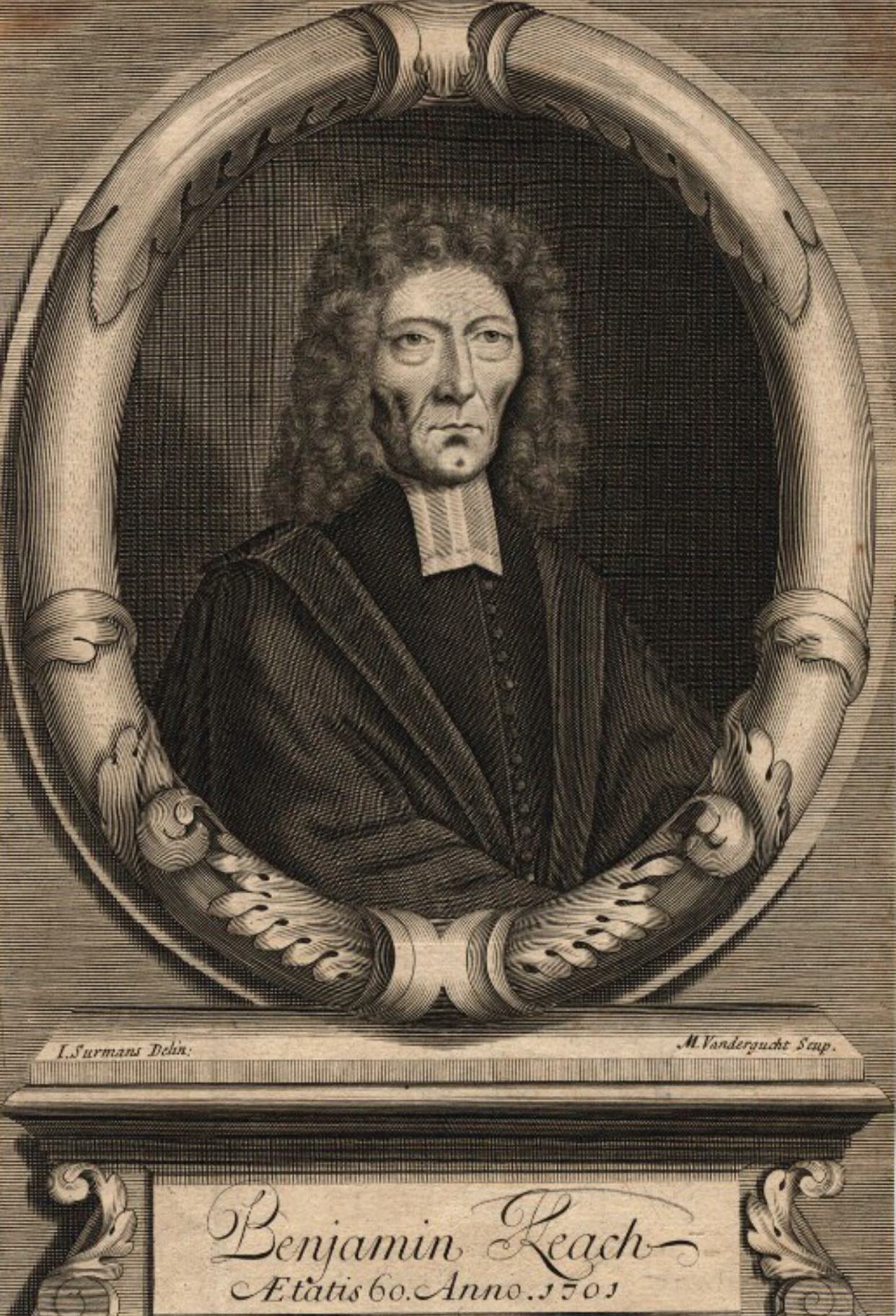
Moses is presented as a Type of Christ in Benjamin Keach's exploration of the similarities between their lives and ministries. Key arguments include comparisons between their humble origins, divine missions, and faithful mediatorships. Scripture references such as Matthew 11:28-29 highlight Christ's meekness, while Hebrews 3:5-6 emphasizes Christ’s faithfulness in contrast to Moses' servanthood. The practical significance lies in understanding how Moses foreshadows Christ, illustrating how believers can see the continuity of God's redemptive plan from the Old Testament through to the New Testament, firmly rooting Christ’s identity within the broader narrative of Scripture.
Key Quotes
“Moses was no sooner born but he was exposed to the wrath of Pharaoh king of Egypt who sought to put him to death so Christ in his infancy was sought by king Herod to be slain...”
“Moses was appointed by God and sent to deliver Israel out of Pharaoh's cruel bondage so Jesus Christ was appointed and sent to deliver all the Israel of God from the cruel bondage of Satan...”
“As Moses was transfigured on mount Sinai... so Jesus Christ also was transfigured in mount Tabor...”
“Christ sweetens all our afflictions by the means of his cross...”
What does the Bible say about Moses as a type of Christ?
Moses serves as a type of Christ, pointing to Jesus through his humble beginnings, miraculous deliverance, and mediatorial role.
Moses' role as deliverer of Israel from Egyptian bondage serves as a powerful analogy for Christ's mission to deliver believers from the bondage of sin and Satan. While Moses could lead Israel to the edge of the Promised Land, Jesus leads His followers directly into the heavenly kingdom. Just as Moses was learned in all Egyptian wisdom, Christ demonstrated divine wisdom that astonished His adversaries. Additionally, both figures mediated covenants and enacted laws; Moses with the law given at Sinai, and Christ with the law of the Gospel inherited from the Father, affirming their unique roles in redemptive history.
Hebrews 3:5-6, Matthew 11:28-29
Why is Moses important in understanding who Christ is?
Moses' life foreshadows Christ, emphasizing His roles as deliverer and mediator.
Moreover, Moses' role as mediator of the first covenant reflects the redemptive work of Christ, who functions as the mediator of the new covenant. While Moses delivered the law from Mount Sinai, Christ, as the supreme lawgiver, provides the Gospel, which fulfills and transcends the law. This typology stresses the importance of recognizing Jesus as the culmination of the covenant history established through figures like Moses, confirming the intricate web of God’s salvation story woven throughout Scripture.
Hebrews 3:5-6, Ephesians 1:4-5
How do we know that Christ fulfills the role of Moses?
Christ fulfills the role of Moses through His miraculous works, mediatorial office, and by establishing the new covenant.
Additionally, while Moses instituted the Passover that saved Israel from death during the Exodus, Christ, the true Moses, established the Lord's Supper, which symbolizes His sacrificial atonement for sinners. By offering Himself as the ultimate sacrifice, Christ perfectly fulfills God's law in a way that Moses, as a servant, could not. Thus, the connection between Moses and Christ is foundational to understanding Jesus’ mission, as He embodies the hopes and promises articulated through the life of Moses.
Luke 22:19-20, John 1:17
I. MOSES was a Type of Christ in his person: (1.) He was of mean parents and birth: so was Christ in respect of his flesh, or human nature, of a poor decayed and dried stock, being born of a poor virgin. (2.) Moses was no sooner born, but he was exposed to the wrath of Pharoah, king of Egypt, who sought to put him to death: so Christ in his infancy was sought by king Herod to be slain; but both by God's extraordinary providence were delivered. (3.) Moses was of a meek and sweet disposition, above all that dwelt upon the earth, yet full of zeal and indignation against sin: so Christ was a pattern of meekness and humility. "Learn of me," &c., Mt 11:28-29.
II. Moses in his office and function was a Type of Christ. (1.) He was appointed by God, and sent to deliver Israel out of Pharaoh's cruel bondage: so Jesus Christ was appointed and sent to deliver all the Israel of God from the cruel bondage of Satan, and heavy oppression and burden of sin. (2.) Moses was sent to lead Israel towards Canaan: so Jesus Christ leads us to heaven, the anti-type of Canaan. But in this there is a disparity: Moses led Israel but unto the sight of the promised land; but Jesus Christ leads us quite into heaven, or the land of promise. (3.) Moses was learned in all the learning of Egypt: Christ was learned to admiration; his enemies cried out, from whence hath he all this learning? (4.) Moses gave the law, having first received it from the hand of God: so Jesus Christ hath given us the law of the Gospel, as he received it from his Father. (5.) Moses was mediator of the first covenant, and as so considered, was both King, Priest, and Prophet: Jesus Christ is mediator of the second covenant, and as so also both King, Priest, and Prophet. (6.) Moses wrought many mighty miracles in Egypt, at the Red Sea, and in the wilderness, to confirm the law, and to show Israel that he was really sent of God: so Jesus Christ wrought many strange and wonderful miracles by sea and land, in towns and deserts, to manifest his glory, to show he was sent of God. and to confirm his doctrine. (7.) Moses instituted the passover: so Christ, the true Moses, instituted the Supper.
III. Moses in his faithfulness was a type of Christ; he was faithful as a servant; he did all things exactly according to the pattern showed him in the mount: so Christ in all things was faithful as a Son, Heb 3:5-6.
IV. Moses being to deliver the law, fasted forty days and nights in the mountain alone: Christ being to preach the Gospel, fasted so long in the wilderness.
V. He was a Type of Christ in many particular actions of his life: (1.) Moses married an Ethiopian, a stranger, a black: so Christ espoused the Gentiles, who were strangers to God, and, by reason of sin, as black as hell could make them. (2.) Moses sweetened the bitter waters of Marah, by a tree cast into it: so Christ sweetens all our afflictions by the means of his cross. (3.) Moses led Israel through the Eed sea: Christ leads his Church through a sea of tribulation. (4) As Moses was transfigured on mount Sinai, and seemed so glorious, that the children of Israel could not behold his face: so Jesus Christ also was transfigured in mount Tabor, so as his disciples were amazed, and wist not what they said.

Comments
Your comment has been submitted and is awaiting moderation. Once approved, it will appear on this page.
Be the first to comment!