The following is an audio transcript
of the book, Justification Before God, not by faith. This is tape number two, side
A. We were in chapter four. Divine law differs from human
law. Consequently, Christians should beware of the plausible
and distinguish things that differ. Human analogies do not always
illustrate biblical principles. They often lead astray. For example,
a man may be forgiven of his crime by the person against whom
the crime was committed. However, the criminal is not
cleared in the eyes of the law. On the other hand, a criminal
may be convicted of his crime and imprisoned. He pays his debt
to society, but that does not indicate that he has been forgiven
by the person against whom the crime was committed. The sinner
differs in that he is guilty, and Jesus Christ died in his
place. Sin is antagonistic against the
very nature of God. Individuals must answer to him
for every sin committed. Sinners are lawbreakers. Sin
must be punished because it is sin, and justice must punish
sin because it is justice. Since sin is on the sinner, justice
must punish both sin and the sinner. However, if sin is imputed
to Jesus Christ, justice must strike through sin and the person
bearing it. Once justice strikes, it exhausts
itself and can never strike again. The Lord Jesus Christ is the
infinite sacrifice for the persons and sin of God's elect. Punishment
for God's chosen ones exhausted itself on Christ. Therefore,
the elect are set free. The righteous character of God
is declared in God's satisfaction in His Son. Therefore, the Holy
God can declare an unjust person just and remain just in the declaration. Faith does not make the law void,
Romans chapter 3 verses 30 and 31. A finished painting does
not destroy the artist's version, but verifies it. And a completed
building does not disannul its plans, but substantiates them.
The Lord Jesus Christ did not destroy the Lamb. He was the
Lamb. The law was established by the
execution of its penalty, not by relieving the lawbreaker.
The penalty must be paid by either Jesus Christ or the lawbreaker
himself. The satisfaction of God's divine
nature was necessary that he might look favorably upon sinful
mankind. That which satisfies God involves
his holy character. His holiness prohibits his looking
in mercy on the ungodly. His holy law must be satisfied
before his mercy and love can operate to declare the ungodly
just before that law. The Lord Jesus Christ died to
satisfy divine justice. Satisfaction is not a biblical
word used with reference to Christ's death, but the truth intended
by that word is everywhere ascribed to the death of Jesus Christ.
Satisfaction is a word borrowed from the law, and it refers to
full compensation of the creditor from the debtor. The debtor is
man, and the debt is sin. Death is required to make satisfaction
for that debt. The obligation by which the debtor
is bound is the holy law of God. God, the creditor, requires satisfaction
from sinful man because he is the offended person. The ransom
paid by Jesus Christ has come between the holy God and unholy
man. Romans chapter 3 verse 25. Divine satisfaction must precede
personal peace with God. The debtor's peace is the natural
consequence of knowing the creditor is satisfied. The only way to
have peace below is to know that the sin question has been settled
above. Christ's redemptive work balanced
the books of God, restored moral equilibrium, and paid back to
God all that of which sin robbed him. Christ's deity gave him
the capacity to minister to the divine nature, and his humanity
enabled him to offer himself as the substitute for his chosen
ones. United divine and human natures
constituted the divine person, the God-man. But natures are
revealed in his, quote, being put to death in the flesh, but
quickened by the spirit, close quote. First Peter chapter three,
verse 18. He was put to death in the flesh
because God absolutely considered cannot die. Jesus Christ alone
could say, quote, Therefore doth my Father love me, because I
lay down my life, that I might take it again. No man taketh
it from me, but I lay it down of myself. I have power to lay
it down, and I have power to take it again, close quotes.
John chapter 10, verses 17 and 18. Chapter 5 The Seat of Saving
Faith The seat of saving faith is the
heart of the regenerated person. Justification of the elect, and
the presence of God, is the foundation for justification by faith. Faith
is not substituted for or accepted in the place of righteousness
before God. Faith and righteousness must
be distinguished. Faith is the act of the person
who has been made righteous in the righteousness of Christ.
It is the fruit of imparted righteousness. Righteousness is what Christ
purchased for the elect. Identifying faith with righteousness
makes many passages of scripture unintelligible. Righteousness
is connected with faith, but to identify it as faith destroys
the various meanings of some Greek prepositions used in connection
with faith. Quote by faith, close quote,
ek pasteos, Romans chapter 1 verse 17. Through faith, ek pasteos,
Romans chapter 3 verse 30, by faith, dia pesteos, Philippians
chapter 3 verse 9, and by faith, dia pesteos, Galatians chapter
2 verse 16. On the other hand, faith is through
the righteousness of God. 1. Faith is brought about by
the impartation of righteousness. 2. Faith is the means of embracing
and understanding. 3. Faith and its fruits are imperfect,
but the righteousness of God is perfect. A person is declared
righteous before God not on the basis of his imperfect faith,
but on the foundation of the perfect righteousness of Jesus
Christ. 4. Faith, while directed to the righteousness of Christ,
is not the righteousness of Christ. 5. Faith is a righteous act, but
it is not a perfect act. One can never be declared righteous
before God by an imperfect act. Paul spoke of the faith of God's
elect in Titus 1. But he also said that all men
have not faith. 2 Thessalonians 3. Those who have the faith of God's
elect are those who were ordained to eternal life. Acts 13, verse
48. Those who were thus ordained
to eternal life are shut up to the faith that shall be revealed.
Galatians 3, verse 23. God, who has disclosed himself
objectively in history, in his Son, and in his written word,
will enlighten the elect subjectively, in order that we may apprehend
his self-disclosure experientially. Everyone who has been given faith
in regeneration is shut up to the faith that is revealed, Jesus
Christ himself. Much of that which is called
faith is nothing more than an advantageous quality of the soul
without any respect to the reality or unreality of its professed
object. Having been declared righteous
by the sovereign God, justifying righteousness is revealed through
faith. This is the fruit of regeneration, and the results are now unfolded.
The justifying act of God is followed in time by an appropriating
act of faith. on the part of the one who has
been justified before divine justice. Justifying faith before
the human consciousness is not passive but active. The individual
participates in the act. It is manifested first by coming
to Christ. Every person the Father gave
to the Son will come to Him and not one will be lost. John chapter
6 verse 37 It is believing on Christ, Acts
16, verse 31. It is committing oneself to Christ. Faith and justification differ
in nature. Righteousness is the ground of
acceptance before God and faith is simply the instrument of embracing
and resting in the righteousness of God. Since justification is
a sentence that passed in the mind of God from eternity and
passed on Jesus Christ in the covenant, faith is not first. It is not the efficient cause
because God and not faith justifies. The moving cause is the free
grace of God. The substance of justice is Jesus
Christ. The relation of faith to justifying
righteousness in no way indicates that faith itself is that righteousness. Faith is the experience of the
individual appropriating what the Father has declared. The
Father's declaration, not the believer's faith, gives the believer
assurance. Regeneration is inseparable from
its effects, one of which is faith. Without regeneration,
none can savingly believe in Jesus Christ. Moreover, the regenerated
cannot do other than believe in Jesus Christ because the objective
message flows through the Subject of Faith that was given him in
regeneration, and he experiences conversion. Regeneration is the
act of God. Subject of Faith is the act of
the regenerated person in the power of the Holy Spirit. The
good ground hearer in the parable of the sower illustrates subjective
faith. He heard the word, understood
Matthew 13.23, received Mark 4.20, and kept it Luke 8.15. That is the biblical definition
of subjective faith, the principle of faith which God gives in regeneration. One cannot believe he is justified
until he has been justified. He cannot reason himself into
justification. That is the reason objective
faith must flow through subjective faith. The testimony of objective
truth to the finished work of Jesus Christ gives basis to one's
confidence and assurance. Chapter 5 subheading, faith out
of the ability to hear. God-given faith does not come
through hearing God's Word. Faith is the fruit of regeneration. The general consensus of opinion
about the teaching of Romans chapter 10 verse 17 is that faith
comes by hearing the Word of God. The following arguments
from John 3.18 have been given to substantiate that opinion.
1. This verse says that without faith one is condemned. 2. How
can one be spiritually alive and condemned at the same time? 3. By what means does one become
a son of God? Galatians 3.26 4. Does not faith
in conjunction with the Holy Spirit bring a sinner from darkness
to light? 5. Is not a sinner required to
hear the gospel, be quickened unto life by the Holy Spirit,
repent and believe the gospel of Christ in order for him to
be a living, regenerated son of God? 6. Is not anyone less
than this a mutated being who is spiritually alive, but who
is yet condemned and not a son of God? 7. What shall the time-lapse
people do with Ephesians 1.13? Note how one event flows biblically
into the other without lapse or hesitation. They trusted after
they heard the gospel. Upon hearing the gospel, they
believed. After they believed, they were sealed with the Holy
Spirit of promise. In contrast to these seven arguments, a person
must first be quickened by God before he has faith. The only
way Romans 10.17 can be understood is to look at it in the light
of its context. Chapters 9-11 concern Israel. Paul dealt with the absolute
sovereignty of God in salvation. 9.1-29 He then discussed righteousness
out of Christ versus righteousness out of the law. 9.30-10.8 Next, he declared that imparted
righteousness is revealed in conversion. Chapter 10 verses
9 through 21. In his discussion of righteousness
out of Christ, in contrast to righteousness out of the law,
Paul showed that through self-effort, Israel had not attained righteousness
out of the law. They sought righteousness by
works rather than out of the faithful one. Paul quoted Isaiah
chapter 28 verse 16 to show the reason for some believing and
others not believing. Therefore, thus saith the Lord
God, Behold, I lay in Zion for a foundation a stone, a tried
stone, a precious cornerstone, a sure foundation. He that believeth
shall not make haste. The Lord Jesus is the massive
living rock. He became a stone of stumbling
over whom the self-righteous Pharisees stumbled. They had
a zeal for God, but their zeal was not according to knowledge.
They went about to establish their own righteousness out of
the law, and they would not be submissive to the righteousness
out of the faithful one, Jesus Christ, who is the goal of righteousness
to all believing. The Jews, like all others, are
without excuse. God's not choosing an individual
does not leave that person without excuse. Every person is a reasonable
being. God is not the author of one's
depravity. Man is the author of his own depravity. Many, like
the Jews, are guilty of seeking righteousness out of the law.
Institutions are filled with self-righteous people who are
seeking spiritually on a human level. They profess to be Christians,
but they deny that Jesus Christ is impeccable and say that he
could be tempted. The religious world talks about
the baby Jesus. They deal with everything on
a human level. Hence, their salvation is humanistic. Christ did not lay aside his
attributes when he assumed a human nature. He went as far as he
could to meet you and me to become our mediator. but he lifts us
out of the humanistic concept. Those who worship God must worship
him in spirit and in truth. Paul could identify with the
religious Jews because he had been one among them. Therefore,
he expressed the desire of his heart and his prayer on behalf
of them for their salvation. He was not discussing regeneration.
He desired to have a part in the salvation of the remnant
of the present time. Romans 11.5 Thus, he was not
praying contrary to the will of God. God will not answer a
prayer unless it is according to His will. 1 John 5.14 God had promised that the nation
of Israel would be saved, but that was beyond Paul's time.
Romans 11.25-26 That does not mean all the Jews. Many of them
are dead. and many of them are dying. But
God promised to save a certain number and he discussed that
number in Revelation 7. It can be said that Paul's desire
and prayer was for the elect Jews. God does not promise to
save anyone because someone prays for him. A man once said he had
been praying for an individual for a long period of time and
finally the Lord regenerated that person in answer to his
prayer. An instructed Christian told him that his faith should
be strengthened from that experience so that he would pray for the
whole world. Moreover, he would be selfish
to limit his prayer to one person. The instructed Christian was
showing him that God regenerates no one because we pray for Him.
Nevertheless, we do pray that if it is God's will, that He
will grant that we might have part in the salvation of His
elect by presenting the gospel to them when the Holy Spirit
has quickened them. That is praying in the will of God. God's sovereignty
is no barrier to prayer. It does not limit our concern.
Paul had concern for those whom God had promised to save. The
religious Jews were forsaking the Old Testament prophecies
concerning the Messiah. They were so enamored with their
own doings and were so zealous for their humanistic ideals that
they left the righteousness of God and were going about establishing
their own form of righteousness. They would not subject themselves
to the righteousness that is out of the faithfulness of Jesus
Christ, who has become the goal of righteousness to all believing
ones. The Jews had a zeal for God, but it was not according
to knowledge. They were ignorant of the righteousness
of God, Jesus Christ. They crucified Jesus Christ because
of their ignorance of His person and work. Their ignorance led
them to try to establish their own righteousness, and they would
not subject themselves to the righteousness of God. Religious
institutions are filled with the same kind of people. Jesus
Christ has been made unto the elect the righteousness of God.
Christ is the goal of the law for righteousness to everyone
who believes. He is the end of the ceremonial
law. All the shadows pointed to the
substance, Jesus Christ. He is also the end of the judicial
aspect of the law. He suffered the penalty of the
law. Therefore, the Christian has Jesus Christ, who was made
unto him righteousness. Christ is the object of his God-given
faith. Righteousness out of the law
speaks terror. Offense in one point makes one
guilty of breaking the whole law. James chapter 2 verse 10. Every time one looks at the law,
he sees that he has come short of keeping it. Jesus Christ alone
has kept it to the letter. No one can keep it because his
flesh is weak. Romans chapter 8 verses 2 and
3. Righteousness out of the law shows that the offender will
be judged. For as many as are of the works of the law are under
the curse. For it is written, Cursed is
everyone that continueth not in all things which are written
in the book of the law to do them. Galatians chapter 3 verse
10. Paul was amplifying the latter
part of Romans 9 when he said, The man practicing the righteousness
out of the law will live in its fear. Romans chapter 10 verse
5. That man is a legalist. Righteousness
out of the law is in contrast to righteousness out of faith.
Verse 6. Righteousness out of the law
and righteousness out of the finished work of Christ are opposite. But there is no difference between
righteousness out of the law and righteousness out of man's
faith, or righteousness out of baptism. One is justified before
God by the righteousness of Jesus Christ, which has been imputed
to his account. This is not faith righteousness,
but righteousness out of the faithfulness of Jesus Christ.
Since Christ is the object of faith, the regenerating Spirit
directs the quickened person to Jesus Christ. Christ vicariously
fulfilled all the requirements of the law for the elect by both
precept and penalty. In contrast with the righteousness
of the law that brings terror, the righteousness out of the
faithfulness of Christ gives peace and forbids us to fear
damnation. Paul declared that imparted righteousness
is revealed in conversion, Romans 10, verses 9-21. Conversion enables
the regenerated person to confess with his mouth the Lord Jesus,
believe in his heart that God has raised him from the dead,
and be saved. Since conversion and not regeneration
is under discussion here, subjunctive mood verbs are used in verse
9. For confessing the Lord Jesus with the mouth and believing
in the heart that God has raised him from the dead. A third class
condition particle, eon, is used with the subjunctive mood verbs.
Quote, confess, close quote. an arius acta subjunctive of
amalagael, which means may confess, and quote believe, close quote,
an arius acta subjunctive of pastual, which means may believe,
to denote that man has a part in his conversion, but not in
his regeneration. Man's confessing and believing
is made possible because righteousness has already been imputed to him
and imparted in him. Quote, for with the heart, cardia,
man believeth unto, ais, the ablative of cause, which means
because of, righteousness. And with the mouth, confession
is made unto, ais, ablative of cause, which means because of,
salvation. Close quote. Verse 10. With the
heart, one believes because of righteousness. And with the mouth,
he confesses because of his salvation. The same thing is true with reference
to baptism. One is baptized because he has
repented. Acts chapter 2 verse 38. John
the Baptist baptized people because they had repented. Matthew chapter
3 verse 11. When the Apostle spoke of believing
with the heart, he was not talking about the organ that pumps blood,
but about the seat of the inner man, the seat of the Holy Spirit. The seat of the inner man is
in contrast with what the man says. There is no value in confessing
someone unknown to oneself. Confession and faith are both
Christian acts. A sinner cannot believe in Jesus
Christ and he cannot produce a Christian life. Hence, the
subject of faith righteousness is not here. If faith itself
is the righteousness, how could it be called the righteousness
of God? Is a person justified before God by his faith? Christ
has made unto us righteousness. 1st Corinthians chapter 1 verse
30. God has made Christ, quote, to be sin for us, who knew no
sin, that we might be made the righteousness of God in Him,
close quote. 2nd Corinthians chapter 5 verse
21. Paul was talking about heart faith and not mental assent when
he spoke of believing with the heart. The regenerated heart,
in contrast to the mouth, is the seat of the Holy Spirit.
Therefore, heart faith is more than mental assent. It includes
heart and mouth, faith and confession, and righteousness and salvation.
Most church members assume that winning the lost and winning
souls are synonymous terms. When they talk about winning
the lost, they refer to bringing them to a saving relationship
with Jesus Christ. No one can lead a lost person
from darkness to light, but he who wins souls is wise. A soul
is won by giving an already regenerated person the truth by which he
can be converted, by leading him out of error into truth.
Salvation from man's perspective is that he confesses because
he is saved. He is saved because he has called
on the Lord. He calls on the Lord because
he has believed. He believes because he has heard.
He has heard because a preacher preached the gospel to him. The
preacher preached because he was sent by God. From God's perspective,
the reverse is true. God sends the preacher. The preacher
preaches. The person who has been given
a hearing ear hears. Having heard, he believes. Having
believed, he calls on the Lord. Calling on the Lord, he is saved.
And he confesses, he is saved. When studied as a unit, Romans
10, verses 12-17 will show that hearing the word results from
one having been given the ability to hear. Christ must be revealed
through the gospel before one can experience faith. The ability
to hear produces faith. Paul drew from Isaiah's experience
in Isaiah 53, verse 1 to show that the reason all have not
obeyed the gospel is because they did not believe his preaching.
Romans 10, verse 16. They did not have ears capable
of hearing, because the Holy Spirit had not circumcised, quickened,
their ears to hear. Hearing a message does not produce
faith. It takes the regenerating Spirit of God to quicken a person.
It takes life to produce the ability to hear. Faith does not
produce life, but life produces faith. The Greek noun, akoe,
can mean either the ability to hear or the message heard. Context
alone will determine its meaning. In verse 16, the word, quote,
report, close quote, is aka'e, which can be translated preaching.
Who believed our preaching? In verse 17, aka'e is used two
times. 1. Consequently, faith is by
means of ek, ablative of means, the ability to hear, acaes, ablative
feminine singular of acae. And two, the message heard, aka
nominative feminine singular, is by means of, dia, ablative
of means, a declaration, hermatus, ablative neuter singular of herma,
a word, saying, declaration, or speech concerning Christ. When one takes the time to study
the noun, Achaia, in Mark 7, verse 35, John 12, verse 38,
Acts 17, verse 20, 1 Corinthians 12, verse 17, Galatians 3, verses
2 and 5, Hebrews 5, verse 11, and 2 Peter 2, verse 8, he will
have no difficulty understanding Romans 10, verse 17. Where does faith come from? Does
it come from hearing the message preached? Or does it come from
the ability to hear? Faith comes from the ability
to hear. It has no reference to the message
heard. Consequently, faith comes from the ability to hear, and
this ability to hear comes from regeneration. If one does not
have the ability to hear, how can he have faith? The message
heard is by means of a declaration concerning Christ, who is the
righteousness of God. Faith is called into exercise
because of the ability to hear. The ability to believe is because
of the ability to hear. Therefore, faith is called into
exercise by means of the ability to hear, and the message heard
is by means of a message concerning Christ. Preaching alone will
not produce faith. Faith does not point to itself.
Faith, which is the gift of God, is the fruit of regeneration.
Faith, which comes from the ability to hear, points us to Jesus Christ,
who is our righteousness. That which points us to righteousness
cannot be the righteousness. Hence, faith is the fruit of
imparted righteousness. Righteousness does not consist
of either confession or faith. The righteousness which Paul
set, in contrast to the righteousness out of the law, that brought
terror to him, brought conviction and conversion experience to
him. The righteousness of Christ gives peace. Righteousness is
Christ by performance. He lived a righteous life and
died on the cross paying the penalty that righteousness demands. Righteousness is the Father's
by donation. It is ours through impartation
by the Holy Spirit. The Holy Spirit imparted that
righteousness to us because it had already been legally imputed
to our account before God. Hearing is necessary to believing,
but this hearing is more than having the organ of hearing.
There are ears to hear, but they do not hear. There are eyes to
see, but they do not see. God is the author of both the
seeing eye and the hearing ear. Although Israel had heard the
message, they did not understand. Verse 19. Israel's disobedience
was punished by God's turning to the Gentiles. Isaiah said
God was found by the ones who sought him not. No one seeks
God until he has been quickened. No one tries to find the Lord.
until the Lord first finds him. The Message of Reconciliation The message of reconciliation
has been entrusted to God's people. The necessity of its proclamation
in order that the elected, regenerated person might know he has been
justified was emphasized in Paul's message to the Corinthian Christians.
2 Corinthians chapter 5 verses 11 through 17. Continually having
the fear of the Lord, Paul said, quote, We persuade, present active
indicative of patho, which means persuade, appeal to, or convince
men, close quote. He did not coerce or compel by
force. Persuasion and coercion differ. Coercion is without any regard
for a person's desire. Persuasion is by teaching and
appealing from the scriptures, giving the exhortations God has
given us to give. No one should be intimidated
to do something for which he has no desire. Paul was continuing
to have problems with the Corinthians' acceptance of him. Therefore,
he reminded them that he was manifest to God and he trusted
that he was also manifested to their consciousness. The apostle
had already commended himself to them. Hence, he would not
do so again, but he was giving them an opportunity to boast
on his behalf in order that they might have a reply with reference
to the ones boasting in appearance and not in practice. He was talking
about the legalizers who had come in and caused disturbance
in the Corinthian church. Paul was neither boasting nor
seeking praise from the Corinthians. No man using this language is
seeking self-praise. One seeking self-praise tells
people what they want to hear. Paul's personal defense included
distinction between appearance and heart. He was not talking
about externals, but about the heart. The heart reveals what
one is within himself. Paul had no confidence in and
made no display of externals, such as schools of the prophets,
associations with influential people from whom he could get
letters of recommendation, etc. He was not concerned about man's
recommendation. He had his letter of recommendation
from God, the truth that had been committed to him. His life
was his recommendation to the people. Paul's enemies were legalizers
who boasted in appearance. They boasted that they could
get letters of recommendation from the Sanhedrin. They recognized
Christ only as the seed of David. Romans chapter 1 verses 3 and
4. But they neither saw nor laid hold of Christ's resurrection
which put him in a higher relationship than David with the eternal covenant
of God's grace. They did not see him as the one
who by the power of the Holy Spirit had been raised out from
among the dead. They rejected that, and they
even crucified this one whom they acknowledged as the seed
of David. They did not know that Jesus Christ had become a minister
of the circumstances on behalf of the truth of God to confirm
the promises to the fathers. Romans chapter 15, verse 8. Jesus
Christ was not only the minister of reconciliation, but he is
also the reconciler. Paul's godly zeal was being misrepresented
by his enemies. Where there is godly fear, there
is automatically a godly zeal for the things of God. The Lord
Jesus manifested zeal for the place of worship when he drove
the money changers from the temple. John chapter 2 verse 17 and Psalms
chapter 69 verse 9. The zeal of God's house consumed
him. He physically chased them out of God's house. Some abuses
in the local church today may be reformed by appeal to the
people, but sometimes they are abuses that cannot be brought
into a right position before God by appeal. Then, drastic
means must be used. Other abuses can be changed only
by a righteous soul acting by divine authority. Paul manifested
zeal before Festus, and Festus accused him of being out of his
mind. Acts 26.24 Paul's enemies in Corinth misrepresented his
zeal and accused him of being out of his mind. But he told
the Corinthians that whether he was beside himself, it was
to God, and whether he was sober, it was for their cause. 2 Corinthians
5.13 Paul did not act from appearance,
but from the heart. The love of Christ controlled
him. Verses 14 and 15. These two verses, which are very
controversial, must be studied together. Most people believe
that this teaches universal redemption. Christ died for everybody. Paul
purposed to show in verses 14 and 15 how the elect are constrained
to live for Christ and not for themselves. 1. If the term, quote,
then we're all dead, close quote, refers to being dead in sin,
how can those who are dead in sin live for Christ? What kind
of reasoning would say that Christ died for all who were dead in
sins? Those who live would live for
themselves. 2. Recipients of grace feel the
constraining influences of Christ dying for them. This constrains
them to die to sin and to live for Christ. The message of reconciliation
has been committed to God's people. 2 Corinthians chapter 5 verse
18. Power is not in the message itself.
Power is in the message only as it is brought to the heart
of an individual by the Holy Spirit. Messengers are entrusted
servants of Christ, and we are willing to endure all things
for the elect's sake that the elect might experience subjective
reconciliation when a work of grace has been wrought in their
hearts. 1 Thessalonians 1 verses 3-10 The all things of 2 Corinthians
5 verse 18 includes 1 imparting, 2 outworking, and three, completing
of objective reconciliation. Every Christian has been entrusted
with God's message, and he is a representative on behalf of
Jesus Christ. God appeals through us. Therefore,
when one gives the truth of God, God is appealing through the
truth given. The command to be reconciled
to God is addressed to those who have been objectively reconciled.
2 Corinthians chapter 5 verse 20. A person has no part in objective
reconciliation, but he does have a part in understanding subjective
reconciliation. Reconciliation comes as an act
of understanding by a person's act of faith. He apprehends the
message and accepts it. But there is a continual reconciling
work going on. Every time a Christian sins,
his fellowship with God is broken. He has offended God, hence he
must be reconciled. Conclusively, this ministry of
reconciliation continues throughout our lives on the earth. Servants
are called for the purpose of effecting experiential reconciliation
in the lives of those who have been regenerated. The command
to be reconciled is an Arius Passive Imperative of the Greek
word katalasa. There is a difference between
the passive voice in reference to one being born of God and
the passive voice as it is used of one who has been commanded
by another, to whom the ministry of reconciliation has been given,
to be reconciled to God. There are three kinds of passive
voice. One is called the direct agent, the second is the intermediate
agent, and the third is the impersonal agent. The person God regenerates
was dead in trespasses and sins. He was passive to spiritual things. Therefore, God acted upon him. But the person who begs the regenerate
to be reconciled to God is the intermediate agent. He speaks
in behalf of Jesus Christ. Therefore, he tells the one who
has already been quickened by God to be reconciled. He gives
the truth that the regenerated person may know what he is in
Jesus Christ. The Word of God is the impersonal
agent. Two focal points in 2 Corinthians
chapter 5 verse 21 are 1. The Incarnation explains Christ's
sinlessness. and two, the crucifixion was
on behalf of all the elect. Jesus Christ paid for all the
sins of all the elect of all time. Hence, His death was also
retroactive to include the Old Testament saints. God was in
Christ doing the legal work at Calvary. The Holy Spirit applies
what Jesus Christ accomplished, and He is in the elect doing
the practical work. How wonderful and awesome that
God has committed the ministry of reconciliation to those to
whom He has imputed and imparted His righteousness. Working together,
those who have been made righteous in Christ's righteousness appeal
to the regenerate not to receive the grace of God in vain, but
to be reconciled to God. 2 Corinthians chapter 6 verse
1 and 2. The only person who will hear
are those in whom God has done a work of grace. There was no
life in the bones to which Ezekiel preached, Ezekiel chapter 37. Preaching may organize, but it
is not and cannot give life. After the bones were organized,
brought together, and flesh came upon them, they were still minus
life. But Ezekiel continued preaching
to them. Preaching may reform, but it cannot regenerate. A multitude
may come together in a football stadium. A preacher may preach
to them, but that is only indicative of organizational effort. Preaching
may create excitement, but that is not proof of life. There may
be noise and shaking without power. Large gatherings do not necessarily
prove the presence of the Holy Spirit. Multitudes come together,
but there is no breath or power in them separate from the Spirit
and regeneration.
About W.E. Best
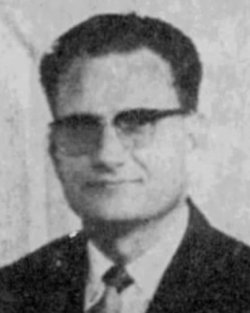
Wilbern Elias Best (1919-2007) was a preacher and writer of Gospel material. He wrote 25 books and pamphlets comprised of sermons he preached to his congregation. These books were distributed in English and Spanish around the world from 1970 to 2018 at no cost via the W.E. Best Book Missionary Trust.
SERMON ACTIVITY
Comments
Thank you for your comment!
Your comment has been submitted and is awaiting moderation. Once approved, it will appear on this page.
Pristine Grace functions as a digital library of preaching and teaching from many different men and ministries. I maintain a broad collection for research, study, and listening, and the presence of any preacher or message here should not be taken as a blanket endorsement of every doctrinal position expressed.
I publish my own convictions openly and without hesitation throughout this site and in my own preaching and writing. This archive is not a denominational clearinghouse. My aim in maintaining it is to preserve historic and contemporary preaching, encourage careful study, and above all direct readers and listeners to the person and work of Christ.
Brandan Kraft
Bible Verse Lookup
Loading today's devotional...
Unable to load devotional.
Select a devotional to begin reading.
Examples: Isaiah 53:10, Rom 8:28-30, Psalm 23, grace, love one another
to
This chapter has verses 1---
Sign in to save your Bible lookup and search history.
Comments
Your comment has been submitted and is awaiting moderation. Once approved, it will appear on this page.
Be the first to comment!