Now turn, if you will, to Ephesians
4, as we continue our study today of unity. Ephesians 4, let's read the first
16 verses and then we'll begin our exposition. I therefore the prisoner of the
Lord, or in the Lord, I would say,
really, entreat you to walk in a manner worthy of the calling
with which you have been called, with all humility and gentleness,
with patience, showing forbearance to one another in love, being diligent, in other words,
sparing no effort to preserve the unity of the Spirit in the
bond of peace, There is, now here are the seven things he
mentions. I'll review just a few things
and put what we gave last Sunday in a few words to begin with
this morning in the first three verses, and we'll be looking
only at the next two verses, but I want to read all the way
through verse 16. There is one body and one spirit,
just as also you were called in one hope of your calling. One Lord one faith, one baptism,
one God and Father of all, who is above all and through all
and in you all. There are three prepositions,
different prepositions, in that last verse, verse 6. And they
don't mean the same. But to teach one of us grace
was given according to the measure of Christ's gifts. Therefore
it says, when He ascended on high, He led captive a host of
captives. And he gave gifts to men. Now
this expression, he ascended. What does it mean except that
he also had descended into the lower parts of the earth? He
who descended is himself also he who ascended far above all
the heavens that he might fill all things. that He gave, and
He gave some as apostles, and some as prophets, and some as
evangelists, and some as pastors and teachers, or pastors-teachers.
For the equipping of the saints, for the work of the service,
to the building up of the body of Christ, until we all attain
to the unity of the faith, unity of the Spirit, unity of the faith,
and of the knowledge of the Son of God to a mature man, to the
measure of the stature which belongs to the fullness of Christ.
As a result, we are no longer to be children tossed here and
there by waves and carried about by every wind of doctrine, by
the trickery of men, by craftiness and deceitful scheming. But speaking
the truth in love, we are to grow up in all aspects unto Him
who is the head even Christ, from whom the whole body, and
folks there's going to be unity of the body one day, not now,
that's future. being fitted and held together
by that whichever joint supplies according to the proper working
of each individual part causes the growth of the body for the
building up of itself in love. Now let's begin our study. Let
me give a few statements by way of introduction. just reviewing
verses 1 through 3 by the use of as few words as possible.
You'll notice that King James uses the word vocation. I therefore the prisoner of the
Lord beseech you that you are ye walk worthy of the vocation
wherewith you ye are called vocation what is the word from which I'm
talking about the Greek word from which the translators of
the King James Bible use the word vocation now whether you
realize it or not even the English gives the proper definition and their definition is is a particular occupation. That's number one. And secondly,
a station in life to which a person has been called by God. I was
a little surprised, but I happen to have one dictionary that gives
that. And I gave it just as the dictionary states it. The word
is crisis. and means calling. This refers
to the effectual calling, not a general calling, but the effectual
calling of God's people. Now this calling, klesos, must
be recognized by you and me, by all believers, in order to
live in a manner worthy of the calling. Now let's go back and review
that. This calling must be recognized. This calling must be understood. This calling, if it's understood,
is greatly appreciated. It's not general. It is particular. And it is effectual. It only
happens one time in the life of an individual. He's not effectually
called many times. He is effectually called one
time. One effectual calling by grace. You see what I'm talking about? But we have to understand it.
We have to recognize it, understand it, in order to appreciate it,
and we have to appreciate it in order to order our lives and
to walk in a manner worthy of it. That's where the practical
comes in. You can't have principle without
there being the practical side, and I'm going to always emphasize
it. Furthermore, the more its height,
H-E-I-G-H-T. You see, this effectual calling
is called in the scriptures and other references, like 2 Timothy
1, 9, a holy calling. Or like Hebrews 3, verse 1, a
heavenly calling. That means a high calling. Or
Philippians 3, 14. So the more its height, its height,
is recognized by you and me, the lowlier, oh watch what I'm
saying folks, the lowlier will we become, not only in mind,
but also in disposition. Folks, that's the practicality
of it. So if we understand its height, its holiness, then we will have
a lowlier attitude in the presence of Him with which we have to
do. And that is the teaching of verse
2. In humility. In humility. Then we come to verse 3. Endeavoring
or sparing no effort. To do what? To keep. Terio. To guard. To keep. What? The unity of the Spirit in the
bond of peace. So the unity of the Spirit secures
the unity of the body. Folks, if we would simply put
into practice the principles, it would eliminate all serious
problems in the local aspect of Christ's assembly. That's why I'm going to do my
counseling, all of it, in the pulpit. That doesn't mean that I wouldn't
discuss something with you privately, but my counseling will be done
in a public manner. You see, that unit of which I
speak is a fact, F-A-C-T. It is a fact Therefore, each member is to
recognize the fact of the unity. It's factual. It is something
that you do not make. It is something you cannot make. It is something you cannot bring
into existence. I'm talking about this unity.
This unity is the gift of the grace of God. And all we can do is keep it
and guard it. You see what I'm talking about?
So all these efforts today by religionists in bringing all
things together, that is out of the pit of hell. And I'll have absolutely nothing
to do with it. So we must order our life accordingly
that's our responsibility therefore the believer does nothing who
understands this and is making an effort to bring his life in
order he does nothing to militate against that unity by means of
carnal irritability irritability but he is the one sparing no
effort. Being zealous or being eager,
no effort to keep the spirit of unity in the bond of peace. Folks, that is important. Now, it is not peace at any price. My Bible teaches me how can two
walk together except they be agreed. This unity about which I'm speaking
this morning is marked by seven principles in verses four through
six. And that's what we're studying
today. So what I've said thus far, after having read Ephesians
4, 1 through 16, I've reviewed briefly what we covered last
Lord's Day. Now we're looking at the great
principles of this unity. Seven of them. Seven of them. And as we review them this morning
and look at them a little deeper, I'm going to ask you a lot of
questions. I hope you get the questions down, especially in
reference to some of them, about which there is so much controversy
among theologians and even Greek students. First of all, I'd like to say
that there is a cardinal adjective used here. What do you mean by
cardinal adjective? The word cardinal means the prime
or fundamental importance of the adjective. So it's called
a cardinal adjective. It is used seven times. What
is this cardinal adjective? It's the word one, O-N-E, in
the English. One. What is this word in the
Greek? It is heis. Spelled like ice,
but it has the rough breathing and it has the H sound, heis. Not ice, but heis. And the only
difference between heis and heis is the rough breathing and the
smooth breathing. But there surely is a big difference in the meaning
of the word. Here we have an adjective rather
than a preposition. Now, if you have your Greek text
with you this morning, as you look through and you see the
Greek word, you're going to say, there are three different Greek
words for one. No, there are not three different
Greek words for the word one. There are three different inflected
forms of the one word, which is haise. Different inflected forms. And the inflected form simply
boils down to this. It is the same in each instance
with the exception of the gender, the gender of the word. You have the neuter, You have
the feminine and you have the masculine. So you do not have
seven different words. You have one word used three
different ways, referring to the different genders with which
that particular adjective is used. Now, having said that,
let's look at something. There is one body That's hen. That's the rough breathing. And
it looks like en, like in for in, like the preposition in in
English. But you have the rough breathing,
hen. And so that is the inflected
form. It's a cardinal adjective. But it's neuter gender. One body. How many? Just one. Just one body. Did you know the word Soma, the
word body, is never used in the plural in the Bible? In the New
Testament, never used in the plural. Always singular. Interesting, isn't it? Secondly,
and one Spirit. Now, here it is again, Him. So, neuter gender, because the
Spirit is neuter gender. Number three, just as also you
were called and you were called is an arious, passive, indicative
verb. Passive voice. In other words,
you had nothing, nothing to do with your effectual call. It is in the indicative mood,
the mood of reality, It is Arius, so it refers to that which is
past. Paul is writing to those who
had been called. They were effectually called.
Now folks, is this the way to study the Bible? Is this the
way for explanation? We have to know how the word
is used, and what it means. So just as you were called, Kaleo, the verb, and it means
to call or to summon. In, and that's Ian and not hen,
but that's epsilonu, the locative of sphere, in the locative case. So you've been called in one
hope, in one. Now you'll notice one here is
Mia. And in this instance is feminine
gender. One hope. One hope, not two hopes,
one hope of your calling or of the calling of you. Number four,
then there is one Lord. Here it is heis, heis. This is masculine gender. Now
these birds of a very foul flock who make light of gender when
it comes to the Lord, God, whether it's feminine, whether it's a
woman or a man, a God, a woman or a man. Folks, when people
talk like that, let me tell you something, you can shut them
off, you can turn them off because they are out of the pit. They're not speaking on behalf
of God. You say, you mean you have to
know all this? Well folks, people who have studied for years, yes,
and you ought to want to know. You ought to want to know. So
now when it comes to Lord, that's Jesus Christ. He's our Lord and
Savior. Masculine gender. So, It's mia. Then number six, one baptism. One baptism. This is hen again. It's neuter, associated with
the neuter gender of baptism. And then finally, number seven,
one God, theos, and father, pater, masculine gender. of all, of all. Now let's watch something. Folks,
this gets great. One God and Father of all. Now all here is used restrictively. Are you listening? It's true that God is the God
of all in one sense, but Paul is writing to Christians. So
take it in the context. Of all, that is, it is limited
to the saints of God at Ephesus. It is restricted, it is limited
to believers. So, God and Father of all, He's
not the Father of all humanity, He's not the God of all humanity
in the sense He's the God of you or He's the God of me. So what about all of these false
religions getting together? Here are principles of unity. Now do you see why I could never
have anything to do with Billy Graham? Then notice what he says. of
all the one over, over. Now what is the preposition that
is used here? Epi, epi, over. That's the genitive of place,
P-L-A-C-E. And the place is over. So God
is the sovereign Lord. So we're getting into sovereignty. getting into sovereignty, over
all. And then notice the next. And,
the I is the next preposition. This is the ablative, what's
this? The ablative of agency. Acting through. God is acting
through you. And he's acting through me. as
he acts through all of his people in accomplishing his purpose
and acting through, ablative of agency. And finally, look
at the last part. And in, in, in. This is the locative of place.
In, in us. This refers to dwelling. He's dwelling in us. So God,
the Father of all, abode, He's above all, acts through
the eye, operates through us. Why? Because He is living in
us. Now let that soak in. Folks,
if you can't get excited over that, I hate to tell you, but
you need something you don't have. And I don't care who you are. Now let's go back and look at
something, and we're going to go back through them again and
see what the real meaning of each one is. But I wanted to
read them with emphasis. There are not two bodies. There are not two good spirits. Of course, the word spirit here
is used in a good sense. There's an evil spirit, spirit of the demons. But one
good spirit, one holy spirit, one spirit who is a member of
the Godhead, so you have to believe in the Trinity. I'm not going
to have anything to do with oneness. Anybody who denies the Trinity,
I'm not going to have anything to do with him, folks. I have absolutely nothing to
do with him. Not two bodies, not two spirits,
not two hopes, not two callings, not two lords, not two faiths. Methodists come along and they
say, my faith is Methodism. The Baptist comes along and he
says, my faith is the Baptist teaching. Lutherans come along
and they say, Lutheranism is my faith. Folks, just one. Catholics come along and they
say, that's my faith. Just one faith. Now am I telling you the truth
or not? Is this important or not? And not two gods and not two
fathers. Now let's look at some things
in depth for a few minutes. One body. one body. Let's begin with the body. I've
already stated that the body is never used in the plural form. Christ's body is one, but it
consists of many members. You say, now preacher, what are
you going to do with 1 Corinthians 12? And I could give you some
other instances. Even like the church at Ephesus
called the body, Corinthian church was called the body of Christ.
Singular. Aren't there two bodies? Aren't there two bodies? Membership
in the body is coterminous with salvation. Are you with me? Colossians 1
19 and 29 all the parts of the body are Joined to the head and
who's the head of the body Jesus Christ. Oh I used to make the Baptist
so mad they're talking about the head, you know the head Christ
is the head of this assembly if he's not the head of this
assembly. I don't want to be here He's my head Oh, they look upon the president
of the convention as being the head. He's the leader. I don't
look to any man as being the head. Folks, I'm not the head
of this assembly. I'm just a pastor teacher. That's all I am. Christ is the
head of the assembly. No metaphor could be as complete
as the human body, and that's why Paul refers to the human
body as an illustration in 1 Corinthians chapter 12. The human body is the vehicle
by which the unseen person is made known. Now, when it comes to the body
of Christ, it is unknown except as it is manifested in your life
and in my life as members of the body. I don't know why anyone would have
difficulty with that. No one can know what the spirit
within is thinking or what the soul is feeling unless
it be expressed through the body. A human body is a marvelous unity,
as any doctor will tell you. And so is the assembly of our
blessed Lord. Now there should be a warning
at this point. So I mentioned first the body because it is
the first principle that Paul mentions. Now there is a warning
that should be given even with what I said. The assembly local
is related to the assembly universal which is invisible. Are you with me? not as an arm
of the body, but as a microcosm to a macrocosm. Each assembly being small but
a complete embodiment, and notice what I'm saying, a complete embodiment
of the whole. And that's the meaning of 1 Corinthians
12 and verse 27. One body. One body. All the people of God are united
to that body. Now, let's go just a little further. Let's look at this a little closer
this morning. Of course, there's a lot of misunderstanding about
this. A lot of different views. Does the term body, I'm asking
a question now, whether we answer it to your satisfaction or not,
you need to get the question down. We're talking about body. I'm only going to spend time
with the principles of unity about which there's so much controversy
today. And there's a lot of controversy
about the word body. If you don't believe it, I challenge
you to read about six or twelve different commentaries. My first question, does the term
body always refer to the local assembly? What do you think? There are
a lot of people who say yes. Well I'm one who says no. Now let me give you some questions
under that question. Now these are questions under
that question. If the answer is no, one is compelled
to believe in a universal body. He's compelled. If the answer is yes, one is
forced to believe everyone in it is saved. And folks, I've heard Baptists
say that that's it. So I'm not a Baptist. I'm not
a Baptist. Because you can't prove it. If the reply is ALL are saved,
what about Judas? What about Simon Magus? Et cetera,
et cetera. Simon Magus, for example, well,
first of all, Judas was a member of the Twelve Disciples. He was associated and a member
of the beginning of the Assembly, Christ and His disciples. Because
they constituted the foundation, Ephesians 1 and 2, the foundation
of the Assembly. What about Simon Magus in Acts
chapter 8? He also believed, when he heard
Peter, he believed he was baptized and he was added to the assembly.
Not a Christian. Read the account. Christ never,
watch this, never identified himself with professing Christendom. Christ never identified himself
with, quote, religion, end of quote. He never identified himself.
If my Lord didn't identify himself, I'm not going to do it either.
I'm not going to do it either. But Christ did identify himself
with the assembly. Now watch me. Why? Because he gave himself for her,
Ephesians 5. And during this age, this dispensation
of grace, he is gathering the elect, the chosen, unto himself
those who are being regenerated by the Spirit of God for whom
he died, which is his body. I challenge anybody to refute
that. Now folks, I can get excited. And I'll tell you what, if I
turned on my television set tonight, and I heard some preacher give
this, I tell you, I'd get excited sitting over at the very listening
to it. But I never have heard it. If body is used only in a local
sense, as many say, that's true. then membership in a local assembly
is coterminous with salvation. Paul said to the Colossians,
and let me read to you Colossians 1, 28 and 29 with a few comments.
Paul said to the Colossians, whom we proclaim, warning every
man and teaching every man in all
wisdom in order that, here's the purpose clause, in order
that we may present every man mature in Christ. Am I through? Listen to the next verse. For
which purpose for which purpose. Also, I am working hard, as a
present active indicative verb. I'm working hard, which means toiling or striving. Folks, do you believe the ministry
is something easy? then he follows that verb with
a present middle participle of agonizami, which means to fight
our struggle. So fighting our struggle according to his energy, whose
energy? God's energy. which is operating
in me in power. That's what Paul said. Folks,
and I'll tell you, I can bear witness to that. Paul reveals his purpose in preaching
in verse 28. Look at it, his purpose in preaching.
And he added what his personal experience had been in the next
verse, verse 29. And I can relate with that. Although he used several metaphors
to describe his work and warfare, laboring, wrestling, boxing,
running, harvesting, these are all biblical metaphors our Lord
used and his apostles used. Here he spoke of an inner working,
of energy operating in him. I have personally witnessed many
times, more than half a century, when I would be so tired physically.
And I'll tell you something, last Wednesday was one of the
most beautiful days I've ever seen. I spent all the morning
in my study. Juanita came in about noon. She
came to bring me something to drink. She says, Sweetheart,
if you'll walk outside, you won't come back in the rest of the
day. And folks, I was tired. I'd been
translating, poring over the Scriptures, wanting to handle
it, desiring to handle it correctly. taking to heart what Luke said
in the first four verses of Luke 1. Oh, the practical application
of it. And I was tired. I walked outside.
It was so beautiful. There wasn't a cloud in the sky
at about 70 degrees, and the lake was as placid as a mirror.
There was no wind blowing. It was like you could look at
yourself in the looking glass. I spent the rest of the day pumping
rock and enjoyed every minute of it. It's a chore and it's harder on your system
than physical labor. I had so hard, I had a difficult
time telling Richard years ago, son Two services on the Lord's Day,
if I speak an hour in each one, is equivalent to 18 hours of
hard labor. He just laughed. It is. I'm not the only one who
says it. I learned that from doctors. So Paul revealed his purpose
in verse 28, added his personal experience in verse 29. And in
the midst of great conflict, let us not overlook one's compensation,
which is power equivalent to the need. This power supposes human endeavor. Such equivalency is not restricted
to extraordinary service like Paul, but to ordinary service
like you and me. The ministry is a constant battle
with not only false teachers, pagan philosophers, 2nd Peter
chapter 2, Acts chapter 17, Colossians 2.8, but with carnal and unruly
assembly members. 1st Corinthians 3, 2nd Thessalonians
3. Now let's look at the next point. One Spirit. I'm going to have
to go fast now. I'm going to have to give the
rest up in 15 minutes. One Spirit indwells the one body. The Spirit
regenerates. He indwells and He seals, seals
the believer in Christ. One Spirit. The Trinity is presented
in these verses 4, 5, and 6. So anyone who denies the Godhead
and the three persons of the Godhead denies the Word of God.
So you know where I place him? With all religious pagans. Regardless of what people think. I can't keep people from thinking
what they want to think. Thus the Trinity is part of the
unity to be kept, and make every endeavor to keep
it. Now there's a warning. The common
question is, if all possess the same spirit, then why are believers
so diverse in judgment and manner of life? Good question. But the Bible answers it. The
Spirit is sovereign. Therefore He does not work alike
in all saints. He enlightens some more than
He does others. Now church members as a whole
may not like this, but that's a fact, folks. I'm just thankful. I don't know
as much as some, but I'll tell you what, I surely am thankful
for what God has taught me. I'm thankful for my enlightenment. And His gifts to all believers
are not the same. I said His gifts. All Christians, however, operate
together for the good of the whole, just as all the members
of the body work together for the good of the body. I'm talking
about the physical body. Thirdly, one hope. One hope is the glorious goal
of the assembly. The spirit is the earnest, the
pledge. of the consummation of Christ's
work. Calling in this verse is effectual,
as I've already stated. And what is effectual to some
is only general to others. And I hope, folks, it is not
general to any member of this assembly. There's a warning that should
be given at this point. Is the Christian hope his deliverance
from the body or his deliverance of the body? There's a difference. So in the first three that I
have mentioned, body, spirit, and hope, We have the unity, or in this
unity we have first what God has done, secondly what God is doing, and
thirdly what God will do, the hope for his assembly. So in the first three features
we have unity of privilege. Oh, what a privilege. Unity of
privilege. Three features. are internal. Internal. The next three features
constitute the unity of responsibility. Responsibility. They are external. Now let's look. One Lord. One Lord. Jesus Christ. The head of the body. in the
human body, it is unthinkable that the members would act independently
of the head. All the directing energy comes
from the head. Believers are responsible to
inquire what God has to say on all subjects. when the Lordship
of Christ is honored, there is no place for a party spirit. No place for a party spirit. Then look at the next, one spirit. Now here's another one about
which there is much controversy, so I'll be giving you several
questions on this one. The body and the spirit, these
are the two very debatable subjects among theologians. Religions,
notice I said religions. One thing, well there's a lot of disagreement
about this. See, Billy Graham, he talks in
his article about your faith, your faith. That's what he's
talking about, man's faith, not God's faith. See, my faith from
which I'm speaking this morning, not my faith, I'm speaking to
you from the faith that God has given me. That's the gift of
God. So one faith here, to what does
it refer? It refers to the system of truth
that has been committed to you and me. Philippians 1 27 and
Jude 3. As believers have one Lord to
obey, so they have one Bible to follow. Just one book, one
guide. And not only to follow, but hold
to it tenaciously. Even though personal faith is
not mentioned, it is implied in the first four
features. And of course, that's a God-given
faith, but it becomes yours. It's yours because God gave it
to you. I'm not talking about human faith. I'm talking about
a God-given faith. And it's personal. It's yours.
And the faith that God gave me is mine. Now let's come to one baptism.
Now here is the real controversial one. I said this is really controversial
among religionists. One baptism refers to what? Does it refer to our being planted
into the body of Christ? Or is one baptism here the ordinance
of baptism practiced by assemblies? Now how does one find out? I
challenge you on this one. You could read commentaries from
now until you die and you're going to find nothing
but confusion. So you need to collect all the
material, which I've tried to do through the years, put it
together, and then start investigating it. I think that's what Luke
did when he gave us the gospel that bears his name and the Acts
of the Apostles. He took the reports from various
and sundry men. He investigated them. That doesn't
mean that God wasn't in it. That doesn't mean he wasn't inspired.
He was. What he actually put into the
gospel itself, he was inspired to do so. But he investigated
diligently. That's a lesson for you and me.
We have to go through all of this teaching today, all of these
various and sundry ideas, and come up with the truth. Now, it took me a long time to
come to this conclusion. I'll be the first to confess. But I found it. And folks, I'm
so settled on it, I'm not worried about anybody refuting it. I'll tell you where we're going
to begin this morning. Now, we know that the Holy Spirit is
the author of regeneration. The Father chose us, the Son
purchased us, and the Holy Spirit applies what the Father chose
and the Son produced. But the Holy Spirit is the one
who quickens. The Holy Spirit is the one who
makes us alive. And it's always in the passive
voice. We have nothing to do with it.
Always. But He does regenerate. Now almost
every commentary you will read, turn if you will please to 1
Corinthians 12, 13. 1 Corinthians 12, 13. This is the
last reference to being baptized in the Holy Spirit. There are
only seven references. I'm not going to go into this.
This is in the book and send out, I think, two or three books,
but in great detail in one in particular. But I want to share
something with you and show you the simplicity of this subject
before we get to the last point and conclusion this morning.
Let's read the verse. I want to translate it as we
go along. The first two Greek words in
the Greek text, kai-gar, Now, but you don't translate in that
manner. You don't say indeed for, but you say for indeed. For indeed. Now chi is used in
the sense, it's ordinarily a coordinating conjunction, but it's sometimes
used as an adverb. And here it is used as a conjunction,
but it is what is called an ascensive, A-S-C-E-N-S-I-V-E, an ascensive
conjunction. It means it's rising, rising. And also it's emphatic, emphatic. It's in reality, it's in truth.
So I want to stress that to begin with. For indeed, in, and that's
the preposition in, locative of sphere. Locative of sphere. For in one spirit we all were
baptized. That is an arius passive indicative
verb. Folks, verb of reality. Arious tense, indicative mood,
puts it in the past. Fulfilled! Fulfilled! Only seven references to being
baptized in the Holy Spirit. Matthew, Mark, Luke, and John
are the very first of each. Acts 1-5, Acts 11-15, and this
is the last verse. And they all point to Pentecost. I said they all point to Pentecost. Those in the Gospels, five of
them, and then in Acts 1, 5, look forward to Pentecost, point
to future, something is going to happen. Then in Acts 11, looking
back as to what had happened or taken place. Same thing is
true with this in 1 Corinthians chapter 12 and verse 13. Now
look at it again. For indeed, in one Spirit we
all were baptized into one body. Now who is the agent? The Holy
Spirit does not baptize into Himself, The Lord Jesus is the agent of
this baptism in every instance, and I challenge anybody to refute
it. Anybody. We're baptized into
one body. One body. Whether Jews or Gentiles, whether
slaves are free. Now watch the last part. And
we all were made to drink, or we were all imbued with one cup, or one spirit, one spirit. That's another Arius passive
indicative, the same as baptism. So all were baptized, arius,
passive indicative. All were made to drink or all
were imbued with one spirit. Both arius, passive indicative
verbs. Now questions. I want to show
you the simplicity of something. Conclusion, this is my conclusion.
If I didn't reach the correct conclusion, I'm open for your
question. Write me, I'd be glad to consider
it. But be sure and weigh all of the evidence that I'm giving
before you ask me a question. Might save you a lot of problems,
a lot of trouble. Now, baptism or being baptized
in the Spirit has past tense. All this took place at one time,
Christ was the agent, and Pentecost was the time. That's history! That's history, folks! That baptism is past! It'll never
happen again! Now, what about the ordinance
of baptism? The Ordinance of Baptism is discussed
throughout the Acts of the Apostles and it's mentioned and certainly
applied, like the Corinthian Church. Paul said, I didn't baptize
any of you except Crispus and Gaius. So there is an Ordinance of Baptism.
And the baptism here, folks, is the ordinance of baptism practiced
by the local assembly during the dispensation of grace. That's
for the present, not the past. Now here are some questions in
conclusion. And I'm about out, and we're getting close to 12
o'clock. If you'd like to take some of these questions down. Do the two verbs apply to the
same event? I'm talking about 1 Corinthians
12, 13. In other words, are both verbs, do they apply to the same
event? Then underneath that question,
I'd like to raise these questions. Is the latter the fruit of the
former? That is, being made to drink.
one Spirit. Secondly, is Christ the agent
of the first and the Spirit the agent of the second? Some who
believe that, folks. And third, is the Spirit ever,
is the Holy Spirit ever the agent of baptizing in the Spirit? I'm not going to answer them
this morning. I want you to get the questions and think about
them. Another question. Does the Spirit baptize the sinner
into Christ? And then Christ baptizes him
into the Spirit. You see what I'm doing? I'm trying
to make you think through it. I'm putting all this, a lot of
this garbage, but all this information together and then raise some
questions for you to clear it up. Another question, does the
Spirit subsequently baptize the believer into Himself? Another question, do Christ and
the Spirit separately baptize the sheep into each other? Talking about the Son and the
Spirit. Another question, is Christ always the agent of baptizing
persons in the Spirit? Finally, is Christ always the
agent of baptizing His people? And when did it happen? Did it
happen at Pentecost? Or does it happen when a person
believes or subsequent to his belief? Folks, there is no, absolutely
no scripture to justify the charismatic movement today. Absolutely not. Then I close just by reading. Just by reading. One God and Father. He's the
Lord of all. One Lord. One God and Father
of all. He's above all, working through
His people, and indwelling His people through whom He works. Let us stand.
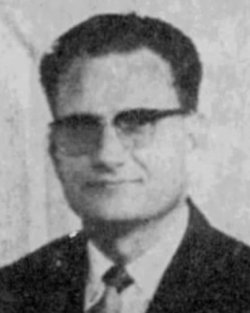
About W.E. Best
Wilbern Elias Best (1919-2007) was a preacher and writer of Gospel material. He wrote 25 books and pamphlets comprised of sermons he preached to his congregation. These books were distributed in English and Spanish around the world from 1970 to 2018 at no cost via the W.E. Best Book Missionary Trust.
SERMON ACTIVITY
Comments
Thank you for your comment!
Your comment has been submitted and is awaiting moderation. Once approved, it will appear on this page.
Pristine Grace functions as a digital library of preaching and teaching from many different men and ministries. I maintain a broad collection for research, study, and listening, and the presence of any preacher or message here should not be taken as a blanket endorsement of every doctrinal position expressed.
I publish my own convictions openly and without hesitation throughout this site and in my own preaching and writing. This archive is not a denominational clearinghouse. My aim in maintaining it is to preserve historic and contemporary preaching, encourage careful study, and above all direct readers and listeners to the person and work of Christ.
Brandan Kraft
Bible Verse Lookup
Loading today's devotional...
Unable to load devotional.
Select a devotional to begin reading.
Bible Reading Plans
Track your daily Bible reading with a structured plan. Choose from several options and let us keep track of your progress.
Comments
Your comment has been submitted and is awaiting moderation. Once approved, it will appear on this page.
Be the first to comment!