Now I've written down a few things
that I want to share with you to begin with this morning. I
want to speak to you on the subject of unity this morning. Unity. There's a popular song
today that goes like this, let the
walls come down. Unity. Scripture not only gives the
terms of unity, but also the time for absolute unity. Now we don't have absolute unity
today. There is no assembly, I don't
care how scriptural it is, that has absolute unity. That is something for the future.
Keep that in mind, please. The verses of scripture which
are read today by modernists, moderates if you want me to use
that term, are John 17, 11. Let me read
these verses. Our Lord was praying and He said
that they may be one as we are. Then in verses 20 through 23
of the same chapter, our Lord continues His high priestly prayer. I do not ask in behalf of these
alone, but for those also who believe in me through their word,
that they may all be one, even as thou, Father, art in me, and
I in thee, that they also may be one in us. that the world
may believe that thou didst send me. And the glory which thou
hast given me, I have given to them, that they may be one, just as we are one. I in them, and thou in me. that they may be perfected in
unity. The world may know that thou
didst send me, and didst love them, even as thou didst love
me. Now those are the passages of
Scripture that the moderates use. It becomes your responsibility
to know what these verses actually teach. And we're going to look at the
subject of unity this morning. I'm concerned about biblical
unity. And I'm looking forward to the
day when there will be absolute unity. That's my hope. And I have assurance for that
hope because I believe in the divinely inspired scriptures. I have raised some questions
that I want for you to think about before I get into the subject
of unity this morning. After reading and hearing the
things that I heard and read last week from the religious world, The
time has come when you and I had better be
fortified with a knowledge of what the Scriptures teach. I'm
going to ask you to do something for the next two
weeks. The second chapter of the Gospel
according to Luke, believe it or not, is one of the most fascinating
portions of Scripture in all the New Testament concerning
the person of Jesus Christ. More heresy originates from a
misunderstanding of Luke chapter 2, and I believe any other passage
of Scripture when it comes to the person of Jesus Christ. So
I want you to become conversant with that portion of Scripture
before I bring a message or two from Luke chapter 2. Now for
the questions. Is there only one true saving
faith? That's a biblical question and
it has a biblical answer. Do you know the answer? Is there
only one true saving faith? My answer is, of course, yes.
And it's not the faith that everyone possesses, saved or lost, but it is a God-given
faith which is the fruit of one having passed from death into
life, or one who has been regenerated or born again from above. So there is only one true saving
faith. Question number two. Do all believers
have the same degree of understanding the Scriptures? The answer is
no. They do not. All believers do
not have the same degree of understanding. Now this has to be understood
by all of us. Question number three. Are unity and union the same in meaning? Unity and
union. The answer is no, they do not. Much of what is said today concerning
unity from a biblical perspective is only union and not unity. Well, let me give you the basic
meaning of each word. Unity means a state of being
one single entity. Oneness, if you please. Complete
accord among persons regarding attitudes, opinions, intentions,
etc. Union, however, means the act
of uniting. A lot of people are uniting today.
But the question is, around what are they uniting? And who is uniting them? A lot of people unite with some
church. That is, join a church, a local
assembly. But they have not been united
by the grace of the sovereign God to the Godhead. So union means
the act of uniting, the state of being united. A number of
persons or states, for instance, may become united for a particular
purpose. Like we have the United States
of America. It means to be joined or associated
together for some common purpose. But the unity about which I'm
speaking is the unity of the Spirit. It's being united to the Godhead. by grace. The fourth question,
is the unity for which Christ prayed in John 17 a unity of equality or a unity
of likeness? Now this is a very important
question. Is it a unity of likeness or a unity of equality? Folks, it is not a unity of equality. It is a unity of likeness. And in that likeness there is
the likeness of will, the likeness of affection, and the likeness
of understanding. So thus we have a unity of likeness. Question number five. Is there
only one true faith in the sense, same word, same word, pistis,
Is there only one true system of truth committed to God's people? Only one, folks. Not several,
just one. One faith. One system of truth. Not several systems of truth. So when the Muslims and the Jews
and I say a real Christian come together to discuss religion,
they don't have anything in common. If there's a real Christian present,
if there's not a real Christian present, it doesn't make any
difference. They all have something in common, and that's religion. But if there's a Christian present,
The Christian has nothing in common with either the Orthodox
Jew or the Muslim. Both reject Christ. Now, what does the Bible have
to say about Christ? He's the only way to the Father.
John 14, 6. No one comes to the Father except
by me. The Muslim rejects that. The
Orthodox Jew rejects that. But the believer in Christ, if
he's a Christian, accepts that. He experiences that. Now the
question is, how can two or three walk together except they be
agreed? They're in agreement. And that,
folks, happens to be a biblical statement. Amos 3 3 So there's only one system of
truth and that one system of truth Not only do we have this in Ephesians
4 5 which we'll read in a few minutes but also in Jude verse
3 Once for all delivered no one adds anything to it it's complete
it has been once for all delivered in its complete form and we have
it in the original manuscripts and notice what I said we have
it in the original manuscripts question number six is Christian
doctrine And I'm talking about a biblical principle. Principles,
plural, or principle, singular. Is Christian doctrine essential
to Christian unity? Is it? It surely is. Union ceases to be Christian
when biblical principles are ignored, are rejected. Before I look at the seventh
and last question, I want to tell you about just a little
bit about a conversation I had last week. A man who was raised
up in Houston, in fact his parents moved to Houston when he was
six years of age, and the father worked in the shipyard during
World War II helping to build ships. He was raised up in Magnolia
Park Baptist Church. Now some of you know exactly
where Magnolia Park Baptist Church is. Just off a wayside, really just
off a canal one block, past wayside, out in Central Park. Having been raised up in Magnolia Park Baptist Church,
which is close to Park Memorial, I told him, I said, did you know
that Park Memorial is a split off of Magnolia Park? He didn't
know that. The old saying is when Baptists
begin to fight, you know what's gonna happen, there's gonna be
a new Baptist church. And so the fight led to the beginning
of Park Memorial just almost around the corner on Wayside
Drive. Now that goes back a long way.
We're talking about 50, 55 years ago, 50, well at least 55 years
ago. So I asked this person, he's
really interested and he's been just sitting down every time
I come around to talk to me. So I asked him the question the
other day. I wanted to find out just what he has been subjected
to, because he seems to be really sincere. And I've learned to
really appreciate a lot of things about him. I asked him about
church discipline. If he was familiar with church
discipline, we'd discuss some other things. I assure you we've
touched on the doctrines of grace, and we've touched on other things.
His eyes will get big, but he listens. has a great attitude. As long as he listens, I'm willing
to talk. And so when I ask him about discipline,
no, I haven't seen it. I said, you never have heard
of anyone or have seen anyone excluded from the church for
a drunkenness or for fornication or adultery? No. I said, well,
I believe in it. I've practiced it ever since
I've been a pastor for 54 years. And I've never been in a church
where it wasn't practiced. And I don't believe that any
church exists that does not need to practice it. Far more. And I said, most of them are
not practicing it at all today. And he agreed. See, all you have to do today
to find out how much a person has really been subjected to
in the way of biblical principles being proclaimed from the pulpit
is to raise a few questions. So principles are not preached
very much today. Question number seven, is the
time for absolute unity now or when we have perfect knowledge
and that perfect knowledge will never be until we are perfected. Although there is unity now in
the fellowship which we have by the Spirit of regeneration
with the Father and His Son Jesus Christ. First John 1.3 We know there will not be absolute
unity until we all come unto a perfect
man, unto the measure of the stature
of the fullness of Christ according to Ephesians 4 and verse 13. Now let me give you two or three
verses of scripture to think about. I'm talking about fellowship
with the Father and His Son, Jesus Christ. What about those
who reject Jesus Christ? They don't have any fellowship
with the Father. What about those who have this
wrong concept of the person of Christ? Now, folks, that's why
I'm asking you to study Luke chapter 2, and I assure you,
you'll have your hands full for the next month I said the next
month if you would just really study Luke chapter 2 and if you'll do that then I
won't have to speak but about twice from that chapter to put
it all together so I'm asking you to do that who is a liar we're told but
the one that denies that Jesus is the Christ 1 John 2.22. So anyone who refuses to accept
the person of Jesus Christ as being the person he claims to
be, he's a liar. And that means the truth's not
in him. I can't soften that. I can't tone it down. The person
is a liar. What about 2 Corinthians 6, 14,
be not equally, unequally yoked together with unbelievers? That's an admonition of Scripture.
And how can we walk together except we be agreed? Now just
two or three more statements before we read our Scripture. We cannot produce unity, even
in this assembly. I can't make unity. I can't produce
unity. It doesn't make any difference
how much I declare all the great principles of scripture. I cannot
make unity. I cannot produce unity. Unity is a gift, and I'll read
it to you in a moment, but I want to prepare you for it. We cannot
produce unity by trying to build a great house and put a great
house, in quotation marks, that 2 Timothy chapter 2 verse 20,
I think it is. over a divided Christendom. Now let me make the statement
again. We cannot produce unity by trying to build a great house
that has union but not unity. Over a divided Christendom or
a religious society. Folks, I'm giving to you this
morning just a basic foundation. But I assure you that what I'm
giving can't be refuted biblically. We're not told to make unity, but to spare no effort to keep, to maintain, the unity
of the Spirit in the bond of peace. Do you know where I'm
quoting from? Now open your Bibles, please,
and I want to read this morning from the New American Standard
Bible. Ephesians chapter 4. So open
your Bibles, please, to Ephesians chapter 4. And while you're turning to that
chapter, unity cannot be formed by surrendering many great truths. I'm not going to surrender any.
I'm not going to surrender any thing that I have taught from
this pulpit, which I believe to be the truth of God's Word,
without a real debate. Now folks, the reason that I
had to change my mind several weeks ago to do what I am now
doing is because of what I know. So we're going back to basics.
Going back to basics. Let's read the first 16 verses
of Ephesians chapter 4. I'm reading from the New American
Standard. I therefore, the prisoner of the Lord, if I were translating
it, I would say in the Lord, because the preposition in the
Greek text is in, the locative of place, in the Lord. I just said if I were translating.
But I'm reading the New American Standard because basically it's
a very good translation. I'll put it like this, it's better
than the King James. I therefore the prisoner, I'm
saying in the Lord, entreat you to walk in a manner worthy of
the calling with which you have been called. With all humility,
What is humility? And gentleness with patience,
showing forbearance to one another in love. Now, in your King James,
the first word, somebody call it out to me. In the King James,
what is the first word? Endeavoring. It happens to be
a participle in the Greek. Now, you'll notice in the New
American Standard it says, being diligent. Well, that's a good
translation because spoudazo means that. But I'm going to even suggest
another translation for you to think about. Sparing no effort
And that's recognizing the participle. Sparing no effort. And folks,
that's what I'm emphasizing. That's our responsibility. That's
your responsibility as a member of this assembly. That's my responsibility
as the pastor teacher. What? Sparing no effort to do
what? To preserve. That's a good translation,
nothing wrong with that. unity the unity of the spirit
in the bond of peace now notice beginning with verse 4 there
is one body and one spirit just as also you were called in one
hope of your calling one Lord one faith now is that personal
faith Or is that the system of truth handed to us? You've got
to determine that, folks. You have to determine that in
the context. One faith, one baptism, one God
and Father of all, who is over all, and through all, and in
all. But to each one of us, grace
was given according to the measure of Christ's gift. Therefore it
says, when he ascended on high, he led captive a host of captives. You could say that a little different.
In other words, he captured the captives. He captured the captives. And he gave gifts to men. Now
this expression, he ascended, you know this expression even
in the NASB. It's italicized, it's a supplied
word. He ascended. What does it mean
except that he also had descended into the lower parts of the earth? He who descended is himself also
he who ascended far above all the heavens that he might fill
all things. And he gave some As, you notice
as is italicized, a supplied word, apostles. So he just gave some apostles.
And some as prophets, and some as evangelists, and some as pastors
and teachers. For the equipping, equipping
of the saints for the work of service to the building up of
the Body of Christ UNTIL we all attain to the UNITY, here we
are folks, to the UNITY. This is the second time reference
is made to unity in this portion of Scripture. Verse 3 is the
first reference, unity of the Spirit. Here, UNTIL we all attain
to the unity of the faith. What faith? Not our personal
faith, not faith which is God's gift by which we lay hold of
things, but the system of truth. So what are we striving for?
What is every assembly to strive for? Now let me pause here a
moment to say, every assembly has to strive for this very thing. There never has been an assembly
since the first assembly at Jerusalem. That each assembly did not have
to strive for this very thing. So that's what we're striving
for. Until we all attain to the unity of the faith or the system
of truth which has been committed to us. And by the way, the word
faith, pistis, is used three different ways in the scriptures.
A lot of folk don't know that. And of the knowledge, watch this,
and of the knowledge of the Son of God. Folks, I confess to you
this morning, after 57 long years, and I spent many of those years
studying the personal work of Christ, I have not reached the
place that I can say that I'm satisfied with what I know about
my Savior. What do you say? To a mature
man, man, notice, not a child, not a babe in Christ, but a man, to the measure of the statue
which belongs to the fullness of Christ." What a statement. As a result, we're no longer
to be children. Now watch this. No longer to be children, tossed
here and there by waves. Notice this terminology. and
cared about by every wind of doctrine or teaching. By the trickery of men. I said trickery of men. By craftiness in deceitful scheming. Let's stop there a moment. I was talking to Bob, I think
it was last Thursday, he said, Brother Bess, I preached last
night. I said, what? I didn't know you
were a preacher. He said, yes, I preached. They're starting a new church
in the cold spring. And he said, the preacher asked
me to preach. I didn't say anything, I just
let him go ahead. I said, well, what did you speak of? What was
your subject? He said, false teachers. False teachers. He said, you
know, when you listen to the radio, what do you hear? False
teachers. When you look at television,
what do you hear? False teachers. I said, well, you're on target
there. You're on target. He said, I
told the folks, now I'm not going to preach to you as I've been
asked to preach to you tonight very long. But he said, I'm going
to give you a little message. And then he said, I want a real
huge offering. He laughed. He said, that's all
you hear, isn't it? Today when you listen to radio
or television, They don't give you anything but they want a
huge offering. Well, he may have gotten over
two or three pretty good points to the people. There are a lot
of false teachers out there. Now notice the last verse, verse
16. Let's go back to verse 15 to
make the connection. But speaking the truth in love, And folks, that love is always
manifested in the love of truth. We are to grow up in all aspects
unto Him. Who is the head? Who is the head? Even Christ. Bob was telling
me yesterday morning Brother Best, the rumor's gotten out. He said, lies are being told
on us already here in Cold Spring about starting a new church.
I said, Bob, would you like for me to take time to tell you?
I said, you're just getting started. See, some of the members of the
First Baptist don't like the cost in a small town, they're
starting another church. So they got some rumors going.
He said, one of the women, Wednesday night, were just in tears, one
of our finest women up here, about what is being told. I said,
I have news for you. I said, when I left the convention,
I said, I had a lot of lies told on me. It was said that I owned
all the property, six acres of land and the buildings and everything
out on Belfry. I said, if it turned out, I said,
I didn't own it. And when the Lutheran people
found out the truth of it, and when he was called by the associational
office one day, and he was told, don't you have anything to do?
Did you know that Bess owns that property? You gonna get in trouble.
He said, I had the pleasure of telling them they were liars.
And he told the big shots of the Union Baptist Association
what liars they were, the Lutheran preacher did. When I drove up this morning,
I told Mrs. McDonald, I saw the sign across
the street and then one on this side. I said, somebody's going
to say, Al Best is selling his property. He needs some money. Lies, you know what? You know
who gets lies started? Unregenerate church members. Unregenerate church members. Now look at verse 16 again. From
whom the whole body, being fitted and held together by that which
every joint supplies according to the proper working of each
individual part, causes the growth of the body for the building
up of itself in love. Now let's look at the subject
of unity this morning. I'll not be able to finish it.
I'll just get started. In verses 1 through 16 of Ephesians
4, we're informed about three great
unities. Number one, unity of the spirit. Number two, unity of the faith. And number three, unity of the
body. The local assembly in which one
is a member. While there is no doubt about our believing exactly alike
about everything to the most minute detail in heaven. Folks, that will never be achieved
as long as we're in the flesh. But it is something for which
Christians strive. The King James says, endeavoring, or making every effort, and sparing
no energy. Really, the participle in the
Greek is used in the sense of an imperative or a command. That's
our responsibility. And folks, Paul is giving this
responsibility to the Ephesian saints who had been well indoctrinated
in all the many of the great biblical principles in the first
three chapters. And now he's showing that whenever
we learn principles, then comes practice. What did I tell you
two weeks ago? Then reminded you again last
Sunday? P.P. Principal Practice. Christian unity The Christian
life is Represented not only in Ephesians, but in many of
the New Testament epistles By the use of the term walk w-a-l-k And whenever you find the word
walk And notice, if you will, in the King James, I therefore,
the praise of the Lord, verse 1, beseech you that you walk. In other words, you live in a manner that is worthy of
one who has been called by grace. That's what he's saying. So the
word walk in the Greek You think of it many times, not in literal
taking steps, but in the life that we live, and I'll illustrate
that. So the Christian life is the fruit of one's understanding
of his position and blessing in Christ. And where do we go
to get our position and blessing? The first three chapters. And
we're not backing up this morning to study those three chapters.
So the believer walks like a Christian or he lives like a Christian
because he is a Christian. That's how simple it is. So the
believer, he walks one step at a time. one step at a time. So walk is
a synonym for life. Life is a walk from the cradle
to the grave. The Christian life is a walk
from infancy as a Christian from an infant Christian to the grave. To the time when he steps out of time into eternity. There are not many mountaintop
experiences in the Christian life. Watch me now, please, and
follow me, and be very careful how you interpret
what I'm going to say. There are not many mountaintop
experiences in the Christian life in comparison to the many
things, common things, that we have to face in life. I've had
a few mountaintop experiences, but the greater portion of my
Christian life has been the everyday problems of dealing with people
and dealing with my own faults and failures, dealing with my
own sins. Are you listening to me? Some
people are led to believe today by a false teacher that when
you become a Christian, oh, it's just great, just one great bed
of roses until we reach the harbor of haven. of heaven itself. Not so. The life of any Christian, as recorded in the scriptures,
is a life with many tasks that are difficult, that really get
you strength and test you. But there are enough real mountaintop
experiences to make it all worthwhile as you walk the walk of the Christian
life. Well, let's look at a few things.
I want to give you some practical things. Ephesians presents the
walk of life before regeneration. Ephesians 2, 1 and 3, 1 through
3. the walk of life before regeneration. Secondly, and Ephesians also
gives the walk of life of good works subsequent to regeneration,
Ephesians 2.10. And thirdly, Ephesians also gives the walk
of practical, the practical life, the practical holiness, which
includes, includes love, Ephesians 5.2,
light, L-I-G-H-T, Ephesians 5.8, and carefulness Ephesians 5 15, we can never
be too careful in this walk, in this life. Let's go a step further. Let's
look at the Christian life from a positive point of view and
also a negative point of view. Positively speaking, the believer
is to walk in newness of life, Romans 6 4. After the Spirit, Romans 8, 4. In honesty, Romans 13, 13. By faith, that's the opposite
of sight. That's putting your personal
faith, that's putting the God-given faith into practice. By faith,
and that's 2 Corinthians 5, 7. In good works, that's Ephesians
2, 10. and in love, and that's Ephesians
5, 2. In wisdom, Colossians 4, 5. And in truth, 2 John verse 4. Folks, that's saying a whole
lot, isn't it? That's the positive side. So positively speaking,
these are things that must be studied in connection with the
Christian life, the walk, or the life. Now, negatively speaking,
the saint is not to walk after the flesh, Romans 8.4, after the manner or custom of
men. 1 Corinthians 3. The Corinthians
were following men. They were walking as men. They
were living as men. In craftiness. 2 Corinthians
4. Paul had to warn the Corinthians.
By sight. Don't walk by sight. There are
times when you can't walk by sight. You have to walk by faith. And you'll find that to be true.
in your Christian experience. Don't walk in vanity. Don't live
in vanity. Ephesians 4, 17. And don't live
a disorderly life in the assembly. And that's 2nd Thessalonians
chapter 3 and verse 6. Pretty important, isn't it? Chapters 1 through 3. present
what God did for the Ephesians. These chapters present to you
and me what God has done for you and me. Now, coming to chapter 4, the
word therefore, which is a very important word, it links the
practical the with the doctrinal so what is now going to present
in the next three chapters we have the practical and the practical
is linked with the doctrinal so we have to learn doctrine
before we can practice doctrine but when we learn doctrine and
don't put it to practice look out when God gets through spanking
us and we'll be willing to make an effort to do so so
doctrine runs into practice and practice has its foundation in
doctrine so folks most people today know
so little about the scriptures And I'll tell you what I found
out. I found out that you folk do, as a whole, know a whole
lot about biblical principles. And you have manifested it. And
the men that I appointed, the special committee, manifested
it in what they drew up. And I rejoiced in it. But yet,
statements were made. Things were done. that I knew
that I had to almost start from scratch again because our assembly
as a whole was not ready to try to look out for a preacher on
her own. And you may not like what I'm
saying, but folks, I've said it, and I had a reason for doing
what I'm doing now and what I intend to do by the grace of God. So I realized what my responsibility
is. And I'm trying to get my old
body back in as good a shape as possible. I laughed and told
somebody the other day, I just ordered 12,000 pounds of rock. That's six tons. And I've already,
in a little over a week and a half, I've handled three tons of rock. So I'm trying to build my old
body up. Walking up the hill, carrying
rock. And some of the pieces might
weigh 30, 40, some of them 50, 60 pounds. I thought that's the best way
to try to get my old body in shape. If I don't keep my body
in shape, then I'm not going to be able to do what I should
do. So I have a responsibility, and I'm going to seek to carry
it out, and I believe I should, as one who has been preaching
for 54 years. Now, the Christian walk to be
worthy of such calling, verse 1, must be It must be. All I can do today is give you
an introduction of what I'm going to give on unity. So I hope you
get these things that I'm giving. I'm kind of giving them to you
in an outline form to make it easier for you. So to be worthy
of our calling, we must be. This walk, this life must be
with all lowliness. That's in the first part of the
chapter, which springs from a true estimate of ourselves. It doesn't
take you long, folks, to find out when you listen to a person
talk, you watch him work or you watch him perform, you can tell
how much he thinks of himself, if he has the right thoughts
about himself. So notice what it says, with
all lowliness. And I'll go into some of these
things in great detail because we're headed for unity as much
as possible. Lowliness, and that springs from
a true estimate of oneself. True humility, I said true humility,
is a grace of the Spirit of God. This is given to warn against
the pride that might arise. And does to some extent when
we come to the knowledge given to us in the first three chapters
as to our position in Christ. And when we see what our position
is, if we're not careful, we begin to think too highly of
ourselves. Now follow me, folks, for I'm
going to illustrate it with the Bible. And I'm right down where
we all live. You see, I'm preparing and giving
these things for me, first of all. For this one, first of all,
but for you, too. So true humility, let me repeat
it again, is a grace of the Spirit of God. And this is given to
warn against the pride that we might have as having come to
the knowledge of our position, having been chosen in Christ,
even before the foundation of the world, redeemed by the blood
of Christ, and regenerated by the Spirit. I'm somebody, and
I am. But I want to give you a biblical
example of true humility. Are you with me? I could wish that every member
could hear every one of these lessons, but you have to give.
Some are out today for sickness and various reasons. I have to
give it. And I can't wait till everybody's
here. I have to give the lesson. Abraham
was called the friend of God. Abraham enjoyed the covenant
relationship. Folks, just like I enjoy, and
I praise God for the fact that I am related to Christ in a covenant
relationship. And that EVEN from eternity.
You see, Abraham, one of the greatest biblical examples of
a divine election. So Abraham was a friend of God.
But when he was in his conscious presence with God. And notice
what I'm saying, conscious presence. He was but dust and ashes. That's what he said. Dust and
ashes. I'm as dust and ashes as Genesis
18, 27. Think about Isaiah, in Isaiah
chapter 6, the prophet, when he had the vision of the Holy
One, holy, holy, holy. What did Isaiah say? Woe is me,
for I am a man of unclean lips. A proud person is never a good
servant if his pride is always sticking
out. Never a good servant. His work
is either too great or it's too small, too menial, too common. Why should EITHER EARTH OR ASHES be proud? Now that's what we
are, folks, in our estimation of ourselves. And don't forget
this, Job was referred to as being perfect, upright, One who
abstained from evil, but when Job spoke about himself, don't
forget Job chapter 40, I believe it is, and verse 7. So true humility never thinks
too highly of oneself. Paul said, I am what I am by
the grace of God. And I am the chief. He didn't
say I was. He said, I am chief of sinners. And he said that while God was
using him as he has never used another human being. in his first letter to Timothy. Someone has said, the limbs of
a fruit tree that is most laden with fruit always hangs lowest. Pretty good illustration. The tree limb that is hanging
the lowest with fruit, that's the most fruitful limb. Then he says, the Christian walk
to be worthy of one's calling must not only be in all lowliness,
but in meekness. That's not weakness, that's meekness. Meekness which springs from humility. This meekness moderates anger. Nothing wrong with getting angry. We're to be angry at sin and
not sin. You're not sinning when you become
angry at sin. but it moderates anger. This meekness takes off the edge
of revenge. Sometimes you have to get ready. If you ever have to rebuke a
brother, remember this, if you rebuke a brother, he loves you.
If you rebuke a fool, he hates you. I'm giving you the book, folks. I say without any hesitancy,
my worst enemies through the years have been church members
who couldn't face up to the reality of biblical truth. That's why I teach like I do.
That's why I preach like I do. I don't want to do something
in my everyday life I overlook a lot of things. I don't want
someone to... Of course, they'll find something
if they're looking for it, because you can find something with anybody.
But I don't want someone to find something in my everyday life
that they can say, well, boy, that's terrible, and they use
that. If they're going to get mad,
I want them to get mad at the truth which I proclaim. Meekness. Meekness teaches one
to carry himself meekly toward God. Amen. Amen. You know, Moses was not provoked
to wrath against Aaron and Miriam. Watch this. When they murmured
against him according to Numbers chapter 12, they murmured against
him. brothers and sisters murmured
against him. But it was a different matter
when they sinned against Jehovah God. Proof of it? Exodus 32 19. Now there is a biblical principle
Meekness is willingly subjected to the Word of God. So you know
what meekness in reality is? It's not being able to shed a
few tears and say, I'm sorry. Meekness is manifested in being
submissive to the Word of God when it is taught. That's meekness.
I challenge anybody to refute it. I don't care if you ever shed
a tear. you submit to the teaching of
Scripture, that's the important thing. Then he says, with long-suffering, long-suffering, which is the
quality that encourages the keeping of the unity, keeping of the
unity, guarding the unity, Long suffering. Don't give up. So folks, when things get rough,
I just try to preach and teach and touch the subjects that should
be proclaimed, that should solve the problem. Many times, just
the teaching of the Word doesn't solve the problem because sometimes
people get in such a position that they're not willing to listen
to anything. They've overextended themselves
and they've committed themselves and they're not about to be put
down. So then you have to resort to
other means. And I'm one. I'll try every effort in teaching,
teaching. I don't like personal counseling.
I want to do my teaching and give the admonitions that the
Word of God gives from the pulpit. I believe that was true in biblical
times. Can you just see Paul with a
couch? and acting like a psychiatrist.
Can you just imagine seeing him do that? Or Timothy, or Peter,
or some of the rest of them? Ah, but today we've got to have
a couch and we've got to act like psychiatrists and psychologists. Just declare the whole counsel
of God, proclaim it from the pulpit, and that should solve all the
problems. If it doesn't, then you have to resort to other
means. So meekness is willingly, willingly
subjected to the Word of God. That's meekness. James 1.21,
and declines not to the most severe courses of mortification,
crucifying the flesh with all of its affections and lusts.
long-suffering the most difficult suffering which the Christian
has to endure comes from contact are you ready for this from contact
with fellow believers that may be a bitter pill for
you but folks that's not only has been my experience but it's
been the experience of many men before me. I've read after them
and I've heard them speak." Long-suffering. So God has ordained
Christian fellowship so that we might learn patience. Then he says, forebearing. forebearing
one another in love means to continually support one another. And you need to study in connection
with that chapter 4 beginning with verse 32 through chapter
5 and verse 2. Then giving diligence to keep,
diligence to keep the unity of the Spirit and the bond of peace.
So you can see why the word endeavoring used in the King James Bible
is not strong enough for the Greek in this instance. It means to spare no effort. Unity does not include all professing
believers in one organization. There is a difference between
aggregation of people and a hive. I remember reading the illustration
a fellow gave one time. He said one, a bee, a fellow
who loved bees, he liked to catch bees and had beehives. He was
always catching some bees here and there and just everywhere
and putting them into one hive. But he found out that became
dangerous. Those that just came on their own to the one hive,
that was different. More honey there. So see the
point? It's not a matter of just getting
out here and just gathering people. You want people who come together
as a result of the truth of God's Word. So there is a difference
between an aggregation of bees and a hive of bees. And there
is a difference between an aggregation of people and a hive of people,
those who have been brought together by a common faith. We cannot produce root unity
in trying to build a great house over a divided Christendom. So
all of this effort today of a one world, one world church, one
world government, one world of commerce, and folks, we're near
the accomplishment of it all than we might believe. I just
got through investigating something. Some have even stuck their necks
out to say, and they've set as a goal to have a world government,
a world religion, and world banking, and world commerce by the year
2000. Folks, I read some of that and
studied some of that. It's alarming. It's frightening. Things are happening faster than
we might think. What have you been hearing on
television and reading in the papers over the last two weeks
especially? Here's the comment that is being
made today. Did you know since the last debate
that Clinton had and Dole had, he's
gone down six more points since he's talking about integrity?
They're saying integrity, character, these things are not important. So when the time comes in this
country, when people think as a whole, I mean the majority
of people are saying, integrity is not that important, character
is not that important, it's getting this done, it's getting that
done. Folks, we are at the point of no return. No return. Why am I interested? I'm thinking about the One World
Church. I can't buy it. I'll fight it. I'll condemn it. Drop down now to verse 4. We
won't have time. I just, I want to read these
verses again to you. Verses 4 through 6. Let me just
read them and we'll have to stop with that. and we'll take up here next Sunday
morning. These are the biblical ingredients for unity. There is one body and one spirit, even as you were
called in one hope of your calling, one Lord, one faith, one baptism,
one God and Father of all who is above all and through all
and in you all. I believe every one of those
seven things. And we're going to discuss them
next Sunday. Let us stand for the benediction.
About W.E. Best
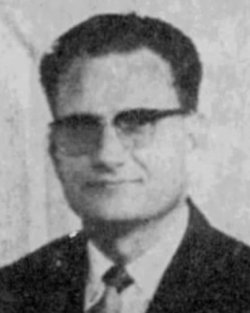
Wilbern Elias Best (1919-2007) was a preacher and writer of Gospel material. He wrote 25 books and pamphlets comprised of sermons he preached to his congregation. These books were distributed in English and Spanish around the world from 1970 to 2018 at no cost via the W.E. Best Book Missionary Trust.
SERMON ACTIVITY
Comments
Thank you for your comment!
Your comment has been submitted and is awaiting moderation. Once approved, it will appear on this page.
Pristine Grace functions as a digital library of preaching and teaching from many different men and ministries. I maintain a broad collection for research, study, and listening, and the presence of any preacher or message here should not be taken as a blanket endorsement of every doctrinal position expressed.
I publish my own convictions openly and without hesitation throughout this site and in my own preaching and writing. This archive is not a denominational clearinghouse. My aim in maintaining it is to preserve historic and contemporary preaching, encourage careful study, and above all direct readers and listeners to the person and work of Christ.
Brandan Kraft
Bible Verse Lookup
Loading today's devotional...
Unable to load devotional.
Select a devotional to begin reading.
Bible Reading Plans
Track your daily Bible reading with a structured plan. Choose from several options and let us keep track of your progress.
Comments
Your comment has been submitted and is awaiting moderation. Once approved, it will appear on this page.
Be the first to comment!