Romans chapter 6. I want to carry
you a little further into the sixth chapter, even before we
get there, because this is another very difficult passage, evidently,
for many people from the many different views that are given
on this portion of Scripture. So what we'll do this evening,
we'll look at this, and I'll try to raise some questions for
you, for you to be thinking about, because it is a very controversial
verse of scripture. I doubt that we'll get beyond
the sixth verse. I'm talking about Romans 6, 6. Keep in mind, we're not through
with verses 3 through 5 yet. I'll be preaching more from those
three verses this coming Lord's Day, the Lord willing. Subject
of baptism. And now looking at verse 6. Let me read the verse, first
of all, in the King James, and then I'll go back and read it
again and give the translation. Not too many great changes. Knowing this, that our old man
is crucified. Notice now, is crucified. with
him that the body of sin might be destroyed, that henceforth
we should not serve sin. Now there are two things in this
text that we must understand. And it is not as easy as you
might think to come to a settled position on this. You'll have
to do a lot of studying on your own. Even though I'll give you
the different views, some of them tonight, I'll discuss them
more when we do preach on it on the Lord's Day. Not this Sunday,
I'm sure, but probably the next. I doubt we'll be able to get
to it Sunday night. But I'll give you enough to be thinking
about between now and the time that I do speak, and we'll be
preaching at least one message just on this sixth verse. Knowing this, that our old man
was crucified with him in order that the body of sin may be ineffective,
that we no longer serve sin. Now, the two things I want you
to look at in this text are, first of all, our old man, and
secondly, the body of sin. Are they the same? No, they're
not the same. Now having said that, I want
to give you some views on this and how they differ. So listen
to these views. Some equate old man with the
body of sin. I can't do that. I can't conscientiously
do that. Don't believe that anyone else
can. There are some who say that the old man and the old nature
are the same. Some believe Paul used the word
crucified rather than died because the old man is still alive and
flourishing. Now I'm going to give you some
quotations, just brief quotations. You don't have to copy these
down because you have some of these books in your home library.
I'll just run through to show you that it is a controversial
verse of scripture. And may I make this statement
before I read these quotes. These men were not and are not
heretics. Those who are living, they're
not heretics. We have to be careful about just using the word heretic
because we disagree with somebody on a particular point. Now, of
course, some of these men have been dead for a long time. Matthew Poole, for instance.
Here's what he says. Quote, by the old man is meant
that corrupt and polluted nature which we derive from Adam. The
body of sin is the very same that he is called before the
old man. Hodge. Quote, our old man, that
is, our corrupt nature, as opposed to the new man, our holy nature. John Gill. By the old man is
meant the corruption of nature, called a man. Albert Barnes. Quote, Paul uses the expression
to denote our sinful and corrupt nature. Spurgeon. Every new man is two men. No,
he's not two men. I just couldn't help but say
that at this point. I didn't intend to say anything,
but it just came out. Some things, you know, when you
read them, you just have to follow up with something. You just can't
be quiet. He is what he was and not what he was. Now, let me
read this again by Spurgeon. Every man is two men. He is what
he was and not what he was. He's what he was and not what
he was." End of quote. Barnhouse. The old man is the
biblical term for the Adamic nature with which we were born. It is wrong to convey the impression
either that the old man has departed from us or that he remains with
us but no longer affects us. Haldane. All believers died with
Christ on the cross. Their old man or sinful nature
was crucified with Christ. If, then, their old man has been
crucified with him, it cannot be that they will for the future
live according to their old nature. Williams and Williams' Commentary
The old man, that is, the evil principle lodged in man, as a
son of the first Adam, the body of sin, that is, the invisible
activities of that evil principle." End of quote. Now, we could just
go on and on with these if we wanted to, but I wanted to show
you that there's a lot of confusion about what this verse teaches
by men who are and who were great Bible students. And we have to
learn to accept that and appreciate what they said in many areas.
But no man has all the truth. No one. Period. No one. Let's look at this verse that
I want to take you to two other passages of scripture and you're
going to think that there is some contradiction between these
statements. Now Paul is the only writer in
the New Testament that uses the expression that you find here,
our old man. And he uses it three different
times. He gives it here in Romans 6,
6. He uses the expression in Ephesians chapter 4, and we'll
read that one in just a minute, and also in Colossians chapter
3. So turn with me now to Ephesians
chapter 4. Let's read that passage first.
Now, we're not going to discuss all these in detail tonight,
folks. Hope you realize that. Ephesians 4. Let's begin with
verse 22. I'm not going to read the King
James first. I'll just give you the translation. You put off or you put off you
don't have to use that You put off concerning the former. Well,
let's go back up so we get proper connection in verse 20 But you
have not so learned Christ if so be that you have heard him
and have been taught by him as the truth is in Jesus that you
put off concerning the former way of living Conversation can literally be
translated way of living. The old man. Now here's the second
time Paul uses this expression. The old man, who is being corrupted
according to the lusts, lusts of deceit, and to be renewed
in the spirit of your mind. Now notice the 24th verse. and
you may think this rather strange, and that you put on the new man. Now I want to show you something.
There's nothing wrong with the use of the word man in verse
24, even though it is not in the Greek text. Let me call attention
to that. Go back to verse 22 again, and
you'll notice On the second line, the last three words, tan, pelion,
anthropon. And it's translated, the old
man, and that's true, the old man. So you have anthropon, that's
the accusative for anthropos. However, in verse 24, when he
talks about the new man, putting off now, putting on. that you
put on the new man, if you look at your Greek for just a moment.
Yes, you do have it here. Maybe in Colossians I'm thinking
about it. You have the new man. The and
kynon, anthropon. So you have ton, kynon, and that's
the word for new, and then anthropon. And to put on the new man according
to, Let me read my translation. "...and that you put on the new
man who, according to God, has been created in righteousness
and holiness of truth. Therefore, having put off the
lie, speak every man truth with his neighbor, because we are
members one of another." Now turn to Colossians chapter 3. I believe it is. And I think it begins with verse
9, Colossians 3, verse 9. Yes. Do not lie to one another, having
put off the old man with his practices. Deeds, OK, but I like
practices better. and having put on the new." Now
here is what I had in mind. It was Colossians rather than
Ephesians. I knew it was in here somewhere,
but I had forgotten where. So let's read the 9th verse again
and go right into the 10th, and I'll call attention to it. Do
not lie to one another, having put off the old man with his
practices And having put on the new, you notice the word man
in your King James, it's italicized, that means it has been supplied.
Now stop there just a moment and look at your Greek text in
verse 10. And having put on, having put on is an arius middle
participle. And it's in denominative case,
masculine and plural number. And then he has tan, neon, tan. So he has just tan neon. Now
neon is masculine. So since it is masculine, you
can say man. But the word anthropon is not
in the text, that being the accusative of anthropos. So there's nothing
wrong with using man. So I left man in the translation
just as it is in the King James. It is italicized. So the 10th
verse, and having put on the new man, which is being renewed
for complete knowledge according to the image of the one who has
created him. Now, so these are the only three
places where the expression the old man is used. What does it mean? Let me go
back to Romans chapter 6. Let me make a few comments, just
brief comments tonight on this. And then I'll go into it more
extensively in an outline that I have here that I will share
some of the things with you at the present time. All right, let's put verses 6
and 7 together. And I'm doing this for a reason.
Actually, these two verses need to be studied together. You can't
hardly separate them. So let's read verse 6 again and
go on and read verse 7 before we stop. Then I want to ask you
a question about verse 7. Knowing this, that our old man
was crucified. Was crucified. Now, why are we
translating it like that? Was crucified is an arius passive
indicative. So when you have the passive
voice, arius mood, you translate it was. So was crucified with
him in order that the body of sin may be ineffective that we
no longer serve sin. For the one who has died has
been made free from sin, or has been freed from sin, or
has been made free from sin. And it's better to say has been
made free because it is a perfect passive indicative. And you need
that been in there for the passive voice. First of all, let's look at the
two expressions that I call attention to. Are they the same, or are
they different? First of all, let us look at
a very important word here. Look at the expression on the
second line, the first three words. Palaios, haemon, anthropos. So, you have the old, our old
man. Palaios means old or former. In some places you wouldn't translate
it old, you would here, but you would translate it former. But
former also tells you something. Now this is the unregenerate
man. The old man is the unregenerate
man. And we know that this expression
is also used. in Ephesians and Colossians,
which we've also read. Now, crucified. Knowing this,
that our old man was crucified. Where was the old man crucified? I'm asking you questions now.
Put these down and think about them. Where was he crucified? Where was the old man crucified?
And secondly, when was he crucified? So where and when? And what kind
of death was it? What kind of death was it? All right, now the next expression,
the body of sin. The body of sin. Used only here. This is the only place where
this expression is used in the New Testament. The body of sin. What does it mean? I certainly
do not believe it is the same as the old man. So the body of sin used only
here, but the principle of sin is resident
in the body. The principle of sin is resident
in the body. So the physical body is the vehicle
through which the principle of sin operates even in a renewed
person, in a new man. Right? And we'll get into this
in great length later on in the 6th chapter and also when we
come to the 7th chapter as well as the 8th chapter of Romans
in dealing with the subject of sanctification. So you may put
down here, so the principle of sin is resident in the body. Verse 14. Let's look at, let's
read verse 14. Let's look at these verses now
to kind of amplify what we're talking about. For sin shall
not have rule. It could be translated either
rule or power. Rule over you or power over you. For you are
not under law, but under grace. Then let's look at some other
verses here in the sixth chapter. Look at verses 17 and 18. Verses 17 and 18. This will help
us to understand what is meant here by this expression. But thanks to God that you were
slaves of sin, that though you were slaves of sin, I think that
needs to be thrown in, though you were, enables us to understand
it better, you were the slaves of sin, and you obeyed out of
the heart a pattern of teaching to which you were delivered. And having been freed and that
could be once for all, from sin you were enslaved to righteousness. Now let's read two other verses.
Drop down to verses 20 and 21. For when you were slaves of sin,
you were free, that is you were destitute, you were free from
or you were destitute of righteousness. Now we know that, don't we? We
can certainly relate with that. We were destitute of righteousness.
Then in verse 21, what fruit therefore were you having at
that time relating to which things you
are now ashamed? For the end of those things is
death. Now let's go ahead and read on
through the 23rd verse. But now, having been freed from
sin, and having been enslaved to God. You have your fruit resulting
in sanctification and the goal, of course, being eternal life. And I'll tell you something that's
really kind of clever in this. Well, let's read the next verse.
For the wages of sin is death, But the free gift of God is eternal
life in Jesus Christ our Lord. Now there are several things,
beginning with the 18th verse. What if I were to stand before
you on the Lord's day and I were to say, no one is free. No man is free. Would you think that is true
or false? If I were to say that no one
is free, you'd say, wait a minute now. You shall know the truth
and the truth shall make you free. And verses would start
coming to your mind. Does that contradict what I have
just said? No one is free. No individual. Look at the 18th
verse again. And having been freed from sin, you were enslaved to righteousness. As soon as you cease to be a
slave of Satan, you become a slave of Jesus Christ. So no person
is free. No person is free. So both, in
other words, were born a slave to sin, And then we're born again
to being a slave for Christ. So when you're born, you're automatically
a slave of sin. And when we're born again, we
become a slave of Jesus Christ. I love the latter slavery, don't
you? So having been freed, that's
an arius passive participle, you were enslaved, that's an
arius passive indicative. And the participle, of course,
goes before the main verb. And the main verb is what? You were slain. Now then, we
have a twofold obligation. and that two-fold obligation
that is also brought out in the sixth chapter of Romans. Number
one, we're to know what the Lord requires of us. That's our responsibility,
to know, to know. And secondly, to do, to do what
we know. And then when you look at verse
23, the last verse, there is no reduction in the wages of
sin. No reduction. That's saying a
lot in just a few words. No reduction in the wages of
sin. But I want to show you a beautiful
outline here, beginning with verse 16 through 22. First of
all, there is a new obedience Verse 16. We'll go back now and
read these verses. A new obedience, verse 16. Secondly, there is a new power
which enables us to obey, and that's verse 17. A new power. A new obedience, and then a new
power in order that we may obey. And then thirdly, a new freedom
in which we operate, that's verse 18, a new freedom. And number
four, there is a new service that results in progressive sanctification,
that's verse 19. And then number five, there is
a new motive, and that's what promotes action, that not only
results in progressive sanctification, but its destiny, watch this,
its destiny is eternal life. Now let me show you a beautiful
thought here. Drop down to verse 22 again. Look at verse 22. Read all of
verse 22 with me. Let me make this comment before
we go back and begin an outline on verse 6. in verse 22, but now having been
freed from sin and having been enslaved to God. See, there it
is. We're never without slavery.
We're always a slave. Either the devil or slave of
God. Everybody's a slave. That wouldn't go over very well
today, would it? That's an absolute fact. So, but now having been
freed from sin and having been enslaved to God, you have your
fruit resulting in sanctification, that's progressive sanctification. And, now look at the last words
of verse 22. Telos dizon ionion. And it's translated, in life
eternal. In the telos means in, but it
also means, other than just in, it can also mean consummation. Also mean fulfillment. So here's
what I want to leave with you on this point. So it's wonderful
to be able to experience eternal life before we experience eternal
life in eternity. And here's the thought. So it's
wonderful, just look at the word end as they translated it here
in your inlinear. Telos, they translated it end.
So it is wonderful that we have the end before we get there. Now think that through a moment.
I said it's wonderful that we have the end before we get there. You see what I'm talking about?
Let me state it differently. Because I want to translate telos
a little different. So thus we have the conclusion
before it is concluded. We have the conclusion before
it's concluded. See the eternal life I have now
is going to be concluded. It's not concluded yet. It's going to be greater in degree
than I experience now. Because I'll be in my glorified
body and other things. See, I'll be in a glorified environment
and on and on and on. So, we have the conclusion before
it is concluded. Now we'll go back to verse 6. And we'll spend the rest of our
time tonight on verse 6, this so-called controversial verse. So the old man is the unregenerate
man. That's the old man. So what man was in Adam is gone
when he is regenerated. He's gone. He's dead. So reckon yourselves to be dead. You've got to count it. You've
got to calculate it. You've got to realize it. When did we die
at Calvary? Legal. Legal death. And then,
of course, that was applied in regeneration. Now, we're in the subject of
sanctification here. And since we're in the subject
of sanctification, sanctification is not crucifying the old man.
Now that's the statement I want you
to get. Crucifixion, you don't crucify
the old man. I'm not crucifying the old man,
he's dead. In my calculation, he's dead. And there's not any
scripture here where we crucify the old man. We crucify the deeds
of the body. Nothing stated about us crucifying
the old man. The expression the old man only
found three times. We've already looked at all three
references. Now this is the foundation truth
in the Christian life. I said this is the foundation
truth in Christian experience. So the history of the old man
has been terminated in Christ's death. Crucifixion of the old man is
something to be reckoned by faith, or calculated, or counted. That's logizimai, a very important
verb. Logizimai. Now the believer is not commanded
to crucify the old man. We don't find that expression
in the scriptures. Look at verses 12 and 13. I think
Romans, turn to Romans 8 and look at verses 12 and 13. Still
dealing with sanctification, but I wanted to make this point.
This is a good passage to read. Consequently, we are debtors
not to the flesh. See the term that is used? Flesh.
To be living according to flesh. For if you are living according
to flesh, you will certainly die. But if by the Spirit you
put to death the deeds of the body, That's the same as the
body of sin. If you put to death the deeds
of the body, if we don't crucify the old man, he's to be counted
dead. When Paul said, I was crucified
with Christ in Galatians 2.20, that's a perfect tense. I have been, perfect passive
indicative. I have been crucified with Christ. So the old man is dead. When
did that take place? At Calvary. These things are
so difficult for young Christians to understand, but you have to
be able to make these distinctions or you'll just get yourself in
a big mess and stay in it. I know I've been there. I've
been there and trying to understand. these things. You can imagine
a young Christian without any training whatsoever, anyone to
give any help, he starts reading Romans like 6 and 7 and 8 and
he is so confused he doesn't know which end is up. Take study. Alright, let me give some more
points. I just want to give a bunch of points for us to be thinking
about. So believers do not gradually die, as far as the old man is
concerned. I said as far as the old man
is concerned. So believers do not die to the old man. There
is a gradual dying, don't get me wrong. But it is not to the
old man. And to show you that we do gradually
die, 2 Corinthians 4.10-12 and other passages, but that's a
classic one. Now this is very important. The believer is not
two men. That's dualism. The believer is not two men. He is one man, but he has two
natures. One man, two natures. So he's not two men. He's one
man with two natures. The believer is a new man in
Christ. A new man. Because he has been
justified or declared just or set free. The old man has been crucified. Another statement, our old self
was crucified with Christ. And that's in the Arius tense,
which denotes a single and completed past act. So the Arius denotes a certain
thing occurred once for all in past time. Now those are some basic things.
Now when you think about some of the statements that I have
made here, how do these statements stack up with some of these quotations
that I gave? For instance, let's listen to
them again. Who by the old man is meant? That corrupt and polluted
nature which we derive from Adam. The body of sin is the very same
that he has called before the old man. So he takes the body
of sin and equates it with the old man. You don't do that. That's confusion. I won't read anymore because
I've already read them. Let's go on to another point. So we
have first of all looked at the old man, and the old man is the
unregenerate man. Now let's think about the body
of sin. Just giving you some basic things now about the body
of sin. In other words, the body is the
vehicle in which the principle of sin acts today in you and
in me. It's where he dwells. What Paul said in Romans 7, 18. Let's look at that verse for
a moment. Romans 7, 18. We're not getting ahead of ourselves.
We're just staying with the subject we're discussing. But we have
to roam all over this that's dealing with practical and progressive
sanctification. For I have known that in me,
that is in my flesh, no good thing is dwelling. For to desire
is present to me, but to accomplish the good I do not. So the body is the vehicle, the physical body in which the
instrument of sin or the principle of sin resides and operates. Now, the person of the believer
is legally free. The person. This is a very important
point. The person of the believer is
legally free from sin. But his body is not free from
the effects of sin and the fall. That's why we die. And the Lord terrors us coming,
we're going to all die. That's why we sin. Now having
said that, I want to show you a point here, and I'm not getting
too far ahead of myself. Let me call your attention to
something and see if you catch it. Look at Romans 6 verse 1
for a moment. All I'm going to do is to read
this without emphasizing, hopefully, if I can, and then I'll read
another verse and get you to ask yourself a question. What then, shall we say, may
we continue in sin? Now look at the word. The verb
is a present active subjunctive. Present tense, active voice,
subjunctive mood. First step away from reality,
you remember. And we won't get into that tonight any further
than having made that statement. Present, active, subjunctive.
So you can translate it like this. May we continue in sin
that grace may abound. So continuing in sin, present.
Present, active. Now, I told you last Sunday that
the 15th verse gives the beginning of the second major division,
of chapter 6, what then? Same terminology, same Greek.
Now notice this, instead of it being a present active subjunctive, what do we
have in verse 15? We have an ariest active subjunctive. Now what's the difference between
verse 1 and verse 15? One is a present active subjunctive. The second one is an arius active
subjunctive. Now what do we have? In simplicity,
what is it that really stands out in your thinking that we
have just stated? You want me to go ahead and say
it? In the present active subjunctive
of verse 1, that's in harmony with how Paul is beginning this
chapter on progressive sanctification. And in answering the last two
verses of chapter 5. So we have the present active,
which means continue in sin. How then can we continue in sin? Alright? But when we come to
the 15th verse, we're in another division now. And so we have
an arius active subjunctive, verse 15, and this refers to
single acts of sin. Not a continually living in sin,
but acts of sin which we all commit. But there's a difference
in living in sin and committing acts of sin. Christians commit
acts of sin, but they don't live in sin. Don't live in sin. So that's the difference because
we're going to the second division of the chapter. So distinction must be made between
the personality of the Christian and his body. Still making distinction
between the old man and the body of sin in verse 6. Now sin does not reign over the
personality of a Christian. Sin does not reign, and that's
all brought out in this sixth chapter before we get through,
does not reign over the personality. But it does seek, sin, the principle
of sin in you and in me, does seek to dominate the body. So the word flesh in this sixth
chapter could really be equated with the term body in this sense. Sarx, it can refer to the body. Human body. And keep in mind
the word sarx is used about as many different ways as the word
sozo. That'll keep you busy for a while. Now, regenerate men
though not under dominion of sin, have the presence of indwelling
sin, with which we must reckon all the days of our lives on
this earth. So I can't hope that the time
will come in my physical life here that I won't have the conflict
I'm going to have. In fact, it's going to increase.
The more you know about truth, the greater the warfare. You
say, well, I'm just going to stay dumb and not go any further. You can't do it. You can't do
it. Period. So the body in itself is not
inherently sinful. I'm talking about the body now.
The body itself is not in itself inherently sinful. But the body with its various
members and instincts are subject to temptations and sin. The believer himself is delivered.
But his body is not delivered. I'm delivered and yet I'm not
delivered. See, that sounds like a contradiction.
I'm delivered, my personality. I've been delivered. I've been
free. But my body hasn't been delivered yet. Neither has yours. And since that is a fact, and
this is what you deal with when you study Ephesians 4, 22 and
23, and Colossians 3, 5 through 9, or a little further. That's
really a commentary of what I've just said. So when you think
about your taste, after all, folks, our taste gets us in trouble.
We eat too much of what we shouldn't eat. I'll tell you something else.
Our eyes sometimes get us in trouble. We look at something
that we shouldn't look at. Well, let's go a little further.
Our anger sometimes gets the best of us. And we're angry where
we shouldn't be angry. So you see what I'm talking about.
We could go on and illustrate this many, many ways. So the
believer himself is delivered. But his body is not delivered.
Proof of it, Romans 8.23. To win the redemption of the
body. The difference between Christ's
body and ours is this. What is the difference? You don't
have any trouble making the distinction, do you? I don't. I don't think
you do either. Christ was born holy. Luke 1.35. I was born in sin. Psalm 51 and verse 5. David said, I was conceived in
iniquity. So we have to contend with lust, but Christ didn't
have to contend with lust. So when people say He could lust,
they're bringing Christ down to the level of man, therefore
they don't have a Savior. That's what it boils down to. So body is used here in the sense
of the physical body, body of sin, the physical body. Now I'd like for us to consider
for a few minutes the fallacy of some other views on the body
of sin. Let me list some. Some teach
that sin is called a body because it is made up of many members
as the body of an army. Others say the body of sin is
sin imbibed, meaning the whole mass of sin. Let me give some quotations.
Calvin said, The body of sin does not mean flesh and bones,
but the whole mass of sin. For man, when left to his own
nature, is a mass of sin. Listen to Hodge. Hodge said,
the body of sin is only another name for the old man, or rather
for the concrete form. Barnes said, this expression
doubtless means the same as that which he had just used, our old
man. That's confusion, folks. Barnhouse
said, the purpose of our joint crucifixion with Christ by God
was in order that the body of sin, which is our old man, might
be destroyed. Now let's think about the destruction,
the destruction of this body. Look at verse 6 again. Knowing
this, and I don't think that you'll feel like when I do preach
on this, I'll try to outline it a little different and explain
it more than I'm doing tonight. But I want to show you what all
is involved in this study. But when he says, knowing this,
that our old man was crucified with him, in order that the body
of sin, King James says, might be destroyed, I'm translating
it, may be ineffective. May be ineffective. Now, I'll
explain that more when I preach on it, so I won't take time to
go into that particular point tonight. So the ineffectiveness
of the body or the destruction of the body of sin means the
body of the Christian is no longer a body conditioned and controlled
by sin. So it becomes ineffective, it's
not controlled by sin. The Christian's body is not controlled
by sin. Period. He sins, but it's not
controlled. Not dominated. Not an ongoing,
continuous thing. All right, let's look at this.
Let me give some points on this. If the body of sin means the
same as the old nature, then the old nature is made ineffective.
Ah, you see what I'm talking about? Now think it through.
Folks, it just takes a long time to unravel a lot of these things.
It takes a long time. Let me say this again. If the
body of sin means the same as the old nature, then the old
nature is made ineffective or destroyed. Now, the charismatics
would eat that up. We don't sin, we just make mistakes.
That's their philosophy. So this is not true. Secondly, the body of the new
man is one that is controlled by what has become the ruling
principle of his life, obedience under righteousness. I want to quote a man on this
point. John Murray said in his work
on Romans, the body is an integral part of personality, and since
the old man has been crucified, the destruction of the body of
sin is an indispensable aspect of that radical transformation
of the entire person which the crucifixion of the man connotes." End of quote. So the body of
the believer is no longer the place where sin reigns. Sin dwells, but doesn't reign. does not reign. Present, but doesn't reign. Now man in Adam, that's the unregenerate
man, is controlled by sin, body, soul, and spirit. That's proved in Romans 1, 24-28. Man in Christ, that's the new
man, the regenerate man, is controlled by the indwelling Holy Spirit
of regeneration. Therefore, the believer does
not continue to live and wallow in sin. He can't do it. The new man has not died to sin
in order to live in it. The new life is a resurrected
life. The object of our crucifixion
with Christ was to deliver us from the reign of sin over us. I'm just looking at it from different
perspectives. The object of our crucifixion
with Christ was to deliver us from the reign of sin over us. And finally, in the power of
the new nature, the believer overcomes the power
of the old nature, not the old man. So the word translated destroyed
is cardigal. It does not mean destroy in Romans
3, 3 and 31, 4 and 14, and 7, 6, Hebrews 2, 14. But it does mean that it was
made ineffective. So the same principle applies
to the body of sin. Now, four things must be observed
in the destruction or making the body ineffective, body of
sin ineffective. Here they are. Number one, the
meritorious cause is the crucifixion of Christ. Secondly, the efficient cause
is the indwelling Holy Spirit. Thirdly, the instrumental cause
is the truth of Holy Scripture. We're talking now about progressive
sanctification, see? And the word is used in sanctification. Sanctify them through thy word,
thy word is truth, is what Christ said in John 17, 17. And fourthly, The modal cause is the infusion
of new affections, new principles, and new desires. 2 Corinthians 5.14 for new affections,
principles, Galatians 5.16, desires, Proverbs 11 and 23. So it is no longer the question
of mastery, but the master. Not the question of sanctification,
but the sanctifier. Not the question of victory,
but the victor. Not the question of a new experience,
but a new existence in a new sphere. Folks, I'm living in
a new sphere. In a new sphere. Not living in the sphere of sin.
Living in the sphere of the Spirit. So the only way for the Christian
to deal with sin in the body or flesh is to realize, there
is your calculation again, reckoning, counting, is to realize that
he is in Christ. That has to be realized first
of all. And I think I have a little outline
I'll share with you and we'll develop it later. I like these
outlines. I just like to put it all in
a few words. Listen to this. Romans 6 presents
the believer's threefold relationship. First of all, his relation to
Christ. And his relation to Christ by
means of information. Information. And we'll get into
this, and I'll give you the verses now, 3, 6, and 9. All of this in the 6th chapter,
verses 3, 6, and 9. In verse 3, are you failing to
understand? See what I'm talking about? And then in verse 6, knowing
this, knowing this. And look at verse 9, having known
that Christ So what do we have? I said Romans 6 presents the
believer's threefold relationship. Number one, his relation to Christ
by means of information. Secondly, his relation to sin
by calculation, reckoning, logizimae, calculation. That's verse 11. Verse 11. So also you consider. Consider
is logizimai. Logizimai. And thirdly, his relation to
service, and his relation to service is by, you're not going
to like this, oh yes you are, those of you here are not going
to like this, by regimentation. Regimentation. You see what I'm talking about?
Boy, I tell you, you talk about preach, I preach. And all of
this is in the chapter. That's just one way of about
25 different ways and outlines to look at in this sixth chapter. So I'm going to take my time
and cover the most important things. But when you think about
information, calculation, and regimentation, that takes it
in. And that's the order. We have
to know, first of all, we have to know Christ. Then we've got
to what? The information must come. And
then there has to be the calculation. You've got to reckon. You've
got to count. You've got to consider where you are, who you are, where
you are. You're in Christ. And you do that by faith. And
then regimentation. That's putting everything in
order. Putting everything in order. That's the Christian life. Don't forget, God is a God of
order. And everything related to God
is order, has order in it.
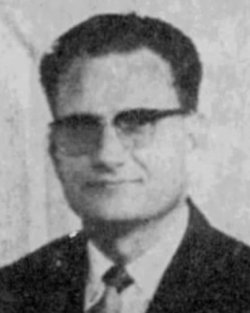
About W.E. Best
Wilbern Elias Best (1919-2007) was a preacher and writer of Gospel material. He wrote 25 books and pamphlets comprised of sermons he preached to his congregation. These books were distributed in English and Spanish around the world from 1970 to 2018 at no cost via the W.E. Best Book Missionary Trust.
SERMON ACTIVITY
Comments
Thank you for your comment!
Your comment has been submitted and is awaiting moderation. Once approved, it will appear on this page.
Pristine Grace functions as a digital library of preaching and teaching from many different men and ministries. I maintain a broad collection for research, study, and listening, and the presence of any preacher or message here should not be taken as a blanket endorsement of every doctrinal position expressed.
I publish my own convictions openly and without hesitation throughout this site and in my own preaching and writing. This archive is not a denominational clearinghouse. My aim in maintaining it is to preserve historic and contemporary preaching, encourage careful study, and above all direct readers and listeners to the person and work of Christ.
Brandan Kraft
Bible Verse Lookup
Loading today's devotional...
Unable to load devotional.
Select a devotional to begin reading.
Bible Reading Plans
Track your daily Bible reading with a structured plan. Choose from several options and let us keep track of your progress.
Comments
Your comment has been submitted and is awaiting moderation. Once approved, it will appear on this page.
Be the first to comment!