Bootstrap
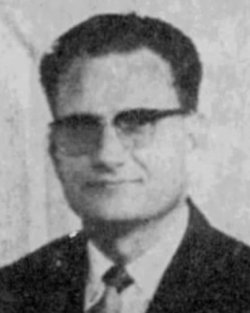
W.E. Best

The Theanthropic Christ - The God-man, Part 2

W.E. Best July, 1 1992 Audio
0 Comments
Best on the Person of Christ

Sermon Transcript

Auto-generated transcript • May contain errors

100%
Let me review just two or three
things before we continue our study of the theanthropic person
of Christ. You remember last Wednesday,
and I won't hold you a long time tonight, I would like to announce my subject
for this Sunday morning before we get started. I would appreciate
it very much if you would make a diligent study of the first
six verses of Hebrews 11, since we're really after the
introductory message or lesson on the subject of faith. And then I'd like for you to
also study Luke 18, 1 through 8. I think this is going to be the
first one that we will develop. The Son of Man having come, will
He find faith on the earth? That's the translation. The Son
of Man having come, verse 8, will He find faith on the earth? I think that will be the subject
that we will deal with after looking at verses 1 through 6
as a whole. in discussing the subject of
faith this coming Lord's Day morning. You remember last Wednesday evening,
we said that Jesus Christ is not God in man, He is not God
and man, but He is the God-man. And then we discussed those three
things. We gave you quite a bit on those three points because
they're so important. And to review just with a brief
statement about each one, Jesus Christ is not God in man because
God is in his people. He's in you. He's in me as a
born-again person. He is not God and man, because
if that were true, then there would be two persons in Christ,
but there are not two persons. There were not two persons, and
there are not two persons now. Two natures, but not two persons. But He is the God-man. He is
the God-man. Now, we were discussing The second
major heading in the outline form, the theanthropic person
began with the incarnation, and then we went from that point
to the theanthropic person is complex, and then we gave some
of the heresies of the past, trying to formulate as much of
history into this brief lesson, and we discussed Apollinarius,
Arius, and docetism and I'll have a little more to say tonight
about docetism. So now we come to the subject
of docetism and I'd like to start there because I did not give
all that I want to give on that subject. I have been accused
of believing in docetism. In other words, I've been accused
of adopting the docetic point of view. And
I've been accused even by persons who embrace the doctrines of
grace, believe it or not. So you have all kinds of things
taught by all kinds of people, therefore it's the responsibility
of every Christian to so study this subject that he will be
able to give the biblical reason for what he believes. In continuing that particular
point, I would like for you to turn in your Bibles to Luke 8,
25, as we continue the thought about the docetic view. And the verse that we want to
look at in connection with this is the 25th verse. Christ is speaking, and he said
to them, where is your faith? And they, being afraid, wondered,
saying one to another, What manner of man is this? What manner of man is this? For he commanded even the winds
and water, and they obeyed him. So looking at the statement here,
what manner of man, or a question, it's an interrogative statement,
It is conceivable how Christians have regarded the confession
of Christ's deity as primary and as humanity as secondary. Notice I said primary and secondary. Why do we say that? Because God
alone can redeem. He's the only one who can redeem. He's the only one who can regenerate.
He is the only one who can forgive sins, and it should not be necessary
to give verses of scriptures on all three of those statements.
He alone redeems, He alone regenerates, and He alone forgives sins. So
God alone can redeem, God alone can regenerate, and God alone
can forgive sins. The Confession has preserved
Christianity from the idea of placing the true humanity of
Christ on a level with placing one's trust in man rather than
God. Therefore, the God-man, true
God, true man, is something other than a form of humanism. Now let's look at the docetic
idea. What does docetism really teach?
That Christ was only a phantom. So Christ had only a phantom
body. No, he had a human body. So docetism
has been condemned by scripture. It is necessary to avoid the
docetic view that Christ was born through Dia and not of Ekmeri. So Jesus Christ differed from
other babies only, only in his non-possession of a human father. There is no trace of docetism
in the scriptures, absolutely none. study Christ's life, his
death, his burial, his resurrection, his appearance between his resurrection
and his ascension, etc. And you'll find that there is
absolutely no concept, no hint at the theory of docetism. Scripture
never permits the divine to threaten or relativize the human nature. Two or three more statements
on this point based on verse 25 of Luke chapter 8. Chapter 8 and verse 25. Some
are now saying the motif of docetism appears now in a more refined
form. It's not a denial of a human
body, but the language of it is in such a way as to make it
hard to believe in a true and complex body. However, scripture teaches us
to note carefully the connections between human thought and action
and divine thought and action. So it cannot be denied in the
study of the New Testament scriptures on this subject that present-day
theology places strong emphasis on the human nature of Christ. Christ is viewed as a messenger
from a far country whose manners are foreign to today's society. But there is nothing that would
justify the concept of docetism. Now the reason I was accused
and have been accused of being a Docetist is because of what
I have written and what I have taught and continue to teach
and will until my dying day. And that doesn't mean that I
do not continue to correct my proof. Remember what I said Sunday
night? Since we are not infallible,
we have to continue to correct our proof. So every time we study
a subject, we learn more about that subject, and there are some
aspects that we're not as clear as we should be, because no one
has all the truth instantly. It's a lifetime growth. So the
Christian is always continuing to correct his proof. And as
he corrects his proof, he has more assurance, more power, and
a greater witness for the Lord. So that's true with the person
of Christ, and the reason for it is because it's an infinite
subject. Absolutely infinite. Not finite,
but infinite. Now we'd like to, we gave you
the theanthropic person as complex, that was Roman numeral three.
We discussed capital A under that. And then we came to capital
B, and that was the study of the different views that have
been condemned by great men of God down through the ages. We
notice Arius, Nestorius, Apollinarius, and others. So now the third
major point under this Roman numeral three, Jesus Christ was one person with
a twofold consciousness. Now we're going to get down right
to the bedrock of the subject. Jesus Christ was one person with
a twofold consciousness. So let's go into this particular
point. Now we'll have some more subheadings
under this. That's C, capital C. One, little
one under that. The impersonal human nature of
Christ was personalized by the hypostatic union. Personalized by the hypostatic
union. And these are some comments that
I want to give under that particular point. Some say that Christ's,
quote, human nature, although endowed with intelligence and
will may be, and in fact is, in the person of Christ, impersonal."
End of quote. Now I'm quoting from theological
works, from systematic works on theology. Another person makes
this statement, and I quote, in saying that Christ took our
nature upon him, We imply that his person existed before and
that the manhood which he assumed was of itself impersonal. The person who made that statement
was Tatford, T-A-T-F-O-R-D, and the first one was Hodge and his
work on systematic theology. Let me give you one by John Owen,
the Puritan. who wrote, I suppose, more on
theology than any of the Puritans of the past. John Owen said,
quote, The Logos gave it its subsistence in his own person,
where it hath its... Now here is a word we do not
use. It's archaic, so I'll give you our modern version of this,
distinctive character, distinctive character. Now listen to it again.
What did he say? He said the Logos gave it its subsistence
in his own person where it hath its distinctive character and
distinction from all other persons whatever." Another man made this statement.
I'm giving these statements before we make some comments. The more
accurate statement would be that the human nature in the Virgin
Mother antecedent to the assumption of it by the Logos, is impersonal. Strictly speaking, the human
nature, when once in the person of Christ, is no longer impersonal
because it has been personalized by the union. I want to give
you those statements and then we'll give you some comments
on them. Now, we know that there was no
alteration Whatsoever in the deity of Christ when the eternal
son assumed human nature in the incarnation But there was in
the form of consciousness Now let me run that back by a game
because this is a very important point Gives us a better understanding
of the two natures and how they operate how they operated and
when he was here in person and walked among the sons of men.
No alteration, absolutely no alteration in the deity of Christ,
but there was in the form of consciousness. The God-man has
a twofold variety of consciousness or experience with only one self-consciousness. Now that's very important. A
two-fold variety of consciousness are experienced with only one
self-consciousness. Now, these are some comments
under that. If Christ had only one nature, there could not have
been a complex consciousness. But there is a complex consciousness.
in the God-man that we've already talked about. There were two forms of consciousness
in the God-man, two forms of consciousness, divine and human. And you'll
see what I'm getting at when we come to a conclusion of this
tonight. When Christ said, I thirst, Again, why hast thou forsaken
me? And another example, the form of his consciousness,
we could say, was what? Human. I thirst, that's human
consciousness. Why has the Father forsaken me?
That's human consciousness. Do you think that God forsook
God, absolutely speaking, absolutely not. Couldn't do that, contrary to
the teaching of Scripture. Now, let's turn it around. When
he said, if any man thirst, let him come to me and drink, That
was not human consciousness, folks. That's divine consciousness. When he said, I and my Father
are one, I'm not giving the scriptures. I'm assuming that you know most
of them. That happens to be John 10, verse
30. I didn't copy it down, but that's
John 10, verse 30. I and my Father are one. He was
speaking not from the human consciousness
but from the divine I and my father are one give another example
Lazarus come forth he was not speaking from the
human consciousness he was speaking from the divine consciousness and this helps you to understand
The verse of Scripture that is so controversial with a lot of
folk, and that's Mark 13, 32, about the Lord Jesus not knowing
the time when He's going to come. And that's another subject to
discuss. Man is a human person with a fluctuation of conscience,
consciousness. We should understand that. We're
human beings. When man says, I thirst, the
form of his consciousness is that of his material nature. That is his physical nature.
I thirst. That's human. God doesn't get
thirsty. God absolutely considered doesn't
get thirsty, does he? When he says, I love the Lord,
I'm talking about man now. The form of his consciousness
is from his spiritual nature. In other words, if it's really
coming from the heart, coming from one who has been regenerated,
it comes from his spiritual consciousness. And then a good passage to study
in connection with this, we will not take time to turn to it,
is Romans 7, 15 through 25. Paul said what he would do, he
doesn't do, etc., etc. You're familiar with that portion
of Scripture. So putting the two together that we've been
talking about, what do we have? We say that the person who has
different modes of consciousness or conscious experience is human. And a tremendous passage to use
at that point would be 2 Corinthians 4, 16 through 18. Though the
outward man is perishing, yet the inward man is being renewed
day by day. So man is a person with a fluctuating
or a fluctuation of consciousness. Now, let's look at animals. That's the reason, you see, I
don't believe we came from monkeys or any other animal. So that
means that I detest, I have absolutely nothing in common with anyone
who does believe in evolution, period. Let's look at the animal
for a moment. The animal has only one form
of consciousness. One form. Because he is simple in his constitution. Now an animal can learn a lot
of things and it's by repetition. I know. I've got a dog. They
can learn a lot. Smart as far as it goes. But
they can't reason. If you think they can, well,
sit down and try to reason with one of them why you should do
something. I had that experience this week,
by the way, and I won't go into that. But it's a good illustration
if I were to take the time to do it. So the animal can have
some of the forms of human consciousness. I said some of the forms. Animal
gets thirsty, gets hungry, hurts when it's been kicked or mistreated. He can feel, he can get hungry,
he can get thirsty, and he can have pain because he has a physical
nature. Our little dog is so rotten,
when he has a pain, he comes and walks in our lap and do something
for me. He didn't tell me that, but I
know that's what he wants. And we can understand that. But
I'll tell you what the animal cannot do. And never will be
able to do. I don't believe there's a heaven
for dogs. As some people believe. Did you know some people believe
that? Religionists believe that. He cannot enjoy spiritual emotions. Emotions like joy in God. or rational perceptions, like
the intuitions of geometry, because he has no rational nature. Now going along with this same
thought, while the acts and qualities of either nature may be attributed
to the one theanthropic person, the acts and qualities of one
nature may not be attributed to the other nature. So Christ
could not attribute the characteristics, the attributes of one nature
to another nature. And let's look at some very important
things under that statement. It would be erroneous for you
or me to say that the divine nature suffered, died, and was
raised. Each nature has certain properties. The properties of one nature
cannot be transferred to the other nature. A material nature
cannot have, or can't have rather, only material properties, and
a spiritual nature can have only spiritual properties. It doesn't take long when you
talk to people as to if their properties are only spiritual
or only physical, and to make the proper distinction
between them. Thus, the resurrected, glorified, and exalted Christ,
the theanthropic person, has retained all the essential properties
of his human nature. He has retained all of them. Associated with flesh and blood,
not flesh minus blood, not flesh minus blood, which were left
behind. He's not in a body of flesh and
blood. He's in a body now of flesh and
bones, Luke 24, 39. So suffering, pain, and death
are left behind. Christ will never die again.
He'll never experience pain again. He'll never experience agony
again. We could go on and on. Such modes
of consciousness were left behind. The same shall be experienced
by you and me when we leave time and step out into eternity. Revelation
21. Now this is a very important
point under this. The human nature of the exalted
Christ retains the essential properties of human nature. It keeps its finiteness, and
it is not invested with the infinite properties such as omnipotence,
omniscience, and omnipresence. Now, the divine nature of Christ
is the foundation of His person. That's the foundation. Now you
can see when we understand this, no one can believe in the peccability
of Christ. I said the divine nature is the
foundation of His person. He is the God-man, not man-God. Let's keep it always in the proper
order. God-man, not man-God. Let's look at a number of things
under this. This would be capital D if you're
outlining. First of all, the Eternal Son
is personal per se. He's personal per se. He is from
everlasting to everlasting. So he is from everlasting to
everlasting, conscious of himself as distinct from the Father and
from the Holy Spirit. Three different persons in the
Godhead, but one God. You say, that's difficult to
understand. Yes, it is to the natural mind, but not to the
Christian. Because he accepts, he lays hold of, he apprehends
what he is not able to comprehend. Now, if the human nature had
been the base of Christ's person, base or foundation of his person,
He would have been the man-God and not the God-man. So you'd
have to reverse the order. The personality of the God-man
depends upon the divine nature. At the crucifixion, the union
between the logos and the human soul and body was not dissolved. But the union between the human
soul and body was dissolved temporarily, like that, until the change came. The personality of the human
nature of Christ was interrupted for a period of three days and
three nights. That's called death. The soul without its body is
not a full and entire person, as you and I know, and we've
studied it many years together. However, the soul is the base
of the person, the immaterial part. The God-man existed between the
crucifixion and the resurrection, didn't he? I say yes, notwithstanding the separation
of the soul and body of the human nature. The divine nature is the controlling
factor of Christ's person. The divine person was powerless or all-powerful during his public
ministry in accordance with the determination of the Logos. Sometimes he was all-powerful
in his acts, and sometimes he was a worm and no man. You say,
wait a minute now. Folks, that's Scripture, Psalm
22, 6, talking about Christ. The knowledge of the God-man
depended upon the divine nature for its sustenance, right? The human
mind of Jesus Christ stood in a somewhat similar relation to
the logos that the mind of a prophet did to God. The prophet could know no more
of the divine mind than it pleased the Holy Spirit to reveal. Thus
the human mind in Christ could know no more of the divine mind
than the Logos determined to make known. And that's Mark 13, 32, if you
want to really get into it. Now this analogy, and it is an
analogy, is not true in all respects. The Logos and the human mind
constitute one person, but it is true in respect to the point
of dependence for knowledge. It must be remembered that the
Eternal Son condescended to unite Himself with an inferior nature,
human nature, even though it was perfect, it was inferior. Sinless, but inferior. Through which His own infinite
perfections could shine only, watch this, in part, in part,
Hebrews 2, beginning with verse 14 forward. Though the Logos
condescended to take the form of a servant, now we go back
to Philippians 2 where we began our study. He did not cease to
exist in the form of God. Form of God, the divine nature. Form of a servant, his human
nature. Now let's look at Roman numeral
four for the last point in our study of the theanthropic person. Jesus Christ is the impeccable
Savior. Now we bring it to this conclusion. The subject of Christology is
not complete without considering the subject of Christ's impeccability. I don't know about you, but I
never tire of studying about the person of Jesus Christ. And
every time I explore the subject, I find new things in relation
to this infinite subject. Hmm Christ was not only As we used to say now watch what
I'm doing here, please I'm going to correct my proof of the past
you follow me I Used to say that Christ was not able to overcome
was not only able to overcome temptation But he was unable
to be overcome by it. That could be stated better.
So here you learn to correct your proof. So Christ was not
tempted, and since he was not tempted, you don't have to use
that. And certainly he overcame. But let's look at some very important
points under this heading concerning his impeccability. The fallen angels were holy,
but they were not impeccable. I said they were holy, but they
were not impeccable. They could have temptation with
the power given to them, but they were not impeccable. Let's look at Adam. Adam was
created upright. The old-timers like to refer
to original uprightness or original righteousness, some of them called
it, what it's called in Ecclesiastes 7 and verse 29. Adam was created
upright, and that's the word that is used in Ecclesiastes
7, 29, but he was not impeccable. Upright, but not impeccable.
So you cannot use Adam as an analogy when you talk about Christ
and his temptation and where Adam was tempted and he fell,
then Jesus Christ was tempted, but he didn't fall. It won't
work. Will not work. Adam had the power to repel temptation, but he was not impeccable. Christ's holiness was immutable. His absolute holiness was immutable. Couldn't change. Couldn't become
less holy. Because he was absolutely holy. His holiness was not created.
Not a created holiness. Therefore immutable. Christ was not created. Immutable holiness is irreconcilable
with the fact that the God-man is the author of holiness. A mere man can be overcome by
temptation, but the God-man was never tempted. Period. Sure he overcame, but he was
never tempted. No weakness within that could
be attracted by the evil outside. The holiness of the God-man is
more than sinlessness. More than sinlessness. It is a positive virtue. You
don't think of it in a negative term. So the finite cannot overcome
the infinite. Temptation depends in part upon
deception. A finite intelligence can be
deceived. We as Christians can be deceived,
not to our destruction, but we can be deceived. The unregenerate
person, he lives in a state of deception. Not a matter of him
being deceived. He lives in a state of deception.
We don't live in a state of deception, but we can be deceived. That's
why we have all the warnings of the New Testament. And there
are plenty of them, not only given us by Christ, but by the
apostles. Do not be deceived. Be not deceived. So temptation depends in part
upon deception. A finite intelligence can be
deceived, but an infinite intelligence cannot be deceived. And who's
going to say that Christ's intelligence is less than what it is, and
that it is infinite? I want to give you an unusual
view of impeccability, which I do not endorse at all. It's
in one of the outstanding works on systematic theology, Shedd's
work. It's a three-volume set, and
Shedd was a grace man, has some great things in some of his teachings. But let me give you a quotation
out of it. Found on page 333 of volume 2
of Shedd's Systematic Theology. Dogmatic, it's called Dogmatic
Theology. I'm going to summarize it. I'll
use one direct quote in just a minute, but I want to summarize
it first because he goes into it like this. He believes that
Christ's human nature was peccable. His human nature was peccable. And his divine nature was impeccable. Now watch what he does. But the
union of the two natures made his person impeccable. Now that's
his teaching. If you don't believe it, volume
2 and you can begin on about page 333 and you'll have a lot
to read. He gives an unusual, the most
unusual view of impeccability I've ever read in all the years
that I've been studying. So watch it now. He says what?
He believes that Christ's human nature was impeccable, His divine
nature was impeccable, but by the union of the two natures,
His person, and after all, there's only one person, is impeccable. He also states that since the
divine nature determines and controls the human nature, the
person of Christ, therefore, is impeccable. Now here's a direct
quote. Impeccability characterizes the
God-man as a totality while Peccability is a property of his human nature
end of quote But I thought that was the most unusual view of
impeccability And it is the most unusual that I came across when
I was doing a lot of research on this years ago Now this raises
a serious problem That's what I said. I said, this raises a
serious problem. What is it? If the properties of either nature
can be attributed to the person of the Godhead, such as finite
and infinite, impotent and omnipotent, ignorant and omniscient, then
why may we not say that he is both peccable and impeccable? All right, let's take that a
little further. What's the answer? What's the answer to the problem?
Now their answer to the problem, the answer that has been given,
makes a distinction between sinful and non-sinful properties. Now it is true that Christ did
not see him when he became thirsty. He did not see him when he became
weary in his journey. He did not sin when he got so
tired that he went to sleep, had to rest the body. We would
all agree to that. They also say that should Christ
sin, the incarnate God would sin. As incarnate God suffered,
when Christ suffered, the divine nature may leave the human nature
in cases where sin is not involved. Suffering is humiliation, but
not wickedness. The God-man, they say, was commissioned
to suffer, but was not commissioned to sin. A lot of human reason. Now let's look at this in conclusion.
What about the absolute holy nature of Jesus Christ? What about the absolutely holy
nature of deity uniting with a nature which had the capacity
to sin? I'm going into Shedd's view again. If his human nature was peccable,
then the divine nature, the absolutely holy nature, united with something
that was not holy. I don't believe that. Don't believe
it for a second. Well, let's see what the scripture
has to say about it. What does Luke 135 say? What
does it mean? Was the holiness of the human
nature the same as the holiness of Adam's nature in the fall?
Nope. Is there not a difference between
person and nature? We've already studied that last
week. Is there not a difference between
nature being personalized in Adam and a holy nature personalized
in the person of Jesus Christ? So that holy thing was personalized in the person
of Jesus Christ, Luke 135. That holy thing. Talking about
his nature. Christ had no sinful lust of
any kind. There was no antagonism whatsoever
between the finite and the infinite will. Or between his human will
and his divine will. He did have a human body, he
had a human soul, and he had a human will. That made him man. But he was a God-man. No conflict
whatsoever in the self-consciousness. See, we're getting back to self-consciousness
again. No conflict in the self-consciousness of Jesus Christ, similar to that
in the life of the Apostle Paul, or in your life, or in my life.
There's a conflict. We have a conflict. There's a
warfare. in us. What I would do, I don't do.
What I don't want to do, it seems that that's a thing I do. Christ
didn't have that conflict. And to even hint that he had
that conflict is heresy. Absolute heresy. So Christ didn't
have the conflict that we have. I'll give these things in conclusion,
and I think this could wrap it up in a more simple fashion. Jesus Christ is a unique person. Never has been one like him.
Never will be another like him. He's the unique one. Only begotten
literally means unique one. And I like that translation,
really. So Jesus Christ is equal to the Father, but different
because he possesses what? A human nature. Now what did I say? I said Jesus
Christ is equal with the Father, but different because He possesses
a human nature. He possesses a glorified human
nature now. He'll always possess that glorified
human nature. He assumed the human nature never
to lay aside. It was glorified in His resurrection,
and our human natures will be glorified in the resurrection.
But we won't become little Jesuses. We won't become gods, that will
always be a distinction. We don't accept, we don't embrace
Mormonism. That's very heretical. So Jesus
Christ is equal with man, but different from man. Now notice
what I'm doing, I'm reversing it. Because he possesses a divine
nature. So He's equal with the Father,
but He's different from the Father because He possesses a human
nature. He's equal with man, but He's
different from man because He possesses a divine nature. Now let me illustrate it in a
very simple way, really. During Christ's earthly ministry,
He, number one, He's number one now, spoke as God. He spoke as God. I and my Father are one. He was speaking as God. Unusual. You notice, I and my
Father. I don't think, regardless of
what one thinks about the word order of the Greek, I don't think
you can change it. I think it stands out very clearly
John 10 verse 30 that that is the order I and my father not
my father and I but I and my father are one why did he say
it in that matter because he was equal to the father and He
was saying it for the benefit of those wicked and religious
Jews to whom he was speaking They were doubting him they were
saying he couldn't be I and my father are one He was speaking God. Number two,
he spoke as man. I thirst. I've already given
other illustrations but we'll use this one now. God does not
thirst. Never has been thirsty, never
will be thirsty. That's John 19 28, I thirst. I gave the one of the statements
that he made while hanging on the cross. And then thirdly,
let's put them together. He spoke as God, absolutely considered. He spoke as man. Now He also
spoke as the God-man. How does He speak as the God-man? Here it is. Come unto me. And
what? I will give you rest. He spoke
as the God-man. Matthew 11, 28. You can't come to the Father
as the Father. You have to come to the Father
through the Son by the Holy Spirit. See? Come unto me and I will
give you rest. So he was speaking as the God-man.
Come to me and I'll give you rest. So he spoke as God He spoke
as man, he spoke as the God-man, putting them both together. So the subject of the theanthropic
person is one of the most important studies to make in connection
with Christology or the impeccability of Jesus Christ. Be sure and study diligently
if you have time. Study your Greek. We'll be looking
very closely into the Greek on these because, as I gave you
last Sunday morning, those contrasts, you'll see why it's necessary
to look closely to the Greek in order to understand some of
these questions that I raised last Sunday morning. So if you
haven't listened to the tape, you need to listen to that tape
in preparation for this coming Sunday. But the Son of Man having
come, Arius, active, then what? Will he find faith or shall he
find faith on the earth? What is the meaning of that?
What kind of faith? Let's stand.
W.E. Best
About W.E. Best
Wilbern Elias Best (1919-2007) was a preacher and writer of Gospel material. He wrote 25 books and pamphlets comprised of sermons he preached to his congregation. These books were distributed in English and Spanish around the world from 1970 to 2018 at no cost via the W.E. Best Book Missionary Trust.

Comments

0 / 2000 characters
Comments are moderated before appearing.

Be the first to comment!