Bootstrap
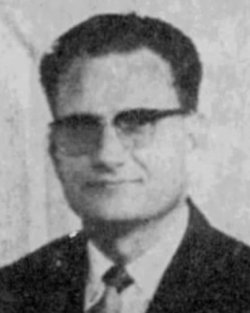
W.E. Best

The Theanthropic Christ - The God-man, Part 1

W.E. Best June, 24 1992 Audio
0 Comments
Best on the Person of Christ

Sermon Transcript

Auto-generated transcript • May contain errors

100%
Let's read beginning with the
fifth verse, Philippians 2. Let this mind be in you, which
was also in Christ Jesus, who, being in the form of God, thought
it not robbery to be equal with God, but made himself of no reputation
and took upon himself the form of a servant, was made in the
likeness of men. and being found in fashion as
a man, he humbled himself and became obedient unto death, even
the death of the cross." We started out giving a little
bit on the theanthropic person, and tonight I'd like to bring
our study to a conclusion by going into this subject, but
I doubt that we can finish it tonight, but I will begin. Now this is not an easy subject
to listen to. It is a subject that very few
people are acquainted with. Let me ask you this question.
I have preached it in this church. I've taught the subject, I think
a couple of times, maybe in the last 25 years. But have you ever
heard, how many of you have never heard the development of the
subject, the theanthropic person? Let's see your hands. You've
never heard it. So we do have some who have not heard it. It's
necessary that you take some notes and when we get to certain
areas I'll go a little slow so you can take some notes because
This is really a very, very important subject to understand the person
of Christ, the two natures of Christ, and also it is connected
with His impeccability. And if we do not have the biblical
concept of the person of Christ, then we don't have anything at
all to give people, period. I'll begin by giving what I gave,
I think, about three weeks ago, just briefly. And that is, a
single person may consist of one nature, or
two natures, or three natures. A single person may consist of
one nature, of two natures or of three natures. First of all, a Trinitarian person,
that's one of the persons of the Godhead, has only one nature, the divine
essence. the one nature of the Godhead,
if you please. Number two, a human person has
two natures. He has a material body, a decaying body, but he has an immaterial soul. material body but an immaterial
soul. His soul is not decaying. Now we know why Paul said what
he did in 4th chapter of 2nd Corinthians. Though the outward
man is perishing, decaying, yet the inward man is being renewed
day by day. So a human person has two natures.
A theanthropic person has three natures. He has a divine essence. Secondly, he has a human body.
And thirdly, he has a human soul. That's Jesus Christ. As he walked among the sons of
men, However, let us not make the mistake when Jesus Christ
assumed a human nature, He assumed it never to lay it aside. It's
glorified now. And we'll be like Him when we
see Him as He is. So to begin with, Jesus Christ
is not God in man, are God and man, but He is the
God-man. Very important that we get these
distinctions. Jesus Christ is not God in man,
or God and man, but the God-man. And we'll develop those three
tonight. We'll have time to develop those three, I'm sure, and maybe
more. He is not merely God or merely
man, but a union of both. He is the God-man. He is the
theanthropic person who shall remain so forever." Now watch this next statement.
The person of Christ, the person of Christ is theanthropic, but not his nature. The person,
but not his nature. You see, that would make the
infinite finite and the finite infinite. The natures of Christ
retain their own properties and attributes. The natures of Christ
retain their own properties and attributes. The divine nature
is not humanized nor the human deified. So the divine nature is not humanized, and the human is not deified. As we gave the four adverbs for
you last week, and this is a good place to remember them, The natures are not confounded
or mingled, but they have one common life. Now, what is the outstanding
question in relation to this subject? Is the question, is Jesus human? Is that the important question,
is Jesus human? No, it is, is Jesus divine or
is Jesus Christ divine? Since his deity can be demonstrated, we may well accept the verdict
of the Chalcedonian and Athanasian creeds on the subjects of the
unity of his person, the unity of his person, and the duality
of his nature. Unity of his person, duality
of his nature. Now we started out by giving
you, if you're outlining this, Jesus Christ is not God in man,
be it Roman numeral I, or God and man, but the God-man. Now
we'll look at these three. So let's divide it into about
three major divisions here. So capital A if you're outlining. First of all, God in man. applies to the regenerated man. The statement God in man applies
to the regenerated person. Colossians 1 27, Romans 8 9 through
11, Ephesians 3 and verse 17. Now this could never apply to
the theanthropic person. Now, I'll give you some things
under that. Little 1, 2, and 3. Number 1, God was in Christ. 2 Corinthians 5, 19. It says, God was in Christ, reconciling
the world unto Himself. So what does it mean God was
in Christ? It means the Father was in Christ. It would be unnatural to say
the divine nature of Christ was in Christ. Number two, The Father is in
me, and I in Him. That's John 10, verse 38. What does it mean? It means that
in Him dwells all the fullness of the Godhead, bodily. And that's Colossians 2, verse
9. Thus all the perfections of deity
dwell in Jesus Christ, the God-man. And three, the elect who had
been at a great distance from the Father are made nigh through
the reconciling work of the Son. So you see what I've done in
the three points underneath. This gives us the truth of God
being in Christ, reconciling the world, that is the world
of the elect, unto himself. So the elect, who had been a
great distance from the Father, are made nigh through the reconciling
work of the Son. Now, capital B, God and man. See, the first one was God in
man, now it's God and man. Let's see how we are to understand
this and explain it. God and man means the persons
rather than the natures. God and man means the persons
rather than the natures. This is not the same as in the
God-man, or God as the God-man. Now, I'm going to give you three
things under this one, and one of them is going to be long.
In fact, this, we could develop the third point into quite an
exposition. But number one, under capital
B, Jesus Christ is the second person of the Godhead. He's not
the first person. He's not the third person. He's
the second person of the Godhead. That's the order. That's the
order we have in Scripture. He did not obtain personality
by uniting with a human nature. He did not obtain personality
by uniting with a human nature. Second, man is a person. The second person of the Godhead
did not unite with a human person, but with a human nature called
a holy thing. Luke 135. Notice, a holy thing. Now number three, we're going
to show where nature differs from person. Where nature differs
from person. Personality is not an essential
part of nature. I said personality is not an
essential part of nature. but the terminus to which it
tends. T-E-N-D-S. Nature is a more impersonal term
than the term person. Nature is impersonal. Person
is different. Human nature is not actually
personal. That's why Christ assumed that
holy thing. So human nature is not actually
personal. That is a distinct person. It is nevertheless personal.
That is, it is capable of becoming a separate, self-conscious, individual
person. So it is the properties of a
nature, or substance, if you want to use the word substance
in parenthesis, following nature, that make it what it is. not
the particular individual from which it may assume. So the figure of the potter's
clay may be used as a tremendous illustration at this point. Jeremiah
18. And also Romans 9. Paul quotes
that in Romans 9. A lump of clay has all the properties
of matter that belong to the vessel of honor or dishonor. Notice what I'm saying. Of either.
Vessel of honor or a vessel of dishonor. But it has not as yet
the individual form of a vessel. Thus an act of the potter must
intervene. A piece of clay is separated
from the lump and molded into a particular vessel, having its
own peculiar shape and figure. So in like manner, human nature
as an entire whole existing in Adam, the federal head of the
old creation, possessed all the elemental or elementary properties
that are requisite to personality, though it was not yet personalized. I said though it was not yet
personalized. So the difference then between
nature and form is virtually that between nature, substance,
and form or personality. You're looking at a form as I
stand before you. I'm looking at forms out there,
looking at personalities. Now, C, it's capital C, We're
looking at God-man. See, not God-in-man or God-and-man,
but God-man. God-man means a second person
of the Godhead took not the person of man, but the nature of man
into subsistence with himself. He's not two men in one. He's
one person with two natures. Many times we refer to the Lord
Jesus Christ as the God man the divine in human natures. That's
okay but when we really think about the second part we know
that Jesus Christ had not only a Human body, but he had a human
soul. So that makes him the the anthropic
person And the scriptures teach that. Surely I don't have to
go through all the New Testament to show you references where
it speaks of Christ's soul, Christ's spirit, Christ's body, etc.,
etc. The material part, the immaterial
part of the human nature. So God-man means a second person
of the Godhead took not the person of man, but the nature of man
into subsistence with himself. Now, three things under this
point. I'll give you more than that on this one, because this
really goes into some very important things. Number one under this,
the human nature of Christ, previous to his assumption of human nature, of course, was
not the human nature of Christ, previous to his assumption thereof,
was not a person. The nature he assumed was not
a person. The assumption was unto a theanthropic
person. Number two, now let's look at
the Incarnation. In the Incarnation, the Eternal
Son did not Himself unite with the whole human nature of Adam, but only a part of it. Hebrews 2.14. See, He didn't unite Himself with
Adam's sinful human nature. So he did not unite himself with
the whole human nature, but with only a part of it. Hebrews 2.14.
Human nature may signify the entire human species as it existed
in Adam, or only a part of it as it exists in near or remote
ancestors. So in the first case, it is the
human nature, the human nature with emphasis on the definite
article the. In the second, it is a human
nature with emphasis on the indefinite article. Christ assumed only a part, a
part of a human nature. it being the impeccable human
nature. Not peccable, impeccable. If we don't understand that,
we don't even understand the virgin birth of Christ. I don't
know why people, people talk about believing in the peccability
of Christ. When they make that statement,
they deny Christ's virgin birth. Number three, The terms son of
man, the man Christ Jesus. Now all of these are biblical
terms that I'm giving you. I won't give you the scriptures
for them because there are a great number of them. But these are
biblical terms. Son of man, the man Christ Jesus,
the God-approved man, etc. Do not express the personality
of a mere man. They do not express the personality
of a mere man. A mere man ought to be underlined. They express the personality
of the God-man who appeared in the form of a
servant that we've been reading about in Philippians 2. It takes the spirit of regeneration
to see something more than a mere
man in the the anthropic person. And I'd like for you to put down
John 19 5. Now, while you're making a few
notes, think about that for a moment. During the personal ministry
of our Lord, many people saw him and all they saw was a man.
So they referred to him as the man. They saw the human nature. They did not have the ability
to see or to penetrate beyond or below or inside or look into
the person inside the human nature which he had
assumed. Persons today who are not Christians,
you can't expect them to understand the person of Christ. They can't. Any more than people could during
the personal ministry of Christ when they looked upon Him and
did not really know who He was. All they could see was a man.
And almost all religionists today, all they see is just a man. And they treat him as such. They
look upon him as such. Number four, in the incarnation,
the Trinitarian person, now I'm stressing the Trinitarian person.
second person of the Godhead, subsisted in both the form of
God and the form of a servant. Taking this from the passage
that we read again. The form of God was veiled in
the form of a servant. But he was more than a servant.
He was God manifested in human flesh or in human nature. Number five, we cannot say, and
this is important, we cannot say properly that the virgin
boar or John baptized or Pilate condemned, or the Jews crucified
the human nature of Jesus Christ. They just crucified the human
nature of Jesus Christ. We can't say that. Now notice
what I'm saying. And I'm not contradicting myself, and I'll
turn it around in a moment and say what we can say. But right now, what we cannot
say. We cannot say properly that the
Virgin bore or gave birth to, or John baptized, or Pilate condemned,
or the Jews crucified the human nature of Christ. We can say properly that the
Trinitarian person was born of the Virgin. He was baptized, condemned, and
crucified. But it was His human nature that
made His eternal person capable to have these experiences. Now there's the whole thing in
a nutshell. I'll run the last one by again. We can say that the Trinitarian person was
born of the Virgin. He was baptized by John, condemned
by Pilate, and crucified by his enemies, by the Jews, But it
was not his human nature that made it, but it was his human
nature that made his eternal person capable of having those experiences. Now let's add to this point the
God-man. Number six. The word was made
flesh. That's John 1 14. The word made flesh means that
the divine Logos came to possess human characteristics
in addition to the divine characteristics. So he now had human characteristics.
Not all of them. He didn't have any sinful characteristics,
but he got sleepy, he got hungry, he became weary, tired, etc.,
etc. So he had human characteristics.
So the word was made flesh means that the divine law gods came
to possess human characteristics in addition, and the word addition,
underscore it, in addition to the divine properties of the
divine nature, which cannot be destroyed or
altered. So when he took on these human
characteristics, there was not any destruction to the defined
characteristics. And to say that is heresy. You say, well, that's deep. You
better believe it is. There goes your simple faith
again, see? No such thing as simple faith.
Faith is complex. It's a complex subject, like
the person of Christ is complex, not simple. If it was simple, he wouldn't
be divine. He wouldn't be the infinite one. Number seven, the works of the
God man. The works of the God-man were
never attributed to one nature or the other. Watch, this is
bringing it together now. It was the theanthropic person
who performed the works. See how important that is? That
brings it all together. Folks, if this is not the teaching
of Scripture concerning the person of Christ, I don't know. I don't know. So this is bringing it together,
as far as I'm concerned, as the Bible presents it. Now, Roman
numeral two. The theanthropic person began
with the incarnation. I have a semicolon in mind, this
sentence. The God-man was a new person
as well as unique. He's a new person as well as
unique. Now we'll go to the Roman numerals,
and then about three under each one of the Roman numerals. I did this some time back, but
I wanted to put it in as condensed a form as I possibly could. Capital A, the Trinity was not
modified by the incarnation. No modification of the divine
triunity. See, if Jesus Christ were two
persons, then you wouldn't have a Trinity. See what I'm talking
about? So that's heretical. Trinity
wasn't modified. We have one person with two natures,
and having one person with two natures, that doesn't modify
the Trinity. We still have the three persons of the divine triunity. So the Trinity was not modified
by the Incarnation, only the second person was modified. Only
the second person of the Godhead was modified. Now three things under this point.
Number one, neither the Father nor the Spirit was incarnated. The Father is invisible, the
Holy Spirit is invisible. Now since I've said that, folks,
the Father is invisible, the Holy Spirit is invisible, do
you think when we get in the kingdom that we're going to see
the Father and the Holy Spirit? Will it not be throughout eternity
that the only manifestation of God we will ever see is the Lord
Jesus Christ? We'll be in our glorified bodies.
He's in His, we'll see Him. In Him dwells the fullness of
the Godhead vitally. Now the reason I said that, I remember a few years ago we
used to have different preachers to speak for the pastor's conference.
One Monday, and I remember the person's name very well. He's
still pastoring here in Houston. He is a man with tremendous moral
character, I'll say that for him. I've known him for more
than 50, I've known him for about close to 50 years. His name is
Lamar Mathis. Lamar Mathis was, and he was
a pretty studious fellow. He was preaching to the preachers
one Monday morning. And he was on the triunity. They
like for the preachers to speak on great doctrinal themes, to
try to stir up the brethren and get them to think on Monday mornings
after a hard day Sunday. So he preached on the triunity
and he was discussing it and when he got to the book, he gave
a summary of the triunity and he came to the book of Revelation
and he said, won't it be wonderful He said, when we get to heaven,
we're going to see not only the Lord Jesus Christ, we'll see
the Father and we'll see the Holy Spirit. And he waxed eloquently. So after the service was over,
he was standing out in the parking lot. And I said, Lamar, he's
about my age, maybe a year or two older. I said, where is the
scripture for us seeing the Father and seeing the Holy Spirit? He
looked at me, it's funny, he said, sounded good. I never will
forget what he said. He said, it sounded good. He
said, you got me. I said, well, I've had that question
asked me and that's the reason. I said, I have made the same
mistake. But he said, I hadn't even thought
about it. But I never will forget what
he said. It sounded good. A lot of things sound good that
are not very good. So that was number one under
capital A. Number two, only the Son. Only
the son is referred to as the elder brother now notice what
I'm using terms the terms I'm using the elder brother The head
of the redeemed, etc. Etc. You could go on So the son is the one In whom there was modification
He became the theanthropic person. And three, the Son by virtue
of His office stands in near relation to the redeemed than
either the Father or the Holy Spirit. Now notice what I said.
That doesn't mean that you still have to realize that in Him dwells
the fullness of the Godhead bodily, but the Son by virtue of His
office stands in nearer relation in eternity to the redeemed than
either the Father or the Spirit. Capital B, the untrinalized,
untrinalized nature would be impersonal. the untrinalized
nature would be impersonal. It would be nothing more than
deism or pantheism. We're talking about an untrinalized
nature, would be impersonal. Now, number one under this, the
divine nature is personalized, simultaneously, in eternity,
by subsisting in three persons, Father, Son, and Holy Spirit. The divine nature is personalized
simultaneously in eternity by subsisting in three persons,
Father, Son, and Holy Spirit. Two, if the divine nature had
no trinality in it, if the divine nature had no trinality in it,
the deity would present no personal characteristics appealing to
man's needs. Three, God is a unity. God is
a unity. Personality does not exist in
isolation, but in association with other persons of equal nature. Boy, when we understand this,
I'll show you how important what we're giving tonight is. When people understand this, you see what I'm saying? Now
having said that, and you know, I'm sure you know that they believe
that God was a man who became God. Did you know that that's
their teaching? And that we will become gods. But there are a lot of Baptists
today that talk about all Christians are just little Jesuses. So listen to this third one again.
God is a unity. Personality does not exist in
isolation, but in association with other persons of equal nature. We will never be equal with the
triune God. throughout eternity. There will always be a distinction,
folks, between God and the redeemed. Capital C. The one God condescended
to reveal Himself. the one God condescended to reveal
Himself. Three things under this. Number
one, while there is only one God, there are in the one essence
three distinct persons. If you've never tangled with
a oneness, I've tangled with it. Boy, listen,
they have a pig trail down through the Scriptures, and you take
a novice who doesn't know anything much about the Scriptures, and
a oneness can tie that person in knots, just like a smart Church
of Christ preacher or an elder that knows his pig trail. He
can give his arguments, and a novice is just at his mercy. It's a shame, but most people
today don't think it's necessary to know Bible doctrine. Well, of course, I have my opinions
of folks like that, and they're not very good. They're not very
good. Number two, each person of the
Godhead fulfills a separate department in the economy of human redemption. Each person of the Godhead fulfills
a separate department in the economy of human redemption. So if a person doesn't believe
in the Divine Trinity, by the way that Jehovah's Witnesses
don't. It's the Father who chose, the
Father who planned, the Father who elects, it's the Son who
redeems, it's the Holy Spirit who regenerates. The Father doesn't regenerate,
the Father didn't go to the cross of Calvary and die, the Son did. So each person of the Godhead
fulfills a separate department in the economy of human redemption.
Three, the Trinitarian person did not begin at the Incarnation, but the theanthropic personality
of Jesus Christ did begin at the Incarnation. We'll have time to finish this
point, but I have several other points on this, and we'll give
them next week, because just take a few notes and go back
over them and condense them as much as you possibly can, but
keep them because, folks, this is a lot of meat in just a few
words. Number three, there was modification of the
second person of the Godhead by the Incarnation. modification
of the second person of the Godhead by the Incarnation, but there
was no modification of the Trinity. We still have the Divine Triunity. That's why when we pray, we pray
to the Father and we go to the Father through Jesus Christ by
the power of the indwelling Holy Spirit. The Father has come to you and
me through the Son, by the Holy Spirit, and we address the Father
and we go back to Him in prayer, worship, et cetera, et cetera,
through the Son and by the Holy Spirit. And that's the order. We'll start capital three, I
mean Roman numeral three, excuse me, Roman numeral three. Now, the theanthropic person
is complex. I'm sure you understand that before
we begin. I'll give you a few quotations
from the men of the past on this point. A person may be incomplex, like a Trinitarian
person who has only one nature, or complex, like a human person
who has two natures, and a theanthropic person who has three natures. Now, capital A. Distinction must be made between
a theanthropic person and a human nature. Now here's where I'll give you
a lot of things that will take care of all of the heresies of
the past throughout church history between 1992 and going back to the time of
our Lord and the early disciples. So A, capital A, distinction
must be made between a theanthropic person and a human nature. Now
I'm going to give you some quotes. One under this is Eutychus. I'll
spell it for you. Fifth century head of a monastery
in Constantinople. E-U-T-Y-C-H-E-S. Eutychus. Fifth century head of a monastery
in Constantinople. What did he teach? Eutychus taught
that the union of the Lagos with a human nature results in a single
nature of a third species. That was his teaching. Which nature is neither human
nor divine, but he says the anthropic. Neither human nor divine, but
theanthropic. Now the scriptures refute such
heresy in Romans 1, 3, and 4, and Romans 9 and verse 5, just
to give you a little taste of that point. So a theanthropic nature is impossible. We're talking about a theanthropic
person, not a nature. Number two, Jesus Christ is the theanthropic
person. He has three natures without
mixture or confusion. without mixture or confusion.
Three, a nature is incomplex and simple. A nature is not composed
of both immaterial and material properties. And four, Jesus Christ is a divine
human person. Divine-human person. But this is not the same as a
divine-human nature. Now the next point is going to
include a lot of Harris's of the past, but they have their
contemporaries, they have their followers today. Some of them
under a new name, but the same old Harris's. I'll start this one to begin
with. Capital B, Christ assumed a real human body and a real
human soul. His appearance was not that of
a phantom or ghost. His appearance was not that of
a phantom or ghost. Now I'm going to give you several
heresies under this point. Heresies of the past. Number
one, the heresy of docetism. And that comes from the Greek
word By the way, Doc Ayo. Doc, Docetism comes from Doc
Ayo. Which means seems to be. So the heresy of Docetism, and
you know I've been accused of being a Docetist? I have. Those things don't bother me
anymore, but I can remember the day when they did. So the heresy of Docetism states
Christ was only good, therefore His body was only a phantom. Only a phantom. This heresy is refuted by Luke
24, 39 and 43. And John 20 and verse 27. just start you off on that study. Now the second heresy of the
past was between 310 A.D. and 390
A.D. Apollinaris. He was the Bishop
of Laodicea. That doesn't surprise you very
much, does it? Laodicea Apollinaris, I'll spell it for
you, A-P-O-L-L-I-N-A-R-I-S, A-R-I-S, he denied the completeness of
Christ's human nature. He taught that Christ had a human
body, but an animal soul. Thus he mutilated Christ's humanity. Now here's the one that nearly
everyone remembers, Arius. A-R-I-U-S. Between 256 A.D. and 336, he denied the deity
of Christ. He has a lot of followers today. All who believe in peccability,
you can classify them with this fellow. They could say a lot more. They
denied the deity of Christ. That's enough said. I'll give
you another one. Nestorius, N-E-S-T-O-R-I-U-S,
from 428, and not sure about the conclusion.
failed to distinguish between a nature and a person. Now that's
why I gave you quite a bit while I go on the distinction between
a nature and a person. He failed to distinguish between
a nature and a person. He taught that Christ was two
persons, God and man. He acted as man sometimes and
he acted as God sometimes. Avoidin' that. Nestorius. Number five, and we'll
have to stop with this one. Notice what I'm doing with this
one. Those who believe in impeccability are often accused of docetism. Oh, by the way, I told you last
Sunday about Ms. Nichols in Victoria. She said she had gone to Sunday
school class, woman teacher. She gave up teaching years ago,
said she couldn't continue. But her husband goes to Sunday
school. He's one of the leaders in their Sunday school and so
forth. And she'd been going to this lady's class, and she said this lady was on
the impeccability of Christ here a few months ago, and said, Brother
Bess, it was horrible. She said, after the class, I
went to her and I told her that I could not continue to support
the class and listen to that kind of teaching. So she said,
people in the first church, they think that I'm off my rocker.
And she said, this lady let me have it. Boy, she ripped me up
one side and down the other. And said, in fact, she gave some
arguments that I was not familiar with. So I went home, got out
your books, and I was talking to this young preacher where
we go on Sunday nights. He said, why don't you Xerox
certain pages? And he told her what pages to
Xerox. and send them to her, mail them to her. She said, don't
send her the book, just Xerox certain pages. She said she did
that, and she hadn't heard a word from her. She said she just completely
ignores her. Any person, I don't care who
it is folks, listening to me, any preacher, any individual
who believes in the impeccability of Christ, he doesn't know the
Lord, or she doesn't know the Lord, period. Have I made myself clear? I don't compromise. I'm going to be frank with you
tonight. I don't understand preachers
who say they believe these things, and they'll talk to you personally,
but they won't preach it in the pulpit. Folks, I don't believe
that God's man ought to have one message outside the pulpit
and another message in the pulpit. It ought to be the same in the
pulpit or out of the pulpit. And I maintain if a person really
believes it, it's going to be the same. And I say this, any
person who is a member of the church, and if he can talk one
way before people and talk another way before others, it all depends
on what crowd you're with as to how you talk. I don't have
any respect whatsoever with people like that or for people like
that. Period. Do you? I don't care who it is. And no
one has to listen to me. I'm not going to cop out. I believe
if a person believes that this is Bible, he's studied it enough
that he knows this is the teaching of God's Word, and he's afraid
to say it somewhere, afraid that he might offend somebody, State
the truth, you have the opportunity, state the truth as it is. People who will compromise the
truth, they are more afraid of people than they are of God. They would rather offend God
than man. And I have no respect for anyone
who would rather offend God than offend man. And folks, I'll say that and
that'll be the last thing. I hope that's the last thing
that comes out of my mouth before I leave to go be the Lord.
If you believe something and you know it's a teaching of Scripture,
don't be ashamed of it. I've seen people who would fight
a bus off if something was said about a member of the family
or something like that. And people can blaspheme the
name of God and blaspheme the Lord, and they just keep their
mouth shut. They're going to be Mr. and Ms. Ties. I'll tell you one thing, the
enemies of the Lord don't compromise what they believe. They don't compromise one bit. So let's look at this one in
conclusion. Persons who believe in impeccability are often accused
of docetism. Now, I've been through this,
so I have condensed the things that I have had to face personally. We're not accused of an absolute
denial of Christ's human nature. in such a way as to make it hard
for one to believe in a true and complete human nature. Some
have accused Paul of being on the boundary lines of docetism
in Romans 8, 3 and Philippians 2, 7. What about Galatians 4, 4 and
1 Timothy 3, 16? The New Testament not only does
not teach Docetism, but it polemicizes against it. Take these verses down. I said the New Testament not
only does not teach Docetism, but it polemicizes against it.
1 John 4, 2 and 3 1 John 5, 5-9. Luke 24, 36-43.
John 20, 17 and 20. That's verses 17 and 20 and 27. Matthew 28 and verse
9. Christ corrected the idea of him being a fathom in Mark
6, 49. Christ's impeccability, watch
this, Christ's impeccability does not detract from Christ's
true human nature, or His true humanity. Does not. Hebrews 2,
14 through 17, and Hebrews 4, 15. Ordinary human development. proves the reality of Christ's
human nature. Luke 2, 40 and 52. Scripture does not permit the
divine to threaten or relativize the human nature. I give this
again in conclusion. Scripture does not permit the
divine to threaten or relativize the human nature. Now we'll take
up with capital C next week. Jesus Christ was one person with
a two-fold consciousness. One person with a two-fold consciousness. We'll begin there. I'm not going to give you any
of this. speaking about one service a week on eschatology, and probably
two services a week after we finish this on Christology. So, but we won't be quoting Josephus, or Albert Barnes, except to show,
or B.H. Carroll, or all these other great
SBC are millennialist. Folks, this
is something. How to curl your hair. If you
want curly hair, read this. I guarantee you, if you have
straight hair, when you get through, you'll have curly hair. Let's
stand.
W.E. Best
About W.E. Best
Wilbern Elias Best (1919-2007) was a preacher and writer of Gospel material. He wrote 25 books and pamphlets comprised of sermons he preached to his congregation. These books were distributed in English and Spanish around the world from 1970 to 2018 at no cost via the W.E. Best Book Missionary Trust.

Comments

0 / 2000 characters
Comments are moderated before appearing.

Be the first to comment!

Pristine Grace Research Assistant

Pristine Grace Research Assistant

Ask me about articles, sermons, or theology from our library. I can also help you navigate the site.