Bootstrap
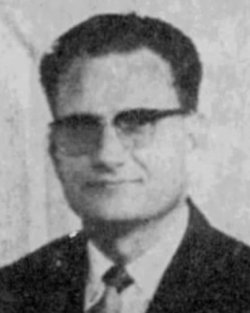
W.E. Best

The Person of Christ & His Impeccability, Part 3

Philippians 2:5-11
W.E. Best June, 3 1992 Audio
0 Comments
Best on the Person of Christ

Sermon Transcript

Auto-generated transcript • May contain errors

100%
a little further with what we
have been talking about concerning the person of Christ. You know, I've been quoting different
ones and what they say concerning Christ's being capable to sin, but He
did not commit sin. Ms. Postema, a lady who has been
visiting our church for some time, came up to me Sunday night
after the service, and she said something a little unusual happened.
She said, I got a call from my sister-in-law in Grand Rapids,
Michigan, and that's the headquarters for the Dahan program and the
organization. And she told me that she had
just come from visiting the headquarters of the Dahan program and their
work. She's a great admirer of the
Dahan's. She said, well that's interesting, I'm just listening
here to a tape of the pastor that has been preaching on the
impeccability of Christ and he has been quoting M.R. Dahan and
she told him, told her what I said and she said, oh, no truth to
that. Boy, she just really got upset.
No truth to that. That isn't true at all. She said,
what is the book that you are quoting from? I said, I'll be
glad to give the title. I think I know the title now.
I've been denied, but I said, to be sure, I'll look it up when
I get home and give it to you. And so we got the title of the
book, and she's been informed as to what the title of the book
is. And so if the lady, but you know what? I haven't found many
people like that that will even read the material that you give
them. I could give you a number of illustrations on several different
occasions in my ministry. I have preached on things and
I have even had members of the church come up to me and say,
I just don't believe that. It was necessary a number of
years ago, in fact about 40 some years ago, I was on the subject
of divine election and the deacons met and they disapproved of what
I was preaching. And they let me know that they
didn't believe it. And they had gone to the First Baptist Church
downtown, and Dr. Boyd Hunt, who is now professor
of theology at Southwestern Seminary in Fort Worth, and they had consulted
him, and he said, well, Baptists used to preach that, but they
don't anymore. And those deacons were foolish
enough, three of them, called me in a meeting, and informed
me as to what Dr. Hunt had said. I said, well,
I have a question for you men. Were the Baptists wrong years
ago when they preached it? Well, they didn't know what to
do with that question. I said, come on down and answer
it. Were they wrong when they preached
it several years ago? Well, they didn't know what to
do with that. They just knew that Dr. Hunt said that they used
to, but we're not, Babbists don't preach it anymore. I said, well,
does that mean that they were wrong then and Babbists are right
now? Or does it mean that the Babbists
were right? I said, it has to be one way or the other. They
were correct then and we're incorrect now. And the men got so flustered
that I went into the pulpit one Sunday night with four volumes
from my library. And three of them were written
by SBC men years and years ago. B.H. Carroll, Dr. Tidwell, who has a building named
after him today at Baylor University. I had to borrow that book from
a pastor friend of mine. He had it and I knew he did.
And I had two others all written by Baptists. So I had paper clips
in those books. I put them on the communion table
in front of the pulpit stand. And after I got through with
my message that Sunday evening, I don't know if you were there,
boy, that may have been before you came into the church. This
happened about less than a year after I went there as pastor.
I was teaching through Romans, but I felt like they needed it.
And so not a person would come And even, I challenged them,
I said, now there's a paper clip, you won't have any problem finding
a place. I even have it marked. I challenge
you to come, here are the books, right here on the pulpit, on
the communion table. I'd like for you to take the
books before you criticize me and accuse me of preaching heresy. If I'm a heretic, folks, I'm
a heretic along with B.H. Carroll, Dr. J.B. Tidwell, and
J.R. Graves. He was a Baptist, but
he was not a Southern Baptist, but I had his book on it. And
one other whose name I have forgotten. Not a one would come. They continued
to believe what they wanted to believe. That's the main reason
that I left that church after four years and went out and started
church from the ground up. And then while we were at Belfort,
we had our shingle out, and when you have your shingle out, you're
going to get more of the same. And we experienced a tremendous
growth for a number of years, first about three years, two
or three years. Pretty good church, wasn't it?
I mean, we had a pretty good time. Some of you who came in
at the very beginning, like the Penningtons or Coles, I think
you came in, were we already in our building, in our first
building when y'all came in? But you remember the days of
A.B. Dominey and some of those men? So I was exposing some things. I'm doing this for a reason tonight,
folks, and I hope you realize I am. And so I was accused by
A.B. Dominick, one of the deacons
of the church at that time, of not giving true statements concerning
the SBC. And so I had exposed some things,
and I had the book with me, and after the service he was so angry
I said, Believe it or not, A.B. Dominick, would you think he'd
get angry, you know, just seeing him every day? These quiet fellas
sometimes, folks, don't pay attention to that. So I put the book, I
offered the book, I said, would you read this? No. So my opinion
of that man has been ever since, I wouldn't trust him as far as
I could throw a 10,000 pound here, a bull by the tail. Whenever
a person will make a statement and you offer him the book and
ask him to read it and he will not do it, you can write him
off. I mean just completely write
him off. People who have grace will not
do that. Period. So what's happening today,
we're having to minister to people outside, many people who have
been exposed to certain things, they claim to be Christians.
And now I'm going to close out tonight, hopefully I may not
be able to finish tonight. And once again, I'm going to
do some quoting. I want to begin tonight, first
of all, by asking you to open your Bibles to Matthew 21. Matthew
chapter 21. Well, chapter 22. Chapter 22
it is. I want to begin with verse 41. I want to raise a question, and
I want to make some statements as strongly as I can make them
concerning what I believe the Bible teaches concerning the
Lord Jesus Christ. While the Pharisees were gathered
together, Jesus asked them, notice the Pharisees, the religionists,
He was not speaking to pagans. He was speaking to religionists.
Jesus asked them, saying, what think ye of Christ, or what do
you think of Christ? Whose son is he? They say unto
him, the son of David. He saith unto them, how then
doth David in spirit call him Lord, saying, The Lord said unto
my Lord, sit thou on my right hand till I make thine enemies
thy footstool. If David then called him Lord,
how is he his son? Boy, he was getting those religionist
confused, wasn't he? And no man was able to answer
him a word, neither durst any man from that day forth ask him
any more questions. Now what I'm going to do tonight
is just give you a few quotations by various religious groups. And I'm not going to mention
the Baptists and the Methodists and those who teach the peccability
of Christ. But at the conclusion, I want
to give some statements and you won't misunderstand where I stand. What do you think about Christ? That's the question. Here's what
Spiritism teaches. Now these are quotations from
works. He was the great medium between
God and man. Christ was a medium and reformer
at Jerusalem. The miraculous conception of
Christ is merely a fabulous tale, end of quote. I believe, folks, that you'd
have to write the spiritism off, wouldn't you? What about Christian
science? It's like grape nuts, it's neither
Christian nor science. Like a guinea pig, neither guinea
nor pig. Christian science, listen to
this quotation. Jesus is the human man and Christ is the divine
idea. Hence the duality of Jesus the
Christ. Jesus was the offspring of Mary's
self-conscious communion with God. Mary's conception of him
was spiritual, for only purity could reflect truth and love,
end of quote. I'm just giving a few basic statements.
Unity School of Christianity, their headquarters is in Lee
Summit, Missouri. Very similar, really, to the
Christian science. In fact, I think it's really
an offshoot of the Christian science. Listen to this, quote. The Bible does not refer to Jesus
of Nazareth, the outer man. It refers to Christ, the spiritual
identity of Jesus, whom He acknowledged in all His ways and brought forth
into His outer life until even the flesh of His body was lifted
up, purified, spiritualized, and redeemed. And redeemed. Thus He became Jesus Christ,
the only begotten Son. and we are to follow him into
the perfect state and become like him for in each of us is
the Christ the only begotten son." Well, what about Mormons? A friend of mine had Baptist
deacons coming to his church and was showing some interest
until he let the people know where he stood about Mormonism. Got these deacons all angry. Said, well, I know some Mormons.
They're great people. All right. What do they believe
about Christ? I've got a lot of their works
in my library. Jesus Christ was a polygamist.
I wouldn't have to read any further, folks. I could stop right there
and not even read another word, and that'd be enough for me.
I wouldn't have to know any more about the Mormons. That would
be sufficient. To say that he was a polygamist,
I could stop right there and say, let's call a halt right
here. I don't know about you, but there
isn't any subject that thrills me any more than studying about
the Godhead and studying the person of Jesus Christ. There isn't another subject that
thrills me anymore. Jesus was a polygamist. Mary
and Martha, the sisters of Lazarus, were his plural wives. And Mary Magdalene was another.
The feast in Cana was the occasion of one of his own marriages.
He could see his own seed before he was crucified. The passages
are numerous in the inspired writings, which indicate a plurality
of gods. What about Ambassador College? Now you see this program all
the time on. I'm talking about H. W. Armstrong and his followers. He's deceased, but he lived to
be ninety-something. Boy, he treasured up a lot of
wrath, didn't he? Have you ever thought about that? I said he treasured up a lot
of wrath. And he's conscious of it today,
I assure you of that. Quote, before Jesus was conceived
by Mary, he was not the Son of God. God is the divine family. He was one of that family. Jesus
was in the human flesh, His first birth, a descendant of David,
and by the resurrection from the dead, born again, the Son
of God, now no longer human, but composed of spirit, a spirit
being. Scripture says that Jesus Christ
could not sin. No scripture says that Jesus
Christ could not sin. No scripture, they say, no scripture
says that Jesus Christ could not sin. So I want you to know
all who believe in peccability, boy, they are birds of a feather,
aren't they? They're enjoying the same camaraderie
and the same bed When we are born of God, we shall
be of His very family. We shall be spirit as He is spirit,
immortal as He is immortal, divine as He is divine. Now, do you want to listen to
Mr. Armstrong or his cohorts or followers? That gives you
a sample. What about the Jehovah's Witnesses?
You know about them. Here's a quote. Our Redeemer
existed as a spirit before He was made flesh. At that time,
he was properly known as a God. Have you ever had an argument
with one of them on John 1.1? You know what they'll do? They'll
come to your house and even maybe have a little Greek interlinear
in their little briefcase, and they'll pull it out and try to
make you think that they're Greek students. And they don't know
it any more than they know about the Son of God Himself. I was talking with a lady not
too long ago, a Baptist in name, who asked me
what I thought about the Unitarians, said that she had been invited
to go to a Unitarian church. I said, really? Well, I had a
conversation. You can imagine what I told her.
Listen to this. Quote, may I say as clearly as
I can that I as a Unitarian believe in the divinity of Jesus. Then with the next breath say
I believe in the divinity of mankind. The dogma I deny is exclusive
divinity of Jesus. I do not believe the infinite
can be compressed within the form of one being. Jesus differs
from other men only in his greater capacity for the one life. Now this is given by one of their
lecturers. Now the point is this. The great
majority are professing Christendom today. I said the great majority
believe in the peccability of Jesus Christ. Now if you want to say that's
drawing a mighty fine line, then that's exactly what I'm doing.
I'm drawing a line as fine as the scripture itself. Now this statement before we
start giving you what we want to give tonight. Anyone who believes that Jesus
Christ could sin is no better off than the Buddhist, the Mohammedan, the Confucianist,
the humanitarian. If that offends people, they'll
just have to be offended. If I believe that Jesus Christ
could sin, then I do not believe that He is the person that the
Bible portrays Him as being, and therefore I not only reject
what the Scriptures have to say concerning Him, but I reject
the voice of God Himself. And you know what that means?
I don't have a Savior. You see, do you believe it's
possible for a person who is saved to believe that he could sin? No, I do not. I do not believe that one of
them is saved. Is that strong? I couldn't make
it any stronger. If that isn't the truth, then
I'm 180 degrees in the wrong direction. Let me prove it with one simple
statement. The same Holy Spirit that provided
the impeccable human nature in the womb of the Virgin Mary is
the same Holy Spirit that quickens those whom the Father gave to
the Son in the covenant of redemption. So the same Holy Spirit that
prepared His impeccable human nature in the womb of Mary is
the same Holy Spirit that quickened or made me alive in Christ Jesus. And that same Holy Spirit enables
me to see the truth concerning the human nature of Jesus Christ.
Do you believe that God would save me, would quicken me, would
make me alive? And then not enable me to see
the truth concerning the person of Christ? That's how strong I am. And I'll
get stronger. Because the more I study, the
stronger I get. The more I'm convinced. I'd like to discuss this subject
with you tonight. The dignity, the humility, and
the glory of Jesus Christ. The dignity, the humility, and
the glory of Jesus Christ. I'm not going to Well, let's
do take time to do it. Turn with me to Philippians 2
and let's read verses 5 through 11. Now we go into this passage
in one of the books, but we're presenting some things and I
want to give you some things that are not in print. Some choice
things that I've collected through a great number of years that
I want to share with you as I've been doing for the last several
weeks. I want to give the very best
things that I've been able to find and study out in my years
of preaching. I want to give those to you who
are faithful in your attendance and you have a desire to grow
in grace and knowledge of the Lord Jesus Christ. Let's begin with verse 5. This
is called the great Christological passage in the scriptures. Let this mind be in you which
was also in Christ Jesus, reading the King James, who being in
the form of God thought it not robbery to be equal with God,
but made himself of no reputation and took upon him the form of
a servant was made in the likeness of men. And being found in fashion
as a man, he humbled himself and became obedient unto death,
even the death of the cross. Wherefore God also hath highly
exalted him, and given him a name which is above every name, that
at the name of Jesus every knee should bow of things in heaven,
and things in earth, and things under the earth. And that every
tongue should confess that Jesus Christ is Lord to the glory of
God the Father. Now we'll start giving you some
nuggets. that I've been able to gather
over a number of years. I'll try to go slow enough that
you can take some notes if you desire. Some of the statements
you will find probably are close to them, and some of the things
that we have in print, but a number of the things that I will be
giving, they're not in print. Since Jesus Christ is absolutely
sinless, as we have already established, even in the study of James 1,
13 through 15, then Jesus Christ is a miracle. He is a miracle. I can't stress
that too much. And the proof of it is 1 Timothy
3 and verse 16. We'll not take time to go to
that verse. He differs not only in degree
but in kind from every other human being. He differs in degree
and kind. He is something absolutely unique
within the circumference of human nature. No other human nature like His
human nature. So stay with me and let's let
this really soak in tonight. It is a fact that no perfectly
holy man was ever produced by natural generation from Adam to where we are today. No argument there, is there? No perfectly holy man has ever
produced by natural generation. No person
by natural generation. So the Lord Jesus himself was
not produced by natural generation. That's why we have the virgin
birth. We could ask the question, who
can declare his generation? Have you ever thought about that
in Isaiah? Who can declare his generation? It's a great question.
Can you declare his generation? Now see, that's a tremendous
study, just in Isaiah 53a. Christianity is not a product
of the human mind. It is a creative act of God. The human nature is not the production
of man. It was the production of the
Holy Spirit within the womb of the Virgin Mary. The Lord Jesus Christ entered
into the community of the human family, but he was not the product
of a human family, man and woman. If Jesus Christ came into the
world like all other persons, then he is like all other human
persons. If Jesus Christ does not differ
from men in his origin, then He does not differ from men in
other respects. If Christ does not differ from
us in other respects, then He cannot be our Savior. If He's
like us, He can't be our Savior. And I'm talking about just like
us. Christ's relation to the world
is based upon His relation to the Godhead. Herein lies the deepest mystery
of His nature. The deepest mystery of His nature. I want you to turn in your Bible
for I want us to read a passage that's very familiar to us, but
let's look at it from this perspective tonight. Matthew 11, and we'll
begin with verse 25. All scripture harmonizes when
it is handled correctly. If it is not handled correctly,
then of course you're going to have a lot of questions and a
lot of misunderstanding. Verse 25, At that time Jesus
answered and said, I thank thee, O Father, Lord of heaven and
earth, because thou hast hid these things from the wise and
prudent, and hast revealed them unto babes. Even so, Father,
for it seemed good in thy sight. Notice the wording, folks. He
has hidden these things from the wise and the prudent. He's
revealed them unto babes. And then our Lord Jesus said, for so it seemed good in your
sight. Now verse 27, all things are
delivered unto me of my father, and no man knoweth the son but
the father. No man knoweth the son but the father. Now you know Him as your Savior.
Surely you won't say that you know Him as the Father knows
Him, will you? You wouldn't have the audacity
to say that, would you? You don't know Him as the Father.
I don't know Him as the Father knows Him. No human being knows
Him as the Father knows Him. so no man knoweth the son but
the father neither knoweth any man the father save the son I know the father but I do not
know the father as the son knows him the one in whom the fullness
of the Godhead bodily dwells Colossians 2.9 now notice the
rest of this verse and he to whomsoever the son will reveal
him I'm so thankful the son has revealed the father to me to
the extent that I can know him as my father and I can know much
about his characteristics and so forth but I do not know him
as a son and I do not know the son as the father so his human nature is a mystery
of mysteries. That's why we have that statement
in 1 Timothy 3.16. So Christ's relation to the world
is based upon his relation to the Godhead. So it is here that
the deepest mystery of his nature exists. What kind of relation
is it? Is this? He places himself on
a level with God with respect to the world. As God is a hidden
mystery to the world, so also is Jesus Christ. Don't expect
the world to understand Jesus Christ. And when I say the world,
I'm talking about worldly people. You can talk about Christ and
the world can talk about Christ, but the Christ you talk about
is a different Christ from the Christ the world talks about. Not the same Christ. They don't
know Him and can't know Him apart from grace. Christ, however, we know is God manifest in flesh. Now this does not mean that God
is a mystery to Jesus Christ. The Father and Son are ever known
to each other, but both are hidden from the
world. Now the God-man is something
more than a man of God. I'm a man of God. Every Christian
man is a man of God. The scripture gives him that
title. But there's a difference between
a man of God and the God-man. The God-man is the unique one. He's the Lord Jesus. Christ's incarnation is the foundation
upon which Christianity rests. If we don't have the truth concerning
the person of Christ, there is no Christianity. Religion, yes. Christianity,
no. Proof of it is 1 John 4, 2 and
3, with other passages, but those two verses will suffice for the
time being. Denial of the Incarnation is twofold in those verses in 1 John 4,
2 and 3. Number one, not of God, that's
negative. And secondly, of Antichrist,
and that's positive. So if we do not have the right
concept concerning the person of Christ, his human nature,
united to his divine nature, giving us one person with two
natures, both perfect holy natures, we don't have the right concept
of Christ. And Christ is the foundation of Christianity. Without
the right concept of Christ, there is no Christianity. So when you hear the world religions
talking about everybody trying to get to heaven and all this
kind of stuff, folk, you can't join up with that. You can have
no part of it. There is an inward test, now
watch this, an inward test, to which every person is subjected
with regard to the incarnation. I said an inward test. the Holy Spirit. But He is a divine person, a
divine person who selects or chooses and teaches. John
3.8, 1 John 2.27, 1 John 3.24. The subjective spirit within
us confesses to the objective fact
that Jesus Christ is come in the flesh. So it's the Holy Spirit
within us that enables us to lay hold or embrace the truth,
not only to comprehend to an extent, but what we can't fully
comprehend we apprehend, we lay hold of it knowing that it is
truth. It is infinite truth. It is truth that cannot be completely
comprehended by us. So the subjective spirit confesses
to the objective fact that Jesus Christ is come in the flesh. This is a continuation of thought
from 1 John 4, 2 and 3. The Holy Spirit who played a
vital role in the Incarnation, Luke 1.35, also plays a vital
role in a person's recognition of the fact of the Incarnation.
I have no problem with that. No problem with that at all.
I don't believe that any Christian, and I hadn't had any instruction
either, The work of the Godhead is included
in the Word made flesh, John 1.14. Somebody asked a question, what
about those who deny the Trinity? Anyone who denies the Trinity
is not a Christian. You say that statement is too
strong. They believe in Jesus. I just got through saying no
person who denies the Trinity is a Christian. And many religions of the world
deny the Godhead. They deny the triunity of God.
Let me show you how simple that is. If the Father, I should say,
I won't use if. I'll use a first class condition.
Since the Father chose us in Christ, since the Son redeemed
us, and since the Holy Spirit regenerated us, Now if you remove
any one of those persons, if you deny the divine triunity,
you're going to deny God's redemptive work. It is God who chooses, it is
God who plans, it is God the Father who purposes, it is God
the Son who purchases, and it is God the Holy Spirit
who applies. So, you just keep thinking about
it, and the more you think about it, the larger it gets. The bigger
it gets. You cannot deny the Trinity and claim to be a Christian. You can't do it. You say, well, I don't understand
the Godhead. That might be a tremendous study
for us to get into for a few weeks. Now you talk about getting
Getting deep, you can get deep in a hurry in studying the Godhead. The mysterious part of the Incarnation
was not publicly proclaimed until after Christ's resurrection.
That's interesting. I said the mysterious part of
the Incarnation was not publicly proclaimed until after Christ's
resurrection. Christ hid the glory of His eternal
nativity under the veil of an earthly nativity. I'll give that last sentence
again. Christ hid the glory of His eternal nativity under the
veil of an earthly nativity. Paul gave a final word and finished
formula of the incarnation in Philippians 2, 5 through 11. The apostle exhorted the Philippian
saints to imitate the humility and unselfishness of the Savior. In other words, he was not a
selfish person, was he? And a Christian can't be. Too
much to do. That's why we have to continually
crucify the flesh with its affections and lusts. However, there could have been
no force in the example of Jesus Christ had not been God. The Philippian passage that we
read to begin with tonight is a notable one in Scripture on
the subject of the Incarnation. It is a great passage. There
are many passages, but Paul kind of put it all together in a very
systematic order. It unveils Christ's preexistence
or his preexistent equality with God in eternity past. Now that's
a term from our benefit, not God's. Eternity past. Eternity
is just eternity with God. No past, no future, just an eternal
present. But with you and me, we think
about the past, eternity past, eternity future. So those are
expressions that we use for our benefit. So it unveils Christ's pre-existent
equality with God in the eternity past, His voluntary subjection
to God for providing the price of redemption, and that's present. Of course, it's past to you and
me, but I mean in time. And His future added glory and
the endless ages of the future. They're all three brought out
in Philippians 2, 5 through 11. Before the Incarnation, Christ
was in the form of God. Morphe is the Greek word. We
won't get into the Greek much tonight. We may want to get into
the Greek of those verses before we get through. He was in the form of God, and
after the Incarnation, the form of God. After the Incarnation. And after the Incarnation, the
form of God was veiled by the form of a servant. Now, let's go through that again.
Before the Incarnation, Christ was in the form of God. And after, or subsequent to the
Incarnation, the form of God was veiled by the form of a servant. So you have both in that Christological
passage, form of God before the Incarnation, form of a servant
subsequent to the Incarnation. The Lord Jesus Christ may be
called by either name, the Son of God or the Son of Man. The
Son of God or the Son of Man. But that name signifies His person
Not singular, folks, singular. His person as possessed of two
natures, divine and human. The divine nature never has a
human attribute. The divine nature never has a
divine attribute. Watch what I'm saying, please. nor the human a divine. But the divine human or the God-man
person may be spoken of as having both. Now let me run that back by.
This is so important. We're talking about the God-man.
The divine nature. I'm talking about God absolutely
considered before the incarnation. The divine nature never has a
human attribute, nor the human a divine. But the divine human, that is
the God-man, person, may be spoken of as having both. Thus you will observe, with respect
to the union of the divine and human natures of Christ, some
deeds which He performed in one nature are ascribed to the other
nature. Have you ever noticed that? Let
me give you a couple of examples. Let me give you this statement
again. Now, folks, we're making some distinctions now that may
be a little hard for you to grasp at first. If you're not careful
when you hear a lot of fellows teach or preach, they misconstrue
the subject by not handling this distinction as it should be handled. So what did I say? I said, you
will observe with respect to the union of the divine and human
natures of Christ, some deeds performed in one nature but ascribed
to the other nature. Now, I want to give you one classic.
I'll give you two verses of Scripture. I could give you more than that,
but two verses. 1 Corinthians 2, 8 and Acts 20, 28. I want to use the one in Acts
20, 28 because it is so clear. So turn to Acts 20, verse 28. And you'll see what I'm talking
about when I, all I have to do is just read the verse. Take
heed therefore unto yourselves and to all the flock over the
which the Holy Spirit, I don't say ghost even though I come
to it in the King James, Holy Spirit hath made you overseers
to feed the church of God which He has purchased with His own
blood. You see what I'm talking about?
Now, God absolutely considered the divine nature has no blood. But Jesus Christ, the God-man,
the human nature, He assumed the human nature in order that
He could die. He could shed His blood. Now
listen to this verse again, after having said that. So let's read it again. Take
heed therefore unto yourselves and to all the flock, over the
which the Holy Spirit hath made you overseers, to feed the church
of God, which he hath purchased with his... Who's he talking
about? Who's he talking about? The Holy Spirit made you overfear
to feed the Church of God, God, Church of God, of the Assembly
of God, which He has purchased with His, God's blood. See what I'm talking about? Called
the blood of God. And of course, 1 Corinthians
2, 8 is another good illustration of it. It must be understood, however,
that Christ's human nature never acted, and we'll come to the
conclusion tonight on this, must be understood that Christ's human
nature never acted independently, and this is the key to the whole
thing, of His divine nature. His human nature never acted
independently of His divine nature. He always did the will of God,
we're told. Isn't that right? Didn't Christ
say that? Always did the will of God. Never acted independently
of the divine nature. Nor the divine of the human. Consequently, all Christ's actions
were the acts of one indivisible person acting in the fullness
of both natures. He always did the will of the
Father, even in his human nature. Now we're going to stop there,
but I want to read you one statement that would really put it all
together tonight. Listen to this. The truth is
simply this. I'm talking about the truth of
the passage is simply this. Christ was possessed of all the
essential attributes and properties of Deity. Christ was possessed
of all the essential attributes and properties of Deity. but
he did not use them except at the pleasure of the Father." Now you can see why we have the
order which we do have in 1 Corinthians 11, and let's look at that in
closing. Let's turn to 1 Corinthians 11. This came to my mind as I was
giving that last statement. Let's begin with verse 2. This gets into the subject of
the woman and her place and so forth, but notice how Paul presents
it. Verse 2, Now I praise you, brethren,
that ye remember me in all things, and keep the ordinances as I
deliver them to you. But I would have you know that
the head of every man is Christ." The head of every man is Christ. Now he's addressing this to the
assembly family, and I hope that we all realize that. And the head of a woman is the
man. And the head of Christ is God,
that is, God the Father. So there is order in the Godhead,
the Father, the Son, and the Holy Spirit. So that's why we made the statement
that we did, that Christ was possessed of all the essential
attributes and properties of Deity, but He did not use them
except at the pleasure of God the Father. He always did the
will of the Father. Now, we will take up where we
have left off here tonight, because it will take another, probably
a couple of weeks on this particular subject. Let us stand for the benediction.
W.E. Best
About W.E. Best
Wilbern Elias Best (1919-2007) was a preacher and writer of Gospel material. He wrote 25 books and pamphlets comprised of sermons he preached to his congregation. These books were distributed in English and Spanish around the world from 1970 to 2018 at no cost via the W.E. Best Book Missionary Trust.

Comments

0 / 2000 characters
Comments are moderated before appearing.

Be the first to comment!

Pristine Grace Research Assistant

Pristine Grace Research Assistant

Ask me about articles, sermons, or theology from our library. I can also help you navigate the site.