Bootstrap
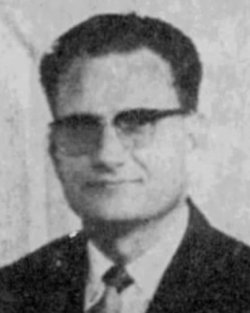
W.E. Best

The Person of Christ & His Impeccability, Part 2

W.E. Best May, 27 1992 Audio
0 Comments
Best on the Person of Christ

Sermon Transcript

Auto-generated transcript • May contain errors

100%
Let's continue tonight in our
study of the person of Christ, the arguments concerning Christ's,
against Christ's impeccability. Did I give you number three?
Did I stop at number three last Wednesday? I think I stopped.
I think I just mentioned it. We went into the theanthropic
person in discussion of the, one of the points. I'll give
this and then I'll go on to the next. I'll go back over number
three quickly because number four is going to take a long
time tonight. Number four. This is number three. This is the argument now. These
are arguments against, not for, against the impeccability of
Christ. Here's what they say, if it were
impossible for Jesus to yield to temptation, there would be
an excuse for Adam. I think I mentioned this, but
I didn't go into it very much. Now here's a quotation on this
by M.R. Dehaan from his book, page 13. Why then didn't God make Adam
so he too could not sin? And if it were impossible for
Jesus to yield, then what comfort is there for us to know that
to keep Christ from falling it was made possible, not by his
voluntary victory, but by his inability. It is far more wonderful
for Jesus to resist the temptation than to be immune from its power. It is not sin to be tempted.
It is sin to yield to temptation." End of quote. Now in the first
place, we've already discussed the man didn't even, he doesn't,
well he didn't, he's deceased now. Hopefully he's with the
Lord. I said he's deceased, been deceased
for a long time, but his son, and grandson, and great-grandson,
they're all coming right along teaching the same thing, and
carrying right on what he left. You know, when you have a television
or you have a ministry like that, they've got to keep it in the
family, so it goes down from father to son to grandson, et
cetera, et cetera. Because after all, it's a pretty
good money-making scheme. Now, it's amazing to observe,
first of all, the ignorance manifested in failure to distinguish the
difference between the creator and the creature. In fact, Mr. DeHaan didn't even know the distinction. He wasn't acquainted with the
distinctions between God and man. We know that the creator
must be superior to the creature. The finite has the capacity to
sin, but not the infinite. How could it be more wonderful
to trust a Savior who could sin, but did not, than one who could
not? Would a person rather ride an
elevator that could fall could fall but never has, or one that
couldn't fall. I'll tell you what, if I went
downtown, I was going up about the 25th story of some building,
and there were two elevators, and on one of them it said, this
elevator can fall, but it never has. And right beside it, there's
another one that says, this elevator cannot fall. I wouldn't waste
any time getting on the one that said you can't fall in this one. If Christ could have sinned, but did not, then what about
Hebrews 13, 8? Same yesterday, today, and forever. What about Malachi 3, 6? I am God and I change not. What
about the verse we just looked at in James 1, 17? His immutability. not even the slightest semblance
of variation. Not even the slightest semblance
of variation with God. It is appropriate, I would say
at this point, to discuss some of Christ's attributes and show
what their relationship is to Christ's impeccability. Let me
just give a few of his attributes. You know what an attribute is? An attribute is a self-distinguishing
characteristic attributable only to God. That's an attribute. So when we say God is omnipotent,
you can't say that. You can't apply that to yourself.
that's applicable only to God. God is immutable. God is omniscient. These are
characteristics of God, not the creature. So let's look at just
a few and you could take in more. Let's look first of all at Christ's
holiness. His holiness is established.
Now, holiness, the reason I'm using it is, number one, because
that is God's chief attribute. That's Christ's chief attribute.
I shouldn't have to explain that. I've explained it before. I can
remember, though, so well, some 40 years ago, when I got into
the study of this subject and I began preaching it, a lot of
people were confused in the church where I was, and whenever I'd
go someplace to speak, I'd usually speak on this subject. And I
would usually begin by asking, how many of you believe that
the chief attribute of God is love? And boy, everybody's hand
would just jump up. I'd say, uh-uh, you missed it.
And then boy, I had enemies the rest of the service. But why do you do things like
that to get them to think? Love is not God's chief attribute,
but almost in every congregation you can ask, or you can talk
to anybody, what is God's chief attribute in order to explain
what an attribute is. Mention a few of them, like His
omnipotence, omniscience, omnipresence, et cetera, et cetera. And then
say, now, is love God's chief attribute? Absolutely, God so
loved the world that, boy, I tell you, they think they know John
3, 16, but they don't know it. My wife and I listened to a man
Sunday night after we got home. I was tired, we ate a little
bite. This fellow started out making some tremendous, he was
a black man, but a well-educated fellow, and a real performer. Most blacks are performers, but
after all, most preachers are performers today. And his first statements really attracted
both of our both of us. I mean, we were attracted to
what he had to say. He got into the eternality of God. I'm not
going to go into it. So I said, I just don't believe,
I've heard this man before, I just don't believe that he is going
to deal with it properly. So I said, let's hear him through. We listened to it for 30 minutes
and you never heard so much jumbled up mess in all of your life after
his initial tremendous statements. He contradicted himself coming
and going. So it was a misrepresentation.
I said a misrepresentation of truth. Now, Christ's holiness
is established. I'll give you some verses on
it if you'd like. Acts 3.14 Mark 124. We don't have time
to turn or I don't have time to quote them even. Just giving
you some references. Hebrews 7, 26 and 27. 1 Samuel
2, 2. And a tremendous verse in the Psalms. Psalm 89, 35.
Now Jesus Christ was not merely unsinful or sinless. Watch what I'm saying. He was not holy because he refused
to sin. You wouldn't say that, would
you? I said he was not holy because
he refused to sin. He refused to sin because he
was holy. Quite a difference. Holiness is far more than the
absence of sin. It is a positive virtue. Not something negative, it's
positive. To say that Christ could have
sinned is to deny the positive holiness of Jesus Christ. To deny positive holiness is
to deny the holy character of God. These are all just pungent statements
without much explanation, but I want to give you these things
so you can have them and then you can add meat to them. This is the way I, when I want
to preserve something, the important thing, this is the way I do it.
You can get a whole lot of information in a small amount of space, and
then when you go back and look at those pungent statements,
it'll bring back to your mind what you have studied in the
past, in most cases. Notice I said, in most cases.
All depends on how long it is before you go back to it. Holiness is positive virtue which
has neither room for, room for nor interest in sin. Has neither room for nor interest
in sin. That's a positive virtue, that's
holiness. Holiness is an active attribute
which not only refuses to participate in sinful acts, but must take retributive action
against sin in all forms. Must take retributive action against sin
in all forms. That's true in the holiness which
we have as a result of the grace of Christ in us. Keeps us from and then we have
to react to and denounce or make a judgment against that which
is sinful. But not in the same manner in
which our Lord does. Holiness is not just a passive
freedom from iniquity. Holiness is not just a passive
freedom from iniquity. Now all these statements really
could be a lead, could be made into a lead sentence for a paragraph
and it would take an entire paragraph to do justice to each one of
the lead sentences. Now we dealt with holiness. Number
two, Christ is immutable. See I began where I think we
should have begun. And that's with God's chief attribute,
holiness, which is the beauty of all of his other attributes.
He's holy in his justice. He's holy in his love. He's holy
in his immutability. He's holy in his omnipotence.
He's holy in his omniscience. Holiness is God's chief attribute
because it is the beauty of all the other attributes. Now, number two, we'll look at
immutability. He's immutable. Hebrews 13, 8, same yesterday,
today, and forever. An immutable person is not one
who does not change. I said, an immutable person is
not one who does not change, but one who cannot change. It can only move in four directions,
and I want to give you these four directions. Can only move
in four directions. So this will explain. Number
one, under that, change can move from one good
to another good. From something good to something
else that is good. Now let's answer that. Let's
go a little further. God cannot change in this direction
since all good eternally resides in Him. How can He go from one
good to something else good? Because all good eternally resides
in Him. We'll look at number two. Talk
about change now. Change can move from good to
better. Now folks, that's you. That's
me. I want to change from something good to something that is better. I want my Christian life to be
better. I want to grow. I want to develop. I want to
be better tomorrow than I am today. So change can move from good
to better. God cannot change in this direction
because there can be no improvement in Him. He's absolutely holy. Three, change can move from good to
bad. Now you and I do that. Tomorrow
we may not be on the same spiritual plane as we are today, in a backslidden condition, disobedient. See what I'm talking about? God cannot change in this direction
because of His absolute holiness. Finally, number four, change
can move from bad to good. God cannot move in this direction
because He is eternally free from all moral and spiritual
defilement. Never anything bad in Him to
begin with, so how can He move from bad to good? Now folks, when you really understand
the immutability of God, the immutability of Christ, The Father's thing from your
mind would be, He could sin, but He didn't. I wonder the time, and I wouldn't
be anxious to do it, but suppose that a lot of opposition came
about, and I've had opposition to the book on Christ Could Not
Be Tempted. But I'll tell you for sure, when
I get opposition to that, it goes in file 13, I forget it.
I can't help anybody that objects to that subject. And so that's
it. If a person wants to believe
it, that's between him and the Lord. But I don't believe it,
I make it a test of fellowship with anybody, anywhere, anytime. And that's it, that's final. You say, well, can't you learn?
You better believe it. But what I'm going to learn about
Christ is going to only enhance the subject that I already have
the truth of, basically. And I have found through the
years that everything I come across, it enhances, it only
establishes, it only puts more on that mound of truth. Number three. Christ is omnipotent. All authority
is given to Him in heaven and earth. He's omnipotent. To say
that Christ could have seen is to say that a finite power is
capable of what? Overcoming an infinite
power. Now, wouldn't that be stupid?
You mean an infinite temptation out here can overcome the infinite
person of Jesus Christ? A finite, finite temptation can
overcome the infinite Savior? Folks, that's too stupid to even
imagine. There is power in words. There
is power in truth. There is stability in truth. So can the finite will of man
overcome the infinite will of God? We could carry that right
into the subject of salvation. It's not of him that willeth,
nor of him that runneth, but of God who shows mercy. So of
His own will He has brought us forth. It's God's will. How in the world can a finite
will overcome the infinite will of God? The infinite will of
God must go ahead of every will, every will. He works in them
to make us willing to do His will. We could go on and on. But we're using this in connection
with His omnipotence. Let's look at another one, Christ's
omniscience. God has infinite intelligence. He knows all things, whether
actual or possible, present or future, in one eternal act. He knows everything. Can I be
informed? Can I be taught? You say, well, doesn't He forget?
Let me ask you a question. What does He forget? His forgetfulness
is an attribute. It's a perfection, not a defect.
When we forget something, it's a defect. But God's forgetfulness
of our sins, as He says, that's an attribute. I didn't know I was going to
get into that particular point, but that'll maybe help us to understand a
little bit better. So he has infinite intelligence. Omniscience
is God's infinite awareness. Infinite awareness. One tremendous
verse of scripture, Psalm 147, verse 5. His understanding is
infinite. Has infinite understanding. God
cannot learn anything. He knows. Now number four, number five rather, excuse me. Let's go back to our arguments.
This is number four major arguments against impeccability. Here's what they say. There is
not a scripture in the Bible which says that Jesus Christ
could not sin, but numerous passages that he did not sin. Now that's
their argument. Let me give it again. There is
not a scripture in the Bible which says that Jesus Christ
could not sin, but numerous passages that He did not sin. Now that's
what they say. That's their argument. The position states that when
Jesus went to meet the tempter, He did not go as the Son of God,
but as the Son of Man. Now watch their argument. As the Son of God, He could not
sin, they say, for God cannot even be tempted. Instead, He
chose to overcome the temptation as a man on the same plane as
the first Adam. Listen to this, because I want
to see if you can catch the terrible heresy here. This is heresy of
heresies. So let me go back. I want you
to listen closer now to see if you catch it. The position states that when
Jesus went to meet the tempter, he did not go as the Son of God,
but as the Son of Man. As the Son of God, he could not
sin, for God cannot even be tempted. Instead, he chose to overcome
the temptation as a man on the same plane as the first Adam.
Now do you take what the heresy is? He's making Jesus Christ
two persons instead of one person with two natures. And folks,
that is heresy. This writer who believes in the
impeccability of Christ says, Had he gone to meet Satan as
the Son of God, there could have been no temptation, for God cannot
be tempted. It would have been bowing to
Satan's power. So remember, Jesus, the human
Jesus, was involved, but not his deity, end of quote, M.R. Dehaan. Not only does he believe
that, all who believe in the peccability of Christ teach it. I just happen to be quoting him. Mr. DeHaan gives as further proof
of his proposition the baptism of Jesus as an act of obedience
to God. Now listen to this. He said,
was not Christ obedient? Now listen to his argument. And
also his praying in preparation for the meeting of Satan in the
wilderness. So his being baptized, his obedience to baptism and
praying in preparation for his temptation in the wilderness,
as he puts it, So as God Jesus could neither
obey nor pray, but as man he must obey and pray, his obedience
was rewarded by the Father in the desert by the Holy Spirit and the assurance
that God was pleased with his obedience and had heard his prayer. If he was to meet Satan as God,
and God cannot sin, then why all this detail about his act
of obedience, his praying, his filling with the Holy Spirit?
Now that's his argument. Now let's listen closely to the
answer to this. Mr. DeHaan is giving what he
considered to be a clever proposition. makes a serious mistake concerning
what? The person of Christ. The person
of Christ. Who is he? Who is he? Jesus Christ is not two persons. Folks, this heresy was condemned
back in the 4th century AD. I mean condemned. Arius. He is one person with two natures. The person of Christ is possessed
of only one purpose. One purpose. Thus the divine nature determined
and controlled the human nature. Even the human nature of Christ
was controlled by the divine nature. You and I have a God-like
nature. And when we're yielded to the
Holy Spirit of God within us, we can overcome temptation because
of the power of the Holy Spirit within us. Now, that's an illustration,
not a good one, because, you see, our two natures are not
like the two natures of Jesus Christ, folks. So the human nature never acted
independently of the divine. Never acted. In other words,
there was never any controversy. Never any conflict between the
human nature, which was holy, and the divine nature, which
was holy. That isn't true with you and me. We have two natures. A God-like nature, but we have
the old principle of sin nature. And we'll have the old principle
of sin nature as long as we're in the flesh. That's why I referred
to the completion of our union in Christ or being in Christ.
Perfectively. That's our hope. We'll be perfectively like Christ. So deity is not humanity. nor a humanity deity. Nevertheless,
it must be acknowledged that He is the God-Man. God-Man, not man-God. God-Man. It is true that God absolutely
considered, cannot be tempted, pray, and be obedient. I said, God absolutely considered.
But Jesus Christ, the God-man prayed, He was obedient, and
He was tested. Not tempted, tested. And I'm
not going into that again, I've already given enough on that. Many regard Christ's inability
to sin a threat to His humanity. I'm not going to call the preacher's
name, but he's not the only one. He's still in Houston. I don't
have any fellowship with him and don't intend to have. Probably
one day he said, best he said, you are bordering on docetism. I haven't fooled with him since. He believes that Christ could
see him, but he didn't. So-called grace man, folks. I'll tell you what he's never
done. He never has sat down and read the book and answered it. He hasn't taken time to do that. And I'm not going to talk to
somebody or fool with somebody until he at least reads what
I have in print all that I have, and answer it. And answer it. They say that his temptation
cannot be viewed as being real if the proposition that Christ
cannot sin be true. That's what Herschel Hobbes,
that's what all of them say. I've talked to many of them.
They all say the same thing. His temptation was not real if
he could not have sinned. Why was he tempted if he could
not sin? It wouldn't be real. There isn't any need to even
ask that question if you understand the meaning of the word temptation
and how it is used or the verb tempted. What's the proper approach to
this subject? The proper approach to this subject is to proceed
from the plain witness of Scripture to the sinlessness, or to put
it positively, to the holiness of Jesus Christ. You say, well, I don't think
that we ought to be this picky. This is what I'm going to do
my best over the next six months to see that we don't have, folks.
We're dealing with precious truth, biblical truth. I believe that
we're to prove all things and hold fast to that which is good.
That's what my Bible teaches me. We're to be set for the defense
of the truth. That's what Paul said in Philippians
1. I believe it. And if people are desirous to
know the truth, they'll study enough until they can find it
out and be able to answer. And it's not a lazy man's toy either. The three main arguments used
by many who oppose impeccability are, here they are, The three main arguments out
of all the research that I've done over many years who oppose
impeccability are. Now we won't have time to discuss
them tonight, but I'll give you their three main arguments, and
they think they are biblically sound, that they substantiate
their belief. Number one is the rich young
ruler. Luke 16, 19 and Mark 10, 18. I'll just give you the passages that they use. The second
one is the baptism of Christ. They think this substantiates
His peccability. Matthew 3, 14, Mark 1, 4, Luke
3, 21 and 22. And number three, the Christology of Hebrews. Hebrews
5, 7, and 8. Are you familiar with Hebrews?
Now, the rich young ruler, you'll want to study that passage, and
I gave you the key verses to study, Luke 18, 19, Mark 10,
18. On the baptism of Christ and
the key verses to study, Matthew 3.14, Mark 1.4, Luke 3.21 and
22. And then the third, the Christology
of Hebrews, that's Hebrews 5, 7 and 8. Now I'm not going to
read it in the translated form, but I want to turn to Hebrews.
I want you to see this one in Hebrews. Oh, I've had this one
pulled on me more than once. Hebrews chapter 5, 7, and 8. Let's take time to look at these
two verses in conclusion tonight. Who in the days of his flesh,
when he had offered up prayers, let's talk about Christ, and
supplications with strong crying and tears unto him that was able
to save him from death, and was heard in that he feared. Though he were a son, yet learned
he obedience by the things which he suffered. Let's read a little
further. And being made perfect, Now do you see why the King James
can just throw a person? And here they build their entire
doctrine. This is talking about Christ,
folks. And being made perfect. How could the Son of God, who
is absolutely perfect, be made perfect? But it says made perfect
here in the King James, doesn't it? He became the author of eternal
salvation unto all them that obey Him. Now, that would keep
you busy for quite a while just to study that out, translate
it the best you can, and to study it, and to answer it correctly.
Let's read it again, and you can see now why. Because this
is their chief. I mean, this is really one of
their Strong arguments they think this does it go back to verse
let's read verses 7 through 9 now, and then we'll be dismissed Who
in the days of his flesh when he had offered up prayers and
supplications? With strong crying and tears
unto him that was able to save him from death and was heard
in that he feared Though he were a son Yet learned he obedience
and Learned he obedience now if he
learned something was he perfect What is the meaning he learned
he learned what how did he learn it? What did he learn? He learned
obedience by the things which he suffered Did you catch it
the last part? Verse 9 and being made perfect
here the son being made perfect and He became the author of eternal
salvation to do all them that obey Him. Now folks, take that
passage of Scripture, and someone who has been indoctrinated in
peccability, and you try to take the King James and explain that
to him, and you'll have a rough time of it. You say, well, that's what it
says. What does the word perfect mean? We've been looking for the word
perfect. So those are the three major arguments used by those
who believe in peccability. Christ could sin, but He did
not sin. We'll look at them next week,
those three arguments. In the meantime, I'd like you
to do a little looking. Let us stand.
W.E. Best
About W.E. Best
Wilbern Elias Best (1919-2007) was a preacher and writer of Gospel material. He wrote 25 books and pamphlets comprised of sermons he preached to his congregation. These books were distributed in English and Spanish around the world from 1970 to 2018 at no cost via the W.E. Best Book Missionary Trust.

Comments

0 / 2000 characters
Comments are moderated before appearing.

Be the first to comment!

Pristine Grace Research Assistant

Pristine Grace Research Assistant

Ask me about articles, sermons, or theology from our library. I can also help you navigate the site.