Bootstrap
W.E. Best

The Subject of Temptation, Part 1

James 1:13-15
W.E. Best May, 6 1992 Audio
0 Comments
Best's Corner

Sermon Transcript

Auto-generated transcript • May contain errors

100%
We're going to study tonight,
our beginning tonight, verses 13 through 15. I'm going to do something that I haven't done
with the first 12 verses. We're going to, first of all
this evening, I went through and parsed these and I'll give
you some information if you'd like to have it. for the simple
reason that this is a very, very controversial passage of scripture,
greatly misunderstood. Talking about misunderstanding
portions of scripture, I heard Ed Young last Sunday morning
announce this subject and his subject was taken from Hebrews
6, verses 4 through 6. So I said to myself, I want to
know what you have to say on that passage of scripture. And
I didn't tell the folk Sunday morning about it. I mentioned
to you that he gave the three basic principles on hermeneutics,
interpretation, and then forgot all about the three rules that
he gave. But if you haven't heard this,
I've never heard it, I've never read it, and he admitted that
he stood almost alone on his interpretation of Hebrews 6 verses
4 through 6. He believes that those verses,
I'm assuming now that you are acquainted with the passage that
I'm referring to without me going and reading those verses, has
tasted of the heavenly gift and powers of the age to come, et
cetera, et cetera. He says that that passage of
scripture teaches, let me give you basically what he said. He
said, there are two major views. Well actually there are three
major views but if he wanted to reduce them to two that's
his business. There wasn't anything wrong with what he said concerning
two major views. He said there are some who believe
that this passage refers to the saved and there are others who
believe it refers to people who have been saved but they have
lost their salvation. He said the passage teaches Christians
sinning a sin unto death, physical death. Now he didn't give an exposition.
It's amazing to me that a man in his position can do as little
with the scriptures as he does And yet people just flock out
to hear him. Actually, he didn't say anything.
He just made reference. There was no exposition of the
verses at all. He just made a few statements
about it and then went into what he believed. that the passage
taught that it refers to persons who have been saved, they're
saved, but they are so carnal that they sin a sin unto physical
death for which, he said, there is no renewing unto repentance.
That was his interpretation of verse six. And then he gave us an illustration
I copied it down, I took brief notes. You don't have to do much
writing when you hear those fellows speak. You can have just a few
sentences and that's about it. You've got everything to have.
But he went on then after giving that and read verses 7 and 8
and he tied this passage in with Romans 1, 28 through 32, believe
it or not, about God giving them up And he said, carnal Christians,
so lustful, so carnal, they made shipwreck of the faith. And he
closed like this. He said, these were Christians
who committed the sin of capital punishment. And then he used
as an illustration the Apostle Paul being alone in the fourth
chapter of Sack of Timothy. And he raised the question, he
said, are any of you out there a Demas? Are any of you an Alexander? Have you sinned a sin unto death?
Are any of you a Hymenaeus? Are any of you a Philetus? Now
folks, that was it. I gave you in just about two
or three minutes what he gave in 25 minutes. So since this passage is even
more controversial than Hebrews, 6 verses 4 through 6 especially. We're going to, first of all
tonight, let's look at the verses. You look at your Greek interlinear,
if you have it with you. You want to take some notes because
I'm going to give you some verbs and things and the meaning of
those verbs. And one in particular about which
there is much controversy. Now watch what I'm going to say,
please. One verb that is used in the 15th verse is also used
in the 18th verse of James 1, another controversial verse of
scripture. And the same verb is used in
both. And if you try to look up the compound
verb, you're not going to find it in any lexicon that you have
in your library. You say, well, where'd you get
the information? Well, I have works that go beyond most lexicons,
and I have those works for a reason. You see, the Koine Greek, I've
said this before, but let me say it again. There are some 5,500 basically,
just round figures, words in the Greek New Testament, Koine
Greek, I said 5,500 words are about that. With all the inflected
forms of those words, you have a total of between 21 and 22,000
words actually used in the New Testament. And when you start
looking up some of these root words, you're not going to find
some of them in your lexicons, in your koine lexicons. You'll have to go to the classical
and you can find the root word in the classical. And there's
one that I'll give you tonight that you will not find it unless
you have a work like Liddell and Scott. And folks, that is
a volume about this thick. It is as large as an unabridged
dictionary. which will give you all of the
words in the classical Greek as well as the Koine. And sometimes
when you look up a word and you can't find it, you have to go
to one like Liddell and Scott and that gives you the root words
even going back into the classical Greek. So I wanted to say that
to begin with because when I give you some of these things tonight,
if you go home and you look in bag, you know what I mean by
bag, that's the lexicon, the green one that you have, you
won't find it. If you look up in fare, you won't
find it. So I just wanted to tell you
that so you won't think that, well, preacher's off base. Well,
I am off base on a lot of things, but I don't want to get very
far off base. All right, so let's begin with the 13th verse. 13th
verse, James chapter 1. Now this is going to be an interesting
study. It's going to take more than
one service to do justice to it. I don't know how far we'll
go, and I'm also thinking about preparing a message on beginning
with the 13th verse through the 27th. Because there are three
major divisions. There is a perfect outline. Perfect
outline. And I'll share that with you
later. Three points concerning temptation. And we're dealing
now with a subject of temptation, not trial, but temptation. So let's begin with verse 13.
I'll translate it as we go and then I'll call attention to the
words that I'd like for you to take some information on. Let
no man Let no man say, I am being tempted by God. Now let's stop there
for a moment. Let no man say, I am being tempted
by God. Now let's go back and look at
some words. First of all, You have an adjective. The adjective
in your Greek interlinear, and you'll notice verse 13, I've
worked it out so I'm not looking at my interlinear right now,
but it's medais. Notice the word medais. Well, that is a pronominal adjective. It is a cardinal pronominal adjective. And when we say cardinal pronominal
adjective, it refers to a number. It is an adjective. And it is
a number of prime and fundamental importance. That's the reason
it is referred to as a cardinal adjective. But it's used as a
pronoun. So it's a pronominal adjective.
May dies. And may dies, I'm using no man,
it means nobody, nobody at all, or no one, no one. And I'm translating it, let no
man. Now why are you saying let? And why are you using that word
preceding no man? Let say, let no man say, so it
goes with say. and you have a present active
imperative of the verb lego, which means to say, to speak,
or to tell. Now, let no man say, it's a present
active indicative, when he is being solicited to sin. when he is being solicited to
sin. Now here we have a present passive
participle, it's nominative masculine singular, of the verb paradso,
which means to tempt, now watch what I'm saying here, you don't
find this in most lexicons, so watch what I'm saying. Means
to sin, or to tempt, are to try, and we've been looking at the
first 12 verses where trial is emphasized, but now we're leaving
trials. We're not dealing with trials
now, we're dealing with temptation. And it is a present passive participle,
a paradozo, and I'm translating it to solicit to sin. And if
you look up, if you have a wide selection of good lexicons, you
will see why that I have chosen to translate it in this manner.
So this is not something off base. Now let's look at it again. Let no man say when he is being
tempted, that's a present passive participle, when he is being
solicited to sin, to sin, Now, comma, I am being tempted. Now you have paradozo again.
But it isn't a participle this time. It isn't a present passive
participle. It is, the second time, a present
passive indicative of the verb paradozo. So I am being tempted,
you could say, I am being solicited to sin, if you want to translate
it in that manner. I'm giving you alternates, I
want you to think about it. But since we're studying the
subject of temptation, or to be tempted, not anything wrong
with translating it in that manner, we understand that it does refer
being solicited to sin. So I am being tempted, and then
you have the preposition by, it's the ablative of apa, and
it denotes the origin, now watch this, it denotes the origin,
not merely the agency. The origin. In other words, the
origin of the temptation. The origin of temptation is not
God. The origin of temptation is the
individual. It's man. Then you have a present active
indicative of Ami, which is Esten. So is unable to be tempted is
Unable to be tempted unable to be tempted is Really the translation
of an adjective and It's the in the anominate Kate nominative
case masculine singular and it's pyrrhos moss You would think
of it as pyrrhos moss. That's the noun but this is an
adjective and since it is an adjective and is negated you
know would you have the alpha preceding so it's up I Rostas
and it means without temptation without temptation or God cannot
be tempted to do evil we're explaining the meaning of this adjective Then to do evil things now, you've
got to add this in here to do evil things because you'll notice
you have another adjective and it's another pronominal adjective
and it's cocoon And that is genitive case, which is descriptive, masculine,
plural, and you will also find it, it could be neuter, but we're
using it as a masculine, but the same inflected form also
talks about a neuter. So, to do evil things, and it
is an adjective, genitive, masculine, plural of cacos, and cacos means
evil, bad, or wrong. And then you have a comma, and
in this case, they is just a regular coordinating conjunction. It
is not an adversative, you can't use but. And, but they does mean and,
it can mean but, used as an adversative, now or then. So and, he tempts. He tempts. Another present active
indicative of pyrrhodzo. So you see the verb pyrrhodzo
is used several times. And then, no one, so he tempts
no one. In other words, he solicits no
one to sin. Now, let's go back, because that's
verse 13. Let no man say, when he is being solicited to sin, I am being tempted, or I am being
solicited to sin by God. For God is, now there is a definite
article before Theos, and if you want to use it, it's certainly
permissible to use if you want to put it in there. So for the
God is unable to be tempted. Now folks, that says it wherever
one can understand it. God is unable to be tempted. In other words, no one can solicit
Him to sin. So we're going to get into the
impeccability of Christ in this passage. This passage is the
greatest proof portion of scripture in all the Bible to teach the
impeccability of Christ. So, for the God is, or God is,
it reads better in the English just to say for God is, unable
to be tempted to do evil things. Now, this could be translated
like this. buy evil things. In other words, if you wanted
to leave off to do evil things, you could translate it, and it's
perfectly legitimate to translate it in this manner. So, you may
have a hard time settling on some of these things, but I want
to show you the alternates, and they're all according to the
Greek. So you could take this last adjective,
which I have mentioned, And then it is a pronominal adjective
again, to do evil things, that's the meaning of it. You could
read it like this, for God is unable to be tempted
by evil things or with evil things. But I went ahead because of its
meaning, to do evil things. So God cannot be tempted by evil
things, or with evil things, or to do evil things. And then,
and he tempts no one. Now, no one is another cardinal
pronominal adjective. And this time, it is not Medias,
but it's Udina. Udina. So he solicits no one
to sin. Now isn't that, now this, the
King James, you're not going to go wrong in the King James,
but you can see already, I'm sure, that by translating it
and going into these Greek verbs, it's more meaningful. I'd like
to read it one more time in case you might be taking notes. Let
no man say, say what? When he is being solicited
to sin, no man is to say it. when he is being solicited to
sin, I am being tempted by God. You say, would anybody go to
that extent? Wait till we get through on temptation.
Well, let me give you an illustration of it to begin with. What about
Adam and Eve in the Garden of Eden? What about them? When they sin, Eve blamed the serpent. And Adam blamed Eve. And what
do we have today among people? No one wants to admit his fault. I remember reading years ago,
I think a Puritan made this statement. He said, sin is a child that
no one wants to own. Pretty good statement, isn't
it? Sin is a child that no one wants to own up to. Doesn't belong
to me. That child belongs to somebody
else. Do you already see why most people
don't want to study the scriptures? I don't have any problem understanding.
Not at all. Because most church members today
are not Christians. That's it, pure and simple. Now look at verse 14. Notice
you have they again. This time it's a superordinating
conjunction and it is an adversative. But each one, here's another
pronominal adjective, and this time it is hekastos, which means
each or every. So I'm translating it, but each
one is being solicited, solicited to sin. Another present active
indicative of paradozo. So, but each one is being solicited
to sin, present active indicative, when he is being drawn away. When he is being drawn away is
a present passive participle, nominative masculine singular
of the verb exalco or exialco. And you will find
in some dictionaries the omega is an oh my verb, O-M-A-I rather
than omega. So don't let that throw you.
If you look it up in some lexicons and you find that it's an omai
rather than omega, you're talking about the same verb. So when
he is being drawn away, and ex elcho means to lure or draw away, and is used only here
in the New Testament, only here. Now it is made up, it's a compound,
you recognize that. Xe is really ek. In other words, epsilon kappa. And elcho, elcho is the main
stem. Now elcho is used twice. The compound verb is used only
in this place. So you've got to settle on what
it means right here. You can't go somewhere else and
find out how it's used and then hope to profit by that. But the
verb itself, the verb stem, elko, is used in Acts 21 30 and James
2 verse 6. And it's used in the sense of
draw to draw, to attract, or to drag, or to drag. Draw, attract, or drag. Now let's go back and read. But
each one is being solicited to sin when he is being drawn away by, and this is a pa again, abitive
of means, his own His own, and that's idios, that's an adjective,
of idios, and it means one's own, belonging to one, or personal. Now I'm emphasizing this because
of what follows, so watch this. So he is being drawn away by
his own what? Lust. His own lust. And that's epithumil, which is
a noun, And it means desire, lust, passion, or longing, drawn
by his own lust, and has been caught. Now, has been caught
is the way I've translated it, but it can also, has been deceived. And that would be permissible
here. He's been deceived. And it is a present passive participle
of deliazzo. Delia adzo means to allure, to
lure, to entice, to catch, to bait, or to catch by a bait,
to allure or to deceive. Now we're not going to look up
all the references or even several of them the way they're used
in the New Testament, but it is used in other places in the
New Testament. Now let's read the 14th verse
again. without explanation. But each one is being solicited
to sin when he is being drawn away by
his own lust, own passion, own desire, I'm using lust, and has
been caught has been deceived now let's look at the 15th verse then lust the first word even
in your Greek text verse 15 and look at your Greek the first
word is an adverb it's I to And ita means next or then, it's
temporal. Next or then. So I'm using then,
I'm not saying next, just then is the better translation. So
you don't really have difficulty deciding what word to use. Then
lust, which has conceived. Now that's a very important verb,
which has conceived. This is an arius active participle
of sulabano. And Sulembano, and S-U-L is the
same as S-U-N, which is the preposition meaning with, Sulembano, it means
to conceive or to become pregnant. It means to seize or apprehend,
used in that sense. So the lust which has conceived,
now notice The close of the 14th verse. A person has been drawn
away by his own lust. Then lust, which has conceived,
bears, or you could say produces. It's a present active indicative
of ticto, which means to bear or to produce or to bring forth. So, you can say bears what? Sin, or produces sin, comma,
and sin, comma, having been fully formed, having been fully formed. Here's another arius passive
participle of apet, L-A-O. Apat leo. In other words, it's
apa and teleo. Now we refer to teleo means to
finish, to complete, and so forth. So it's a compound again. And
it means to bring to completion, and when it's used in the passive
voice, it's used in the sense of to be full grown, or when
it has run its course. When it has run its course. All
right, let's go back to the first and read because we're coming
now to the debatable part among even theologians and Greek grammarians. Then lust which has conceived bears or produces what? Sin. And sin having been fully
formed brings forth, now notice what I'm saying here, brings
forth, you'll notice the inflected form of the verb in your text,
is apakuai. And it is a compound verb, listen
closely to this, what I told you to begin with applies right
here. Apa is a prepositional prefix. And then kueo, Kueo is
the main stem. You will not find it. Kueo is
not even used in the King James or in the Koine Greek. Not used at all. You've got to
go to the classical. I had to go to Liddell and Scott. Now,
I want to show you what I came up with by going into Liddell
and Scott. And it even helps me to better
understand it from what I've gotten even in the past. Even
though basically I've had the truth on it. But this even gives
further information. And I'm always looking for further
information when I think it's needed. And it's usually needed. There are some instances you
reach the end of the road when it comes to a word and what it
means. So you have a pa, the basic meaning of a pa is from.
And then you have the main stem of the verb, it's cueo. And cueo,
listen to this, I'll give you Liddell and Scott because you
don't have it. You'd have to go to the library somewhere to
get it. And it'll cost you about 80 or 90 bucks or 100 bucks to
buy the volume. And maybe more than that now.
And you may not want to spend that much for one volume. Means
to bear in the womb. To bear in the womb. To be pregnant
with to have conceived and to bring forth. And to bring forth. Now, to bring forth. Folks, in the light of verse
15, the only way in this world that you can translate it properly
according to the context is to bring forth. Where does sin originate? Sin does not originate outside
of you. When you're tempted, the temptation,
the allurement comes from without. But sin itself, it is not sin
out there. Even though it's sinful, it's
not sin to you. But it's when you give your consent
and you want what is attractive to you outside and then when
you turn your wheel over and you say, I want that, I desire
that, I lust for that, that's when sin begins and it begins
in you and in me. It doesn't begin outside. Sin
does not begin outside. I'm talking about as far as you're
concerned. Sin begins with your evil nature. Sin begins with
your consent and my consent. I want what is offered me. I want what is suggested. Now
we're going to go into that in great detail. You see, this is not understood
today. And I realize, and I feel like that, and there are very
few people that are really giving. And I'm talking about men of
God. But men of God are expounding the truth. They're upholding
the truth. But the world doesn't want it. Psychologists do not want it. The social gospelers do not want
it. Your problem is not your fault, it's just
your problem. Folks, that is a lie out of the
pit of hell. Now, are you willing to stand
up for it at all cost? Now, can we prove it? Do you
see how many different areas we have to study in this passage,
verses 13 through 15? Folks, if we did justice to these
three verses, we would spend about two or three months on
these three verses. I don't think it's necessary
for us to go back and read all these three verses now. Without
stopping, it might help, so maybe we just need to do it. Now let
me read, and you think with me as we read. Let no man say, when
he is being solicited to sin, I am being tempted by God. For God is unable to be tempted. Unable to be tempted to do evil
things. or by evil things or with evil
things. And he tempts no one. God isn't soliciting anybody
to sin. He could not do that. He's holy,
he's perfect. But each one, and folks, that
takes in everybody. Listen to this, that takes in
sinner and saint. Do you hear what I said? That
takes in sinner and saint. But each one or everyone is being
solicited to sin when he is being drawn away by his own lust and
has been caught I'm going to stop here. Hank,
will you read that in the American Standard Version? Now, it can
be translated this way, but I don't think it's doing justice to the
Greek text. Read it. I'm familiar with this,
but I want him to read it. But each one is tempted when
he is carried away and enticed by his own love. You see what
he's doing. But we have here two present
passive participles. And I want to stress both of
those participles. I said, because we have two present
passive participles. And he kind of puts it all together.
Now, nothing wrong with it. The truth is there. But I think
that something is missed by not emphasizing both present passive
participles. Now, that's my own opinion. Verse
15, Then lust which has conceived. In other words, You've already
become pregnant with sin. Does that help you to understand
it? Sin is already there. You've
already given your will to it. So, the lust which has conceived
produces sin and sin having been fully formed brings forth What? Death, what kind of death is
it? What kind of death is it? Thanatos, what kind of death?
There are several deaths spoken of in the scripture, so what
kind of death is this? Now I said 15th verse applies to both sinner
and saint. If it's a sinner, it would be
spiritual death. If it's a saint, it could be
physical death. In other words, he's sent to
sin under physical death. You say, well now, how do you come
up with that? Well, I want you to look at the 16th verse. We're
not beginning here tonight, but look at the 16th verse. Do not,
do not be deceived. See what James is doing? Do not
be deceived. My beloved brethren, or my beloved
brothers, You make an application, isn't
it? So don't just restrict it to the sinner. There is an application
for the saint, because the saint also sins. He still has the old
sin principle in him. Now, we've read the three verses.
We've spent enough time on that. And did you know it took us 40
minutes to do that? Doesn't it seem like 40 minutes
have passed, really? All right? Well, let's give you an overview
of some things. So the elements in temptation,
and this is what we're studying, not testing now, not testing, but temptation. I had something here I wanted
to share with you, but I'll get to it later. So the elements
of temptation are number one, outward enticement. Outward enticement. And two,
inward lust or desire. So lure and lust work together. Why? Because they have something
in common. See what I'm saying? Lure and
lust work together. Let us don't forget it, please
Why because they have something in common? You see something
even though it is forbidden by God I want it and you make up
your mind you're going to have it and you start justifying your
reason for getting it and Lure and lust work together.
They both have something in common. You can't get around it. Folks, I've made up my mind what
I'm going to do. I'm going to teach the truth
to the best of my ability. When the time comes that no one
will listen to me, I'll say, well, time to write Ichabod and
I'll just go right on just preaching to myself and one-on-one. Now let me show you the difference
between the first 12 verses and verses 13 through 15. Listen
closely to this. Trials are to be endured. Isn't that the emphasis in the
first 12 verses? Trials are to be endured. Are
temptations to be endured? Now let me ask you a question.
Now think with me for a moment. Are temptations to be endured?
trials are to be endured but temptations are to be resisted. There's a difference in enduring
and resisting. Now we've come to the three verses
dealing with temptation and temptations are to be resisted not endured. proves to any person who has
a spiritual mind that the same word, whether it is the noun
form, pirasmos, or pirazo, the verb, there's a difference between
try, trial, or to be tempted. So the subject changes, beginning
with verse 15. It moves into, as it moves into
verses 13 through 15, there is a change. The subject is changed. It is no longer testing. Now
I'm giving a brief summary of the first 12 verses. No longer
experiencing full joy. in various trials, no longer
patient endurance, completing its work, no longer
coming to maturity, etc., but now the subject is temptation. Temptation. We have the Bible's description
of both and the distinction is given between the two. Having
seen that the Greek word can mean either a test or trial or
a temptation, we now get in a study of temptation itself. The meaning
is determined by the context in which it is used. No one could
study verses 13 through 15 and say that the word test should
be used. You'd have to say temptation.
If he's honest. I said if he's honest. But religionists,
they're not honest. They just have to say it like
it is. It is not surprising that James
discusses testing and tempting so closely together. Not surprising. Discusses one and goes right
into the other. Why? Because testing can easily
become tempting when testing becomes the occasion for sinning
or complaining against God. James not only discusses the
source and process of temptation, so there are three things, three
parts, beginning with verse 13 through 27. We have the source
of temptation, the process of temptation, and victory over
temptation, all discussed in these last verses, 13 through
27. Source of temptation, process of temptation, and victory over
temptation. I gave you the outline. We'll
not divide it tonight because we're not going that far. Now
if Jesus Christ, watch what I'm saying, if Jesus Christ could
have been tempted, then he was not the only begotten
God. Would you agree with that? God
is unable to be tempted. And John 1.18, you can translate
it two ways, the only begotten God or God only begotten. Would you go back and look at
that verse with me? I want to show it to you. You don't have this
in the King James. Only begotten Son is the King James. And the
manuscript that was used by King James has that, but I don't believe
that's the best. I don't believe it's the most
reliable. And I challenge you to study the works of men and
different translations and different Greek manuscripts and text and
see. Let's look at verse 18. John
1, 18. has ever seen God. No man has ever seen God. The only begotten God is what
you have in your Greek text here. It's theos, it's not hwios. Hwios
is for son, theos is the word for God. So you could translate
it like this, no man has ever seen God, God only begotten,
you could translate like that, or the only begotten, God. The one being in the bosom of
the Father, that one made him known. So if Jesus Christ could
be tempted, Folks, that contradicts the Word of God. You'd have to
say that Jesus Christ is not God. Because God is untemptable. He is unable to be tempted. So we raise the question, was
Christ tempted to the wilderness by Satan? I say no. Now, when you tell some people
this, you're going to have a problem if you try to show them and you
read to them from the King James. They say, it doesn't say that
in the King James. And then the only hope that you
have to try to help somebody like that is turn to this passage
in James. Folks, this many years ago, I
saw the truth of this. The first time I heard someone
say that Christ could be tempted and Christ could sin, they went
on to explain that Christ could sin, but He didn't, I became
very upset. I was infuriated. I knew that
that wasn't right. Now, God does not try men with
evil intent. Watch what I'm saying. He does
not try men with evil intent. Since He is incapable of any
contact with evil, He cannot be the cause of man's doing evil. You want me to give you a couple
of passages and I won't give you the answers for them tonight?
I'll let you think about them for a while. We'll discuss them
later. Now what did I say? I said since God is incapable
of any contact with evil, He cannot be the cause of man's
doing evil. I want to raise two questions.
You're going to have to do your best to find the answer. Number
one, what about Romans 1, 24 through 28? God gave them up. How do you answer it? We've been
studying that. We spent a lot of time studying
the first chapter of Romans, but how would you answer it?
Question number two, what about 2 Thessalonians 2, 11? when God sends a working of error. How do you explain it? You all
be thinking about those two questions. If you don't think about them
and find an answer, somebody will ask you sometime and then
you'll be left standing, holding the bag with both ends open. Sin does not begin with the act. Overt act. Watch what I'm saying
now. We're going to explain it. We're just kind of giving an
overview of these verses tonight. Sin does not begin with the act,
overt act. Aren't the scriptures playing
on that? What about the man who looks on a woman? You see, the Jews had the concept
just as long as they did not actually commit fornication or
adultery, that they hadn't sinned. They could think about it, desire
it, but as long as they didn't actually do it, they hadn't sinned.
What did Christ say in reply to them? If you even look on
a woman with the intent, you have sinned already in your heart.
You know what the scripture says? Now we're going to show how it
all ties in. So sin does not begin with the
act, it begins with the inward desire which craves for the outward
thing that is so enticing. So sin, let me explain it another
way, sin begins with the ascent of the will. the ascent, A-S-S-E-N-T,
ascent of the will for the thing that is contrary to God's will. I'll use an illustration. Just
as a child is alive in the womb before the actual moment of birth, Sin has begun before its visible
action. It's there. Now, I'm going to approach this
subject from several different ways tonight, so we can explain it and try
to get it in our minds. We must understand, first of
all, the source of temptation. source of temptation. It's not
God according to these verses that we have read tonight. It's
not God. I've already referred to Adam
and Eve. Eve blamed the serpent. Adam
blamed Eve. Neither was willing to take the
blame. Now by the fact that neither one was willing to take the blame,
what does that imply? Let's go to step number two.
In reality, they both blame God. I said, in reality, they both
blame God. Why did God make the serpent?
Don't you imagine that he said, if God had made that serpent,
I wouldn't have fallen for it. That's just like people say today,
well, if it hadn't, I was in the wrong. You know what I'm
going to say? I was in the wrong place at the
wrong time. Folks don't ever be guilty of
saying that as an excuse. I was just in the wrong place
at the wrong time. You see, studying the Word of
God like this, folks, it gets right down where we live, doesn't
it? You know, I've been teaching
you folks along. If I were to go into a new place
and preach and teach to people who haven't had any instruction
at all, and I taught there like I'm teaching here, I'm not too
sure I'd come out alive. Do you realize that? I remember when I used to go,
when I was even in the convention, and I'd go somewhere to preach
for a week. And I'd get up in this, and I
didn't have the depth then that I, hopefully, that I have now. And I don't have the depth now
that I hope to have later. But I can remember very well,
I've never been, I've never enjoyed, did you know I've never enjoyed
preaching to another congregation? I've never enjoyed it. You say, I don't understand that.
You're not in my shoes. I start out on a Monday, it would
have a pretty good crowd, and by Wednesday just teaching and
just applying it, and doctrine, doctrine, doctrine, and trying
to apply it. Boy! And I've had instances before
the week was over, I remember on one occasion, I
traveled quite a distance. The preacher got embarrassed.
He wanted to take up an offering. He wasn't getting any offering
for me. Got up begging the folk for money and complaining about
people not giving any money. So when he got through, I was
so embarrassed, I got up and I said, I don't want to hear
another word about money. I didn't come up here just for money. I came on your invitation to
preach on the great truths of grace, which I've been trying
to do. And I said, you folk, if you're not interested in the
truths of grace, you're not interested in what I have to say. And I
said, whether you give me a dime or not, I've got a few folk back
in Houston that if I don't have money to get back, and I couldn't
even fly back, I didn't get enough to even fly back, I didn't want
to wait to get some money, so I caught the train back. Trains
were still running in those days. I said, I've got a few folk I
think would even drive up here and get me. And then I cut loose. I didn't know if I'd have any
liberty preaching or not that night. I thought, well, this
is the last time. I'll give you both barrels for
an hour before I quit. And after the service was over,
several of them came around and apologized. I thought that was
a little bit late, but anyway. You see, I've been convinced
a long time ago, folks, most people are not interested in
the Bible. Most people who claim to be Christians are not interested
in studying the Scriptures. They're interested in a program,
they're interested in a gimmick. They're interested in something
besides the Word of God, pure, plain Word of God. They want
to be coddled, they want to be tickled, they want their flesh
excited, but they do not want anything that probes the heart. So in reality, Both Adam and
Eve blame God. Adam, why in the world did you
give me Eve? Why did you make Eve? Had it
been for Eve, then I wouldn't have done it. But notice the command. Let no
man say... That's a command, folk. That's
an imperative. Let no man say, I am being tempted by God. That's plain. That's in verse
13. Let no man say it. When you complain, or when I
complain against providence, I'm complaining against God. You say, well, if it's in the
providence of God for us to have a world church, we have to be
careful how we pray. We are to pray for those in leadership. So watch this, this is serious
folks, this is serious business. So the source of sin cannot be
God because evil is against God's nature. The source is man, every man,
no exceptions, every man. is tempted, he's pulled towards
sin, he's drawn away by his own lust. He can't say, lay it off on someone
else. He can't say the devil did it. He's been drawn away by his own
lust. And notice this, The believer
has a sin nature. It has not been destroyed, it
has not been eradicated. Though I have been regenerated,
though you have been regenerated, we've been justified, we've been
reconciled of God, we've been made new creatures in Christ
Jesus and we could go on and on and on, set apart once by
the offering of Jesus Christ, sanctified, on and on we could
go. Yet, we have the old sin principle. The old sin principle. So the
source is not God, the source is man. Now let's look at the
process. Now there are different ways
of looking at the process. I want to give you two or three
different ways tonight. And we'll go into it a little
deeper each time I give a different process. Conception. That would be the first, looking
at the scriptures here, conception. And then after conception, the
bringing forth. Then the being fully formed.
And then finally, bringing forth death. So you could take four
steps in the light of the context. Conception brings forth or produces Then when it's fully formed,
it brings forth death. And it all depends on the individual
as to how death is to be understood, whether the person is a sinner
or a saint. Now let's look at it from another
way. Years ago I got into this. studying, and I came across some
of my old notes on this, because this is such a big subject, so
important, I want to present this to you, and then I'll present
another way. Let's begin with allurement. Let's begin with
that which is outside. Not inside the person himself,
but outside, the allurement. In other words, you see something
out here, and it attracts your attention. You're allured by
it. You're attracted by it. You say,
I'd like to have that. Somebody might see a young woman,
some young man. I'd like to have her as my wife. He doesn't know anything about
her. But he's attracted to her physically. And he says, I want
her. I'm going to do my best to court
her. And I want her for my wife. I can just tell by looking at
her. I believe she has all the qualities that I would like.
And of course, his qualities would not be what a Christian
would be really thinking about. But he's attractive. He goes
on and he finds out that she'd been married before she divorced.
He still wants her. And then he wants her so bad
he starts finding excuses and reasons to get her. And he overlooks
everything. There are a lot of so-called
Christians that do this. And I'll go so far as to say
there are some Christians who do it. And they try to justify
it. Now folks, I just used one illustration.
We could use hundreds. You know what I'm talking about?
Anything that is outside the will of God is evil. It's wrong. And you're going to have to cross
over that boundary, that line of demarcation, in order to achieve
it, or to get it. So allurement, attraction by
the offer of something desirable. That's step number one. Step
number two, illumination. Now I'll explain illumination.
I'm not talking about illumination now in the sense that we've been
talking about, like in relation to hermeneutics. In other words,
a person is made to realize that in order to have what is offered,
or what he thinks he might get, One must step across a standing
precept into forbidden territory. Now folks, what I have said in
step number two can cover anything whatsoever that is not of faith. Faith is sin, Romans 14.30. whatsoever is not of faith is
sin. Then number three, rationalization. Allurement number one, illumination. He's made to realize that in
order to have what he wants, he must step over a standing
precept into forbidden territory. So then rationalization steps
in. The one tempted begins to rationalize in such a way that
he is made to feel justified in doing what is wrong. He might even go so far as say,
the ox was in the ditch. Now, will you apply that one?
You know, a lot of people, they just find something else to do
on the Lord's Day when they know where they ought to be. Well,
the ox was in the ditch. What, did you shove him in? Maybe you pushed the ox in the
ditch. And then you won't take time to get him out. I'm talking
about rationalization, folks. You know, I like to discuss things
like this because things like this get right down where we
all live and won't take me long to find out whether you can take
it or not. Step number four, rationalization. Aspiration. Aspiration. Aspiring. Strongly desires the
offer of the tempter. Whatever has been offered. Whatever
seems to be mine if I can get it. So aspiration. Strongly desires. That got David
in trouble, didn't it? When he saw Bathsheba. Got him in serious trouble. And finally, step number five,
fruition. So, what happens? The person surrenders. The fact is, is just the fruition
of the sin that was already in his heart. Any honest person will recognize
that and admit it. We've all been guilty of it and
not a person is immune from it. Now let's look again. Let's approach
it from a little different way. So we can say step number one,
occasion. Occasion comes from without. Occasion comes from without.
What happened in L.A. last week, that was the occasion.
The verdict of the trial was only the occasion. Not the cause,
it was the occasion. And so that bunch of thugs and
thieves and looters and everything else you can think of, they took
advantage of it. That was the occasion. And now it's beginning
to be felt up in Toronto, Canada. And no telling where it'll spring
up next, folks. I have something I think I'll
wait till Sunday morning to tell you. We've already been going
over an hour here, but I want to give these four points in
closing. I had an interesting conversation yesterday morning
with a black man that I've known for several years, where I go
to take my car to wash it. He has his office there, and
he waxes cars and all this. He's a hardworking young man.
I would say he's between 35 and 40. He's a Baptist. I've given him
some books. He's easy to talk to. So I went
down to watch the car yesterday morning out there at JR. I talked
to him a few minutes. He said, yeah, I'd like to talk
to you. You're the best. I said, what do you think about
all this in L.A.? ? Folks, that young man made
some of the greatest statements that I've heard from the mouth
of a black person, preachers, politicians or whatever, lawyers
or whatever. I won't tell you all because
it would take too long to develop it. But he was on target with
what he said. I mean right on target from the
standpoint of a Christian. And you'd be amazed at what he
said. I said, J.R., I will tell you
this. I said, J.R., you're going to
have to be careful where you talk like this. He just laughed. Now he's
an industrious young man. He has I don't know how many
men working for him. They keep all the cars, new cars
for I don't know how many dealers up and down Gulf Freeway. He
has his men to wash them all he does. He goes by and picks
up the check and pays the men. He has a tremendous, tremendous
business. I mean, he makes good money and
he lives out in our area. He said, Brother Bill, let me
say, I have to tell you this. He said, let me say something to
you. He said, I'm black. I said, yeah, I noticed that.
He laughed. He said, it doesn't bother me. He said, I'm not ashamed. He
said, God made me black. That was God's business. And
he said, I'm just happy that I'm a black man who's saved. And he said, I'm not trying to
be white. He said, I wouldn't think about, even when I was
dating, I wouldn't think about dating a white girl. I certainly
didn't want to marry a white girl. He said, that would bring
a lot of trouble into the world. He said, I wanted to marry a
black girl. He said, now I live in a predominantly
white area, as you know. He said, you know where I live.
He said, I want to tell you, I'm so happy to live there. He
said, where I was living before I moved out here. He said, I
didn't know what evening I would go home and my house would be
burned down. There's a lot of jealousy. He said, I work. I work for what I get. And I
work day and night. And my wife works at home. She
answers the phone. And we enjoy one another. We
enjoy life. And he said, I'm acting in my
church. I go every time the doors are open. He said, there's a
lot of jealousy, you know. There is. He said, I can sleep
well out here. I'm not worried about the house
maybe burning down at night. He said, that's a terrible thing
to say, but he said, that's my honest feeling. And he said,
I know what happens. And he said a lot of things,
folks. I mean, from a Christian point of view, and also from
the political point of view, that would make the politicians
fighting mad. But he was on target from the
standpoint of the Word of God. So folks, that's great. I was encouraged when I left.
There is one black fellow that will tell the truth. Occasion comes from without.
Step number two, persuasion. Persuasion comes from within. Someone has said the Christian
has a fifth column within him or her. I like that. The Christian
has a fifth column within him or her. Step number three, germination.
Germination. This is progress, see? Brings
forth sin. Germination brings forth sin.
Now, these things are all in harmony with the passage we're
looking at, 13 through 15. And number four, culmination
brings forth death. In the unregenerate, it would
be eternal death. in the regenerate, it could very
well be the death of reputation, watch what I'm saying, death
of respect by others, if it's a minister, death of his ministry, and physical death if one persists
in his sin. You know you don't have to. I
just, looking at this afternoon, I just wrote down a bunch of
notes here. Really, I like to preach like
this. I like to teach like this. We haven't really started the
subject. I don't know how far we'll go with it, but I gave
you an overview of it tonight. Let us stand.
W.E. Best
About W.E. Best
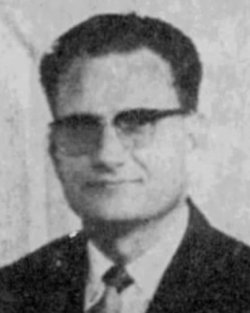
Wilbern Elias Best (1919-2007) was a preacher and writer of Gospel material. He wrote 25 books and pamphlets comprised of sermons he preached to his congregation. These books were distributed in English and Spanish around the world from 1970 to 2018 at no cost via the W.E. Best Book Missionary Trust.

Comments

0 / 2000 characters
Comments are moderated before appearing.

Be the first to comment!

Pristine Grace Research Assistant

Pristine Grace Research Assistant

Ask me about articles, sermons, or theology from our library. I can also help you navigate the site.