Bootstrap
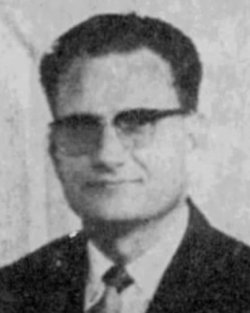
W.E. Best

The Born-Again Phenomenon

John 3:1-21
W.E. Best January, 13 1992 Audio
0 Comments
Best's Corner

Sermon Transcript

Auto-generated transcript • May contain errors

100%
So open your Bibles to John chapter
3, one of the most, if not the most, familiar passages of scripture
to all professing believers. And I want to read the first
21 verses before we begin. I'm not going to outline it during
this first lesson this morning. I will show you what we will
be developing in the light of these verses. Therefore, let's
begin with verse 1. Or would you rather that I go
back to verse 23? I think I will. Go back to verse
23 of chapter 2. I want to show you that where
we have the division, and after all, the division here is something
that was given by man. It is not inspired. And if you
look at your Bible closely, at verse 23, that is the beginning
of another important division. And you have that which signifies
that to be a fact. So let's begin with verse 23.
I'm going to take the time to read these verses. I'll do my
best to not comment because we'll be doing a lot of commenting,
and we'll be looking at this passage of Scripture closer than
we ever have. in our ministry, and hopefully
the same will be true with you. And if we all study together,
we will all certainly profit by it. Verse 23, chapter 2. Now while
he was in Jerusalem at the Passover, at the feast, many believed because
of his name. observing the miracles which
he was performing. There are six imperfects, I'll
let you find them. So observe the imperfect tense
verbs. That means progressive action
now. Verse 24, but Jesus himself was
not entrusting himself to them because He knew what was in all
men. And because he was having no
need that anyone may witness concerning man, because he was
knowing what was in man. I might add that the word anthropos in verses 24 and 25 is used generically, the speaking
of mankind. Verse one, now without stopping,
just notice the first verse of chapter three. Now there was,
continuing the imperfect tense, there was a man. I'm going to use another word,
to add another word here, there was a certain man. Now, you get
that from the demonstrative pronoun later. There was a certain man
from the Pharisees named Nicodemus. I do want to stop long enough
to tell you what Nicodemus means. This is a compound noun. It is
made up of neke, which means victory, and demos, which means
crowd or people. So Nicodemus was one who conquered
the people. A ruler, which means a chief
or an official, of the Sanhedrin, a ruler of the Jews. This man
came to Jesus at night and said to him, We have known that you
are a teacher who has come from God, for no man is being able
to do these miracles that you are performing unless God may
be with him. Jesus answered and said to him,
truly, truly, I am saying to you, unless a person may be born
from above, he is not being able to understand the Kingdom of
God. For A'o can be either see or
understand. Verse 4, Nicodemus says to him, is a man being able, how is a
man, excuse me, let me go back. Nicodemus says to him, how is
a man being able to be born or literally to be being born, being
old? Can he be able to enter the second
time into his mother's womb and be born or literally be being
born? Jesus answered, truly, truly,
I am saying to you, unless a person may be born of water and spirit,
please notice how I read that. Superfluous words are used here
in the King James that actually destroy the meaning. So let me
read verse 5 again. Jesus answered truly, truly,
I am saying to you, unless a man may be born of water and spirit,
that's the literal text, he is not being able to enter into
the kingdom of God. That which has been born out
of the flesh is flesh. and that which has been born
out of the Spirit is spirit. In other words, the first one
is by nature flesh, the second one by nature spiritual. I added
that. Verse seven, do not wonder because
I said to you, you must be born from above. We'll be looking
at the adverb later in detail. Now, I'd like to mention before
we go any further, because I won't have to comment on this later,
verse 7 again. Let's look at it with this translation
in mind. Do not wonder because I said
to you, you must be born from above. Must comes from the Greek
verb di, and it means must or necessary. Now, what it literally
is saying, and I'll say it in a different way now. To be born
from above is a necessity for you. That's not my translation,
that's just reversing it, but it is true to the Greek text. So, to be born from above is
a necessity for you, that is Nicodemus. Verse 8. The Spirit is breathing where
He desires, and you are hearing His voice, but you have not known
where he is coming from and where he is going, so is everyone who
has been born out of the Spirit. Nicodemus answered and said to
him, how are these things able to come to pass? Jesus answered
and said to him, are you the teacher of Israel and have no
knowledge of these things? Truly, truly, I am saying to
you, we are speaking what we have known and testifying what
we have seen, and you are not receiving our witness. Since
I told you, that's a first-class condition, since I told you earthly
things and you are not believing, How shall you believe if I may
tell you heavenly things? And no man has ascended into
heaven except the one having descended from heaven, the Son
of Man. And as Moses lifted up the serpent
in the desert, even so must the Son of Man be lifted up. in order
that everyone believing in him may have eternal life. For in
this way God loved the world, so that he gave the only begotten
Son in order that everyone believing in him may not perish, but may
have eternal life. For God sent not the Son into
the world to judge the world, but in order that the world through
him may be saved. He that believeth, or he the
one believing, in him is not being judged. The one not believing
has been judged already because he has not believed in the name
of the only begotten Son of God. And this is the judgment, that
the light has come into the world, and men love darkness rather
than light. than the light because their
deeds were evil. For everyone practicing evil
things hates the light and does not come to the light in order
that his deeds may be exposed. but the one practicing truth
comes to the light, that his deeds may be known, that they
have been produced by the agency of God." Now, we'll be calling attention
to many things within this section of Scripture. What is our subject
again? It is the born-again phenomenon,
a cover-up for Harrison. There is no portion of Scripture
used more, abused worse, and understood less than this passage
which we have read to you this morning. Theologically, this
passage of God's Holy Word is used by denominationalists and
non-denominationalists to represent various views concerning soteriology
the science of salvation. Number one, there are those who
teach baptismal regeneration and they use a portion of the
passage that I have read as their proof text. The greater number
of professing Christians today believe in baptismal regeneration. Number two, many contend for
faith regeneration. They use a portion of this passage,
which I have read, as their main proof text. Finally, number three,
some proclaim the truth of spirit regeneration. And folks, that
is found within the context of this passage. Heresy cloaked in biblical language
remains heresy. Because of the nature of this
subject, the correct term is heresy, not error. We all make
mistakes. We all have errors and we make
many errors, but error is not heresy and heresy is not error. I said because of the nature
of the subject that we are discussing, heresy is the proper term. Scriptural terminology is used
by many to teach the opposite of what the scripture actually
affirms. Do you doubt that? Surely you've
had enough experience as a Christian that you know that to be factual.
Although the term born again is biblical, it is being used
by politicians to get votes, by athletes who are disobedient
concerning the Lord's day, They talk about being born again believers
and go out on Sunday and try to knock somebody out, and I
mean clear out of the game. That's a real Christian attitude.
I'm being factual, folks, and they call it sport. I call it
something else, and I'll let you wonder what it is. Religious leaders, use it to
peddle the word of God. And local assemblies use this
statement, or this term, to attract great crowds by the use of entertainers. Hence the so-called born-again
Christian movement has become the fastest growing cult in America. In no way can John 3, 1 through
21, teach so many divergent views on the science of man's deliverance
from the penalty and condemnation of sin. The idea that God's word,
which has been permanently established in heaven, and permanently given
to you and to me and to all Christians can mean different things to
different people is ludicrous. Some say, well, what it means
to you, it doesn't mean that to me. I said, that is ludicrous. Such
thinking deserves ridicule. because it is an attack on the
veracity of God. Nothing is given in time but
what was purposed in eternity. Thus the order for which informed
Christians contend is the relation between cause and effect that
we have been dealing with for several services. This order
is confirmed in Creation, John 1, 1-3, Redemption, John 3, 14-16,
and Acts 2-23, and Regeneration, John 3, 1-16. We shall see in our striving to accomplish
a knowledgeable study of this portion of scripture. How little
people in general understand passages that are so familiar
to professing Christians. This portion of scripture will
be explored by considering the following truths. Now I'll give
you a brief outline. the following truths in the light
of these verses which we have read. Number one, regeneration
is necessary because of degeneration. And to explain further the term
degeneration, which is a state of being degenerate or depraved. Regeneration is God's inward
work of grace by the agency of the Holy Spirit in which he implants
the principle of spiritual life in the soul. Number two, the
purpose of regeneration is to produce an outward act of turning
to God in a conversion experience that keeps on turning to God
in conversion experiences. Thus, the inward change of life
finds expression in an outward change that keeps on changing
until the final change. Folks, there are a lot of people
today who talk about the new birth, but their lives condemn
them. And the Scriptures certainly
condemns them. The Scriptures do not condemn
as far as the religionists are concerned. But to every person
who has been saved by God's grace, he knows that the Bible is true
and man is a liar. Conversion is the beginning of
a progressive and endless holy life until we shall be made like
Jesus Christ. Now we could use a lot of scriptures
at this point, 1 John 3, 2 would be enough for me, but there are
many more. Regeneration is exclusively God's
act on the passive sinner. And folks, I took hours this
past week to confirm that, and I shall give you the references
before we finish our studies today. I'm talking about the
sinner being passive when it comes to spiritual things. Conversion
is the act of the regenerated person by the power of the inward
principle of life. Watch this statement. Subsequent
to God's drawing, the one drawn follows. That's the teaching of Scripture.
Subsequent to the Father's drawing, the drawn follow. Follow whom? Follow the Lord. And number three, here's the
third thing we'll be looking at in this section of Scripture. Distinction is made between the
regenerate those who love the light, and unregenerate, those
who hate the light. One can never be becoming like
Christ unless he is first existing in Christ. Now we will look beginning at
the first verse of chapter three. And in discussing Nicodemus this
morning, we will be taking in the last three verses of chapter
two. For the time being, look at verse
one. Now there was a man or a certain
man from the Pharisees named Nicodemus, a ruler. judge or a high-ranking official
of the Jewish Sanhedrin. This man came to Jesus at night and said to him, Rabbi, one rabbi, as far as he was concerned,
speaking just to another rabbi. But I'm here to tell you folks
that Jesus Christ was no ordinary rabbi, which means teacher or
master. He was no ordinary teacher. He
was no ordinary master. Nicodemus was just an ordinary
master or teacher of the Jews. But the one to whom he was speaking
was no ordinary teacher or master. He was the master of masters. He was the teacher of teachers. I want you to see also in verse
2 before we get into a real exposition of the first three verses this
morning and we will not complete even the first three verses in
this lesson this morning. So this man came to Jesus at
night. and said to him, Rabbi, we have
known. That's a perfect tense. In other words, we have been
knowing for a long time. Get the point? Completed action
in past time, and they were in a continuous state of knowing.
So they had been knowing for a long time. How long I do not know, and you
do not know either. We have known that you are a
teacher. He doesn't say the teacher, he
says a teacher. There is no definite article
here. A teacher who has come. There is another perfect tense. Who has come from God. For no man is being able to do
these miracles that you are performing unless
God may be with him. Although Nicodemus was a high-ranking
official of the Jews, he was a depraved religious Pharisee. Do you realize, folks, that Christ's
worst enemies are unregenerate church members? I want that to soak in. And when you think about all
the false teaching that is done today concerning these vital
truths of regeneration, of conversion, of faith, of justification, because
we're within that framework in our studies at the present time.
You know as well as I do, and many of you have experienced
it, that most people who go to quote a church are not the children
of God according to the scriptures which we are now studying. That's a fact. And Christ's worst enemies are
not people who make no profession His worst enemies are unregenerate
church members. Nicodemus was a religious Pharisee,
but he was not a regenerated person. The strongest language that Jesus
Christ ever used was against the Pharisees, read it for yourself,
Matthew chapter 23. You hypocrites, quieted sepulchers,
and on and on. Woe to you. That was the language
he used in speaking to them. And unregenerate church members
deserve the strongest language of Holy Scripture. I've already given you the meaning
of his name. Conqueror of the Populace. That's the meaning of Nicodemus.
Conqueror of the Populace. Nikei. Victory. Deimos. crowd or people. Victory over the people. That
was Nicodemus, ruler of the Jews. Don't forget that, folks. He was a member of the Sanhedrin,
the supreme ecclesiastical and civil tribunal. which was the
final court for the interpretation and enforcement of the Jewish
law. The Pharisees were zealous for
their religious sect, which began, do you know when? Which began immediately after
the return of some of the Jews from Babylonian captivity. according
to history. Therefore, they not only rejected
the message of Jesus Christ's forerunner, John the Baptist,
Matthew 21, 25 through 27, Luke 7, 29, and 30, but they
also became Christ's greatest enemies, Matthew 15, 23, John
8, with a lot of other passages which we will not discuss this
morning. I'm just giving you some important references. The
Pharisees were separatists who had their own interpretation
of the Scriptures. They had their own interpretation
of morals. Oh, now that brings me to the
place where I could really inject a very important point. What
a religion is doing today. You read the papers. Why do you
think that I read to you what I did this morning? Let me give
it to you again. This is a Methodist church. My
deceased brother-in-law, fought it while he lived. He was a Methodist
minister. And it isn't getting better,
it's getting worse. But listen to this again. We
proclaim that all people are created in the image of God and
affirm that each person, regardless of age, economic status, faith
history, ethnicity, gender, mental or physical ability, marital
status, sexual orientation, or lifestyle, is a beloved child
of God and worthy of God's love and grace. What's happening today? You know
what's happening. There is a breakdown. Everybody has his opinion. Well,
the Jews had theirs. The Pharisees had theirs. They
had their own interpretation of morals. Now, I don't want
to take the time. It isn't necessary. But if you
will read the Sermon on the Mount, Matthew 5-7, you will find where
our Lord Jesus Christ had to straighten the Pharisees out
on the subject of morality. And folks, that's needed today. I said, that's needed today.
Religionists need to be straightened out on their concept concerning
morality. Now this is the person with whom
our Lord was dealing. So he was a separatist. In fact, the Jews, I'm talking
about the Pharisees now, made void the Word of God through
their own traditions. Mark 7. Read the whole chapter,
but especially the first 14 verses. What's happening now? Religionists
are making void the Word of God through their own human traditions. It's a repetition. No wonder, folks, Christ's strongest
language was against the unregenerate religionists of his time. All we know about Nicodemus is
found in three passages of Scripture, and they're all in the Gospel
according to John. I'll give you the references.
The first 12 verses of John 3. Secondly, John 7 and verse 50. Finally, John 19 and verse 39. When Nicodemus came to Jesus
Christ at night, every time I got to saying that
to myself, and I have seen that fella give the news, you know,
at night, you know who I'm talking about? And I couldn't help but
laugh. And I don't want to take away
from the sting, but this is not anything about which there is
a great sting at the present time. I'm talking about Channel
13, who gives the news as he looks around and views the different
things that people are doing at night. So, that's the way
he always concludes. He gives his name, reporting
at night. Well, Nicodemus came. to Jesus
Christ at night. The preposition in is in the
locative case and it is the locative of time. At night. Talking about time. So he came to the Lord Jesus
Christ at night. He did not know that he was a
lost sheep. You might ask the question, do
you believe that Nicodemus was saved? I think when you read
the seventh chapter in the verse that I gave, and also, that's
verse 50, also the 19th chapter in verse 39, you will come to
the conclusion you won't have to go any further than chapter
seven and verse 50. There had been a tremendous change
in Nicodemus. But he didn't know that he was
a lost sheep. and we may have some sitting
here this morning. You do not know that you are
lost sheep. The context will settle the differing
views concerning the reason the Pharisee came at night. His first statement betrayed
him. Rabbi, master or teacher, we have known I've already called
attention to this. Perfect active indicative of
oida. That you are a teacher who has
come another perfect active indicative. This time it's irkamai. From,
and this is the preposition apa, which is the ablative of source.
Out of or from God. The first person plural we, watch
it, gave the impression that he had nothing personal at stake, but that he was speaking on behalf
of the Sanhedrin. We. If that was true, Why did he
come at night? Now watch this. Some think his
coming at night manifested cowardice. Now there's another opinion and
I'll give you that opinion. Others think it was the best
time for Nicodemus to have a conversation without the interruption of the
normal activities of the day. So there are two principal views
concerning why Nicodemus came at night. The two perfect tense
verbs give credence to the fact that Nicodemus had known for
some time that Jesus Christ was a teacher come from God. Furthermore, he was in a state
of knowing that Christ's works were of the nature that apart
from God, apart from His presence, he would be unable to perform
what he had been practicing. Now it's important for us at
this time to go back to chapter 2 beginning with verse 23. The
chapter division would be more fitting beginning with the 23rd
verse of chapter 2. And the context will prove it
beyond a shadow of a doubt to the person who is honest and
wants to see it in the light of its context. So notice now
beginning with verse 23 again. Now while he, that is the Lord
Jesus, was in Jerusalem at the Passover, at the feast, many believe because of his name. Because of his name. Observing the miracles which
he was performing. But Jesus himself was not entrusting. I like that better than committing. Was not entrusting, and there
is your imperfect again. He was not entrusting himself
to them even though they had believed because of his name.
He was not entrusting himself to them because he knew what
was in all men. In other words, he was not deceived. And folks, he isn't deceived
today. He never will be deceived. He's
the omniscient one. He knows all things. So he knows whether your faith
is genuine or whether it's nothing more than just human faith. Although many believe when they
saw the miracles Jesus Christ was performing at the Passover,
Christ was not entrusting himself to them. That's verse 24. Because he was knowing What was
in man? And I said, we have the generic
use really here of Anthropos. He knew what was in mankind. He knows what is in mankind. And then when you look at the
25th verse, and then I'll do some explaining. And because
he was having no need that anyone may witness concerning man, because
he was knowing what was in man." We determine the character of
trees by their fruit. Isn't that true? The man who
has an orchard or he has some fruit trees, He determines the
character of the tree by the fruit of that tree. Folks, I
determine the character of a professing believer by the character, by
the life, by the fruit of that individual. And I have a right
to do so according to the seventh chapter of Matthew. Which follows,
judge not that you be not judged. There is an unlawful judgment,
but folks, there is a lawful judgment. I've always said, and I'll repeat
it again, Matthew 7, verse 1 is the fifth amendment for professing
believers. Judge not that you be not judged.
That's the fifth amendment for professing believers. We have a lawful judgment, there
is an unlawful judgment. And that is discussed in the
first four verses of Matthew, chapter seven. But following
that, the Lord Jesus brings out the fact that we are to judge
things by trees, fruit trees by their fruit, et cetera, et
cetera. So we shall know people by their lifestyle. By their lifestyle. So we determine
the character of trees by their fruit. But listen to this. Christ
knows the very roots of the trees. He knows. He doesn't have to
be informed. He knows. He knows you this morning. He knows me. He knows if you
are saved, if you are not. He knows if you are believing
with a God-given faith or if you are believing with human
faith. He knows the motive behind it.
He knows everything. Everything is naked and open
unto Him with whom we have to do, the writer of Hebrews tells
us. So He knows. Therefore, there are believers
and there are believers. Many believe when they saw the
miracles that He was performing. They believe because of those
miracles. Because, I said, of those miracles.
The accusative of cause. And that's important to see that
in the preposition that is used. Faith may be sincere, but superficial. Here's a person who says, I didn't say anything. It may
be sincere, but superficial. And I mean by that, natural.
Natural. So you haven't told me a thing
when you say I'm sincere. It's not what one says. It's
the fruit, the fruit, the lifestyle that demonstrates character. It may be brought, that is human
faith or superficial faith, may be brought into exercise by miracles
or circumstances. But it will disappear with the
disappearance of the things that brought it into exercise. Folks, that is just as true as
it can be, and I've seen it, I've witnessed it. Christ cannot
entrust Himself to a person who exercises that kind of faith,
because He knows that that person is a stony ground hearer. I'd like you to turn to one verse
of Scripture. I want to translate it for you. Luke 8, 13. Faith can be temporary. And unless
faith is genuine, unless it is God-given, it is temporary. It will not last. It's superficial. It's not of God. And here's what
our Lord says, And the ones on the rock are those who, when
they hear... Now notice I said on the rock. I'll tell you a study I got into
this last week and I'll share this thought with you. The Greek
preposition ipi can be translated either on or
upon. I said either on or upon. Now,
upon is not archaic. Let me use another illustration.
You see, I'm getting to the place where I want to know what words
mean because that's where truth lies, folks, in the proper understanding
of what a word actually means. Now, when it comes to to and
unto, in the King James Version we have unto. Unto is archaic. To is not, of course. So I'm
trying to change, but you know when you've memorized Scripture
and you have so much of it in your mind, you don't always say
what you would like to say because it just comes out. the way that
you have learned it, the way that you have it stored in your
memory bank. But whenever you find unto in
the King James Bible, it's permissible to just translate it to. Because
unto is archaic. That is not true with own and
upon. You might think that upon is
archaic, and I had that thought. But I got to studying the Greek
preposition epi again a couple of weeks ago, and the thought
came to me. On and upon, you have two things. Upon consists of two words, up
and on. Up and on. Now when it comes
to the Lord Jesus Christ being the true rock, folks, I want
to use upon, that's elevation. Up on denotes elevation. Now
when you talk about something being on the ground, that's okay.
So notice here, there are some seed that fell, and I'm not translating
a pea in this sense, in this instance, up on the ground. Just
on the ground. I don't see any elevation with
ground, do you? You say, well, you're being too
picky. Oh no, folks, listen. Listen. So notice what the Lord
says. And the ones on the rock. Well,
He's not talking about Jesus Christ the rock. But on an ordinary
rock. So that's not elevation. So on
is certainly permissible. But if you're talking about being
on the rock Christ Jesus, I'd say up on because that denotes
elevation. That's not only on, but it's
up on. That's elevated. And folks, every
person in Christ has been elevated. That means he lives an elevated
life. He has an elevated lifestyle. He doesn't live on the earth
where the slime and so forth is. He's up on a higher elevation. Now notice what our Lord says,
And the ones on the rock are those who, when they hear, Receive
the Word with joy. Receive the Word with joy. It
is possible for you to receive even something from the Scriptures
which you like to hear, and you receive it with joy, but you
receive it not with a God-given faith, but with human faith.
All right, let's look at the rest of it. Let's look at all
this verse. And the ones on the rock are those who, when they
hear, receive the word with joy, who believe for a brief time. For a brief time. I've seen that and so have you.
So don't come to the place in your Christian life where you
say, now here's a person This individual seemed to be such
a great Christian and sweet person. How could that person leave the
assembly, go back into the world, and do those things? Folks, we
don't like to see it, but when it happens, you don't become
despondent, you accept it, and you have to make a judgment as
to why that is taking place. So here's what he said, who believe
for a brief time and in time of trial become apostates. And in time of trial become apostates. You see, it is not how you start
the race, folks, it's how you finish. Are you with me? I said, it's not how you start
the race, it's how you finish. Let me use an example here. Kindly
diverting some thoughts here for a moment. There is an article
in today's Houston Post I wish you'd read. It's about the Japanese
and what they're doing to us. While we're sitting around in
America and complaining about what the Japanese are doing, about the imbalance of trade
and so forth. And so we sent along with our
president to Japan last week the three major automobile manufacturers'
representatives. And so they're so bold, you know, the Japanese just let them talk.
And while we're talking and complaining, you know what they're doing?
They're taking the technology they have learned from us and
they're doing a much better job than we will ever do because
of our complacency, because of our laziness. Folks, read it. You'll see what's happening.
Now, you may not like what I'm saying, but that doesn't disturb
me. It's a fact. And folks, when it comes to the
church, the assembly of Christ, we are to take the truth which
we have. And what are we to do? We're
to study it and study it and learn more about it and let it
become a part of us as I sought to bring you last Sunday. Feeling
the very words of God and acting upon what we have learned. So there are a lot of people
who profess to be believers. And they made their professions
and they believe because of circumstances, not miracles as these people
were witnessing in their time, but just circumstances. But then
when the trial comes, they apostatize. Believe only for a brief period
of time. Temporary faith, if you please.
Temporary because it's human. But when God gives faith, it
is a faith that just keeps on believing. It will always be
believing. It'll be believing when you come
to the finish line. And you'll be believing with
such intensity because of your growth in grace and knowledge
of Jesus Christ that you'll say, If it's time for you to call
me home, thank you for the privilege that you've given me. What are we talking about? We're
talking about Nicodemus. Nicodemus came as an anxious inquirer to
Jesus Christ at night. However, in the light of the
context, his coming was motivated Watch what I'm saying, in the
light of the context now, by the miracles that the Lord Jesus
Christ was performing. And that is proved by verse 2. When Nicodemus said, Rabbi, we
have known that you are a teacher who has come from God, for no
man is being able to do these miracles that you are performing
unless God may be with him. His coming cannot be classified
with come to me. Watch what I'm doing. I'm answering
an objection that someone might want to make. Come to me, all
the ones laboring and having been loaded with burdens, and
that's a perfect passive participle, and I shall give you rest. Matthew
11, 28. The proud Pharisee addressed
Jesus Christ as rabbi, thus placing himself on the level with him. He was saying that we rabbis,
plural, have known what you are doing as a rabbi, singular. This manner of address leaves
little doubt that Nicodemus did not at that time know who Jesus
Christ really was. Even though he acknowledged that
God was associated with him. Let's go a step further. in getting
a good view of Nicodemus, an unregenerate religious person. The questions Nicodemus asked
proved he was not regenerated when he came to Jesus Christ. Listen to the questions. In verse
4, how is a man being able to be born or to be being born,
being old? Question number one. Question
number two, can he be able to enter the second time into his
mother's womb and be born or be being born? Verse nine, that's
in the second part of verse four. Verse nine, how are these things
being able to be coming to pass? like Nicodemus, many come to
Jesus Christ in order to ask questions rather than to listen. Are you with me? I'm pausing
for a reason, folks. I want all this to soak in. I can truthfully say From the time that the Lord regenerated
me and I had a conversion experience, I've always had an ear and I
still have it. I'm listening. I'm listening.
I'm listening. I want to hear what He is saying. The depravity of hearts will certainly be revealed when persons are interrogated. Nicodemus' questions revealed,
number one, here are the things that his questions reveal I hope
to you they have to me. Number one, how the natural man
is unable to understand spiritual things. 1 Corinthians 2.14. You
can't deny that in the light of the context. Everything I'm
saying is in the light of the context of the passage we're
studying, folks. Number two, is question revealed? how far
a person can be advanced in worldly wisdom, including religious wisdom, and be spiritually ignorant,
and be spiritually ignorant. Thirdly, his questions reveal,
number three, how one can belong to organized religion, and know
nothing about saving grace. You can be a Lutheran, a Catholic,
a Baptist, a Methodist, Episcopalian, a Presbyterian, a Pentecostal,
on and on we could go to update it, to make it practical. So, his questions reveal this,
how one can belong to organized religion. and yet be ignorant
of spiritual things. This is characteristic of the
great majority of religionists today. You can't deny that if you're
honest. You have to face it head on.
And that's why we're studying this passage in the manner in
which we are. Such persons are not only lost, but also like
the Pharisees, they're Christ's worst enemies. If there is an unregenerate member
of this assembly, you're not only an enemy of Christ, whether
you will acknowledge it or not, but you're my enemy. And you're
the enemy of the saints of God who are in the assembly. Did
you know that? And it'll come out sooner or later. It'll manifest
itself. Hopefully sooner than later. Jesus Christ did not reply to
Nicodemus. Now here's an important point.
He did not reply to Nicodemus because he was no ordinary rabbi
speaking to another ordinary rabbi. He was God who came to
be the teacher, or He was God who came as THE teacher. Jesus Christ needs no one to
witness concerning man, since He knows what is in man. And I'm using the word man generically. Knowing Nicodemus' condition,
Christ answered, He addressed him as an unregenerate man. Notice what I'm saying. He addressed
him as an unregenerate man. You say, well, maybe he had already
been regenerated when he came, and therefore he came in all
honesty seeking. That isn't true, folks, in the
light of the context. So he knew his condition, I said
Jesus Christ knew His condition and He addressed Him as an unregenerate
man. And here it is in verse 3. Now let's read verse 3 and
we'll bring this to a conclusion this morning with some very important
things to show you what we'll be getting into tonight. Jesus answered and said to him,
truly, truly, I am saying to you, unless a person may be born. That's Arius' passive subjunctive
of genao. Notice the passive voice, folks. From above. That's an adverb,
anaphen. Anaphen, the adverb either meaning
again, or from the beginning, or from above. This adverb is used, I think,
14 times in the New Testament, and it's used only three ways.
I checked them all, and I'll discuss that with you more later.
I'm translating it not again, born again, but born from above.
That's the way I'm translating it. And since this adverb is
used five times in the gospel of John itself, five out of the
14 times it's used in John's gospel, and folks, in every instance,
it is correct to say from above, including the two times that
is used right here in the third chapter. So let's look at it
again. Jesus answered and said to him,
truly, truly, I'm saying to you, unless a person may be born from
above, he is not being able, that's dunatai, and that's a
present active indicative of dunamai, which means can, or
able to, be able to, or able to do, to understand. Now watch what I'm doing here.
We have Aidan. an arius active infinitive of
hor a'o. And hor a'o can mean either to
see or to understand. I realize that I've memorized
it, it's in my mind, because I've quoted it so many times,
to see. But the better translation is to understand. To understand
what? The Kingdom of God. The Kingdom of God. Now I want
to read the verse again. Jesus answered and said to him,
Truly, truly, I'm saying to you, unless a person may be born from
above, he is not being able to understand the kingdom of God. In other words, he cannot understand
spiritual things. Now, the adverb anaphan. Let's look at it for a moment.
I've already told you it's used three ways. out of the 14 references
where it is found in the New Testament. The three ways are,
and I'll give you one verse of scripture for each one, from
above. I'm going to give you a different
reference rather than what we have here in John chapter three.
John 19, 23. Secondly, again, a favorite translation
of many. of John 3, 3 and 7. And thirdly,
from the beginning, Luke 1, verse 3. Now, in all five references in
John, from above makes for good theology. Listen closer to what I'm saying.
Makes for good theology. And the references are John 3,
3 and 7 and 31 and John 19 verses 2 and 3. Born from above of John
3, 3 and 7 shows that the new life comes down from God. Would anybody object to that? and it affects a complete and
radical change in the elect who have been raised out of spiritual
death which is the result of their depravity. Now you know
what we're going to get into before we can go any further?
We're going to have to see that Nicodemus, a religious official
of the Jewish Sanhedrin was depraved. He was not only unregenerate, but
he didn't realize and didn't understand his depraved condition. Depravity is denied by not only
the intelligentsia of the world order, but also denied by many
religionists in professing Christendom. Among the religionists, the following
statements I'm going to give to you in conclusion this morning
are often heard or read to try to refute the biblical teaching
of depravity. Now these are choice things that
I've gathered over a period of 50 years. Some I've heard. in person, some I've read, but
I have many more that I've collected. See, I collect certain things,
and I like to go back and take out the ones that I think are
the most important. Number one, Adam sinned only
in his own person, and there is no reason that God should
impute his sin to infants. That statement is playing on
the sympathy of people with small children. Number two, that which we have
by birth cannot be the evil of sin. Three, sin must be voluntary
or it cannot be sin. In other words, the innocent
child that does something and he doesn't do it voluntarily
or a person who does something without being voluntary, then
it isn't sin. That one should be accounted
guilty of a sin that is not his own is inequitable. Five, God cannot in justice appoint
anyone to hell for original sin. Six, the old fatalistic view
of God's relationship to man is fading away. And folks, what
I'm giving you now is very much up to date. The new view sees
God as giving to man the potential for working out his own destiny. I could stop here and give you
quotations by Ronald Reagan and others that would just shock
you to the end of your toes. Number seven. Man is not so corrupted
by sin that he cannot of himself believe to the saving of his
soul. Number eight, the sinner can
be saved anytime he desires to believe. Why? Because today is the day of salvation
and now is the accepted time to say. Number nine, since the sinner
is commanded to believe, he is not so dead and passive that
he cannot believe. And folks, all Armenians believe
that, and many others who do not call themselves Armenians.
Number ten, Names are written and sealed in heaven at the point
of faith. Hence, faith, regeneration, and
justification all take place simultaneously. Depravity signifies the following
truths concerning man by nature. And that's where we'll begin
tonight. Now, a concluding remark. This last week, I became so intrigued
over this subject that I wanted to do something that I had never
done. I knew it would be rather time-consuming,
but I felt that I could profit by it if I did it. So what did
I do? I'll elaborate on it more tonight,
but I want to mention it now. I went through every reference
in the New Testament where the verb genao is used. There are 15 references all used
by John either in the gospel according to John or his first
epistle. First John. 15 references where
Genao is used in connection with being born of God. Now we have
the indicative, we have participles, and we have, I think, a couple
of infinities. I'll give them all to you tonight. 15 references. In every one of
those, Whether it is an infinitive, a participle, or a verb, it is
always in the passive voice, without one exception. Why am
I saying this? I'm saying it because all Armenians
believe that the sinner is not so passive that he cannot, by
his own faith, believe and be born again. plus the fact, and
I will be establishing this more by quoting even persons who say,
we believe in the doctrines of grace, but in substance they
do not. That's a bold statement, but
I've made it. And I've not only made it, I'll back it up with
scripture. Now here is just briefly my finding. Never will you find, follow me,
we're going to study the Greek voices. Now the question is, do you want
to go that far into it? Well, whether you want to or
not, I'm going to expose you to it. And we'll have it in the
booklet. We'll have it all in detail in
the booklet. So if you miss out on something,
it'll be in the booklet. We're going to see about the
use of the active voice, middle voice, and the passive voice.
I'm cognizant of all the debate over especially the middle and
the passive voices. And I've read everything I could
get my hands on concerning the discussion over the middle and
the passive voice. But we will look at the basic
use of the active voice, the middle voice, and the passive
voice. Now here's what I found. And
folks, I not only looked at Gna'o, But I also looked at the verb
sozo. And here is my finding, and folks,
this is something that no one can disprove. I'll tell you now, I'm as dogmatic
about this as I am I have eternal life by the grace of God. I'm just as dogmatic about this
as I'm standing and I'm just as sure of what I'm saying and
going to say to you as my ability to stand here and speak to you
this morning. Whenever you find either the
active or middle voice used in connection with an individual
where so-so is you, You can rest assured of one thing. Being regenerated is not the
subject. And I'm going to spell that out
for you. Are you with me? You can't act in it according
to Pelagianism. You can't have a part in it using
the middle voice, God plus you. But folks, when it comes to being
born of God, the sinner is absolutely passive, having nothing to do
with it. Let's stand.
W.E. Best
About W.E. Best
Wilbern Elias Best (1919-2007) was a preacher and writer of Gospel material. He wrote 25 books and pamphlets comprised of sermons he preached to his congregation. These books were distributed in English and Spanish around the world from 1970 to 2018 at no cost via the W.E. Best Book Missionary Trust.

Comments

0 / 2000 characters
Comments are moderated before appearing.

Be the first to comment!

Pristine Grace Research Assistant

Pristine Grace Research Assistant

Ask me about articles, sermons, or theology from our library. I can also help you navigate the site.