Bootstrap
W.E. Best

God's Remedy Set Forth in Justification

Job 9
W.E. Best December, 8 1991 Audio
0 Comments
Time@57:00,deals with hypostatic union & impeccability.

Sermon Transcript

Auto-generated transcript • May contain errors

100%
I want to share this with you,
and when I give this, there is a reason for giving it, and hopefully
we will all take it to heart. He said, my wife, he said, talking
about his deceased wife, he's an elder man now, he said, I
can remember throughout my ministry, that when she would meet a Christian,
sometimes she'd come home and she'd be so just taken up with
this person. Oh, this person is a great Christian. And he said, then after a month,
she would be discouraged. Now listen to this, folks. There's
a tremendous lesson in this, and I'm going to use it. I've gone along the same line.
In other words, I could relate with what he said. And he said
then, after a few weeks maybe, or a month or two, she'd come
back and she'd be even lower. She'd be so discouraged about
this person that she had so much confidence in to begin with.
And he said, that has happened many, many times since I've been
in the ministry. He said, I got to thinking about
what's the answer to it. So he said, I told her one day,
and he called what her name was. He said, let me give you some
advice, if I might. He said, you begin with 100%.
You shouldn't begin there. You know what I'm going to say
now? He said, none of us are 100% of what we ought to be.
Not anyone is 100% of what he could be or should be. So he
said, When you come home, I would ask you the question, would you
say that this person is 90% a few weeks or months? What's wrong
now? Would you say this person is
about 80%, 70% and on like that? He said, I don't begin with 100%.
He said, I begin at the bottom. Now folks, think that through.
Think that through. I begin at the bottom. I can
well remember, folks, I thought when I was first saved, when
Juanita and I first became Christians, I surrendered to preach to everybody
who said he was a Christian. Boy, that's great. It didn't
take me long to find out that you have hypocrites and you have
some of the sorriest people in the world who say that they're
Christians. And the religious community is
full of them. So he said, I begin at the bottom.
And I told her, I said, now, the only way in the world that
you can solve your problem is you start at the bottom. So here's
a person you say, well, I'm going to start at the bottom with you.
And then you watch that person after a while, well, I believe
this person's a 20 percent and 30 percent, 40 percent or 50
percent. You come on up and about the
normal, he said, is anywhere from 60 to 70. Now, he was not wrong, folks.
You know what the Bible says in our Lord's discourse in Matthew
5 through 7, and in Matthew 13, especially
Matthew 13, we have all Christians, I'm talking about people who
are really saved, they bear some fruit. If a person doesn't bear
any fruit, he's not a Christian. That's just a biblical fact.
If there is no fruit in your life, you're not a Christian.
Because every Christian will bear some fruit, thirty percent,
sixty, very few hundred-fold Christians. That's in the parable
of the sower. So with that before us, I got
to thinking about some scriptures. that I want to share with you. First, I'd like for you to open
your Bibles to James chapter 1. James chapter
1. I'd like for you to read with
me. And this is a challenge that I'm using because it's biblical.
I'm not concerned about trying to challenge people to do something
without the Word of God being behind it. If I wanted to do
that, I'd do what Ed Young did in yesterday's ad in the paper.
Did you see it? Huge ad. Feel good inside. Not one thing, not one thing,
sports and all the different things, to get the people to
come, not one thing about the Lord, not one thing about the
teaching of Scripture. Let's read beginning with verse
22, James 1. And you be doers of the word,
and not hearers only, deceiving your own selves. Because
if anyone is a hearer of the word and not a doer, this one
has been like a man," now notice this, "...observing the face of his
birth in a mirror. For he looked at himself and has what? And has gone away and
straightway forgot what manner of person he was. But the one having looked into
the perfect law of freedom and continuing in it not having become
a forgetful hearer, but a doer of the work, this one should
be blessed in his doing." Looking into the mirror of God's
Word. Now, how many of us examine ourselves
in the Word of God by looking into the Word of God? Now, I'll
tell you what most people do today. Most church members look
at themselves in the limited understanding they have of God's
mirror. Or they look at themselves not
only at their limited understanding of God's Word, which is a mirror
that reflects really what we are, but through their prejudices,
that they have formulated their own beliefs without really knowing
what the Scriptures teach. So you can see how important
it is for us to examine ourselves and the not many people who do
that. You do not do it unless you study the Scriptures. And
when I say study the Scriptures, folks, I'm not talking about
this hip skip method. I'm talking about all the Word
of God. Now, for the final passage I
want to read to you, it's in Jeremiah 9, 23 and 24. If this
is not a challenge, I don't have one. And whatever I might get
you to do, apart from the Word of God, wouldn't be worth five
cents anyway. Thus saith the Lord, let not
the wise man glory in his wisdom, Neither let the mighty man glory
in his might. Let not the rich man glory in
his riches. Now the next verse. But let him
that glorieth glory in this. In this. Now in what? That he
understandeth and knoweth me. In other words, that he understands
and knows me. understands and knows that I am the Lord who exercise
living kindness, judgment, and righteousness in the earth. For
in these things I delight, saith the Lord." So folks, if we're
not doing what the 24th verse says, we're not delighting the
Lord. It's just that simple. Oh, we
may come and we may be religious. We may spend a little time and
we do this and we do that. But we have to know the Word
of God. We have to have a basic knowledge of all the great principles
of Holy Scripture. And then, if that be true, so
we are to understand and know God. Now to our subject. I'd like
to this morning read the part beginning with justification.
Tonight I think I will go through it again and it will take me
the whole service if I do this. But I'll not make any apology
to you now or tonight if I do it. If I do that, I'm going to
show you many words. I can't parse every word. If I did that, it would take
several services. But we're going to look at verses 19. I want
to give the transition from condemnation to justification. And we have
that transition, really, in verses 19 and 20. The subject of justification
begins with the 21st verse and goes through the last verse of
chapter 5. Now, let me say something else.
We'll outline it for you later, not now. Actually, the subject
of justification per se concludes with the 11th verse of chapter
5. Beginning with the 12th verse through the last of the chapter,
we have a summary of the whole thing. In other words, Paul gave
an in-depth study of the subject of justification, righteousness,
etc. And then, what did he do? He gave a summary of it after
he had concluded. And a brief summary of the whole
thing, not only condemnation, beginning with verse 12, but
also of justification. And that's interesting. I've
never seen it just exactly like that before, but that is the
case. So this morning, I want to read
through the 26th verse with you. And I won't make any comments
this morning, hopefully. I'll just try to read. I have
gone through this twice. I've translated it two different
times. And the reason I've done it,
because the more you study and the more you look and the more
you research, folks will never get to the place where we have
the final word on anything. We just continue to grow and
increase in our knowledge as we do it. And the more times
that one does it, the more sense it makes when he gets through.
So people who think they can just skim through and, well,
the subject of justification. I've got it. No, you don't have
it. That attitude is enough. I said
the attitude itself is enough. Verse 19, now we have known. That's a perfect act of indicative.
That means we're in a state of knowing too. Now, we have known
that whatever things the law says, it says to the ones in
the sphere of the law. Now, I want you to do this this
week. I'd like for you to see how many
different ways the word law, anomos, is used in the Scriptures.
Folks, I know you don't have time to do it, but you can at
least find a little bit about it. It doesn't always mean Moses'
law or the Pentateuch. And we'll show you that Paul
is not restricting the word law in these verses just to the Mosaic
economy. And the proof of it is in the
context because Paul goes back and he draws many scriptures
from the Psalms and other places, and folks, the Psalms, The Poetica
books, it's true that Moses wrote a few according to tradition
and so forth, but he didn't write all the Psalms. So the word law
does not always refer to the Mosaic economy. So now we have
known that whatever things the law says, it says to the ones
in the sphere of the law. In order that every mouth may
be silenced. in all the world may become exposed
to the judgment of God. Because no flesh should be justified
before Him out of the source of works. Now that can be translated
two different ways, and both are correct. And I first translated
it differently, and then the more I looked at it, I wanted
to do it as I'm giving it to you this morning. Because no
flesh should be justified before Him out of the source of works. For through law is full knowledge
of sin. The law exposes, the law condemns,
but the law doesn't say that it was not given for that purpose.
As a result of studying it, we have full knowledge of sin. We've discussed that in the previous
chapters. Now verse 21, this begins, this
is the beginning of justification. But now a righteousness, but
now a righteousness of God separately from the law, we have
an adverb, separately from the law, has been what? Revealed. And has been revealed,
folks, is a perfect passive indicative. Has been revealed. And so it
is in a state of being revealed. It's still revealed. Permanent.
So a permanent revelation of a righteousness. And this goes
back really to where Paul left off in Romans 1, 16 and 17, where
he spoke in verse 17 of a righteousness. Of a righteousness. And that
righteousness being provided by the Lord Jesus Christ in His
death. So has been revealed, being witnessed
to by, Now, watch this. First of all, we have the preposition
by here, and I'm taking it to mean the ablative
of means, by the law. You see, when we have a person,
then it's agent or agency. If it's by the use of an impersonal,
like the word or something, then it's by means of. So it's by
means when it is not a person. But I want to show you something
here that you have to figure out for yourself. And I haven't read
this in anybody's Greek work. You just figure out things for
yourself the more you get into it. So watch this. Let's read
all of verse 21. But now a righteousness of God
separately from the law has been revealed, and that's permanently
revealed, being witnessed to by, by means of the law, then
you have Chi, the conjunction, coordinating conjunction, and
the prophets. Now the prophets, they're persons,
but you've got one preposition dealing with both. So technically,
you would have to say, I mean, in your own mind, if you do not
translate it this way, it'd be like this. By means of the law,
and to keep the same preposition because we don't have another
preposition, and the writings of the prophets. That's understood.
It would be not only by the means of the law, but also by means
of the writings of the prophets, to be consistent. Verse 22, he
says, even a righteousness of God through, now notice the King
James, the King James says, by faith of Jesus Christ. Now here
is where pistous comes in again. The noun pistous, I've said this
before but let me say it again, means faith. It is used concerning
the faith that God gives us. So we walk by faith. We live
a life of faith. We walk by faith, not by sight.
In other words, we walk by this God-given faith. But it's also
used in the sense of assurance. And it can be translated in some
instances, not by the word faith, but by assurance. In other words,
when he speaks of the faith of God, I'm not talking about Christ
now, the faith of God, in some instances, and I found this by
study, it would be by the assurance that God the Father has concerning
what His Son is doing. Now, God the Father doesn't have
faith. He doesn't walk by faith. But He has assurance because
He knows everything. His wisdom is infinite. Psalm 147, verse 5. But here,
even a righteousness of God through the faithfulness of Jesus Christ. This righteousness is not through
somebody's faith, but it's through the faithfulness of Jesus Christ. To all the ones believing, for
there is no distinction. Now notice verse 23, for all sin, now that's ariest,
that's ariest, for all sin, I'm going to go ahead and do this
this morning a little bit and I'll get on something else tonight,
but it's too important that we see some of these things and
this will make you, and hopefully you'll want to study it more
diligently. For all sin, that's ariest, active, indicative, point,
action, past, time. But really when you think about
it, it's an aggressive ariest. Now you can't memorize all these
things and keep them in mind. You have to make notes, folks.
When you take more than 20,000, there are about 5,600, approximately
5,600 different Greek words in our New Testament, Koine Greek.
But with all the inflected forms, you have a total of almost 22,000. Well, you can't remember all
the inflected forms. After a while, you can detect
some of them when you look at the Word, but you can't remember
all of them. And not that you're supposed
to, but in critical passages, work it out in the margin of
your Bible or someplace and keep it handy. because you'll be constantly
needing it and using it, and really to the glory of the Lord,
but most of all for your own instruction and for the instruction
of those that you're trying to help. So all sin, ingressive,
so it's really talking about the beginning of the action.
He's emphasizing the beginning of the act. In other words, it's
going back to Adam and the guard of Eden, when we all sinned in
Adam. But now notice the change, and
this is so important. You don't see this in the King
James, but it's in the Greek, folks. For all sin, that's Arius
active, and come short is the way the King James translates
it, but are coming short. Are coming short. So what do
we have here? We have a present middle indicative.
In other words, it's continuous action. Now watch what I'm going
to say. The middle voice is also important here, and I'll prove
that in just a moment. So all sin and are coming short
of the glory of God. So not only did we all sin in
Adam, but we come into this world, sinners, We are depraved, and
so we have a continuous life of sin until we are regenerated
by the Holy Spirit. Now that's it. That's it. Coming short. So this is the
sinful life flowing from the fact of original sin, or the
depraved nature. Now what about the middle voice?
The middle voice shows the deficiency of the depraved wills. The deficiency
of the depraved wills. Now, actually now beginning with verse
24, these next three verses, folks, you can't imagine of the
doctrinal depth that's in these three verses. You can never exhaust
them. I can never, if I live to be
a hundred years and spend all the rest of my life with these
verses, I can never completely exhaust them. You can't either. No one can. Now notice what we're
going to do here, beginning with verse 24. What's the meaning of justification
anyway? You know what it means. Let me
give you a brief Of course, we have a verb here, and justification
is a noun. But listen to a brief definition
of justification. Justification is legal acquittal,
legal acquittal, which depends on an act of God and not on the
process of holiness of the individual. Now, why am I saying that? Because
of the doctrine of Roman Catholicism and some others. This includes
either one's act of faith or life of faith. So actually, to
justify means to declare righteous. It's a declaration. It does not
mean made righteous, it's declaring one righteous. Alright, now having
said that, look at this. Being declared, I'm translating
this, being declared righteous by, now you have the preposition
by, and that's okay, you don't have a Greek preposition for
this word, but it's in the instrumental case, if you'll look closely
at the context. So in the instrumental case,
it's right to use by. So being declared righteous by
his grace through the redemption. Through the redemption. Now folks,
that's a word that'll keep you going for a long time. That is
in Christ Jesus. And in here refers to the place. To the place. Now let's go back
and look at one other thing here. Being justified freely by His
grace through. Through is the translation of
the Greek preposition dia. And here it is the ablative of
agency. Now watch what I'm doing here.
I had already translated it, but the more I studied this,
I saw where I was not exactly right. In other words, I wasn't
doing justice, not that I was in great error, but I was not
doing justice to the text. So watch it. Being declared righteous
by His grace, that's the instrumental case, by His grace through, that's
diah, and it's the adjective of agency. Now here's what I
learned by digging into it. So it is a personal agent who
performs the action of a passive verb, and we have a passive participle
to begin with. So that helps you even more to
have a better understanding. So being declared righteous by
His grace through the redemption that is in, and that's the locative
of place, in Christ Jesus. Now verse 25, Whom God purposed beforehand. Whom God purposed beforehand. Now you see, that's not what
it says here in your Greek, in your translation, in your King
James. Whom God has set forth is what
the King James says. But the King James is wrong according
to the Greek. Now it doesn't bother me to make
statements like this anymore. I can remember when it used to
scare me to death, for I was afraid some people would misunderstand
me. But I know I'm going to be misunderstood by a lot of people,
so I just have to get accustomed to it. And you've got to state
the truth the best that you can, whether people understand or
they misunderstand. But we have here Pra-tithomi
is the verb. Pra- means before and tithomi
means to purpose, to ordain, or to destine. So, whom God purposed
beforehand. Now watch what I'm doing here
and I'll explain this more in detail later. To be not a propitiation,
that's a noun. But we have an adjective. Some
say it's an adjective used as a pronoun or as a subtitle. But
I'm just going to stay with the preposition. And I'll give you
my reasons for it later when we develop this verse. Whom God
purposed beforehand to be propitious through faith because of his
blood. Now I want you to look at some
prepositions in verse 25. You have diah on the second line,
by means of faith see, through faith or by means of faith. And
then you have the preposition after the word faith in the Greek,
pisteos. You have the preposition in,
and here it's the instrumental of cause. And now notice what
I'm saying. And folks, you can't know these
things if you don't know biblical doctrine. No way in the world you can know
it. So when you find people translating
these prepositions differently, They reflect many times the erroneous
doctrines they're embracing. So let's look at verse 25, "...whom
God purposed beforehand to be propitious through faith because
of His blood." Through faith. Faith is the cause. Our faith
is the cause. In other words, His blood is
the cause of us having faith. So because of His blood, And
notice this, "...for proof of righteousness, because of the
passing of the sins previously committed in the sphere of God's
forbearance, for the proof of his righteousness in the present
time, that he may be just, and the one justifying..." Watch
this now. Out of the faithfulness of Jesus. That's the adjective of source.
Out of the faithfulness of Jesus. I would like for you to open
your Bibles. I'd like to speak to you about 30 minutes. Hold
out that long. Open your Bibles to the book
of Job. I'm introducing the subject. of justification. Job chapter 9. I'll read it in the King James.
Now there are some other translations I like better than the King James
in the Old Testament. But all of you have the King
James, so we'll look at it. Then Job answered and said, now
who was the answering? When you go back to the 8th chapter
and begin with the first verse, Bildad, one of those three comforters
who came to comfort Job, but they didn't give him a great
deal of comfort. They didn't help him too much. And there
are a lot of people who, instead of helping, they want to find
something wrong so they can pick it. You know, so this is the kind of fellow
Bildad was. So I can usually pick out those
people sometimes, and you have to learn them. Not a thing in
the world wrong with learning them. So a lot of times, you
know the Lord allows us to make a lot of mistakes so we can find
out who our enemies are. Did you know that? And folks, I know pretty well
who my enemies are. Wasn't born yesterday. Sometimes
they can be very pious. Very religious, to hear them
talk. That doesn't mean too much. So
Bildad, notice some of the statements he made before we look at chapter
9. Then answered Bildad, the Shuhite, and said, How long wilt
thou speak these things? And how long shall the words
of thy mouth be like a strong wind, or a tempest? Doth God pervert judgment? Or
doth the Almighty pervert justice? Now notice what he was doing.
You see, he knew enough to make some good statements. And there
are a lot of people like that. Verse 5, well, verse 4, If thy
children have sinned against him, and he hath cast them away
for their transgressions, talking about the children that he had
lost, you know, God killed them. He was bereaved because of his
children's death. And then his wife turned against
him, he lost his property. Verse 5, If thou wouldest seek
unto God the times, and make thy supplication to the Almighty,
if thou were pure and upright. Now notice what he's doing, you
see how subtle this character is. Folks, when you read the
Bible, do you place yourself in that category? You don't get
anything out of it if you don't. If thou were pure and upright,
see this is Bildad now questioning Job. And when you go back to
the first chapter of Job, you know what kind of a person he
was because God said it. Now Job didn't go around telling
everybody he was just and all this. God said it. And so you
and I are to say only what God says about us. And that's a big difference.
So if thou were pure and upright, surely now he would awake for
thee. In other words, he wouldn't be
sleeping, he'd be wide awake and he'd be giving you help.
And make the habitation of thy righteousness prosperous. Prosperous. So to Bildad it had
been a habitation of wickedness. Now, we won't read any further,
but I wanted to give you that much to show you the connection
now with the first verse of chapter 9. Then Job answered and said,
I know it is so of a truth. Now, that's the King James. I
like the NASB on this, and I copied it down because I like it so
well. And the NASB puts it in a little
different way, and I think it's much better. So, now the question is asked. And what is the question? In
other words, I know that what I'm saying is truth, and I have
the truth concerning you. Now here's the question. How
should a man be just? Before God says with God in the
King James, but notice your marginal reference and before God is better
How? Should a man or how can a man
be just before God? Folks that's a tremendous question.
I Mean that is a tremendous question the Hebrew word for just can
either mean just are righteous How can a man be righteous before
God? How can a man be just before
God? I? See, we're getting into the subject of justification. So Job believed in the supremacy
of God, verses 1 through 4. He believed in the supremacy
of God. The justice and holiness of God
were nothing new to Job. Then in verse 2, verse 2 is the
most important question ever asked. by mortal man. You ask it. I believe when you
are brought to the end of yourself, you ask it. How in the world
can I be just before God? And see, we're looking at this
in the light of what we have just covered, condemnation. Romans 1.18 through chapter 3
and verse 20. How can a man be just or righteous
before God? If he will contend with Him,
he cannot answer Him, one of a thousand. One of a thousand. Now notice verse 4. He is wise,
Job believed in the wisdom of God. Secondly, he believed in his
strength, mighty in strength. Finally,
he believed that God was retributive, who hath hardened himself against
him and has prospered. So how can a man be just before
God? Well, let's drop down. I want
to give you an overall picture of what we're developing this
morning as an introduction to justification. I want to go back
to the Old Testament and begin there. Look at verse 12 for a
moment. First of all, in verses 1 through
4, Job believed in the supremacy of God. In verses 5 through 10, Job believed
in the omnipotency of God. And then verses 11 through 24,
Job believed in the, now listen closely, arbitrariness of God.
I'll use that term just to get you to think. So in verse 12
we see, first of all, the truth of God's agency he takes away. Two, the sovereignty of God's
dominion. Who can hinder him? Who can hinder
God? He can do what he pleases, what
is his purpose, when he pleases, and how he pleases. That's God's
business. We're to never question God.
Three, the justice of God's conduct. Who will say? Now those are three tremendous points
in this twelfth verse. So the truth of God's agency
he takes away. And then the sovereignty of his
dominion, who can hinder him? And three, the justice of his
conduct, who will say? Job was a sufferer. He was suffering
greatly. He had been deprived of his property,
bereaved of his children. And his wife had even tried to
get him to curse God and die. And sorely afflicted in his own
person. Now the next time you think you're
having a hard time, just remember Job. Had lost his family, including
his wife, who turned against him. Lost his property, lost
his health. That's Job. But God has a right
to do what he pleases. God was teaching Job a valuable
lesson, and you'll find that when you get to the 40th chapter
of Job. But now, Job's question, how can a man be righteous before
God? How can he be righteous before
God? In the cup of life, there are many bitter ingredients. There is a mixture of joy and
sorrow. You may be rejoicing today, but
something may happen in the providence of God that you will be in deep
sorrow tomorrow. The world is full of uncertainties. We should know that. Uncertainties. It's best satisfactions are neither
substantial nor permanent. Christianity is not satisfied
with directing our attention to second causes. Christianity leads above second
causes to the first cause of all things. And that's what we
see here. So God takes away. He takes away
wealth. He takes away health. He takes away wisdom. But I tell
you what cannot be taken away. The person who understands and
knows God. That's permanent. That's permanent. Then I'd like you to drop over
a little further into the chapter. Notice with verse 30, Job said,
If I wash myself with snow water, and make my hands never so clean,
yet shalt thou plunge me in the ditch, and mine own clothes shall
abhor me. Verse 32, For he is not a man
as I am, that I should answer him, and we should come together
in judgment. Verse 33, folks, is a tremendous
text. Neither is there any daysman
betwixt us. Neither is there any daysman
betwixt us. Now, we kind of gave you an outline
of this chapter. Job recognized his own weakness,
verses 25-28. He admits that it would be vain
to contend with God. And he gives up the argument
in vain. He submits to God and to His will for him. That's what we're to do. Then
in verses 29 through 35, Job longed for a daismon. Do you
know what that word means? A daismon? The answer to man's sin is grace. And the supreme manifestation
of this grace is Jesus Christ. Now folks, this is the very place
to which we have come in Romans chapter 3. Are you with me? You
see why I'm doing this? I want to give you a classic
biblical example. When Christianity expresses what
she knows of Christ, she calls him the God-man. The God-man. That's the language of the New
Testament. The God-man. 1 Timothy 2.5. Now notice what Job says here.
Neither is there any daismon betwixt us that might lay his
hand upon us both. Now let me explain to you the
meaning of the word daismon. Job's language here does not
appear that he desired a mediator in the sense that we think of
a mediator. In other words, the way we understand
the word mediator in the New Testament. He simply said there
was no one above God. No one above God. Or no umpire who would be competent
to decide the matter in issue between him and his maker. Laying hands on both, was an ancient ceremony. Watch
what I'm saying. Laying hands on both was an ancient
ceremony in courts where the umpire, so
to speak, laid his hands on both parties. On the judge and the judged. See what I'm saying? Now, let's
take this. Then let's not forget what we're
looking at in Romans 3 beginning with verse 24. Now it appeared
during the personal ministry of our Lord, I said from outward
appearance, it appeared that there was a contradiction between
Christ's inner nature and his external historical reality. Why do I say that? Because all
some people could see was just a man walking around. They could
not penetrate and see what was inside of that human nature. Unless they were the children
of God. Unless they had been quickened by grace. So what Christ appeared to be
was not the corresponding reality of what he essentially was as
the eternal Son of God. The contrast became sharper and
sharper until its climax, it met its climax in the death of
the Son of God. You see what I'm saying folks?
I'm getting to the true gospel now. and the only true gospel. So in his death, and then especially
in his resurrection, there was no question, he was more than
man. He was the God-man. The only
mediator between the holy God and unholy man. The righteous
God and unrighteous man. The just God and unjust man. Now, if you are not settled by
this time, on the condition of every person
outside of Jesus Christ, you'll never be settled. But we've looked
closely, beginning with the 18th verse of Romans 1 through the
3rd chapter. And the 18th verse, which is
the last horrible indictment brought against the unsaved person. So when eternal life sank in
death, notice what I'm saying. Eternal life sank in death. Now, only the human nature of
Christ died. God cannot die. But he was the eternal one. So he became life to all for
whom he died. He didn't become life to all without exception, but all without
distinction. Now what about this? His death
was followed by his resurrection. Then there the contrasts of life
became reconciled. What man could not reconcile
now can be reconciled. The risen Savior was seen by
the disciples and men in general to be in reality what He was
eternally by nature. He was then proved to be the
Son of God with power, Romans 1, 3, and 4. Made of the seed
of David according to the flesh and declared the Son of God with
holiness and power and so forth. Romans 1, 3, and 4. Now, the
God-man is our mediator. Let me illustrate it. 1 Timothy 2.5, Galatians 3.20,
1 Samuel 2.25. A Christ truly human. Now I want
you to see what all is involved in this. According to a lot of
teaching today, and I was exposed to it when I was a Baptist, and
it's heresy of the deepest dye. If Jesus Christ had the capacity
to sin, then his human nature was contaminated with depravity.
And folks, if that be true, then he can't be our mediator. Listen to me closely. He cannot
be our mediator. So if I believe that, I don't
have a savior. Now let me prove it. A Christ truly human, yet not
absolutely divine, would be a bridge from man's side of the gulf,
which could never reach God's side. Could never reach God's side.
On the other hand, a Christ absolutely divine, yet not truly human in the sense
that he had a human nature, would be a bridge from God's side,
but could never reach me. So I'd still be without a Savior. But Jesus Christ is the God-man,
and that's why you find this statement even in biblical prophecy
in the Old Testament. You see, if you believe the Bible,
any biblical truth in the New Testament will harmonize with
all the Old Testament. And what is set forth in the
Old Testament will certainly harmonize with all the biblical
principles of the New Testament. So listen to this. We have the
answer in Isaiah. When Isaiah chapter nine, verse
six speaks, of the child born, that's the human nature. The
child born, that's the human nature. And the son was given,
that's the divine one coming. So you have human nature and
the divine nature united in one person and he is our mediator. He is our savior. How can a man
be just before God? Only Jesus Christ, who is our
mediator, both his hypostatic union, divine
nature, human nature, united in one person, one person, so
he can take hold of everyone whom the Father gave to him in
the covenant of redemption. takes hold of the holy God and
the unholy sinner. And the unholy sinner. Now, not
only are we just before God as a result of imputed righteousness
through the redemptive work of Jesus Christ, and we read those
verses this morning, but I want to take you to another passage.
There is a life that is righteous. So turn to the book of Proverbs,
chapter 4, and we'll close with this this morning. And we have the word just. This
is the same Hebrew word that we looked at in Job 9.2. Same
Hebrew word, meaning either just or righteous. But the path of the just are
the path of the righteous. Sadiq is the Hebrew word. So the path of the just is as
the shining light that shineth more and more to the perfect
day. Now let's look at some things
here. So how are we made just or how
we made righteous? Through the redemptive work of
Jesus Christ, the God-man. The path of the just resembles
a shining light in more than one respect. Number one, as to
origin, it embraces, of course, much biblical teaching. So as
to origin, it emerges from the darkness at the dawn of the day. Now, do you know of anything
any darker than what we've been studying? Man's condition, his
condemnation? As to progress, it grows in brightness
onto the perfect day until we reach Christ's personal
presence. Thirdly, as to perfection, The
progress ends there, not here. The progress of the Christian
life doesn't end here, it ends there. So the just
man or the righteous man is not the person who merely begins,
but the man who perseveres. The path of the just, is as the
shining light that shines more and more to the perfect day.
God never starts something that he doesn't complete. After we
have finished our study of justification, which will take several services,
then we'll get into sanctification. And that's right here with the
path of the just, as a shining light that shines more and more
to the perfect day. Sanctify them our Lord said in
his high priest of prayer through that truth our word is true So the just person's path is
not to be compared to a meteor Which gleams and expires But
it is the path of the cloudless light of heaven It is not actuated by mere human
impulse, but by divine principle. The use of light is twofold.
It enables us to see and be seen. We see and we are seen. And that's the life of the Christian.
The Christian sees and he is seen. So as the light of Christ is
reflected to us, in like manner the light is reflected from us
to the world. In whatever path we set out,
there's no standing still. Now, folk, listen to this. No standing still. A Christian
can't stand still. The Christian life is not something
that stands still. There is progress in the Christian
life. If there is not progress, there is no life. The grace of God never lies dormant. I said the grace of God never
lies dormant. There are two things in this
text. First of all, progression. And
finally, perfection. You have progression, first of
all. That's the path of the just. Progression. So progression is
here. But perfection is there. In the
presence of Christ. No perfection here. Perfection
is there. I don't expect to find perfect
Christians, but I do expect to find progressing Christians. I do expect to find growing Christians. Four important things about the
light of the just. Number one, it is preceded by
a state of darkness. You and I were in a state of
darkness. Ephesians 5, 8. Secondly, it
is dim at the beginning. Dim, I said, at the beginning.
Little at the beginning. That's just like when the sun
starts coming up in the morning. Sometime when I'm walking, taking
my exercise, I see a little bit and then more, then there's more.
Doesn't just come up all of a sudden. Noonday, That's true in the life
of the Christian. It's as the light that shine
more and more. Until what? The perfect day.
But the perfect day is the day of Christ. The day when we'll
be in his presence and be there eternally. Thirdly, it is progressive
in character. And finally, it reaches, it reaches
the perfect day. It shall be perfected. How can a man be righteous before
God? Only through the mediatorial
work of Jesus Christ. And folks, that's what we have
in these verses 24. Let's read them again, and I'll
not read them tonight. Turn to Romans 3. Notice beginning
with verse 24. And notice this follows, all
sin, that's Arius, ingressive Arius, and are coming short,
that's the life, flowing from original sin, and then being
declared righteous, not made righteous here, declared righteous. Justification is the declaration
of righteousness. Remember what I said when I gave
a definition? Legal acquittal, legal acquittal, which depends
on an act of God and not on the progress of holiness of the individual. So this includes Either one's act of faith or
life of faith. In other words, neither one will
justify a person before God. Your act of faith doesn't justify
you before God and your life of faith doesn't justify you
before God. You're declared righteous on the basis of the faithfulness
of Jesus Christ. And the righteousness He wrought
out for you and me at Calvary is through His faithfulness. Now, when did this justification
take place? There is an eternal aspect to
justification, whether people want to accept it or not. I said there is an eternal aspect.
I wish that people would learn the difference between eternity
and time. If they would, they wouldn't have so many problems. Most church members today cannot
make a proper distinction between that which is eternal and that
which is temporary, or eternity in time. Let me ask you this question.
I'll close with this one. Was the passing by Look over
here. The passing by of the sins done
aforetime, or beforehand, or committed beforehand. Was the
passing by absolute? No, it was not absolute. Don't
forget chapter 1, beginning with verse 18, through verse 32 of
the first chapter. No, it's not absolute. Look at
the fifth chapter. You've got to answer these questions.
Look at the fifth chapter of Romans, verses 12 through 14. I'll just read the King James
here. Wherefore is by one man sin entered into the world, and death by sin. So death passed
upon all men for all have sinned. For until the law, sin was in
the world. But sin is not imputed when there
is no law. Nevertheless, death reigned.
Wait a minute. Death reigned. Death, folks,
is God's punishment. That's God's judgment. Death
reigned. Death reigned from Adam to Moses,
even over them that had not sinned under the similitude of Adam's
transgression, who is the figure of him that was to come. So, not absolute. Christ's redemption
by blood at Calvary, watch this, paid for the sins of the elect
before and subsequent to his death at that time. They were
paid for literally, actually. I said before and subsequently. And God could do that Even in
the Old Testament times, because Jesus Christ was on His way to
Calvary. You follow me? He's the Lamb
that was slain from the foundation of the world. He was on His way
to Calvary. Declared righteous. A declaration of being right
with God. because we are rightly related
to God through the redemptive work of Jesus Christ. Let us
stand.
W.E. Best
About W.E. Best
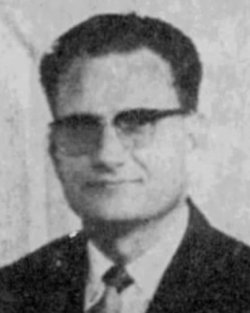
Wilbern Elias Best (1919-2007) was a preacher and writer of Gospel material. He wrote 25 books and pamphlets comprised of sermons he preached to his congregation. These books were distributed in English and Spanish around the world from 1970 to 2018 at no cost via the W.E. Best Book Missionary Trust.

Comments

0 / 2000 characters
Comments are moderated before appearing.

Be the first to comment!

Pristine Grace Research Assistant

Pristine Grace Research Assistant

Ask me about articles, sermons, or theology from our library. I can also help you navigate the site.