Bootstrap
W.E. Best

Unity of the Body

Ephesians 4:1-6
W.E. Best November, 6 1991 Audio
0 Comments
Best on Unity

Sermon Transcript

Auto-generated transcript • May contain errors

100%
I want us to talk about the unity
of the body. Some tonight. And I want to tell
you to begin with that I am rethinking some things and I'll share these
these thoughts with you. I said I'm rethinking some things. And I don't have any confidence
in anyone who is not willing to rethink things. So let us read the first six
verses of Ephesians 4. Can you hear me okay without
turning it up? I therefore the prisoner in the
Lord, And I'm translating it in the
Lord, and if you'll look at the text, you'll see why. Because
we have the preposition in, in the locative case, the locative
place, in the Lord, not of the Lord, but in the Lord, beseech
you that you walk worthily of the calling with which you were
called. walk with all lowliness and meekness
and long-suffering, forbearing one another in love, endeavoring
to keep the unity of the Spirit in the bond of peace." Endeavoring
to keep the unity of the Spirit in the bond of peace. Beginning
with verse four now, through verse six, we have seven features
of unity. Now there are more than seven
in the scriptures but these are the seven most important ones
and of course the number seven in this case would denote completion.
This is all that he needs to give to cover the area that he's
covering. So watch these verses. There is one body. I don't have
any problem with the body here. We'll discuss it a little bit
with you tonight. One spirit. even as you were called in one
hope of your calling. One Lord, one faith, one baptism,
one God and Father of all who is above all and through all
and in you all. Now let's go back and look at
these seven. Then I want to ask you if you feel that you understand
what each one of these means. First of all, one body. Do you
have any problem with that? That's singular. Every time you
find the word soma, which is the Greek word for body, referring
to the body of Christ or the assembly, the assembly that Christ
is continuing to build, it is referred to as His body. It is always singular, never
used in the plural. Soma is never used in the plural.
Now ecclesia is used not only in the singular but also in the
plural. Assemblies and assembly. Does the word body disturb you?
Do you have any questions about it in your mind? I don't have
any problem with the word body. One spirit. I don't have any
problem with the word spirit. even as you were called in one
hope of your calling. One hope. I have no problem with
that. I've never been disturbed about these. Now, notice one
Lord. Now that doesn't bother me. You
see, we have one spirit, one Lord, and one God, the Father.
So you have the divine triunity mentioned in these seven features
of unity. Now, what about faith? Is this the gift of faith which
God gives to the individual? Is it subjective or is it objective?
Are you settled on that? Is there any doubt in your mind
about what faith refers to? Is it the ability to believe
or is it what is believed? See, that's the question. I don't
have any problem with this. Alright, let's go a step further.
Now the next one, folks there is a lot of discussion
and I'm doing some rethinking on this one. Don't mind telling
you. One faith, one baptism. Now as a Baptist I was taught
that this is water baptism. Is it really? Can you truthfully,
honestly say that it's water baptism in the light of the context?
All who believe that 1 Corinthians 12, 13, baptized in the Spirit,
refers to regeneration. They say it refers to regeneration.
Therefore, the proof text on this is 1 Corinthians 12, 13.
Is that what it's talking about? I have problems with that. Well,
what does it mean? So do you feel that you're settled
on it? Are you willing to rethink it, too, with me? Now, according
to my notes that I've had for several years, I've been thinking
along this line, and the more I look at it, the more I have
to think about it in the light of what I know concerning the
Scriptures. And then one God and Father of
all who is above all and through all and in you all. So let's look at this tonight.
Let's do a little rethinking. Hopefully I can get to that place. I brought some pages here, and
I'll follow the notes rather closely, without any apology. I'm doing so many things now,
working with so many different subjects. that I make no apology
when I stand before you to follow my notes closer than usual because
I have a lot of things on my mind when I come to the pulpit
because I'm studying about six different subjects at the same
time. I don't mean I sit down and study them all at the same
moment, but I mean the same week I'm in these different areas.
i would call the subject tonight and it's right along the line
it would go with our subject uh... of the assembly unity of
the body and of course we have the unity of the spirit in verse
three endeavoring to keep the unity of the spirit and then
we have in verse thirteen unity of the faith there's a difference
between the unity of the spirit in the unity of the faith this
is the unity of the body is the name of the title of our subject
Now let's work into the seven features of unity that Paul gives
us. The unity of the body is based
on the unity of the Godhead. In origin and nature, origin
and nature, its unity is of God. It's the unity of the Spirit.
Therefore, it is not dependent on man. This unity is the result
of the work of the Sovereign Spirit. Unity of the Spirit. Unity of the Spirit, of course,
is what Paul is stressing here. Christians strive. Now watch
what I'm going to say. Christians strive for the unity
of the faith. You do not strive for the unity
of the Spirit. Now think that through for just
a moment. You do not strive for the unity
of the Spirit. That's the result of the sovereign
work of God in the hearts of His people. Notice what he says, endeavoring
to keep the unity of the Spirit. You keep what God has already
given you, what God's already wrought in you. And you're to
keep that in the bond of peace. In the bond of peace. Now we'll
be looking at the verb that's used there in a few minutes. So striving for the unity of
the faith, which is the system of truth that God has committed
to us, is impossible without having been united in the Spirit,
or by the Spirit. Verse 3, we cannot strive for
the unity of the faith apart from having, first of all, experienced
the unity of the Spirit as a result of the work of God in our hearts.
So we guard the unity of the Spirit. We guard it. Keeping
here, the verb can be translated guard. So you guard the unity
of the Spirit. And we strive for the unity of
the faith through the gifts given to the body of Christ. Now the Assembly of Christ, the
most important institution in the world, and it is the most
important institution in the world, includes a two-fold unity. Unity of the Spirit, verse 3.
Unity of the Faith, verse 13. Unity of the Spirit is positional.
Positional. It is a result of regeneration.
The early Christians were brought together on the basis of only
one, on the basis of the only thing they had in common. Their
salvation in Jesus Christ, called common salvation. Jude verse
3. So their bond was the common,
and that's the word, it's an adjective, koinos, which means
common or in common. We have something in common,
that's koinos, that's an adjective, Greek adjective. So their bond was the common
work of regeneration by the Holy Spirit. There was no central
government over early assemblies, but only a local form of government
imposed on the believers as they were brought together by the
bond of a common salvation. And folks, that's what I advocate
today. This unity of the spirit is something
to be kept or guarded. Not made, we do not make this
unity, We keep it. We guard it. It is something
that comes from God. Notice the word endeavoring in
verse 3. The first word is endeavoring.
If you look at your Greek text, you have a present active participle
that is actually used in an imperative sense. You can have participles
that are used in an imperative sense, and this one is used in
an imperative sense. It's a present active participle,
but it's used in the imperative sense. So you could say, technically,
it is an imperative participle. And it's translated endeavoring. Now you'll notice in your inner
linear, They have translated it being eager. Notice that?
That's a good translation. So let's look at that. The word
endeavoring of Ephesians 4.3 is not strong enough to explain
the Greek present active participle of spoudazo. The verb form is
spudadzo. And spudadzo means to be earnest
about or spare no effort. Well, that's strong, isn't it?
So I don't like endeavoring. I don't think that's a good translation.
Spare no effort in keeping or guarding the unity of the spirit. So the teaching is that believers
are to spare no effort to keep, then we have a present active
infinitive of terio, and terio means to guard or to keep. Watch
over could also be translated watch over. The unit of the spirit
in the bond of peace. So this unity is brought about
by the Spirit, and we should spare no effort in guarding it
with our very lives. Our very lives. I'd like to give a comparison,
a verse of scripture that is a good comparison to use with
this. It's found in Colossians 3.15. And let the peace of God rule
in your hearts. to the which also ye are called
in one body, and be ye thankful. So this is a command to every
Christian in the local assembly. Paul gave this to the Colossian
saints. So Paul called the church a body,
not bodies, plural, body, singular. The Lord will call attention,
it's always used in the singular, number. because all the members
were viewed by God in eternity as a corporate entity. That's why it's singular. So the Lord viewed the church
or the assembly as a whole. The assembly that he is building
is viewed as a whole. And I'd like to illustrate it
in this manner. He did not say, I pick you and you and you out
in eternity. See? That's succession. You follow
me now? We've been talking about this,
so let's keep these great principles in mind as we study all the scriptures. When we learn a great principle,
let's try to retain that principle and use that principle in the
study of the scriptures. So he did not say, I pick you,
and you, and you, and you, in succession, in this generation,
in that generation, and another generation. See? He didn't do
that. Since God does not think successively,
His viewing the body as a corporate entity was one act in eternity. That solves the whole problem
that some people have. In time, the elect are divinely
summoned by God. I was summoned 52 years ago. Nearly. 52 years ago. I don't know when
you were summoned. But you see what I'm talking
about? You were not summoned the same instant. I doubt that
any one of us here tonight would say that we were all summoned
at the same instant in time. Well, we're not. So in time, the elect are divinely
summoned by God. They're called to be in earnest
about promoting unity and the bond of peace. Now, persons who
are not men of peace are not men of God. If you're not a person of peace,
you do not belong to the Lord. But I'm not through with that.
But this does not mean peace at any price. It does not mean peace at any
price. Temporary appeasement is possible
in compromise. but it would not be expedient
when a principle of God is at stake. We must remember that neither
the center, foundation, nor instrument of unity is earthly. Now think
about that. The center of unity is not earthly. The foundation of unity is not
earthly. The instrument of unity is not
earthly. It's all of God and from God. All three things that I've mentioned.
So they're all from God. It will never be discovered in
either human thought or organization. The foundation of unity is the
personal work of Jesus Christ. The instrument is the Spirit's
work in regeneration. And the center is the heavenlies
in Christ. Such unity can never be created
nor destroyed by man. What God does cannot be destroyed. What man does can be destroyed. But Christians should make every
effort to keep this unity of the Spirit in the
bond of peace, but not at any price. I'll never compromise,
by God's grace, I'll never compromise any divine principle that I know.
For anybody, for any reason. Just that simple. So I learned a long time ago,
if I had gone on to get a doctor's degree, which I could have done,
and I had the discipline to do it, But I soon found out that
if you have a doctor's degree but that doesn't soften the truth
one bit. Not one bit. A person just soon to knock you
in the head is a doctor if you tell the truth or if you're a
peon and tell the truth. Let me illustrate the unity of
comprehensiveness and a unit of singularity. the unity of
comprehensiveness and a unit of singularity. They must be
distinguished. We'll use an illustration from
the United States Army. The army is won because of its
comprehensiveness, whereas a soldier is a unit because
of his singularity. The human body is used to illustrate
the body of Christ in 1 Corinthians chapter 12. The different members
of the body that Paul mentions, he mentions some of them, such
as the foot, hand, eye, etc., demonstrate the singularity of
a unit, unit. However, the body as a whole
illustrates the comprehensiveness of unity. There is a place and a job for
each member in the body that Christ is continuing to build.
Unity is higher than the oneness of a unit. Unity is higher than the oneness
of a unit. It is the unity of an aggregate. This may be illustrated by man
who caught bees, honey bees, one by one, and put them in a
box. He had hundreds of bees, but
he didn't have a hive. You follow me? We can get a lot
of church members and put them in, put the names on the roll,
but that doesn't mean we have a church. That doesn't mean we
have an assembly. See what I'm talking about? The man who took all of those
bees one by one and put them in a box. He had a conglomerate,
but he didn't have a hive. There are more conglomerates
today than there are assemblies. That's just a fact. Most religious institutions are
filled with a conglomerate of people with different ideas,
and they never go beyond a unit to the comprehensiveness of unity. Now folks, this is very foundational. Unity consists in submission
to one single influence. The Holy Spirit of God is our
teacher. One cannot produce unity by ecclesiastical discipline
or some form of expression such as, let us agree to differ. You ever heard that? Let us just
agree to differ. You can put that in quotation
marks. There are no disorders in the comprehensiveness of biblical
truth. When truth compromises with error,
truth suffers because error doesn't have any truth to surrender. Is it a limited message? Is a
limited message more important than a limited fellowship? You're
going to have one or the other. You have to limit your fellowship
or limit your message. Now think about that question
again. Let me ask it again. Is a limited message more important
than a limited fellowship? Let me ask another question.
Is a so-called larger sphere of service more important than
obedience to reveal truth? In order to have a larger sphere
of service, are we to compromise and be disobedient to known truth? Folks, these are things that
I've learned and I just can't surrender. Now, Paul indicates that there
are seven features of unity. Seven features. And the unity
of the faith is progressive sanctification. When you leave the unity of the
Spirit and go on until you get through the 16th verse, and that
covers the first major division of the fourth chapter, you see
he gets right into the subject of sanctification. And then all
that goes with bringing about this progressive sanctification
in the lives of God's people in the assembly. While there is no doubt that
all the members of the Bride of Christ shall believe exactly
alike when we inherit the kingdom, God has given seven basic principles
and gifts for the purpose of making us more alike while we
are here on earth. Now, I'm not worried about when
we inherit the kingdom. We're going to see just exactly
alike there. There will be no differences.
We'll cross every T and dot every I alike. But these seven basic
principles that Paul mentions here that we'll look at briefly
tonight, if we have time to get that far, they're for our edification
here and striving for and looking forward to that perfect unity
in the eternal kingdom. But we're not in the kingdom.
We're in time, and we're wrestling with problems. We're progressively
being sanctified. That means we're changing. So there was an initial change
that just keeps on changing until the final change, which is the
change to perfection. And we're in the changing period,
like a growing child. or a person going to school.
He starts in the kindergarten, then in the first grade, and
on through high school, then college, et cetera, et cetera. Until we come into the unity
of the faith. So the Greek word for come in
Paul's statement, till we all come in the unity of the faith,
verse 13, is an arius active subjunctive of karantano, which
means to arrive at as a goal. To arrive at as a goal, karan
ateo. So this unity is sought in the
following ways. Unity of the faith is brought
about by the elder proclaiming the one faith, our system of
truth, Jude 3. This proclamation brings the
called ones from backgrounds of error, superstition, ignorance,
into a growing understanding of all the principles of unity. Do you ever stop to think about
the different backgrounds that people come from when the Lord
saves them? Here's a person that may have been brought up in Catholicism. He's brought from that. One another
may be from the Lutheran, somebody saved out of Baptist tradition,
some out of Methodist tradition, and some from Hinduism or all
these. Just think about all the different
backgrounds and all the things that people have been subjected
to. Now this is what we have to do. You see, If people are
truly saved that come from these various backgrounds, you're not
going to have any serious problems because they're interested in
the truth. So let's think about this again.
This proclamation of the system of truth that has been committed
to the assembly brings a call out once from various
and sundry backgrounds. into a growing understanding
of all the principles of unity. Unity in the knowledge of the
Son of God centers in Jesus Christ as the object of faith. The Greek
word for knowledge here is the strongest word for knowledge
in the Greek, epignosis. refers to a full knowledge in
the sense of intimate awareness of the character and will of
God, not mere abstract knowledge. And then we have the unity of
mature persons concerning the fullness of Christ, and that's
our goal. As long as the ministry to the
body of Christ continues, She will not be of full age. If I live to be a hundred and
spend eighty years studying the scriptures, I'll still not be
of full age spiritually. You won't either. Now there are
three primary hindrances to progress in the unity of the faith. Three
primary hindrances. I've gone into these, all I'm
going to do is mention them, you'll remember them. One is
to romanticize the past. Secondly, to absolutize the past. And thirdly, many criticize the
study of eschatology, last things, by saying we are to live for
the now. All three of those things are hindrances to the study of
God's word. I am not one who romanticizes
the past. I am not one who absolutizes
the past. I don't believe that as great
a work as many of the fathers of the past have done, they were
not perfect any more than I'm perfect. They made mistakes,
I make mistakes. Members of the local assembly
are commanded to strive for the unity of our minds flowing together
with the mind of Christ. Let this mind be in you, Paul
said, which was also in Christ Jesus. We are commanded to think,
that's a present active imperative of phaneo, as Christ thinks,
and that thinking must be constant. Now let's begin looking at these
seven principles. One body. One body. When you think about these principles, and seven of them are mentioned
by Paul, I believe they all are spiritual.
Now that's what's caused me to do some rethinking. They're all
spiritual. They're in the spiritual realm. And I'll show you what I mean
by that. Let's look at the first, one body. There are two principle
views of the body being taught today. Other views, but two principle
views. Number one, they say it refers
to the local assembly. And they believe they have their
proof text in 1 Corinthians chapter 12, and I'll not turn to it,
I'll just mention it. So they say the same thing about
the body they say about the word assembly. They believe the local
assembly is the only, in other words, there's no such thing
as an invisible or universal assembly. Strictly local. I'm not a strict localist. I've
already given enough proof on it. I'll keep stacking the evidence. We'll stack a little more, stack
it a little higher tonight. Two aspects of the assembly,
I believe, is invisible and visible. Now since this is part of the
description of the unity of the spirit, That's what I'm saying
here. This is part of the description
of the unity of the Spirit. It refers to that which is spiritual. Now watch me closely, folks, and see if I'm a heretic. But
I'll tell you, I've gone far enough in it and I'm fully convinced
it's not heresy. So watch this. The local congregation,
even though it is spiritual to an extent, this local assembly
where you and I worship is spiritual to an extent, will not qualify as the one body. this assembly will not qualify
as the one body. No one assembly will qualify
as the one body. Now watch what I'm saying, please.
Hear me out. You know, you have to do more
than just study. You read, you collect thoughts, you have to
stop, then you have to put them all together. Will this harmonize
with all the scripture from Genesis to Revelation? If it will not
harmonize with every great principle from Genesis to Revelation, you
have to start all over again. Right? Okay. Paul was addressing Christians
who had passed from death into life and who constituted a part
of this spiritual body. Since we are related to Christ,
we are part of His assembly, Christ's assembly, which is His
body. By the one Spirit who is continuing
to form the assembly to the one hope in which our calling has
summoned us. The body refers to the spiritual
body of Jesus Christ. Now the reason this local assembly
can't be, or any other local assembly, if there is one member
of this assembly who's not a Christian, then that knocks it out. That knocks it out completely. I was talking to a strict localist. We were going to a conference
many years ago, and he and I were in the back seat of this car.
We were on the way to Dallas to a Bible conference, long and
about in the early 70s. So he started, he wanted to debate
with me on strict localist concept. And so he kept on. The Bible
just doesn't teach this invisible, universal something that's strictly
spiritual. The only assembly is the local
assembly. I said, let me ask you one question.
Will you affirm that every member of the assembly where you preach
is a Christian? Will you affirm it dogmatically? Will you say without any hesitancy
that every person in that assembly is a Christian? He said, we try
to see to it that they are. I said, that's not my question.
Answer my question. Will you affirm dogmatically
that everyone is a Christian. Do you know for sure? Can you
know for sure? I just kept pushing him. Finally
he had to say, well, no, but we'd try. I said, that's not
the question. I'm not talking about trying. I'm talking about
every member being a Christian and knowing it absolutely. I said, when you say that, well,
no, I couldn't, I couldn't say for sure or dogmatically, then
you're, Your statement is worthless. Worthless. Now watch what we're
going to say. Paul was not speaking of the
institutional body here. I said he was not speaking of
the institutional body. Consisting of both saved and
lost. but of the one assembly which
Jesus Christ is continuing to build. Now listen to this statement.
I wrote this in before I left. The more you think about it,
the bigger it gets. And the more you sit down and
really think, things will come to your mind. You don't have
any problem. The one body will come to the unity of the faith. This body will come to the unity
of the faith. No doubt about it. Now I can't
say that the local body is going to come to the unity of the faith,
the whole body. I can't say that. You can't either. No one can say absolutely that
every member of every local institutional assembly will come to the unity
of the faith. He can't say it. But this body that Paul is talking
about, this principle that is absolutely spiritual, every one
of this body, every person of this body will come to the unity
of the faith that he talks about in verse 13. Let's go a step
further. The unity of the body in the
eternal kingdom, which is to come. is the goal for which the
local assemblies, plural, strive for in time. Now let's look at the One Spirit.
We won't have spent any time to speak of on most of these
tonight, but we'll get to those about which there are questions.
There is one spirit. The Holy Spirit is third in the
natural order in the Godhead, Father, Son, and Holy Spirit.
But you notice here, it's reversed. There's a reason for it being
reversed. The Lord Jesus is subordinate
to the Father, and the Spirit is subordinate to both the Father
and the Son. looking at, explains the reversal, watch this, of
the normal order of the Godhead. And in chapter 2 verse 18, for
through Him, that's Christ, we both have access by or in one
Spirit unto the Father. So the Holy Spirit applies the
redemptive work of Jesus Christ that the Father planned. So the application of the redemptive
work of Jesus Christ in regeneration enables the elect to embrace
Christ as Lord and Savior, and through Him we have access to
God the Father. So we have the unity of the Spirit
in verse 3, and then the Lord is mentioned, referring to the
Lord Jesus Christ, and concluding in verse 6, God and Father, who
is above all, through all, and in you all. It's in reverse because his purpose
is being executed. Executed. Now, the one body and the one spirit correspond
with a one hope in which we were called. God leaves no doubt as
to whether this one hope is the principle of hope, which is subjective,
or whether it is the object of our hope, the object of our hope, which
is objective. So Jesus Christ is the object of this objective
hope. Romans 8, 24 says, we are saved
in the sphere of hope. Hebrews 6, 18, and 19, the hope
set before us, we have as an anchor of the soul, bold, sure,
and steadfast, and which entereth into that within the veil. So
the Christian's faith is unfailingly certain, unfailingly certain. Hope is a pleasing expectation
of something good. We won't go any further than
that. The one hope is found in the eternal covenant and the
unconditional covenants of scripture. Now, next there's one Lord, and
that's, of course, the Lord Jesus Christ, the one Savior, the only
begotten God, John 1 18. Now there's one faith. Rush through
to get to these I want you to think about. One faith. Is this the subjective principle
of faith within the regenerated person or is it the objective
system of truth? It's the objective system of
truth. It's not the ability to believe, it is what is believed. And that which we are to believe
is the system of truth has been committed to us. The context
will help us to determine the answer to these questions. So
the word faith, pistis, is used as a noun in verses five and
13. Cannot be subjective faith, in verse 13, because the preceding
verses teach that Jesus Christ has given gifted men to the body
of Christ for the purpose of equipping the saints for the
work of the ministry and the building up of the body of Christ
until we all arrive at the unity of the faith. Hence the faith
of verses five and 13. We have objective, objective
faith. Now, baptism. Here's the real bone of contention. A person's belief on the teaching
of the one body, Soma, will determine his interpretation of the one
baptism. Make a note of that, don't forget
it, please. This is what I've found in research work through
the years. I said a person's belief on the teaching of the
one body will determine his interpretation of the one spirit, or one baptism,
rather. One baptism. Some say that baptism here refers
to the ordinance of baptism. That's what I was taught. That's
what I believed for a number of years, but I didn't know any
better. We believe a lot of things because
we don't know better. We believe a lot of things because
we have not learned enough. And no one has arrived, so therefore
he continues to learn. However, water is not necessary
to the unity of the body. Is water necessary to the unity
of the body? I'm talking about the assembly
that Christ is building. We're united to that body before
we're baptized. You don't believe in baptismal
regeneration, do you? Now folks, I'm going to let you in on something
here now, so follow me closely. The common view of this word
baptism by a great number of Baptists, Methodists, Dallas
Theological Seminary, Presbyterians, I could go on and on and on.
The common view is what? Among religionists, and many
Christians, is that the one baptism is the baptism in the Spirit,
or by the Spirit, referring to regeneration, they believe. And
their proof text that they use for this verse is 1 Corinthians
12, 13. Now I'm not gonna repeat what
I've given on baptism, I've already done that. Seven times baptized
in the Spirit. So I'll not repeat them, but
let me give you this. All seven features of the unity according
to the context. Now this is a conclusion to which
I've come. So I'm asking you to weigh it. Must be spiritual. All seven features must be spiritual. You say, well, wait a minute,
to say that the word baptism here refers to a person being
baptized by the Spirit into the body of Christ, regeneration,
1 Corinthians 12, 13, that's spiritual. Yes, it's spiritual,
but is that what this verse teaches? Now, have we forgotten all that
we have been teaching and all that we have been subjected to
concerning the seven references to baptism in the Spirit? And
not a one of them refers to regeneration. And Christ is the agent in every
one of them, even 1 Corinthians 12, 13. And once again, now, if you believe
the King James, then I would be wrong. if the King James is
inspired. But folks, I've got the Greek,
and I challenge anybody to look at the Greek. And when he looks at the Greek,
and if he's honest, he can't interpret it that way. It will
not harmonize. So watch these things now. All seven features of the unity
of this passage which we're investigating, and I say according to the context,
must be spiritual. therefore the one baptism is
spiritual but it is not spiritual in the sense of referring to
regeneration now watch this it refers to the
one baptism in the spirit at Pentecost Christ being the agent
when all of those were baptized into the body at Pentecost. Now watch what I'm going to say.
Number one, baptism in the Spirit applies to the visible body of
Christ. Excuse me, to the invisible body
of Christ. Baptism in the Spirit applies
to the invisible body of Christ. Now I want to see the difference.
Baptism in water, if this is water baptism, if it's a rite,
R-I-T-E, or an ordinance, baptism in water applies to the local
body of Christ. Are you with me? Baptism in the Spirit applies
to the invisible body of Christ. Baptism in the water would apply
to the local assembly. You're not baptized into the
invisible body of Christ, the assembly that Christ is building,
His body. You're not baptized into it by
water. You're baptized into the local
assembly. Or you're baptized and then you become a member
of the local assembly. Put it like that. Now listen closely to this. If
the one body is the local assembly, as taught by many, then local
assembly membership is essential to salvation. Write it down,
don't forget it. If the one body is the local
assembly, then local assembly membership is essential to salvation. And folks, there are a lot of
denominations that believe that. So that's why I've had to rethink
studying what they believe about soteriology and the spirit and
so forth. Now, furthermore, since water baptism is a prerequisite
to local assembly membership, that makes water salvation. Our water baptism, I should say,
essential to salvation. Now is it spiritual or not? All
of these features are spiritual, are spiritual. And then leaving this, what do
we have? There is one God and Father of all. I have time to
run through this. Confusion over one spirit, one
Lord Jesus Christ, and one God and Father, above all, through all, and in
all, verses four through six, is unnecessary. You have the
prepositions epi, dia, and en. Now this is an interesting study,
we don't have time to get into those tonight. But notice this,
you have three different prepositions here. You have epi, above all,
dia, through all, and en, in all. Does this signify one God? Plus one God, plus one God? One
times one times one correctly identifies the comprehensive
unity in the Godhead. So there is one God, not three
gods. Although the unity of God means there is one God in opposition
to the claim that there are many gods and many lords, internal
distinction and the one essence are implied. That's what we have. Now do you see why I said what
I did and I'll stop with that. So there is one God, or Godhead,
if you want to use that term, consisting in three persons,
Father, Son, and Holy Spirit. First Corinthians 8.6 is a tremendous
text. But to us there is but one God,
the Father, of whom are all things, and we in him, and one Lord Jesus
Christ, by whom are all things, and we by him. So one who says
he believes in God the Father, but denies either Jesus Christ
or the Holy Spirit is not a Christian, period. You'll not accept that. So that
eliminates Unitarians, Eliminates people who have the
wrong concept of the Godhead. Eliminates those who have the
wrong concept of Jesus Christ and his deity. Et cetera, et
cetera. Now these are biblical principles.
But think with me about what we said about all of these are
spiritual. If they're all spiritual, you're
going to have to eliminate the water. The water. Now, does it refer
to regeneration? Or does it refer to what we have
talked about in the past? Seven references, and only seven,
that speak of his people being baptized in the Spirit. And the
agent is the Son of God himself. And the sphere in which he baptizes
them is the Holy Spirit. It is not by the Spirit that
we're put in the body of Christ, but Jesus Christ baptizes the
whole body into the sphere of the Holy Spirit. Seven spiritual features here
of unity. Now, I'd like for you to do this.
Sunday morning, I want to take the time. So I'd like for you
to study the epilogue between now and Sunday, at least read
it, become acquainted with it. I want you to see what all is
included in the epilogue. Now, we could preach several
messages, but I'm going to deal with just one aspect of it. So
open your Bibles to the 22nd chapter. I want to begin with the 17th
verse tonight because I want to ask you some questions. I
want you to think about it. I'd like for us to read 17 through
19 in closing, and I want to point out some things that I
want you to be thinking about. Verse 17. Verse 17 is used by
all Arminians and all of those who believe that we're to offer
the gospel to everybody, we're to always continually give an
invitation to people to exercise their faith in Jesus Christ.
Let me share something real cute with you. I heard yesterday morning,
the fellow was applying it wrong, but what he said was a good illustration.
It was a wrong application of it. See, when I hear something
that is good and it's applied wrong, I just turn around and
use it the right way. He was talking about being saved
by faith, by one's faith. I was waiting for the barber.
It was this morning. I was waiting for my barber. I always get there
early so I can be the first one. So I was sitting, I get there
about 15 minutes before she gets there, and so I was sitting there
and I was listening to the radio. And this fellow's talking about
being saved by faith. Listen to this. You're gonna laugh.
You're gonna laugh at this. I just cracked up. He was showing
how that people exercise faith and they don't realize it. But
of course, I couldn't use it in the sense he was using it,
any more than I could say, you believe that pew's gonna hold
you up, and if you believe that pew's gonna hold you up, and
you put your faith in that, well, why can't you put that same faith
in Christ? See, that won't work. But here's what he said. I use
it in this sense, the way I'm gonna use it. Our life is a life
of faith. We walk by faith, not by sight.
Now here it is. He said, you go to a doctor whose
name you can't pronounce. who gives you a prescription
you can't read. Oh, this is hilarious, folks. For a drug that you don't know
anything about. And you take it to the pharmacist
and it's filled by a person you don't even know. He said, I call
that faith. I can't apply it the way he applied
it. But we do now, we do, we walk by faith. We walk by faith,
not by sight, so you can use that. But I nearly cracked up. Go to a doctor whose name you
can't pronounce. And I took Juanita to have some
things burned on her face. And sure enough, I couldn't pronounce
that. It starts with C-H-I-N, but man, it's about probably
14 characters in the name. And so I had to ask him, how
do you pronounce that? And he's supposed to be really
good. And that's the reason we went
to him. But anyway, so you go to a doctor whose name you can't
pronounce. He gives you a prescription which
you can't even read. For a prescription which you can't
read. And then for a drug you don't know anything about. And
it's filled by a druggist you don't even know. I thought that was, I thought
that was kind of cute. You got to have a sense of humor in a
lot of things that attract your attention, let it stand.
W.E. Best
About W.E. Best
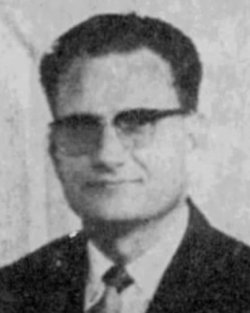
Wilbern Elias Best (1919-2007) was a preacher and writer of Gospel material. He wrote 25 books and pamphlets comprised of sermons he preached to his congregation. These books were distributed in English and Spanish around the world from 1970 to 2018 at no cost via the W.E. Best Book Missionary Trust.

Comments

0 / 2000 characters
Comments are moderated before appearing.

Be the first to comment!

Pristine Grace Research Assistant

Pristine Grace Research Assistant

Ask me about articles, sermons, or theology from our library. I can also help you navigate the site.