Bootstrap
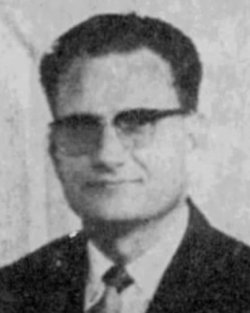
W.E. Best

Three Days in the Wilderness, From Victory to Murmuring

W.E. Best August, 28 1991 Audio
0 Comments
Best's Corner

Sermon Transcript

Auto-generated transcript • May contain errors

100%
Exodus chapter 16. If I were giving a title to our
lesson this evening, I'd call it Three Days in the Wilderness. In other words, after leaving
Egypt and spending only three days in the wilderness, going
from passing through the Red Sea and singing the song of victory,
chapter 15. And then in chapter 16, when
they came to the wilderness of Sin, S-I-N, only three days in
the wilderness, what were the people who just A short, short,
just a few hours, they had been singing the song of victory,
and they went from singing the song of victory to murmuring. You know what murmur is? How
do you spell it? M-U-R, what's the last three
letters? M-U-R. You know what murmur means? Murr murr. So it's two groans, it's double
groans. Now I just, I said that. Murr
murr. Let's read a few verses in the
first part of the 16th chapter. We're going to look only at some
verses in the 16th chapter of Exodus, and then we'll be going
to the eighth chapter for our concluding remarks tonight, eighth
chapter of Deuteronomy. We'll begin, I'd like for us
to begin with verse 20 of chapter 15. And Miriam the prophetess, the
sister of Aaron, took a timbrel in her hand, and all the women went out after
her with timbrels and with dances. And Miriam answered them, seeing
ye to the Lord, for he hath triumphed gloriously, the horse and his
rider hath he thrown into the sea. So Moses brought Israel
from the Red Sea, and they went out into the wilderness of Shur,
and they went three days in the wilderness, and found no water. just three days in the wilderness,
and they found no water. Sure means a point of observation. And when they came to Mara, they
could not drink of the waters of Mara, for they were bitter.
Therefore, the name of it was called Mara. And the people murmured
against Moses, saying, what shall we drink? And he cried unto the
Lord, and the Lord showed him a tree. And when he had cast
into the waters, the waters were made sweet. There he made for
them a statue and an ordinance, and there he proved them, and
said, If thou wilt diligently hearken to the voice of the Lord
thy God, and wilt do that which is right in his sight, and will
give ear to his commandments and keep all his statutes. I
will put none of these diseases upon thee, which I have brought
upon the Egyptians, for I am the Lord that healeth thee. And
they came to Elam, where were 12 wells of water
and three score and 10 palm trees, and they encamped there by the
waters. And they took their journey from
Elam and all the congregation of the children of Israel came
unto the wilderness of Sin, which means thorn or mire. I found two different
explanations of the word sin, two different definitions, which
is between Elam and Sinai. on the 15th day of the second
month after their departing out of the land of Egypt. And the
whole congregation of the children of Israel murmured against Moses
and Aaron in the wilderness. And the children of Israel said
unto them, Would to God we had died by the hand of the Lord
in the land of Egypt. Now this is what they also said
in the 11th chapter of Numbers. after the numbering and after
the tabernacle had been built and they had left in order and
so forth. When we sat by the flesh pots
and when we did eat to the full, for ye have brought us forth
into this wilderness to kill this whole assembly with hunger. Then said the Lord unto Moses,
Behold, I will rain bread from heaven for you, and the people
shall go out and gather a certain rate every day, that I may prove
them whether they will walk in my law or no. And it shall come
to pass that on the sixth day they shall prepare that which
they bring in, and it shall be twice as much as they gather
daily. And Moses and Aaron said unto
all the children of Israel, At even, then ye shall know that
the Lord hath brought you out from the land of Egypt. And in
the morning, then ye shall see the glory of the Lord, for that
he heareth your murmurings against the Lord. And what are we that
ye murmur against us? And Moses said, this shall be,
when the Lord shall give you in the evening flesh to eat,
and in the morning bread to the full, for that the Lord heareth
your murmurings which ye murmur against him. And what are we? Your murmurings are not against
us, but against the Lord. Now, that's far enough to read. The joy and enthusiasm of the
Red Sea triumph soon passed away. It's been difficult for me to
understand how the people who say they are Christians, and
I'm not saying that people do not backslide, but I do not believe
that God's people just continue to backslide and go on and on
and on. Either one of two things will happen. God will kill them
or they'll be turned back. God will chasten them and they
will accept God's chastisement and get back into fellowship
with the Lord. But what a sudden change we see
in Israel in just a period of about three days They went from
singing to murmuring. So the concluding verses of chapter
15 show us Israel in the wilderness. And up to this point, it all
seemed to be fair sailing. Heavy judgments upon Egypt and
triumph for Israel. Feelings, however, exalted are
no resting place for faith, your faith or mine. Unless faith is
grounded in the word of God, it will prove unavailing in the
day when we are really tried. Trials are sent not to distress
us, but to test us. 1 Peter 1 7 I said trials are not sent to
distress us but to test us. The real man is what he is under
trial. There's where you find out all
about people. It comes out. There are three distinct positions
in which we may contemplate Israel. One, Egypt. Two, the wilderness. And three, Canaan. Now these are types for you and
me, as we said Sunday morning. And there are scriptures in the
New Testament that specifically state these things are written
for our instruction. Trials of the wilderness, they occur early in the Christian
life. You see they hadn't left, hadn't
gotten away from the Red Sea very far until their trials began. As soon as a person passes from
death into life, his trials will start real soon, and his trials
are for his own good. God is going to try us. I said he's going to try us.
He's going to try all of us. The joy of conversion soon meets
with great trials and temptations. And I make a distinction between
trials and temptations. God doesn't tempt us, but he
tries us. The devil tempts us. And that's
the big difference. And surely we understand that
difference. We are amazed when we are tried. At number one, the evil that is
in our own hearts. That's number one. I'm talking
about Christians. We're amazed when we're put to
the test at the evil in our own hearts. That's number one. Number
two, we are also amazed at the coldness of many fellow believers. And sometimes the coldness of
others will cause us to get our eyes off the Lord and on people. And I have to be reminded of
that constantly. And the only solution for me,
folks, is to go home and get along with the Lord and the study
of His Word. And I can overcome it in a hurry.
Only by getting my eyes on the Lord and off of people. So we, when we're put to the
test, We recognize that there are evils that we have not even
discovered, but they're brought to life. There are things that
have to be crucified within us, and that crucifixion is something
that is constantly going on. But we also see the coldness,
coldness in fellow believers. And last but not least, we recognize
the cruelty of the people in the world. Evil in our own hearts, coldness
among the people of God, and lastly, the cruelty that's in
the world. God does not pledge himself to
alter our circumstances. are to remove our burdens in
answer to our prayers. Now this is a lesson we have
to learn. I said he doesn't alter our circumstances. He doesn't remove the burdens
that we may be going through just because we pray. Now watch
this. Our greatest blessings often
come through the very things that seem to be the most grievous
to us. You understand that? You don't
question that because you know it is biblically true. Some of
the greatest spiritual heights I have experienced in my lifetime
as a Christian and as a minister of the Lord, have come when I
was going through some of the most severe trials. Maybe worse than I had ever gone
through before. You know what they do? They drive
us to the Lord. And it's there that we get the
spiritual strength. If God were always leveling down our circumstances to our
spiritual state, we would soon waste away with
spiritual dry rot. I think that went through for
a moment. He doesn't level down our circumstances to our spiritual
level. He doesn't do that. It's through His strength in
these trials that we can rise above the circumstances by having
our eyes on the Lord and knowing what His will for us is. I suppose I'm subjected to this
more than you would be because my responsibilities are heavier
due to my responsibility as a minister of God. Christ's way is to make us equal
to our circumstances. So if we are being hindered by
the circumstance, we must gain the strength whereby we can meet the circumstance, whatever
it is, and overcome the circumstance. So Christ, His way is to make
us equal to our circumstances rather than reduce our circumstances
to what we short-sightedly think they ought to be. Obedience to the Lord leads to
remedies from things that would hurt us. That's why we have to be obedient.
Now, if we're disobedient, there are a lot of things that will
really hurt us. However, if we're obedient to
the Lord, they will not hurt us. We can overcome them. So God can make grief a grace
to the Christian who is obedient. I said He can make grief become
a grace. if we're obedient to him. Difficulty is more a sign of
a Christian being right than it is the Christian being wrong. That doesn't mean that the disobedient
Christian is not going to have problems. And don't let this shock you,
but the obedient Christian is going to have more problems and
more that are severe than the disobedient Christian. Did you
know that? He gets it from every angle.
He gets it from the world. He gets it from backslidden Christians.
He gets it from those who are out of the will of God. He gets
it from those who are self-possessed. difficulties are to humble us,
to prove us, number one, to humble us. Secondly, to prove us in
order that we might really know what is in our hearts that we
have not known before. Now we see the Israelites murmuring,
murmuring, That's a double groan. So to murmur is our tendency. That's our tendency, is to murmur,
complain. But do we mean to let the tendencies
of our old nature rule us? Are we going to let the old sin
principle in us rule us? We have the grace of God and
we can overcome Him. We can overcome that tendency.
Most of us, when we are in a murmuring vein, are not honest enough to
murmur directly against God. You notice what the Israelites
did? They murmured against Moses. And they had to be told that
in actuality they were murmuring against God because Moses was
God's leader. And most Christians are not honest
enough when they start murmuring to say I'm murmuring against
God. They're either murmuring against circumstances, they're
murmuring against the leader, they're murmuring against this
thing and that thing or this person or that person, when in
actuality they're murmuring against God. To murmur against the second
causes makes about as much sense as the conduct of a dog that
bites the stick with which it has been whipped. So God uses circumstances sometimes
to whip us. That's a form of chastening. So let us not be as foolish as
the dog that bites the switch or the stick with
which it has been whipped. I want you to turn now to Deuteronomy
chapter 8. This is a short chapter, but
it has some tremendous things in it. And this is a good way to close
this because we are to remember what the Lord has done for us.
You see, this is what happened to Israel. In three days, they
had forgotten about the taskmasters of Egypt. Just in a few hours, they had
forgotten all about their taskmasters in Egypt. When they should have been remembering, We'll begin with verse one of
chapter eight. I'm not going to read all the
chapter, but I do want to read several verses in the chapter,
and then I'd like to develop some things concerning memory. All the commandments which I
command thee this day shall ye observe to do that ye may live
and multiply and go in and possess the land which the Lord swear
unto your fathers. Verse two, and thou shalt remember,
or you shall remember, all the way which the Lord thy God led
thee these forty years in the wilderness to humble thee, to
prove thee, to know what is in thine heart. See, I had this
verse in mind when I said what I did a few moments ago. Whether
thou wouldest keep his commandments or no, and he humbled thee, and
suffered thee to hunger, and fed thee with manna, which thou
knewest not, neither did thy fathers know, that he might make
thee know that man doth not live by bread only, but by every word
that proceedeth out of the mouth of the Lord doth man live. Verse
five, number one, you shall remember. Number two, in verse five, you
shall also consider." Remember and consider. Consider in your
heart that as a man chasteneth his son, so the Lord thy God
chasteneth thee. Therefore thou shalt keep the
commandments of the Lord thy God to walk in his ways and to
fear him. Drop down to verse 11. Beware
that thou forget not the Lord thy God, in not keeping his commandments
and his judgments and his statutes which I command thee this day,
lest when thou hast eaten and art full, and hast built goodly
houses, and dwelt therein. And when thy herds and thy flocks
multiply, and thy silver and thy gold is multiplied, and that
thou hast is multiplied, thine heart be lifted up, and thou
forget the Lord thy God which brought thee forth out of the
land of Egypt from the house of bondage who led thee through
that great and terrible wilderness wherein were fiery serpents and
scorpions and drought where there was no water who brought thee
forth water out of the rock of flint who fed thee in the wilderness
with manna which thy fathers knew not, that he might humble
thee, and that he might prove thee, to do thee good at thy
latter end. Folks, that's what I'm concerned
about. Not only the past, remember the
past, but be concerned about the future, consider our opportunities,
but oh, the latter end. That's the important thing, the
latter end. Now let's look at these three things in conclusion. First of all, verse two, you
shall remember. We must not confound this exercise
with looking back at our ways, our ways, our service, or ourselves. You see, self-retrospection and
self-occupation are a death blow to fellowship with God and with
one another. Self-retrospection and self-occupation. Anything that tends to bring
self before the mind of a believer must be judged immediately and
refused. Self-pity. On and on we could
go. Now, how do you explain this
in the light of Paul's statement in Philippians 3 when he said,
forgetting the things which are behind and pressing on to the
prize of the high calling of God in Christ Jesus. Do you see
any problem between remembering and forgetting? Think it through for a moment.
Remembering and forgetting. Here the Israelites were told
to remember. To remember. Paul said forget. Now let us consider what we are
to remember and what we are to forget. What Paul was saying
was entirely different from what the Israelites were to remember.
The Israelites were to remember what God had done for them. And folks, we must not forget
it. We must not forget it. I suppose that's why I was so
impressed when I attended that Indian church out in Arizona
several years ago. And they sang this song when
they observed the Lord's Supper. And the chorus, Lest I forget,
what, Gethsemane. Lest I forget thine agony. Lest I forget thy love for me. I thought it was so timely that
they used this song in the observance of the Lord's Supper. It made
an impression on me. Because I had never heard that song used
at the observance of the Lord's Supper. And the Indian preacher
was an elderly man. I don't know anything about his
theology. It was a little Baptist church. I don't know... I don't think it was a Southern
Baptist. I don't know if it was independent
or whatever. There were not very many people there, but it was
a very impressive service. I was moved by it. I was moved
by the sincerity of the elderly man. Now there's a difference In remembering,
what are we to remember? The Israelites were to remember
what they had been led out of in Egypt. What they had been
redeemed from in Egypt. How the Lord had led them through
the wilderness. How he had provided for them. So we are to remember the things
that God has done for us. Now when Paul said, forgetting
the things which are behind, he was not talking about the
things that God had done for him, but he was talking about
forgetting the things which he had done as a religious Pharisee. Boy, that puts us where we belong. So we're to forget about ourselves. We're to forget about what we
have done. Paul said, I want to forget.
Forget the things that I did. I did. I was a Pharisee of the
Pharisees. I was a Hebrew of the Hebrews.
I knew the law. I observed the law and all these
things. So we must forget those things and remember what God
has done for us. what He is doing for us. So that's
why we begin with this admonition. You shall remember all the way
which the Lord thy God led thee these 40 years in the wilderness
to humble you, to prove you, to know what is in your heart. We have to have the same experiences,
folks. So anything that tends to bring
self before the mind must be judged and refused. It must be
forgotten. The things that Paul forgot,
of course, were the things that he had felt like he had done
for God. Then in verse three, He humbled
you, suffered you to hunger. So this verse drives special
interest and importance. Derives special interest and
importance. Since it was the first of Christ's
quotations, In Matthew chapter 4, you don't live by bread alone,
but by every word that proceeds out of the mouth of God. God's disciplinary ways are seen
in the wilderness. So God's disciplinary ways belong
to the wilderness. but they have the land always
in view, the land of Canaan. God's discipline of you and of
me in our wilderness sojourn should cause us to keep our eyes
focused on Canaan, spiritually speaking. And Canaan is not heaven,
folks. Canaan is not heaven. You don't
fight and overcome 31 kings in heaven. It is a type, really,
of reaching that spiritual plateau that is out there for us if we
possess our spiritual possessions that God has in store for us. And that takes work. That takes
study. That takes effort. The whole of the 40 years, Moses was saying, has been divine
leading, chastening, and educating. So his people must be brought
to the place where they hunger and thirst for righteousness. And that's what I'm trying to
do. I'm trying to lead you as the under-shepherd of Christ
to the place where you're hungering and thirsting more for righteousness. Do you know what kind of righteousness
that is? I've just developed ten points. We won't give them tonight. That's
in the series in Romans. Ten steps. chronologically in
order on the righteousness of God. There is a lot of misunderstanding
about righteousness. What is the righteousness for
which we hunger? I don't hunger for that which has already been
imputed to me. I don't hunger for that. That's
mine. I don't hunger for that which
has been imparted in me. What am I hungering for? I'm
hungering for righteousness. A righteousness which alone will
satisfy the righteousness within me. You know what I'm talking
about? So we as Christians are always
hungering and thirsting for a righteousness. What kind of righteousness is
it? a righteousness which alone will satisfy the righteousness
that has been imputed and imparted to me. I won't say any more,
but since I used that term, I'll drop that thought. You shall
remember, it's verse two, no Christian is to forget a single
scene or circumstance in his whole earthly career or sojourn
that is related to divine sufficiency made available to him through
God's mercy and grace. And then he mentions the things
In verse two, humble us, prove us that we might know. That we might know. What do you
think it means to prove us, to prove you? Christians know so little of
the depths of evil and the folly of their own hearts. And do you
know why most, I'm talking about Christians folks, I'm not talking
about unregenerate people. Most Christians know so little
about the folly of their own hearts and the reason is they
know so little of the word of God. I find the more I study the scriptures,
the more I understand myself. And the more I understand myself
is because of the greater knowledge that I gain in knowing about
God. So the more I know about who
He is, the more I know about who I am in the light of who
He is. Not who you are, but who He is
and who I am in the light of who He is. Very simply stated. So thou should remember. Now
we must not only remember, watch this, but we are to forget. We need a good memory and we
need to have the ability to forget. In other words, we need the ability
to remember and we need the ability to forget. Both are absolutely necessary. Memory ranks with the most important
faculties with which God has endowed us. Now you can't remember what you
haven't studied. And the best illustration I know
of is the computer today. You can't bring anything up that
hasn't already been put there. And you can't remember what isn't
there. It's just that simple. Now we
can all relate with that. Many times we say, oh, I wish
we knew more about the subject. I'd be in a better position to
give a better witness, a clearer witness. And folks, we need that. I hear the most foolish things
today. We have a young A couple just real close to us
at the end of our street, and we only one vacant lot between
us and the dead end street. And if we're driving down our
street, we could just go right on in their driveway. They're both from Oklahoma. I
would say she is probably 22, 23. She just finished college
this last May. And she's a member of the First
Baptist Church in Paraland. Has a tremendous personality.
She had to run out the other day holding her stomach. She
said, see, I'm pregnant. And she was just so happy about
it, she wanted everybody to know about it. But I'm not through
yet. I heard something I've never heard. The day before yesterday,
she came out and was talking to Waddy and me as we walked
by late in the evening. She said, you know what? I said,
what? I'm giving my husband a baby
shower. Have you ever heard of that one? I've never heard of that one
before. I wonder what kind of things they're going to think
up next to get gifts. I guess she won't equate us with
that. And of course, she's buttering us up for it. Of course, she
came down and brought us a little cake yesterday afternoon. She
had begged. I'm giving my husband a baby
shower. I guess they'll start giving
all the children a baby shower, each one of the kids. Now she's a religionist. We gave
her a couple, wanted to give her a couple of books. A while
ago we left the house. We took her a little pan that
she brought the little cake down to us in. And so she handed her
a couple of books. But folks, we need to know the
scriptures to be able to witness to people. Whether they hear
or whether they forbear. You can make an effort. That
doesn't mean that they're willing to listen. But you can surely
bring up the biblical principles, or one or two of them, chief
ones, and seek to discuss them. And they'll soon let you know
if they want to listen or not. You can tell if they're listening. But you can't bring something
up if it isn't already there. Now, I like an illustration that
I came across on this. How do you illustrate what memory
really is? I'm quoting one of the old writers
now. That was before the days of a
computer. And here's what he said. Memory, he acknowledged that it ranks
with the most important faculties with which God has endowed his
people. Here's what he said. Memory is a gallery lined with
the pictures of past events. In other words, like an art gallery.
Well, this was all right for his day. It's all right for today. It's a good illustration. You
walk in an art gallery and here's some beautiful paintings. So
you look at all of them. And he went on to say, Memory
is a gallery line with the pictures of past events and with scenes
on which we gaze. Well, that's a pretty good illustration. Now, if knowledge is important,
and it is, memory is equally important. Both are important. But you can't remember what you
haven't learned. Knowledge is nothing unless applied. And it cannot be applied if it cannot
be remembered. We should give earnest heed to
the things we have heard, the scripture says, in Hebrews 2
verse 1, lest at any time we let them slip. That's a good warning to us.
Give earnest heed to the things which we have heard. Folks, we have to be good listeners. A good listener learns. So we have to give earnest heed
to the things which we hear, lest at any time we let them
slip. Memory, like all other faculties,
may either help or hinder. Memory is indestructible. It will either bless in the world
to come or it will aggravate misery. I'll give these three things
in closing. Believers are to remember first
of all the agent of their discipline. The Lord thy God. That's in the text. That's in
our eighth chapter that we're looking at. Think of the multitude
of influences to which Israel was exposed. Israel was exposed
to many influences and so are we today. Secondly, Believers are to remember the
sphere of their discipline in the wilderness. We're in the
wilderness. This is a time of testing, proving. So the place in which the discipline
was conducted was not without its bearing on the result. God
has a purpose in giving us a taste of the wilderness a taste of the wilderness life.
Don't forget, back in that 15th chapter of Exodus, don't forget
Elam, don't forget the 12 wells of water, and don't forget the
palm trees. So folks, even though we are
in the wilderness, there is an oasis for you and for me in our
wilderness experience. There is the water and there is the rest. There
is Elam and thank God for Elam. Thirdly, believers are to remember
the term of our discipleship. With Israel, it was 40 years. I mean their discipline, the
term of their discipline, for 40 years. And lastly, believers are to remember the
purpose of the discipline, to humble, to prove, and to know
you. Now God knows us, but we're to know ourselves. And then in verse 5, Thou shalt
consider. What do we consider? Consider the afflictions of God's
people, however complicated, however prolonged, proceed from
the purest motive of the Heavenly Father. Let us never overlook
the motive of discipline. It's for our good. That's what
the 12th chapter of Hebrews teaches. And in conclusion, look at verse
11. Beware that thou forget not the Lord thy God, so beware that you do not forget
the Lord. Forgetfulness springs from unbelief and is a sign of contempt. It is the greatest mark of ingratitude. Ingratitude. So when we forget to thank God
for His blessings, it's ingratitude. Do you know of a sin any greater
in the life of the Christian than ingratitude? Ungrateful people kind of irritate
me. Just in ordinary life, don't
they, you? Ungrateful people? There are a lot of ungrateful
people. But what about Christians? When we forget the Lord, we are
ungrateful. It's ingratitude. Let me urge you to read the first
chapter of Romans about two or three times before Sunday morning. We won't do anything
but introduce it Sunday, give you some outlines of the book
and break it down some, but we're going to get into one of
the most timeless subjects. As far as I'm personally concerned,
The first chapter of Romans is more timely than even our study
of eschatology in these last days. And I'll prove it to you
in the first four or five services. I'll prove it. I'll demonstrate
it. Let us stand.
W.E. Best
About W.E. Best
Wilbern Elias Best (1919-2007) was a preacher and writer of Gospel material. He wrote 25 books and pamphlets comprised of sermons he preached to his congregation. These books were distributed in English and Spanish around the world from 1970 to 2018 at no cost via the W.E. Best Book Missionary Trust.

Comments

0 / 2000 characters
Comments are moderated before appearing.

Be the first to comment!

Pristine Grace Research Assistant

Pristine Grace Research Assistant

Ask me about articles, sermons, or theology from our library. I can also help you navigate the site.