Bootstrap
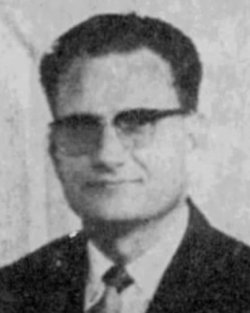
W.E. Best

Man of God

1 Timothy 6:11-14; 1 Timothy 6:19-21
W.E. Best August, 11 1991 Audio
0 Comments
Best's Corner

Sermon Transcript

Auto-generated transcript • May contain errors

100%
Bibles, first of all, to the
sixth chapter of 1st Timothy. What have we been studying for
a number of weeks? It is the subject of apostasy. We're coming to the close of
Paul's first letter to Timothy. I'm going to read from the sixth
chapter and not the fifth. However, I will tell you what
we do find in these last two chapters. Paul told Timothy how that he should look upon
the situation and how he should relate with the assembly of which
he was pastor in Ephesus. That's what we have in these
last two chapters. There are many things for us to investigate,
but since we're studying apostasy, we're not going to make a verse
by verse of these last two chapters any more than we have of all
the verses that we have studied in the first four chapters. That's
not our objective at this time but to
look at those references that are related to the subject of
apostasy and in doing that we see that apostasy is found on
every page of Paul's first letter in some way or other. We're going to look at his statement to Timothy in
verse 11. And then we're going to, well,
we'll just read beginning with verse 11 and read forward for
a few verses. And then I want to take another
statement from the last verses of the sixth chapter. Our subject
is entitled, Man of God. Man of God. That distinctive term is used
only twice in the New Testament and both places are here in 1st
and 2nd Timothy. Paul's two letters to Timothy.
And he refers to him, oh man of God. And notice the
word oh, we'll discuss it later. O man of God. Let's read beginning
with verse 11. He is now challenging Timothy,
his child in the ministry, to be faithful in a faithless age. And what Paul said to Timothy,
the word of God is saying to you and to me this morning. But you, notice now, but you,
and you'll understand this better in the light of what has taken
place in the first 10 verses, which we will not read, but we
will read them during the course of our study and see how they
tie in. But I'm giving the basis and the title of our subject
that we will be developing this morning. But you, oh man of God,
flee these things. and pursue righteousness, godliness,
faithfulness, love, perseverance, meekness. Fight the good fight of faith. So fight the
good struggle of the faith. Take hold of that which is real
life in which you were called and
confessed a good confession before many witnesses. I am charging
you in the presence of God the one giving life to all things,
and Jesus Christ, the one who witnessed before Pontius Pilate
the good confession, that you keep the commandments spotless,
above reproach, unto the appearing of our Lord Jesus Christ. Then notice the 19th verse. storing
up for themselves a good foundation
for the coming age in order that they may take hold of life indeed
or of that which is real life. Now notice again Timothy, there
you have that O again, that's just Omega in the Greek, the
one character Omega. Guard the deposit, avoiding profane
and fruitless discussions and oppositions of the falsely named
knowledge, your King James says, science falsely so called. but
I'm translating it, in oppositions of the falsely named knowledge
which some professing have missed the mark concerning the faith. Grace with you. Our grace be with you. Now folks, that's quite a That's
quite a passage of scripture, isn't it? Now, when we come to the conclusion
of our study of chapter 5, then we'll begin chapter 2. Let me
ask you a question. I want to see if you remember
some of the things that we have discussed with you in recent
weeks. In 1 Timothy, Some are departing. Some are doing this. Some are
doing that. We go from the some to what in
the second letter that Paul wrote to Timothy? All. All. All. Second Timothy is Paul's valedictory
address. In other words, it is his goodbye.
2 Timothy includes the last words
of Timothy. Hopefully when we have finished
this and a few other things, we'll be ready to do, and I'm
hopeful that you will be ready, but I'll soon be able to tell
if you are or not. Since I made an announcement
just about a week ago, I think it was last Sunday, about a study
of Romans over a two-week period, we've had three persons who have
been very eager and they have come to me not just once but
two or three times saying something. That's a thrill. I'm not going to put pressure
on you because if I put pressure on you, it won't be worth 10
cents. But after what I said at the
beginning this morning reading these articles from the Houston
paper, do you have a desire to explore
one of the greatest books in the Bible from the viewpoint
of doctrinal content? If so, I'm just making a statement. I do not want one person to feel
like he is being pushed by the pastor in doing something that
he doesn't really want to do. I'm honest in this, folks. This
is a late day in human history. late day. If I can spend a few weeks preparing
and trying to condense the material of Romans into about 14 or 15
lectures that may last anywhere from an hour to two hours each
time, And if I can go through the book
of Romans and parse every word and translate it, besides doing
all the other things, correlating the material and trying to get
it together over a 50-year period of study of the scriptures, would I be asking too much of
you for you to start reading Romans? And you read Romans enough
times, however many times it takes for you to do it, Until
you can sit down Without looking at your Bible
and begin thinking with Romans 1 1 and Go through every chapter
of Romans 16 of them and Have a mental panoramic view
of all the major content of and subjects of the Book of Romans. You say that's too much. Well,
then it would be too much for me to spend the time to try to
give to you these lectures. But I'm going to do it for my
own benefit, whether I do it for your benefit or not. Folks,
I'm laying it on the line to you. I'm gonna see how enthusiastic
you are for Bible study. You may say, well I already know.
You don't even know really which way you're going hardly. Or no
one else unless he really studies and applies himself. So don't
tell me you've arrived and you don't need it. I have a message I'd like to
give this morning but I don't really think this congregation
is ready for it yet. It's going to be my introduction
to the study of Romans. But I will raise a question.
Are you hungering and thirsting for righteousness? You say you
are. We'll see. We'll see. I heard a good illustration last
week. I was talking with a preacher. He has a very good friend in
Arkansas who teaches. He taught in the school where
he attended. And he had a class which he called
his, now this is an East Texas and Arkansas expression, Hickernut
class. He called the class his Hickernut
class, not Hickery nut class, but his Hickernut class. Can anybody relate with that
expression? I know you've heard it if you
were born in Louisiana or Mississippi or East Texas or Arkansas or
someplace, maybe Oklahoma. So he had 47 preachers in his
class. And he started out and he said,
this is my hickernut class. And he said, we're going to bring
up subjects and we're going to do things that you're not going
to like. But he said, I won't take it now. If you don't like
it, you can leave. And he said, this man did more
for me than any professor that I had. He dealt with subjects that most
teachers would just pass over. And he would raise questions
that would get all those young preachers. And you know, every
young preacher and every young Christian thinks he already knows
it. I've never seen very many young
ones who didn't think that after a few weeks, boy, I've mastered
it. And so they start challenging everybody. So he would ask them
questions that would get them started. And then he'd say, that
isn't so. And then they'd want to debate
with him. He said, not debate it. You're going to listen to
me. I'm teaching. And they'd get smart, he could
tell them where to go. Now folks, you say, well that isn't the
way Christians are to act. I think the professor was 100%
correct. And if I had my life to live
over, I assure you this morning with what little knowledge I've
gained over the last several years, I'd say the last 10 years,
I would do things a lot different from the way I have done them
in the past. Now I want to ask a question.
Let's get back to our subject. Oh, man of God. Think through that statement
for a moment. Give it some real consideration. What does that
mean? Oh, man of God. What is Paul doing? He is exhorting
Timothy. to be faithful in a faithless
age. And if that was true then, nearly
2,000 years later, it is far worse today than it was 2,000
years ago. Apostasy has not only increased
in extent It has increased in intensity. I said in intensity. So I'm appealing to you as Paul
did to Timothy. And I have sought to apply what
Paul said to Timothy to myself before I seek to exhort you. We are to be faithful in a faithless
age. And if you do not believe by
this time that we're living in a faithless age, then folks,
you don't even know the first, you don't know the ABCs of Christian
principles. Now that's a fact. whether you're
willing to accept it or not. It's a fact. But as long as you think you
know something that you do not know, you're not in a teachable
position. Unless all of us have come to
the place that we do not know what we ought to know and what
we should know, folks, we're not in a teachable position. And since we are in the very
closing days of this dispensation, and I'm going to use a biblical
example, I'm going to ask you a question now, and I'm going
to test you without raising your hand, I'm just testing you. Do
you think that the Apostle Paul, who was a Hebrew of the Hebrews,
one who had received his training at the feet of Gamaliel, One
of the better informed Jews of his day, he knew the law, he
knew the Old Testament before he was saved by God's grace. Did he know of somebody in the
Old Testament called by that distinctive title, Man of God? Did he have that person in mind
when he said to Timothy, Oh, Timothy. Oh, man of God. These are the
two texts. Did you know that he did have?
He doesn't tell about it. He doesn't quote it. But knowing
the Old Testament as he knew the Old Testament, There is no doubt in my mind
that he did not know about a person, a man of God, a servant of the
Lord, called by that distinctive name, man of God, in the Old
Testament. You know where it's found? 13th chapter of 1 Kings. Will you open your Bibles to
that portion of scripture? That's where we're going to begin
this morning. You say, well, you're not teaching
Timothy. Well, just hold on a while. We might get to Timothy. But
there is a reason for Paul doing what he did. And there is a reason for me
doing what I'm doing this morning. We're going to read several verses. Are you familiar with Jeroboam?
Do you remember about the religion that Jeroboam set up? His false religion. We're not
going to go back to the 12th chapter of 1 Kings and discuss
that. But let's begin with the 13th chapter, 1 Kings verse one. And behold, there came a man
of God. So we have that distinctive title
in the Old Testament and we have it used twice in the New Testament.
Now before we read any further, let's look at this old man of
God. Omega. Used before a name. indirect address. Oh man of God, that's an evocative
case, the case of address. Oh Timothy, Timothy is in the
evocative case, the case of address. So we have an interjection. Watch
this. An exclamatory word which expresses,
watch this, emotion. Is it wrong for the man of God
to have emotion? Is it wrong? If you don't have
some emotion about you, then you may be dead spiritually.
In fact, in most instances, I think the person is dead. You see, a lot of people can
be religiously dead. So Paul spoke with emotion to Timothy. I wish the preacher would be
sweet. Tell me how good I am. And just think positively. I
saw where Robert Shuler was in town this last week and spoke
to a bunch of real estate people on the power of positive thinking. That false prophet. So Paul says, Oh, Timothy, emotion,
emotion. Now, having said that, let's
read a little bit. the 13th chapter of 1st Kings. Behold, there came a man of God
out of Judah, and there were more good kings in Judah. In fact, there weren't any good
kings in Israel. Eight good kings in Judah, none
in Israel. By the word of the Lord to Bethel,
and Jeroboam stood by the altar to burn incense. Jeroboam had
already set up his own religion, just like people are doing today.
False religionists, false prophets, false teachers, they're setting
up their own religion. Verse two, and he cried, the
man of God cried against the altar in the Word of the Lord. In other words, he used the Word
of God to cry against the false religion of Jeroboam. And said,
O altar, O altar, thus saith the Lord, behold, a child shall
be born unto the house of David, Josiah by name. And by the way,
Josiah means he will be sustained by Jehovah. That's the meaning
of his name. And upon thee shall he offer
the priest of the high places that burn incense upon thee and
men's bones shall be burned upon thee." Now this prophecy was
fulfilled some 300 years later than the prediction was given.
Verse 3, So the man of God in verse one cried in verse two,
verse three, and he gave a sign the same day saying, this is
the sign which the Lord has spoken. Behold, the altar shall be rent
and the ashes that are upon it shall be poured out. And it came
to pass when King Jeroboam heard the saying of the man of God,
which had cried against the altar in Bethel, that he put forth
his hand from the altar, saying, Lay hold upon it. And his hand,
which he put forth against him, dried up, so that he could not
pull it in again to him. The altar also was rent, and
the ashes poured out from the altar, according to the sign
which the man of God had given by the word of the Lord. And
the king answered and said unto the man of God, Entreat now the
face of the Lord thy God, and pray for me. Watch this. That my hand may
be restored. What was he concerned about?
His hand being restored. That's just like a person, he
can just go along without the Lord, not even think about the
Lord, and he gets sick. Oh Lord, heal me! What's he thinking about?
His spiritual condition? No! His physical condition. And that's why you have all these
false prophets and teachers today appealing to people concerning
their physical ailments. But I want you to see the power
of the man of God, in this instance. And God did this for a reason.
So the king said, pray for me that my hand may be restored.
And the man of God besought the Lord, and the king's hand was
restored him again, and became as it was before. You know, when
God does something, it's done right. In these so-called healing
campaigns, they go in on a stretcher and they go out limping. And
in a few days they're right back where they were. That means there's
nothing to it. Now notice verse 7. And the king
said unto him, unto the man of God, Come home with me. Oh, I want you to know now, what's
the separation, folks? You and I are not to be isolated. Separation is not isolation.
It's not becoming a monk. It's insulation. Being insulated
against that which is false. Come home with me. Now watch
the separation. And refresh thyself and I'll
give you a reward. And that appeals to a lot of so-called preachers.
Reward. Gimme, gimme, gimme, gimme, gimme.
Verse 8. And the man of God said unto
the king, if thou wilt give me half thine house, I will not
go. I'll not go in with you, neither
will I eat bread nor drink water in this place. Folks, he started
out great, so I want you to see how he started out. And you may
not want to see the conclusion, and the conclusion can be you
and can be me. Are you ready to listen? Do you believe this is written
for our admonition? Do you believe this is given
for our instruction? For so was it charged me by the
word of the Lord, saying, eat no bread, nor drink water, nor
turn again by the same way that thou camest. Verse 10, so he went another
way and returned not by the way that he came to Bethel. Now watch
beginning with verse 11. Let's get the picture. Now there
dwelt an old prophet in Bethel. Here is the man of God who does
not compromise at this particular time. He obeyed the word of the
Lord, but he comes face to face in a few minutes with an old
prophet. Watch this. Now what kind of
person was this old prophet? We'll see. An old prophet in Bethel, which
means the house of God. And his sons came and told him
all the works that the man of God had done that day in Bethel,
the words which he had spoken unto the king, them they told
also to their father. And their father said unto them,
what way went he, or which way did he go? to put it in our modern-day
English. For his sons had seen what way
the man of God went, or they saw which way he went, which came from Judah. And he
said unto his sons, Saddle me the ass. So they saddled him
the ass, and he rode their own, and went after the man of God. Now he had heard about the prophecy
of this man of God. He had heard about what he had
done. He wanted to meet him. And went after the man of God
and found him sitting under an oak. And he said unto him, Art
thou the man of God that camest from Judah? Are you the one who
came from Judah? And he said, I am. Then he said unto him, Come home
with me. Watch this. Come home with me. See, Jeroboam had made the same
suggestion and he refused. Come home with me. So the old
prophet says, Come home with me and eat bread. And he said, I may not return
with thee, nor go in with thee, neither will I eat bread, nor
drink water with thee in this place. Notice where it is, in
this place. Don't forget those three words,
in this place. For it was said to me by the
word of the Lord, thou shalt eat no bread, nor drink water
there, nor turn again to go by the way that thou camest. He said unto him, I'm a prophet
also, as you are. I'm a prophet like you. And an angel spoke to me. Now
watch this. And an angel spoke to me. Now
before I read any further, don't you read any further, hold a
minute. Do you think he told the truth? You think this old
prophet told the truth? By the word of the Lord saying,
bring him back with you into your house. Did the angel really
say that? Folks, I've been trying for years
as I've been teaching to you, don't you believe anything I
say unless what I say can be backed up with the word of God. And I'm not going to believe
anything you say, unless you can back it up with the Word
of God. But the old prophet said, you
bring it back with you. He said, I was told that by an
angel, you bring it back with you. That he may eat bread and
drink water, but he lied to him. Notice what it says, he lied
to him. Do you believe an old prophet can lie? We have a lot
of liars. So he went back with him. Uh-oh. Uh-oh. So he went back with him. What did he do? He started out
well. He started out as an obedient
man of God. But notice how subtle the devil
is. The devil couldn't use Jeroboam
the king and accomplish his purpose. So he got into the old prophet
and he got the old prophet to go after him. You see, the Lord
is going to test you, folks. He's going to test me. He's going
to see if we will be faithful in the midst of faithlessness. Israel was at a very low ebb. Apostasy was rampant at this
time. We're talking about apostasy.
It was rampant. He went back with him. What did
he do? He ate and he drank. Verse 10. Came to pass as they
sat at the table, and the word of the Lord came to the prophet
that brought him back. And he cried unto the man of
God that came from Judah, saying, Thus saith the Lord, forasmuch
as thou hast disobeyed the mouth of the Lord, The one who lied to him to get
him to disobey now points out the fact that he has disobeyed. And so, folks, when the devil
uses somebody to get you to disobey, and that person who got you to
disobey turns around and says, You've disobeyed the Lord. You
got exactly what you had coming. I said, You got exactly what
you had coming. So you disobeyed the mouth of
the Lord, and hast not kept the commandment which the Lord thy
God commanded you. How do you think he felt about
this time? We're not through. In fact, I'll
spend the whole time, I'm sure, this morning on this point, before
we get to our subject in 1 Timothy. I want this background. You can
see why Paul said to Timothy, Oh, Timothy, There was emotion in what he
said. You must be faithful in the midst
of faithlessness. Verse 22, but Camus back and
has eaten bread and drunk water in the place of which the Lord
did say to you, eat no bread and drink no water. Your carcass
shall not come unto the sepulcher of your fathers. How you like
those words? Do you believe that a Christian
can sin a sin unto physical death? You know, when I see people who
claim to be Christians that they just live a disobedient life,
and they continue to live a disobedient life, I have to come to the conclusion
that they don't even have life. If they had life, the Lord would
have already killed them. What does this do to you? Do
you think I made this up? Are you reading this with me?
Are you looking at it? You see, there is a sin unto
death. 1 John 5, 16, and I do not say
that you pray for it. He's talking about physical death.
So he says here, in the last part of verse 22, your carcass
shall not come to the sepulcher of your fathers. And it came
to pass after he had eaten bread, And after he had drunk, that
he saddled for him the eyes to wit, for the prophet whom he
had brought back. And when he was gone, a lion
met him by the way and slew him. That was the means God used for
killing the man of God. Who? The man of God. And his carcass was cast in the
way, and the ass stood by it, the lion also stood by the carcass. And behold, men passed by and
saw the carcass cast in the way, the lion standing by the carcass,
and they came and told it in the city where the old prophet
dwelt. And when the prophet that brought
him back from the way heard thereof, he said, It is the man of God
who was disobedient unto the word of the Lord. Therefore the
Lord hath delivered him unto the line which hath torn him
and slain him according to the word of the Lord which he spoke
to him. And he spoke to his sons and
said, Saddle the ass. And they saddled him. And he
went and found his carcass. the old prophet found his carcass
in the way and the ass and the lion standing by the carcass
the lion had not eaten the carcass nor torn the ass and the prophet
took up the carcass of the man of God and laid it upon the ass
and brought it back and the old prophet came to the city to mourn
and to bury him now watch this and he laid his carcass in his
own grave in his own grave And they mourned over him, saying,
Alas, my brother! Now we're going to read through
verse 32. And it came to pass, after he had buried him, that
he spake to his son, saying, When I am dead, then bury me
in the sepulcher wherein the man of God is buried. So the
old prophet wanted to be buried where the man of God was buried.
lay my bones beside his bones. For the saying which he cried
by the word of the Lord against the altar in Bethel and against
all the houses of the high places which are in the cities of Samaria
shall surely come to pass." Folks, if Christians can read
this passage without being moved, Well, I better put it like this.
Christians can't read this passage without being moved. I made myself clear? Is there a lesson in this for
us? We're talking about the apostate condition of Israel at that time.
And it behooves us to be faithful. to whom? God, in the midst of
apostate people. And if we are Christians and
we are not faithful, look out. We're going to pay a tremendous
price. You know, folks, If we in this
little assembly can spend our time, I don't like the way this
is being done, I don't like the way that is being done, I don't
like what this person, I don't like the way he looks or she
looks, I don't like this and I don't like that. If we can
spend all of our times in things like that and can't see our purpose
in life, we are miserable indeed. But
I have a word for you. Some Christians know just enough
Bible to make them miserable. Some believers know just enough
truth to make them miserable. Few pursue the scriptures and
study and apply and become fruitful And the joy of the Lord, even
in the midst of adverse circumstances, demonstrate the joy of the Lord
in their lives. Few, few. You remember me reading in the
last of 1 Timothy about storing up, storing up treasures? And
taking hold of that which is life indeed. That's what I'm appealing for. I said that's what I'm appealing
for. I'm really not concerned about
going on in our study of prophecy until some of these things are
put behind us. I'll be very frank with you.
I'm not interested in just feeding your intellect Unless we know biblical principles
and we apply those principles, folks, those things precede other
things. I want us to look at some things
in this chapter, 1 Kings chapter 13, before we go back to the
New Testament. I want us to look at the practical things in this
portion of scripture. So the man of God out of Judah
lost his life by disobedience. You say well I've lived all these
years and I haven't done what I should do. Well just wait a
minute you might need to take inventory. Don't brag about it. If that is your thought, it just
can be a very strong possibility that you don't even have life. And I've seen that demonstrated
over and over and over again in 50 years of preaching. The old prophet lied to the man
of God, pretending that he had gotten a further word from the
Lord. So don't you listen to anybody who claims that he has
gotten a further word from the Lord while ignoring what the Scriptures
teach. But unless you and I are in a
position to know what the Word of the Lord says, we can very
well be lied to. And as a result of being lied
to, as a result of temptation, we can become what? Disobedient.
And when we do, we'll certainly pay the price. We'll pay the
price. When we have the Word of the
Lord from the Lord, when we have His Word from Him, we must not
listen to the Word of man, however pious he may appear to be. The devil can really be pious. After all, he is an angel, fallen
angel, with tremendous clothing. Not as a fallen angel, but as
a good angel. We're warned about him. Now, I'm not saying that these
men are false prophets, but I've gotten two things through the
mail in the last few days that I'm anxious to answer, and they
can be answered in a survey of Romans. I told and I gave some
of one of them this last Wednesday night. Well, I've gotten another
one since then, and this one comes from the Banner of Truth.
Do you know about Banner of Truth? Publishing company in England?
And this comes from one of the writers, one who gives articles.
So he sent me his little booklet. Evidently, he's read some of
my works and he knows where I stand on regeneration and conversion.
So he sent me his little book, The Authentic Gospel. And in one of those little yellow
stickum things on the front, Sincerely, and signed his name. Well, I took time out to read
it. He has some great things in it. Great thing. But you see,
I happen to know where the writers, for a banner of truth, where
they stand. And they do not make any distinction
between regeneration and conversion. They don't like to be told that
they believe in gospel regeneration, but they believe in gospel regeneration. And so he had some great things,
but before he got through, here it was, and I could see the purpose
in him sending it to me, and I read it. I read it. And folks, in our survey of Romans,
there are a lot of things that I have to offer, and I don't
believe, I'm not the only one who believes them, but I'm not
afraid to have them put in print. Are you with me? I don't care how controversial. And I challenge you to study
with us. Not all disobedient servants
are cut off in the same manner that the man of God was. But God chooses examples for
the instruction and the warning of us all. I do believe this, and this is
no excuse for ignorance. The more I know, the more responsible
I become. And I want it that way. You say, well, if that's true
with me, I don't want to know so much. That attitude is indicative
of the fact you don't even know the Lord. That's indicative of
the fact that you're not hungering and thirsting for righteousness. I'm just putting it simply, folks.
I'm putting it just like it is. We hunger as Christians, we hunger
and we thirst for righteousness. And where there is no hunger
and no thirst, there is no life. You know, many servants have
been disapproved, and you can become disapproved. The will of God truly known must
never be questioned. I say when the truth is fully
known, it must never be questioned. The man of God should have turned
a deaf ear even to the old prophet. You know, when you start looking
back, it's dangerous. Now folks, I'm going to hit some
of you right between the eyes now. Do you like to look back and
reminisce when you were young and all this kind of stuff? Folks,
that's for the birds. Are you with me? That's for the
birds. Don't look back. The Christian is to look forward,
forward, forward, not looking back. Don't reminisce and talk about
when the good old days and all this kind of stuff. Folks, if
you are going From glory to glory, strength to strength, faith to
faith, you're not willing to look back. You're looking forward.
Am I making sense? And when you start looking back,
look out. You're disapproved. You're disapproved in the sight
of God. The man of God began his witnessing
in the courage of the Holy Spirit, you'll notice in this passage
that we have just read. It was such courage that prepared
Moses to dare the wrath of Pharaoh and Elijah to stand before King
Ahab. You may stand like the rock of
Gibraltar today, but that's no assurance that you may not fall
tomorrow if you begin to look back. So that's why Paul said in his
letter to the Corinthians, take heed lest you fall. Now when
the Christian falls, he falls in the arms of the Lord according
to the Psalmist, and that's true. He doesn't fall away, but he falls nevertheless. When you look at verse 6, Jeroboam
had seen as great a miracle wrought before him as Saul of Tarsus
experienced at his conversion. However, without the Spirit's
work upon the heart, neither miracle, watch this, neither
miracle nor ministry nor influence will ever soften the heart of
an obstinate sinner. King Jeroboam was. Jeroboam's concern was the same
as so many religionists today, just getting that which satisfies
the flesh. In verses 7 through 10 we have
the subject of separation. But if you want to look kind
of like an outline form of this, we know that the man of God was
not only a prophet, but he was a man of courage, verses 3-5.
He was a man of power, in verse 6. He was a man of self-denial,
in verses 7-10. And he was a man who fell through
the influence of an old prophet, verses 11-19. and mourned over
by the man who deceived him. In verse 30. Just to summarize it. But look
at the separation. Separation is a biblical truth. Paul as a Pharisee was separated.
Religionists can be separated. Now watch this. But then it was by pride. When Paul was separated, it was
by pride. You and I can separate ourselves
from others, and it can be out of pride. I'm not like those, and they're
beneath me, and so walk around like a proud peacock. Out of
pride. Separation by pride. Oh, but
there's a difference in being separated by pride and being
separated by grace. The king could do anything easier
than repent. And the reason for this is repentance
is granted by God Himself. And if you think you can repent
on your own, I have a word to give to you. You can't do it. The man of God must not be bribed
out of his separation by a ruler who has not the will to repent. And so he didn't. He was not
bribed by him. But he was bribed by an old prophet. An old prophet. Now what do you
think happened to the old prophet? I'm afraid that the old prophet,
when he heard about what the man of God had done, he became
a little jealous. So here he was, an old prophet,
and he became jealous. And so then the devil used his
jealousy. And through jealousy, he told
a lie. He told a lie. The conquest of one evil often
leads to an assault from another. You may be the victor over one
evil, but look out, the next one will be more deceptive. And
if you think the devil is going to make the same approach the
second time that he made the first time, you have another
thought coming. He isn't going to approach you the same way
the second time. So it's a serious thing to linger
in a scene of temptation. I said to linger in a scene of
temptation. It might seem to be a very small
offense to go home with a prophet. But it was disobedience. I guess to many, it seemed like
a very small thing for Eve to just take and eat that forbidden
fruit. And in the eating of it, she
fell and she gave to her husband and he ate it and he fell. You see, the man of God had God's
word. but he listened to an unknown
prophet. He discharged a heroic duty and
then failed in an ordinary trial. Isn't that amazing? Let me say that again. He discharged a heroic duty and then failed
in an ordinary trial. I can do it and you can do it
too. So look out. God tests His best servants. You with me? He tests us. Yes, He tests us with the most
difficulties and hardships. Come home with me, verse 15. That was cruel courtesy, folks.
I said that was cruel courtesy. So don't think sometimes when
people are being real courteous to you that they're courteous.
It's a cruel courtesy. They have something ulterior
in mind. Will you go home with me? Yes.
And we'll feast. And during the feast, they roast
the preacher. That's a very cruel courtesy. See, I made it real practical. Roast the man of God, in other
words, who's seeking to uphold the truth. You see, a man of God better
be prepared for anything. And that's why Paul said to Timothy,
Oh, Timothy, O man of God, I'm trying to drive that home, with
such compassion, with such emotion, because he knew what Timothy
had to face. And folks, I know what you and
I have to face. So then the old prophet told
a lie, and telling a lie is a foul business. He boasted himself of a false
gift. In other words, he posed to have
a word from the Lord, and he didn't. He had one from the devil
that deceived the man of God. In verses 20 through 22, The
man of God lost the power of his witness and whenever you
become a prey of a false testimony by a false person, you lose your
testimony and I lose mine. The Lord killed him and the old
prophet went out and sought for his carcass, found it, and brought
it, and put it in his own grave, and then it wanted to be put
in that same grave with him because he knew the man of God had something.
He knew what he had done. He knew it had been used by the
devil. Now let's go back. I knew we
wouldn't get any further than this this morning. It's already
a quarter to twelve. So tonight, we're going to take you through
as quickly as possible the fifth chapter and show you some important
things that illustrate apostasy. Then we're going to look at the
first chapters, but in coming to the last verses of the sixth
chapter, what a message. What a message for you and me. And that's what we'll get into
tonight. Let me say this before we leave because we will not
be talking about the man of God per se tonight or that expression,
that term. There are three men to think
about. First, the man in Adam. Secondly, the man in Christ. Now watch this. Thirdly, the
man of God. The last two are not synonymous. What did I say? The man in Adam,
he's depraved. The man in Christ, he's saved. The man of God is not a synonymous
term with the man in Christ. Now keep that thought in mind,
and we'll look at it a little more tonight as we go into the
last part of the fifth chapter. And that will set the stage for
about three or four messages from 2 Timothy. I don't know
just how many yet. I'm not giving a verse-by-verse
exposition, but I do say when we come to 2 Timothy, we see
apostasy at its worst. We go from some to all. And folks, whether we like it
or not, there are more false prophets
and teachers today than there are true prophets and teachers. According to the Word of God. That's why I spent time on trying
the spirits. Let's stand.
W.E. Best
About W.E. Best
Wilbern Elias Best (1919-2007) was a preacher and writer of Gospel material. He wrote 25 books and pamphlets comprised of sermons he preached to his congregation. These books were distributed in English and Spanish around the world from 1970 to 2018 at no cost via the W.E. Best Book Missionary Trust.

Comments

0 / 2000 characters
Comments are moderated before appearing.

Be the first to comment!

Pristine Grace Research Assistant

Pristine Grace Research Assistant

Ask me about articles, sermons, or theology from our library. I can also help you navigate the site.