Bootstrap
W.E. Best

The Subject of Authority and Its Abuse Today

Matthew 16:19; Matthew 18:18
W.E. Best January, 20 1991 Audio
0 Comments
Best's Corner

Sermon Transcript

Auto-generated transcript • May contain errors

100%
Tonight, the subject of authority. I was reading a work that has
been recently sent to me this past week. And I appreciate the
things that oppose in the sense that I look at them, I weigh
them, and as a result, many times, I'm driven to explore the subject
more. And in doing so, I'm blessed.
So opposition. doesn't bother me as much as
some of you might think it does. Every Christian is going to have
opposition. And the more he has indicates the more he is witnessing
and standing up for truth. Have you heard it said, we have authority today to bind
We bind Satan. We do this. We do that. We have
authority. I want us to look at a verse
of scripture. I've given it before. I've taught on it. I've given
you the translation. I've called attention to the
verb that is used twice, not only in this verse, Matthew 18,
19, but also Matthew 18, 18. And we'll be looking at these
verses. And then the subject of authority has come up. What
about authority? I don't have any authority. A
lot of people who are ignorant of the scriptures could hear
me speak and say he's an author... I'll say it in a minute, I'll
spit it out in a minute. A person who is just rather dictatorial
or he's manifesting his authority. Folks, they don't know anything
about the scriptures to begin with, and they haven't heard me but
a few times, but because I'm dogmatic, and when I believe
something, I believe it, and I'll stand for it. And believing
that it is a truth, I'll die for it. I want to read you a statement
to begin with, and then we're going to look at the word, the
Greek word, exosia. I've never made this kind of
a study of it until last week. Exicea. That's the word for authority
in the scriptures. I'll give you the ways in which it is used
later. But here's a statement based
on Matthew 16, 19 and Matthew 18, 18. And here I'm giving a
quotation. One person said, quoting Matthew 18 18 let's read
it before I give you this Matthew 18 18 truly I am saying to you whatever
you shall bind on the earth I'm reading the King James let me
read the King James and I'll give you the other later Verily
I say unto you, whatsoever ye shall bind on earth shall be
bound in heaven, and whatsoever you shall loose on the earth
shall be loosed in heaven." Now one of the works that I just
recently got, here's what the man said. This is his interpretation
of this verse. He said this verse is like a
school principal looking back upon the decisions
of those under him, that is the teachers under him. So it's like
a school principal looking at all the decisions that the teachers
make who are under him. Now let's take it a little further. Thus decisions of the local assembly,
see that was his analogy, thus the decisions of the local assembly
will be ratified in heaven. In other words, whatever decision
a teacher makes, it is ratified by the principal of the school
in his office. And so whatever decision a local
assembly makes, that decision, having been made by the assembly,
will be ratified in heaven. Folks, I had to laugh when I
read it. I knew it was 180 degrees in the wrong direction, but I
wanted to pursue it. So I said, well, I've never really
gone into this subject as deeply as I'd like to, so I'll just
take the time to do it now. And so I'll make a study of ecstasy
and all the words that are used for authority. Now let me give you a translation
of this verse. For I'm saying to you, whatever
you shall bind on earth, in other words, whatever you
declare to be lawful, shall have been already bound
in heaven. That means it's declared Unlawful, so whatever
you bind on earth that is Unlawful it has already been declared
in heaven and notice shall have been already Bound or declared
unlawful and whatever you shall loose On earth that is declared
to be lawful Shall have already been loosed in heaven and Now, I don't ordinarily do this,
but Tom, the Greek, that's what it says, isn't it? You know,
I was reading after hearing W.A. Criswell last Friday, and my
stomach was just, I mean, turned wrong side out. I went to my
library. I knew I had a few books by him,
and I pulled out one, and I wanted to see what he said on two or
three things. So I happened to pull this one out because I was
studying this subject. And folks, he gave the truth
on it. Now when a person gives the truth
on important things like this, how in the world can he get on
television and do the very opposite of what he has even in print? Would you have any respect for
me if I went out tomorrow and acted out the very opposite of
what I'm saying to you on the Lord's Day? Why you ought to stop coming.
I mean, you ought to either get rid of me or stop coming. Well, let's look at the word.
The word is authority. The principal word in the New
Testament for authority, and notice I said the principal word,
is the noun exosia. It is used for authority in the
New Testament. It means authority. It's used in the sense of being
right. Right. Capability. Ruling power. Even liberty. Government. Jurisdiction. Now it's used 103 times. Now I found something that I
didn't know before. So I'll share it with you tonight.
And let me give that to begin with and then we'll go into this
and explain it. Used a hundred and three times. The context,
therefore, must be carefully observed in each instance where
exousia is used. Now here's what I found. Let
me sum it for you, just sum it up. The eternal Son of God, who became the Son of Man in
the incarnation, has been given authority above all authorities. Now notice what I'm saying. He's
been given authority above all authorities. I want you to turn
with me please to Ephesians 3. Ephesians chapter 3, Ephesians
1 rather, and verse 21. Ephesians 1, 21. Let's look at this. He's talking about the Lord Jesus,
if you go back up in the preceding verses, which He wrought in Christ
when He raised Him from the dead and set Him at His own right
hand in the heaven of places. far above all principality, and
power, and might, and dominion. See what he's saying? And every name that is named,
not only in this world, but also in that which is to come. So when you look at that verse
closely, you come to this conclusion, that Jesus Christ, the Son of
Man, has been given authority above all authorities. Now let's look at these authorities. So thus he is above all authority,
all power, and that's the word for dunamis, all dominion, etc. That means he has authority over
Satan. Now Satan has authority, exesia,
And I'll give you the references, a few. Remember now, it's used
103 times. Satan has authority of the air. Ephesians 2 and verse 2. Luke 22, 53. And the passage
we were using this morning that preceded the verse that we began
in Ephesians chapter 6 concerning the armor of God. Ephesians 6
in verse 12 so Satan has authority That doesn't mean that he has
part of Christ authority, but he has authority Secondly or it should be thirdly
beginning with Christ Thirdly the Apostles had authority exosia For the first reference, when
the Lord called the disciples, he gave them authority, Matthew
10, 1. And exosia is used in that verse. It's used in reference to the
apostle Paul, 2 Corinthians 10, 8, 2 Corinthians 13, 10, 2 Thessalonians
3, 9, just to name a few. But what I'm showing is the apostles
had authority. Number four. civil government
Ordained of God has authority Romans 13 and verse 1 Now watch
this one those who receive Christ John 1 12 are said to be given
accession Now that's an accusative case, and that's why you have
the news and exosian, the children of God. And then there is another
reference in 1st Corinthians 7 and verse 37. The only reference, now watch
this, the only reference to the assembly of Jesus Christ is given Revelation chapter 2
verse 26 and there folks it has reference to the future not now
future authority Now I didn't know that but I
know it now See there are a whole lot of
things I don't know And there are a whole lot of things I never
will know because I'm dealing with an infant mind. And I rejoice every time I learn
something that I didn't know. That's why there's no stopping
place to the study of this book. Now let me run back through these.
Jesus Christ as the Son of Man has been given authority above
all authorities. Now that doesn't mean that Jesus
Christ is the eternal Son of God, did not have authority,
but I said as the Son of Man. And you can begin in learning
about that in John 5 and verse 27. He's given authority as the
Son of Man. So He's been given authority
over all authorities. And secondly, Satan has authority. Of course, it's certainly limited,
and thank God for that. It's limited because Jesus Christ
had been given authority over all authorities. And folks, we
wouldn't have any hope if that were not true. And then the apostles had authority.
I began with the disciples and then used Paul. Civil authority
ordained of God has authority Has authority under God to even
execute capital punishment if you please To all of these does
I believe in capital punishment because the Bible teaches it
But when it comes to the assembly Exicea is used in reference to
the assembly of Jesus Christ only one time and that has reference
to the future Let me prove it to you turn to Revelation 2 in
verse 26. I want to give you these things
before we Make some practical applications of this and I'll
show you what all is involved in this subject Revelation 2
verse 26 and the one overcoming and keeping my works until the
end I shall give to him authority over the nations and folks that
is a promise of the assembly when in the time of the kingdom
and that's future it isn't now now you tell me that the church
of Jesus Christ has authority Now, I looked at some works in
my library, and I was a little amused by some statements made
by some of them. And I'll give you a little quotation
by one. The keys of the kingdom, here's
their meaning. They say, that's preaching the
gospel and exercising assembly discipline. Catholics believe that they have
the authority. Baptist churches in general believe
that they have authority. Every cult says we have the authority. I'm here to tell you that the
assembly of Jesus Christ does not have the authority that they
claim to have. Whenever you read Matthew 16,
it's the keys of the kingdom. I said, keys of the kingdom. But when you get to Matthew 18
and 18, we don't have the word keys. The word keys is not used. It
is true that the assembly has the right and the responsibility
of not only preaching the gospel, but also exercising discipline. But the authority that they talk
about is not scriptural. It is not biblical. So you see how important this
subject is, hopefully. But let's go a little further. Now, I gave you the noun exosia. The verb exosiazo is used only
in these references, and it's used just a very few times, and
so I'll give you the references. Luke 22-25, 1 Corinthians 6-12,
and 1 Corinthians 7-4 twice. And it means power or authority
over. Now there are two nouns, other
nouns, that are used which do refer to authority, or command,
or order. One is epitage, and it means
order or authority. It is used not many times, so
I can give them to you. Romans 16, 26. 1 Corinthians
7, 6 and 25. 2 Corinthians 8, 8. 1 Timothy 1, 1. Titus 1, 3
and 2, 15. And the last, noun is huperachē and it means
position of authority and it's also used in the sense of high
sounding words and used only twice in the scriptures 1st Corinthians
2.1 and 1st Timothy 2.2. Now we have one other verb and
the other verb is it's a compound Kara is the prefix, the prepositional
prefix. Kaxasiadzo. And it means to rule
over. And it's used only in Matthew
20, 25 and Mark 10 and verse 42. Now, what are we talking
about tonight? Talking about authority. What is the chain of command? I want to give it in the sense
of a chain of command. I want to really simplify it
if I can. All of you, Glenn Coe, I was
going to use him as an illustration because he knows something about
the chain of command. I believe he would. Don't you,
Charles? But Charles, you know about it in a sense. You know
about the chain of command. And those of you who have been
supervisors or whatever, like Hank. Hank knows what the chain
of command is. Tom, you know what the chain
of command is. And others. Let's think about the chain of
command for a moment. Because a person used this, but
when he got through with it, that I read, that I was telling
you about, I didn't like his conclusion. So the chain of command
or the chain of authority. So we begin first of all with
God, the sovereign God of the universe. Folks, He is in command. He's the sovereign God. But Jesus
Christ is also God. And so when He became the Son
of Man, God the Father gave to Him all authority, or authority
over all authorities as the Son of Man. He was always in subjection to
the Father. He always did the will of the
Father. Whatever He received, He received
it from the Father. We go down the line of the chain
of command from the Father to the Son, and then we have the
Apostles. Now the apostles did not receive
a part of God's authority. And I'll explain that in a moment.
As some explain it today, which is heresy. It's literally heresy. And that's the reason we have
so many false isms. So the apostles had the right,
they had the authority. And we can't go through all these
references and look minutely at each one in the light of its
context to see if it's the word right would be the better word
or the word authority would be the better word, et cetera, et
cetera, administration or whatever. The context will bear that out.
But I can present this subject tonight, I think, without doing
all of that and give you the main point that we need to consider. So then we come the church. hasn't
been given authority? Now the elders, you say, well,
they have authority. No, they don't have that kind
of authority. Now let's look back at the chain
of command for a moment. Let's take, for instance, a very
simple illustration. Here is a person who is For instance,
the boss, we'll say, we'll use that expression, the boss or
the president of a company or a corporation. He's in charge of everything. He has the authority over the
whole corporation or company. He has men under him. Suppose
he were to say, now I want you, Joe Blow, I want you, I'm going
to be gone for a while. I want you to take over. I want
you to be in charge. Does he mean when he says that,
that Joe Blow, or whatever his name is, that he can go and talk
to his men, he can make decisions without any regard whatsoever
to what the person who is in command or in charge of the whole
cooperation? He can't make decisions. on his own, he has to make his
decisions on the basis of the rules and the regulations of
the corporations instituted and those which are upheld by the
president of the company. Folks, if that were not true,
you'd have chaos. You'd have chaos. Now, when this man was using
this verse of Scripture, And this person is a highly regarded
man among teachers today. He said
this verse of scripture where it talks about binding and loosing,
etc., etc., that means that the person in charge will validate
whatever persons under him say are decisions that are made. All right, let's look at it now
from God's point of view. God is the sovereign God. This
Word is His Word. His Word is settled in heaven
even before the foundation of the earth. It can't be changed. When I stand
before you, I do not have the authority to just tell you this
is it. I can only give you what God
has given to me and I must give what He has already given and
what is established in heaven before the foundation of the
world. I can't make a decision. down here that would be contrary
to the standard of God, to the Word of God and expect God to
validate what I have said or what I have done just because
I have done it and I'm under Him. So folks, you can't go around
and say, well, you can believe this and you can believe that
and I'll believe something else. And I've got a right to believe
what I want to believe. Folks, that's not even the language
of a Christian. That's not the language of a person who has
been saved by the grace of God and is in subjection to God and
His Holy Word. Now, I want us to go back to
Matthew. Go back to Matthew, if you will, please. Matthew
16 and verse 19. Let's begin with this one. And
the reason I want to begin with this one There are those who
say that the keys of the kingdom constitute the privilege of the
assembly to preach the gospel and also to exercise discipline. That's what they believe about
the keys of the kingdom. Catholics believe they have the keys. Baptists
come along, we have the keys. Methodists come along, we have
the keys. Somebody else comes along, we
have the keys. I'm here to tell you that no
religious organization can make that claim based on the Holy
Scriptures. So let's look at Matthew 16.
First of all, Matthew 16, 19. And I want to give you the translation.
I want to read it first. Let's begin with verse 18. And
I say also to you that you are Peter, and upon this rock I will
build my church, and the gates of hell shall not prevail against
it. Now, I'll read it to King James. The verse that I'm now
going to read is the one we want to really look at. And I will
give unto thee the keys of the kingdom of heaven, It's what
the King James says, but it's plural in the Greek. And whatsoever
thou shalt bind on earth shall be bound in heaven, and whatsoever
thou shalt loose on earth shall be loosed in heaven. Now I want
to give the translation to it. I shall give to you the keys
of the kingdom of the heavens, plural, and whatever you shall
bind on the earth Just as you have, in Matthew 18, 18, that
is declare unlawful, and I'm putting that in brackets in my
mind, shall have been already bound in the heavens, that is
declared unlawful. And whatever you shall loose
on the earth, that is you declare to be lawful, You shall have
been already loosed in the heavens, that is, declare it lawful. Now,
we have two verbs here, deo and luo. One means to bind, the other
means to loose. And what kind of a verb do we
have? We have what is called a paraphrastic. And that means
two or more words having the same syntactic function as an
inflected word. It is a paraphrastic, but this
is the main thing. A future perfect passive participle. And the only way in the world
you can translate it is to say like this. Shall have already, shall have
been passive, already bound. And shall have been already loosed. So that means whatever is done
down here, it is only carrying out what God has already settled
in heaven, even before the foundation of the world. So I can't stand before you and
tell you what I think, and I can tell you what I think about some
things that I'm not sure about. But to speak authoritatively,
I can only give to you what God Himself has said. So the church doesn't have the
authority that she claims to have? Now the next time you listen
to the radio and hear one of these preachers, he talks about
binding loose and I bind you, you write him off as a heretic,
folks. and they're growing by leaps
and bounds today. I bind you, I do this. They're lying through their teeth
and I have to call it what it is. No wonder they sell their libraries
and say that God is revealing to them. Folks, we're living in perilous
times and we have to be on our toes every day of our lives. There has never been a time in
human history when there have been as many isms, as many heresies,
as there are in existence today. You see, it was bad during the
early church. It was. But they didn't have
as many. Even two or three hundred years
ago, there were not as many as there are today. Our fathers
didn't have to fight so many different isms. As Dr. R.G. Lee once said, there ought
to be wasms. All the isms ought to be wasms.
I thought that was a pretty good expression. So let's think about authority.
I don't have any. God hasn't delegated. See, I'm
using that word delegated. We hear about delegated authority.
Be careful about that. delegated authority God is the
sovereign God he gave to his son Authority over all authorities
Satan in all of the rulers and dominions if that were not so
we would be without hope So the Lord is in control He's
in control of the Middle East situation. I just want to be
in a position. That doesn't mean that we're
not to take a stand against that which is evil, folks. You'll
find the prophets during the days of the kings, when some
of the good kings were doing atrocious things. And they would
go to them and denounce what they were doing. And we're to
do the same today. But we don't know the purpose
in some of it. So, when you hear these fellas
talk about praying, where two or three are gathered together
agreeing, don't forget what I said this morning, what is the principle
of agreement? When you hear people talk about,
I have authority to cast out demons, I have authority to do
this and do that, you better write him off. And
you better write him off quickly. So there's a chain of command.
It's very simple. The father gave to the son. Now notice the way I'm going
to close this tonight. The son has authority over all
authorities. It is true that the apostles
were given authority, but their authority was under the authority
of Jesus Christ. But when it came to the church,
the church doesn't have the authority she thinks she has, the assembly
doesn't have the authority she thinks she has. Now the apostles and prophets
were inspired to receive what God gave in giving the message. The message which we have which
we love, which we appreciate. And the more we know about it,
the stronger we are. Did you observe this morning
all the parts of the armor? Six of them. And there's nothing
stated about prayer. It's the seventh. That means
no one can pray until all the other things precede, folks.
I didn't have time to develop this. But you will find something
very interesting. The ariest is used in the first
four, and then in the next two, I'll let you decide, because
there is a difference. And the only offensive weapon
that you and I have as Christians is the Word of God, referred
to as the sword, the Word of God, which is the sword of the
Spirit. The only offensive weapon. And it is something that is to
be used constantly. Constantly. But where does prayer
come in? It's the last. And no one can
pray unless he has the first six. The first six. Oh, the beauty
of scripture. And how wonderful it is to observe
the order. The order. That's why I stated
this morning that prayer follows regeneration. Abba Father. A continuous life of praying
as long as we're living as Christians. And then coming to that conclusion,
farewell, as the psalm says. Farewell, prayer. We won't need
any intercessor. And folks, the time is coming. We won't need any intercessor.
Be no praying in heaven. Be no praying in the presence
of Jesus Christ. So farewell. So let us be sure and understand
two things. Number one, prayer. And number
two, authority. Now, my authority, What kind
of authority do I have? I have been appointed. I'll use
that terminology. I have been appointed to preach
His Word. But the message which I have,
I have received it, not conceived it. I am not to preach what I
conceive in my mind. I am to preach what I have received
from the Lord. Let me demonstrate it for you.
Turn to 1 Corinthians. 1 Corinthians chapter 15. Just want to show you the simplicity
of it. Beginning with verse 1, 1 Corinthians
15. Now I am making known to you,
brethren, The gospel which I preached to you, which also you received. All I am is a receptacle to receive
what God has said. I don't conceive it. I receive
what He has said. And having received it, I preach
what I have received, not what I have conceived. So I'm just a receptacle of the
truth of God. Now, I can speak authoritatively
because of the author of the message, if it be the truth of
God which I'm giving. I can't bind, I can't loose. The keys of the kingdom will
be executed, not by imperfect Christians. But that authority,
according to Revelation, the only place where exousia is used,
and we read it in Revelation 2.26, where we have been given
authority over the nations in the kingdom. We have a very humble position in this age. But oh, what a message
we have. Let's stand.
W.E. Best
About W.E. Best
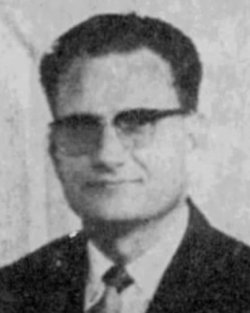
Wilbern Elias Best (1919-2007) was a preacher and writer of Gospel material. He wrote 25 books and pamphlets comprised of sermons he preached to his congregation. These books were distributed in English and Spanish around the world from 1970 to 2018 at no cost via the W.E. Best Book Missionary Trust.

Comments

0 / 2000 characters
Comments are moderated before appearing.

Be the first to comment!

Pristine Grace Research Assistant

Pristine Grace Research Assistant

Ask me about articles, sermons, or theology from our library. I can also help you navigate the site.