Bootstrap
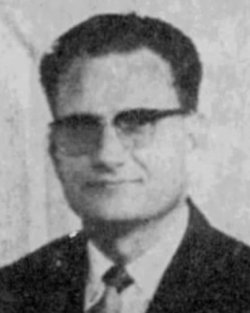
W.E. Best

The Temptation of Christ, Part 2

W.E. Best July, 1 1988 Audio
0 Comments
Best on the Person of Christ

Sermon Transcript

Auto-generated transcript • May contain errors

100%
If you remember last week as
we read, we're not giving an exposition now, either of Matthew
4, 1 through 12 are Luke chapter 4 and verses 1 through 13. We'll do that in subsequent lessons.
We have read the passage last Sunday and we'll read the passage
this morning to show you the difference between Matthew's
account of the tests and Luke's account. Matthew, first of all,
mentions the bread, secondly, the temple, and finally, the
kingdoms of the world. That's the order. Now let's read
Luke's account, verses 1 through 13 for our scripture reading.
And Jesus, being full of the Holy Ghost, returned from Jordan
and was led by the Spirit into the wilderness. being forty days
tempted of the devil, and in those days he did eat nothing,
and when they were ended, he afterward hungered. And the devil
said unto him, Since you are the Son of God." Now we'll go
into that more later, not this morning. He didn't say if, in the sense
of doubting Christ's deity. The devil did not doubt Christ's
deity. Since you are the Son of God,
command this stone that it be made bread. That's number one
test. And Jesus answered him, saying,
It is written that man shall not live by bread alone, but
by every word of God. And the devil, here's number
two, taking him up into a high mountain, showed unto him all
the kingdoms of the world in a moment of time. Matthew had
this one as the last. And the devil said unto him,
all this power will I give thee, and the glory of them, for that
is delivered unto me, and to whomsoever I will I give it.
If thou, therefore, wilt worship me, all shall be thine. And Jesus answered and said unto
him, Get thee behind me, Satan, for it is written, Thou shalt
worship the Lord thy God, and him only shalt thou serve. Verse nine, we have the third
test. And he brought him to Jerusalem and set him on a pinnacle of
the temple. This was number two in Matthew's account. And said
unto him, If thou be the Son of God, cast thyself down from
hence. Or since you are the Son of God,
cast yourself down from hence. For it is written, He shall give
his angels charge over thee, to keep thee. And in their hands
they shall bear thee up, lest at any time thou dash thy foot
against a stone. And Jesus answering said unto
him, It is said, Thou shalt not tempt the Lord thy God. And when
the devil had ended all the temptation, he departed from him for a season. I asked my wife before we left
and came to the church house this morning why that Matthew's
order is different from Luke's. She read the two. I anxiously
awaited her answer. And I was gratified when she
gave the correct answer. Do you know why? Do you really know what the difference
is? Let me state it briefly. Luke presents Jesus Christ as
the perfect man. Since Luke presented the Lord
Jesus Christ as the perfect man, he presents the tests of Christ
in their moral order. Whereas Matthew, who presented
Jesus Christ as the rightful king, presented the tests in the correct
order from the standpoint of the kingship of Jesus Christ. I'm not saying any more about
that now. We'll deal with that more in detail later. The message
this morning is the temptation of Christ, lesson number two.
Whether Jesus Christ was God or man during the days of his
flesh is not a question. Jesus Christ was the God-man. He is the God-man. Observe, I
am presenting it positively. In the Garden of Eden, there
was a man God-made. But in the temptation of the
wilderness, there was the man God begotten. Do you know the
difference? I want you to see the beauty
of this. I stated in the garden of Eden, there was a man God
made. However, in the wilderness, there
was a man God begotten. What a difference! Oh, what a
difference! A mere man in the Garden of Eden. The God-man in the wilderness. Both were tested by Satan. The man God made fell. The God-man
begotten did not fall. In fact, he wasn't
even tempted, as I'm going to prove to you this morning. when
we understand the meaning of the word temptation. Last Sunday morning we sought
to emphasize three things. Let me review to bring you up
to our lesson today and show you that one will follow the
other. We're giving some building blocks on one of the great subjects
of the New Testament, the temptation of Jesus Christ. Last Sunday morning the first
point was God tests Satan tempts. The second point, Satan was the
instrument of temptation or testing, but God ordained Satan being the instrument. The
final point was, temptability does not imply or necessitate
susceptibility. Now today, we want to zero in
on the meaning of the real nature of temptation. And there are
five steps in temptation. When these five steps are understood
in the light of Holy Scripture, no child of God, no recipient
of the grace of God could even think, must less say, that Jesus
Christ had the capacity to sin. No one but a rank heretic who
would drag the deity of Jesus Christ down and make him no more
than a human being, likened to himself, would even think such
a thing. So the difference is between
a man God made and a man God begotten. No wonder we find in John chapter
1 verse 14, the word was made flesh and dwelt among us and
we beheld his glory. The glory is of the only begotten
of the Father, full of grace and truth. As the only begotten of the Father,
the God-man, and here are three important things, please get
them, the God-man was unversed in incapable of and untemptable
with evil. Beloved, I could preach for six
months on those three points. I repeat them. The God-man was
unversed in evil. He was incapable of evil. And he was untemptable with Eva. Jesus Christ was more than a
mere man. He was and he is the God-man. The Lord Jesus said in John 14,
30, The prince of this world cometh and hath nothing in me. Nothing in me. Christ had to
deal only with that which came from without in all the trials
to which he was subjected. Let me illustrate that. We know
that if a city is united, its only consideration is to oppose
the enemy from without. However, If the city be divided
in itself, the first thing is to look for traitors within. Now let me update that. When
the Church of Jesus Christ is united, when God's people in
this church or any church, when they're united, they don't have
to look for traitors within. They only have to fight the enemy
from without. But whenever there is division
within the Church, or divisions, there are traitors within. And,
beloved, I want you to know, the enemy has to be looked for
within as well as without. Personally, I'd love to pass
the Church that is united, united in all the basic fundamental
principles of Holy Scripture, And once the church is so united, she doesn't have to look for
traitors within. She only has to look and fight the enemy from
without. I find that a good illustration.
Now I would ask this question. Was there a division between
the two holy natures of Jesus Christ? Was there a division? between
God who is holy and none are as holy as God himself and his holy human nature that
we read about in Luke 1 and verse 35. Can even, can a person even think
about there being a division between the holy divine nature
and the holy human nature of Jesus Christ. Beloved, I want
you to know when I got into this subject this last week, I could
see no end, and I didn't want to quit studying it. I'm dealing
with one of the most precious truths in God's Word. I'm dealing
with a person of my Savior, and there is no fundamental biblical
truth. to say that Jesus Christ, and
I'm giving some of the quotations as briefly as possible, to say
that he could have sinned, as we saw last week, could have
chosen to do wrong, or that temptation had an appeal to him, blaspheming. Those are all blasphemous statements.
If you come to me, I'll not waste one second in telling you you're
a heretic. If you even suggest that Jesus Christ could sin,
I'll tell you you're a heretic. And I won't worry about the consequences.
If you even suggest that he could have done wrong, I'll call you
a heretic. And to say that temptation had
an appeal to Jesus Christ is a blasphemous statement. Such statements would indicate
that there was a conflict between Christ's two natures, divine
and human. Do you believe there was any
such conflict between the two natures of Jesus Christ? That would put Jesus Christ on
a level with the Apostle Paul, who had such a conflict within
himself that we read about. Romans chapter 7 beginning with
verse 15 through 25. Paul said, I find that in me
that is in my flesh what if no good thing the very thing I want
to do that's the thing that I don't do. Do you believe for a second
that Jesus Christ had such a conflict? Some say that Christ could have
sinned as to his human nature but not as to his divine nature. Now think that one through for
a moment. This would force one to the conclusion
that there was a conflict between his two natures. If there was
such a conflict, then there was a conflict between his holy divine
nature and his holy human nature. However, the holy human nature
of Jesus Christ was in perfect harmony with his divine nature
because his human nature was united to the divine person,
the second person of the Godhead. Beloved, I hope you're listening.
And I'll go so far as to say if you have an ounce of grace
you can understand what I'm talking about. If you don't have grace
you can't understand it. Listen to this statement. There
was no relative wholeness with Jesus Christ. I want you to think
that one through for a moment. What do you mean relative wholeness?
Relative wholeness. Now you ought to be able to think
that one through. You that have been around many years in this
church, you should know exactly what I'm talking about. In case
you do not, and some of the newer people, let me illustrate it.
I'm not as holy as Jesus Christ in my person. There's a relative
holiness. I'm not as perfect as Jesus Christ. It's only a relative perfection.
I'm not as righteous as Jesus Christ in myself. It's a relative
righteousness. I'm talking now about my life.
I'm not talking about myself. I'm talking about my conduct. There was no such thing, there
is no such thing as relative holiness with Jesus Christ. And that's the point don't ever
forget. There's relative holiness with you and me. You see, I am not now what I'm
going to be when I see Jesus Christ face to face. So there's
relative holiness, there's relative righteousness, there's relative
perfection. Be perfect as your Father which
is in heaven is perfect. That's Matthew 5.48. A lot of
people stumble at that. We are to be as perfect in our
sphere as God is in His sphere. But I am not as yet in His sphere,
and therefore I'm not as perfect as He is. Don't tell me that there was
relative holiness with Jesus Christ, or I'll say once again,
that's heresy. Beloved, I'm trying to cover
the subject, and I want to put everything I've got into it.
Listen to what our Lord Jesus said. First of all, in John 4,
34, My need is to do the will of him that sent me, and to finish
his work. Listen again at John 5, verse
30. I can of mine own self do nothing, as I hear I judge, and
my judgment is just, because I seek not mine own will, but
the will of the Father which hath sent me. Again in John 6
and verse 38, For I came down from heaven, not to do mine own
will, but the will of Him that sent me. The writer of Hebrews said of
Jesus Christ, in Hebrews 10 verse 7, Lo, I come, in the volume
of the book it is written of me, I do thy will, O God. The two wills of Jesus Christ
never crashed. Now, that's another subject that
I'll get into. We'll get into the human will of Christ. And there are many passages related
to this subject that we will deal with in subsequent lessons.
I want you to know it's a big subject. But as I've done in the study
of justification and every other great biblical subject, I'm going
to do my best to get all the information, the data that I
can get and put it together. And when our Lord said in John
5 verse 30, I cannot of mine own self do nothing as I hear
I judge, and my judgment is just, because I seek not mine own will,
but the will of the Father who sent me. You've heard this statement,
it is a trite statement, quote, a man makes a poor witness in
his own case. A man makes a poor witness in
his own case. The reason is simple. First of
all, man is possessed with self-love. That's number one. And secondly,
he is subject to error. That's true of every one of us.
There's a certain amount of self-love, and then every person is subject
to error. Therefore, he is a poor witness in his own case. However,
the God-man The one who was unversed in evil, incapable of evil, and
untemptable with evil, said, he's the Amen, the faithful and
true witness. No error in him, no self-love
in him, as it is in man. Hence, nothing
but truth. could ever come from the holy
lips of Jesus Christ. The God-man concluded his argument
in John 5 by showing the Jews that they were wrong in their
judgment of him concerning his healing of the impotent man.
He was not working alone. As the God-man, Christ resolved
not to use his inherent omnipotence between his incarnation and his
crucifixion. Thus, the perfect unity between
the Father and the Son is ever evident. Therefore, the Jews'
criticism of the Son of God was opposition in reality to the
Father. Listen to my point. Listen to
my application. Likewise, every false statement made today by
preachers, or anybody for that matter, about the person of Jesus Christ
is, in reality, a statement against his Father. For Jesus Christ
said, I and my Father are one. The next time you hear some of
these preachers talk about Christ having the capacity to sin, don't
forget that. The temptation of Christ was
an actual meeting between the Son of God and Satan. We know
that Satan challenged the first man in the Garden of Eden. But
the Son of God challenged Satan in the wilderness. Please don't
forget that. It was not Satan challenging
the Lord Jesus Christ. Don't forget what we said last
Sunday. He was led, he was driven into the wilderness. And the
Lord Jesus put Satan to the test. Satan was the instrument of the
fall in the garden, but the Son of God was the instrument of
victory in the wilderness. As the God-man in the position
of humiliation, he beat Satan. The contest was a reality. Those who say Christ was peccable
state that the contest's reality, listen to this, was dependent
on Christ's capability of sinning. Now, I want to destroy that.
I want to annihilate that thought. The God-man, led by the Holy
Spirit, which was given him without measure, as we're told in John
4, verse 34, forced Satan into the open. And, beloved, I love
to think about that. He forced Satan into the open. Thus the tempter was the one
who was really put to the test. The Holy Spirit did not lead
the God-man into the wilderness to see if he had the capacity
to sin. The objective was to force Satan
to a decisive conflict. in order to manifest Christ's
deity and supremacy on the one hand, and Satan's undoing on
the other. Therefore, Jesus Christ met Satan
head-on, not to prove his impeccability to either himself or the Father,
but, beloved, to prove himself impeccable to all who put their
trust in him. Does that make sense? Beloved, I want you to know this
is preaching, this is preaching material. You know, I don't have to worry
about preaching. All I've got to do is just study
the Scriptures and have a message from God. It just rolls, it comes
out. A lot of these fellows have to
study about preaching, you know, in order to project themselves. If they'd spend time studying
the book, when they get up to preach, it just, it comes out. Now, there
are several steps in the nature of temptation. And this is the
most important part of my message today. These show that a person
can be guilty of sin in his heart without committing the act. I
want us to read to the verses to preface these five steps. discussing the nature of temptation.
Turn to Matthew chapter 5. Let's read verses 21 to 28 before
we begin this particular study of the steps in the discussion
of the nature of temptation. Matthew chapter 5 beginning with
verse 21. We want to see that a person can be guilty of sin
in his heart without committing the act of sin. Ye have heard that it was said
by them of old time, Thou shall not kill, and whosoever shall
kill shall be in danger of the judgment. But I say unto you
that whosoever is angry with his brother without a cause shall
be in danger of the judgment. And whosoever shall say to his
brother Rekha shall be in danger of the counsel. But whosoever
shall say thou fool shall be in danger of hell fire. If thou bring thy gift to the
altar, and there rememberest that thy brother hath ought against
thee, leave there thy gift before the altar, and go thy way. First
be reconciled to thy brother, and then come, offer thy gift.
Agree with thine adversary quickly, whilst thou art in the way with
him, lest at any time the adversary deliver thee to the judge, and
the judge deliver thee to the officer, and thou be cast into
prison. Verily I say unto thee, thou
shalt by no means come out thence, till thou hast paid the uttermost
fathering. Ye have heard that it was said, by them of old time
thou shalt not commit adultery. But I say unto you, that whosoever
looketh on a woman to lust after her hath committed adultery already
in his heart. We're talking about temptation
now. And the seven steps in discussing the nature of temptation. We
have seen a passage from Matthew, the words of Jesus Christ himself,
proving that a man can have sin in his heart without committing
the overt act of sin. Now, what is step number one?
What do you think it is? What is step number one? Beloved,
please get these. The first step in discussing
the nature of sin is allurement. Allurement. Now, we saw last
Sunday the distinction between testing and temptation. We discussed temptation to some
extent, so we don't want to repeat that again this morning. We're
going on. We're still laying blocks. The first step is allurement,
which comes from without. It always comes from without.
There is something outside of man that charms or fascinates
him. There is the attraction by an
offer to something desirable. After all, there's pleasure in
sin, but it's only for a season. Hebrews chapter 11 and verse
25. I'm not foolish enough to tell
you that there is not pleasure in sin. Sure, there's pleasure
in sin, but it's only for a season. Payday is coming. So that which
is pleasant may appeal to the flesh, it may appeal to the eyes, and
thirdly, it may be found in the category
of the pride of life. 1 John chapter 2, verses 15 through
17. We're talking about allurement. So here is a person He may not
desire a woman, for instance, but his eyes may be on getting
ahead, making more money, or he may be lifted up with pride,
and he's so proud of his accomplishments. We're talking about allurement.
So the first step in the nature of temptation is allurement. There is an attraction outside
of the individual. Secondly, there is illumination. This is the second step, illumination. What do you mean by illumination?
The one being tempted is enlightened to the point he realizes that
in order to have what is offered outside that is pleasant to his
eyes, that is attractive to him, he must pass over into forbidden
territory. Now, let's start back with a
little child, and then let's come on up where we all live
today. A little child knows what this
means. You tell Johnny, Johnny, I'm
baking some cookies. Don't you get into those cookies. By the very statement you made,
by the very statement that you have made, makes Johnny desire
those cookies more than anything else in all the world. He walks
around the house, he can't get it out of his mind. You know
why he can't get it out of his mind? It is because of the depraved
nature. He wants the very thing that
he has been forbidden to have. Let's don't just stop with the
children. What about adults? For instance, they can advertise
something in the paper. If you don't buy this automobile now,
It's going to go up a thousand dollars next month. And so you
want it now. Right now. So by the very fact that it looks
like that you're going to be forbidden to buy it later on,
makes you desire it more now. Illumination. There's an attraction
from without, that's number one, that's allurement. And then illumination,
in order to have what you desire, you realize that you must, you
have to pass over into forbidden territory in order to have it. What happened to David when he
committed the terrible sin that he did? He passed over into forbidden
territory. Bathsheba was another man's wife,
but he wanted Bathsheba. But I want you to know there
are a lot of women today that want other wives, husbands, and vice
versa. Vice versa, and there are a lot
of other things. The third step is rationalization. I want you to see the steps.
First, there is the allurement, the attraction. Second, the illumination. You know in order to have it,
you're going to have to pass over into forbidden territory. But
you want it anyway. I've just got to have it. And
then comes step number three. It is rationalization. The person
starts rationalizing and he starts figuring every way in the world
he can in order to have what he wants. Now, beloved, that is justifiable
only in spiritual things. Only in spiritual things. Justifiable
there, but only in spiritual things. So rationalization. The person begins to rationalize
so that he is made to feel justified in doing what he knows to be
wrong. I've seen Christians. I have
pastored people. They decide they want to do a
certain thing. They know it's wrong to do it. And then they
start rationalizing how they can justify themselves in doing
the very thing they know is forbidden for them as a Christian. But
they rationalize, and I want you to know, the mind is good
on rationalization. For instance, here's a man, and
I've had this a number of times, a man who, for instance, he doesn't
have the scriptural qualifications for remarriage. And so he gets
to the place where he wants to get married again, and he starts
rationalizing. I've had this one so many times
in 40 years that it's almost like the same song, second, third
verse. And he starts rationalizing,
rationalizing. So step number three is rationalization. What's step number four? The
fourth step is to make the fulfillment of one's desire, the goal of
his life. That's the goal of his life.
Now it's right for every Christian to have a goal in his life. He should have a goal. And I
pity the Christian who does not have a goal. But I'm not talking
about that aspect of it right now. So we have, first of all,
the first step is allurement, attraction from without. Second
one is illumination. He's going to have to pass over
into forbidden territory in order to have what has attracted his
attention. And thirdly, rationalization. He starts rationalizing how that
he can have it and justify himself in doing the forbidden thing.
And then comes number four. In order to fulfill his desire,
he makes it the goal of his life. The goal of his life. He becomes
obsessed with his goal. Finally, what do you think the
fifth step is? The fifth step is the surrender,
the surrender to the act or acts of sin which were already in
his heart by desire. They were already there. He had
already seen, but he had not committed the overt act of sin.
Now, beloved, those are five steps. Don't ever forget them.
Number one is allurement, attraction from without. Number two is illumination. You're going to have to pass
over into forbidden territory in order to have what you want,
what you desire, what has attracted you in this temptation. And I'm
talking about temptation now. And then number three, rationalization.
You start rationalizing how I can have it and be justified in having
it. And then, in order to fulfill
this desire, there is a goal and everything is set in the
fulfillment of that goal. And finally, the surrender. That's the final step. But I
want you to know that final step is only the outward manifestation
of the sin that was already in the heart, from the allurement
through to the actual act of sin. Hence, sin is in the heart before
it comes out into life. Listen to our Lord when he said
in Matthew 15, 19 and 20, For out of the heart proceed evil
thoughts, out of the heart, murders, adulteries, fornications, thefts,
false witness, blasphemies, these are the things which defile a
man. Our Lord informs us that the
part of man which yields to such poisonous fruit, and such yields
to such poisonous fruit, is not a limb that can be cut off. It's not a limb that can be cut
off. Listen to it. It is the very core of his being.
It's his heart. It's his heart. Hence, lust does
not come merely out of the eye, but from the inmost nature of
man. The eye, just simply the organ
for the heart, the evil heart, to see and desire. Murder does
not come from the hand. Listen. Murder does not come
from the hand. Adultery and fornication do not
come from the act or the illicit acts. They come from the heart, ungoverned
by grace. A man may be restrained from
outward sin. I said a man may be restrained
from outward sin, but that does not restrain his inward desire. Tell little Johnny, you can't
have those cookies, and you may restrain him to the point he
cannot have what he desires, but the desire for them is still
there. Here's a man who looks at a woman
with lust. He may be restrained by fear
of her husband, but the desire is still there, the sin is still
there. Original sin is the womb of all
capability of sinning or actual sinning. I said original sin. Now I would ask a question, did
Jesus Christ have any original sin? If you tell me he did, I'll
tell you you're a liar. And the word of truth's not in
you. Beloved, I can speak authoritatively on this subject, and I don't
intend to pull a punch. In considering the manner of
the temptation of Jesus Christ, one can deny neither that Satan
had some offers to the Son of God in the wilderness,
nor that the Son of God was eternally aware of those offers. I want you to know that there
were offers made to Jesus Christ, but I also want you to know that
Jesus Christ was aware, eternally aware, of all those offers. However, it is wicked to imagine
that Jesus Christ wanted anything Satan had to offer. Some religionists are so full
of iniquity that they maintained that Christ's human nature was
no different from ours today. How can anyone who claims to
have grace suggest that Jesus Christ had an internal weakness? that could manifest itself in
desiring to have the forbidden things of God's holy law, because
he said, I delight to do thy will, O God. The wicked logic, I said, the
wicked logic of these men is that since they can be tempted,
then Jesus Christ could be tempted. So we have human beings who are
putting their trust in a human savior. That means no more than
Confucius, Mohammed, or any other man. To maintain, listen to this,
to maintain that human nature is corrupt, which is true, as black as hell,
which is also true, And it was this same nature in which Jesus Christ clothed himself,
and that's blasphemy. It's nothing short of blasphemy. So to maintain that human nature
is corrupt, as black as hell, and at the same time that's the
nature in which Jesus Christ clothed himself, beloved, that's
too much for me. I'll tell you, I can't take that.
I can't take that. I don't believe that any Christian
can take that. A person would have to be ungodly
to suggest that Jesus Christ had an internal weakness that
could manifest itself in the various lusts of the flesh. Let me prove the point now, coming
to the close. Luke presents the perfect humanity
of Christ. He gave the order of the three
attacks Satan made against the Son of Man, the God-Man, with
reference to body, soul, and spirit, the three spheres of
manhood. Now, we'll enlarge more on these
things. I can't do that. This is still
the introduction to our study. Last Sunday was the first introductory
message. This is the second. We haven't gotten to the real
meat of it yet. So listen to this again. Luke presents the
perfect humanity of Christ. He gave the order of the three
attacks Satan made against the God-man with reference to body,
soul, and spirit, the three spheres of manhood. Each sphere manifested
man's attraction, number one, to the world, number two, to
the flesh, and number three, to the devil. Now listen to this. As to the
world, what did Jesus Christ say? John 17, 16, I am not of the
world. The world had no attraction to
Jesus Christ. The only world that had any attraction
to Jesus Christ was the world of the elect for whom he came
to save. The evil world system had no
attraction to Jesus Christ. I'm not of the world. So as to the world, what did
Christ say? Beloved, this is pungent. Get
this. This is pungent. What did I say? I said that Satan's
attacks against the Son of Man were against soul, body, and
spirit, the three spheres of man. And each sphere manifested
man's attraction to the world, the flesh, and the devil. As
to the world, Christ said, I'm not of the world. I'm not of
the world. The world had no claim on him.
The evil world system had no attraction for him. As to Christ's flesh, get this
one, he did not assume sinful flesh,
but he assumed the likeness of sinful flesh, Romans 8.3. Therefore
his saving work extended to the nature of sin as well as to the
sins of nature. Finally, as to the devil, Christ
said, the prince of this world cometh and hath nothing in me. Nothing in me. The words had
nothing in me. mean that Satan shall have no
power over Jesus Christ because there is no weakness in Christ. Let me illustrate it. When wood
is tested, there are ashes. I said when wood is tested, there
are ashes. When water is tested by fire,
so when wood is tested by fire, there are ashes. When water is
tested by fire, there is evaporation. When steel is tested by fire,
there is dust. Oh, but beloved, when pure gold
is tested by fire, there is nothing but pure gold. And I'm asking
you a question this morning. Was there any impurity in Jesus
Christ? Pure gold was tested in the wilderness, and after
the testing in the wilderness of pure gold, there was nothing
but pure gold. But with you and me, it's different.
When I'm tested by fire, dross is burned away. Don't tell me
that Jesus Christ had dross that had to be burned away by the
testing of fire, because I'll say it's a lie out of the pit
of hell. Beloved, this is an important
subject. Satan's challenge for Christ
to turn stones into bread. I give this in conclusion. Really,
I ought to keep this. I think I'll just, I'll build on these
later. I think I'll take these three tests, build on them later. Maybe I'll just mention two or
three things, so in closing. Satan's challenge for Christ
to turn stones into bread was related to his sinless infirmity
of hunger. I said his sinless infirmity
of hunger. Since there was political oppression
and unemployment, Satan attacked Christ's virtue because there
was no vice in him. Socialists today look after the
temporal wants of men, and they believe the kingdom of God is
advanced through socialism. Oh, do you see the area in which
we can explore here? Satan's second challenge was
for Christ to cast himself down from the pinnacle of the temple
to capture attention, to capture attention. You know, the temple
was new. We find in John 2 verse 20, Then
said the Jews, For it in six years was this temple in building,
and wilt thou rear it up in three days? This temple began to be
built twenty years before Christ and was finished 26 A.D. That
was the year that our Lord began His public ministry. Important,
isn't it? And Jesus himself began to be
about 30 years of age, Luke 3, 23. The Jews knew that Messiah
would come to the temple. Malachi 3, 1, The Lord whom ye
seek shall suddenly come to his temple, even the messenger of
the covenant, whom ye delight in. Behold, he shall come, saith
the Lord of hosts. That's a prophecy. However, Christ
knew that he must suffer before he established the kingdom. Therefore
he must not dazzle people, listen to this, where our Lord said
no, sensationalists take every opportunity to be spectacular. Finally, Satan's third challenge
was for Christ to accept the kingdom he offered, he offered. All these kingdoms will I give
you if you'll fall down and worship me. So he took the Savior to
a high mountain, showed him the kingdoms of this world, and promised
them to him if he would just fall down and worship him. Now,
I can't help but get into eschatology a little bit. It all fits. Are
you ready for this? The church kingdom theologians
have an unusual interpretation of this. The church kingdom theologians,
and I'm not one of them, claimed that Christ was tempted by Satan,
quote, to adopt the materialistic concept of the kingdom. But Christ showed that he must
substitute a spiritual kingdom for a materialistic kingdom,
end of quote. Sounds good, but long ways from
truth. Listen to this. The fact is,
Satan did not apprehend that the kingdom was to be given at a certain time by the Father
to the Son of David. Thus Christ did not deny that
either the miraculous power or ultimate world dominion belonged
to Him. But the kingdom would be given
to him at a certain time by the Father to him as the son of David. Oh, beloved, what a subject to
explore there. More to it, what appears on the surface. You have seen this morning the
five steps in the nature of temptation. What do you think of Christ?
That's the question. Whose son is he? Let's stand
as we sing.
W.E. Best
About W.E. Best
Wilbern Elias Best (1919-2007) was a preacher and writer of Gospel material. He wrote 25 books and pamphlets comprised of sermons he preached to his congregation. These books were distributed in English and Spanish around the world from 1970 to 2018 at no cost via the W.E. Best Book Missionary Trust.

Comments

0 / 2000 characters
Comments are moderated before appearing.

Be the first to comment!

Joshua

Joshua

Shall we play a game? Ask me about articles, sermons, or theology from our library. I can also help you navigate the site.