Bootstrap
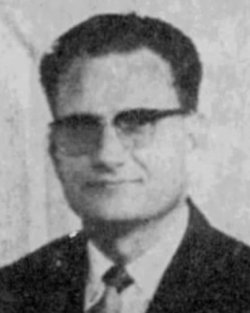
W.E. Best

Free Offer of the Gospel, Part 1

W.E. Best July, 1 1988 Audio
0 Comments
Best's Corner

Sermon Transcript

Auto-generated transcript • May contain errors

100%
verses of scripture this morning
that I want to use. First of all, I ask you to open
your Bibles to Romans chapter 1 and let us read the 16th verse. This is a familiar verse to every
Christian, but I sometimes wonder if we really know all that we
should know about this familiar text. After we have read this
verse, Then we're going to go to 1 Thessalonians and read several
verses in chapter 1 and in chapter 2. And these verses that we will
be reading will constitute the basis for our study this morning
on the subject entitled, The Free Offer of the Gospel Controversy. Last Sunday, we dwelt on the
subject of the priority of preaching. making the distinction between
preaching Christ and offering Christ. Let us now read verse
16, Romans chapter 1. Paul said, For I am not ashamed
of the gospel of Christ, for it is the power of God unto salvation. I'd like very much for you to
underscore those two words, unto salvation. to everyone that believe
it, to the Jew first and also to the Greek. Before we turn
to 1 Thessalonians chapter 1 and read from that chapter, let me
make a brief comment on Romans 1 verse 16. The gospel does not
come to mankind in general to inform them of a new objective
state of affairs. The gospel of Jesus Christ invades
the elect of God who have been regenerated as a call to faith
and obedience. Now, beloved, that statement
is in direct contradiction to almost everything that you will
hear from the average pulpit of today. I want to repeat it
again. The gospel does not come to mankind
in general to inform them of a new objective state of affairs. It invades the elect of God who
have been regenerated as a call to faith and obedience. Now turn
to 1 Thessalonians chapter 1. I'd like us to read beginning
with verse 2. Paul said, We give thanks to
God always for you all, making mention of you in our prayers. Remembering without ceasing your
work of faith and labor of love and patience of hope in our Lord
Jesus Christ in the sight of God and our Father. Knowing,
brethren, beloved, your election of God. Now observe verse 5. For our
gospel came I'd like you to remember those three words. Our gospel
came. And then think with me for a
moment about the statement we have previously made concerning
Romans 1.16. Paul said, Our gospel came, not
unto you in word only, but also in power, and in the Holy Ghost,
or Holy Spirit, and in much assurance. as you know what manner of men
we were among you for your sake. Verse 6, And ye became, look
at the two words, ye became. Our gospel came, in verse 5,
and ye became, in verse 6, followers of us and of the Lord, having
received the word in much affliction with joy of the Holy Ghost, or
Holy Spirit. Verse 7, so that ye were in samples
are examples. The three words, ye were examples
to all that believe. That's as far as I'll read. Then
notice in the middle part of verse 8, your faith to God is
spread abroad. Now let's put something together.
And this is what you have to do in studying and giving a true
exegesis or interpretation of scripture. Paul said in verse 5, Our gospel
came. And he told how it came to the
Thessalonians. Ye became followers and ye were
examples. Now I'd like you to drop over
to the second chapter, beginning with verse 1. For yourselves,
brethren, know our entrance in unto you that it was not in vain. Now I want you to see the connection
here. Our entrance unto you was not in vain. Why? Because the gospel is the power
of God unto salvation. Not under the offer of salvation,
not under the offer of salvation, but unto salvation. Do you see
the difference? Therefore it was not in vain.
The gospel accomplished the purpose for which it was sent when Paul
preached it to the Thessalonians. Romans 1.16 gives the answer
as to why Paul's preaching was not in vain in verse 1. Drop
down now to verse 4. But as we were allowed of God
to be put in trust with the gospel, even so we speak not as pleasing
men but God, Paul was not a man pleaser. His only desire was
to please God, and that's true of every, every God-called preacher,
which trieth or who trieth our hearts. Verse 5, For neither
at any time use we flattering words. The man of God does not
use flattering words just in order to tickle the ears of people.
Verse 6, Nor of men ought we to glory, neither of you, nor
of others. when we might have been burdensome
as the apostles of Christ. But we were gentle among you."
Look at that statement. Even as a nurse cherisheth her
children. Look at the illustration he uses.
We were gentle among you. Why? They embraced the truth
that he preached. It's so easy for the man of God
to be gentle with one. He can't help but be gentle.
when there is response to what he is saying. That's just like
you look at a beautiful little girl two or three years old,
you smile at her and she smiles back, and it just makes you want
to pick her up and just squeeze her good. You can't help but
be gentle when that little thing responds to your affection. So here the Thessalonians were
responding to Paul's message. They were responding because
the message which he preached was God's power unto their salvation. Look at verse 8. Being so affectionately
desirous of you. Beloved, there is no affection
like the affection that is the result of the grace of God. I
know what I'm talking about. I loved my wife devotedly when
I married her and for nine months we were married and both of us
were unsaved. Lost church members. I said lost
church members. I loved her devotedly, affectionately,
but I didn't really know what love was until the grace of God
came into my heart. I said until the grace of God
came into my heart. And after more than 40 years,
my love is even greater for her. Listen to this. So being affectionately
desirous of you, we were willing to have imparted unto you not
the gospel of God only, but also our own souls. There's the test
of a true man of God. Verse 9, the latter part of the
verse. We preached unto you the gospel of God. Now verse 13 for
our last statement from 1 Thessalonians. For this cause also thank we
God without ceasing, because when ye received the word of
God which ye heard of us, ye received it not as the word
of men, but as it is in truth, the word of God, which effectually
worketh or which performs its work also in you that believe. Let me review just as briefly
as I can what we discussed last Sunday morning to bring you up
to today, up to today's lesson. We're in a very important series
of studies. Many of the things are relatively
new. Beloved, they are biblical, and it behooves us to search
the Scriptures. What I'm going to say this morning is contrary
to the traditional view of professing Christendom. And I have a right
under God to question the traditional view. You can see why I made
some statements I did before we began the lesson this morning.
It all ties in together. Last Sunday, our subject was
the priority of preaching. the priority of preaching. What
an important subject the priority of preaching is in the study
of God's Word. We only gave the introduction
last Sunday morning. Last Sunday night we dealt with the meat
of the subject around three questions. Number one, what is preaching?
Two, what is a preacher? And three, what is the purpose
of preaching? I'd like to review one or two statements that I
think are very important in this connection that I gave last Sunday
evening. And then last night, just before
my wife and I went to sleep, we heard Stephen Olford. I don't
always agree with what he says. In fact, he doesn't say too much
with which I do agree. But how many ever heard him last
night? He brought a tremendous message last night, and I believe
in when a man preaches the truth, commending it. His subject was
on the subject of preaching. And I'm going to give you one
statement he made that just amplifies what I gave last Sunday evening.
You remember last Sunday evening I made the statement in discussing
the priority of preaching, and I'll repeat again. Preaching
makes the historical acts of the gospel a present reality. And then I gave these statements.
The saving act of God at Calvary becomes, through preaching, a
saving act through faith by the spoken word. And this statement,
preaching therefore, is the timeless link between God's redemptive
act at Calvary, which was His eternal purpose 1 Peter 1, verses
18-20, and the regenerated person's apprehension of it by faith. Let me tell you what I heard
last night that I thought was so great. My wife and I both
rejoiced in it. Stephen Offer was talking about
preaching and the importance of preaching, right along the
same line that our subject was last Sunday. Now he made this
statement that I thought was excellent. And I'll have to share
it with you. He talks about Jesus Christ being
the incarnate word. In fact, I didn't forget it,
and I made a note of it this morning in my Bible. There is
something incarnational. That's the word he used. Listen
to this. There is something incarnational between the incarnate word and
the preacher of the gospel. Listen to that, and I'll let
you think it through later. There is something incarnational
between the incarnate Word and the preacher to whom the gospel
has been committed. I'm adding a few things. And
then he went on to say, there is something secondly incarnational,
listen now, incarnational between the preacher and the persons
who hear the preaching." Now, if you didn't get that, you've
missed something, and I'll just let you just go on in darkness. Beloved,
there are some precious things included in those two statements.
Something incarnational between Christ and the preaching, something
incarnational between the preacher and the persons who receive the
message. Now, one thing Stephen Offer
did not do because he is not a real strong grace man. In fact,
he's not a grace man period. And I would have to add to it.
There is something incarnational between the message of the preacher
as he preaches and the person whom the Holy Spirit has regenerated
and his apprehension, his embracing that message when it is preached.
It is another way of saying what? It is another way of saying that
preaching is the connecting link between the saving work at Calvary
and the apprehension of that work by the believer when it
becomes the power of God unto his salvation. Oh, beloved, let
us be students of the Word. That's the only way to be anchored
in the truth and rejoice in the things of God. Now that's our review. This morning
I'm going to have to give a little history. I hope you'll bear with
me. I will not have time in the message
this morning, nor even the one this evening, to cover all the
material that I've gotten together for these two lessons. But I'm
so afraid that I'll leave out some important things, and I
hope I do not. I've enjoyed so much the study
of this subject. Let me first of all acquaint
you with the traditional view of the, quote, free offer of
the gospel controversy. And I've searched catechisms,
systematic works on theology, and I've gone through many, many
things, and I'm giving to you, in as concise a form as I can,
what I have found. Now, at the close this morning,
I want to raise seven questions. In other words, I want to present
seven biblical facts. I cannot discuss them all in
detail. I'll have to take them one or two at a time until we
have completed our study of this particular subject that we're
beginning this morning. Here is now the traditional view
of the free offer of the gospel controversy. It is affirmed by
the majority of even grace preachers, follow me now, that in the gospel
there is offered to all men salvation that is, listen now, amply sufficient
for all and completely suitable to the need of every human being.
Now I want to give that again. I'm not taking anything out of
context. Don't have to. I'm building a case, not a case
to justify my belief. but a case built on the truth
of God's Word. Let me give it again. It's important
that you get these. It is affirmed by the majority
of grace preachers, see I'm not even considering now the Arminians
and others, that in the gospel there is offered
to all men a salvation, that is amply sufficient for all and
completely suitable to the need of every human being. Now, I'll
amplify that later on. I can't right now. In the study
of this subject, of course I've gone back to John Calvin and
his particular view, and he too believed in, quote, the free
offer of the gospel, end of quote. John Calvin was born in 1509
and died in 1564. I'm not ashamed of the word Calvinism,
but I'm not a Calvinist per se. There are a lot of things Calvin
taught that I do not believe. But I do believe what he taught
concerning salvation being of God. Now stop with that. Following
John Calvin, there was another French reformer by the name of
Moise Amarant. Moise Amarant. Moise Amarant
was born in 1596, you see, not too long after, about 30 years
after the death of Calvin. And he died in 1664. He taught,
listen to this, a hypothetical universalism. a hypothetical
universalism, which was really a species of universal atonement. Now listen carefully. This is
what he said. God willed by an antecedent decree
that all men should be saved on condition of repentance and
faith in Jesus Christ. He therefore sent Christ into
the world to die for all men. But seeing that left to themselves,
none would repent and believe, he by a subsequent decree elected
some as the objects of the saving operation of his grace. These
and those only, and these and these only, are actually saved. Now do you see what he did? He
has two decrees. Two decrees. And I'm going to
give you B.B. Warfield's denunciation of that
view in a few minutes. But let me see now what, let's
just look for a moment as to what happened, what were the
consequences of this reformer after the death of John Calvin
on the subject of soteriology. The outcome of the two decrees
by Moisei Amarok, resulted in this. Some of his followers stressed
the first decree and the universal offer based on it and drifted
back into Arminianism. Others emphasized the second
decree and the necessity of effectual grace and returned to the Calvinistic
position. B.B. Warfield, in his excellent
work entitled The Plan of Salvation, condemns this view of Moisei
Amarok on page 94 of his work by saying, quote, The schematization
of the order of decrees presented by the Amarillians in a word
necessarily implies, listen to this, a chronological relation
of precedence and subsequence among the decrees. Boy, he annihilated
it. The assumption of which abolishes
God And this can be escaped only by altering the nature of the
atonement. And therefore the nature of the
atonement is altered by them, and Christianity is wounded at
the heart." End of quote. If we have this put in print,
we'll have all of this in detail for you. Now let's look at this
as simply as we can. You and I know that Arminianism
teaches, listen carefully, a redemption that does not really redeem,
a reconciliation that does not reconcile, a propitiation that
does not propitiate, and a surety that gives no assurance. And
I say that without any reservation. That's Arminianism. And that's
why I abhor it. I abhor it. The Arminian says,
Quote, provisionally, all sins are forgiven, but one must appropriate
the forgiveness by faith. Another, as I quoted last Sunday,
and I heard just last week, the Chancellor of Dallas Bible College,
and I heard him on the radio, he said, God has reconciled himself
to all mankind, and now it is up to mankind to reconcile themselves
to God. I'd like to ask you a question
this morning. You see, we have to be sensible. If Jesus Christ
has forgiven all mankind of their sins, but mankind must appropriate
that forgiveness by faith, what about those who fail to appropriate
it by faith? What about Christ's forgiveness
of their sins? That means that the Lord Jesus
Christ would have to change his mind about it. He forgave them,
and now, wait a minute now, I'm going to have to back up. I can't
forgive them. I'm going to have to change my mind. And what does
that result in? A mutable Christ. A mutable God. A changeable God. He didn't know
what he purposed. He didn't know what he decreed.
Now, beloved, you can believe that religious rot if you want
to, but you're looking at somebody who doesn't believe it. And that's
religious rot. That is religious rot. Now let
me give a few quotations from one of the rankest Arminians
I've ever read. I'm giving direct quotations
and I won't spend a lot of time telling the page number and so
forth. I give this quote. There are two principles which
must control the interpretation of Scripture. And we know that
is true. We know that is true. There are
two principles which must control the interpretation of Scripture.
And we're going to get to that in a minute. Now, we're going
to have to come to a conclusion on this as to how one interprets
Scripture. And there are certain principles
that we must use as guidelines in our interpretation of Scripture.
And I'm going to give you a statement by Charles Haddon Spurgeon and
his philosophy with which I do not agree. And I'm going to give
you another statement by Charles Hodges, with which I do agree,
and I'll give you both of them in a few minutes. But now let
me give to you a rank statement of Arminianism. Quote, What is
God's attitude toward sinners? Does he pick and choose among
them, so that this one he loves and this one he hates, this one
he wants to save and this one he has no concern for? Is that
God's attitude towards sinners? Is that the attitude of the Lord
Jesus towards sinners? Thank God we know from the Bible
that it is not. God's loving heart has deep concern
for every lost sinner, and God wants men, He wants all men everywhere
to be saved. Any foolish preacher who makes
it appear that God is not willing to save some people sins against
the gospel. sins against the loving heart
of God and perverts the Scriptures. I would be such a person in the
eyes of that individual. Hyper-Calvinism often say that
a sinner cannot repent without the enabling grace of God. I
surely do say it. That is true, but he's like the
billy goat now that's always going around butting. But every
sinner does have the enabling grace of God, does he? I deny
that he has. Can a spiritual dead man repent?
Yes, if God tells him to. The truth is that those who are
even physically dead will hear the voice of the Lord Jesus and
obey him. Listen now. When Jesus Christ
speaks, a dead man can come out of the grave, whether he is saved
or lost. And when Jesus Christ speaks,
a man dead in trespasses and in sins can repent, and if he
does not do so, his eternal ruin will be upon his own head. This
is a final statement by him. Christ's atoning death paid for
the sins of every person ever born. Jesus is the Savior of
the world, not of a selected few. End of quotation. Now, a couple weeks ago, many
of you got this abstract of systematic theology by J.P. Boyce. And there are many great things
in that book. But I'm going to have to acquaint you with what
exists today in the back of that book, in his own catechism, and
it's on pages 12 and 13 in the back of the book. Here's what
he says. The offer of salvation. This
is the title. He has nine questions. I'll not
give them all because I don't have time to do that. I'll give
just two or three to show you what I'm talking about. Question, answer. Question, answer.
Question number one. To whom does God offer the salvation
in Jesus? Answer. He has ordered it to
be offered to every creature. Question number two, upon what
condition? Answer, upon that of repentance and faith. Now,
I could read more, but I don't have time to do that. You can
read it for yourself. This last week, I went through other catechisms,
like the Philadelphia Confession of Faith, Westminster Confession
of Faith, and different catechisms, and I don't have time to give
you a detailed report here, but I do have Dr. James McGregor's
teaching on the free offer of the gospel controversy as it
is presented in the Westminster Confession of Faith. And I'll
mention just two or three things to get to the main thing that
I want to give you this morning. He divides his lesson into three
parts. As to the fact, number one, as
to the way and manner, number two, and number three, the real
question here, as to the warrant. Now, number one, as to the fact,
Dr. McGregor says, There is no question
it is declared in the Confession, in due subordination to God's
covenant with man, a placing that brings into view the dependence
of the free offer on the sovereign will of God. He also states,
Man by his fall, having made himself incapable of life by
that covenant, and then he has, in brackets, covenant of works.
But let me say this, I do not believe that God is a covenant
of works without him or any man. Keep that thought in mind, please.
And you're going to come in contact with that. The tradition of you
is that God made a covenant of works without him, I deny it.
God never made a covenant of works with man for salvation. I deny that. I don't have time
to go into that this morning, that's another subject. But he
refers to this, the Lord was pleased to make a second, commonly
called the covenant of grace, whereby he freely offereth unto
sinners life and salvation by Jesus Christ. Number two, as
to the manner, of the thing, how it is possible for God sincerely
to offer to all sinners a salvation which he purposes to be bestowed
on only some. The confession makes no effort
to explain, he says. how his universal, decreed sovereignty
can be compatible with any reality of rational free agency in creatures,
nor how his being as the first cause can consist with substantive
reality of any secondary causation. And he goes on. Now, let me give the two views. Spurgeon one time was preaching
on a subject entitled regeneration and faith. In that message, he
makes the statement that I want to give to you. And I do not
believe in this philosophy. Quote, Brethren, be willing to
see both sides of the shield of truth. Rise above the babyhood
which cannot believe two doctrines until it sees the connecting
link. Have you not two eyes? Man, must
you knees put one of them out in order to see clearly? End
of quote. Now here is the philosophy that
I do believe. This is by Charles Hodge. And you need to listen to this.
Here are two guidelines for a scriptural interpretation of the Word of
God. Unless you abide by them, you know what? Now you may not
be interested enough to take these down. I want you to know
as a young Christian, oh, I couldn't have waited to have written of
that. Listen. Charles Hodge. There are two principles which
must control the interpretation of Scripture. Two principles.
Are you interested in those two principles? I am. If these two principles were
followed, we would not have all the Harris's and Kalt's that
exist today. But they're not followed, and
they won't be followed. because of the depravity of man. But
listen carefully. Two principles which must control
the interpretation of Scripture. Now he says, when a passage admits
of two interpretations. Well, I believe I could improve
on that a little bit. I don't believe that any passage admits
two interpretations. You see what I'm talking about?
I know what he was saying, but I think I'd have to add something.
what seems to admit to interpretations. I believe that would be better,
don't you? I don't believe that God is the author of confusion.
So that's the only change that I would make in this. When a
passage admits or seemingly admits to interpretations, the choice
between them is to be determined first by the analogy of Scripture. If one interpretation contradicts
what the Bible elsewhere teaches and another accords with it,
then we are bound to accept the latter. That's simple enough
that anybody can understand. Or secondly, the interpretation
must be decided by established facts. by established facts. The average
religionist is not concerned about facts. He is so prejudiced,
and you know, I've said before and I'll repeat it again, prejudice
is a great time saver. It enables a person to form his
opinion without going to the trouble to investigate and get
the facts. I wish I had time to illustrate
that. My wife and I have had some experiences along that line
in witnessing just recently. Prejudice is a great time-saver. It enables a person to form his
own opinion without going to the trouble to investigate and
get the facts. You can't help a person like
that. You might as well shake the dust off your feet. Now listen
to this. The interpretation must be decided by established facts.
That is, If one interpretation agrees with such facts and another
contradicts them, then the former must be true." That's a tremendous
statement by the great theologian, Charles Hodge. Now, what I want
to give to you this morning, and we'll be spending some time
in discussing, I'll have time to just briefly say some things
about each one of these, but I want to present to you seven
facts. about our subject, the so-called
free offer of the gospel, or the free offer of the gospel
controversy. I'm going to give them to you now, seven facts.
Seven facts. And we'll be discussing them
until we get through. And I don't know how long it'll
take for us to get through. Fact number one, it is a fact that God does not
give saving grace to all men without exception. Now that's
a fact that you can't deny. God does not give saving grace
to all men without exception. Think of the biblical persons
and characters whose names are mentioned who died outside of
the Lord Jesus Christ, outside of faith, outside of grace. And you've known people who have
died in their sins, and Jesus Christ mentions about a person
dying in his sins. So it is a fact that God does
not, He has not, He does not, He will not give saving grace
to all mankind without exception. Number two, it is a fact that
all men do not come to the knowledge of the truth. Now, I want to
take time at this point and read to you a verse that is so abused
today by religionists. Turn to 1 Timothy chapter 2 and
verse 4. Now, we're not discussing it
this morning, but I assure you we will discuss it in detail. I'm not afraid of it. I'm not
afraid of any verse of Scripture in God's Word, and that doesn't
mean that I know all about every verse either. But I'm not afraid
of Scripture. Let's read verses 4 through 6,
1 Timothy chapter 2. And it's the fourth verse that
I want you to think about in connection with our second fact. Who will have all men to be saved
and to come unto the knowledge of the truth? Who will have all men to be saved? Does the word will here mean
God's will of purpose? Does it refer to His decree? Or not? I'm not answering it
this morning. I want you to think about it. Now verses 5 and 6.
For there is one God, and one mediator between God and men,
the man Christ Jesus, who gave himself a ransom for all. You notice it doesn't say all
men, does it? Sure doesn't. For all to be testified in due
time. The second fact is that all men
do not come to the knowledge of the truth. And study in connection
with that, please, 1 Timothy 2.4. Number three, it is a fact
that God did not will the salvation of all men as a decree or purpose. You say, well, I just don't think
it's necessary to study these things. Well, I'll tell you something.
If you don't feel any different from that, that's a good sign
you don't have grace. Because you see the Christian,
the person who has grace, he wants to know the truth of God's
Word. It is a fact that God did not will the salvation of all
men as a decree or purpose. I'd like to expand on that a
little bit before we go to the next fact. To say that God will
or decreed the salvation of all men, if they will, is not to
will or purpose salvation at all. You know what the Arminian
says? God will the salvation of all
men if they will. If they will, those three words,
if they will. But beloved, to say that God
will the salvation of all men if they will is not to will or
purpose salvation at all. I'm not through yet. I want to
show you the fallacy of that statement. That God wills the
salvation of all if they will. I like what one man said, and
I'm going back now and have to consult some of the great preachers
of the past who are real students of the book. Such a statement
as, this is a statement made by one of God's noble servants,
such a statement as God will the salvation of all men if they
will, is like God saying, I will that every individual person
be saved, nevertheless, not as I will, but as they will. Boy,
he put it right where it belongs. Do you see the fallacy of that?
Do you see the foolishness of that? This concept makes the
will of God not only mutable and uncertain, but it destroys
the biblical meaning of God's purpose or His decree. And I'll
give you a verse to study in connection with that, Job 23,
verse 13. Fact number four. It is a fact. that Jesus Christ died for the
sheep, for his people, for many, and I'll give you a few references,
just a few, we'll expand on this later, John 10, 15, Matthew 1,
21, Matthew 20, 28, And beloved, this means that
Jesus Christ redeemed, reconciled, propitiated, ransomed, and became
the surety of all those whom the Father gave to Him in the
covenant of redemption. John 6, 37. What we're going to do in the
study of fact number four, we're going to look at these verses
that I've mentioned along with others. So it is a fact that
Jesus Christ died for the sheep, for his own, for many. And those for whom he died, he
redeemed them, he reconciled them, he propitiated them, he
became the surety for them. Fact number five. It is a fact
that the gospel is universal in three aspects. Now this fifth
fact has three parts. It is a fact that the gospel
is universal. It is a fact that the gospel
is universal in three aspects. Number one, it is universal in
the sense that it is sufficient to save all men without exception. Listen now. if God had elected
all. I want to talk about that in
just a moment. Please do not equate salvation
or saving here with regenerating. The gospel is representative
of a price that could not have been higher for the redemption
of man. That's why I said it is universal
in the sense that it is sufficient to save all without exception
had it been God's will or decree to do so. And we're talking about
what? The dignity of the sacrifice
of Christ now. The dignity of the sacrifice.
Let me elaborate on that a little bit. Christ gave His all. He could not have given more.
He gave Himself. The highest price was paid that
could ever be paid for the redemption of man. He could not have done
more. He did as much for the redemption
of one person as if he had, what, died for all mankind. Why? Because he gave his all. We're
talking about what? The dignity, the dignity of his
offering, of his sacrifice. Number two, it is universal in
the sense that it is to be proclaimed by God's people indiscriminately. Preach the gospel to every creature. Now there's a difference between
preaching the gospel to every creature and offering the gospel
to all, or offering Christ to all. You see, that's why we're
making important distinctions. important distinction. Let me
stop here and illustrate something. I'm not always writing my terminology
and I'm having to change. I was talking with a preacher
the other day and he was telling me about a certain preacher that I know
and this man is a real student of the scriptures. He taught
in Dallas Theological Seminary for many years. He's now out
of the seminary in Dallas and some of you know who I'm talking
about. And this preacher said, have you ever noticed that Dr. Lewis Johnson doesn't have a
thing in print." I said, yes, I've noticed that. He said, well,
he told me why he doesn't. And he's almost, I think he's
58, he's almost as old as I am. He said, he's such a perfectionist.
He wants to be absolutely sure before anything goes in print
that it's absolutely correct. I said, he'll never have anything
in print. And, beloved, I mean, I don't care if it is Lewis Johnson.
And no one has ever been any more concerned than this person
that you're looking at. I've always wanted to be, I want
to be now absolutely correct as a representative of God. But
I've had to grow. And I'm still growing. And I
have to change some of my phraseologies as I grow. And so are you. Beloved,
if I were to wait until I was absolutely right in everything,
I'd never preach to you. If I waited until I was absolutely
correct to the most minute detail, there would never be anything
in print. So don't expect the work of any man to be absolutely
correct. It isn't. Only God's Word, as
it appears in the original manuscript, is absolutely correct, settled
in heaven from the foundation of the world. Number three. It is universal
in the sense that all nationalities and kinds of people embrace it. I'll give you a revelation. Chapter
7 is a good chapter to study in connection with this. And
many illustrations. Paul was a religionist. He embraced
it. Rahab the harlot, a whoremonger, she embraced the gospel. We can
go on and on. So all kinds of people and what? All nationalities embrace it.
So it's universal in those three aspects. So the fifth fact, it
is a fact that the gospel is universal in three aspects. And you need to know what those
three aspects are. Now, number six, and I'd like to spend about
two hours on this one. In fact, I will probably later.
Number six, it is a fact that the free offer of the gospel
controversy, listen carefully, is inseparably linked with the
extent of redemption. They're connected. You can't
separate them. Let me give it again. And this is the one that really
caused me to do some rejoicing, and I've been spending quite
a bit of time discussing and studying and research work on
this one. It is a fact that the free offer of the gospel controversy
is inseparably linked to the extent of redemption. Now here
are just a few comments that I want to make in connection
with this, and we'll enlarge upon it later. If the extent of redemption is
for all men without exception, then the offer is to be unto
all men without exception. It's just that simple. However,
if the redemption of Jesus Christ is restricted to those whom the
Father gave to him or the elect, Then the offer cannot be made
to all without exception. Listen to this. It would be mockery
to offer something that could not be possessed. I deny that
God offers something to someone and that someone could not possess
what has been offered. You say, well I know a lot of
scriptures. I'm pretty sure we'll cover most of them. in weeks
ahead. And I can think of them along
with you, but we won't leave them out. What about all the
invitations? Yes, I'm well aware. What about
the command to repent? So forth. I'm aware of all of
them, so we'll study them. But listen to the question again.
I mean the statement of fact. It is a fact that the free offer
of the gospel controversy is inseparably linked to the extent
of redemption. Now I've been reading a couple
of works in the last few days that brought this to my mind.
Now listen to this carefully. It is a false exegesis to reason
from a hypothetical premise and draw an absolute conclusion. Now I want you to write that
one down. We're going to be really expanding on that. And that really,
I really rejoiced in studying that. In fact, I have a message
on that. Now listen to it again. It is a false exegesis, and if
that word is not familiar to it, it's a false interpretation.
It's a false interpretation for one to reason from a hypothetical
premise and draw an absolute conclusion. Now, if you realize
what all is involved in that statement, that condemns Arminianism
and their universal approach. It condemns even the so-called
free offer of the gospel to all men. Why? Because it is reasoning,
reasoning from the standpoint of a hypothetical premise and
drawing what? An absolute conclusion. You know, I have a book in my
library that I have not looked at in about 30 some years. About 31 or 2 years ago, I had
a lady who was my secretary in the church of which I was pastor
at that time. And of course, I was not as versed in the doctrines
of grace then as I am now, but I believed in them and I preached
them. And I could not have done as good a job, not that I could
do a great job now in defending, but I think I can do a pretty
good job. I'm willing to try it anytime and anywhere. Defending
what I believe concerning the doctrines of grace, but I was
preaching a series of messages on the doctrines of grace and
this lady She was older than I and I was in my Well about
30 at the time was pretty young and she felt like that. She was
so much Better instructed in the scriptures than her her young
preacher so she went down and bought me a book and gave it
to me and the title of it is the atonement by FW grant and
And she wanted to straighten me out in a real subtle way on
my doctrines of grace. Well I read it and saw what it
was and laid it aside. Last week I got to thinking about
that book and I started looking for it. And I found it back in
my walk-in closet. I don't think enough of it to
have it out with my better books. So I found that book and I took
it out of the shelf and I started reading it. Now I think I have
time to give you just two or three quotations before I give
you the seventh statement of fact this morning. F. W. Grant makes a distinction
between propitiation and substitution. I want you to think that one
through a little bit. I said he makes a distinction
now between propitiation and substitution. He says that Christ,
as being the propitiation for the sins of the whole world,
are representative. That's one thing. But to be a
substitute or to bear the sins, that's just of those who believe.
He doesn't believe they are of equal extent. And of course,
that's really terrible. It's terrible. Let me give you
two or three statements by him. Quote, The Lord Jesus, then,
was the substitute for believers and thus made propitiation for
the sins of the world, its efficacy being conditioned upon faith.
He stood as the representative of a class, not of a fixed number
of individuals, or of a people to whom men are invited and besought
to join themselves. the value of atonement being
more than sufficient and available for all who come. The responsibility
of coming rests where scripture always places it, upon men themselves. It does speak of propitiation
for the sins of the whole world. It does not speak of their sins
being laid on or borne by Christ. These two things have been confounded
on the one hand and made into a doctrine of limited atonement. You see? are of substitution
for all. On the other, where the distinction
has been noticed, it has been taken to imply that on the cross
there was a work for all and a special work for the elect
beside, a double atonement, as it were, that it was a propitiation
for all, a substitution for the elect. In other words, the Arminian
atonement and the Calvinistic atonement are both considered
true and to be found working together in the work of Christ.
End of quote. That's hilarious, isn't it? I'll give some more by him later,
and what he gives is confusion twice confounding. Now, the seventh
fact. It is a fact that the gospel
is not an offer, but the power, the power of God unto salvation. Romans 1 16. Thus you see, the
salvation is not offered, to those for whom Christ died. Listen. Listen to what I said. Salvation is not offered to those
for whom Christ died. It is applied. It is applied. There's a difference between
being offered and applied. And the Holy Spirit applies what
Jesus Christ worked out on the cross. What do we have as a result of
this? I was looking through a work by John Gill. And I was happily
surprised. He has a truth on this offer.
He has a truth on this offer. Controversy. In fact, Gill makes
the statement, Savior and saved are relative terms. That's good. A Savior supposes persons saved. Persons saved supposes a Savior. I close with this this morning.
How different all of this is that I've been saying from what
we hear on every hand today. Each person, our religious group,
has some easy formula on how to be saved. I get so amused
when somebody comes up, some preacher, with a new formula
on certain steps to salvation. And I'll illustrate that. Churches
today are begging sinners to come forward when the invitation
is extended. Evangelistic crusades stress,
make your decision now. Child evangelism counts as save
all who say they love Jesus or raise their hand. I'm not through. Campus crusade
that gives the four spiritual laws and listen to this I came
across this recently and They believe they do the job on the
average person in a period of 35 minutes Do you believe all of that I
don't believe any of it all of it is contrary to scripture The
gospel is the power of God on to salvation unto salvation. I close with this. The gospel
is called the gospel of salvation, Ephesians 1.13, but I challenge
you to find the expression that I heard Billy Graham use this
morning, the gospel of regeneration. Do you see the difference? The
Bible teaches the gospel of salvation, and the gospel is called the
gospel of salvation, but it is never called by the title the
gospel of regeneration, the gospel of the new birth. Do you know
why? The gospel is not the means of regeneration. The gospel is
not the means of the new birth. That's why it's never called
by that title. But the gospel is the power of
God unto salvation, and salvation is the conversion experience
of one who has been regenerated. And every person the Holy Spirit
regenerates, the gospel will be the power of God unto his
salvation experience. Now tonight we're not going to
begin a study of each one of these facts. I'm going to begin
that next Sunday morning. Tonight I'm going to take you
through the scripture. We're going to look at some Greek
words on offering, offereth, and so forth. And when we get
through, I'll show you from scripture that there is not one reference
in all of the Bible, and I spent hours in trying to find this
for myself, that authorizes one to offer Christ. Offer Christ. He is not to be offered. He's
to be preached.
W.E. Best
About W.E. Best
Wilbern Elias Best (1919-2007) was a preacher and writer of Gospel material. He wrote 25 books and pamphlets comprised of sermons he preached to his congregation. These books were distributed in English and Spanish around the world from 1970 to 2018 at no cost via the W.E. Best Book Missionary Trust.

Comments

0 / 2000 characters
Comments are moderated before appearing.

Be the first to comment!

Joshua

Joshua

Shall we play a game? Ask me about articles, sermons, or theology from our library. I can also help you navigate the site.