Bootstrap
W.E. Best

Free Offer of the Gospel, Part 5

W.E. Best July, 1 1988 Audio
0 Comments
Best's Corner

Sermon Transcript

Auto-generated transcript • May contain errors

100%
distinction between regeneration
and the effectual call. Number two, distinction between
the general and effectual call. And number three, distinction
between preaching Christ and offering Christ. May you call attention to some
things now as we show and bring to a conclusion the distinction
between regeneration and the effectual call. Ezekiel in this prophecy, chapter
36, calls attention first of all in verse 24, I will take
you from among the heathen. Israel by nature was like any
other nation. The God in his grace chose the
nation of Israel to be his peculiar people. You and I, beloved, were
just like all the others, but God in his grace and mercy chose
us to be his own peculiar people. In verse 25, I will sprinkle
clean water upon you. The last part of the verse, I
will cleanse you. Notice now it is God who does
it. I will take you out. I will cleanse you. I will do
this. I will give you a new heart.
I will put within you a new spirit. That means that you and I do
not cooperate in this. God himself does it, and he does
it without any help from you and me. Let me raise this question
in the light of verse 25, where he says, I will sprinkle clean
water upon you. Beloved, we have the divine answer
to this in the New Testament in John 3, 3-5. By whom is this water applied,
is my question. By whom is this cleansing water
applied? It is not applied by man. It
is applied by the Sovereign God. That destroys the concept of
baptism washing away sin, doesn't it? Because man, you see, applies
the water. But this water that is applied
is applied by Jehovah God. Then notice in verse 27, I'll
put my spirit within you. He gives a new heart in verse
26. He also puts, what, the spirit within? And this is what we have
in regeneration. Now let's look at just three
things before we leave this passage and go to the New Testament.
Number one, the new heart. The new heart is a new principle
of life which God himself gives. It is a new life infused. It is a new will filled with
new purposes. This indicates a change in the
whole character of man. Yes, his intelligence is changed,
his affections are changed, and his will is changed by the grace
of God. Now listen carefully to this.
The new heart in this passage of Scripture, Ezekiel 36, 26,
is the same as the new man in the New Testament Ephesians 4.24
and Colossians 3.10. There is no battle between the
new heart and the old heart. Are you listening? Any more than
there is a battle between the old man and the new man. When
God regenerates a person, when a person is born again, the person
is born again. So there is no conflict between
the old heart and the new heart any more, and I don't have time
to elaborate on this, than there is conflict between the old man,
which is gone, and the new man, which is new in Christ Jesus.
Now, I'm not talking about the two natures now, and I hope you
don't get confused on that, so listen carefully. So the new
heart, new heart, is the new principle of life. Now notice,
secondly, we have a new spirit. The new spirit refers to the
inner principle which directs the heart's activities. This
is not the same now as the Holy Spirit. This speaks of a new
disposition given by the grace of God when he regenerates. Now, the Holy Spirit within enables
the new disposition to be manifested outwardly. In other words, the
Holy Spirit enables the new disposition to please God. Now we're going to look at the
third thing. You'll notice in verse 27, there's a new way of
life. I'd like you to go to Jeremiah,
if you will, chapter 32, and read verse 39 with me. And I
will give them one heart and one way, that they may fear me
forever," that is, all the days according to the Hebrew, "...for
the good of them, and of their children after them." Two things
now. Number one, the one way. Number
two, the one heart. The one way is the way of Christ. John 14.6, I'm the way, the Lord
Jesus says. The one heart is the one desire
to follow Jesus Christ. Now let's look at verse 27. And
I will put my spirit within you and call you to walk in my statutes,
and ye shall keep my judgments and do them. So we have the new
heart, the new spirit, and the new way of life. What do we have
to sum it up? Principle must always precede
practice. Practice will follow principle. So the Christian life is not
a passive life. The Holy Spirit produces in the
new heart a spirit of obedience and service. And they both are
manifested outwardly when there has been a work of grace within
the heart. Now, any person who has been
saved by the grace of God can understand that. Now then, to
close our distinction between regeneration and the effectual
call. We showed last Sunday morning
as we discussed briefly the meaning of the effectual call. So now
I'm going to give 12 things, and I hope I have time to give
all of these. I'll give them as fast as I can. And I'm going
to omit some of the finer points of these arguments because I
have too much to give to you this morning in one lesson. Now,
these are the final arguments in the distinction between regeneration
and the effectual call. Number one, regeneration takes
place independently of the understanding and will of the individual. Calling,
however, is effective in both the understanding and the will. In other words, when I preach
the gospel, it cannot be understood spiritually, and it will not
work effectually in the heart of any person unless God, in
his sovereign grace, has given the principle of life to that
individual. So the person hears and he understands what is being
said. And then the will is exercised. So the first argument. Regeneration
takes place independently of both the understanding and the
will, whereas calling is effective only when a person hears and
understands, and when he hears and understands, his will is
exercised. Number two. Regeneration is the
beginning of the new life. I said the beginning of the new
life. Calling is the bringing forth, bringing forth of that
life to light by means of the gospel when it is preached. Beloved,
what I'm giving to you this morning is so important. And I hope,
by the grace of God, that you do not just listen and try to
take notes or get the tapes later and put these things down and
learn them. Number three, regeneration is
wrought without man's cooperation. I will, I will, I will. We saw that language over and
over again in Ezekiel 36. So listen to this. Regeneration is wrought without
man's cooperation. Calling includes cooperation. Includes cooperation. Do you
see the difference? Number four. In regeneration,
the sinner is passive. In calling, he is active. He is active because of the principle
of life within him. Number five. The sinner is dead
in sin when the Spirit regenerates him. The call is heard by the
principle of life that is given in regeneration. Number six,
the first work of grace in the elect sinner is regeneration. I'm talking now about the application.
The first work of grace in the sinner is regeneration. The second
is the effectual call. Number seven, in regeneration,
there is the planting of the seed or the principle of life. In calling, the principle of
life, of course, is brought to light. Similar to what I've already
said, but I wanted to use the word seed in the infusion of
the sperma, the principle of life. Number eight, in regeneration,
the dead in sin are quickened. The new life, as the old timers
stated it, is present, but it may be dormant for a few minutes,
a few days, no one knows how long. Now listen carefully. It
is like seed in the ground during the winter. The life principle is there,
but dormant. In the effectual call, the slumbering
life is awakened. It addresses itself not to the
dead, Not to the death, excuse me, but the hearing. Not to the
dead, but the living. Although still slumbering. Number nine. Regeneration does
something for the whole man. The mind is illuminated, Ephesians
1.5. A new disposition is given to
the affections. And thirdly, the will is renewed. Now listen, in calling, the whole
man is brought into action. The illuminated mind sees the
glory of God shining in the face of Jesus Christ. 2 Corinthians
4, 6. Oh, beloved, that's wonderful. A new disposition hungers and
thirsts for righteousness. Matthew 5, verse 6. The renewed
will comes to Jesus Christ, John 6 and verse 37. That's Bible. I challenge the religious world
to refute that. You can call me arrogant or whatever
you want to call me. It matters little with me. Beloved,
truth is truth. Truth is truth. Number 10. In regeneration, the subject
is not conscious as to what is taking place. In calling, the consciousness
of man is addressed. Now, to amplify that, regeneration
works from within. Calling works from without. Regeneration is a divine quickening. that makes the soul of its subject
for the effectual call. One cannot respond, therefore,
to spiritual things apart from spiritual life. Number 11. There is a great difference in
the manner of the spirit's working in regeneration and his working
in calling. In regeneration, the Holy Spirit
works upon sinners who are dead in trespasses and in sins. They
work not with him. There is no synergism. In calling,
the Holy Spirit works in the regenerated, assisting them in
their work, therefore there is synergism. The man who sees only his calling,
and I use this last Sunday morning in conclusion, the man who sees
only his calling is like the living man who denies conception. How ridiculous! How ridiculous! Beloved, if I have not proved
from the Word of God the distinction between regeneration and the
effectual call, I don't think I can prove it to your satisfaction.
Now we're looking at number two, the distinction between the general
and the effectual cause. Distinction between the general
and the effectual cause. The general call, listen carefully
now, is always ineffectual. The general call is ineffectual. The effectual call is always
effectual. It's effective. Now that's the
basic and fundamental difference. Now I'm going to prove that to
you. I'm going to prove it to you by Scripture. It isn't enough
for me to make the statement without being able to prove to
you what the Word of God has to say on the subject. Our Lord
made the statement in Matthew 20 and verse 16, many are called,
but few chosen. When he said many are called,
that's the general call, but few chosen. That's Matthew 20,
16. It has its companion passages,
and I'm not afraid to acquaint you with any of them. We'll investigate
all of them in time, but I can't look at all of them this morning.
I'm simply laying the groundwork for future studies in this subject.
Now the effectual call calls a man out of darkness into the
light of truth. Like 1 Peter 2, verse 9. Called effectually by the gospel
as the Thessalonians were called in 2 Thessalonians 2, 13 and
14. Called unto the fellowship of
Jesus Christ, like 1 Corinthians 1 verse 9, thus this calling
is a high calling, it is a heavenly calling, it's always effectual. Now, there's a two-fold difference.
Listen carefully now. Listen carefully. I'm showing
you the difference now between general and effectual calls. Now, general There may or may
not be a response to the general call. Please get that. There may or may not be a response
to the general call. I'm going to break that down
in a moment and explain that. What do you mean by there may
be a response to the general call? Do you mean a person may
respond to the general call and yet that response not be effectual?
Yes, and I'll prove that in just a moment. But I must take it
step by step. So in looking at the general
call, there may or may not be response. Now the effectual call,
listen carefully, there is always response in the effectual call. No may not to it. There's always
response to the effectual call. Do you know why there's always
response to the effectual call? It is because of life, life in
that person's heart, that principle of life which recognizes truth
and responds thereto. Now let's look at two more things
before I illustrate the difference between may or may not respond
to the general call. I look at, first of all, the
general. response to the general call is not effectual. Is not effectual. Now let me
give you just two or three examples. I don't have time to give you
a lot, but will you turn with me please to Luke chapter 8.
We've been studying this passage, in fact not long ago we were
looking at this same passage of scripture in the study of
what is saving faith. What saving faith is not? Now
read with me if you will please beginning with verse 11 Now the
parable is this The seed is the Word of God. So Luke is discussing
the same thing in the 8th chapter of his work That Matthew discusses
in the 13th chapter of the gospel of Matthew. The seed is the Word
of God It's the sword parable of the sword now listen carefully
Those by the wayside, or they that hear, then cometh the devil,
and taketh away the word out of their hearts." Out of their
hearts! So there was even some response
on that, by the wayside hearers. Because the devil came and took
it out of their hearts. So there was some response. I
said some response for the devil to come and take it out. That
can't be denied. Or I look at verse 13. They on
the rock are they which, when they hear, receive the word with
joy." That's like a person just receiving the word of God emotionally. Beloved, I'm leery of these people
that just become so emotionally involved with something that
the mind is completely out of gear. Beloved, it isn't the sound
of truth that really brings the message to one's heart, it's
the sense of truth. It's not the sound of a word,
it's the sense, the meaning of a word. So with joy they receive
it. Sounds good. But what happens? These have no root. Which for
a while believed. And in time of temptation, far
away. What I'm showing is there can
be response to the general call, but that response is not effectual. If it were effectual, they would
not turn away. You can't get around it. Now
listen to the next one, verse 14. And that which fell among
thorns, are they which, when they have heard, go forth, and
are choked with cares and riches and pleasures of this life, and
bring no fruit to perfection. There is response, but it is
ineffectual. Now let me give you one other
biblical illustration of this. I don't have time to turn to
it and read, I'll just give it to you. Eighth chapter of the Acts
of the Apostles, beginning with verse 12. Philip was in Samaria
proclaiming the glorious gospel. There was a great campaign going
on. Many were believing on the Lord
Jesus Christ. Simon Nagus came along. He had
been bewitching the people so long, and he saw that there were
many who were embracing the gospel preached by Philip. So the record
says in verse 12, Acts 8, that Simon Magus also believed and
was baptized. But you will find out as you
read further on that his response was ineffectual. He wanted what they had. He wanted
the power and even offered to buy the power. And Peter said,
repent and pray God. So I've given you some biblical
examples where there can be response and that response is ineffectual. You see the difference now between
the general and the effectual call? Listen now to the effectual
call. The effectual call is without repentance, Romans 11.29. The
general call doesn't last, and so there is a repentance that
needs to be repented of. But the effectual call is always
effectual, and there never needs to be any what? Repetition of
it, any more than regeneration can be repeated. Now, people may or may not respond
to the general call, but even the response is not effectual. The effectual call is always
efficacious. It's without repentance. It always
accomplishes its purpose. The word of God goes forth and
does not return to the Lord. It accomplishes its purpose.
Now we've come to the last distinction for this morning. And what is
it? Distinction between preaching Christ and offering Christ. Now here's the great controversy
today. So all I have time to do this
morning is to more or less introduce some things that we will be expanding
on in several subsequent services. What about the so-called free
offer of the gospel controversy? Now, I want to show the distinction
this morning between preaching Christ and offering Christ. I'm not authorized to offer Christ. Do you see what I'm talking about? The Bible does not authorize
me to offer Jesus Christ. And, beloved, I know what I'm
talking about this morning. I spent the last several weeks, not all
the time, but in different intervals, going through all the scriptures,
studying every word that would relate to such a thing. So I
know whereof I speak, and I speak with the authority of God's word
on this subject, and I challenge you, I challenge anybody to refute
it with scripture. God does not authorize me or
any other person to offer Jesus Christ to anybody. I can't offer
to you regeneration. I can't offer to you deliverance
from the corruption and guilt of sin. I can't do that. So this brings up, what does
the word offer really mean? Now I want to tell you what I
was taught many years ago, and there is truth in it, but I thought
this was the final word on it. I soon found out here in the
last few months I had to go a little further than what I had in the
past. You know, there's no end to infinity. I said there's no
end to infinity. And anything that is related
to God is infinite, and there's no end to it. So don't ever think,
beloved, you've come, you've reached the goal and you can't
get any further. Now let me tell you what I have
been taught, what I have used. You've heard me use it. There's
truth in it. Listen to this. Some say, quote, the term free
offer means the gospel should be preached indiscriminately
to all men. Well, that sounded so good to
me many years ago, I thought, well, that's the answer to it.
And I knew that the gospel was to be preached to all. Because
you see, I do not know who's going to respond. Because
that's in the hands of God. God alone gives the increase.
There's truth in that, but I didn't go far enough. Notice what I
said, I did not go far enough. So that brought to my attention,
I must study the etymology of the word offer. And I'll tell
you what I have found so far. And if you can, in your research
work, if you can go back further than this, I'd appreciate your
information. The etymology of the term offer, as far as I've
been able to find, goes back to 1548. Now listen to me. You may want to challenge me,
so that's fine. Well, what do we mean by the
word etymology? Etymology gives the facts relating
to the formation and history and use, I should say, of a word
or words. Now, the derivation of the word
offer, I'm looking at the English word now, so keep this in mind,
please. We're going to look at all of the Greek words that are
used in this relationship later. I can't do that this morning.
I'm introducing the subject now. I want you to see the importance
of it. The derivation of offer was connected
in 1548 with a proposal of marriage. Now listen carefully. Thus the
word meant a proposal to give or do something to tender for
acceptance or refusal. Henceforth, the word offer has
come to have the generally understood meaning of someone proposing
or expressing willingness to do something conditional upon
the consent of the person addressed. Now, that's what I found out
in going back to 1548, that's as far as I could go. I took
an up-to-date Webster's Dictionary, Random House, which I have and
I like very much, and listen to what Random House says. and
the definition given to the word offer. Random House says, quote, to
present for acceptance or rejection, to propose for consideration,
to make a show of willingness to perform or give, to tender
or bid as a price, something offered a proposal which requires
only acceptance in order to create a contrast, a show of intention
or willingness." Now, let's look at this for a moment. This brings
up some interesting things, I hope. You see, religious success depends
on who can make the biggest offer. Now, what does the Bible teach?
Now, in view of the meaning of the word offer, and remember,
I haven't gotten into the Greek words. I'll do that in a subsequent
lesson. Listen to these questions for
a moment. Now, these are honest questions that must be answered.
I'm going to ask six questions, and three as they're related
to man, and three as they're related to God. First, as they're
related to man. How can a person give assent
to that which by nature he hates? And I'll give you the verse of
scripture for it, John 3, 19. Will you answer that one? Let anybody
answer that one. I'll repeat it again. How can
a person give assent to that which by nature he hates? Question
number two. How can one acquiesce to that
which he considers foolishness? 1 Corinthians 1, verse 18. Number three, how can the natural
yield to that which is spiritual? 1 Corinthians 2, verse 14. Now, just answer those questions.
They're sensible questions. They have to be answered. Now,
there are also some questions that must be answered from God's
viewpoint. Those that I have just asked
have been from man's point of view. Number one, how can God
offer, and you've seen this question I'm sure in the reading of men's
works, how can God offer salvation to the non-elect? Is God going to dazzle the non-elect
by offering them something they couldn't even have? Question number two, How can
salvation be offered to those whose sins were not paid for
by Jesus Christ? And question number three, does
God tantalize or torment some people with the prospect of something
that cannot be possessed? I'm not answering this morning,
but we'll answer the questions. More and more, beloved, I am
made aware of the power of words. Words constitute the vehicle
of expression. The means of expression, beloved,
must be clearly understood. Therefore, we must know the meaning
of the word author. As stated a while ago, it takes
more than the sound of words. to convey a message. It takes
the sense of words to convey a message. Those who make the statement
about paralyzing God through man's unbelief, listen to that.
I read that recently. Listen to this. Here's your Arminian
again. Listen to this. Those who make
the statement about paralyzing God through unbelief use Mark
6, 5, and 6. when Jesus Christ said he could
not do certain things because of unbelief in that place? Let
me explain that briefly. We'll look at it more later.
And so the remark was made that man's unbelief paralyzes God. Beloved, you can believe that
rot if you want to. I want you to know, and I say it this morning,
regardless of how you take it, I hate that doctrine. and I use
biblical language, I'm like David, I hate every false way if I made
myself plain. So when I talk to a person and
I found out we have no basis upon which to discuss anything,
beloved, and I find out that person is not willing to accept
the mind of God, I am not, by the grace of God, going to cast
my pearls before swine. Don't forget that's Bible too. And the Bible also speaks about
shaking the dust off your feet. But you need to study it and
know what it really means. And don't just use it as an excuse
sometimes in failure to do what we ought to do. But that is Bible,
you see. We have to take it all. Oh, when
I read this book last week, how the man took just a few verses
of Scripture like John 3, 16, and over and over again, and
not even willing and honest enough to look at all the other verses
of Scripture. Beloved, I'm not going to do
that preaching and teaching to you. I'm going to subject you
to the whole mind of God. The whole mind of God. Can you
imagine somebody saying that man's unbelief paralyzes God? Can you just imagine anybody
being that ignorant if he is a religionist to say that his
unbelief or man's unbelief paralyzes the sovereign God of the universe? Maybe truth doesn't mean as much
to some people as it does to me, but I tell you, beloved,
when I see the truth, truth means more to me than my necessary
food, and if you don't believe it, the Lord may test all of
us some of these days to see if that's true. to see if that's true. Now what
did Christ really mean in this passage in Mark 6, 5, and 6? All the passage means, if you'll
be honest about it, is that Jesus Christ did not will to use his
power, or the power which he possessed. He knew that performing
miracles there, in that place, would be of none effect. And
so he just chose not to do it. Not to do it. Now, in the so-called free offer
of the gospel controversy, scripture forbids two things.
They are, number one, the unregenerate sinner must not be represented
as having ability to paralyze God by his unbelief. Are you
listening? Brother, we're dealing with important
things. I wish I had time to tell you
what I heard Billy Graham say this morning. Oh, I'll tell you. Well, I listen to this stuff
once in a while just to see just how far everything's going in
the wrong direction. I'll tell you later. Did you
listen to my question? The statement forbids two things.
Number one, the unregenerate sinner must not be represented
as having ability to paralyze God by his unbelief. And secondly,
God must never be represented as not being able to do anything
until man lets him. Beloved, I want you to be so
indoctrinated in love of truth so until you manifest your interest
and your zeal and your desire that others might be subjected
to the truth of God. Now, to give an illustration,
then I'll have to bring this lesson to a close. Charles Haddon Spurgeon,
his preaching was such that the Arminian uses it, the Calvinist
uses it, and those in between. But I can't have any control
over what happens to me when I'm gone or whatever might be
in print that I've said. But I hope that my teaching and
my preaching and whatever I put in writing and leave after I'm
gone is so plainly stated that it will not be misrepresented.
Here is a man quoting now Spurgeon in defense of the free offer
of the gospel. And I want you to listen to the
illustration that Spurgeon uses. And I found the volume from which
it is supposed to be taken. I'm going to read it more, but
I know this man was not misrepresenting him. Spurgeon used the following illustration
when speaking on the free offer of the gospel. He said, Preaching is not to
be like the boy who had a nice apple, which he tossed into the
air before his friends and shouted, Do you see the apple? Well, now take a good look at
it, for that is your share of it." And then he put the apple
back into his pocket. I'm quoting Spurgeon. And then
some of his playmates pretended to be more generous than the
boy with the apple. And so they said to him, Oh,
give the poor fellows a smell. But even This young fellow's
liberality went no further. And this is his application.
Spurgeon said, have you ever heard a preacher preach after
that sort? Here is a precious salvation. I hope you sinners see how precious
it is. For that is your share of it.
And then he puts it back into his pocket. The minister puts
the heavenly gift back into his pocket. And then he says, the
minister puts the heavenly fruit back into his pocket and this
is called free grace, end of quote. What do you think about that
illustration? Now listen carefully. I'll explain it. God does not
authorize me He doesn't authorize any man to offer salvation. When I say offer salvation, I'm
talking about salvation in the sense of regeneration. I'm talking
about deliverance from the bondage, corruption, guilt, and so forth
of sin. That's God's work, not mine.
I want you to see the difference in preaching Christ and offering
Christ. I don't offer Christ. If I'm
scriptural, I preach Christ. I preach Christ. Now listen to
this. Scripture gives no one the authority
to offer deliverance to sinners. The sovereign spirit applies
redemption to whom he will. Listen to my observation. Distinction,
therefore, must be made between restricting the preaching of
Christ and restricting the offer of Christ. Do you see what I'm
saying? Preaching Christ is not to be
restricted, it is to be preached to every creature. Distinction, therefore, must
be made between restricting the preaching of Christ and restricting
the offer of Christ. Do you see what I'm saying? Preaching
Christ is not to be restricted, it is to be preached to every
creature. That's what the Bible says. But
preaching Christ is not the same as offering Christ. Offering Christ is unscriptural.
Beware of using sentimental and flesh-appealing illustrations
to gain a point in the eyes of men. Illustrations must support
biblical principles, not the sentimental feelings of people. Is that true or false? Now, there are others who try
to make the word offer less offensive to some by the use of such words,
and this is my study and research lately, as overture to put forward
as a proposal, or the word invitation, which means to invite, to come,
or attend, or to partake in something, but response is involved no matter
what terminology is used. I close with this. Beware of
people who try to tone down either the truth or error in order to
reach more people. Did you know the heretic does
that to cover up his heresy? But the heretic is a crook! Listen
now, but the person, even though he's a Christian, When he does
the same thing, he's acting like a crook. And I have less respect
for him than I do the crook. You know why? Because he ought
to know better. He ought to know better. So don't
be afraid of the word election. Don't be afraid of the word predestination. Don't be afraid of the word grace. But I wonder today how many religionists
know the meaning of such words as grace. Election, adoption,
justification, sanctification, imputation, and I could go on
and on. How many really know the meaning
of these words? Now is a person arrogant because
he studies and he knows and he speaks with authority? Or is
it a sign of humility to say, I just don't know but one thing,
I love the Lord, that's the important thing. I'm illustrating it like it is. When we stand before the Lord
someday to be judged by him, it'll not do to say, well, I
just felt like the word was so deep in those subjects, it's
just not necessary to look into them, so I just love you, Lord. Sickening, isn't it? sickening. We're living in the sickest generation,
spiritually speaking. Beloved, academically, scientifically,
and many other ways, people are far above what they've ever been.
But spiritually, this is the sickest generation of all the generations past.
when it comes to a knowledge of biblical and spiritual things. God has called me, he's called
every person saved, to preach Christ, to witness for Christ,
but he never authorized anybody to offer Christ.
W.E. Best
About W.E. Best
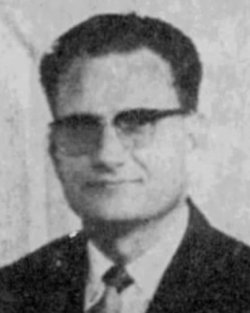
Wilbern Elias Best (1919-2007) was a preacher and writer of Gospel material. He wrote 25 books and pamphlets comprised of sermons he preached to his congregation. These books were distributed in English and Spanish around the world from 1970 to 2018 at no cost via the W.E. Best Book Missionary Trust.

Comments

0 / 2000 characters
Comments are moderated before appearing.

Be the first to comment!

Joshua

Joshua

Shall we play a game? Ask me about articles, sermons, or theology from our library. I can also help you navigate the site.