Bootstrap
W.E. Best

Overview of Parables

W.E. Best July, 1 1988 Audio
0 Comments
Best's Corner

Sermon Transcript

Auto-generated transcript • May contain errors

100%
The 13th chapter is a long chapter,
58 verses, and it would take any of you
if you sought to parse this whole chapter, you
might be working on it for a month. But it needs to be parsed because
this is the chapter with a great number of parables or illustrations
chosen by Christ, to teach the disciples a spiritual truth,
and also at the same time to conceal the message from the
Pharisees. I'm going to read just the first
verse and ask you a question, and then we'll go back and look
at some things that precede this chapter. Matthew 13. Several have already expressed
their desire to get into this chapter because of the parables
that are somewhat difficult to teach. I'm sure you know that
most people think that the parables of this chapter actually give
to us what is known as the mystery form of the kingdom, that that
is a statement without which that really cannot be substantiated
by the Scriptures. Let's read the first two verses,
and then I want to ask you a question before we go any further. On
that day, Jesus having gone out of the house, was sitting
beside the sea. And great crowds were gathered
together to Him, with the result that into a boat, he went into
a boat, I'm using boat rather than a
ship, to sit and all the crowds had stood on the beach. Now, had stood is a pluperfect. You don't find too many pluperfect
verbs in the Greek and we'll tell you what that means in a
few minutes. Go back to verse 1. On that day. What was the day? What was the day? On that day. You cannot understand or appreciate
what is found in this chapter unless you begin by finding out
what the day was on that day. Go back to chapter 12 and verse
38. Let's see what the day was. 1238. Then some of the scribes and
of the Pharisees answered, saying, Teacher, we are desiring to see
a sign from you." Now, the Greek word for sign can also mean miracle. So it could be translated in
that manner. You know that the Jews were always
seeking for a sign. They were looking for a sign.
And then some of the scribes and of the Pharisees answered
saying, Master, we are desiring to see a sign from you. Now drop down to verses 41 and
42. The only sign that our Lord gave
was the sign of Jonah. Verses 41 and 42. Now drop down to verse 46. I
want us to look at a Real practical application. And then when we
read verses 46 through 50, we'll know more about the day that
is mentioned in verse 1. On that day. And by the way,
that day, that's a demonstrative pronoun. So it was a particular
day. On that day. See, when you have
a demonstrative pronoun, it's very important to know that because
it adds emphasis. Verse 46, while he was still speaking to
the crowds, behold, his mother and brothers had been standing. Now we're going to do a little
Greek here for a few minutes. Had been standing is another
pluperfect. a pluperfect active indicative. And the reason I'm calling attention
to it is because we'll see something else when we come to verse 47.
Had been standing. Now what does that literally
mean? That means the action began in past time, and it not only
began in past time, but it was completed in past time. So whenever
you have a pluperfect verb in the Greek. It's all in pastime. It's not like a perfect. A perfect
has its beginning in pastime, but it has a continuing state
of results. But a pluperfect has not only
the beginning, but also the conclusion of the action in pastime. So it's pluperfect. Now let's
read it again and keep that in mind as we look at verse 46.
While he was still speaking to the crowds, behold, his mother
and brothers," and of course they were his half-brothers,
"...had been standing," see, had been standing, so you can
tell what it is, "...had been standing outside seeking to speak
to him." Now in verse 47, "...and someone said to him, Behold,
your mother and brothers have stood outside. Now that's not a pluperfect.
Notice the difference now between had been, had been standing and
now the translation of the perfect active indicative verb in verse
47 which states have stood outside seeking to speak to you. So you
go from the pluperfect to the perfect. Now when you put them
together what do you have? See the difference? Verse 48,
But replying, he said to the one speaking to him, Who is my
mother, and who are my brothers? Now the next two verses give
to us a lesson that was not only true with the Lord Jesus, but it's true in a spiritual
sense to you and me. In other words, the Lord Jesus,
now in these next two verses, was making a break with physical
ties. Making a break with physical
ties. Remember that. In other words,
He had something more important to do. Earthly relationships must not
hinder obedience to God's will. That was true not only in the
life of the Lord Jesus, but it is to be true in your life and
in mine. Spiritual relationship, in other words, is stronger than
blood relationship. Now, if you can't relate with
that, then there is something seriously wrong. I have no problem
relating with it. I have more fellowship with my
brothers in Christ than I do those who are close to me in
the flesh, who give no evidence of having passed from death into
life. Now, looking at verses 49 and 50. And having extended
his hand toward his disciples, He said, Behold, my mother and
brothers, for whoever may do the will of my Father, who is
in the heavens, he is my brother. In other words, this could be
translated two ways. You could translate it by saying,
he is my brother, or you could translate it, that one is my
brother. and sister and mother. So that gives to us a tremendous
truth, doesn't it? So obedience is the tie of kinship. Being children of obedience,
not disobedience, but being children of obedience. That is the tie
of kinship. It is the mark of God's family. I said God's family. Now with this before us, when
you look at the first verse of chapter 13, on that day, on the
day that all of this was recorded, on the day that the Pharisees
and the scribes wanted Him to manifest some miraculous power. When they said, we are desiring
a sign or a miracle from You, verse 38. And He spoke of the
only sign that they needed. And of course a sign was required
by the unrepentant Jews in the face of reasonable evidence. They didn't need a sign. Reasonable
evidence had been given. They were face to face with it.
And so he answered them by saying what he did in verses 41 and
42 concerning the sign of Jonah. I want to mention a few things
now in the 13th chapter. There is so much in this chapter.
We will be studying the 13th chapter when we get to it. We're
just taking it step by step. Remember now, we're still in
the 3rd chapter. And we'll have two or three more
lessons, or maybe more than that, in the 3rd chapter before we
go outside of chapter 3. And even at that, we're not making
a verse-by-verse study. That's impossible. If we did
that, we'd be in the Gospel of Matthew many, many months. But let me give you a few statements
concerning this chapter as a whole. Actually,
there are eight parables rather than seven. People speak of seven,
but there is one actually given in verse 52. So look at verse 52 for just
a moment. 1352. And He said to them, Because
of this, every scribe who has been trained for the kingdom
of the heavens is like, and I'm translating that word and I'll
give you what that word is in a few minutes, similar to a man. a master of a house who is taking
out of his treasure new and old things." But the fact that he uses the
word like here proves that it is in the family of the parables. Now, we read verses
1 and 2. Look at verse 3. Beginning with
verse 3, We have the first parable that our Lord used, but this
parable does not use a word that is used in the other major parables
of this chapter. And I want to see if you detect
what that word is. Look at verse 3. And He spoke
many things to them in parable, saying, the one sowing went out to sow."
And I'm translating it, the one sowing went out to sow, rather
than to say, a sower went out to sow. And then he begins with
verse 4 describing the four sows. And we'll not go into that tonight.
You'll notice there is not anything said in this particular passage,
beginning with verse 3, through verse 10 about the word that
is translated like in your King James. Now the first time that
we have any reference to that which is similar is in the second
parable. So look with me at verse 24. This is the beginning of the
second parable. or illustration. You could translate
the word parable illustration. And I'll describe, and we'll
spend a little time on the subject of the parables in a moment.
We'll find out what a parable is. We'll look at the Greek word
translated parable. Verse 24, He put before them
another illustration, and I'm using that rather than the word
parable, saying, The kingdom of the heavens Here it is, was
similar. Now you can tell by the way that
I'm translating it, was similar. And in your King James Version,
it says, is likened unto a man which sowed good seed in his
field. Now this is a translation that
I'm giving it. And you can look at your in linear.
Sometimes your interlinear gives a very good translation, but
all the interlinear does, it leaves the words in the order
in which they are in the Greek. But you know about word order,
so we won't go into that now. He put before them another illustration
saying, the kingdom of the heavens was similar. Was similar is an
arius passive indicative verb of the verb homoio. Hamo'o'o. And Hamo'o'o, now notice
it's a verb. It's not an adjective, it's a
verb. It means to make like, and since this is passive, the
passive voice, in the passive voice it can mean resemble, be
like, or be similar. And so I've chosen the word similar.
So the kingdom of the heavens was similar to a man who has
sown good seed in his field. So the first time, the verb form
is used. Hamo-aho. Alright, go to verse
31. I'll give you all the places
where it's found now. Now we go from the verb, this
is the only time the verb form is used. In verse 31, He put
before them another illustration saying, the kingdom of the heavens
is similar, but now you say, wait a minute, that's a verb,
isn't it? No, it isn't a verb. Look, if you will, please, at
verse 31 in your Greek, on the second line, about the middle,
you will find hamoia. And you'll notice, now this is
an adjective, it's in the nominative case. And then it is followed
by esten, which is a present active indicative of I, me, which
means to be. And of course, it's translated
is. So you have a verb. And then your verb, even though
the word order is different, you have in the English and translating
it, you don't say like is, but is like, or is similar. So this
is the first, now, adjective that is used. The verb form was
used in the second parable. So he put before them another
illustration saying, the kingdom of the heavens is, and you have
the verb for that, similar, or like, and that is an adjective,
to a grain of mustard seed which a man took and sowed in his field.
Drop down to verse 33. He speaks another illustration
to them, the kingdom of the heavens, same thing again, is similar. So you look at verse 33, the
last word on the second line is the same inflected form as
that found in verse 31. And then it is followed by estin,
the same inflected form, present active indicative of I am he.
So you have the second adjective. And then that is the
same adjective, but it is used a second time. Now drop down
to verse 36. Then having sent the crowds away. Now here's something that's interesting.
Let me show you this. This is so important. The seven
major parables of Matthew 13. are divided into four and three. Four and three. In the first four parables Jesus
Christ gave, He was sitting in a boat and the people were standing
or sitting by the seaside. And so He spoke to the crowds,
and I'm using the word crowds rather than multitudes, By the
sea, He was speaking to the crowds, and that was outside. However, when you come to the
fifth parable, the Lord Jesus went inside. Now, we have the
record of that in verse 36. Verse 36. Then, having sent the crowds
away, He came into the house. And his disciples approached
him, saying, Explain to us the parable of the tares of the field. Now, he explains the parable
of the tares, and that was a second illustration or parable. So they
asked for the explanation of it. And he gives them the explanation. And you'll notice that I'm translating
it, explain. And if you'll notice, in verse
36 of your Greek, the third line and the last word, you have the
inflected form, and it is the arius active imperative, of the
verb dios, dios of eo, dios of eo. And it means to explain,
to tell, or to report. And so I'm using the word explain,
the verb explain. So explain to us the parable
of the tares of the field. So the last three parables, the
major parables I'm talking about, He explained them to His disciples. He wasn't speaking to the crowds.
He was speaking to His disciples inside the house. The first four,
He spoke to the crowds, the last three. He spoke inside the house
to the disciples and began by explaining to them the meaning
of the wheat and the tares growing up together until the harvest.
Now we'll get into all of that later. So Christ taught his disciples
in private that the kingdom was not to be established immediately. And you'll find in this explanation
He proves to them, He shows them that the kingdom will not be
established immediately. So you have to get away from
that idea that the kingdom was established when Jesus Christ
came the first time. So what we're doing, we're just
stacking the evidence, folks. Showing it just instance after
instance. And that's why we ask you to
really study and make notes and put them together in a systematic
order as we go along. I'm just, in these Wednesday
evening services, I'm trying to whet your appetite. to do
some reading ahead so you'll be in a better position to follow
us when we do get to this particular portion of Scripture. So I want
to call attention, these are divided into four and three. Verse 4, outside to the crowds. The last three, inside the house
to the disciples in private. Now one other thing I want to
mention. Look at verses 1 and 2 again. On that day, Jesus,
having gone out, was sitting beside the sea. And
great crowds were gathered together to Him. He wasn't enthused over the crowds. Did you know that? I want you
to turn to the Gospel of Luke, chapter 8. Luke 8. Now, Luke is talking
about the same thing, but I want to read his account here. Luke
8 and verse 4, I believe it is. Now, I haven't had time to translate
the gospel according to Luke. I haven't gotten that far yet.
I'm working on Matthew presently. Verse 4, And when much people
were gathered together, And you'll notice you have really the same
words that you have in Matthew. So the great crowds were gathered
together and were come to him out of every city, every city. What did he do? He spoke by the
use or by means of a parable. So the word, the preposition
by here taken from the Greek literally means by means, by
means of a parable. So Christ showed by his use of
parables that he was not impressed by great crowds. Did that surprise
you? Religionists today think differently. They think serving the Lord is
bringing great crowds together and get a great number of, quote,
decisions, end of quote. whatever that means. And I think
most of us know what that means. Now that wasn't true of Christ.
Why? Let me give you the answer. Turn
to John chapter 2. I'll give you the answer why.
Crowds do not impress Him. And the reason crowds do not
impress Him is given here in chapter 2 verses 23 through 25. Look at it. Now when He was in
Jerusalem at the Passover, in the feast day, many believed
in His name. Many believed in His name. Were
they saved? Let's see if they were saved.
Look at the text. Many believed in His name when
they saw the miracles of the signs. When they saw, they believed. Therefore, their believing was
based on what they saw and not because of something that had
been done in their hearts. Alright, next verse. They saw
the miracles which he did, or which he was doing, because it's
a present active indicative, which he was doing. Verse 24.
But Jesus was not entrusting, I like that word entrusting.
I'm using that rather than commit. But Jesus Himself was not committing
Himself to them. Why? Because He knew all. He knew what was in their hearts.
So He wasn't impressed by the crowds. Now you and I can't read
the hearts of people. We can't do that. Christ could. And knowing what was in their
hearts, He wasn't impressed. Not at all, but the crowds. So
knowing who they were who had come in these large crowds from
every city, he began to speak in parables. Now why did he begin
to speak in parables? All right, let me show you why.
Go back to the 13th chapter of Matthew. And we'll see why he
did it beginning with the 11th verse through the 17th verse. Now this is a passage of Scripture.
that is really descriptive, really descriptive. Let's read this
and then we'll spend the rest of our time discussing parables. Verse 11, I think this is a great
text. I would say that verse 11 is
the text of this entire section, beginning with verse 11 through
17. And he answering said to them, because it has been given."
Now what kind of verb is that? Has been given. Notice your Greek. Verse 11 is the last word in
the 11th verse in your Greek text. Dedotai. And dedotai is a perfect passive
indicative of the verb didomi. Now, Didymi is one of those verbs
that is used many, many times in the New Testament. But it
is the basic verb of grace. Don't forget that. Didymi is
the basic verb of grace. And that's so important to know.
So important to know. Why? Because it is the pure favor
granted by the sovereign God. That's why. Now we'll read all of verse 11.
And the answering said to them, Because it has been given you
to know the mysteries of the kingdom of the heavens. It has
been given you to know. It's been granted you to know." And here's what he says, but
to those it has not been given. Now you'll notice it has not been given. We have
the second line, detetai, and then the last word in the text
is detetai. So you have a present passive
and you have a present passive indicative in both cases. But
the only difference is, one is negated by a negative oo. So to you it has been given. But to others it has not. That negates. It has been given. It's still a perfect, but it's
negated. Has not been given. So when we look at the first,
the disciples, to them it had been given. It has been given
to you. So it was a gift that had been given to them in past
time, and they were in a state or in this state of knowing,
and in this state of grace, which enabled them to know. But to
others, that grace had not been granted, it had not been given,
and therefore they were not in a state of knowing. Verse 12. For whoever has it shall be given
to him. For whoever has, comma, it shall
be given to him. And he shall have abundance.
So to the person this gift has been given, he's going to have
abundance. And that's why we go from grace
to grace, strength to strength, glory to glory. And the path
of the just is the shining light that shines more and more to
the perfect day. It's abundant. More grace, more grace. And that's
James 4.6. But whoever does not have even
what he does have shall be taken from him. Whatever he has should
be taken from him. Hadn't been given grace, but
whatever he has should be taken from him. by means of parables or by means
of illustrations. I am speaking to them, seeing
they are not seeing, and hearing they are not hearing, neither
are they understanding." Now folks, you can't make it any
plainer than that. You cannot make it any plainer than that.
These are the words of Jesus Christ Himself. Verse 14. And in them, the prophecy of
Isaiah is being fulfilled. And he's actually quoted from
the 6th chapter of Isaiah. Saying, by means of you, by means
of hearing, you shall hear and shall by no means. Now I want
you to watch this. Twice in the 14th verse, and
if you look at your Greek, look at verse 14. Drop down to the
third line, you see 14, the beginning of the 14th verse, and the 14th
verse starts with Chi, coordinating conjunction. Drop down three
to the third line, and you have a double negative, u-me. See
this, u-me, double negative. Both are negatives. And you have
this double negative twice. After you look at this, you pause
a while, when you come across this double negative, you know
exactly what it means. By no means. That's what it literally
means. When you have the double negative
in the Greek, it means by no means. It adds emphasis. The
double negative adds emphasis. Now let's read it. All of verse
14. And in them the prophecy of Isaiah
is being fulfilled, saying, By means of hearing you shall hear,
and seeing you shall see, and by no means perceive or to
understand. So you have the double negative.
By no means and by no means. Now verse 15. For the heart of
this people, the heart of this people, verse 15, has grown dull
and with the ears they heard, watch this, with difficulty. They heard with difficulty. And
they closed their eyes lest... Notice that. Closed their eyes.
Have you ever had anybody that closed his eyes and ears when
you're talking to him? I want you to know an unregenerate person,
he'll just turn a deaf ear to you. Unless the Lord has done
something for him, he'll turn a deaf ear to you, folks. This
is what Christ said. We have to believe this. And
you can't pierce it, you can't circumcise his ear. And you can't
give him eyesight. So look at this verse again,
verse 15. For the heart of this people has grown dull, and with
the ears they heard with difficulty, and they closed their eyes, lest
they should see. with their eyes, and should hear
with their ears, and should understand with the heart, and should turn
back, and I shall heal them. Verse 16, but blessed are your
eyes. What a tremendous statement this
is. Christ said to the disciples, blessed are your eyes. Why? Because Here we have Hati, which
is a subordinating conjunction, and it is a conjunction of cause. So because they see and your
ears, because they hear. So blessed are your eyes because
they see, blessed are your ears because they hear. Why do we
see? Why do we hear? Because God opened
our ears and our eyes. Both have been circumcised by
the Holy Spirit. Verse 17 is the last verse. So when you look at verse 16
before we read verse 17. Blessed is the one who can see
and hear. That's what he's actually saying.
This is not based on feelings. But it's based on position. Position
in grace. And that means to be favored
by God. Now verse 17, For truly I am
saying to you, that many prophets and righteous men desired to
see the things which you are seeing, and did see, and to hear
the things which you are hearing, did not hear or comprehend. Now let's look at parables for
a few minutes. Why did the Lord speak in parables? Verses 11
through 17. We have seen why. A parable or an illustration
would conceal the real truth from uncircumcised ears and eyes. And heart, of course, to begin
with. But at the same time would enable those who had circumcised
eyes and ears Not only to see and hear, but also to understand. So, the subject of parables or
illustrations is a very important subject in the study of the New
Testament. Especially the synoptic gospels. Interpretation of parables
is something we need to think about for a few minutes. Let's
look at the word for parable. Parabale. Parabbalay. Spell P-A-R-A-B-O-L and it's
a long E. And pronounced like A, which
is Eta. Now the word is used 48 times
in the New Testament. 48 times, well I should say between
Matthew 13, 3. Now watch what I'm giving. 48 times between Matthew 3, 13,
3. and Luke 21.39, 48 times. And it is used in Hebrews
9.9 and 11.19, twice in Hebrews. Now let's read a look at the
word parable. Let's look at the Greek word.
We'll give the meaning. It's a compound word. It comes
from parabolo. That's a verb. So it comes from
that. This is a noun. Para is a preposition. Para means beside. That's a basic
meaning of the preposition para, beside. And then you have the
verb balo, B-A-L-O, which means to throw. So what do you have? Para and then balo. throw beside. That's the literal meaning, literal
meaning of the word. And of course we're looking at
the noun form, parable. So a parable is something placed
by the side of something else with the intention of explaining
one thing by another thing. That's a parable. Or that's an
illustration. Now I'm going to go over these
things some again. I'm giving you information. I'll be repeating
some of it anyway. But I won't be going into some
aspects of it. But we'll have to touch on these
things for the benefit of all when we come to an exposition
of the 13th chapter of the Gospel according to Matthew. So a parable
is something placed beside or by the side of something else
with the intention of explaining one thing by another thing. So
it's an illustration. Parables must not be made the
first source of doctrine. Don't ever base a doctrine on
a parable alone. A parable is never the first
source of biblical doctrine or a biblical principle. I want to give you an illustration
of that. I had a fellow who tried to hang that on me one time.
I was using Luke chapter 19, when the Lord Jesus spoke about
a certain nobleman who went into a far country to receive for
himself a kingdom and to return. He said, That's a parable, and you don't
base doctrine on a parable. I wasn't doing that, and I won't
do that. If that was the only reference, then I couldn't use
it. I wouldn't use it. But since the Bible is full of
the subject of the kingdom, all the prophecies of the Old Testament,
and all the teachings of Christ by Christ and by the apostles,
all that we have on the subject of the Kingdom, what is wrong
with using the illustration that the Lord Jesus Himself gave?
And don't forget this. The Lord Jesus Christ taught
explicitly on the subject of the Kingdom. If you don't believe
it, go to the first reference, Matthew 4, 17. There He began
discussing the Kingdom. So John the Baptist preached
about the Kingdom in the heavens, the Kingdom of God. in the heavens, or the kingdom
of the heavens. Jesus Christ came along and preached the same
message. The apostles came along, well
first of all, the twelve disciples, Matthew 10. They preached the
same message, following Christ. And then after them, Luke's account
of the seventy. You remember the seventy? Then
the seventy went out and they preached the same message. So
you have John the Baptist, Jesus Christ, the Twelve Apostles,
and then the Seventy, and then all of the others who followed
throughout the New Testament. So it is not the foundation of
the subject of the Kingdom. It's an illustration. And our
Lord used the illustration. So He presented Himself as a
nobleman who has gone into a far country to receive the Kingdom
from the Father and to return. Folks, that's not the foundation
of the doctrine, that's an illustration of the doctrine. Let me use another illustration
of this point. Last night I ran across the dial and a preacher
was on and I've heard him two or three times. Smart cookie. Very smart. Before he got through last night,
he said he used to be a Baptist before he became a charismatic.
So he's had a lot of training, good speaker, sharp as it can
be. His subject was baptized in the
cloud. And he made a few remarks at
the first. I thought, well, I'll hear him for a few minutes. I
was tired just before he went to bed. And Juanita didn't like
to look at that station, so she went on in the workroom and she
was doing something. So I said, I'll just listen to this character,
see what he has to say on it. Folks, he made some tremendous
statements in the book of Exodus about the cloud, in the book
of Numbers about the cloud. And then he used 1 Corinthians
10 verse 2 about the cloud. baptized in the cloud and in
the sea. He was making a distinction between being baptized in water
and being baptized, as he said, in the Holy Spirit. And I'm not
going into that in detail now. But I want to make this statement.
Here he was reading scripture, handling it. Boy, it sounded
good, see. I said, well, I'll have to wait
a few minutes. I'm going to wait until he applies it. And when
he started making application, he was atrocious, folks. Just another of the same breed. Now, the point I'm making is
this. It isn't enough a person to get up and start quoting scripture
or turning from one passage to another. The average person today
who doesn't study, he'll say, why, he's teaching, he's preaching
right out of the book. He's reading the scripture. Sure,
the devil can do it and he does it all the time. How in the world
are you going to deceive people unless you use Scripture out
of context? And before he got through, that's
exactly what he did. But he took about, I would say,
15 minutes developing it, and there was nothing wrong. And
then when he started applying it, he went off to the deep end. So folks, this is what I'm trying
to tell you. What I'm trying to tell you, you have to know
the Scriptures. I don't mean just some of them.
You've got to have a basic workable knowledge of the Scriptures,
period. So we're talking about a parable. Something plays beside
something else with the intention of explaining one thing by another
thing. That's an illustration. That's
a parable. Parable. Beside, follow, to throw. So it literally means to place
one thing beside another thing to explain one thing by something
else. That's a parable. That's an illustration. But parables
are never to be the main source of biblical doctrine. Of biblical
doctrine. They're only ornamental coverings. That's what a parable is. It's
an ornamental covering or illustration. The Levitical priesthood, the
offerings and the feasts were the patterns, we're told, patterns,
in Hebrews 9.23, of the things in the heavens. Things in the
heavens or of the heavens. So all that is of God has come
from God or will come from God. Now there may be mysteries of
Bible doctrines, while the doctrines themselves may be known. Now get this statement. Get this
statement, because I'm going to point you again to 1311, chapter
13, verse 11. I said there may be mysteries
of Bible doctrine, while the doctrine themselves may be known. Now what do you mean by that?
Look at the 11th verse again. I want to use this as an illustration. You know what I'd really like
to do, but I've got to put it in a systematic order as we go
along and develop this theme on the kingdom. I'd just like
to take you through Matthew, really, as rapidly as I could,
in sequence, and just show you the step-by-step. That would be the most fascinating
thing to do. Without a lot of preparation
ahead of time, just take you to the text itself. Look at verse 11 again of chapter
13. And the answering said to them, because it has been given
to you to know the mysteries of the kingdom of the heaven.
It has been given to you to know the mysteries of the kingdom
of the heavens. Now what did I say? I said there
may be mysteries of Bible doctrines while the doctrines themselves
may be known. So they're called mysteries here
in Matthew. Mysteries. Does that mean that
we can't know? Will you turn with me for an
illustration of what I'm talking about? 1 Corinthians 4, I believe
it is. Let's look at chapter 4. Let's begin with verse 1. Show you how important it is. Let
a man so consider us as attendants or assistants, if you please,
of Christ. and stewards, watch this, stewards
are administrators of the mysteries of God. Do you think that the kingdom
was such a mystery that John the Baptist did not know what
he was preaching and declaring or preaching or teaching? Do you think the one that God
called and made a prophet and yes, even more than a prophet
that he didn't understand the subject of the kingdom? I don't believe that for a second.
You don't either. Now, a mystery can be explained
and yet there are elements about it that remain mysterious to
us. For instance, We're told in 1 Timothy chapter 3 and verse
16, without controversy, our confessedly great is the mystery
of God. God manifested in the flesh. Now even though we understand
that Jesus Christ came through the Virgin Mary, Yet, folks,
there are a lot of things we do understand, but there are
a lot of things about it we don't understand. So when a mystery
has been revealed to us, we can say that we understand it, but
we don't understand all about it. Let me give you another illustration
of that, of that fact. Why? We're dealing with the infinite
mind of God, and that's why. That's the simplicity of it. It doesn't disturb me too much
because I just consider the people who say it. But when somebody
accuses an individual, like I was accused last week, of knowing
it all, well, of course, I know the person.
And knowing the person, you have to consider it. No Christian knows it all. No
Christian. No one knows it all. I have a
finite mind, not an infinite mind. And we all have finite
minds. Look at Ephesians chapter 3 and verses
18 and 19 to illustrate this point. I guess the reason I like to
teach like this, you see on Sundays I try to formulate an outline,
I try to follow it closely for the sake of really keeping on
track. But I really like to teach. I
like to study and have so much in my mind that it comes to me
and you just keep teaching. That's the way I really like
to teach. Begin with verse 18. May be able
in order that you may be fully aware or able to comprehend with
all saints what is the breadth and length and depth and height
And to know the love of Christ, which is surpassing knowledge. Even the love of Christ is surpassing
our knowledge. I can't. I can just explain it
to a poet. And I can't say any more. I'm
limited. And we're all limited. In other
words, the love of God surpasses our knowledge, our capability.
to comprehend it. That's true with every mystery,
whether it's the mystery of Christ, the mystery of salvation, the
mystery of the kingdom or whatever it is. But to the child of God
the mystery is revealed and then yet at the same time much of
it is still concealed to us. It will take all eternity for
you and me to really, I want you to know, we won't get bored
in eternity. I told my wife today, I couldn't
believe it this morning. I sat down about 7.30 and when
I got up to the desk it was 11 o'clock. I said, all you've got
to do is just start studying and just keep studying and first
thing we'll know we'll be in the kingdom. We'll be there. These people go around, what
can I do to pass away the time? They just got to, you know, you
hear the expression kill time. I don't know of anything happier
than to just stay in the book and to stay with it and when
you're doing something else to be able to meditate and think about it. Now let me illustrate something.
So there may be mysteries of Bible doctrine while the doctrines
themselves may not be known. And examples, I'll give you some
examples. Here they are, let me give you. They're all called
mysteries. Mysteries of Christ. 1 Timothy 3.6, the mystery of
salvation, Colossians 1.27, the mystery of Israel's blindness,
Romans 11.25, the mystery of iniquity, 2 Thessalonians 2.7,
the mystery of faith, 1 Timothy 3.9, the mystery of the gospel,
Ephesians 6.19, the mystery of God himself, Colossians 2.2, The mystery of the seven stars
of Revelation 1.20. The mystery of Babylon the Great,
Revelation 17.5. The mystery of the kingdom, Matthew
13, which we're looking at. So these are like knowing the
unknowable. Knowing the unknowable. Think
about that. You say, well now how in the world could you make
a statement like that? Only a Christian can make it. I know the unknowable. I know God, and I know Christ,
and they are unknowable. I know what the Bible says about
the kingdom, but the kingdom is unknowable. Folks, that's fascinating. That's
why I'm satisfied. You see, He's satisfied. He's
bigger than my heart. He's bigger than my mind. There came a time when Jesus
Christ changed His manner of teaching. And Matthew 13, 11 through 17
gives it to us. And you can understand why. In
order to really understand the first two verses of Matthew 13, you have to know,
you have to basically know what there is in chapters 11 and 12. So parables are revealing to
the elect and concealing to the non-elect. That's the substance
of it. There are four elements in a
parable. Now this is important to take down. This will be helpful. Four elements in a parable or
an illustration. Number one. Some commonly known earthly thing,
event, custom or occurrence is considered in a parable. Some commonly known earthly thing,
event, custom or occurrence. Number two, spiritual lessons
are taught with emphasis on the word spiritual. Spiritual lessons
are taught. Why do you think he used the
illustrations that he does in chapter 13? He used four when
he spoke to the crowds and three on the inside to the
disciples when he began to explain to them. There was a reason. Number three, earthly elements
gives the parable its illustrative force. Now here's why I use the
term illustration rather than parable, and it's permissible. Now here's something, those of
you who are doing some real studying, I would recommend, please, don't
have just one dictionary in your library. Don't do that. After all, a dictionary has been
gotten together, the information, by men. So you can get a biased view.
The thing that is so unusual, I think, and I've checked him
out for years, Thayer's Greek Lexicon, I have it among many
others. Thayer, whether you know it or
not, was a Unitarian. Now the average person would
say I have nothing to do with Thayer's Greek lexicon if he
was a Unitarian. But do you know what? He was
a tremendous Greek teacher. All he does is put the Greek
together, that's all. But I haven't found anything
of major consequence It was wrong. You can take the things that
Unitarians believe and look up the references of the words and
he is right down the line in giving what he has the conclusion
he's come to from the Greek itself. So I have to say one thing about
him and others have said the same. He is as honest as any
person that I know of in order to just give what the Greek says
and how the word is used in different places. And he was a Unitarian. Some lexicons are formulated
by men who are Arminian. Some lexicons are formed by men
who are very conservative. So you have all kinds of people
bringing into being lexicons. So don't have just one little
lexicon and think this is it. It's not it. Not it. Now, I know that just boggles
the minds of some people, but folks, I have to tell the truth,
whether it's the two. You see, crowds don't... I'm
not putting myself in the shoes of our Lord, but crowds don't
do to me what they did in my early ministry. Not at all. You want people who really want
the truth and want to study. That's what you're interested
in. Whether it's a few or many. So we have the illustrative force,
that's number three in a parable or an illustration. Number four,
since a parable has two levels of meaning, and a parable does
have two levels of meaning, it stands in need of what? I
want you to fill in the word. Since a parable has two levels
of meaning, what is the word I need, Bill? Who will tell me what word? Listen to me closely. Since a
parable has two levels of meaning, you see a natural or something
taken from, the sower went out to sow and he sowed some seeds,
so there's one level of meaning. A person is just sowing seed,
some of it's falling in good ground, some is falling on stony
places, some is falling among the thorns, etc., etc. That's
one level of meaning, but there's another level of meaning, and
so the one word we have to have is what? Interpretation. You've got to give an interpretation. So that's where interpretation
comes in. It's because of the two levels
of meaning. So both the incarnate word and
the written word have the same threefold description, past,
present, and future from our point of view. Now let me make the final statement.
Look at 13.1 and 2 again. 13.1 and 2. You see, we've just really been
talking about 13.1 and 2. On that day, Jesus, having gone
out, was sitting beside the sea, and great crowds
were gathered together to Him, with the result that He went into a boat to sit, and
all the crowds had stood on the beach. This is a statement I want to
make in conclusion. The predicted kingdom of the Old Testament,
because we have the parables of the kingdom of the heavens
in 13, the predicted kingdom of the Old Testament is not described
by the parables of Matthew 13. That's a pretty strong statement. Now I want to complete it before
I finish. I said the predicted kingdom of the Old Testament
is not described by the parables in Matthew chapter 13. The parables
of Matthew 13 teach what is preparatory. What is introductory to the Kingdom? What is preparatory? What is
introductory to the Kingdom? That's what we have in chapter
13. Let us stand.
W.E. Best
About W.E. Best
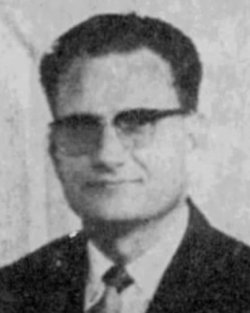
Wilbern Elias Best (1919-2007) was a preacher and writer of Gospel material. He wrote 25 books and pamphlets comprised of sermons he preached to his congregation. These books were distributed in English and Spanish around the world from 1970 to 2018 at no cost via the W.E. Best Book Missionary Trust.

Comments

0 / 2000 characters
Comments are moderated before appearing.

Be the first to comment!

Joshua

Joshua

Shall we play a game? Ask me about articles, sermons, or theology from our library. I can also help you navigate the site.