Bootstrap
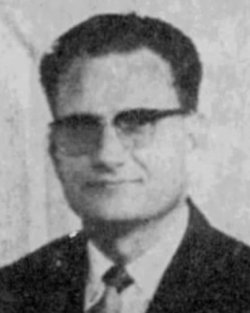
W.E. Best

#3 - Isaiah 53 - The Smitten Savior

Isaiah 53:4
W.E. Best July, 1 1988 Audio
0 Comments
Best on Isaiah 53

Sermon Transcript

Auto-generated transcript • May contain errors

100%
Two weeks ago today, we studied
the last three verses of Isaiah chapter 52, and last Lord's Day
morning, we studied the first three verses of the 53rd chapter
of Isaiah. This morning, I want us to read,
beginning with the first verse, and read through the sixth for
our scripture lesson, But I'm sure the fourth verse will be
as far as we'll be able to get in our study this morning. I'm
going to give to you the title of each verse. Last Sunday we
pointed out that in verse 1 we have the Savior introduced. In verse 2, the Savior misunderstood. And in verse 3, the Savior rejected. In verse 4, we have the Savior
smitten. It will be the fourth verse that
we will be studying in this lesson this morning. Let us, however,
read verses 1 through 6. And when we read the second division,
which actually begins with verse 4, I want to call attention to
the pronouns as we read verses 4, 5, and 6. Who hath believed our report,
and to whom is the arm of the Lord revealed? For he shall grow
up before him as a tender plant, and as a root out of a dry ground,
he hath no form nor comeliness And when we shall see him, there
is no beauty that we should desire him. He is despised and rejected
of men, a man of sorrows and acquainted with grief, and we
hid, as it were, our faces from him. He was despised and we esteemed
him not. Surely he hath borne our griefs
and carried our sorrows. Yet we did esteem him stricken,
smitten of God, and afflicted. But he was wounded for our transgressions. He was bruised for our iniquities. The chastisement of our peace
was upon him, and with his stripes we are healed. All we like sheep
have gone astray. We have turned everyone to his
own way, and the Lord hath laid on him the iniquity of us all. Last Sunday, as we read the first
three verses, I immediately, after having read
the first three verses, went back and re-read each phrase,
and in connection with each phrase, I gave to you either a New Testament
passage or one from the Old Testament that would serve as a divine
commentary on each phrase of the first three verses. I want
to continue to do the same in verse 4 this morning. Therefore, we'll look at verse
4 once again. Surely he hath borne our griefs. In connection with that statement,
remember Hebrews 4 and verse 15, which states, that the Lord
Jesus Christ was touched with a feeling of our infirmities. The next statement is, and carried
our sorrows. In John 11 and verse 38, we find
where the Lord Jesus groaned in himself. and he came to the
grave. He carried our sorrows. When he groaned in himself and
came to the grave, it was the grave of Lazarus to which he
came." The next statement, "'Yet we
did esteem him stricken, smitten of God, and afflicted. In Luke chapter 23 and verse
35, we find this statement. Let him save himself if he be
the Christ, the chosen of God. In these three verses, Hebrews
4 verse 15, and John 11, verse 38, connected
with Luke 23, 35, we have a divine commentary on this prophetical
statement by Isaiah in his prophecy, chapter 53, and verse 4. I want to review a little bit
what we gave last Sunday before we continue our study of verse
4. We're going to get into something
this morning in the fourth verse that will necessitate grace to
understand, yes, grace to embrace, to believe what is given in this
verse of Scripture. I stated last Sunday that Isaiah
53, like many other familiar passages of Scripture, to the
average Christian, is not understood, really, in its great doctrinal
content. I was interested this past week,
after having settled down once again and being able to meditate
on the things of the Lord, I wanted to read what John Calvin
had to say on Isaiah 53. I felt that he should have some
very interesting things on this great doctrinal portion of Scripture. I enjoyed very much his comment
on the very first statement, and I'm giving this by way of
review since a great number of you were out of the city the
last Sunday, and we want you to be up to date in our present
study of this great chapter of Scripture. So look with me now
as we review briefly, and then I'll give some comments that
I've read this past week on the first verses of Isaiah 53. Who hath believed our report? Calvin said, and I quote, Faith
is not in the power of man to believe the report or the doctrine
of Jesus Christ. Who hath believed our report? You will notice that the first
two statements in verse one are in the form of questions. Who
hath believed our report is the first question. And the second
question, to whom is the arm of the Lord revealed? The only
persons who have believed the doctrine of the Lord Jesus Christ
are persons to whom the Lord has revealed himself in regeneration. Thus, the last question actually
answers the first question. When you think about the first
question, who hath believed our report, I think it would be well
for us to consider for a few moments the two New Testament
quotations of this question. One is found in the twelfth chapter
of the Gospel according to John, and the other is found in the
tenth chapter of the Book of Romans. One is quoted by our
Savior, and the other is quoted by the Apostle Paul. In other
words, the Lord Jesus, in his comments to the Pharisees of
his time, had this to say, and I'm asking you to turn in your
Bibles to John's Gospel, chapter 12, and let us read beginning
with about the 35th verse. John 12, verse 35. Then Jesus
said unto them, speaking to the Pharisees, Yet a little while
is the light with you, that is, the Lord Jesus, who is the light
of the world. while ye have the light, lest
darkness come upon you. For he that walketh in darkness
knoweth not whither he goeth. While ye have light, believe
in the light, that ye may be the children of light. These
things spake Jesus, and departed, and did hide himself from them. that is, from the religious crowd. But though he had done so many
miracles before them, yet they believed not on him. Please observe
that the religious people of Christ's day did not believe
on him. Even though he had taught them
personally, he had performed miracles in their presence, yet
they believe not on him." Who was it that believed not on him?
The religious crowd. There is no difference today.
I made this statement to some of the men before the service
this morning. After having dealt with religionists on several
occasions this past week, I find it much easier, notice what I'm
saying, much easier, to witness to a person who doesn't profess
to be anything than to try to witness to individuals who are
religious but lost, who are steeped in tradition but are strangers
to the doctrines of grace. This was true in Christ's day.
What was true then is true now. Notice verse 38. they believed
not on him," now the 38th verse, "...that the saying of Isaiah,
The prophet might be fulfilled, which he spake, Lord, who hath
believed our report, and to whom hath the arm of the Lord revealed?"
Now turn, if you will, please, to Romans 10. in addressing the Jews of his
time. Beginning with the first part
of the 10th chapter, a portion of scripture I'm sure all of
you who have been saved for any length of time are familiar with. The apostle was addressing the
Jewish people when he said, Brethren, my heart's desire and prayer
to God for Israel is that they might be saved. He went on to
say that, I bear them record that they have a zeal of God,
but not according to knowledge, for they being ignorant of God's
righteousness. In other words, the religious
Jews were ignorant of the righteousness of God. Religious people today
are ignorant of the righteousness of God. And they, like Jews of
old, go about to establish their own righteousness and they will
not submit themselves unto Jesus Christ as he is revealed in Holy
Scripture unless, unless the grace of God has been revealed
to their hearts. Now verse 4, For Christ is the
end of the law for righteousness to every one that believe it. Now drop down, if you will, please,
to verse 14. How then shall they call on him
in whom they have not believed? And how shall they believe in
him of whom they have not heard? And how shall they hear without
a preacher? And how shall they preach except
they be sent? As it is written, how beautiful
are the feet of them that preach the gospel of peace and bring
glad tidings of good things. Verse 16, But they have not all
obeyed the gospel. For, and he quotes Isaiah again,
Isaiah said, Lord, who hath believed our report? Thus we have two
quotations. of Isaiah 53, verse 1, in the
New Testament, one by the Lord Jesus Himself and the other by
the Apostle Paul. The Lord Jesus was addressing
the religious Pharisees and Paul, likewise, was preaching to the
lost Jews, or the religious Jews. Looking now at verse 1, "...who
hath believed our report, It takes more than natural faith
to believe the record that God gave of His Son. Natural faith
can give mental assent to the record that God has given concerning
His Son, the Lord Jesus. But faith that embraces the person
of Jesus Christ in salvation experience, and I'm talking about
a conversion experience, The only person who can do that is
the individual to whose heart the Lord in grace has been revealed
to that person. And then we have, in the last
part of verse 1, and to whom is the arm of the Lord revealed. So the Savior is introduced in
verse 1. In verse 2, by way of review,
he is misunderstood. He shall grow up before Him as
a tender plant." The Jews were looking for someone to come in great pomp and in great dignity. The Jews could not make the distinction
between the coming of Jesus Christ in humiliation and His coming
in power or His coming in glory. They looked for someone who would
come riding on a white horse, not realizing that he must come
first, in humiliation, riding upon an ass the full of an ass. Then we're told, as a root out
of a dry ground, dry ground referring to that which is contrary to
the course of nature. And then it says, when we shall
see him, There is no beauty that we should desire Him. When the
Lord Jesus presented Himself, having assumed human nature,
having clothed Himself, as it were, or His divine nature being
clothed with human nature, there wasn't anything attractive about
the human nature of Jesus Christ. And here is the prophecy which
states it. when we shall see him." You see, this is the confession
of the Jews by means of prophecy, when they shall look upon him
whom they have pierced and a nation will be born in a day. In other
words, Isaiah 53 applies primarily, notice what I'm saying and how
I stress the word primarily, to the Jews of the future. when
they shall embrace the Lord Jesus Christ, at which time, of course,
he has been revealed to their hearts by the grace of the sovereign
God. And when they see him and know
him to be the person that he is, this is their confession
at that time. As this is the confession of
the Jews at the time of the conversion of the nation of Israel, It also
gives to you and me a most beautiful picture of the person to whose
heart the Lord Jesus Christ has been revealed in grace. And then
when the gospel is proclaimed to him, there is confession,
there is contrition, there is repentance, there is remorse,
and all of these things are an evidence of one having experienced
the saving grace of Jesus Christ in a conversion experience. But
there is something else I do not want us to pass lightly over
in the second verse. When we shall see him, this is
their confession, the confession of the Jews. When we shall see
him, there is no beauty that we should desire him. That was true when he came in
humiliation. The Jews saw nothing in him that
made them desire him. Therefore, they believed not
on him. And that was in order that the
prophecy of Isaiah 53 verse 1 might be fulfilled according
to John 12 and verses 37 and 38. Now there is a valuable lesson
in the last part of verse 2 to which I direct your attention.
God has a way of concealing His choicest treasures. What did I say? I said God has
a way of concealing His choicest treasure. The choicest treasure
of all is the Lord Jesus Christ, the unspeakable gift of God the
Father. But let me illustrate it by beginning
life with you and with me. When people look at us, They
only see the outward man. They cannot see the hidden man
of the heart. Thus God has a way of concealing
the choice's treasure in you and in me. That doesn't mean that it remains
concealed. Before I will have finished the
fourth verse this morning, And as we consider the confession
of Israel, and as it applies to the confession of every person
born of the Spirit of God, the treasure within does not remain
hidden. There is some manifestation of
it, even though there is some manifestation of it in one's
life. Yet there is never the full manifestation
of it in this life. There is never the full display
of God's grace in your heart. There is never the full display
of the grace of God in my heart. As I was studying this particular
point, I could not help but think about how that the great treasure
that resided in the heart of A.W. Pink, for instance, was
hidden through most of his lifetime from most people who heard him
or most people who attempted to read his material. God has a way of concealing his
choices' treasures. In studying this point, I was
reminded of what a preacher friend of mine told me almost 30 years
ago. He said that he was invited to
attend and speak at a Negro Baptist convention. He said, I went after
having prepared a message. I was to bring one of the main
addresses before the Negro convention. And he said, I was the only white
person present. And he said, one Negro preacher
after the other. got up to speak, and he said,
they spend more time preaching than most white conventions. This was told me by a preacher
while I was in Big Spring, Texas, between the years of 1943 and
1947. And it was during that time that
he had been invited to this convention. He said he listened to several,
and he said, you know, most of them are natural showmen, to
which I agree wholeheartedly. But he said, finally, the main
speaker, and he said, when he was introduced, he said, and
this person walked up to the platform, he said, I said to
myself, why in the world have they waited and have invited
this man, a most despicable looking person, not even dressed well,
said his trousers and his coat did not even match, and they
looked like they had not been cleaned in six months, and he
said, yes, they had called upon this Negro man to bring the final
message. When he was introduced, he was
not pastor of some large colored church. He was pastor of a little
bitty church way out in the country. He said, I said to myself, why
have they done this? But he said, let me finish my
story best. He said, to this day I have never
heard a greater message from the lips of any man that I heard
from that colored preacher. And he said it didn't take me
long to find out why. He was pastor of a little church
Way back in the country, he had plenty of time to spend with
God and in the study of His Word, whereas those who had spoken
before him, most of them were pastors of larger churches, and
you could tell without any preparation did they attempt to speak. But
this man had a message from God, and he delivered it with power. You could tell he had been close
to the Lord. So he said, there was a great
treasure hidden in a vessel that was despicable to look upon. The Lord Jesus Christ was not pleasant to look upon. Therefore he was misunderstood,
revealed in verse 1, introduced misunderstood, and now, verse
3, rejected. He is despised. We find in Psalm
22, verse 6, he is referred to as a worm and no man. And what
did his enemies say while he was here in person? Why, release
unto us Barabbas. Crucified. Crucified. He is despised. Is there any
difference today? None whatsoever. The religionists
despised him, and the religionists despise him now. Rejected of
men. Rejected of men then. Rejected
of religious men now. And acquainted with greed. And
we hid, as it were, our faces from him. He was despised, notice
this, and we esteem him not. Now we come to our text. Verse
4. In this verse of Scripture, the
Lord Jesus is presented as the smitten one. There are two parts
to this verse. I will give them to you in an
outline form, and then we will expound the text. Notice first of all, "...surely
he hath borne our griefs, and carried our sorrows." That's
the first part. In other words, that gives to
us the first division of the text. In this division of the
text, I think we ought to use this title, Christ's Love is Manifested, in a threefold manner. Number
one, surely, surely, look at the word, The word surely speaks
of the certainty of Christ's love for his own. The certainty of love, surely. He hath born. Now there are two words to be
connected. The words are born and carried. In these two words we have the
acts of obedient love. The certainty of love, number
one. And number two, using the two
words born and carried, we have the acts of obedient love. Surely He hath born and carried. Now notice the last. our griefs
and sorrows. Griefs should be connected with
sorrows. Here we have the objects of divine
love. So we have in the first part
of the text, Christ's love is manifested. The certainty of
his love surely the acts of obedient love he hath borne and carried. And finally, the objects of divine
love he hath borne our griefs and our sorrows. Now for the last part of the
text. Here's the confession of repentant Israel. This is the
confession of every person born of the Spirit of God. Here is
man's unthankfulness in the last part of the text. Yet we did
esteem him stricken, smitten of God, and afflicted. There are two parts to which
I call attention under the second major division of the verse.
First of all, we have the persons involved. We, look at the plural
pronoun, we. This is the confession of repentant
Jews. This is the confession of every
repentant person today. So the persons involved, we. Then notice number two, the guilt,
esteeming Christ smitten of God. Esteeming Christ smitten of God. Do you know what that really
means? Let me give it right now before we go any further. We
do not want to miss the point. The Jews, when Jesus Christ came
the first time, looked upon what happened to Him as suffering
for something that He should have suffered since He had led
them away from their, or attempting to lead them away from their
traditional beliefs, from their religious beliefs. Look at that. If you want something that will
curl the hair of every religionist today, here it is. Do you know why it's so difficult
to witness to religionists today, people who are steeped in religious
tradition? Here it is. They esteem what
happened to Jesus Christ, and they esteem the message of grace
that you seek to give to them as leading them away from their
religious traditions, and they despise you for it. Just as they
despise Jesus Christ, just as they despise the Apostle Paul,
and the religionists will ever despise those who stand up and
magnify the unsearchable riches of God's grace, because they
feel, you're trying to lead us away from our Baptist tradition,
or you're trying to lead us away from our Methodist tradition,
or you're trying to lead us away from our Lutheran tradition,
and on and on I could go. And all one is doing is simply
pointing the individual or individuals to the grace of the sovereign
God. But they do not understand that
message. So here is the confession of the Jews when they see Christ
after He has been revealed to their hearts in regeneration. We did, and notice this, Past
tense now, we did esteem him stricken, smitten of God, and
afflicted. In other words, he received what
he should have received since he was seeking to lead us away
from our religious traditions. That's what we're up against
today, beloved. Let's face it. Are we to become discouraged?
No. We are to proclaim the message of God and look to Him for the results.
In proclaiming the true message of grace, it doesn't take long
to tell who are saved and who are simply religious people but
void of the grace of God. Now, for an exposition, of the
verse itself. There are many things in this
text of Scripture. We have the disease of sin set
forth, the disease of sin. There are strange and erroneous
deductions being drawn from this verse of Scripture. Now, let's look at verse 4. I
said strange and erroneous deductions have been drawn from this verse
of Scripture. What is the text really talking
about? It's talking about not the disease
of the body, but the disease of the soul. And I'm going to
prove that before I finish this morning. We're going to have
time to get into the fifth verse. But I do want to call attention
to something right now, and that is the conjunction that separates
verse 4 from verse 5. I'm assuming that you're here
for the purpose of Bible study, and if you're not, then you ought
to be. If you're here for that purpose,
then let's study the Scriptures. And when we find out what the
Word of God says, let us abide by its precepts. Now look at
verse 4 again. We'll read verse 4 and verse
5, but I want you to notice the conjunction that is used to separate
the two verses. Surely he hath borne our grief
and carried our sorrows, yet we did esteem him stricken, smitten
of God, and afflicted. He was wounded for our transgressions,
he was bruised for our iniquities, the chastisement of our peace
was upon him, and with his stripes we are healed. Verse 4, beloved,
is talking about what was fulfilled during the personal ministry
of Jesus Christ while he was here on the earth. That's why
we have Matthew 8, 16, and 17 quoting this reference. Verse
4 was fulfilled during the personal, public ministry of Jesus Christ,
whereas verse 5 is the fulfillment of what took place when Jesus
Christ died on the cross of Calvary. Now for exposition of the text,
I'm talking about verse 4. It is believed by some, in fact
I should say by many religionists today, that Jesus Christ carried
into the Calvary experience all of our sicknesses and pains,
and therefore we should never be sick. If you have not read
that article by the Catholic priest in yesterday's Houston
Chronicle, read it when you go home today. It's right in line
with all that you have read by the Pentecostal and all the shiesters
for the last 50 years. They all believe the same religious
rock. And there's always just enough
truth, just enough truth, to attract the attention, but before
the person gets through, he will misapply, misappropriate the
very text of Scripture, just as this priest did in his article
yesterday. Notice what I'm saying. It is
believed by many that the Lord Jesus Christ carried into the
Calvary experience all of our sicknesses and our pains and
therefore we should never be sick. Now do you believe that? Do you believe that? There are
many religions who do. And the number is growing by
leaps and bounds. because of the religious error
that is being propagated by religious scientists in this age in which
we're living. You say, preacher, you're strong.
I surely am, and going to get stronger by the grace of God. Now let's look at something.
Let's really interpret the text. The work of Jesus Christ on the
cross, I said the work of Jesus Christ on the cross was perfect
and finished, God would, so that he is a propitiation for our
sins, and not only for ours, but for the whole world of believers. You believe that? I believe it. That's what the Bible teaches. Romans 3.26. and 1 John 2. Yes, his work is complete, his
work is finished, God-worthy, so that he is a propitiation
or the mercy seat for our sins, and not for ours only, but for
the sins of the whole world of believers. Now, there is something else.
Its application, its application, however, is not applied to our
bodies now, for our bodies are not perfect. Sin resides in our
bodies. Romans 7 and verse 17, in my
body as a Christian, sin resides. And sin resides in your body
as a Christian. That's why you are to mortify,
to crucify the deeds of the body. Our bodies, therefore, are still
under the power of death. And death, according to 1 Corinthians
15, 26, is the last enemy to be destroyed. Death is not destroyed
yet. It's the last enemy to be destroyed. So the application, notice what
I'm saying, the application of the completed, finished work
of Jesus Christ has not been applied to my body and will not
be applied to my body until the morning of the resurrection. It's just as simple as it can
be. if people want the truth. Now, if people don't want the
truth, then it isn't simple. And I can see why, that when
this truth is preached, it will make religionists who believe
what many religionists do believe today, very angry. And they'll
say, we'll have nothing to do with that. You see, they know
not the truth of Holy Scripture. They've distorted, they've wrested
the Scriptures to their own destruction. The Lord Jesus, who had authority
on earth, according to Mark 2 and verse 10, to remove the effect,
thus made himself responsible for the cause. We do not deny
that Christ's work included redemption from the whole sweep and swathe
of sin. But, beloved, we do say that
the full blessing of Calvary are not yet experienced by the
believer and will not be experienced by the believer until it can
be said, it is done. Revelation 21, verse 6. You and I as believers in Jesus
Christ stand between two cries. The cry of the Lord Jesus from
the cross, it is finished. and the cry of Revelation 21.6,
it is done. Work of Jesus Christ on the cross
was perfect and finished, God would, so that he is the propitiation
for our sins, and not only for ours, but for the whole world
of believers. Do you believe that? I do. That's
what the Bible teaches. Romans 3.26, we stand in the
finished work of Jesus Christ. It has been applied to the soul.
I've been redeemed, not with corruptible things, such as silver
and gold, but with the precious blood of Jesus Christ. But the
application of that redemptive work has not been applied to
my body. That's why I'm growing older.
That's why I'm feeling pain. That's why the Apostle Paul said,
though the outward man perished, yet the inward man is renewed
day by day. My outward man is perishing.
The old man is decaying. But the inward man, by the Spirit
of grace, is being renewed day by day. It's being renewed today.
It'll be renewed tomorrow. Now, we agree that Matthew 8,
17 is a divine commentary on Isaiah 53, verse 4. But the question
is this, was this prophecy fulfilled during the ministry of our Lord
as He performed miracles or when He died on the cross? If you study Matthew 8, 16 and
17, in the light of the context, you will find that the word translated,
he bear our sicknesses, that took place not on the cross,
but during his own personal ministry, while he walked among the sons
of men. All the time I have this morning
to discuss this is to simply mention that there are two different
Greek words translated to bear. And they're not the same. The
one used in Matthew 8, 16, and 17 means to bear in the sense
of a sympathetic manner. And in 1 Peter 2, in verse 24,
when Peter says, "...he bare our sins in his own body on the
tree," that refers to the substitutionary work of Jesus Christ, our Lord
and Savior, and not in a sympathetic manner. He became our substitutor. So you see now why I mentioned
the conjunction between verses 4 and 5 of Isaiah 53. And the conjunction gives the
contrast. between the public ministry of
Jesus Christ as described in Matthew 8, 16 and 17 and his
sacrifice on the cross in verse 5 as described by Peter in 1
Peter 2 and verse 24. If Christ's purpose was that
people should no longer be sick, why did he not destroy disease
I'll tell you why he didn't destroy disease. Disease is a part of
the curse, and the curse is still here. And as long as the curse
is here, disease will be here. That's why. That is the answer.
Do religionists want that answer? No, they don't want it if it
goes contrary to their lucrative scheme. There is a danger, you see, in
being misled by the sound of certain expressions in the Word
of God through failing to ascertain their real sense. Let me give
some examples of that. I'm quoting now some religionists.
Here's one quotation by a religionist to whom I cannot subscribe. Quote, our attitude toward sickness
should be the same as our attitude toward saving. Now think about that for a moment.
I said there is a danger in being misled by the sound of certain
expressions in the Word of God through failing or failure to
ascertain the real sense. Here's one of them. Our attitude
toward sickness should be the same as our attitude toward sin. I want you to know that my attitude
toward sin is different from my attitude toward sickness.
And I say that without any apologies. Here's another one. In the same
way that we receive the first fruits, of our spiritual salvation,
this gospel says, we can receive the first fruit of our physical
salvation. Did you notice the Catholic priest
yesterday? He doesn't know why some are
healed instantaneously and it takes months or even years for
others to be healed. He doesn't know why. You know
why? He's a graduate of Harvard University. But that reminds me, Brother
Mrs. Dixon went up to visit their
daughter in the East several years ago. When they came back,
Mrs. Dixon had a beautiful little
box, and on the inside she picked up an apron, like she's up there.
She put it inside this box and she wrote, A Harvard Nut. And I had that displayed in my
living room. Every time you see that beautiful little box, there's
a dictionary. If you open up, there's an acron
in it, and then there's a sign, Harvard Knut. All I had to say,
this Catholic priest is one of the Harvard Knut. You say, that's
strong. I'm tended for it to be. I'm
tended for it to be. That's exactly what he is, a
religious Harvard Knut. Can I make it any plainer than
that? Listen to this. Here's another one. Sin and sickness, see what they
do? Sin and sickness have passed from me to Calvary. Salvation
and health have passed from Calvary to me. Here's another one. The apostle tells us he was made
sin for us who knew no sin. Likewise, he hath made him sick
for us who knew no sickness. But the Scripture doesn't say
that. You see, that's a religious shyster who said that. Here's another statement. How
can God justify us and at the same time require us to remain
under the curse from which he has redeemed us? Now, that may
sound real good to spiritually ignorant people. But to people
who know the Word of God, they see the fallacy of that immediately. The Lord Jesus Christ did not
become sick or infirm. Did you hear me on that? I said
the Lord Jesus Christ did not become sick or infirm. He did not bear my sicknesses
in that sickness. It is true that he who had the
authority to remove the effects, made him responsible for the
cause, Thus his atoning work was absolutely perfect and finished
godly, so that he is the propitiation for our sins. When you look at these words
within the context of Isaiah 53, the words iniquity, in verse
6, transgression, verse 8, Sin, verse 10, iniquity, verse 11,
and again sin, in verse 12. These words ought to tell you
something. What do they tell us? They tell
us that Jesus Christ went to the cost of Calvary to pay the
penalty for our sins. So the disease is a disease of
sin. It is a wasting, painful, loathsome,
infectious, and mortal disease. When we look at the illustration,
we know that bodily sickness represents the serious nature
and terrible consequences of sin. Did you get what I said? I said vitalist sickness represents,
vitalist sickness represents what? The serious nature. and the terrible consequences
of sin. So sickness in the body is a
type of sin in the soul. That's why we have iniquity,
transgression, and these various words used within the context
of Isaiah 53. The veil is now lifted, if you'll
notice, and Israel sees the true cause of Christ's suffering on
the cross. It is evident from the study
of the New Testament scriptures that the Apostle Paul knew nothing
of such a doctrine as is being propagated by religious scientists
today on the subject of, quote, Divine Healing, end of quote.
You say, well, do you believe in Divine Healing? Yes, with
a capital D. But I do not believe in Divine
Healers till now. Let me give you some scriptures.
for you to read when you have time, to show that the Apostle
Paul did not believe, did not teach what is being taught by
religionists today. Here are the verses, 2 Corinthians
4, 16. In that portion of Scripture,
Paul talks about, though the outward man is perishing, yet
the inward man is renewed day by day. In Romans 13, 11, He
speaks about our salvation being nearer now than when we first
believed. He's talking about the salvation
of the body and not the salvation of the soul. In 1 Corinthians
15, 26, death is the last enemy to be destroyed. In Philippians
3 and verse 21, he talks about the humiliation of the human
body. In Colossians 3, verses 1 through
3, once again we're told that if we be risen with Christ, we're
to seek the things above and not the things upon the earth.
Why? Because when Jesus Christ, who is the very source of our
lives, shall appear, then shall we appear with Him in glory.
In 1 John 3, verses 2 and 3, we'll be like him when we see
him as he is. We're not like him now, but we'll
be like him when we see him as he is. And in Ephesians 5, in
verse 27, all the wrinkles will be ironed out and we'll be like
the Lord Jesus Christ. What are we doing? We're interpreting
the 4th verse of Isaiah 53. Let us observe several things
before we leave this particular thought. Christ's work on the
cross is both finished and unfinished. What do you mean it's both finished
and unfinished? John 19, 30 and Revelation 21,
verse 6. As far as his redemptive work
is concerned, it is finished. That is the reason he ascended
and went back to the right hand of God the Father. There he sits
today to make intercession for you and me. As to the application
to our bodies, that is yet future. So you should put down these
two verses, John 19, 30 and Revelation 21, 26. I've already stated,
we stand between the cry of Jesus Christ, it is finished, and the
last cry, it is done. It is done. Number two, that
which is born of the flesh is fled, John 3 and verse 6. In this flesh, the Christian
groans and prevails in pain. Waiting for what? The redemption
of the body, we're told. Waiting for what? The redemption
of the body. The body has not been redeemed.
We're waiting for it. We're waiting for the redemption
of the body, which is mortal, 2 Corinthians 4.11. which is
a body of humiliation, Philippians 3.21, which is a corruptible
body, 1st Philippians 15.42. And it will remain either vile,
or a body of humiliation, or a corruptible body until the
morning of the resurrection. Number three, in regeneration,
the body remains untamed. When you were regenerated by
the Spirit of God, your body was not tamed. Here's a person
who has given his life to sin. He's been steeped in sin. I remember
one person that was under my ministry for several years. He
was a drunkard before. The Lord saved him by his grace.
He was an alcoholic. He had drunk so much hard liquor
that his stomach was almost eaten up. Now when the Lord saved him,
the Lord did not give him a new stomach. He continued to have
his stomach covered. And he will continue to have
stomach cover until he dies. So whenever the Lord saves a
person's soul, there is no change made in the Bible. Whenever a
person lives in sin and he abuses his body, even though the Lord
saves the soul, the Lord is not going to give you a new body.
Now, I will say this. I certainly believe it's possible,
as a person of faith, if he has been abusing his body, and then
when he has the grace of God, by grace he begins to discipline
himself, and there are certain things done in his life that
will make even physical life But the Lord is not going to
restore a stomach that has been eaten up by hard liquor just
because he regenerates his soul. So that which is born of the
flesh is flesh, and that which is born of the Spirit is spirit. John 3 and verse 6. Number 3, listen to this. In
Romans 12, verses 1 and 2, we know that in regeneration there
is no change in the body. Therefore, the believer is to
present his body as a living sacrifice unto God, which is
his reasonable service. Number four, there is constant
warfare. between the flesh and the spirit,
Galatians 5 and verse 17. When the Lord saves a person,
that does remove the desire. Therefore, there is a conflict
that continues between the flesh and the spirit as long as the
believer lives. And finally, the body is saved
by hope, Romans 8.22-25. I said the body is saved by hope. We are not to think that we're
being gradually glorified any more than we were gradually regenerated. Are you following me now? When
the Lord regenerates the soul, It is done instantaneously. There
is no such thing as a gradual regeneration. And, beloved, there
is no such thing as gradual glorification. Glorification of the body will
be as instantaneous as regeneration of the soul. And that will take
place on the morning of the Resurrection. Let's bring this message to a
conclusion. Notice the confession now, and
I'm asking you, is this your confession this morning? As to the eyes of the Jews have
been illuminated by the Spirit of God, they said, we esteem
Him stricken. In other words, we did at one
time esteem Him stricken, smitten of God and afflicted. But no longer, no longer in the
confession of the Jews, as a result of having been enlightened by
grace, We no longer feel that way. Here's a confession. We
did esteem him stricken, smitten of God, and afflicted. So they're
saying, we, in our former blindness and ignorance, regarded Jesus
Christ as plagued and smitten of God for his own sin and guilt. I like the statement Martin Luther
made, and let me share it with you at this point. He was talking
about the sufferings of Christ, as presented in these verses,
and he said, His satisfaction, you'll not find that word very
often, His satisfaction, talking about His passion or His suffering,
His satisfaction is our satisfaction. I like the way that was stated,
and so I put it down in the margin of my Bible. Luther said, His
satisfaction, His suffering is our satisfaction. In other words,
the sufferings of Christ on the cross. His sufferings constitute
my satisfaction. Do they constitute your satisfaction? You notice, we did esteem him
stricken, smitten of God, and afflicted. Now, their confessing,
we can imagine, can we not, the decontrition and brokenheartedness
of repentant Israel, when their eyes shall be opened by the Spirit,
when a nation shall be born again. But as this will be their confessing,
This is your confession and my confession as a result of our
eyes having been opened by the grace of God. So in verse 5, looking at it
briefly, the light of God breaks in on Christ's suffering, and
it reveals, and it reveals what? I'm talking now about the Jews,
that ours was the transgression, here's the stroke for us. Ours was the iniquity, here's
was the wound for us. Ours was the sin, here's the
death for us. Let me ask you a question. Is
that your contention this morning? It is, if your eyes have been
illuminated by grace. You'll say just exactly what
the Jews will say in the future. You're saying now, my, it was
my transgression and it was Christ's fault for my transgression. It
was my iniquity and it was his womb fought. It was my sin and
it was his death fought. Is that your confession? We can
hear, as it were, the sob which will accompany repentant Israel's
confession. How vague was our gratitude. How intense was our ignorance. How thick was our judgment! How profound was our blasphemy
against the Holy One of God! When I look at the words, stricken,
smitten, afflicted, I must not conclude the message this morning
without going back with you for a moment and look at the last
three verses of chapter 52 of Isaiah. And there you have three
words, exalted, extolled, and then the statement, made very
high. So when you think about the three
statements in verse four, stricken, smitten, afflicted, and then
contrast those statements with extolled, exalted, made very
high, that's the contrast. That's what has taken place for
you and me, and for everyone who will ever believe on Jesus
Christ. as Savior and Lord. I want to
conclude by emphasizing this point again. We're living in
a religious age. We're having to deal with religious
people who are lost, and it isn't easy. And as religious people
have not the right concept of Jesus Christ and will never have
it until their eyes have been illuminated by grace, And when
they're illuminated by grace, then their confession will be
just as the Jews will confess in the future, just as you and
I, as recipients of grace, confess this morning. Our transgression, His scope
for us. Our iniquity, His womb for us. Our sin is death for us. Oh, how deep our ingratitude,
how intense our ignorance, how thick our darkness, and how profound
our blasphemy against the Holy One of Israel. Do you trust Christ this morning?
We're going to stand and sing. What's the song, Brother Pennington?
W.E. Best
About W.E. Best
Wilbern Elias Best (1919-2007) was a preacher and writer of Gospel material. He wrote 25 books and pamphlets comprised of sermons he preached to his congregation. These books were distributed in English and Spanish around the world from 1970 to 2018 at no cost via the W.E. Best Book Missionary Trust.

Comments

0 / 2000 characters
Comments are moderated before appearing.

Be the first to comment!

Joshua

Joshua

Shall we play a game? Ask me about articles, sermons, or theology from our library. I can also help you navigate the site.