Bootstrap
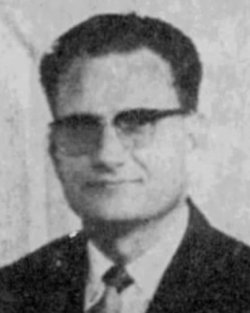
W.E. Best

#4 - Isaiah 53 - The Savior's Vicarious Suffering

Isaiah 53:5
W.E. Best July, 1 1988 Audio
0 Comments
Note times: @47min. imputation; @53min. the bearer is not the guilty party; @29 min. v.5 a certainty or a mere possibility; @60min. a converted Jew's interpretation 'healing'; @25min. sympathetic suffering of Christ, grief & sorrow not directly assoc with transgressions.

Sermon Transcript

Auto-generated transcript • May contain errors

100%
We'll read the scripture and
then go to the Lord in prayer. For several weeks now, we have
been in the study of Isaiah 53, and we'll be in this chapter
for several lessons to follow. Each Lord's Day, I'm going to
read And without any apology, give a brief review of the major
things that we have discussed in previous lessons. Who hath
believed our report? And to whom is the arm of the
Lord revealed? For he shall grow up before him
as a tender plant, and as a root out of a dry ground. He hath
no form nor comeliness. And when we shall see him, there
is no beauty that we should desire him. He is despised and rejected
of men, a man of sorrows and acquainted with grief. And we
hid, as it were, our faces from him. He was despised and we esteemed
him not. Surely he hath borne our grief
and carried our sorrow. Yet we did esteem him stricken,
smitten of God, and afflicted. But he was wounded for our transgressions
He was bruised for our iniquities. The chastisement of our peace
was upon him, and with his stripes we are healed. All we, like sheep, have gone
astray. We have turned everyone to his
own way, and the Lord hath laid on him the iniquity of us all. Let us pray. Our Heavenly Father,
as we study Isaiah 53, or a portion thereof, help us this morning
to see the glorious gospel of the blessed Son of God as penned
by the prophet Isaiah. We pray, our Heavenly Father,
that Thou wilt illuminate darkened minds, that thou will open eyes
that are blind to spiritual things, and that thou will open ears
that are dumb to spiritual truths. Help us, our Heavenly Father,
to look to Thee to give the increase But we know what our responsibility
is, and that is to interpret the Word of God as it has been
committed to our cross. We also pray, our Heavenly Father,
that Thou will enable those who are saved by Thy grace, all of us, to be obedient to
the truths that are revealed to us. For we pray in the name
and for the sake of Jesus Christ, our Lord and Savior. Amen. I cannot say too often and I
cannot say too much about the importance of a correct understanding
of Isaiah 53. This chapter is misunderstood
by the great majority of professing Christendom. I was talking with
a man this past week who called me. He was asking some questions,
a man who is not a member of this church, a man who does not
attend this church, but he knows what I believe. And the subject
of God's grace came up during the conversation, of course. And since this chapter was fresh
on my mind, and some of the things that I've already mentioned to
you in previous lessons, I said to him to confirm a thought that
he had raised and had made known to me, that verse 1 is a confirmation
of the great truth of grace as we believe it taught in Holy
Scripture. This man is quite a student of
the scriptures. He has spent many years in the
study of the Bible. I mentioned to him the two questions
of verse 1, who hath believed our report? And then the second
question, to whom is the arm of the Lord revealed? I said
actually the second question answers the first. Immediately,
he said, will you repeat that again? I said, the answer to
the second question answers the first. Who hath believed our
report? The only persons who have believed
with a conversion experience faith are those to whom the Lord
has revealed himself in grace, which we have in the last part
of the verse. This man has studied Hebrew as well as Greek. He said,
I had not noticed that before, but he said, I cannot deny it.
I let him know immediately that that was not something that I
had thought up on my own, but through research I had come face
to face with that explanation given of verse 1, and I could
see the truth that it contained. Then in verse 2, "...for he shall
grow up before him as a tender plant, and as a root out of a
dry ground." This refers, of course, to the life that the
Lord Jesus Christ lived, the secluded life he lived. And yet, in growing up as a hidden
person from the world for 30 years, his public ministry lasting for
a little over three years, he did grow up before God the Father
as a tender plant and as a root out of a dry ground. Then it
also states that he hath no form nor comeliness, no beauty, no
splendor. And when we shall see him, the
confession of the Jews, there is no beauty that we should desire
him. I stated last Sunday, in commenting
once again on this verse, that God has a way of concealing his
choicest treasures. Then in verse 3, he is despised
and rejected of men. We have in the Psalms, the 22nd
division, verse 6, he is referred to as a worm and no man. We know that When he was rejected
of men at the close of his earthly ministry, men cried out, release
unto us Barabbas, rejected of men, a man of sorrows. Whenever I read that statement,
I am always reminded of Lamentations 112. Lamentations 112 was a verse
which we had to memorize when we were studying in school. We
had to memorize chief verses, key verses, sometimes a key verse
in each chapter, and sometimes, if the book was a short book,
a key verse in a book. And Lamentations 1.12 is the
key verse of the five chapters of Lamentations. See if there
be a sorrow like unto my sorrow. wherewith the Lord hath afflicted
me in the day of his fierce anger." The verse goes on to state, "...and
acquainted with grief, and we hid as it were our faces from
him. He was despised, and we esteemed
him not." The Jews did not esteem him when he walked among them,
teaching the Holy Scriptures. Then last Sunday, We spent the
entire time discussing verse 4. This morning, I am sure we'll
spend the entire period discussing verse 5. In the fourth verse,
surely he hath borne our griefs. We have the certainty of God's
love revealed in the word surely. He hath borne, and then if you
remember, I stated that Two words should be connected in verse
four, and they are what? Born and carried. Two of the
words are to be connected. They are the words grief and
sorrow. Surely the certainty of love. He hath born, and this refers
to his acts of obedience. and then the objects of his obedience
as he has borne our griefs and sorrows. Yet, we're told, we
did esteem him stricken, smitten of God, and afflicted. The Jews looked upon Jesus Christ
when he was here the first time as he carried on his personal
ministry among them. as he preached to them. They
looked upon him when he went to the cross as being smitten
by God for his own sins." Notice what I'm saying. This was their
misconception of the person and work of Jesus Christ. Since the
53rd chapter of Isaiah is the confession of the Jewish people
when they shall look upon Jesus Christ whom they pierced, we
have it prophetically set forth in this portion of scripture
what they thought about him when he came the first time as the
suffering Savior. We did esteem him, stricken,
of God and afflicted. The persons involved, of course,
were the Jews. We, the pronoun we refers to
the Jewish people, the people to whom the prophet Isaiah was
writing. That doesn't mean that this portion
doesn't have an application for you and me, but it refers primarily
to the Jewish people. And then the guilt The guilt
of the people is deeming Christ as smitten of God for his own
sins. The Jewish people did not like
what he said. They were people who followed
their traditions. And through their own traditions,
we're told in the seventh chapter of the gospel, according to Mark,
they made void the word of God. Most religionists today are making
void the Word of God through their own human traditions. And when the truth of God is
given to them, they look upon you as an enemy of God rather
than being a friend of God. just as the Jews, during the
personal ministry of Jesus Christ, looked upon him as an enemy of
God rather than being the eternal Son of God. Now coming to verse
5, and we will do what we have done in previous lessons. I'm
going to take four statements in verse 5, and we will give
four passages of Scripture, all from the New Testament, which
will serve as a divine commentary on the different phrases that
we will be observing today in verse 5. He was wounded for our
transgressions. Notice now the conjunction that
starts verse 5, but he was wounded for our transgressions. He was bruised for our iniquities. Number three, the chastisement
of our peace was upon him. And number four, and with his
stripes we are healed. Let us go back now and look at
these four phrases again as I give to you the New Testament reference
to be put right down beside each one of these phrases. He was
wounded for our transgressions. 1 Peter 3, verse 18, Christ also
hath once suffered for sins, the just for the unjust. He was bruised for our iniquities. John 19, verse 1. Pilate took
the Lord Jesus Christ and scourged him. The word scourged is to
be used as a divine interpretation of the word bruised in verse
5 of Isaiah 53. Number 3. The chastisement of our peace
was upon him, or the chastisement which led to our peace. Colossians 1 and verse 20, having
made peace through the blood of his cross. And finally, and with his stripes
we are healed. Hebrews chapter 10 and verse
10. The apostle, in writing to the
Hebrew believers, had this to say, that he has sanctified through
his offering, or the offering of the body of Jesus Christ once
for all. So all who have been saved have
been sanctified through the once-offered Jesus Christ once for all. Now, something else we want to
see between verse 4 and verse 5. This is as important as what
I had to say about verse 1 two weeks ago today. We stated last
Sunday morning, if you recall, that in verse 4, We have what
was born by Jesus Christ sympathetically during his personal ministry
on the earth. Pentecostal people, all the followers
of the charismatic movement, have a wrong understanding. And I say this without any reservation. I cannot be too dogmatic about
this. They have been taught error on
verse 4 and verse 5. They like to rush to Matthew
8, verses 16 and 17. And in reading those two verses
of Scripture say that those verses serve as a divine commentary
on this passage in Isaiah 53. I believe with all of my heart
that Matthew 8, 16 and 17 do serve as a divine commentary,
but if you will study those verses in the light of the context,
they refer to what was accomplished by Jesus Christ during his personal
ministry and not what he suffered vicariously on the cross of Jesus
Christ. The conjunction that separates
verses 4 and 5 is very important. But, but, now let's look at this
for a moment. Because there is so much misunderstanding
along this very line, and because of this misunderstanding, we
have erroneous doctrines being proclaimed today. You and I must
not fail to notice that in verse 5 there is an entirely different
aspect of human nature from that expressed in verse 4. If you
don't get anything else that I say this morning, please get
that statement. I'm going to repeat it. You and I must not fail to observe
that in verse 5 there is an entirely different aspect of human nature
than that which is expressed in verse 4. Now, let's look at
them again. You see, I'm in no hurry. This
is too important for us to just miss or to pass by lightly. Now look at verse 4, "...surely
he hath borne our grief, and carried our sorrow." Now let's
stop there for a moment. What did we say the title was
for verse 1? We have the Savior introduced
in verse 4, I mean verse 1. In verse 2, the Savior is misunderstood. In verse 3, the Savior is rejected. Now, I think there's a better
title than I've already given for verse 4. We see in verse
4 what the Lord Jesus Christ has borne for mankind sympathetically. Sympathetically. And I want to
stress that word, sympathetically. We see what was borne by him
during his personal ministry, sympathetically. And what has he borne? Or what
did he bear during his personal ministry? Listen to the words.
Surely he hath borne our grief and carried our sorrow. Now, what did I say a moment
ago? I said there is an entirely different aspect of human nature
in verse 5 than that which is stated in verse 4. Now look at verse 5. Here is
the confession of the Jews, and this is the confession of every
born-again person. If this is not your confession
this morning, then you have never been enlightened by the Spirit
of the living God. Your mind has never been enlightened
by regeneration. Your ears have never been on
top by the Spirit of God. Your eyes have never been able
to see spiritual things. As plain as I can make it. Here
will be the testimony of every Jew when he is born of God. It is the testimony of everyone
who has been born of God, whether Jew or Gentile. Now look at the
different aspects of human nature. But he was wounded for our transgression. Let's pause a moment. What do we have in verse 4? What
do we have back up in verse 3? We esteem him not. In verse 4,
we did esteem him stricken, smitten of God, and afflicted. Afflicted
for his own sin, smitten for his own crime, but now Since
there has been enlightenment of the mind by the Spirit of
God, here is the confession, but he was wounded for our transgressions."
That means he was not smitten for his own transgressions. Now
they see the truth, just as you and I have been able to see the
truth by the grace of God that has come into our hearts. He
was wounded for our transgression, a different aspect now of human
nature. Here is transgression, bruised
for our iniquity. The chastisement of our peace
was upon him, and with his stripes we are healed. There is an entirely
different aspect of human nature. Now follow me closely. Follow me closely. You see, greed
and sorrow are not necessarily direct results of transgression
of God's love. Are you following me? Let me
illustrate it. I will admit that all grief and
all sorrow are indirectly associated with transgression. Please follow
me now. This is so important. I said
all sorrow and all grief are indirectly associated with transgression. Going back, of course, to the
fall of Adam in the Garden of Eden and our complicity with
him in his fall. Whatever sorrow you experience
in this life, can be and is indirectly associated with transgression. Whatever grief that you and I
experience, it is indirectly associated with transgression
of the law of God. Jesus Christ, during his personal
ministry, bore our grief and carried our sorrow sympathetically. But no mention, no mention, no
reference in verse 4 to the vicarious suffering of Jesus Christ on
the cross. That's what took place during
the personal and public ministry of our blessed Lord. However,
coming to verse 5, We have here, what? The vicarious suffering
of Jesus Christ. So here's a different aspect
of human nature. Now we have the confession of
the Jesus. You and I know that grief and sorrow as I've already
stated, are indirectly associated with transgression, but not necessarily
directly associated with transgression. You and I may experience sorrow
because of what someone else has done, and we may suffer grief
because what someone else has done. But that is a far different
cry from what we're looking at in verse 5. Why don't people
today, who say they're men of God, give the true exposition
of this passage of Scripture? I'll tell you why they don't.
If they did, their religious enterprises would cold up. Now look at this. Here's the confession. Is it
yours? It is mine. And what does it
say in the very beginning of the 5th verse? But he was wounded
for our transgressions. This is the vicarious suffering
of Jesus Christ. So I would give as a title to
verse 5, the vicarious suffering. We have the sympathetic suffering
which he bore in verse 4, and that was borne by him during
his personal and public ministry. Whereas, in verse 5, we have
what he suffered vicariously as our substitute on the cross. And there, beloved, he suffered
for our transgressions. He was bruised for our iniquities. the chastisement of our peace
was upon him, and with his stripes we are healed." Now for an exposition
of verse 5. Actually, I've already said enough. This is the gospel by the pen
of Isaiah the prophet. The death of Jesus Christ was
a propitiation for sin, or a mercy for sin. Whose sin? Whose sin? For all of those whom the Father
gave to him in the covenant of redemption. Now, I want to raise
one question before we leave the 5th verse, by way of introduction. only a possibility, or is it
what? Is it just a possibility, or
is it a certain thing? Will you answer that question?
Is verse 5 just a mere possibility, or is it a certain thing? Now
with that question, let's look at it again. But he was wounded
for our transgression. Is that just a possibility, or
is it a certainty? You're going to have to answer
the question. Unless you have the life concept of the death
of Jesus Christ, your answer to this will not be correct. He was bruised for our iniquity. Was that which he suffered on
the cross? Was it just a possibility, or
was it a certainty? The chastisement of our peace
was upon him. Was that just a possibility,
or was it a certainty? And finally, and with his stripes
we are healed. Was it a possibility, or was
it a certainty? Did you realize what I said?
The correct answer to that means it was a certainty and not a
mere possibility. Jesus Christ did not die in vain. It was a certainty that he was
wounded for my transgression. He was a certainty that by his stripes I've been
healed, and so forth. Now let's look at the passage. The very God from whom every one of us has
wandered afar, although in different directions, should himself cause the iniquity
of all whom the Father gave to him in the covenant of redemption
to meet, as it were, as myriads of black sewers might meet, and
in one awful, rushing, roaring, filthy flood, if the itself upon the eternal Son of God. And, beloved, when we have that
picture, that's exactly what happened at Calvary. Let me explain
that a little further. I don't like the smell of sewer,
do you? I don't like the feel of sewer. Ever since we've moved over here,
I don't know if you've noticed or not, when you come into the
parking lot, when the wind is in a certain direction, we get
the whiff of a sewer line out here somewhere. Something's emptying
into the storm sewer or something, and it's penetrating the air.
I remember when we lived back here, we got the odor from it
quite often. I don't like the smell of it,
do you? We've all gone by a sewer plant. And there are many sewer lines
from different directions and different parts of the community,
and they all emerge, and they empty into what we know as a
sewer pipe. I don't like the smell of it.
I don't like the look of it. Now I want you to ask yourself
a question. Let it cannot even be compared
to a sewer. They're worse than that. Your transgressions, your iniquity, your sickness, your spiritual
disease, all of these things are far worse, more heinous,
than the filth of any human sewer. And yet we have in this one verse
of Scripture, all of these for whom Christ died, your sins,
my sins, and the sins of all of the elect of God, emerged
and are poured out upon the Son of God. And He suffered in our
scale to pass. You say, that's a gruesome picture.
Yes, it is. I wish I had adjectives that
would even better describe the awfulness of our sins, our transgressions,
our iniquities. We've all wandered afar off,
but notice I said in different directions. Some sinners will
go in the direction of immorality. Other sinners will go in the
direction of religious sin. But it doesn't make any difference
in what direction one goes. His sin is filled, and it's rebellion
against God. Do you know what some people
say about verse 5? I'm going to give you some different
interpretations. Some have put the gloss upon these words by
saying, he was wounded for, and then they say, that is, he was
wounded by our transgressions. Now, look at that a moment. This is what some religions say
about verse 5. It says, he was wounded for our
transgressions. But they put a gloss upon the
text by saying that by should be inserted rather than for. He was wounded by our transgressions. By them. That isn't what the
verse says. Notice the confession of the
Jews again. This is my confession. This is
your confession as a Christian. There was a time when you did
not esteem Him, when you did not have the proper attitude
and concept of Jesus Christ. And you didn't want Him to get
in your religious way, even though you might have been very religious.
You might not have been steeped in immorality, but you didn't
want Him to get in your religious way. And so you felt about him just
as it used to be during the personal ministry of our blessed Lord.
But come into verse 5, but he was wounded for our transgressions. And then you say, he was wounded
for my transgressions. It doesn't say he was wounded
by my transgressions. But he was wounded for my transgressions."
Now, what do we see in this? We see how some religionists,
even today, are glossing the truth of this text over. And
they present it from the human point of view by saying that
Jesus Christ died by the hands of sinful men. without emphasizing
his substitutionary, vicarious atonement on the cross of Calvary. That's Herod. What is Isaiah presenting? He
is presenting Calvary from the divine point of view. Now let
me show you something that is very simple. Isaiah is stressing
the divine aspect of Calvary. He is not stressing the human
viewpoint at all. The Apostle Peter, on the day
of Pentecost, stood before the Jews and made this statement,
you men of Israel, beginning with verse 22, you have taken,
and by your wicked hands, you have crucified, you have put
to death the Son of God. What was Peter doing in that
statement? He was stressing the human aspect
of Calvary. He was showing the Jews that
they were instruments used for the putting to death of Jesus
Christ, for the putting to death of the Son of the Living God. He didn't leave out, however,
the divine aspect He also made the statement that this was determined
by God that you do it. So you see, Peter stresses both
the divine side of Calvary and the human side, whereas Isaiah,
prophetically speaking, stresses only the divine side. He was
wounded for our transgressions. Before we go any further in the
discussion of the other views, look at the words wounded, bruised,
chastisement, and strife. Now, the word wounded signifies
to perforate. It means to peel. It speaks of
severe and mortal wounds inflicted upon the person of Jesus Christ. Look at the word bruised. The
word bruised means to be crushed. And this is one of the ways in
which pain was inflicted upon the human nature of Jesus Christ. Then look at the word chastisement,
the suffering by which our reconciliation was secured. And finally, the
word strife, strife, and we'll have more to say about that in
closing this morning. But here are four statements,
wounded, bruised, chastisement, and strife. And all of these,
Jesus Christ received for the elect of God. There are others who believe
that Jesus Christ died for us, meaning that he set before us
a perfect example. of patience and submission under
suffering. Is that the meaning? No, it isn't.
There are some who say that that's what it means. The Lord Jesus
set before us the proper example of patience under suffering. There are still others who say
that all the passages which speak of propitiation are to be explained
in a figurative sense. They also state that the apostles
borrowed those terms from the Jewish law and applied them to
Jesus Christ only by way of analogy. Not that his blood did really
expiate for sin any more than the blood of animal sacrifices
expiated for sin. What's wrong with that? There's
plenty wrong with it. Jesus Christ died. As he pledged,
they say, to assure us that God would forgive us and accept us
upon our repentance. And that's as far as they carry
the subject of the sacrificial or vicarious suffering of Jesus
Christ. However, you and I as born-again
believers must say, in the light of Scripture, that the apostles
never speak of Christ's death merely by way of analogy to the
Jewish sacrifices, but the Jewish sacrifices simply foreshadowed
or typified the vicarious suffering of Jesus Christ on the cross. We'd better get things in their
proper order. There's a lot of religious teaching
today that is nothing but pure, unadulterated heresy. Now, for the biblical view of
the awful sufferings of Jesus Christ. The biblical view is that he
bore our sins by imputation. We do not have time this morning
to review many of the things that we taught on the subject
of imputation. But do you recall, can you recall now, some of the
important points which we have already discussed with you, even
in recent days, on the subject of imputation? When it comes to the imputation
of Adam's sin to us, do you know how to interpret that? You do
not interpret Adam's sin being imputed to us in the same way
that our sins are imputed to Jesus Christ. If you do, you're
a heretic. You're a heretic. You see, when
it comes to the imputation of Adam's sin, To us, we have to
say that the imputation was real and what? And immediate. When it comes to the imputation
of our sins to Jesus Christ, you cannot say without being
a heretic that it was real, because Jesus
Christ was not involved. in human depravity,
as you and I were involved in the depravity of Adam. You see,
here is the real test, beloved. Now, we're talking about the
sufferings of Jesus Christ. So the biblical view is that
Jesus Christ bore our sins by imputation. I like what one man
said that I was reading recently. He said, I find no fault with
imputation, and I'm sure you realize that many religionists
do not like the doctrine of imputation. He says, I find no fault with
imputation, provided it be rightly understood and explained. That
statement is very important. Provided it is rightly understood
and explained. If by imputation, he said, it
means that our sins were actually made over, are transferred to
Jesus Christ so as to become his, then I must reject that
heretical view of imputation. I've said the same thing, but
in different words. I like the way he stated it.
I want to repeat it again. We're talking about the vicarious
sufferings of Jesus Christ on the cross in the light of verse
5 of Isaiah 53, the heart of the gospel. He said, if by imputation it
means that our sins were actually made over, are transferred to
Jesus Christ so as to become his, Then I must reject that
heretical view of imputation. But someone might ask, he said,
but might they not be reckoned his? Now listen to the answer. No, for that would be to reckon
them what they were not. He isn't through. and what it
was impossible that they should be. But if by our sins, being imputed
to Christ, be understood no more than the punishment thereof was
actually laid on him, this is readily granted because it is
what the scriptures teach." Do you see what we're talking
about? Our sins were imputed to him, not in the sense that
they became his. They could never become his,
in that sense. But they were imputed, and he
bore the penalty of our sins. And that is the meaning. In other
words, he stood in our place. He died the death that we should
have died. That's what it means, and that's
all it means. One person went on to illustrate
it like this. He said the sins of the people. He's talking about
the sins of the Jews in the Old Testament when they offered their
sacrifices. The sins of the Jewish people
were not transferred over to the victim. over to the victim, but the victim
was slain for the sins of the people. This is the teaching
of Leviticus 16, the great day of atonement. This must of necessity be for
the sins of the people, and this must be taken in a figurative
construction. Because the sins of a man in
no sense can be transferred to a beast. I like that. In no sense can the sins of people
be transferred to an animal. And this is the teaching throughout
Exodus, Leviticus, Numbers, and Deuteronomy. So he said, Christ suffered vicariously. Christ, Jesus, was our substitute. You and I cannot be unfamiliar
with instances of one taking upon himself the penalty of another's
recklessness or folly, even within the range of what we call natural
law. There have been men who have
been willing to die the death of a martyr for the cause which
they embraced. The love which a mother has for
a child, she will gladly step in if she sees a child, reach
up on the cabinet and pull, say, a skillet of hot grease or a
hot water or something, she will gladly try to step in between
the child and protect the child from being scalded by hot water. That's the love that a mother
has for her child. willing to stand in the place,
willing to suffer even the pain of being burned by boiling water,
rather than for it to come in contact with a child. That's
the love of a mother for the child. The love of Jesus
Christ for you and me, which is eternal, without beginning,
without ending, went to the cross of Calvary. and bore the penalty
for our transgressions, bruised for our iniquities. The chastisement of our peace
was upon him, and by his stripes we have all been healed. An interesting statement has
been made about the Hebrew verb that is used. The Hebrew verb
signifies to take the debt of sin upon oneself and carry it
as one's own, to look at it and feel it as one's own, and this
is the teaching typified in Leviticus 5, verses 1 and 17. Or to bear the punishment occasioned
by sin. to make expiation for it, as
we have in Leviticus chapter 20. But the bearer is not the
guilty party. Jesus Christ is not the guilty
party. That's why Peter says in 1 Peter
3.18, the just dying for the unjust. That means that Jesus
Christ, the just one, died for me, the unjust one." Wounded, bruised, chastisement,
strife. But there's another thought developed
in verse 5 that I have missed in all the years that I've studied
this passage, and I want to share it with you this morning, one
of our concluding statements. Notice now where there's stripes,
we are healed. We are healed. First of all,
look at the word stripes. The Jewish law forbade more than
40 stripes being given. But Jesus Christ was scourged
by Romans who recognized no such merciful limit. Now what did Isaiah see? Isaiah
saw something that others did not see. He saw the stripes from
the unseen scourge held in the Father's hand, which fell upon
the inner nature," notice what I'm saying, when the soul of
Jesus Christ was made an offering for sale. Men saw what? They saw the scourge. that inflicted
punishment upon the human nature of Jesus Christ. But Isaiah saw
more than that. And what he describes in verse
5 is the scourge in the hand of God the Father, when the inner
nature, the very soul of Jesus Christ, was made an offering
for sin. Do you see that? Man cannot be justified, therefore,
by obedience to the law. The law makes no abatement. It makes no reduction for sincerity. Someone may come before the judge
and say, Judge, I didn't deliberately disobey that law. I was ignorant
of that law. I want you to know that such
ignorance will not stand up before the law of the Holy God. It will never stand the test.
The law of God makes no allowance for ignorance. It makes no allowance
for infirmity. Now, follow me. You must see
the scriptures as they are. Today, religionists think that
God will make an allowance in their particular case, and therefore
things will be easier for them when they have to face the law.
Such is not the case at all. Man cannot be justified by mitigated
law. The law can never be lowered
in its divine standard. The law is law, and that's it. And finally, man cannot be absorbed
by the passing by of his transgression through, as it were, the forgetfulness
of God, because God doesn't forget his holy demands. However, we
do have an answer. In the death of Jesus Christ,
I have the healing The healing, and the healing here is healing
of spiritual disease, beloved. That's discussed in this verse. And the companion passage to
this text is not Matthew 8, 16 and 17, but 1 Peter 2 and verse
24. "...who bare our sin in his own body on the tree." With his stripes, we are healed. We are healed. From what are
we healed? Now, let's connect the last two
things in this verse. And what does the next to the
last statement say for us? The chastisement of our peace
was upon him. That means that chastisement
which leads to our peace. The chastisement which leads
to our peace. We're talking about peace and
healing. Peace is the third, and healing
is the fourth thing in this text. And let's look at them in that
order. When we think about peace, We cannot help but recall the
peace which is the result of having been justified before
God. Therefore, being justified by
faith, we have peace with God. Peace with God. Now, the healing
is something else. I think healing goes beyond justification. Are you with me? We have peace
because of justification, but the healing here goes beyond
the justification, it goes beyond the peace which we have with
God. And it includes sanctification. Yes, recently I read some comments
on this verse by a converted Jew, and he has some outstanding
things on this passage of scripture. He, along with others, brings
this out, and he says, "...the healing seems to go beyond justification,
and hence at the sanctifying grace in the souls of the justified. Thus the Holy Spirit, who accomplishes
within us regeneration, delivers us by sanctification from spiritual
disease and moral blemish, so we may become conformed to his
image." Now, that is a great statement. Let me illustrate
it. So healing goes beyond peace, the peace of justification, and
includes sanctification. So we are healed. We are healed
of what? First of all, we are healed of
our inattention and unconcern about divine things. I'm asking you a question this
morning. Have you been healed of inattention and unconcern
about spiritual things? If you haven't been, then you're
not enjoying the peace of justification. If you have not been healed, And if you are not being healed,
I don't care if you're a member of this church, I don't care
what institution you might be a member of, I don't care how
much you might talk about the Lord, if you have not been healed
from inattention and unconcern about spiritual things, then
you're not enjoying the peace of justification. I'm not through. Are you following me? We have been healed of our unbelief
and of our ignorance in respect to spiritual things. Are you being healed of ignorance
in respect to spiritual things? Number three, we have and we
are being healed from our love to sin. and commission of it. We have
been healed and we're being healed from our love of this world and
the pleasures thereof. We have been healed and we're
being healed from our self-indulgence and self-seeking. We have been healed and we're
being healed from an accusing conscience. Yes, we have been healed and
we're being healed from what? A slavish fear of God. We have been healed and we're
being healed from our distresses and our miseries, both present
and future. Now let me raise a question.
Can prayer heal you? Just as a week ago I read in
the Houston Chronicle where prayer healed. Prayer doesn't heal.
Follow me now. I deny it. I deny that prayer
heals. Prayer doesn't heal. Prayer is a request for healing. Is that right? Are you following
me? Will you be sensible? I believe so. Prayer is simply
a request for healing. Trust doesn't heal. If trust healed a person, then
that would be an individual applying the remedy Himself. You can't
apply the remedy. Only God can apply the remedy. Are you following me? Are you
with me? Listen to this made by a Puritan. The Lord Jesus
Christ was content to be in the winepress alone. In order that you and I, the recipients
of grace, could be in the wine cellar. Do you know what he meant
by that statement? Let me repeat it and I'll give
an explanation. He didn't have to, I knew what he was talking
about. I'm sure he had in mind, he didn't give the verse, but
turn with me, if you will please, to Isaiah 63, verse 3. Isaiah 63, verse 3, I have pardoned
the wine press alone. The Lord Jesus Christ went to
the cross and suffered vicariously, and all of that was done alone. My God, my God, why hast thou
forsaken me? The Lord Jesus was willing to
be in the winepress alone. Here it is. I have trodden the
winepress alone. And of the people there was none
with me, for I will tread them in mine anger, and trample them
in my fury. And their blood shall be sprinkled
upon my garment, and I will stain all my raiment. For the day of
my vengeance is in my heart, and the year of my redeemed is
come. And I looked, and there was none
to help, and I wondered that there was none to uphold. Therefore
my own arm brought salvation unto me, and my fury it helped
me." Jesus Christ was willing to be in the wine press alone
that you and I might enjoy the experience of a wine cellar. What do you mean by the wine
cellar? Wine is a symbol of divine joy, and you and I are the recipients
of divine joy. And now for the concluding question.
Is verse 5 a possibility, or is it a certainty? If it were
nothing more than a possibility, it would reflect upon every great
attribute of God. When I first began studying the
doctrines of grace, and had some understanding of them. I was
presented a book by a man whose name would be familiar to many
of you if I were to give his name. He's written quite a few
books and some of his works are relatively good. But on this
particular work, titled Atonement, it's atrocious. I want to give
you a statement from it and then I will answer the question. is
verse 5 to be considered a certainty or a mere possibility. This man
said, quote, some people say that propitiation is unlimited
and substitution is limited. But these must be of equal extent,
for those for whom he died and redeemed are those for whom he
has become surety. Now this is a man who is commenting
on the book that I told you about. He's replying to this person.
This person made a distinction between propitiation and substitution. So he said they are of the same
extent, so he replied. And then he came to this point.
He said universal redemption reflects on every attribute of
God. It reflects, first of all, on
the foreknowledge of God. For it represents God as striving
to do what he knows that he will not do." That's a great statement. It's like the man who asked me
this past week, he said, how in the world can Billy Graham
be sincere? I said, I don't know, you'll have to ask him. Number
two, universal redemption reflects on the love of God. He said, what sort of love would
it be to die for all, and yet many of them be punished? Universal redemption reflects
on the wisdom of God, and then he raises a question. Where is
wisdom in forming a redemption that fails of its intended purpose? Universal redemption reflects
on the justice of God. Where is justice in demanding
two payments for the same crime? Universal redemption reflects
on the power of God. If Christ died for all, as some
say, and all are not saved, it must be from word of will or
from word of power. If it is his will that all be
saved, then it must be from a word of power he can save us. You
remember the statement the girl made when I read the letter this
morning, the famous evangelist? Universal redemption reflects
on the immutability of God. At one time he loves, and at
another time his love is turned into hate. Universal redemption reflects
on the satisfaction of Jesus Christ, because Christ said,
I see my seed and shall be satisfied. Universal redemption reflects
on the death of Christ. If everyone is not saved, then
Jesus Christ died in vain. Universal redemption reflects
on the work of Jesus Christ because it separates his work of redemption
from his work of intercession. But yet he intercedes for all
for whom he died. No separation. Finally, universal
redemption is a contradiction of those who commit the unpardonable
sin. And what about all who died in
sin before the death of Jesus Christ? He was wounded for our transgressions. He was bruised for our iniquities. The chastisement of our peace
was upon him, and with his stripes we are healed. That's the gospel penned by the
prophet Isaiah. That is the pure gospel of the
Lord Jesus Christ. Anything that will contradict
that is not gospel. It's another gospel which is
not another. May the Spirit of the Lord open
your mind that you might see. Open your ear that you might
hear. And may the Spirit of the Lord give to you the will to obey what you've
heard. Let's stand as we sing, and the
song is number what, brother?
W.E. Best
About W.E. Best
Wilbern Elias Best (1919-2007) was a preacher and writer of Gospel material. He wrote 25 books and pamphlets comprised of sermons he preached to his congregation. These books were distributed in English and Spanish around the world from 1970 to 2018 at no cost via the W.E. Best Book Missionary Trust.

Comments

0 / 2000 characters
Comments are moderated before appearing.

Be the first to comment!

Joshua

Joshua

Shall we play a game? Ask me about articles, sermons, or theology from our library. I can also help you navigate the site.