Bootstrap
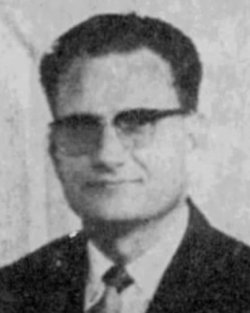
W.E. Best

#8 - Isaiah 53 - The Submissive Savior, Part 1

Isaiah 53:10
W.E. Best July, 1 1988 Audio
0 Comments
time @ 17:30min. God's secret will is not a part of man's actions; @23:55min 'pleasure' defined; @ 19:08 God's decree forces no man to do evil.

Sermon Transcript

Auto-generated transcript • May contain errors

100%
310 is a very simple one. As you have observed, there are
several statements in this text, but I think with all of the statements
that are found in this verse of Scripture, we can sum all
of them up with this very simple outline. We have in this verse,
first of all, the cause of Christ's death. Secondly, we have the
nature of his death. And finally, the fruits of his
death on the cross. As you look at the verse of Scripture,
there are many verses, I am sure, with which you are familiar in
the New Testament. that come to your mind. There
are, however, certain verses that serve as a divine commentary
on this text of Scripture. Let us read the verse again,
and I'll call attention to the New Testament verses that serve
as a divine commentary on this text. Yet it pleased the Lord
to bruise him. he hath put him to grief." The
one verse that stands out in my mind is Romans 8, verse 32, "...he
that spared not his own son." but delivered him up for us all. How shall he not with him freely
give us all things? The first part of that text is
without a doubt the best commentary that can be given on this verse
of Scripture in the prophecy of Isaiah. He that spared not
his own son. John 3.16, of course, is an outstanding
verse in connection with this. God so loved the world that he
gave his only begotten son. Let us notice the next outstanding
statement of verse 10. When thou shalt make his soul
an offering for sin, when thou shalt make his soul an offering
for sin." The Lord Jesus not only suffered physical torture,
but he suffered in his very soul, in his very being. Personally,
I believe that The punishment, the torture which he suffered
was much greater from the standpoint of his soul's suffering than
that which was inflicted upon him in his flesh. When thou shalt make his soul
an offering for sin. We know that in 2 Corinthians
5 and verse 21, him who knew no sin was made a sin offering
that we might be made the righteousness of God in him. He shall see his seed. He shall see his seed. The word seed, of course, refers
to his spiritual seed. It refers to the recipients of
grace. This, of course, has to do with
the fruit of his suffering. I am reminded of John 12 and
verse 24. Except a corn of wheat fall into
the ground and die, it abideth alone. But if it dies, what happens? It will bring forth much fruit. Here we have the much fruit as
the result of the one seed having fallen into the ground and died. He shall see his seed. I'm also
reminded of another great text of Scripture in Romans 4, verse
16. where it is stated that the promise of God is sure to all
the seed. This refers, of course, to all
whom the Father gave to the Son in the covenant of redemption,
the spiritual seed. In the statement, he shall prolong
his days, I'm reminded of Revelation 118. All of us are familiar with John
who had been cast to the Isle of Patmos for the Word of God
and the testimony of Jesus Christ. And that when the Lord Jesus
spoke to him, he fell as though he were dead at his feet. And the Lord Jesus in speaking
said, I was dead, but I'm alive forevermore. And how the keys of hell and
of death. According to Hebrews 7 and verse
25, he has the power of an endless life. We'll discuss this phrase
more in our development of the subject. And finally, and the
pleasure of the Lord shall prosper in his hands. The entire 17th chapter of the
Gospel according to John is the divine commentary on this last
phrase of verse 10. Jesus Christ finished the work
that the Father sent him to perform. And having finished the work
that he was sent to perform, he ascended back to the Father.
He was victorious. in his accomplishments, and the
fruit of his labor is displayed in that great chapter, the high
priestly prayer of Jesus Christ. So the simple outline, as I have
already given you, we have the cause of Christ's death, we have
the nature of his death, and finally the fruit of his death
on the cross. As a title for this verse of
Scripture, I have chosen this as the title. We have been given
a title to every verse. Christ is the submissive Savior. Christ is the submissive Savior. He was submissive to the will
of God the Father, because it was God the Father who gave his
Son. It was concluded in the counsel
of God that Jesus Christ should suffer. Though wicked men followed
their designs and were stirred by the devil himself, Yet God
controlled all the actions of the enemies of Jesus Christ to
the extent that what they did to him was in accordance with
the will and purpose of God the Father. That, however, does not
lessen the responsibility of the wicked men who had a part
in the death of Jesus Christ. We have already seen in verses
8 and 9 in our study last Sunday morning how that he was treated
violently by wicked men. His contemporaries would not
stand up in his defense. The judgment that he was given
was only a mock trial. It was not justice in any sense
of the word, and yet it carried the name of judgment. He was
taken by these wicked individuals and turned over to Roman soldiers
who actually nailed him to the cross. But the Jews, the very
people to whom he came, he came unto his own, and his own received
him not. who shall declare his generation. And that is explained within
the context of Isaiah 53. When the Jews, after a conversion
experience, confessed, we esteemed him not. And there was a time
when we did esteem him as being smitten of God for his own transgressions. That's what they thought of him.
And we can see why they treated him in the manner that they did. He was their enemy, because he
stood against their religious views. They were religious, but
they were strangers of grace. They had never come to know Jesus
Christ, whom to know is life eternal. When you think about how that
the wicked men treated him, and yet they were responsible for
their treatment. Two questions have been raised
concerning what I have said, and may I hasten to say that
the answers can never be given to natural men to satisfy their
depraved minds concerning the death of Jesus Christ. I stated
that God controlled even the evil actions of the very men
who gave him a mock trial and then turned him over to the Roman
soldiers for his crucifixion. Yet God controlled them in all
of their evil actions. Now, with that in mind, two questions
have been raised by unsaved men. And notice what I'm saying, unsaved
men. You say, well, religionists have
raised these questions. I still maintain they're unsaved
men. No person who possesses the grace
of God would ever raise such a question concerning the integrity
of God's sovereignty. Here are the questions. Number
one. How is man to blame for smiting and bruising Jesus Christ? How is man to blame since, they
say, you say, as a Christian minister, that God controlled
the actions of evil men in putting them to death? Question number
two, if man is to blame, Then how does this clear God? That's the second question. Now
think about those two questions for a moment. We know that evil
men put to death the Lord Jesus Christ, and we're talking now
only from the standpoint of man's part in his death. And this is
what we have seen in the study of Isaiah 53 through the ninth
verse. But coming to verse 10, we see
how God overruled and controlled even the designs of men, the
actions of men, for putting to death His beloved Son. We know, according to John 13,
that it was the devil who put into the heart of Judas to betray
Jesus Christ. So it is true that the devil
stirs up wicked men to do devious things. Yet let us not forget
that God is still on the throne, and he is overruling and controlling
even the evil designs of wicked men. Let me cite one example
from the Old Testament. In the 50th chapter of the book
of Genesis, The time came in the life of Joseph when his own
brethren sought to do him great harm. But God overruled their
evil designs and made what they did to work out for the good
of the people as a whole. Listen to this, beginning with
verse 19 of Genesis chapter 50. And Joseph said unto them, Fear
not. For I am in the place of God. But as for you, ye thought evil
against me. As for you, ye thought evil against
me. Here's the overruling providence
of God in the next phrase. But God meant it unto good. But God meant it unto good. For what purpose? To save much
people alive. Now, there is a statement that
cannot be denied. Ye meant much evil for me, but
God meant it for good that much people might be saved alive. Now, let's take that same principle
and use it in connection with the death of Jesus Christ. Evil
men. thought only evil of Jesus Christ. The intention of evil men was
to destroy the very object of their hatred. Therefore they
set out to put to death the Lord Jesus Christ, the spotless, sinless
Lamb of God. They meant it for evil, but God
intervened and turned it unto good. For what purpose? for the
salvation, beloved, of you and of me and of everyone for whom
he died when he died vicariously on the cross." So you can take
the three statements that are found in that passage in the
50th chapter of Genesis and apply those three principles, those
three statements to the death of Jesus Christ, and they serve
as a divine commentary even on the death of the Son of God. But the question is, how is man
to be blamed for the death of Jesus Christ since God overruled
and controlled even their actions? And second, is man to blame? And if he is, then how does this
clear God? How does this clear God? What
is the answer to that? The answer is simple to the Christian,
but it can never be simplified for the satisfaction of a depraved
mind. I'm quoting one man who has given
a good comment on this. Man is at fault because God's
secret thoughts and intents are not his rule of action. Let me quote that again. Man
is at fault, even those who put to death the Lord Jesus Christ,
they were at fault. They were at fault because God's
secret thoughts and intents are not man's rule of action. That brings to my mind that great
text of Scripture in Deuteronomy 29, 29. The secret things belong
unto the Lord, but the things which are revealed belong unto
us and to our children. Our rule of action is not the
secret counsel of God, But our rule of action is to reveal will
and mind of God. With that thought before us,
listen to this statement. Hidden things belong to God,
and he works according to the counsel of his own will. Man
had an evil intent, but God turned it for good. God's decrees forces
no man to do evil. Listen to that. God's decrees
forces no man to do evil. Man is left to follow his natural
inclination. Therefore, God's justice can
never be impeached. I like that. I like that very
much. That serves as our introduction
to the study of verse 10. Now for the development of the
three points which I have already mentioned. The cause of Christ's
death, the nature of His death, and the fruit of His death. First of all, it pleased the
Lord. That is, it pleased God the Father. to bruise Jesus Christ. This is the mystery of all mysteries. I don't expect you to understand
it. I don't. It'll take all eternity for me
to really understand the mystery of Christ's death. I said this
is the mystery of all mysteries. how that God the Father could
put to death His only begotten Son. Now, the Father acted righteously
in the death of Jesus Christ, even though it appears to many
that He did not act righteously in putting to death His Son.
The question is often asked, how could God have acted righteously
in putting to death his innocent son? He had never done anything
to deserve death. He had never done anything to
deserve capital punishment. How could he have been justified
in putting to death his beloved son? It was not the punishment
of an innocent son by an angry father. Listen to me closely.
It was not the punishment of an innocent son by an angry father,
but rather the cooperation of the entire Godhead in the sufferings
out of which redemption was born. So we have what? We have the
unity of the Godhead in the death of Jesus Christ. Yes, there is
a mysterious must in Christ's suffering, that which is arbitrariness
on the part of man, is subjected to a divine must. And that's
why we find the statement, which we do in John chapter 3, Jesus
Christ must be lifted up. He said, I must go to the cross. I must be lifted up among men. So there is a mysterious must
in Christ's sufferings and death. When we look at this first statement
of verse 10, beloved, it mounts, it grows. In fact, as you consider
it, as you continue to consider it, it will grow and it will
mount, and after a while you will stagger. Under the exceeding greatness
of this statement, it pleased the Lord to bruise him. It pleased the Lord. The question
is often asked, you mean it pleased God the Father to put to death
his beloved son? How could it please God the Father? How could it please God who said
that he has no pleasure in the death of the wicked? And yet
here we find the statement, it pleased him to put to death his
son. The question is this, what is
the real meaning of the word pleasure? What is the meaning of the word
pleasure? This does not mean that there
was pleasure in the death agonies of Jesus Christ themselves. In the death agonies, I said,
themselves. But the pleasure was in the purpose
fulfilled in those death agonies. Now, do you want a verse of Scripture
in the New Testament that will explain that to the satisfaction
of every Christian? And may I also add, if the Lord
has wrought a work of grace in your heart, If your mind has
been illuminated, you'll understand what I'm talking about this morning,
even though as yet you have not experienced a conversion experience. What I am giving to you will
enable you to have such an experience. Turn with me to Hebrews 12. We'll
begin with verse 1. Wherefore, seeing we all so are
compassed about, with so great a cloud of witnesses, Let us
lay aside every weight and the sin which does so easily beset
us, and let us run with patience the race that is set before us."
Now, here is the example, verse 2, looking unto Jesus, the author
and finisher of our faith. Here is the phrase, "...who for
the joy that was set before him endured the cross." There's the
answer to what we're talking about. Set forth in that one
phrase, for the joy that was set before him endured the cross,
despising the shame, and is set down at the right hand of the
throne of God. I said there was no pleasure
in the death agonies themselves, but the pleasure was in the fulfillment
in the accomplishment of those death agonies. And that's why
that joy was set before Jesus Christ. And he could, in view
of the accomplishment of his sufferings, in view of the accomplishment
of his death, endure the cross and despise the shame. That's
the answer. And if God has illuminated your
mind, you can understand that. There is no difficulty whatsoever
in understanding that statement. So the joy that was set before
Jesus Christ was not the death agony of the cross itself, but
it was the joy of accomplished redemption. The joy of accomplished
redemption. Let's illustrate it. Even noble-minded
men find pleasure in contemplating self-sacrificing love in others
to accomplish glorious ends. Is there any doubt about that?
No, there isn't. If you have read Foxe's Book
of Martyrs to any extent, you have rejoiced as you have read
the accounts of how that men in the past were willing to give
their lives to become martyrs for the cause of Jesus Christ. Well, let's use the Apostle Paul
for a classic example. Paul tells us in 2 Timothy chapter
4, beginning with verse 6, he said, I have finished my course.
I have kept the faith. And he said, I am ready to be
offered, and the time of my departure is at hand. He was ready to become
a martyr for the cause of Jesus Christ. So even noble-minded
men find pleasure in contemplating self-sacrificing love for the
accomplishment of desired ends. And no one will argue with this.
But Jesus Christ, he was not a martyr. He was the eternal Son of God
who willingly gave himself. He said, I have power to lay
down my life. I have power to take it again. Those who see only suffering
which men inflicted upon the Lord Jesus Christ do not see
the true significance of Christ's death. Let me ask you a question. How
long was it after you had made a profession of faith in Christ
that someone pointed out to you that he not only died by the
hands of wicked men, but this death This death was by the determinate
counsel and foreknowledge of God the Father. And you saw immediately, even
though you had heard about His death on the cross for your sins,
and you had heard John 3, 16 quoted, where God so loved the
world that He gave His only begotten Son. And yet in all of these
statements, somehow or other, You were attracted, first of
all, by what He suffered from the hands of men. And then, in
that conversion experience, you were able to see that God's hand
was in it all, that He was put to death by the determinate counsel
and foreknowledge of God. And when you saw that, beloved,
gave to you the real meaning of his death." I said, the real
meaning of his death. Men could not inflict punishment
upon Jesus Christ except as they received power to do so from
heaven. I'd like you to turn with me
to the 19th chapter of the gospel according to John to amplify
that statement. In John 19, We'll begin with verse 8. The
Lord Jesus Christ had been brought before Pilate the governor. And in verse 8, when Pilate therefore
heard that saying, he was the more afraid, and went again into
the judgment hall, and saith unto Jesus, Whence art thou? But Jesus gave him no answer. Notice. how that Jesus Christ
conducted himself in the presence of this governor. He gave him
no answer. Here's the silence of the Lord
Jesus once again. Then said Pilate unto him, Speakest
thou not unto me? You can imagine how indignant
Pilate was. I'm the governor. I possess much
authority. Who are you to stand before me? And when I've asked you to answer
me, you say nothing. Who do you think you are? Listen to this. Knowest thou
not that I have power to crucify thee? Notice what Pilate said. Don't you know that I have power
to crucify you and have power to release you?
Now the answer. Listen to this. Here is the sovereignty
of God. Jesus answered, Thou couldest
have no power at all against me, except it were given thee
from above. Therefore he that delivered me
unto thee hath the greater sin. What a statement! You could do
nothing to me unless you receive power for the doing of it from
heaven." So the Lord Jesus did not suffer as a passive, involuntary
victim. And now we're getting into a
subject that I'm going to give a note of warning to all of you
who read the works of the Puritans. extensively, and I'm not ashamed
to do it. I started reading the works of
the Puritans more than 30 years ago, and I am thankful for the
great doctrinal truths that I have received from the Puritans. But
it was not until about 19 or 20 years ago, after having given
mental assent for a great number of years, to the passive obedience
of Jesus Christ as it was explained by the Puritans. And then I was
confronted with a question, how could Jesus Christ be passive
as he is presented to have been by the Puritans? After spending
much time thinking about the question and considering many
verses of Scripture, I came to the realization that their view
of the passive obedience of Jesus Christ, beloved, is not correct. And that does not mean that I'm
throwing all of my Puritan works out of the library. But will
you follow me closely as I share some things with you? Because
this is a very important point. I said, the Lord Jesus Christ
did not suffer as a passive, involuntary victim. He was active even in His departure
from this world. Now, I want to begin by giving
you several things to consider. Now, some of you may not think
that this is as necessary as it appears to be by the way I
am presenting it. But, beloved, it is. It is important. It is necessary for you to consider
these things. If you have done much study,
you have read chapters on the active obedience of Christ, and
you have read about as much material on the passive obedience of Jesus
Christ. And as far as I am personally
concerned, most of the Puritans are wrong when it comes to the
passive obedience of Jesus Christ. And I'll not call the role of
the man. That is not necessary. Will you turn with me, first
of all, to John 13 once again? I want to show you that Jesus
Christ was very active in his departing from this world. And I'll begin with this passage
of Scripture. Let's read verse 1. Now before
the feast of the Passover, when Jesus knew that his hour was
come. Let's pause a moment with the
reading of that statement. He knew that his hour was come. Up to this point in the study
of the gospel of John, you will find many statements, My hour
is not yet come. My hour is not at hand. What did he mean by those statements?
He meant that the time for his death had not arrived. Now, he
knows that the time for his death has arrived. Now, notice. Before the feast of the Passover,
when Jesus knew his hour was come, that he should depart. I'd like you to underscore the
word depart. Depart out of this world unto
the Father. Then he says, having loved his
own which were in the world, he loved them unto the end. Verse 2, supper being ended,
the devil having now put into the heart of Judas Iscariot,
Simon's son, to betray him, Jesus knowing that the Father had given
all things into his hands and that he was come from God and
went to God. Now, we're talking about Jesus
Christ being active in his departure from this world. I have already stated that the
Lord Jesus did not suffer as a passive, involuntary victim,
and now I'm going to establish that. Not only do we have this
stated in John 13, verse 1, His activity in His departure, but
we find in Luke 23 and verse 46, When Jesus Christ Himself said
that He commended, notice this, and beloved, that is not passive.
He commended His Spirit into the hands of the Father. Beloved,
by no stretch of one's imagination could Jesus Christ have been
passive when it states that He commended His Spirit into the
hands of God the Father. Now, let's go a little further.
In the Gospel of John, we're told in chapter 10 that He came
for the purpose to give His life for the sheep. Now, He gave His
life. He was not passive in his death. He was not passive when the Father
gave the Son. Jesus Christ was as active as
God the Father in his own death. He came to give his life a ransom
for many. Now this is in reference to Jesus
Christ. Again, we have in John 10, verses 11, 15, 17, and 18,
I give my life for the sheep. I lay down my life. I have power
to lay it down. I have power to take it again.
Now, there is nothing passive in those statements. Every one
of those statements, we see the activity of Jesus Christ in his
death on the cross. Now, these statements do not
contradict the fact that Jesus Christ was put to death by the
hands of wicked men. Wicked men were simply the instruments,
the instruments of his death. Now, for a very important note,
there is no justification, beloved, for dividing Christ's life into
active and passive moments as some of the Puritans have done. I want to repeat that. And I hope that you haven't come
to the place in your life as a Christian that you have read
the Puritans to the extent that you don't even question anything
they say. If you have come to that place,
then you are in a sad position. as a Christian. You're to question
everything. You're to question what I say.
That means you are to question it to the extent that you are
to compare what I say with the mind of God to see if it's in
harmony with Holy Scripture. I said there is no justification
for dividing Christ's life into active and passive moments as
some of the Puritans have done. Now, follow me closely. Some
have misunderstood even the passage which we've already discussed,
Isaiah 53, verse 7, how that he was silent, he opened not
his mouth. It has been said, and listen
to this, This did not originate with me, but it's a true statement. It harmonizes with all of Scripture,
and that's what I'm concerned about. It has been said that
Jesus Christ being silent in the presence of His enemies,
that this was, quote, the greatest activity in the utmost passivity
at the same time, end of quote. I said, that's it. That's it. Let me quote it again. It has been said that this was
the greatest activity in the utmost passivity at the same
time. There is a tendency to accept
only an active obedience in what? Active obedience, as it has been
said, And it implies namely what? In
the sense that it denies that the passive obedience implies
that the passive obedience bearing the punishment for sin in the
wrath of God. Now listen to that statement
again. I said there is a tendency to accept only an active obedience
in a sense which denies, which denies And I'm going slow enough
for you to get a point here. What the passive obedience implies,
namely, the bearing of what? Of the punishment for sin in
the wrath of God. Now, here's another statement.
The contrast between inward and outward that characterizes a
person's life is absolutely absent in Jesus Christ, the eternal
Son of God. All the issues of his life were
from his very heart. Let us not, therefore, divide
Christ's obedience into two parts. as it has been done, and there
are some who continue to do it. Two parts. I say it's impossible
to maintain the unity of Christ's reconciling obedience unto death
with the richness of the fulfillment of the law throughout his life. We cannot exclude the active
obedience from the work of reconciliation accomplished by Jesus Christ
on the cross. I think I need to amplify that
a little more. I became so interested in this several years ago that
I studied it a great deal. And then in the study of the
10th verse, in recent days, I have gone into it again because of
the controversy that still rages over the passive and active obedience
of Jesus Christ. Let me give to you the dictionary,
Webster's dictionary, its meaning of the word passive. Now, most
of us are familiar. What I want to show you is this.
Now, I'm not saying this morning that it isn't right for us to
study English. And the better knowledge we have
of the English language, the more capable we are of understanding
many things. But I want to give a little warning
at this point. English grammar is not always
to be trusted as a divine commentary on a biblical doctrine. Are you
following me? I said the English grammar is
not always to be trusted as a divine commentary on a biblical doctrine. Now, I'm going to prove my point. What does the English grammar
have to say about the word passive? According to Webster's Dictionary,
passive means that someone has been acted upon are affected
by some external force rather than causing action. Now this,
of course, recalls to your mind things that you studied when
you were in school in the study of English grammar. In other
words, we could go even a step further and say it refers to
the object rather than the subject of action. Now, my question is
this, was Jesus Christ completely passive in his death on the cross,
or was he active even in his death? Are you going to say that
it is objective rather than subjective and so forth, or how are you
going to interpret it? I'm sure that many of you remember
when you were studying English grammar, it would be explained
like this, Caesar was killed by Brutus. Was killed is passive. Was killed is passive. Now, will
that stand up in the light of the death of Jesus Christ? That
is true, beloved, from the standpoint of English grammar. But that
does not prove or establish a biblical doctrine. That's the point I
want to make. Jesus Christ was very active. Now, here's the simplicity of
it. And here's what makes me rejoice. This morning before
the service, Bill Topp came back to put a tape on the recorder
to tape the message this morning. And he mentioned to me that he
had been reading a particular work, the only thing that he
had at home, on Isaiah 53. And he made reference to some
things, and this subject came up in the course of our conversation. And I was anxious to see what
his reaction would be. And beloved, he gave, without
having spent a lot of time studying the subject, he gave the true
biblical answer. And my heart rejoiced. Because
here is someone who has studied, he's thought it through, and
he can see the truth of it. He said you can't divide, or
worse to this effect, you cannot divide the persons of the Godhead
in the obedience of Christ. That's the answer. That's the
answer. You cannot divide the persons
of the Godhead in the obedience of Jesus Christ. Now, think about
it for a moment. God the Father gave His Son. Now, are you going to say that
the Son, the second person of the Godhead, was very inactive? He was passive while all of this
was going on? Absolutely not. The Son also
said, I have given my life as a ransom for many. I laid down
my life. I have power to lay it down.
I have power to take it again. The Son was as active in His
death as God the Father. So we have the Father being active
in the death of Christ. We have the Son's activity in
His own death. And He offered Himself through
the eternal Spirit. You cannot separate the persons
of the Godhead in the obedience of Jesus Christ. So don't make
the mistake in dividing the work of Jesus Christ or the obedience
of Jesus Christ into two parts. You just cannot do it and be
consistent with Holy Scripture. He was very active in his departing
from this world. I lay down my life. I commend
my spirit unto thee. So don't make him passive in
his glorious death on the cross. He was very active. I'll tell
you where you'll get into some interesting things in the study
of this subject, and that's Philippians chapter 2. And much has been
written on the subject at that point in Scripture. He was obedient
unto death, even the death of the cross. Was he passive? No, he was very active, very
active. Now let's go a step further.
There is progress in Christ's suffering. I see now we're not
going to complete our study of this verse of scripture, and
we'll take up where we will leave off in the service tonight. I
think I have time to develop this thought. There is progress
in Christ's suffering. The Lord Jesus learned obedience,
Hebrews 5 verse 8, by the things which he suffered. Now the question
is raised, how could Jesus Christ, the eternal Son of God, who knows
all things, how could he learn anything? What is the meaning
of the statement in Hebrews 5.8? He learned obedience by the things
which he suffered. The simple answer to that is,
he learned experimentally what it was to suffer. He learned
experimentally, that's all it means. He who had spent eternity past
with God the Father humbled himself and became obedient to death,
even the death of the cross. And it was in the form unveiling
himself in human nature and in flesh He learned obedience by
the things which he suffered. He learned those things experimentally. That's all it means. And to attach
anything else to it is to lead to serious error. So he learned
obedience experimentally. You'll notice in Luke chapter
22 and verse 15, At the last Passover, the Lord
Jesus said, I have desired to eat this Passover with you because
I suffer. Because I suffer. I want you
to see the progress in Christ's suffering. He began suffering
as soon as He came into the world. I don't have time to go back
and develop all of that. But we know there was suffering
in His life from infancy. On the night of his betrayal,
the Lord Jesus Christ said in Matthew 26, verse 18, My time
is at hand. Thus the evangelist could say
that Jesus Christ began to be sorrowful, began to be sorrowful
and very heavy in the garden of Gethsemane. Matthew 26 and
verse 37. Just as Christ's suffering intensified,
listen to this, so did his isolation. Just as his suffering intensified
throughout his lifetime, so did his isolation. I'm going to prove
it. We know that it came unto his
own, but his own received him not. As soon as he began his
public ministry, his own people, the Jews, did not receive him.
There was isolation. There was isolation. But the
more he taught, the more miracles he performed, there was a degree
of isolation that intensified, and it increased just as his
suffering intensified or increased. This was followed by his betrayal,
and then even his disciples forsook him. You say, that's awful. That's awful. Even his own disciples
forsook him and fled. But that was not absolute forsakenness. The absolute forsakenness was
experienced by Jesus Christ when he cried from the cross. Ila,
ila sabachthanai, my God, my God, why hast thou forsaken me? That's absolute forsakeness. As his suffering increased, his
isolation increased. Came unto his own, they didn't
receive him. Even his own disciples departed
from him and fled. And then the moment of absolute
forsakenness, when his soul was made an offering for sin. My God, my God, why hast thou
forsaken me? What is the lesson in that for
you and me? I do not want us to pass by the opportunity of
stating there is a lesson for us. The believer in Jesus Christ
experiences isolation according to the degree of his dedication. Proof of this is found in 2 Timothy
chapter 2, and I challenge you to study it, beginning with the
19th verse of the last verse of the chapter. I don't have
time to develop that. But the isolation of the believer
in Jesus Christ will increase according to the degree of his
dedication to Jesus Christ. Have you forgotten about the
experience of the Apostle Paul? The fourth chapter of 2 Timothy,
we're told by Paul himself that even those who had been fellow
travelers with him in the ministry forsook him. Forsook him. But here's the point. And I'm
closing with this. Jesus Christ experienced absolute
forsakenness. Even though you and I as Christians
experience isolation according to the degree of our dedication,
yet one thing for sure, we'll never experience absolute forsakenness. Do you know why? Jesus Christ said, I'll never
leave thee, nor will I ever forsake thee. We will never experience
absolute forsakenness because Jesus Christ has experienced
it for us when his soul was made an offering for sin. That's gospel. If you don't understand that,
you've missed the whole point concerning the gospel. Now let's look at the part of
the verse that we have discussed this morning. And I don't want
to go into the rest of this verse because He shall see his seed. There is something in that that
it'll take 30 minutes to develop. And I don't want to start it,
not finish it. Yet it pleased the Lord to bruise him. He hath put him to grief, when
thou shalt make his soul an offering for sin. All we have seen thus
far this morning is the cause, first of all, of
Christ's suffering, the cause of his suffering. Now, we're
going to get into the nature and the fruit of his suffering
tonight. But please study, and don't be
hasty, in believing many things you read in great Puritan works
concerning the passive obedience of Jesus Christ. He was not passive. He was as active as God the Father. He was as active as God the Holy
Spirit. He was active in His departure
from this world. He was active because He said,
I lay down my life. I give my life a ransom from
Him. So as one has expressed it, we
have Jesus Christ acted in the greatest
passivity that one could imagine. We're going to stand and sing.
What's the song, Brother Cole?
W.E. Best
About W.E. Best
Wilbern Elias Best (1919-2007) was a preacher and writer of Gospel material. He wrote 25 books and pamphlets comprised of sermons he preached to his congregation. These books were distributed in English and Spanish around the world from 1970 to 2018 at no cost via the W.E. Best Book Missionary Trust.

Comments

0 / 2000 characters
Comments are moderated before appearing.

Be the first to comment!

Joshua

Joshua

Shall we play a game? Ask me about articles, sermons, or theology from our library. I can also help you navigate the site.