Bootstrap
W.E. Best

#9 - Isaiah 53 - The Submissive Savior, Part 2

Isaiah 53:10
W.E. Best July, 1 1988 Audio
0 Comments
Best on Isaiah 53

Sermon Transcript

Auto-generated transcript • May contain errors

100%
came to Isaiah 53. We'll read the 10th verse, review
just a few things that we gave this morning, plus some things
that we did not give this morning but we will give tonight, to
bring us up to where we left off in our study of this verse
this morning. Yet it pleased the Lord to bruise him, he hath
put him to grief. When thou shalt make his soul
an offering for sin, he shall see his seed, he shall prolong
his days, and the pleasure of the Lord shall prosper in his
hand. I hope that if you have any material
at home that you did some reading this afternoon before coming
to the service tonight. If you did read some things on
this verse, then I believe it will be helpful to you as we
continue our study of this text of Scripture. As I was reading
some this afternoon, I could not help but think about just
how little I really know when it comes to the depth of God's
Word. Now, as I was thinking about
this, this thought came to my mind. I am shocked at how little
I really know. And at the same time, I am amazed
that I know what little I do know. Now, will you analyze that
statement for a moment? Would you not say as a Christian,
Now, you are shocked at how little you really know, and then at
the same time, how amazed you are for the little bit that you
do know. Now, that's a paradox, but it
is one that is understood by every child of God. Let us review briefly The first point that we discussed
with you this morning, under the title of the cause of Christ's
sufferings, it pleased the Father to bruise Christ. It pleased the Father to put
his only begotten Son to grief. When you look, first of all,
at the word bruise, if you want to spend a lot of time in the
study of this subject, all you have to do is take the concordance
and go back to the first reference to the word bruise, and you'll
soon find that this will offer an interesting study. Of course,
one would have to go back to Genesis 3 and verse 15. And as you go back to the very
seed text of the Old Testament, you'll see how important this
word really is. The Lord Jesus Christ was bruised. His heel was bruised. But the time is going to come
when the head of Satan shall be crushed. when the Lord Jesus
Christ comes as King of Kings and Lord of Lords. The word bruise
literally means a painful blow. Thus the Lord Jesus Christ received
a painful blow from his enemies, but having received this from
his enemies, it was under the direction and control, as we
said this morning, of the sovereign God. Then as one continues to
think about the word pleasure and what it really means in the
first part of this verse. First of all, we know that the
Lord Jesus Christ always did those things that pleased the
Father. John 8, 29. Now, I didn't go
into that aspect of it this morning because I didn't have time and
I cannot cover the whole subject tonight. But in introducing the
subject once again, I want to refer to some of the things that
I did not bring out this morning. When one thinks about that verse
of Scripture in John 8 and verse 29, that the Lord Jesus Christ
always did those things that pleased the Father, and yet when
we think about the Father being pleased by putting his only begotten
Son to grief, you can see what all is involved in the pleasure
of the Lord. As we stated this morning, the
pleasure was not in the death agony of Jesus Christ, but it
was in what the death agony accomplished. That's wherein the pleasure is
found. And then as you think about the
word pleasure, once again, As you study the 10th chapter of
the book of Hebrews and the first six verses, we know that animal
sacrifices were offered under the Levitical system. But God
was not pleased, as we find in verse 6 of Hebrews 10, with the
animal sacrifices. He was not pleased for the simple
reason that the animal sacrifices could not take away sin. When he bruised his son, he was
pleased in the accomplishment of the sufferings of Jesus Christ
that were climaxed in his death because in his sufferings he
accomplished eternal redemption for us. That is, for the elect
of God. And then we spent a little time
this morning, in fact quite a bit of time, discussing the obedience
of Jesus Christ. I refer to it once again by saying
that we must not make the mistake of dividing Christ's obedience
into two parts, passive and active. I think it's wrong to do that.
And using once again the statement, and I'll simplify it, I'll shorten
it, when we think about Jesus Christ being obedient unto death,
in his obedience unto death, we have the greatest activity
in the utmost passivity." Now, that is not original, but it
certainly is a great statement, one to which I give my wholehearted
endorsement to, after having given great consideration to
this subject. As we continue, once again, studying
the 10th verse, We're going to see even tonight in our continuation
of this study how that this statement which I have just made is proved
even again in this one text of Scripture. Now we come to the
second division of the text. We have seen the cause of Christ's
sufferings. The cause is found in God himself. And now the second point. Christ's
soul made an offering for sin denotes the nature of his sufferings. We have already seen whom the
Father bruised and how he was bruised. Now in the study of
this point, we shall see why the Father bruised his only begotten
Son. Notice I said we have already
seen whom the father bruised and how he was bruised. Now we want to consider why the
father bruised his son. We'll look at this point, first
of all, under the title of the father's acceptance of the suffering
of his son. And the sufferings of Jesus Christ
were acceptable to God the Father for the following reasons. Number
one, that he might execute, and I'm emphasizing the word execute,
that he might execute his pleasant decrees, or his eternal purpose,
if you want to use that terminology. Number two, It was in order that
the Father might fulfill His pleasant promises, not only to
execute His pleasant decrees, but also to fulfill His pleasant
promises. Number three, that He might redeem
the chosen objects of His everlasting love. That brings us to a very
important point, one that we will want to talk about for a
few minutes. The objects of the everlasting
love. When one thinks about God's eternal
love, there never has been a time when the Father did not love
us. There never will be a time when
he does not love us. In the words of Jeremiah, he
has loved us with an everlasting love. You cannot pinpoint when
that love began, and since you cannot pinpoint when it began,
we know that as it is eternal, it will never have an ending. So God's love for the elect was
so great so great that he spared not his only begotten Son. Romans 8 and verse 32, if that
is not enough to drive you and me into the dust of the earth
at the feet of the sovereign God, there is nothing that will. He loved us so much that it pleased
the Father to spare not his Son, whom he loved devotedly, eternally,
with a love that you and I cannot describe. And yet the love, the
eternal love, the everlasting love, which the Father has for
those whom he gave to the Son, he loved us to the extent that
he spared not the son of his eternal love, his darling one,
is a good way it can be expressed, as one would translate the original
language. So that love cannot be measured. I said it cannot be measured.
And if that cannot do something to us, then, beloved, there is
something wrong with us. So the son was spared not in
order that the father might execute his purpose, fulfill his promises,
and redeem the chosen objects of his everlasting love. That
isn't all. There are some other things to
be considered from the standpoint of God the Father. Number four,
that he might promote his son. to the highest honors. And the Son has been promoted
by God the Father to the highest honors that could ever be bestowed
upon Him. Thus, when we go back and think
about His humiliation, how He humbled Himself and became obedient
unto death, even the death of the cross, and God has highly
exalted him and given him a name which is above every name, that
at the name of Jesus every knee must bow and every tongue must
confess that he is Lord to the glory of God the Father. I have
been able by grace to acknowledge his lordship here. But all who
shall die in their sins will eventually acknowledge his lordship,
but to no avail." I said, but to no avail. Every person will
have to acknowledge, if not in this life by grace, in the next
life or in the time to come, he will have to acknowledge the
lordship of Jesus Christ. So the father has bestowed upon
his son the highest honor that could be bestowed upon him. And
finally, it was for the purpose, that is, the father's bruising of his son. was not
only for the exaltation of the Son, but also for the exaltation
of his own glory. What better way to manifest the
glory of the sovereign God than in this manner? And this is the
means of such glorification. Christ's sufferings were acceptable
to himself, Now we come to the second person of the Godhead.
As we stated this morning, the persons of the Godhead could
not be divided in the work of redemption. So the sufferings
of Jesus Christ were acceptable to himself for the following
reasons. Number one, they were the vindication
of the divine law. Now what am I establishing? What
am I giving to you? I'm simply relating to you the
why of the Father's bruising of the eternal Son. And the sufferings
were acceptable to the Son, first of all, because they were the
vindication of the divine law and the upholding of the divine
government. I'd like you to turn with me
for a moment to Hebrews, the ninth chapter. Hebrews chapter
9. I want to read a few verses in
the 9th chapter and two or three verses from chapter 10. Let us
begin with verse 24 of chapter 9. For Christ is not entered
into the holy places made with hands, which are the figures
of the truth, but into heaven itself, now to appear in the
presence of God for us. I'm going to come back a little
later and use the last phrase of verse 24, and especially the
last two words, as we will be illustrating something. For us. Nor yet that he should offer
himself often, as the high priest entereth into the holy place,
every year with the blood of others. For then must he often
have suffered since the foundation of the world, but now once in
the end of the world, or age, hath he appeared to put away
sin by the sacrifice of himself." Here is another verse of Scripture.
I'm sure that you realize by this time that there are many
verses of Scripture to prove that Jesus Christ was very active
in his obedience unto death. Here's another statement, found
in Hebrews 9.26, which proves the activity in the obedience
of Jesus Christ. hath appeared to put away sin
by the sacrifice of himself." Now, lest we forget an outstanding
verse along this line, go back to chapter 1 of Hebrews. And
let us read beginning with verse 1, but verse 3 is the text to
which I call attention in connection with the active obedience of
Christ once again. God, who at sundry times and
in divers manners spake in time past unto the fathers for the
prophets, hath in these last days spoken unto us by his Son,
whom he hath appointed heir of all things, by whom also he made
the worlds. Here it is. Who, being the brightness
of his glory, the brightness of the Father's glory, and the
express image of his person, and upholding all things by the
word of his power," here it is, "...when he had by himself,"
once again you see the greatest activity in the utmost passivity,
here it is, "...when he had by himself," purged our sins, sat
down on the right hand of the majesty on high." The same thing
is taught in Hebrews 10. When he offered himself once
in the end of the age, offered himself once in the end of the
age, And he has perfected forever all who have been sanctified
or set apart by his offering on the cross, when he had by
himself purged our sins. So his sufferings were acceptable
to himself, first of all, because they were the vindication of
the divine law of God and the upholding of the divine government. Number two, they manifested the
divine love and sympathy for and with His own, perfect as
it was God's and brotherly as it was man's. And finally, The
sufferings of Jesus Christ give an example of what He desires
to see in all of the disciples of Jesus Christ. What? Patience. Patience. That brings us to a
very interesting point as to why the Father bruised His Son. I think here is the climax of
it. Jesus Christ suffered as much
during the three hours that darkness covered the earth as waters would
cover the sea, during the time when he experienced absolute
forsakenness, during the time his soul was being made an offering
for sin, something that was more excruciating,
more painful than physical affliction, but he was suffering in his very
soul, in his very being, for you and for me and for all of
the elect of God for all time. What I'm saying is this. He suffered. during those three hours on the
cross as much, follow me now, as if all of the elect were to
suffer forever in an endless torment. Now let that soak in. If that doesn't move you, then
you can't be moved. I said Jesus Christ suffered
as much when he was being made an offering for sin as if the
elect, all of the elect, were to suffer forever in an endless
torment. That's how much he suffered.
Can you explain it? No, you can't explain it. Can
you describe it? No, you can't describe it. There
aren't enough adjectives in the dictionary. that would enable
you and would enable me to describe the awfulness of the sufferings
of Jesus Christ. Now, why did He suffer? Why did
He suffer such an agony on the cross in order that you and I
might not suffer? He paid the penalty. He satisfied
the just demands of the Holy Law. Beloved, that staggers my imagination. It was while I was reflecting
upon this, this afternoon, that the thought came to my mind,
how little do I really know about the depths of God's precious
Word. And I'm shocked And how little
I know, and at the same time, I'm amazed that I do know a little
bit. And what I do know, I cannot
attribute to myself, but I attribute it to the Holy Spirit of God
who has enlightened my mind, thus enabling me to understand
in a measure something about the sufferings of my Savior on
the cross of Calvary. There is divine order in what
I'm talking about. God is holy. He's absolutely
holy. He is so holy, He can't even
look upon sin. Go back up one in verse 13. And
that is the reason why He turned and did not look upon His Son
when His Son was dying in our place. for us in our place. In other words, He suffered,
as I've already stated, as much as if all of us were to have
suffered or were to suffer eternally in hell. That's what He suffered
for us. I'm talking about the holiness
of God now. God is so holy He can't even
look upon sin. And justice protects that holiness. Mercy desires to operate, but
mercy cannot operate because justice protects holiness. And in love, and here is the
manifestation of love. So you see, love does not come
first in the divine order. It's way down the list. Holiness
is number one, justice is number two, mercy is number three, and
then love. It was in love that the father
bruised his son in order that mercy could operate and bring
salvation to the elect of God because justice had been satisfied. Is that understood? I hope so. The sinless Christ made
an offering for sin was the only way that justice could have ever
been satisfied. And what is the subject? What
is the subject? It's the satisfaction of God
the Father. That's why he was pleased. It
pleased the Father to bruise His Son, because in the bruising
of the Son, the Father was satisfied. The Father was satisfied because
justice was satisfied, thus enabling mercy to operate, because the
Father in love gave the Son, and in giving the Son, satisfied
justice. enabling us to be clothed with
a righteousness performed by Jesus Christ or wrought out by
Jesus Christ in His work on the cross. Clothed in the righteousness
of God, not clothed in our own, but clothed in the imputed righteousness
of Jesus Christ. So the sinless Christ made an
offering for sin was the only way that justice could be satisfied. This is why, although there was
no deceit found in Christ, verse 9, yet it pleased the Father
to bruise him. You see, it took an infinite
sacrifice to satisfy infinite holiness. Now, follow me. It took an infinite sacrifice
to satisfy infinite holiness. Do you know why a person must
spend eternity in hell and suffer the punishment of hell eternally? Do you know why? It is because
sin is against God. And since sin is against God,
then sin must be looked at as being infinite because it is
against the infinite God. And since sin is infinite, the
person who dies in his sin must suffer eternally, eternally,
because sin is infinite. The only way that sin can be
atoned for is by an infinite sacrifice. And Jesus Christ is
the infinite sacrifice who satisfies infinite holiness, thus allowing divine holiness to come
and clothe us. So we are clothed in the righteousness
of God. Jesus Christ is priest as well
as sacrifice. I said, you can't divide the
Godhead. And we're going to see also in
the study of this verse where Jesus Christ was made an offering
for sin. Now, I'm not going into a lengthy
discussion of how this is translated by some Hebrew scholars. Some
say that the sin offering here should be trespass offering. You may have already come to
that in the study of this particular verse. The reason I'm not going
to go into that to any extent at this time is because we'll
get into that in the study of the five offerings in the first
five chapters of Leviticus. We do know this, that each offering,
whether it be the burnt offering, the meal offering, the peace
offering, the sin offering, or the trespass offering, each offering
denotes some specific part of Christ's work on the cross. In other words, each offering
has a distinct meaning of its own. Now, I like what one person
said in his discussion of this. He said there is a lot of discussion
about this particular offering here. Some say that it's the
sin offering. Some say it's really the trespass
offering. Now, then one person made this
statement. He said, both the sin offering
and the trespass offering recognize sin in some form, and that's
true. Though every sin might not be
a trespass, yet every trespass is a sin. One person in Discussing
this, said, let's not make too big to do over it. The important
thing is that Jesus Christ became an offering that satisfied divine
holiness, that satisfied divine justice. And then one person
made this statement. He said, the difference between
the two offerings, that is, the sin offering and the trespass
offering, is this. The sin offering looks primarily
at the sinful state of an individual, whereas the trespass offering
looks to the fruit of that actual state. In our discussion of the
sin offering and the trespass offering, we have stated that
in the sin offering we have the nature of sin dealt with, and
in the trespass offering we have the sins of nature dealt with. And that's true. But now this
point, and I think this is what we need to think about in connection
with the passage we are now studying. When one thinks about the sin
offering, he is to think about propitiation. And when he thinks
about the trespass offering, he immediately thinks about satisfaction. Now, it is satisfaction. that
is the subject that stands out primarily in this passage of
Scripture. It pleased the Father. It satisfied
the Father that His Son should become an offering in behalf
of the elect, or those whom He gave to the Son in the covenant
of redemption. I would like to magnify II Corinthians
5.21, "...him who knew no sin was made sin, or a sin offering,
in order that we might be made the righteousness of God in him."
So satisfaction is the thing that should stand out in our
minds. Now, if you wanted me to go into
a distinction between the sin offering and the trespass offering,
I could and I will get you to thinking about this a little
bit. So if you'll turn with me to Leviticus, we'll not spend
much time now on this because I do not want to do that at this
particular time because we'll do that when we study the offerings.
But in Leviticus 4, we have the discussion of the sin offering. And in chapter 5, we have discussed
by Moses the trespass offering. In the discussion of these two
offerings, we know there are some similarities, but there
are also some dissimilarities between these two offerings.
I've gone through these, and these are some of the things
that I've come up with, and I'll mention just a few because I
have about 14 or 15 things that I could discuss with you on these
two offerings. But let me mention just a few
to get you thinking along this line. Distinctions between the
sin offering and the trespass offering are as follows. Number one, the sin offering
recognized recognize sinfulness as uncleanness common to us all,
that is, to all mankind. And the trespass offering recognizes
sin in the specific acts of any person among mankind. I don't have time and will not
take the time tonight to give you the verses. I'm just simply
mentioning a few things. Number two, The sin offering
regarded all sins, and the trespass offering only some sins. I'll let you look up the verses
for yourself later. Number three, the sin offering
was for all, recognizing their oneness in depravity. And when
I say all, I'm using that in a restricted sense, and I'll
discuss that more in a few minutes. And the trespass was for distinctive
cases. Number four, the sin offering
conveys the idea of propitiation, and the trespass offering embodied
that of satisfaction. And that's a very important distinction.
One, propitiation, and the other, satisfaction. Five, the sin offering
had its aspect Godward, and the trespass offering looked manward. Six, the sin offering symbolized
covering, bearing away of sin, and the trespass offering symbolized
cleansing from sin. Now I could go on and on, and
this is interesting, and you can see how interesting it is
to make a study of these two offerings. But let us In the
study of Isaiah 5310, restrict our remarks to this, and that
is that Jesus Christ was bruised by the Father. He stood in our
place, and He bore our sins in His own body on the tree. I think
it would be well for me once again to quote John Owen. A greater
statement has never been made by any mortal man. concerning
divine truth, and that made by John Owen when he raised three
questions. Number one, did Jesus Christ
die for all the sins of all mankind? And the answer is no. Two, did
Jesus Christ die for some sins of all mankind? The answer is
no. And that is what even the Arminian
believes. You see, the Arminian will tell
you that Jesus Christ died and he has provided a way of salvation.
And the only thing that is left is what? Is faith. And if you do not believe in
Jesus Christ and die in your sin, well, that means then that
Jesus Christ did not die for that sin. Now we come to the
third question. Did Jesus Christ die for all
the sins of some men? And it is only the latter that
I can say yes to and is in harmony with all of Scripture. He died
for all of my sins. He bore all of my sins, past
sins, present sins, and future sins. He died for all of the
sins of some, and not for some of all, or all of all. You say, well, that surely is
getting technical. Well, that's the difference between
truth and error. That's the difference between
truth and error. Now we're looking at the results.
We have seen the why, the why of the suffering, the
nature of the suffering, now the fruit. Really, this is one
point that I would like to spend about an hour on, and I'd like
to spend about an hour on this one phrase, and you can see why,
that this one phrase is inexhaustible. He shall see his seed. Now, we're going to mention three
things, but two of them I'm not going to spend much time on.
He shall prolong his days. That's number two. And three,
the pleasure of the Lord shall prosper in his hand. I do want
to say a little bit about the latter. Now, let's begin with
the first one. Here are the results of his suffering. First of all, he shall see his
seed. The spiritual progeny which he
has forgotten with the travail of his soul is saved. This refers to the household
of faith. He shall see his seed. This refers
to the many sons whom he shall bring unto glory," Hebrews 2.10. This is the much fruit of John
chapter 12 and verse 24. But I haven't really started.
Christ shall see his seed. How wonderful is that statement?
I'll show you how wonderful it is. I think I can show you what
all is involved in this. He shall see his seed. Jesus Christ died 2,000 years
ago on the cross. Redemption was accomplished then
and there. As a result of accomplished redemption,
what did he see? He saw all of those whom the
Father had given to him, not only who had been born and had
been regenerated and had been brought into the ark of safety,
but he saw all who shall be born. And I'm talking now about physical
birth. He shall see his seed. He shall see them as they shall
be born, physically. He shall see them as they shall
be born again. Now, something takes place between
being born and born again. What does He see? He sees us
born of the flesh. He sees us preserved until born
again. That is referred to by the Puritans
and righteously so as prevenient grace. Born of the flesh, preserved
until the time we are born again. What does He see? He sees His
seed born. He sees his seed preserved until
born again. He sees his seed brought safely
into the ark. He sees his people edified. And really, I want to preach
on each one of these points. He not only sees us edified,
but he sees us joined together, Ephesians 4 and verse 16. He
sees us supported in life. He sees us brought through all
of our trials, all of the temptations, knowing that no temptation will
overtake us, but what a way has been provided for our escape. He sees all these things, and
He sees us perfected in glory and reigning with Him eternally. He shall see his seed. One just cannot look at that
phrase without considering what all is seen by the omniscient, by the omnipresent
God. Then look at number two. He shall
prolong his days. How wonderful! How seemingly
paradoxical this is! He pours out His soul unto death,
and yet He shall live and have continuance of days. I'd like you to turn with me
to Psalm 21, verse 4. I want to read the verse, and
then I want to give to you what a Hebrew scholar says about that
verse of Scripture. Now, there are many in the New
Testament that we could refer to, and we gave you some this
morning. Hebrews 7.25, he has the power of an endless life.
Revelation 1, verses 17 and 18, I am he that liveth and was dead,
and behold, I am alive forevermore, and have the keys of hell and
of death. But now in Psalm 21 and verse 4, listen to these
words. He asked life of thee, and thou
gavest it him. This phrase, even length of days
for ever and ever. Now look at that statement for
a moment. Even length of days for ever and ever. Do you know
what the statement, length of days, literally means? Beloved,
it refers to life, follow me now, life when, the life of the
world to come. He shall prolong his days. I said how seemingly paradoxical,
having poured out his soul unto death, and yet the continuance
of life. Now, that brings me to a very
important point. We need to go back up a step
or two and consider some things that we've already passed over
and amplify something that we've already stated. You know, both
Jews and Gentiles have some knowledge of what an offering for sin meant. I said both Jews and Gentiles
had some understanding, some knowledge of what an offering
for sin meant. Why, heathen people today have
some idea of what an offering for sin means. In India, the
mother will take the most healthy child that she has, and in order
to appease her gods, She will go to the Ganges River and throw
that child into the crocodiles, believing that that is the way
for her to appease her gods and find peace. In other words, she
has some idea, I said some idea of a sacrifice. So even the heathen
have some idea. Now, before the Levitical system,
And that's why we believe that the book of Job is the oldest
book of the Bible, because Job served as his own priest. And that means before the Levitical
system became operative. And so Job, serving as his own
priest, offered his own sacrifices. Now, under the Levitical system,
There were sacrifices made, and there was always one who represented
the people or stood between God and the people. He was, if you
please, the third person, the third person. But now look at
Jesus Christ. There is no third person involved
here. He is both priest and sacrifice. And that's why we said when he
offered himself, he sat down on the right hand of God. No
third person. He is both priest and victim
or sacrifice. He offered himself. He offered
himself. And so he poured out his own
soul unto death. And yet, he shall have continuance
of life. He ever lives to make intercession
for us. He shall prolong his days. And now finally, the pleasure
of the Lord shall prosper in his hands. The pleasure of the
Lord shall prosper in whose hand? Shall prosper in the hand of
Jesus Christ. Look at the expression here,
in his hand. The statement in his hand points
to his mediatorial and high priestly work as well as the exercise
of his kingly authority. shall prosper in his hand." Now,
that needs to be expanded on a little bit. What are we looking
at? We're looking at the fruit of
his sufferings that were climaxed in his death, when his soul was
poured out unto death. He shall see his He shall see
the whole family household of faith. That means He saw you,
He saw me, He sees everyone, He knows everyone of us. And
He calls His own sheep by name. He shall prolong His days. And finally, the pleasure of
the Lord shall prosper in His hand. Why? because of the continuance
of his days. When Aaron died, another priest
had to come and take his place. But Jesus Christ was made a priest
not after the order of Aaron, but after the order of Melchizedek,
who was without father and without mother, or without genealogy. as he first serves as a great
type of the Lord Jesus Christ. So the Lord Jesus was made a
priest, not after the order of Aaron, but after the order of
Melchizedek. Why? Because he has the power
of an endless life. And because of the continuance
of his life, the purpose of God shall prosper in the hands of
Jesus Christ, who is mediator who is high priest, and shall
someday reign with kingly authority. I say to you tonight that verse
10 is a great text of Scripture. Even though we have sought to
pick out and dig into and lift from this text some of the treasures
contained therein, beloved, I have attached the Let's read the verse in closing.
And I want you to know that verse 11 is just as rich, and verse 12 is also another
rich one, so we'll spend at least two more services in Isaiah 53. Yet it pleased the Lord to bruise
him. He hath put him to grief. when
thou shalt make his soul an offering for sin. He shall see his seed. He shall prolong his days, and
the pleasure of the Lord shall prosper in his hand." Turn with
me to Hebrews 9, verse 24. I stated we would look at the
last part of that verse. in some closing statements. For Christ is not entered into
the holy places made with hands, which are the figures of the
truth, but into heaven itself now to appear in the presence
of God for us. Christ mediates for the sheep,
and that's why the pleasure of the Father is now prospering.
He's the mediator. He's the all-immediator between
God and men, and he mediates for the sheep. He mediates for
us. Christ died for the sheep, John
10, 15, and appears in heaven now for the sheep, for us, it
says. What do we see when we look upon
the Son's, first of all, incarnation? It is the children. His brethren. What do we see
when we look upon the sacrifice of Jesus Christ? It is for their
sakes, John 17, 19. What do we see when we look at
the resurrection? It is for our offenses, our justification,
Romans 4 and verse 25. What do we see when we look at
His ascension? Christ said, I go to my Father
and your Father, John 20 and verse 17. What do we see when
we consider His intercession? It is perpetual for His own. Where is He now? He's at the
right hand of the Father. And the pleasure of the Father
is prospering in his hands. He is the mediator, he is the
intercessor, as well as the reigning king, who shall reign throughout
the ceaseless ages of eternity. And we shall reign with him. Let's stand as we sing. Brother
Cole, what is the song?
W.E. Best
About W.E. Best
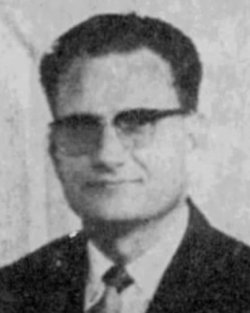
Wilbern Elias Best (1919-2007) was a preacher and writer of Gospel material. He wrote 25 books and pamphlets comprised of sermons he preached to his congregation. These books were distributed in English and Spanish around the world from 1970 to 2018 at no cost via the W.E. Best Book Missionary Trust.

Comments

0 / 2000 characters
Comments are moderated before appearing.

Be the first to comment!

Joshua

Joshua

Shall we play a game? Ask me about articles, sermons, or theology from our library. I can also help you navigate the site.