Bootstrap
W.E. Best

#2 Isaiah 53 - The Savior's Introduction Misunderstood and Rejected

Isaiah 53:1-3
W.E. Best July, 1 1988 Audio
0 Comments
Best on Isaiah 53

Sermon Transcript

Auto-generated transcript • May contain errors

100%
Last Sunday morning we introduced
our study of Isaiah 53 by investigating the last verses of the 52nd chapter,
which should go with the 53rd chapter. Beginning this morning,
we are going to make a study of this which is considered to
be the outstanding chapter in the Old Testament concerning
the sacrificial work of Jesus Christ, our Lord and Savior.
We're only going to study the first three verses this morning. It will take us about four or
five weeks to complete a study of Isaiah chapter 53 in our morning
services. We will continue to study the
book of Esther in our Sunday evening studies. I want us to read just the first
three verses. After I have read the first three
verses, then I want to go back through them once again and give
to you the New Testament passage that will fit each phrase found
in these first three verses. We will be doing that in our
study throughout the twelve verses of Isaiah chapter 53. Who hath believed our report,
and to whom is the arm of the Lord revealed? For he shall grow
up before him as a tender plant, and as a root out of a dry ground. He hath no form nor comeliness,
and when we shall see him, there is no beauty that we should desire
him. He is despised and rejected of
men, a man of sorrows and acquainted with grief, and we hid, as it
were, our faces from him. He was despised And we esteemed
him not. Now let's go back through it
again, and I will give to you the New Testament passage that
is used in connection with each phrase of the first three verses
of Isaiah 53. Who hath believed our report? John 12, verse 37. yet they believe not on him. The pronoun they refers to the
Pharisees of Christ's time. If you're familiar with the twelfth
chapter of the Gospel of John, then you know what the text is
in the light of its context. Now the second phrase, to whom
is the arm of the Lord revealed. I want to give two references.
The first one is Luke 10, verse 21, and the second is Matthew
11, verse 27. Thou hast revealed them unto
babes. Thou hast revealed them unto
babes. That is the phrase that I'm using
from Matthew 11, 27, and its companion passage in
Luke 10, 21. You will notice there are two
questions in verse 1 of Isaiah 53. Who hath believed our report
is the first question, and the second question, the answer to
it, answers the first question. Notice what I said. The answer
to the second question answers the first question. Now verse
2. He shall grow up before him as
a tender plant. There are two passages we will
be using from the New Testament. The one to which I direct your
attention first of all is John 15, verse 1. where the Lord Jesus
said, I am the true vine. I am the true vine. The second
passage is found in the last verse of Luke, chapter 2, to
which we will be referring later. Now the next phrase, and as a
root out of a dry ground, I want us to look first of all to Isaiah
11 and verse 1. In that statement we have a prediction,
a rod out of the stem of Jesse, a branch shall grow out of his
roots. The next phrase, he hath no form
nor comeliness. Once again, I'm directing your
attention to Isaiah 52 and verse 14, a passage which we looked
at briefly last Lord's Day. His visage was so marred more
than any man, a prediction of what would happen during the
awful sufferings of our Savior, the Lord Jesus Christ. Now, the
next phrase. And when we shall see him, there
is no beauty that we should desire him." 1 Corinthians 2, verse
14, we know that the natural man receiveth not the things
of the Spirit of God. There isn't anything in the Lord
Jesus Christ as far as his humanity is concerned that would desire
a person to look upon him. And the fulfillment of that,
of course, is 1 Corinthians 2.14, the natural man does not receive
the things of the Spirit of God. He doesn't have the ability to
recognize spiritual things. when men looked upon the Lord
Jesus Christ during his personal ministry, unless they were endowed
by the Spirit of grace, they could not see anything in him
that would cause them to desire him. The application of that,
of course, today is there isn't anything spiritually that is
desirous to the unsaved person. Now let's go to verse 3. He is
despised. Looking at that one phrase, he
is despised. In Matthew 27 and verse 29, what
happened when the Lord Jesus Christ suffered on the cross?
We're told they mocked him. Matthew 27, 29. Notice the next
phrase. Not only was he despised, But
he was rejected of men, and rejected of men. In John 18 and verse
40, we find this statement, Not this man, but Barabbas. In other words, they did not
want the Lord Jesus released, but they asked that Barabbas,
a thief, might be released. Therefore they chose not the
Son of the Living God, but they chose rather a thief. The next phrase, a man of sorrows. Mark 14, verse 32, the Lord Jesus
said, My soul is exceeding sorrowful unto death. The next phrase,
and acquainted with greed. In John 11, verse 35, the shortest
verse in all of Scripture, Jesus wept. The next phrase, And we
hid, as it were, our faces from him. John 5, verse 40, Ye will
not come to me, that ye might have life. And finally, He was
despised and we esteemed him not. 1 Corinthians 1 and verse
23, unto the Jews the Lord Jesus became a stumbling block. Unto the Greeks he was as a foolish
person. So the gospel was a stumbling
block unto the Jews, and the gospel still is, as it was, not
only a stumbling block to the Jews, but foolishness to the
Greeks. Therefore, we hid as it were
our faces from him. He was despised, and we esteemed
him not. I wanted you to see that we have
a New Testament application of each one of the phrases in this
portion of Scripture. In fact, we have a divine commentary
given us in the New Testament of every phrase of this portion
of Scripture in Isaiah chapter 53. It is beyond us. It is not within our ability.
to give the kind of an exposition that ought to be given of this
marvelous portion of Scripture. I want to begin our study of
Isaiah 53 by saying the chapter begins, you see, not with the
first verse of chapter 53, but going back to the 12th verse
of the 52nd chapter. And in the study of this long
section beginning with the twelfth verse of chapter 52 through the
twelfth verse of chapter 53, we find that this particular
section of scripture begins and ends with a description of the
exaltation and glory of the righteous servant. Let's pause a moment. I said, the righteous servant. There are many in the realm of
higher criticism who say that Isaiah 53 refers not to the Lord
Jesus Christ, the servant of Jehovah, the one who became the
servant, the one who humbled himself and became obedient unto
death, even the death of the cross, Philippians 2, 5-8. but rather this portion of Scripture
describes Israel, who is referred to several places in the prophecy
as the servant of Jehovah. Now, I want to raise a question.
Do you think this passage of Scripture refers to Israel as
the servant of Jehovah? Or does this passage refer to
the Lord Jesus Christ, the second person of the Godhead, who is
also referred to as the servant of Jehovah? You know, of course,
that it is the latter that is the true statement, and not the
former. Regardless of what higher criticism
says, by no stretch of one's imagination Could he say that
our sins were laid upon Israel, and that Israel bore our sins? So you see how foolish any such
statement is in the light of Holy Scripture. Even though we,
as we consider this section of Scripture, beginning with verse
12 of chapter 52, going through the last verse of chapter 53,
as this passage begins and ends with the description of the exalted
glory of the righteous servant. Yet I must hasten to say that
in between the first and the last parts of this section of
scripture, we have the deep valley of the sufferings and death of
Jesus Christ. I believe that this passage should
be studied more than it is. We can never completely exhaust
this portion of Scripture. There is no passage in the Old
Testament that describes the person and work of Jesus Christ
more vividly than the passage that we are now investigating.
I am afraid that Isaiah 53, like Psalm 23, And Ephesians 1, that is quoted
by many, John 3, 16, that seems to be the only text today that
most religionists know, and yet they do not know its content. I'm afraid that we become so
familiar with these passages of Scripture that we fail to
see the deep significance of these great passages and especially
the one which we are now investigating. I'd like first to think about
three things by way of introduction this morning into our study of
the first three verses. First of all, the confusion of
the sacrifice is apparent. This is what we find in the very
first part of Isaiah 53. the confusion of the sacrifice
is apparent. Or, the confusion of the person
of Jesus Christ is apparent. To whom does this passage refer? We have a divine commentary on
it. Do you know where the divine commentary is? Do you remember
the 8th chapter of the Acts of the Apostles? Do you remember
the story of Philip who joined himself with the Ethiopian unit
who had been to Jerusalem and on his way back to the country
from which he had come all the way to visit Jerusalem at the
time of the religious observances to be observed there? What was
he reading? He was reading a portion of Scripture.
And when you observe carefully, verses 34 through 37. You will
find, especially in verses 34 and 35 of Acts 8, that the Ethiopian
eunuch was reading a portion of Isaiah chapter 53. He did
not know what he was reading. In fact, he did not know to whom
the passage referred. When the Spirit of God told Philip
to join himself with the eunuch who was going back to the place
from which he had come, he did that. He obeyed the Spirit of
God. The eunuch asked him the question,
to whom does this passage refer? Does it refer to one of the prophets?
Peter Now, Peter, but Philip, took the passage of Scripture
where the eunuch was reading and preached unto him what? Preached
unto him Jesus Christ. There we have a divine commentary
on Isaiah 53. No one need wonder about the
passage of Scripture and to whom the passage refers in the light
of Acts chapter 8, verses 34 and 35. So the confusion of the
sacrifice is apparent. There are three things to be
considered in the first three verses concerning the confusion
of the person of the sacrifice. First of all, the Savior or the
sacrifice is introduced in verse 1. Then in verse 2, the Savior
or the sacrifice is misunderstood. And finally in verse 3, the Savior
or the sacrifice is rejected. Looking at it from a very simple
outline, the Savior is introduced in verse 1. The Savior is misunderstood
in verse 2. And the Savior is rejected in
verse 3. The chapter is full of paradoxes. I have a volume, at least I did
have, I think I've given it away, and this person, whose name is
Smith, has pointed out 14 different paradoxes in Isaiah 53. I would like to mention these
by way of introduction as we continue to introduce this marvelous
chapter. Fourteen different paradoxes,
and they are, of course, divine paradoxes in Isaiah 53. Look at them briefly. Number
one, root out of a dry ground yet fruitful. That's a paradox. How in the world can a root grow
up out of dry ground and yet be fruitful? That is a divine
paradox. Number one, therefore, is root
out of a dry ground, yet fruitful. Number two, no form or beauty
in Jesus Christ, yet he is God's servant. And when I say he is
God's servant, let me go beyond that. The scriptures present
the Lord Jesus Christ as the lily of the valley, as the bright
and morning star, as the rose of Sharon. I'm here to tell you
there is something very beautiful in the person of Jesus Christ,
but it takes the grace of God to detect that beauty. From the
human point of view, that is, the form of a servant, or the
human nature which he assumed in the incarnation, there wasn't
anything attractive about the human nature of Jesus Christ.
Therefore, no form or beauty was seen in the Lord Jesus Christ
by the natural man. Yet God's servant, and being
God's servant, He was the Rose of Sharon, the Lily of the Valley,
the Bright and Morning Star, and we could go on and on, and
quote many passages from the Old as well as the New Testament. Number three, despised and rejected,
yet he is the anointed Messiah. The name Christ means anointed
one of God. Thus we see another divine paradox. Number four, without generation,
yet numerous seed. Number five, suffered unto death,
yet ever living. Number six, rejected and beaten,
yet prospered. Number seven, cut off yet prolonged
his days. Number eight, he grew up yet
the eternal Son of God. How can the eternal grow? So
you see, here is another paradox. He grew up, Luke 2 and verse
52, yet he is the eternal Son of God. Number nine, a tender
plant yet bearing an enduring and awful storm. Number ten,
no beauty to lead one to desire him, yet he is a desire of many. Eleven, wounded to death, yet
those wounds that led to death to Jesus Christ are life to you
and to me. and all who are born again with
the Spirit of God. 12. Jehovah laid on him, yet he was
Jehovah himself. 13. Helpless was he in the hands
of his persecutors, yet omnipotent and delivering others from their
oppression. In other words, helpless because
he chose to be helpless. And I want to emphasize that.
Finally, dying yet, we find in verse 12 of Isaiah 53, dividing
the spoils. Dying yet dividing the spoils. Do we see more than Christ's
death? than Jewish enmity and Roman
cruelty in this chapter? Do we see the decree of God evidenced
in this chapter? I trust that we do because, after
all, the decree of God was behind even the Jewish enmity and the
Roman cruelty that was inflicted upon the human nature of our
Savior, the Lord Jesus Christ. Now for the beginning of our
study of verses 1 through 3. Who hath believed our report? Or who hath believed our doctrine,
if you'll notice your marginal reference? Who has believed? That's a good question. Have
you believed the record that God gave of His Son? There are
many outstanding statements in the New Testament concerning
this record. One of the better ones that comes
to my mind at this time is 1 John, chapter 5. Will you turn to it? In the 1st epistle of John, chapter
5. Who hath believed our report? The question is, have you believed
the record that God gave of his Son? There are many today who
say they have believed the record. They may have given mental assent
to the record, but there is a difference in giving mental assent to the
record of God and believing the record with a faith that is the
gift of God. Here's what we have, beginning
with verse 9, 1 John, chapter 5. If we receive the witness
of man, the witness of God is greater. For this is the witness
of God, which he hath testified of his Son. He that believeth
on the Son of God hath. And that means, according to
Charles Haddon Spurgeon, got it. hath the witness in himself. He that believeth not God hath
made him a liar, because he believeth not the record that God gave
of his son." Now listen to verse 11. Several things in this text. And this is the record that,
number one, God hath given. God hath given. Number two, he had given to whom? To us, John says, that is, to
all believers. John was writing to the children
of God in his first epistle. So it's personal, to us. Number
three, and notice it is a lasting record, eternal life. So God has given, it is a divine
gift, It is to us, therefore it is a personal gift. It is
eternal, therefore it is a lasting gift. And then finally, and this
life is in His Son. He that hath the Son hath life,
and he that hath not the Son of God hath not life. Now the question is raised. In
Isaiah 53, verse 1, who hath believed our report? That is, who has believed our
doctrine? who has believed the wonderful
story about the glorious servant of God, the Lord Jesus Christ,
who through self-humiliation and vicarious suffering, even
unto death, accomplished salvation for all of us who have believed,
and he has accomplished salvation for all who shall believe. Now we come to the second question.
To whom is the arm of the Lord revealed? The answer to the first
question is that none believed except those to whom Christ was
or is revealed. Christ was revealed to you, and
that's the reason you believe. And unless Jesus Christ is revealed
to you, you will not believe. Let's look at it. There is more
to what this says than what might appear on the surface. So to
whom is the arm of the Lord revealed? Here is the answer, the answer
to the first question. I did not elaborate. too much
on the first question, who hath believed our report? I simply
stated that a report has been given. Jesus Christ has been
evidently set forth, crucified among us. That is, according
to Paul's statement in Galatians 3, verse 1, He has been placarded
before us. In other words, it is something
that was not done in a corner. Acts 26 and verse 26, what God
has done has been evidently set forth, and it was not something
done in a corner as far as the death of Jesus Christ was concerned. But there is more to it than
just His death on the cross. His death on the cross does not
mean a thing to any individual. until God by the Spirit reveals
the meaning of Jesus Christ and his death to you and to me. So to whom is the arm of the
Lord revealed? The answer to the first question,
who hath believed, is that none have believed unless Jesus Christ
has been revealed by the Spirit to your heart. Can you prove
that? I surely can. That's why when
I read this phrase by phrase and gave you some New Testament
passages, one of which I gave was Matthew 11. Will you turn
to the passage? You can know this morning whether
the Lord Jesus has been revealed to you or not. And here it is,
beginning with verse 25 of Matthew chapter 11, a passage that is despised by
religionists today. And I say that without any hesitancy. Listen to these words. Christ
is speaking. At that time, Jesus answered
and said, I thank thee, O Father, Lord of heaven and earth, because
thou hast hid these things from the wise and prudent, and hast
revealed them unto babes." In other words, spiritual things
are hidden from the wise, the worldly wise, and the prudent. And they are revealed by the
Spirit of God unto whom? Unto these. Verse 26, Even so,
Father, for so it seemed good in thy sight. Verse 27, All things
are delivered unto me of my Father, and no man knoweth the Son, but
the Father. Neither knoweth any man the Father,
save the Son. Here it is. Are you ready for
it? Can you take it? Here's the biblical
answer to the second question of Isaiah, chapter 53. And he to whomsoever the Son
will reveal Him. There's the answer. You don't
have to wonder about it. Now look at the two questions
again. The first one, who hath believed our report? The second
question, to whom is the arm of the Lord revealed? Let's look at the phrase, arm
of the Lord. That is a significant statement
found a great number of times in the prophecy of Isaiah. I
will give you three at this time. In fact, there are seven that
I would like to give, but that would include really another
message. So look at these three statements
taken from Isaiah. Isaiah 33 and verse 2, "...be
thou their arm, our salvation." In other words, the phrase or
the statement, the arm of the Lord, is the name which reveals
the Lord Jesus Christ as the Executive of the Godhead." You will notice I said, Jesus
Christ is the Executive of the Godhead. Do we have a New Testament
passage to prove that? We surely do. Colossians 2 and
verse 9. In Him, that is, in Jesus Christ
dwelleth all the fullness of the Godhead vitally, and we are
complete in Him. Jesus Christ, the arm of the
Lord, is the executive of the Godhead. That's why the prophet
said, Be thou their arm, be thou the arm of Israel, our salvation. In Isaiah 40 and verse 11, he
shall gather the lambs with his arm. He shall gather the lambs
with his arm. He is the executive of the Godhead. And finally, in Isaiah 51 and
verse 9, O arm of the Lord, or O executive of the Godhead. to whom is the arm of the Lord
revealed, to each one to whom the Spirit
of God has revealed the person and work of Jesus Christ. Now
look at verse 2. The Savior is introduced. Now
the Savior is misunderstood. For whom did the Jews look? The Jews looked for one who would
come in majesty and glory. They were not looking for one
who would come in a humble way. So the Jews were looking for
one who would come with pomp and pride. as did the captain
of the Lord's host in the days of old, according to Joshua chapter
5 and verse 14. This was part of Israel's stumbling
block. But what about Genesis 3.15? What about Isaiah 9 and verse
6? In Genesis 3.15, the statement
is made that the Lord Jesus Christ would be the seed of the woman. In Isaiah 9 and verse 6, even
though a son is to be given, that will not take place apart
from a child being born. Now, this was something the Jews
did not recognize. They had been blinded by their
prejudice. to this. But here we see that
he was to come, and he was to come not only as a son given,
but he would come as a child being born. Therefore he would
be the seed of the woman. The answer to this is Galatians
4. At God's appointed time, Jesus
Christ was made of a woman. Made of a woman. That goes right
along with the virgin birth. Then notice, He shall grow up
before Him. He shall grow up before Him. He shall grow up before whom?
Now, look at Isaiah 53, too, for a moment. For he, to whom does the pronoun refer? It refers to none other than
Jesus Christ, God's righteous servant. This is not an influence. This is not a system. This is
not education. This is not some philosophy.
This is not the nation of Israel. This is a person. Notice what
it says, "...for he shall grow up before him." Now, look at
the pronoun, him. To whom does the pronoun, him,
refer? He, that is, Christ, shall grow
up before God the Father. So a person was born. A person
lived. A person died, a person was buried,
a person was raised again, a person is sitting today at the right
hand of God the Father, and a person will come again to receive his
own unto himself. So he shall grow up before God
the Father, and he will grow up before God the Father as a
tender plant. Will you turn with me to Luke
chapter 2 for a moment? And let us look at a very important
text of Scripture. It is verse 52. It states, And Jesus increased
in wisdom and stature," or age, and in favor with God and man. I am stressing in favor with
God, in keeping with our text in Isaiah 53, verse 2. So he shall grow up before the
Lord. The word grow here marks the
difference between the work of God and the work of man. No human work can grow. Only that which God gives can
grow. Only a divine work can grow. So the one who gives life is
the cause of growth. But we go a little further. He
shall grow up before Him. as a tender plant. So look now
at verse 52 again, Jesus increased in wisdom and stature, or age,
and in favor with God. So the veil is now falling from
the eyes of the Jews. Let me pause long enough to make
a statement that is very important for the proper understanding
of this 53rd chapter of Isaiah. This entire chapter is a penitential
confession of the Jews, of the Jews. That does not mean that
you and I cannot receive spiritual lessons from it. But keep in
mind that the prophet was addressing the Jewish people. Therefore,
this prophecy pertained to the Jews primarily, and it constitutes
the penitential confession of the Jews. Now, the scales are
beginning to drop from their eyes. They're beginning to see,
in other words, this is a prophecy of what will take place in the
future. They're beginning to see, in
other words, this is a prophecy of what will take place in the
future when the scales shall fall from the eyes of the Jews,
when a nation will be born in a day. Now, don't take this passage
out of its proper setting, please. To do that is to do an injustice
to the Scriptures, even though you and I receive valuable lessons
from it. This is a penitential confession
of the Jewish people projected into the future when Israel as
a nation shall look upon him whom they have pierced and a
nation will be born in a day. And we have that prediction given
us in the 66th chapter of the prophecy of Isaiah. But here,
the veil now is falling from their eyes. And they remember
the Passover lamb. He shall grow up before him. You see, the Jews set aside a
lamb for a sacrifice. And the lamb was set aside unto
the tenth day of the month, according to Exodus 12 and verse 3. During this period of time, The
Lamb was ever before Jehovah, before Jehovah alone, and His
eyes alone rested upon the Lamb with delight. Now, the Jews are
saying, during that time, we did not recognize what was taking
place. You and I know that for 33 long
years, Jesus Christ, the second person of the Godhead, having
assumed human nature, was in hiding, as it were, from the
world. He did not display himself. We know very little about him,
but he was ever before the eyes of God the Father, and he was
growing up before God the Father. waiting for the time when He
would go to the cross of Calvary and there shed His precious blood
in order to obtain eternal redemption for all whom the Father gave
to Him in the covenant of redemption. So He was before the Father,
just as the Lamb that was set aside for a period of time was
not detected by the Jews generally. but was ever before God with
delightful eyes. Yet there was a time when the
Lamb did come forth, the Lamb was slain, the blood was applied,
and all of this in prediction of Jesus Christ who grew up for
thirty-three years before God the Father without any public
display And therefore he gained favor, as we're told, before
God the Father. Then look at the phrase, as a
root out of a dry ground. Taken in connection with Isaiah
11, verse 1, we see that it springs up out of the decayed stump of
Jesse. I said out of the decayed stump
of Jesse. Men are represented as turning
away in disappointment from this tender plant, springing up out
of such unpromising surroundings. Did men not say during the early
years of our blessed Lord as he went forth ministering Did
they not raise the question, can any good thing come out of
Nazareth? They knew that he had come out
of Nazareth. So he grew up as a tender plant out of a dry ground
or unpromising surroundings. I want you to know there is no
difference between the religious world today and the people of
the world. I want to make that very plain
this morning. I said there is no difference
between the religious world and their attitude toward Jesus Christ
and the world in general. And I'm going to prove that from
this passage of Scripture. We know that the Jews did not
desire him. So the Jews at the birth of Jesus
Christ may be described by political impotence and religious decadence,
according to Isaiah 11 and verse 10. The dry ground that is used
here in this prophecy describes the then existing state of the
enslaved and degraded nation of Israel. So the dry ground
is the corrupt character of the religious age in which Jesus
Christ was born, and it describes the corrupt age in which you
and I live today. Yet, in spite of all the adverse
circumstances of Christ's earthly environment, he grew up before
God the Father. That is, he grew up before the
Lord God of heaven, and he increased in wisdom and stature and in
favor with God. Coming to the next phrase, he
hath no form nor comeliness, no beauty that we should desire
him. You see the scales are falling
now from the eyes of the Jews. They're confessing. They're confessing. This is the penitential confession
of the Jewish people. So they're saying, he hath no
form nor comeliness, no beauty, that we should desire him. There was nothing in his surroundings
or appearance that attracted the fleshly or worldly-minded
people. I should hasten to say, nothing,
either in his person or work, to attract the religious people
of Christ's day. You say, I don't understand that.
If you do not understand that, then you do not understand the
teaching of Holy Scripture. You do not understand the depravity
of the human heart. I'm here to tell you this morning,
there was nothing to the religious world of Christ's day, nothing
about his humanity, that caused him to desire. Listen to what
he says, he hath no foreign nor common. no beauty that we should
desire. The Jews are confessing that
they were looking for one to come with pomp and pride, but
instead the Lord Jesus Christ came in humility. He humbled
himself and became obedient unto death, even the death of the
cross. They wanted to see one riding upon a white horse They
wanted to see one coming as king, but he didn't come that way the
first time. He came to suffer. He came to die. When he comes
a second time, he will come as king of kings and Lord of lords. So the situation was appalling
when Jesus Christ came the first time. And the Jews admitted And
here they are confessing that there was no beauty in him that
they should desire him. I want you to know there is no
beauty in the Christ that is proclaimed today in all of his
beauty and glory, spiritually speaking. There isn't anything
that will attract the flesh. So the situation is the same
now. No beauty. So the Lord Jesus
Christ did not answer to the ideal of the Jews when he came
the first time, and Jesus Christ does not answer to the ideal
of the religious world today either, beloved. He doesn't answer. to the thoughts of the Jews,
and the greatness of Jesus Christ today is not changed to this
religious world in which we are living. Here is a passage of Scripture
that really describes what ought to be depicted in our day in
which we live. What happened to the Jews? They
misread the prophecies. They imagined that another deliverer
than God, had come, would come. What's the religious world looking
for today? The religious world is looking
for something that will attract the flesh, and that's what they're
going after. All you have to do is to talk
about the absolute sovereignty of God, the holiness of God,
and you will find religionists on their way out of your presence.
All you have to do is just take a stand, that's all. They want
no part of the holiness of God, because they want no part of
the holiness of life, which is the evidence of regeneration. Is there not an application in
this for our generation? You and I are not to look just
at the vessel. We are to look at what the vessel contains.
When men looked upon Jesus Christ, no beauty that they could desire
Him. You and I see more than the human nature of Jesus Christ. We are able by the grace of God
to penetrate the human nature and see the divine nature. Jesus Christ, the Eternal Son
of the Living God. Now we come to verse 3. The Savior
was rejected. Introduced misunderstood and
now rejected. Verse 3, despised and rejected
of men is what the Scripture says. Thus the penitential confession
proceeds in verse 3 to set forth the positive hostility when the
Jews and their former ignorance is manifested to a God-righteous
person. Look at the word despise. In connection with the word despise,
listen to this text in Isaiah 49, verse 7. Thus saith the Lord,
the Redeemer of Israel and his Holy One, to whom man despises,
Man, in his natural state, despises the Holy One of Israel. You say,
I don't despise the Holy One of Israel. If you're on the stage,
you do. Whether you are willing to admit
it or not, you do. You despise the Holy One of Israel. John 3, 19, 20, and 21. proves that to be. You hate God. You will not come to the light
lest your deeds be reproved. So the prophet said, the Lord
speaking through him, the Redeemer of Israel and his Holy One, to
whom man despises. Now, the Jews confessed that
they had despised him. This is their confession. And,
beloved, this is the confession of every person saved by the
grace of God. There was a time when I despised
him, and you did too. And you did too. That is in all
the texts. What else does it say? To him
whom the nations abhorred. That's Isaiah 49, 7. Even the
nation abhorred him. What do we have when we come
to the New Testament? Away with this man! Crucify him! If that is not a manifestation
of despising Jesus Christ, the Holy One of God, tell me what
is. away with him! Crucified! Crucified! That was the cry of
the religious mob, and that is the cry today of the religious
mob, because human nature has not changed. Then notice as we
go a little further, not only is he despised, but he is rejected
of man. In Luke 19, verse 14, the statement
is made by those who were living when our blessed Lord went to
the cross of Calvary. They said, We will not have this
man to reign over us. That's the attitude of the unsaved
person today. I'll not have this man to rule
over my life. I want you to know it's the greatest
blessing in the world to be under the rule of Jesus Christ. That is freedom indeed. He shall know the truth, and
the truth shall make you free. And if the Son, therefore, makes
you free, you'll be free indeed. We're destined. We'll not have
this man to reign over us. The chief men of his nation,
the great men of this world, withdrew their hands from him."
Thus we read in John 7, 47 and 48. Have any of the rulers believed
on him? Have any of the Pharisees believed
on him? Notice the question. Have any
of the rulers of this world believed on him? rejected of men. How about the religious Pharisees?
Had they believed on him? No, and they would not believe
on him until he chose to reveal himself unto them. Coming now to the next statement,
a man of sorrow. We have all seen grief and sorrow
in our time. But it is not one sorrow that
makes one a man of sorrow. It is not one meeting with grief
that makes one acquainted with grief. Christ's life was one
of constant, painful endurance. He was acquainted with grief. It is not that he had not, that
he had by nature a sickly body, because he didn't have a sickly
body, but that the wrath instigated by sin and the zeal of self-sacrifice,
burnt like the fire of a fever in his soul and body, according
to Psalm 69 and verse 9. Therefore his sorrow was heart
sorrow, and his grief was grief of soul. See, if there be any
sorrow, life unto my sorrow, wherewith the Lord hath afflicted
me in the days of the spirit angel." He was despised. Here is a depth of contempt in
that statement. We esteemed him not. We're again
now at the penitential confession. There was a time when you did
not esteem him, but by grace you do esteem him, as we'll see
a little further on in the study of this chapter. And it's by
grace that you esteem him. But in an unsane condition, no
one esteemed Christ. We esteemed him not. Instead
of counting him dear and worthy, the Jews formed a very low estimate
of the Lord Jesus Christ. I want to say this morning that
the religious world has formed and is forming a very low estimate
of Jesus Christ, the Son of the living God, when they say about
him, he is a peccable person. He had the capacity to sin, but
he didn't. That's a very low estimate of
Jesus Christ. Then it says, because he had
poured out his soul unto death. poured out his soul unto death. And he was numbered with the
transgressors, and he bare the sin of many. It is only in the
way of conviction of sin and repentance, and not in the way
of speculation, that Jesus Christ can be known. I close with this statement.
Turn with me, if you will, to Hebrews 12 and verse 2. You and
I know that the work of Jesus Christ is behind him. He is at the right hand of God
the Father today, having finished the work the Father sent him
to perform. During his personal ministry, all the things that
he suffered, the grief which he endured, Look at this, verse
2, Hebrews 12, looking unto Jesus the author and finisher of our
faith, who for the joy that was set before him endured the cross. Notice now, the joy that was
set before him endured the cross. despising the things, and is
set down at the right hand of the throne of God. I would have
closed by saying that Jesus Christ is living in the eternal joy
of an accomplished work. I'm saying that in the light
of this verse. While he was suffering, while he was bearing grief, He's
the often finisher of our faith, who for the joy that was set
before him endured the cross, despised the shame. It was before
him during his personal ministry. Now it is behind him. The death
of the test-treater has taken place, and now he ever lives
in the joy of an accomplished work. What is your attitude concerning
the Lord Jesus Christ? What is your attitude? Who has
believed our report? To whom is the arm of the Lord revealed? To
whom is the executive of the Godhead revealed? That answers the first question.
Has he been revealed to you? If he has been revealed to you
by the Spirit, then you have believed the report. If he has
not been revealed to you, then you have not believed the report. What do you say? What think you
of Christ? What value do you place upon
him? Does He mean more to you than
all the world? Let's stand as we sing. Touch
the psalm, Brother Brennan.
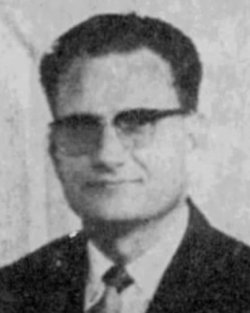
W.E. Best
About W.E. Best
Wilbern Elias Best (1919-2007) was a preacher and writer of Gospel material. He wrote 25 books and pamphlets comprised of sermons he preached to his congregation. These books were distributed in English and Spanish around the world from 1970 to 2018 at no cost via the W.E. Best Book Missionary Trust.

Comments

0 / 2000 characters
Comments are moderated before appearing.

Be the first to comment!

Joshua

Joshua

Shall we play a game? Ask me about articles, sermons, or theology from our library. I can also help you navigate the site.