Bootstrap
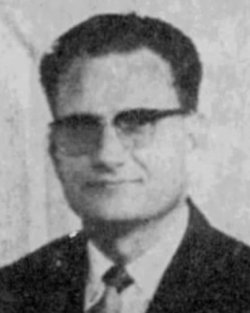
W.E. Best

#10 Isaiah 53 - The Savior's Soul Made an Offering

Isaiah 53:10
W.E. Best July, 1 1988 Audio
0 Comments
Best on Isaiah 53

Sermon Transcript

Auto-generated transcript • May contain errors

100%
I'm going to read, beginning
with verse 1, reading through verse 11, following the same
pattern which we have been doing for the last several weeks. But
since this morning, we're going to concentrate our attention
upon one word that is found in the last three verses of Isaiah
53. It is the word soul. Let us therefore read verses
10 through 12, looking and emphasizing the word soul. Yet it pleased
the Lord to bruise him. He hath put him to grief, when
thou shalt make his soul an offering for sin. He shall see his seed, he shall
prolong his days, and the pleasure of the Lord shall prosper in
his hand. He shall see of the travail of
his soul and shall be satisfied. By his knowledge shall my righteous
servant justify many, for he shall bear their iniquities. Therefore will I divide him a
portion with the great, And he shall divide the small with the
strong, because he hath poured out his soul unto death. And he was numbered with the
transgressors, and he bared the sin of many, and made intercession
for the transgressors." Now look at the three verses once again
as we pick out the phrase that has to do with the soul of Jesus
Christ. In verse 10, his soul was made
an offering for sin. In verse 11, he shall see of
the travail of his soul and shall be satisfied. In verse 12, he
hath poured out his soul unto death. What does it mean for the soul
of Jesus Christ to be made an offering for sin? Did the soul
of Jesus Christ die? Or was his soul poured out unto
death? Now, those two statements are
different. They are not the same. Notice I ask the question. Did
Christ's soul die, or was his soul poured out unto death? I'm going to have an unusual
introduction of the study of this subject this morning, because
I think this will create a great interest in the minds of all
of us to explore the subject of Christ's soul being made an
offering for sin, or his soul being poured out unto death. When you open your Bibles to
Romans chapter 9, I know that to every one present who has
been a Christian for any length of time and has come face to
face with the third verse of Romans 9, has wondered at what
this verse really means. I'll give to you the common interpretation,
one which I have heard several times in the last few weeks as
I have listened to different men on the radio and television. I'm talking about ministers.
It is the common interpretation of this verse, but I must hasten
to say that I have never since I have come to any knowledge
of truth whatsoever, have been able to accept the common interpretation
of this verse. Now, for some several years,
since I've been reading the works of the Puritans, and especially
the work by Robert Haldane, and he has an excellent work on the
Book of Romans, I did not know of a better interpretation than
what he gave, and yet I had question marks in my mind as to what it
really meant even after I read his interpretation of this verse
of Scripture. Let us read now, beginning with
verse 1. You say, well, I don't see the connection. You will
in a moment. Beloved, you and I cannot understand Romans 9-3
until we understand the meaning of Christ's soul being poured
out unto death. When we understand that, that
will give to us the key for the understanding of this verse.
In the study of the death of Christ this last week, and especially
his soul being poured out unto death, After studying and reviewing
and exploring everything almost that I have in my library, and
I have quite a few things, I read one little statement by a Puritan
that provoked thought enough that I kept exploring it, and
it wasn't long until, as far as I'm personally concerned this
morning, it is as clear as day, and I hope that it will be to
you when we have finished our discussion of Christ's soul being
made an offering for sin, which is the key, I said, to the understanding
of this passage. Paul said, I say the truth in
Christ. I say the truth in Christ. I
lie not. My conscience also bearing me
witness in the Holy Ghost. Whatever Paul is saying here
in the first three verses, he said under the inspiration of
the Spirit of God. Therefore, he made no mistake
whatsoever. He could not have made any mistake. Verse 2, that I have great heaviness
and continual sorrow in my heart. Here is the verse. For I could
wish that myself were accursed from
Christ for my brethren, my kinsmen according to the flesh." Paul's
wish was in the power of the Holy Spirit according to verse
1. Therefore, I think you ought
to underscore the phrase, in the Holy Ghost, in verse 1, with
the statement, for I could wish. Whatever he wished, he wished
in the power of the Holy Spirit of God. He did not desire, beloved, to
be cut off from union with Jesus Christ. Notice how I said that. I have never believed that. I
said years ago that if the common interpretation which I heard
then, and which I've heard many times since, if that were the
truth of this passage, then there's something wrong with this person. Because, beloved, I do not, and
I do not believe that you can honestly say that you would like
to go to hell if your going to hell would mean the salvation
of some of your relatives or close friends. Now, I want you
to think about that a little bit. Just let that soak in. If being accursed from Christ,
and you can notice your marginal reference, are being separated
from Christ, and that's the word that you find in your marginal
reference. If that means going to hell,
being forever separated, as so many say it means, then, beloved,
I have to confess that I don't have that kind of love. Do you have that kind of love?
And I'll tell you something else. The next time you hear some preacher
say that, after he gets through preaching, ask him if he has
that kind of love. Ask him if he is willing to go
to hell, if his going to hell would mean the salvation of some
of his friends or relatives. And when you ask him the question,
say, now be honest, don't lie. Let's have no quote ministerially
speaking here. I want you to tell the truth. Beloved, I do not believe for
a second that any one of you who knows Jesus Christ as your
Lord and Savior would be willing to be banished in hell forever
for one of your loved ones, if that would mean the salvation
of one of your loved ones. I don't believe that. I don't
even believe that's what Paul meant. I want to show now that
that is contrary even to what Paul has taught in the preceding
chapter. Paul has just completed an exposition
of the security of the believer in Jesus Christ, and there is
nothing that can separate him from the love of God, which is
in Christ Jesus his Lord, according to verses 28 through 39 of the
8th chapter. Now, can that be denied? You
see, I believe that the way we ought to study Scripture, we
ought to study it in the light of its context. Now, that would
contradict, that would be in direct contradiction to what
Paul had previously taught. He had rejoiced in the fact that
he had been effectually called because God had predetermined
his salvation, and since he had been justified, there was not
anything that could happen in his life to keep him from being
glorified. And therefore he could say, like
in verse 31, What shall we say to these things? That is, to
the five great biblical doctrines found in verses 28 through 30? If God be for us, who can be
against us? But he climaxed it by saying,
there is nothing that can separate one who is past from death and
the life, from the love of God, which is in Christ Jesus, his
Lord. Well, what does it mean? What
does it mean? Now, Haldane has given a good
exposition up to a point. Up to a point. He has made reference
to what I have just stated, as well as others. And then we are
told in Matthew 19 and 19, that we are to love our neighbor
as ourself. Now look at that statement a
moment. Beloved, if you were to say, I'm willing to go to
hell if it would be the means of the salvation of my neighbor,
that would be loving your neighbor more than loving yourself. But Jesus Christ didn't say it.
that we are to love our neighbors more than ourselves. He said,
love your neighbor as yourself. As yourself. Now, Haldane places this interpretation
on it. And as I've already stated, this
was about the best thing that I had read up until my recent
study. And, beloved, you see, I'm still
of the opinion that we as Christians have to continue to study the
Scriptures. We have to explore. We have to dig into the goldmine
of biblical truth. And the more we do, the greater are our blessings
received from such digging into the Scriptures. Now, some say,
as Haldane, It should be translated in this manner. I was wishing,
or I did wish, referring to the past in Paul's life, that is,
while he was Saul of Tarsus, while he was a member of the
Sanhedrin, in other words, he was willing as a member of the
Sanhedrin to be separated from Christ for the sake of his brethren. That sounded pretty good, but
it is stretching, notice what I say, it is stretching the original
language used here. Most interpreters, as I've already
stated, say that he desired to be separated from Christ eternally
if it could mean the salvation of his brethren, the Jews. Now,
the only way that the true meaning of this verse can be understood
is to have the proper understanding of the death of Jesus Christ.
And that's why I guess maybe this subject was such a blessing
to me this past week. I've known some of the things,
but yet I had not made this connection. This connection. And I want to
make that connection in order to be a help to you. And I believe
with all of my heart it is true. I can find nothing, I can think
about nothing throughout Scripture from Genesis to Revelation that
will contradict what I am going to give to you. Paul was willing
to give up something. Notice what I'm saying. He was
willing to give up something. Now the question is, what was
he willing to give up? What was he willing to give up?
He was willing to give up. I'm going to give the truth of
it now and then I'll elaborate on it in our discussion of the
soul of Christ being poured out unto death. He was willing to
give up the sense of God's presence and the joy which he was experiencing
then in Jesus Christ and undergo this displeasure for a time for
the sake of his brethren, the Jews. I repeat. I said Paul was willing to give
up the sense of God's presence and the joy that he was experiencing
in Jesus Christ. and undergo these things for
the sake of his brethren, the Jews, if that would mean their
salvation. That was an expression of love.
But it would not have been an expression of love had he said,
I'm willing to be eternally separated from Jesus Christ. I'm willing
to go to hell eternally. if by thus going to hell my brethren,
the Jews, could be brought to a saving knowledge of Jesus Christ. I said he was willing to give
up the sense of God's presence and the joy of Christ which he
experienced at that time and undergo that displeasure for
a time if it would benefit the Jews. Now you see what we're
getting at. Christ's death was understood
by Paul. And since the death of Jesus
Christ was understood by Paul, he didn't make a mistake. He
knew what he was talking about. He knew exactly what he was saying,
because what he said was in the power of the Holy Spirit according
to verse 1. Now, I'd like you to turn with
me to the 26th chapter of the Gospel according to Matthew. Christ's soul was made an offering
for sin. His soul was poured out unto
death. Oh, the travail of the soul of
Jesus Christ! Now, I have 40 minutes to expound
on this subject. But I know I cannot complete,
but I think I can give the major points and we'll complete it
tonight. 26th chapter of the Gospel according
to Matthew. Read with me, beginning with
verse 36. Then cometh Jesus with them unto
a place called Gethsemane. And saith unto the disciples,
Sit ye here while I go, and pray yonder. And he took with him
Peter and the two sons of Zebedee, and began to be sorrowful and
very heavy. Then saith he unto them, My soul
is exceeding sorrowful, even unto death. Please notice the
language here in verse 38. is the same language as that
found in Isaiah 53, verse 12, pouring out his soul unto death. Unto death. Then he said, Tarry
ye here, and watch with me. And he went a little further,
and fell on his face, and prayed, saying, O my Father, If it be
possible, let this cup pass from me, nevertheless, not as I will,
but as thou wilt." But as thou wilt. Now turn with me, if you
will, to the 27th chapter of Matthew, chapter 27, and let's
just read the 46th verse. And about the ninth hour, Jesus
cried with a loud voice saying, Eli, Eli, lama sabachthanai. That is to say, my God, my God,
why hast thou forsaken me? Christ's soul was made an offering
for sin. I want to begin our exposition
of this by saying, that Jesus Christ died from the standpoint
of a physical death. The human nature which he assumed
died, and his body was buried in Joseph's borrowed tomb, and
he remained there three days and three nights. And after three
days and three nights, his body was raised out from among the
dead bodies. But, beloved, the soul of Jesus
Christ did not die. His soul was poured out unto
death. Now, I want to explain that. Scripture nowhere states that
Christ's soul died. And since Scripture nowhere states
it, you and I better not say it did. But the Bible does say that his
soul was sorrowful, that is heavy unto death. Let me give to you
several companion passages that you may read in your spare time
in connection with what I am teaching. Matthew 26, 37 and
38. See, I don't have time to refer
to all of them this morning. Mark 14, 33 and 34. Luke 22,
verse 44. and John 12, verse 27. The curse that Jesus Christ endured
for you and me, for all the elect of God, did not work death in
his soul, but a heaviness unto death. And as the Puritan would
express it, not extensive, but intensive, as if his soul had
died. Now, how can I explain that?
You know, since we had just completed our study of the kings, and one
in particular, my mind immediately thought about a statement found
in Isaiah 38, verse 1. And here is a perfect analogy
of what I want to say in connection with the soul of Christ being
poured out unto death. Do you remember what we have
taught concerning Hezekiah, the good king? In Isaiah 38, verse
1, it states that he was sick unto death. Same terminology,
sick unto death. Now think about that statement
for a moment. Christ's soul was poured out unto death. His soul
didn't die. But what he suffered was as great
as if his soul had died. Now think about Hezekiah for
a moment. The prophet said that Hezekiah was sick unto death. Now Hezekiah did not die then. He did not die then. He lived
for 15 years after that. But he could not have been sicker
had he died. He was as sick as if he had died. Do you see what I'm talking about? I'm trying to make it as simple
as I can. But, Beloved, when you deal with spiritual things,
you can't make them as simple as some people would have them
to be made. Now, let's go a step further.
Hold this place in Matthew 26, 37 and 38, and turn with me to
Acts 2 and verse 24. The apostle Peter is preaching
on the day of Pentecost. He is preaching in the power
of the Holy Spirit. He is telling the Jews how that they had taken
the Lord Jesus and by wicked hands had put Him to death. And He did die physically. He
did die physically. But in His physical death, His
soul did not die. Here's the proof of it in verse
24. And this 24th verse refers not to the body, but to the soul
of Jesus Christ. Here it is. "...whom God hath
raised up, having loose the pains, or the throes of death, because
it was not possible that he should beholden of it." What is Peter
saying? He is quoting from the 16th division
of the Psalms, and there are two things taught in the 16th
division of the Psalms. There is the resurrection of
the soul of Christ, and there is also the resurrection of the
body of Jesus Christ. A little further on, as Peter
preaches, he also discusses the body and the resurrection of
the body in verse 27. of Acts chapter 2. But verse
24 speaks of Christ's soul, not His body. Death of the soul is
not death in the absolute sense, but the sorrows of death, that
is, the same pains that dying men's souls experience. Christ experienced when His soul
was made an offering for sin. Oh, let that soak in. Brother,
when I get through, if you don't have a great appreciation for
the death of Jesus Christ and for your relationship to Him,
then there's something seriously wrong with you. Seriously wrong. The soul did not die. Because Jesus Christ lived to
see his seed and was satisfied. Look at the context of Isaiah
53 now. His soul was poured out unto
death. His soul was made an offering for sin. Oh, consider the travail
of his soul. But he lives, and he lived, and
he lives, I should say. Put it in the present tense,
the present perfect tense. He lives to see his seed, his
spiritual seed. Thus the death throes could not
hold the Lord Jesus Christ, that is, his soul. Though they were
the same pains which kill the souls of the impenitent in hell,
the Lord Jesus Christ was too strong for the death throes to
hold his soul. Therefore he was raised, he was
raised from the suffering or the death throes that his soul
suffered when his soul was made an offering for sin. When his
soul suffered the torment, the torture that all of the rightly
should suffer throughout eternity. He suffered, the Infinite One,
more that suffering in finite time. Do you see the difference? Now
let's look at something that is really interesting. The Lord
Jesus Christ experienced two resurrections. The resurrection of the soul
and the resurrection of the body. Does that teach us anything?
The Lord Jesus Christ experienced the resurrection of the soul
in verse 24 of Acts chapter 2. He also experienced the resurrection
of the body after three days and three nights. Then his body
came forth from the grave. So the resurrection of his soul
from the pains of death was experienced by the Lord Jesus Christ. It
was not necessary for Jesus Christ to be in hell to suffer the penalty
of hell. Follow me. Please do. I said it was not necessary for
him to be in hell to suffer the agonies and the tortures of hell
anymore. that it was necessary, listen
to my analogy, that it was necessary for the Apostle Paul, who was
in his body on earth, to be in heaven when he heard words and
saw things that were not lawful for him, do I? II Corinthians
12, 1-4. There is no indication. Paul
said, I knew a man in Christ, whether in the body or out of
the body, I cannot tell. You can see now, since we are
studying this very passage, or will be, I read it last Wednesday
night, how all these things came to mind in my study of this subject
since Wednesday night. Now listen to me a moment. Jesus
Christ became our surety. Now, in becoming our surety,
it was not necessary for him to go into hell, in body, to
suffer the torments of hell, any more than it was necessary
for Paul, I said, to go in body into the third heaven and hear
things that were unlawful for him to utter. I said it was not necessary.
Now let me illustrate it another way. Here's a man who is willing
to become a surety for a person who is already in prison and
serving a prison term for something that he has done. Here's a man
who is willing to become a surety. And since he has been willing
to become a surety to pay the debt of the man who is in prison,
it is not necessary For the person who has become a surety for that
man who is in prison, to go into the prison itself. He can pay
the debt without going into the prison. Thus Jesus Christ, while
here on earth, while suffering the terrible agonies of the elect
of God, when his soul was poured out unto death, it was not necessary
for him to go to hell. In person, he suffered them as
a willing surety when his soul was weighted down with the judgment
of God upon him when he was bearing our sins in his own body on the
tree, as Peter tells us in 1 Peter 2.24. But Jesus Christ experienced the resurrection of the soul,
the death throes could not hold his soul. He suffered unto death. He was sorrowful unto death. His soul did not die. Now, you and I, as the recipients
of grace, also experience a twofold resurrection. Will you follow
me? Just as the soul of Jesus Christ
was made an offering for sin, in order that our souls might
be redeemed, when you and I were regenerated by the Spirit of
God, we experienced a spiritual resurrection. Death rose could not hold our
souls because Jesus Christ had already undergone that suffering
for us. Therefore, when we were saved,
we were raised up and made to sit together in the heaven that
places in Christ Jesus. And just as sure, beloved, as
we have experienced the resurrection of our souls, we're going to
experience the resurrection of our bodies. There is complete salvation,
I said complete salvation, in the sacrifice of Jesus Christ. But I haven't gotten to the beautiful
part of this yet. Now when we think about what
Christ suffered, when we think about His separation, what about
the forsakenness of Christ? Now we're getting to the point
that will enable you to understand what Paul meant when he said
he was willing to be separated from Christ for his brethren,
his kinsmen, according to the flesh. Now go to the 27th chapter
of Matthew. And in the 27th chapter, what
did the Lord Jesus cry on the cross? My God, my God, why hast
thou forsaken me? Christ's forsakenness by the
Father was not, follow me, a forsaking in respect of the essence of
the Godhead. Now let me give three things
here to be considered. I said the forsakenness by the Father
was not a forsaking in respect of the essence of the Godhead.
Don't forget, please, John 10.30, when Christ said, I and my Father
are one. There can never be any separation
in that sense in the Godhead. Is that understood? It should
be. Second, it does not mean that the Father was separated
from the Son in the Godhead. This forsakenness does not mean
that the Godhead was separated from the manhood. In other words,
that there was a separation in the hypostatical union in Jesus
Christ. There was no separation of the
divine nature from the human nature in His death. When Jesus Christ assumed the
human nature, He assumed it forever. forever. So we know that in Jesus
Christ dwelleth all the fullness of the Godhead biblically, even
when, follow me now, even when his soul was being poured out
unto death, in him dwelt the fullness of the Godhead biblically. Colossians 2 and verse 9. The heinousness of sin is understood,
beloved, when we really consider Christ's cry, My God, My God,
why hast thou forsaken me? It was sin that drove the angels
from heaven. It was sin that drove Adam out
of the Garden of Eden. It was sin that caused the father
to forsake his son for a time, for a time. Let us think about that for a
moment in comparison to two verses of Scripture. The first one is
taken from the Old Testament and the second one is taken from
the New. David said, ìThough my flesh fails, Yet God fails
me not." Now here was David. He was a
Christian. He said, though my flesh fails,
yet God fails me not. However, God forsakes his only
begotten Son. Then let's go to the New Testament
and consider a statement made by the Apostle Paul in 2 Corinthians
4, verse 9. Paul said he was persecuted,
but not forsaken. Paul was persecuted by his enemies,
but he was not forsaken by God. We find even in the fourth chapter
of 2 Timothy, Paul was even forsaken by his own comrades in service. But yet, the Lord stood with
him. Yet, Jesus Christ was forsaken
by God the Father. I want you to see the awfulness
of sin. I want you to see the blackness
of sin. I want you to see what it means
for the soul of Jesus Christ to be poured out unto death. Part of the punishment of sin
is the loss of divine presence. The loss of divine presence.
Now look at the statement. Look at the cry, My God, My God. He didn't say, Father. Notice,
please, He did not use the endearing term of Father. I'm going to
show you why in a moment. I want you to see the beauty
of this subject and what all is involved in it. He said, My
God, He didn't say, My Father. You remember after His resurrection
and before His ascension? What he said to Mary in the 20th
chapter of the Gospel of John in verse 17, here's what he said,
Touch me not, as he spoke to Mary. Touch me not, why? For I am not ascended to my Father
and your Father, and to my God and your God. Now let's look
at that a moment. And when you consider this, you'll
understand why. He used the term God rather than
the endearing term of Father. Have you already come to the
conclusion? Do you know already? Think for a moment. I'll give
you time to get rid of those cobwebs and do a little thinking.
Why did he use the more stricter term, God? rather than the endearing
term of father. Now we see the difference between
my father and your father, my God and your God. When the Lord
Jesus spoke to Mary, he said, I have not yet ascended to my
father. Now, he is my father in a sense
in which he cannot be your father, Mary. He is my Father by eternal
generation. He is your Father by regeneration. See the difference? He is my
God, not in the same sense that He is your God, Mary. You see, He is my God by equality. I, my Father, are one. He is
your God by inequality. Are you listening? Are you listening? Let me go over that again. What
did He say to Mary? Don't you touch me, because I
have not ascended to my Father and your Father. He is my Father.
He didn't say our Father. Why did He say our Father? Because
Jesus Christ is the unique person. There has never been another
like Him. There never will be. He's the eternal Son of God.
So He's my Father by eternal generation. There never has been
a time when He was not my Father. He's your Father, Mary, by regeneration. You've been born of the Spirit
of God, therefore you can call Him Father, but not in the same
sense that I call Him Father. He is my God in the sense that
he and I are equal. I and my Father are one. He is
your God by inequality. You're not equal with God. But now looking at the term that
he used, my God, my God, why hast thou forsaken me? What does it mean? What does
it mean? Jesus Christ is both Son and
surety. Here's the key. Jesus Christ
is both Son and surety. Now, when we consider the Father
and His relation to the Son, there's a twofold relation. I said the Son is both Son and
Father. I mean, the Son is both Son and
surety. And the Father is related to
both Son and surety. Now, God is related to Jesus
Christ. How? As Son, He is the Father. He's the Father. But as surety,
He's His God. He is his God. Now why did Jesus
Christ cry like He did? My God, my God! He did not address
Him by the endearing term of Father because at that time He
was standing as our surety, bearing the penalty. Therefore God looked
upon Him and judged Him because He was what? Our surety. our surety. So as surety, the
Lord Jesus Christ placed himself under the judgment of God for
our sins. For our sins. Now the question
is often raised, how could the Father, the loving Father, manifest
love and hatred upon His Son at the same time. Will you think about that a moment?
Let that soak in a little bit. How could the loving Father manifest
both love and hatred for the Son at the same time? Do you know how to explain that? Did you know that the Father
loves and hates the elect at the same time? Are you with me? Go back with me a moment. When
God chose us in Christ, before the foundation of the world,
Jesus Christ saw His seed, His spiritual seed, as having been
given to him by the Father in the covenant of redemption. The
Lord Jesus Christ, as I said last Sunday night, saw his seed
born of the flesh. He saw his seed born again. But wait a minute. Between our
physical birth and our spiritual birth, All of us are children
of wrath, according to Ephesians 2, 1, 3. So, during that time, the Father
loved us with an everlasting love. Are you following me? Jeremiah 31,
3. And even though He loved us with
an everlasting love, His wrath was upon us because we were the
children of wrath until born again by the Spirit of God. So the Father loves the elect
and His wrath abides upon the elect until the wrath of God
is removed from the elect by the judgment executed upon Jesus
Christ, who is our surety and stood in our place. As the Father,
he spoke of his beloved Son. As God, who judges, and may I
hasten to say this, God cannot be bribed. He is a
judge that cannot be bribed. We have seen something in the
papers recently. We have heard on the news about a judge here
in our own city who has been sentenced to prison or to punishment or
to a judgment to be rendered by the judge because evidence
is that he was bribed. I want you to know God cannot
be bribed. Our sins had to be paid for. The penalty of sin had to be
paid for, and Jesus Christ paid for it when He died on the cross. So the Lord Jesus addressed Him,
My God, My God. He was the judge who couldn't
be bragged. And Jesus Christ was the surety,
enduring the punishment for the elect of God, enduring the wrath for the elect of God. Now let's
go a little further. Who can explain forsakenness?
My God, my God, why hast thou forsaken me? No man can really
explain the forsakenness of Jesus Christ. Do you know why no man
can explain it? No man can explain it because
he has never experienced it. I go even further than that.
No person in hell today experiences that forsakenness, because Jesus Christ, in his
forsakenness, endured the wrath of all the elect of God, whereas
the impenitent sinner in hell today is only suffering for his
own sin. Therefore, he can't even explain
it, as awful as it is. Do you get the picture? Now, what does it mean? What
does it really mean, Jesus Christ was forsaken? It means that communion
with the Father, communion which Jesus Christ enjoyed with the Father was broken, was
broken. It was broken, though union in
the Godhead was not broken. Here's the key. I said communion
with the Father was broken, but union in the Godhead was not
broken. Now, what did Paul mean when
he said, He was willing to be separated from Christ. He was
willing for communion to be broken. Not union, but communion, and
the enjoyment thereof for a time, if it would be of any benefit
to his brethren, the Jews. Paul never meant, and you know
he never meant, that he was willing to go to hell forever. if the
Jews could be saved. He was willing to be separated
from communion, knowing that union could never be severed,
according to the 8th chapter of Romans, if it would be of
benefit to his brethren, the Jews. So the Lord Jesus Christ
experienced separation from communion with the Father. Now, you and
I can't explain that, because only Jesus Christ really knew what it was to enjoy
that communion eternally with the Father, and to have that
communion broken for a time when the Father turned his back upon
the Son, while the Son soul was being poured out unto death. This was part of his humiliation.
Christ's battle with Satan was won. Therefore, his suffering
is viewed from the viewpoint of victory and delivery. Our liberation is brought about
by Christ's condemnation. Our life is brought about by
the death of Jesus Christ. Our delivery by the anguish of
the Lord Jesus. Our ascent into heaven by his
descent into hell, and I do not mean that in body, but transfigured. Christ, therefore, turned our
shadow of death into the morning of eternal life. The Lord Jesus was beloved as
the eternal Son of God, but he was forsaken as our surety. One is said, Christ was forsaken
to make amends for our willful desertion of God. We that forsook
God deserve to be forsaken by God. Jesus Christ was forsaken
for us that we might not be forsaken. It was not necessary, as I've
already stated. for the Lord Jesus to descend
in body into hell to pay the debt. It was paid by him when
his soul was poured out unto death as he hung on the cross, as he was suspended between heaven
and earth. When the sun ceased to shine,
and there was total darkness, and that was given as a sign
of what it cost Jesus Christ to purchase us, to redeem us. He did not bear the eternity
of punishment, follow me now, but only the extremity of it. intensive but not extensive. The eternity of punishment arises
from the fact that man is finite. But Jesus Christ, the infinite
Savior, by His soul being poured out unto death, paid the penalty
by His infinite sacrifice in order that the elect might not
suffer eternally in hell. Beloved, do you see now the connection? Do you see why I stated that
a proper understanding of the death of Jesus Christ and the
forsakenness of Christ by the Father is the key to Paul's statement. He was willing to be separated
from Christ for his brethren, the Jews. If we do not have the
right concept of the death of Christ, we don't even have the
right concept of Paul's statement in Romans 9, verse 3. We're going
to stand and sing. Have you gotten a glimpse this
morning of the awfulness of sin? Let's stand. Do you have a desire to explore
into the riches of God's unfathomable grace?
W.E. Best
About W.E. Best
Wilbern Elias Best (1919-2007) was a preacher and writer of Gospel material. He wrote 25 books and pamphlets comprised of sermons he preached to his congregation. These books were distributed in English and Spanish around the world from 1970 to 2018 at no cost via the W.E. Best Book Missionary Trust.

Comments

0 / 2000 characters
Comments are moderated before appearing.

Be the first to comment!

Joshua

Joshua

Shall we play a game? Ask me about articles, sermons, or theology from our library. I can also help you navigate the site.