Bootstrap
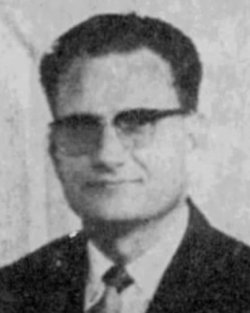
W.E. Best

God Granted Israel a Divorce

Hosea 1
W.E. Best March, 9 1986 Audio
0 Comments
Best's Corner

Sermon Transcript

Auto-generated transcript • May contain errors

100%
Let's take up where we left off
this morning. Open your Bibles, please, to Hosea chapter 1. We began this morning with Jeremiah.
We're studying the subject, God granted Israel a divorce. Does that mean that divorce is
scriptural? Does the Bible approve of divorce? I want to give you once again,
in case you might not have gotten it this morning, you might have
had other things on your minds. And if you were preoccupied with
something else or someone, and your minds were not in tune to
what we were saying, what we were trying to do, maybe this
will help you tonight. I want to present once again
as an introduction. before we take up where we left
off this morning. Many are saying that divorce
is a biblical concept which God, through Moses, regulated rather
than condemned. I've taken these statements from
various works, put them together. These are things that are being
propagated today. Therefore, their opinion is that
marriage is a covenant relationship broken by divorce. They raise
the question, did not God write Israel a bill of divorcement? Then quote Jeremiah 3.8 as their
proof text. They assert that anyone who thinks
two persons are married, though divorced, must admit they are
to continue to have sexual responsibilities. I was shocked when I read that.
I was absolutely shocked when I read that. To emphasize this assertion they
ask, and here's the question, should counselors, and you know
what I think of, quote, Christian counselors, end of quote. Beloved, Let me pause long enough
to inject this thought. If every preacher declared the
whole counsel of God from the pulpit as he should, there wouldn't
be any need for so-called Christian counselors sitting and counseling
individuals who come to him talking about their sexual problems and
their other problems. Paul didn't have a counselor.
You do not read in the scriptures where they had counselors per
se. They say, to emphasize this assertion,
they asked, should counselors tell their clients they should
maintain sexual intercourse after divorce? He went on to say, this
particular person did. Do you see the predicament the
counselor is in? Here's a preacher who says that
there are no grounds for divorce. And then these people come to
us, counselors. What are we to tell them? Beloved, this is the day in which
we live. Now we began with Jeremiah chapter
three this morning. and we can't take time to review
what we've already given from Jeremiah 3. We then turn to give
the biblical example that God has given to us through Hosea,
the one to whom he said, go and marry a woman of whoredoms. You say, I'd never tell my son
to do that. You're not God. God had a purpose
in it. And the first three chapters
of Hosea are to be taught. Do you know I read not long ago
where one preacher made this statement, I can give you his
name, it's in a commentary right back here in our library. He
said there are certain sections of scripture that are not to
be taught from the pulpit. Beloved, everything God has given
to you and me in the Holy Bible is to be proclaimed by God's
men from the pulpit. They make out like, that is some
of them, there are some things you just wouldn't mention. Why,
they're more polite than God Himself. They're so religious. Stinking outfits. I could use
a list of adjectives that long in describing them. So let's look at Hosea a little
further tonight. We'll have to continue where
we left off this morning. Hosea, manifesting that he was
a prophet of persevering love, took Gomer out of Hortums. Now spiritually speaking, that's
exactly what God has done for many of His elect. Even though He didn't take you
out of whoredoms, the potential for you to be there is in the
heart of every person who is depraved, and every person is
depraved by nature. You might not have been guilty
of adultery, the act of physical adultery, but if you were a man
and ever looked on a woman, you had committed adultery already
in your heart. And the same thing is true with
fornication before marriage. You see, the Lord in Matthew
5, 6, and 7 really makes the law applicable. It goes deeper
than an overt act of sin. Sin begins always in the heart. And we've studied that before.
You see, that's why we have shown that Jesus Christ could not be
tempted. The Lord Jesus was never tempted.
He couldn't be tempted. But you and I can be tempted. And sin begins in the heart before
there is the overt act. You remember what our Lord said
in Matthew 5. You will observe that Gomer bare
Hosea a son. I'm reviewing just enough to
tie in with what we gave this morning with tonight. In verse 3 of Hosea chapter 1,
So he went and took Gomer the daughter of Debalaim, which conceived,
and bare him a son. However, you'll notice in verses
six and eight, when Gomer gave birth to a daughter and another
son, there is no indication that they were the children. In other
words, there is no indication that Hosea fathered them. I want
you to see what kind of woman she was. She proved to be unfaithful
to him. She left him and she ran away
after other lovers. Nevertheless, she was still dissatisfied
according to chapter 2 in verse 7 finally according to the Jewish
law Isaiah 50 in verse 1 Jeremiah
and 3 8 Hosea gave to her that is Gomer a writing or a bill
of divorce Stay with me. We've already looked at three
things in Jeremiah and God granted Israel a bill of divorce, after
which He begged her to come back and then said, I'm married to
you, married yet divorced. I'm your husband. Remember I
said the Hebrew word can mean I'm your master, I'm your husband,
or married, either one. All means the same. So now we
find Hosea giving a bill of divorcement to Gomer. Keep in mind, this is to be an
object lesson for the nation of Israel. So Hosea gave her the writing
of a temporary, not a permanent, bill of divorcement. The time
came when Hosea disclaimed her as his wife. Look at Hosea 2
and verse 2. Plead with your mother, plead,
for she is not my wife. He even said, she's not my wife.
Neither am I her husband. Notice this. I'm talking about
the metaphorical language now, stay with me. Let her therefore put away her
whoredoms out of her sight and her adulterous from between her
breasts. However, he later said he would betroth her to him forever. In the same context of chapters
one through three. He had given her a bill of divorce,
but yet he had betrothed her forever, forever. Gomer did not marry another man.
She just went from one man to another, just like many are doing
today. And beloved, the thing that makes
me so sick is that religionists and churches are caving in, giving
in. Beloved, We can't do it. Are you courageous enough to
stand up wherever you are? And to whomever you're speaking? I've taken a stand against my
own loved ones in the flesh, and I'll take a stand against
anybody who goes contrary to the Word of God. I don't care
who it is. And I'll tell you what, we have some in this church,
and I hope all of you will, but we have some in this church who
will, And some who have done it just recently. She lived the life of a whore. And was sold into slavery. Chapter
3 and verse 2. Proving the bill of divorce was
temporary. You'll notice, too, in the reading
and study of these first three chapters, that Hosea manifested
his love for Gomer by never letting her go and remaining faithful
to her while she was unfaithful to him. Now, beloved, that's
love. That ought to melt our hearts. While we are disobedient and
unfaithful, the Lord still loves us. with an everlasting love. And he'll not let us go. But
I want us to see what the consequences will be. I want you to know that
Gomer had to pay for it. And, beloved, don't sit there
tonight and look at me and say, I'm not going to pay for it.
You and I will pay for it one way or the other when we're disobedient. I'm looking at Roger Gray. You're
suffering right now, aren't you, Roger? I don't mind calling his
name. I might call yours next. You're suffering for it because
you've been unfaithful and disobeyed God. You cannot be unfaithful to God
without paying for it. I don't care who the person is. But God loves us. God loves us. God made a covenant with Israel.
Now let's get down to the teaching of the subject on the divorce
that was granted. You'll find also that His grace
also made provision for the Gentiles in the covenant. Look at Hosea
1 and verse 10. Yet the number of the children
of Israel shall be as the sand of the sea, which cannot be measured
nor numbered. And it shall come to pass that
in the place where it was said unto them, Ye are not my people,
There it shall be said unto them, ye are the sons of the living
God. You're not my people, that is according to the flesh, but
ye are the sons of God. This refers to the Gentiles.
Look at chapter 2 and verse 23. And by the way, this is quoted
by Paul in Romans 9. And I will sow her unto me in
the earth, and I will have mercy upon her that had not obtained
mercy, and I will say to them, which were not my people, thou
art my people, and they shall say, thou art my God. Paul uses
this expression in Romans 9 to explain that salvation is also
for the Gentiles as well as the Jews. So all of this has given
us in this story of Gomer Hosea So this is explained and I'll
tell you where it's explained It's explained by Paul in Romans
9 21 through 25 and the word Gentiles is used in verse 25
It's also explained in chapter 11 and Gentiles are referred
to in several places in that chapter Now let's illustrate
what we're talking about tonight I The same truth is illustrated
in the two adulterous women in the New Testament. Take this
down, take notes. I'm teaching as well as preaching. The adulterous woman brought
to the Lord Jesus by the scribes and Pharisees of John 8, 3 through
11 represents the elect remnant Among Israel, who shall be saved
in time to come? Among the Jews, adultery was
punishable by stoning to death, as we've already seen in the
study of Deuteronomy 22. The Lord Jesus in grace did not
condemn the woman to stoning. Notice, he did not condemn her
to stoning. When the Pharisees came to him
and said, the law says stoner, what do you say? And what did
the Lord say to them? He said, you that are without
sin, cast the first stone. Remember that? And then he told
this Jewish woman who had been caught in the act of adultery,
go and sin no more. I've already shown you from scripture
that if the grace of God does not intervene, and without the
intervention of the sovereign God, every adulterer was put
to death under the law. But David was not put to death.
Why? Because of divine intervention. And here is a case of divine
intervention. She was one of God's elect. So he told those Pharisees, you
that are without sin cast the first stone. And then he turned to her and
said, go and sin no more. Now she represents the elect
remnant from among Israel. Now turn back to John chapter
4. The adulterous woman in John
4 who had five husbands, and was living with one who was not
her husband, portrays elect Gentiles who were saved by grace. The woman embodied all that could
excite the aversion of the Jews. Her Samaritan birth rendered
her an object of sectarian hatred, and her immoral life brought
contempt from the Pharisees. The Samaritans were disliked
by the Jews. Now notice this. However, Jesus
Christ had no natural animosity. Oh, I want us to see this. He was a Jew, but he was the
God-man. He had no natural animosity. He had no sectarian bigotry. He had no professional dignity
or self-righteous hatred. What did he do? He saw the woman
as one whom the Father had given to him in the covenant of redemption,
John 6 37. That's how he saw this woman. The Lord Jesus crosses all human
barriers, if you will notice, and reconciles the elect unto
himself. Jew Gentile alike. One of the marvels of grace is
that it overcomes sectarian and prejudicial opinions. Elect Jews and Gentiles are brought
into covenant relationship with God through the grace of our
Lord Jesus Christ. Now let's go back to Gomer for
a moment. Look closely with me as I call attention to some scriptures
in a moment. Gomer's unfaithfulness to Hosea pictures Israel's unfaithfulness
to God. Now we may not be unfaithful
in the same way, but if we're unfaithful, look out, we're going
to have to pay for it. We're going to have to pay for it. Gomer played the harlot and went
after other lovers. What are you going after? If
you're unfaithful, what are you going after? If you're unfaithful, you're
going after some other lover. Doesn't have to be a human being,
but after something else, something else. Notice she is living in spiritual
harlotry, according to the context, prostituting her high privilege
for personal gain. And that gain doesn't have to
be money. Many passages of scripture other
than this in Hosea portrays adulterous Israel. I'm hoping that you had
time this afternoon to read Ezekiel 16. I'm not going to embarrass
you by asking you how many did. I may start any time, though.
Just keep asking your question. Just ask it. Hold up your hands.
It won't bother me at all. If you get angry, that's okay.
Are we applying ourselves? That's the question. If you read the 16th chapter
of Ezekiel this afternoon, as I asked you to this morning,
then you'll be able to follow us closely now. You'll notice, too, that she
later desecrated what God had given to her. I'm talking about
Israel. Proof of this is found in Ezekiel 16. Turn to Ezekiel
16. Let's look at a few verses. Just
for fear you didn't do what you ought to have done. Ezekiel 16. We can't read the whole chapter.
It's a long chapter, 63 verses in length. Tremendous chapter. Full of lessons for you and me.
Full of lessons. Let's look at the 15th verse
first of all. And this was after her salvation. After God clothed
her. And you talk about what God did
for her. We're going to have to go back
a moment. I may be here till 10 o'clock tonight, but I got
preaching on my mind. So let's begin with verse 8.
Now when I passed by thee, this is God talking of Israel, and
looked upon thee, behold thy time was the time of love. Now what did he do for Israel?
Notice I've numbered the things in my Bible and I've even circled
with a red pen the personal pronoun I, what God did. Notice now in verse 8 as we continue.
Number one, I spread my skirt over thee. In other words, he
covered her neck in this. Israel was represented as an
infant cast out into the field or the world unclothed, unswaddled. Even the cord was still hanging. Hadn't even been cleaned up after
birth. That's a picture. I spread my skirt over thee,
covered thy nakedness. I swear unto thee. In other words,
you made a covenant. Entered into a covenant with
thee, saith the Lord God, and thou becamest mine. This is God
speaking. Then washed I with water. Yea,
I thoroughly washed away thy blood from thee, and I anointed
thee with oil. Don't tell me that when God saves
a person, he doesn't clean him up and turn us around. I clothed thee also with broaded
work. Oh, he does even more than we
can imagine. And shod thee with badger skin, girded thee about
with fine linen. I covered thee with silk. I want
you to know I gave you my best. I deck thee also with ornaments,
and I put bracelets upon thy hands, and a chain on thy neck.
I put a jewel on thy forehead, and earrings in thy ears, and
a beautiful crown upon thine head. Now that's God's description
of what he did for Israel. Oh, but look at verse 15, beloved,
please. But, what a connective. I don't like that connective
in a case like this, do you? But thou didst trust in thine
own beauty, and playedest a harlot because of thy renown, and pouredest
out thy fornications on every one that passed by. Believe me, that ought to make
us hang our heads in shame. That's verse 15. Look at verse 16. And of thy
garments thou didst take, and deckedst thyself thy high places
with divers colors, and plaitest the harlot. Look at verse 22. And in all thine abominations
and thy whoredoms thou hast not remembered the days of thy youth,
And that takes us back to what God did for her at the beginning.
When thou was naked and bare and was polluted in thy blood. Now what's God demonstrating
by using Hosea and Gomer? Hosea marrying this woman of
whoredoms and then she became unfaithful to him and went out
with many lovers. He said, Jose, I want you to
know now how I feel about Israel. About Israel. That place became a place for
spiritual prostitution. Israel should have lived a separated
life, and beloved, you and I are to live separated lives. And
I don't mean by being monks. But she mingled with the very
people from whom she had been delivered. Now read verses 25
and 26 of Ezekiel. 16. 25 and 26. What happened
to her? Here it is. thou hast built thy high place
at every head of the way, and hast made thy beauty to be abhorred,
and hast opened thy feet to every one that passed by and multiplied
thy hoardings." Whenever a Christian fails to live a separated, dedicated,
consecrated life, he brings dishonor upon his own head as a Christian. You can't flirt with the world
and the things of the world. Look at verse 26. Thou hast also committed fornication
with the Egyptians. And notice, committing fornication
with the Egyptians, the very people from whom Israel had been
delivered. You can't play with the people
of the world. We have too many preachers today
who think that they've got to become a part of everything, you know,
in order to win people. I tell you what, when people
do things to get a crowd and they resort to the things of
the world in order to get a crowd, they might as well go all the
way and have prostitutes to come to perform and see how many will
come for that purpose. You say, that's a little too
plain. Oh, I'm saying exactly what ought to be said. So she committed fornication
with the Egyptians. With the Egyptians! And this
is spiritual fornication, I'm sure you realize that. The Lord
compared her with a wife who commits adultery in verse 32
of Ezekiel 16. Now one may wonder why Ezekiel
used both adultery and fornication to illustrate Israel's sin. Have
you wondered about that? Can you explain it? I think so.
Think I can. These terms were used with reference
to Israel. And remember, please, metaphorical
expressions. Fornication, the act of sin outside
the consummation of the wedding contract, could be committed
by one who was betrothed or engaged. So you notice that Ezekiel used
the word fornication because betrothal was as binding as though
a person were already married. You notice too he used the term
adultery because Israel is represented as married in what sense? Metaphorical expression. because
he's talking about a covenant relationship with Israel. Therefore, both terms are permissible
with reference to Israel. Both fornication, and I'll explain
that more in just a moment, but let's update it now. Let's bring
it down to home. Christians are espoused as chaste
virgins to Jesus Christ. 2nd Corinthians 11 to Paul said
for I have I am jealous over you with godly jealousy Now beloved it may seem strange
to you But if I see some of you members doing things that bring
that not only brings reproach upon you But upon the church,
I'll tell you I'm jealous. I Don't like it a bit. I Don't
like it any more than I would for my wife. I To make goo-goo
eyes at some other man. I'm not worried about it, never
have worried about it, not worried about it now, but I'm using that
as an illustration. Paul said, I have espoused you
as chaste virgins to Christ. I'm jealous over you with godly
jealousy. For I have espoused you to one
husband that I may present you as a chaste virgin to Christ.
Notice, espoused to one husband. One husband. Keep that in mind.
How could it be a husband? Sure do you understand that by
now? If not, we'll go over it again in a minute. We're not
married to Jesus Christ now. I'm not married to Jesus Christ.
The marriage is future. I'm espoused to him. I'm engaged,
so to speak. I'm betrothed. I'm espoused. So if we commit spiritual fornication,
the sin is as great as if we committed adultery. You understand what I'm talking
about? If you as a Christian commit
spiritual fornication, being a spouse to Christ, that sin
is as great as if you committed adultery. 1 Thessalonians 4, 3-7 proves the
point. One who desecrates the gifts
and blessings of God becomes guilty of spiritual whoredoms. You know, I could stand before
a lot of congregation today and I could say, you folk, many of
you are acting like a bunch of whores. How do you think they'd
take that? They'd be ready to tar and feather
me. And you know why? Because they don't have any understanding
of the Scriptures. But I want you to know churches
are literally filled with people today who are acting and living
like a bunch of whores. If not fleshly, spiritually. Spiritually. You'll notice the Apostle Paul
exhorts Christians to cleanse themselves from the sins of the
flesh and of the spirit. Turn, if you will, to 2 Corinthians
7, verse 1. Here's our responsibility. You
and I are to do it. We're to do it constantly. We're
to do it now. We're to do it tomorrow. It is something we're
to constantly do. Here's what Paul said. Having
therefore these promises, dearly beloved, writing to the Corinthian
Christians, let us cleanse ourselves from all filthiness of the flesh
and spirit, perfecting holiness in the fear of God. Oh, I wish
we'd do that. I wish we'd do it. Sins of the Spirit are just as
heinous as sins of the flesh in the sight of God. Hosea had given Gomer his love
and material blessings. Go back to chapter 2, verses
8 through 13. We'll make a few comments. But
she rejected them for other lovers. Consequently her blessings were
removed and her sin was revealed Verses 8 through 13 of chapter
2 Now we don't have time to read
all these verses I could preach here to midnight That's why I
want you to read these passages and have them well in mind Israel is rejecting her betrothed
for other lovers and material gain and that's going on today
and with Israel as a nation. The prophecy of Isaiah represents
this truth. You'll notice that Isaiah was
commissioned to prophesy to Israel, and he saw no desirable results. Turn to Isaiah 6, 9 through 12,
and beloved, sometimes I have to ask myself, sometimes I get
a little discouraged because I don't see any visible results,
even among us. I'm talking to this church now. And could this be the reason? Could this be the reason? What's
the reason? Let's read it, verses 6 through
9. Now God told Isaiah, go Isaiah. And he said, go and tell this
people, hear ye indeed but understand not, see ye indeed but perceive
not. Make the heart of this people
fat. I hope, beloved, that I'm not making any of you fat in
this sense. And make their ears heavy. I
hope that I'm not making the ears of any of you heavy in this
sense. And shut their eyes. Lest they see with their eyes
and hear with their ears and understand with their heart and
convert and be healed. Oh, listen to this. Then said
I, Lord, how long? Now that was not an easy mission.
That was not an easy thing for Isaiah to do. How long? And he answered, until the cities
be wasted without inhabitant, and the houses without man, and
the land be utterly desolate, and the Lord have removed men
far away, and there be a great forsaking in the midst of the
land. But did you know, I believe that men of God are commissioned
to do that in places today. Now let's go a step further,
go back to Hosea. Gomer, Hosea's wife, began to
recognize her condition. And I want you to know every
recipient of grace will, sooner or later, recognize this condition. God's going to see to it. You
can put this down, beloved. If you are a Christian and you're
disobedient or unfaithful, God's going to show you in time. God's
going to show you in time. And if you're not shown, you
have something to be afraid of. You really have something to
be afraid of. Let's look at this. Look at chapter 2 and verse 7. And she shall follow after her
lovers, but she shall not overtake them. And she shall seek them,
but shall not find them. Then shall she say, I will go
and return to my first husband, for then was it better with me
than now. So she's beginning to make some
confession, see? She realizes what she's doing
is wrong. She was severely chastened, and this goes on through the
13th verse of the 2nd chapter. And we don't have time to read
it all, so do that later, please. God remains faithful to His own
even while they're unfaithful to Him. The Lord will not let
His people go. Look at verse 14 of chapter 2.
Therefore, behold, listen to Hosea, I will allure her and
bring her into the wilderness and speak comfortably unto her. I wonder how many men today whose
wives acted like that would do that. A person could only do that by
grace. He could only do that by grace. His people will not be allowed
to continue in unfaithfulness. Chasing is a means to cause his
people to come back. Despise not thou the chastening
of the Lord, Paul said. He chastens every son whom he
receives. And if you're without the chastisement
of God, Paul said, in Hebrews 12, it's because you're a bastard.
That means you're not a Christian. None of his. Now turn to the third chapter
of Hosea. Oh, what a wonderful conclusion. What a wonderful
conclusion. Hosea brought Gomer from her
slavery, verse 2. He bought her now. I bought her
for me for fifteen pieces of silver. And we'll name some other
things. And then look at verse 3. And
I said unto her, Thou shalt abide for me many days. Thou shalt
not play the harlot. You got to straighten up your
act. He didn't take her back into
his house. Notice this. And God's not going to take you
back. He's not going to take me back until we're right with
Him. And thou shalt not be for another
man. You're never to be for another man, so will I also be for thee. Although Gomer was married to
Hosea, he said that he would betroth her unto him forever. Here he had given her a bill
of divorce, but then he turned right around and said, I'm betrothed
to you forever. Remember what we said about Jeremiah? What Jeremiah said about Israel?
Bill of divorce, but yet married. So although Gorma was married
to Hosea, he said he was betrothed to her forever. However, for
a time, for a time, get the time limit here, the time element,
for a time she could not live with him as his wife. And beloved,
we cannot be in fellowship with him unless we're right with him. Beloved, this is preaching material,
not only teaching, but this is preaching material. Now look at verses 19 through
20, if you will please, of the second chapter. 19 through 20, look at these verses.
And I will betroth thee unto me forever, yea, I will betroth
thee unto me in righteousness, in righteousness, notice this,
and in judgment, and in loving kindness, and in mercies, I will
even betroth thee unto me in faithfulness, and thou shalt
know the Lord. Isn't that wonderful? Now let's explain all of this.
By using the metaphorical language that we've been talking about,
Israel was not literally married to Jehovah. Israel was not literally
married to Jehovah. This is a metaphorical expression.
Neither are Christians today literally married to Jesus Christ. We're betrothed to Him. Israel is betrothed to Jehovah
by covenant relationship. God, therefore, is not through
with Israel. Christians are espoused to Jesus
Christ by regeneration. We know that God is not through
with Israel. She is not now abiding with Him, just as Gomer After
he had bought her, he was not abiding with Hosea for a time. Israel is not abiding with the
Lord now either. Do you see the connection? Do you see the beauty
of this? And I'm not through. I'm going
to give something in conclusion and I don't want to make you
shout. Nevertheless, after her wilderness
experience, she will return and seek the Lord Jesus Christ, her
King. I'm talking about Israel. That's Romans 11. She will fear
the Lord and His goodness in the latter days, Hosea 3, 5. Look at the fifth verse of Hosea
3 and read verses 59 through 63 of Ezekiel when you have time. The Apostle Paul showed that
Israel shall return, Romans 11, and that's future. Past, present,
and future. Romans 9, past. Romans 10, present. Romans 11, future. Past, present,
and future of the nation of Israel. Isaiah promised that in spite
of Israel's unfaithfulness a remnant will return listen to Isaiah
6 13 but yet in it shall be a tenth and It shall return and shall
be eaten as a teal tree and as an oak whose substance is in
them when they cast their leaves So the holy seed shall be the
substance thereof. Oh There's hope for Israel Notice the words here, it shall
return. They're expressive of the claim
that Jehovah still has on the nation of Israel. Don't you ever
lose sight of that. It shall return. What shall return? The remnant of Isaiah six and verse 13. So the words that shall return
are expressive of the claim that Jehovah has on Israel. The life
germ in Judah will cause Israel to survive. A living seed does
not perish when it is buried in the earth, but it springs
up and a new plant comes into being. Keep that in mind when
you read and study Romans 11. Neither will Israel perish. Though
she is now buried among the nations of the world, but Israel's going
to rise again. And don't let any odd millennials
tell you that isn't so. If he does, I'm going to tell
him he's a liar. Beloved, I can't speak about
these things lightly. I haven't spent 47 years studying
this for nothing. I'm convinced of what the Bible
says. God has a remnant, a holy seed
among the Israelites, Hosea 2.16, and Gomer illustrates this. And then you'll notice two names
in the second chapter of Hosea, verse 16. Look at this verse.
And it shall be at that day, saith the Lord, that thou shalt
call me Eshi, and shalt call me no more Baalai. Now let's
look at that for a moment. Great lesson in that, have you
missed it? I said God has a remnant, a holy seed among the Israelites.
Israel will call Jehovah Eshi, not Baalai. So both words could
be used to speak of the husband-wife relationship. You'll notice in
your marginal reference, Eshi means my husband. Beli means my Lord, spelled with a little
L. So the time is going to come
when Israel will say, Eshi, my husband. my husband. When Israel has proper respect
for the Lord, when Israel has proper respect for the Lord,
she will call Jehovah my husband, Eshi. The terms employed by Jeremiah,
Ezekiel, Hosea, Malachi to address the Jews are interesting to observe
now notice what I'm going to do here and summing up and bringing
this to a conclusion tonight Go back to Jeremiah 3 for a moment
Jeremiah spoke of Israel's adultery divorce and God being their husband
in that order If you had that called your attention
before look at it don't take my word for it read it I Let
me say it again. Jeremiah spoke of Israel's adultery,
then divorce, and being their husband in that order. God their
husband. So it wasn't a perpetual divorce,
was it? I'd like you to see something
else. Ezekiel spoke of the Jews' fornication and adultery in Ezekiel
16, 15, 26, 29, and 30. And you'll find this expression,
breaking wedlock, which means to commit adultery. And let me
read you the New American Standard Bible's translation of 1638,
Ezekiel 1638. Thus I shall judge you like women
who commit adultery or shed blood are judged. Now that's the New
American Standard Bible's translation, and I think it's better after
having checked the Hebrew word in my Hebrew lexicon. Hosea referred
to Gomer as his wife, as his wife. Get this. But after her
infidelity, he said, I will betroth thee unto me forever. Where is
there an everlasting, a perpetual bill of divorcement? You won't
find it. Why? Because of the metaphorical
language used. Israel's sin was spiritual adultery,
which means to seek satisfaction in unlawful relations. Anytime, beloved, we have an
unlawful relation as a Christian, it's spiritual adultery. You notice, too, that Gomer was
also guilty of harlotry, which means prostituting high possessions
for the sake of higher gain. Nevertheless, Malachi spoke of
the Jews as the wife of God's covenant. Malachi 2 and verse
14. Now let's try to bring it to
a conclusion with one, and I'm going to take about 15 minutes
for something else to give you tonight because I want to see
if you've observed, see how closely you've studied Jeremiah 3. I've
been asking you to do it for weeks, about two weeks. The difference between God divorcing
Israel and a man divorcing his wife is tremendous. Please stay with me now for a
moment. I said the difference between God divorcing Israel
and a man divorcing his wife is tremendous. It's a tremendous
difference. God hates to put away Malachi
260 he hates to put away But there is no reference to man
hating divorce when a man gets a divorce. He doesn't hate it.
He's glad I Want you to see the difference God has given Israel
a temporary divorce for her idolatry But she will like Gomer be restored
in the latter days. I I don't care how much you chew
on it, it's going to come out that way. You can't explain it
away. I just double-dog dare you to
try it. And if you think you have succeeded, let me know about
it. Man thinks his divorce is final. I said he thinks his divorce
is final. But according to God's immutable
principle, marriage is indissoluble. Romans 7, 2 and 3, we've already
covered that. Thus we see how far to take,
listen to this, thus we see how far to take the use of the metaphor
of marriage and divorce when God applied them to the nation
of Israel. Now I want you to go back to
Jeremiah 3. I'm going to give this, if it
takes a little time. We've got more time than we've got knowledge,
scriptures. So go back to Jeremiah chapter
3, verse 1. Verse 1. I called attention to
this when we read it this morning. They say, if a man put away his
wife, And she go from him and become another man's. Shall he
return unto her again? Shall not that land be greatly
polluted? That's far enough. Where did Jeremiah get this information? Where did he get it? If you'll
notice your marginal reference will tell you something. He's
quoting from what passage? He's quoting from Deuteronomy
24. Beloved, that means there is a connection between Deuteronomy
24 and this verse in Jeremiah 3. Now go back to Deuteronomy 24.
Deuteronomy chapter 24. When a man hath taken a wife,
and married her, and it come to pass that she find no favor
in his eyes, because he hath found some uncleanness in her."
I've already defined that. That means fornication. That
uncleanness is fornication. It's proved by the context. Chapter
22 of Deuteronomy. It's not for every flimsy reason
that the liberal Jews wanted. Now what is he to do? He finds
some uncleanness in her. Then let him write her a bill
of divorcement and give it in her hand and send her out of
his house. and when she is departed out of his house, she may go
and be another man's, and if the latter husband hate her,
and write her a bill of divorcement, and give it in her hand, and
sendeth her out of his house, or if the latter husband die,
which took her to be his wife, her former husband, which sent
her away, may not take her again to be his wife, after that she
is defiled. What defiled her? When she married
the second man, that defiled her. She was defiled. Now isn't
it strange? Now notice this. Now this is
talking about individuals in Deuteronomy 24. For the cause
of fornication. The other morning I was in the
car. I heard a program and then the next morning, Brother Ronnie
Hicks called me and said, Brother Best, turn on your radio. I was
already at my desk and I turned my radio on. I said, listen to
John MacArthur. I said, he's giving a series
on marriage, divorce, and remarriage. I said, I don't have to, but
I know what he believes. So he started out. He said, except
for adultery, his exception, except for adultery and marry
another committed adulterer. That isn't what the scripture
says. I don't care if John MacArthur
did say it. It says except for fornication. And I'm not through teaching
that yet, so stay with me. We got a long ways to go yet.
I'm just stirring up your minds now. But I know where I'm going
because I've already arrived, I've already studied every verse,
every word found in the scriptures on the subject. That doesn't mean that I have
the last word, but I want you to know I do have a word. I do
have a word. It doesn't say except for adultery. That's not the exception. The
word is pornaya, not mortaya. Now why is it that Jeremiah in
talking to the Jews uses this in Deuteronomy 24? Now I've read
it to you. You're familiar with it. Go back
to Jeremiah. Go back to Jeremiah. He uses
this now in Deuteronomy in making an application of this to the
nation of Israel. How do you do it? Stay with me. You know something? About 30
years ago I read something on this, a little statement. I made
a little note of it in the margin of my Bible. And I never did
really get around to pursuing it. In my recent studies of this,
this came to mind about three weeks ago when I was in this
study. And I said, now wait a minute, Jeremiah has something in mind.
Why is he using this? Why is he pulling this out of
Deuteronomy 24 and applying it to the nation of Israel? Surely
he has a reason. Just struck my mind and got my
brain working again. Sometimes it's kind of hard to
do, but I got it working again and I thought I knew where that
little note was. And so I had to look at two of
my wide margin Bibles, but I found it. And as a result of it, I started
studying it. Now listen, let's see if we can
arrive at what Jeremiah had in mind. He's taking an individual
bill of divorce but given to an individual woman and he's
applying that to the nation of Israel. Isn't that what he's
doing? All right, let's see. One important aspect of Israel's
divorce is now going to be discussed. One important aspect of Israel's
divorce is now going to be discussed. I'm sure you know there is an
Israel within an Israel. Is there a need for me to explain
that? Romans 9, 6. They're not all
Jews. who say they're Jews and so forth.
They're not all Israel who are of Israel. There is an Israel
within an Israel. Do you know what I mean by that?
Let me explain it. That's Romans 9, 6. I'm trying
to explain it without spending so much time. That means that
they're not all spiritual Israel. They're not all the children
of God, the seed of the promise, just because they're in the natural
seed of Abraham. Therefore there is an Israel
within Israel. Are you with me? Follow me. So there is a spiritual Israel
within national Israel. Jeremiah 3.1 must not be overlooked
when considering God giving a bill of divorcement to whom? To whom? The apostate Jews. I said the apostate Jews. Stay with me. The apostates becoming another
man's. Let's apply it now. Look at Jeremiah
3.1. They say if a man put away his
wife and she go from him, they become another man's. Let's stop right there and become
another man's. So they're not all Israel who
are of Israel. God did write a divorce, a bill
of divorce, but we could say a permanent one to the apostates.
I said to the apostates, So the apostates becoming another
man. In what sense do the apostate
Jews become another man? This applies to the formation
of a definite covenant. A definite covenant made with
whom? Turn with me please to Daniel chapter 9. Daniel chapter 9. Well, I'll show you what'll happen.
I'll show you how it all ties in and the application he makes
of this in Deuteronomy 24. I don't have time to go into
all of Daniel 9. I hope you realize that. But let's begin with verse
25. Verse 24, really. Verse 24. You
see, Daniel is deeply disturbed because there are a lot of apostate
Jews. There are a lot of apostate Jews today. Not all the Jews
are the elect of God. Spiritually speaking as a nation. That's one thing and as the spiritual
seed of Christ. That's another thing Let's begin
with verse 24 70 weeks are determined upon thy people and upon the
Holy City First to finish the transgression and to make an
end of sins and to make reconciliation for iniquity and to bring in
everlasting righteousness and to seal up the vision of prophecy
and to anoint the most holy and Now this is future for Israel.
Notice verse 25. Know therefore and understand
that from the going forth of the commandment to restore and
build Jerusalem unto the Messiah the Prince shall be seven weeks
and three scored two weeks the streets shall be built again
and the wall even in troublous times. And after three score
and two weeks shall Messiah be cut off. That's when Jesus Christ
died. Who is this? But not for himself. He didn't
die for himself. He died for the Alexi. And the
people of the Prince. Who is this Prince? This Prince
is the Antichrist. He's the Antichrist. Follow me
now. That shall come shall destroy the city and the
sanctuary, and the end thereof shall be with a flood, and at
the end of the war, desolations are determined. Look at the last
verse. And He, that is the Antichrist,
the Prince, must be tied in with the pronoun He in verse 27. He
shall confirm the covenant with many for one week. Now with whom is that covenant
going to be made? With the apostate Jews? With the apostate Jews? And in the middle of the week,
what will happen? He shall cause the sacrifice and the oblation
to cease, and for the overspreading of abominations, he shall make
it desolate, even until the consummation, and that determined shall be
poured upon the desolate. Now let's make the application.
Hope you can see it. Keep in mind now, in Deuteronomy
24, if this man has found some uncleanness in a woman and he
gives her a bill of divorce, she may go away and be married
to another man, to another. But if that man puts her away,
she may not come back and be the first husband's wife. That's an abomination to God.
I want you to know the apostate Jews who make a covenant with
Antichrist can never after He has cast her off. And if you're
familiar with Revelation, the time is going to come when the
Antichrist will cast off the apostate Jews, and when the Antichrist
casts off the apostate Jews, they may not go back to Jesus
Christ. They're apostates. Now I want to make an application
of that tonight. We've been talking about Israel. Now let's bring
it down to the church. You ready for this? Are you ready
for this? I try to make everything practical. So we know that God has a remnant
other than the apostate Jews. And it's the remnant that's going
to be saved. It'll constitute that nation
born in a day. Romans 11. Now listen to this.
The churches should also take warning. While the Lord owned a remnant
in Thyatira, remember Thyatira? He rejected the visible body
as a whole. So take courage, folks. I want you to know I'm prepared
by God's grace, I think, regardless of what any of you might do.
By God's grace, I know what I've got to do. Listen to this. While the Lord
on a remnant in Thyatira, He rejected the visible body as
a whole. I want you to turn with me to
Revelation. I think it's 223. I thought I had the reference
down. I'm trusting my memory now. Revelation
chapter 2, and I think it's 23. This is talking about Thyatira. Verse
19, it says, I know Thy works and charity and service and faith
and Thy patience and Thy works and the last will be more than
the first. Notwithstanding, I have a few things against Thee because
Thou sufferest that woman Jezebel. Remember all of our series on
the seven churches? It's coming out in a book form
real soon. Verse 21, And I gave her space to repent of her fornication,
as she repented not. Jezebel didn't repent. Verse 22, Behold, I will cast
her into a bed, and them that commit adultery with her into
great tribulation, except they repent of their deeds. and I
will kill her children with death. And all the churches shall know
that I am He which searcheth the reins and hearts, and I will
give unto every one of you according to your works. While the Lord owned a remnant
in Thyatira, He rejected the body as a whole. While God rejects
Israel, As a whole, there's a remnant according to the election of
grace. Take courage, folks. Take courage. Now, what's the application?
The man having taken a new wife. Now, go back to Deuteronomy for
something in conclusion. And notice the fifth verse, and
when a man hath taken a new wife, the man having taken a new wife
predicts the Lord Jesus Christ and the true assembly, the church
of the firstborn. There is some reason why Jeremiah
used that, do you see it? If that isn't why I use it, you
tell me. The apostate Jews will make a
covenant with the Antichrist and the Antichrist will use the
Jews just as long and the apostate church just as long as she will
serve his need. And when he's through with her,
he'll cast her off. But the apostate Jews can't go
back. It's abomination. Why? She married the Antichrist. She joined up in a covenant with
the Antichrist. The application to the church?
Thyatira. He begged Jezebel to repent.
She didn't repent. The church as a whole was rejected,
but there was a remnant according to the election of greats. Take
courage, folks. You know what? It would hurt
me deeply. I know Maybe this is going too far, but I want
you to know if about all of you say except five were to walk
out on me tonight, I know what I preach and I know what the
Word of God says and I'd take courage by God's grace. Hope you don't walk out. Why
am I preaching like this? I'm studying. I'm spending endless
hours. I'm going to give to you what
you need to hear. and the best that I have as long
as I'm alive. You can like it or leave it.
That's up to you. Let's stand.
W.E. Best
About W.E. Best
Wilbern Elias Best (1919-2007) was a preacher and writer of Gospel material. He wrote 25 books and pamphlets comprised of sermons he preached to his congregation. These books were distributed in English and Spanish around the world from 1970 to 2018 at no cost via the W.E. Best Book Missionary Trust.

Comments

0 / 2000 characters
Comments are moderated before appearing.

Be the first to comment!

Joshua

Joshua

Shall we play a game? Ask me about articles, sermons, or theology from our library. I can also help you navigate the site.