Bootstrap
W.E. Best

The Problem of Divorce Solved

Mark 10:10-12; Matthew 19:9
W.E. Best March, 2 1986 Audio
0 Comments
Best's Corner

Sermon Transcript

Auto-generated transcript • May contain errors

100%
Open your Bibles to two passages
of Scripture. First of all, Matthew 5, verse
32, and then to Matthew 19, verse 9. We're looking at only these
two verses, and you'll see why in just a moment. We're looking
at the exception clause. The exception clause used only
by Matthew. In Matthew 5, 32, and Matthew
19, 9. But I say unto you that whosoever
shall put away his wife, saving for the cause of fornication,
causeth her to commit adultery. And whosoever shall marry her
that is divorced, committeth adultery. Turn now please to
the 19th chapter, and let us look at verse nine. I'll not
take time to go into it this morning, but there is a little
difference in the Greek construction in Matthew 5.32 and Matthew 19.9,
but it comes out meaning the same thing. And I say unto you, whosoever
shall put away his wife, except it be for fornication, and shall
marry another, committed adultery. and whoso marrieth her which
is put away doth commit adultery. Turn now please to Mark's Gospel
chapter 10. Mark omits, in other words, the
exception clause is not used. Neither by Mark nor by Luke. Now we're not going to look at
Luke's account because he only has one verse given to this subject. We're looking at Mark, and I'm
only calling attention to verses 10 through 12 of Mark chapter
10. This was after he had answered
the Pharisees in the first part of the chapter. Now you'll notice
beginning with verse 10, and in the house, his disciples asked
him again of the same matter. The next two verses, look at
them closely. And he saith unto them, whosoever shall put away
his wife and marry another, committeth adultery against her. And if
a woman shall put away her husband and be married to another, she
committeth adultery. Now Mark includes two things, two things that are very important.
First of all, you'll notice he does not mention the exception
clause that is given us only by Matthew. And secondly, he
adds something that Matthew does not give. What is it? Matthew
doesn't say a thing about a woman if she puts away her husband.
It is only the man putting away the woman and not the woman putting
away the man. but that is included in the 12th
verse of Mark chapter 10. Our subject this morning is entitled,
The Problem of Divorce Solved. I want to give some statistics
before we begin. I was called by one of the members
of the church just last week, and he asked me to look at channel
8 from 9 until 10 o'clock. I did that. on the 25th of February. It was on the subject of divorce.
I also looked at a portion of another program and the moderator
of that program made this statement. Homosexuality is not a moral
issue. Now think that one through. On
that same program, the subject that was being discussed was,
quote, open marriage, end of quote. I'll not go into detail. It was
so obnoxious. But believe me, that gives to
us some idea of what this society is all about today. I came up with this thought as
a result of a statement I heard this last week. How can you and
how can I remain steadfast in a self-destructing society? Beloved, we are living in a self-destructing
society. We're living right in the very
midst of a modern Sodom and Gomorrah. Not just one little section off
here in one part of the country, but America as a whole is a Sodom
and Gomorrah. Listen to these statistics that
I saw on Channel 8. from nine until ten o'clock last
week. There are more divorces in America
than anywhere else in all the world. There is no other country in
the world that has the divorce rate that America has. The average
age is 32. 32. 60 million children of divorced
parents live in the United States of America. And the rate is growing
by 2 million each year. Instead of it being 60 million
10 years from now, it'll be far more than 70 million children
of divorced parents in America. Every 27 seconds, someone gets
a divorce. Many states, notice I said many
states, now have, quote, a no-fault divorce, end of quote. And I
saw it demonstrated. This makes it, they said, much
easier for persons to get a divorce. Six years ago, there were 7,000
lawyers trained for and practicing in divorce cases. Six years later, that's now,
there are 12,000 lawyers majoring in divorce cases alone. And it
is growing by an alarming rate. This is unusual, maybe to some. Most divorces are initiated by
women. By women. And you know why? That's
because of woman not being in her place. That's because of the insubordination
of women today. First, the first year of each
divorce case, and this is the percentage, the standard of the divorced
women decreases in the first year by 70%. The standard of
living. On the other hand, the standard
of divorced men increases by 30%. The standard of living for the
divorced women decreases by 70% and the standard of living for
divorced men increases by 30%. Now these young girls need to
take note of that. What a warning. One out of every four divorce
cases, only one out of four receives full support. Beloved, we're living in a sad
day. And yet, the all-millennialists
and the post-millennialists say things are getting better. I feel sorry for them, don't
you? And I'll give some quotations tonight as we continue our study
on the eschatological kingdom. Now, our subject, the problem
of divorce resolved. Fornication is not a synonym
for adultery, in the exception of Matthew 5.32 and 19.9. I listened one morning last week
while I was in my car, listened to this preacher from the West
Coast, and I'll not call his name. He's speaking on divorce
and remarriage at the present time. And I could not agree with
him at all. And I'll tell you what I've done
over the last few weeks. I've studied it for 46 years. But
I'm not taking anything for granted, so I've gone through the New
Testament. I've looked at every time the word porneia is found. And the other words, pornei,
and so forth. And I've studied each verse in
the light of the context from which it is taken. Porneia is
the word for fornication. It is used 26 times in the New
Testament. I have looked at moikia, and
moikia is the word for adultery. When I listened to this man the
other morning, he used the word adultery for fornication. He
said, except for adultery, and marries another commits adultery.
That isn't what it says. There are two distinct Greek
words. One is pornia, and the other
is moikia. So fornication, beloved, is not
a synonym for adultery. In order to understand the difference
between Matthew's use and the other inspired writers' omission,
I'm talking about Mark, Luke, and all the writers of the New
Testament outside of Matthew, one must know the difference
between Jewish and other civilizations' customs. The fact that Matthew
alone records the exception suggests it has a special application
to the Jews, period. Now, I've read all the pros and
cons on this. I'm acquainted with all the arguments
given. So if you'll stay with me, we'll
cover them, we'll look at them, and we'll look at the Scriptures.
We'll look at the Scriptures, and the Scriptures, I trust,
will be our final authority. It is mine, and I trust it will
be yours. To make fornication, porneia,
and adultery, moicheia, mean the same thing, beloved, is untenable
I repeat, is untenable when both are used in the same text of
Scripture. For instance, like Matthew 5.32,
Matthew 19.9, Matthew 15.19, Mark 7.21, Galatians 5.19. We
find both words used in the same text. Mark and Luke do not mention
the exception that is used by Matthew. You'll notice they give
no grounds for a divorce. I didn't say that, the Word of
God says it. Matthew wrote primarily to Jews. And Mark and Luke wrote primarily
to the Gentiles. Since Mark's account is more
comprehensive than Luke's, our attention will be directed this
morning to Mark chapter 10 verses 1 through 12. His record clearly
evidences that Christ amplified for his disciples the subject
of marriage and divorce that had been raised by the Pharisees.
Two important variations are apparent, and I've already called
attention to them. In verses 10 through 12, And in the house
his disciples asked him again of the same matter. And he said
unto them, Whosoever shall put away his wife and shall marry
another, committed adultery against her. And if a woman shall put
away her husband, and he be married to another, she committed adultery." The two things to observe here,
showing the difference between what Mark says and Matthew says,
are the exception for fornication recorded by Matthew is omitted
by Mark. And secondly, the woman putting
away her husband is added by Mark, and Matthew doesn't refer
to it. Divorce was permitted, notice
what I'm saying now, permitted among the Jews during the Mosaic
dispensation for only the cause of fornication. Fornication is sexual activity
before marriage. And I can prove that from Deuteronomy
22. And adultery is infidelity after marriage. Now those are
the basic things we need to keep in mind. Hence, it is under God's
curse when one commits fornication. It is also under God's curse
whenever an individual commits adultery. And this should answer
the one flesh that we've already discussed in detail, which is
properly associated with marriage, but improperly applied to fornication. 1 Corinthians 6 and verse 16. Now, I would like to think with
you for a few minutes about a believer committing fornication. I'm not
talking about the unbeliever right now, I'm talking about
the believer. There are a lot of so-called believers out there
that are committing fornication. Fornication is an awful crime
for a Christian to commit. And I want to give you six things.
Number one. First of all, the believer is
joined to the Lord. 1 Corinthians 6, 17. By the very
fact that the believer is joined to the Lord, he is to flee fornication. Now what I'm saying doesn't give
the unbeliever any excuse for committing fornication. It is
still a sin, even though the unbeliever commits it. But I'm
talking about the believer for a moment. Secondly, the fornicator
dishonors the members of the body of Jesus Christ. And the
proof of this is found in 1 Corinthians chapter 5. The young man who
committed fornication, from his point of view, he was guilty
of fornication when he had an illicit relationship with his
mother-in-law. Now, there are differences of
opinion, but whatever, so you're familiar with that. And we know
what happened. He was a fornicator. And the
church at Corinth did not discipline him. Until Paul gave them some
very strong words He was later disciplined He was excommunicated
after his excommunication when he made things right Then he
was received back into the church according to the second chapter
of second Thessalonians But the fornicator dishonors the members
of the body of Christ. That means, beloved, if you,
any one member of this church, were to be guilty of fornication,
he dishonors the whole body here. You remember the sin of Achan? the sin of Achan became the sin
of Israel. And I want you to know the sin
of any Christian that brings dishonor upon the Lord and the
church involves the whole church body. Beloved, I wish that you
could have heard some of the conversations that I've had this
last week with preachers throughout the country. I had two preachers that just
confessed to me. that they just didn't study like
they should. Beloved, that's an awful confession.
That's an awful confession. One preacher went on to tell
about a terrible immoral problem that he had to cope with. Beloved,
I'll tell you. You know me well enough. And
we've dealt with them in the past and we'll deal with them
in the future. Whenever there is a case of immorality
and I hear about it, I don't wait a week, I don't wait two
weeks, it is dealt with immediately. And it went on to tell how this
immoral person almost tore the church up. But wait a minute,
I have to put some of the blame upon the shoulders of the preacher.
for not having enough intestinal fortitude to do something about
it. Beloved, the preacher is a responsible person. He is God's man in God's place,
and he has a responsibility under God. So I want you to see the seriousness
of this. Number three, the fornicator unlawfully Becomes one flesh
with a harlot Where's that found first Corinthians
616 Now when you think about a believer becoming one flesh
with a heart I Want you to see how heinous the sin of fornication
is committed by a believer. I Beloved, if I were to preach
what I'm giving to you this morning in the First Baptist Church here
in Houston, the Second Baptist Church, I'd spit it wide open
in one service. Just wide open in one service. Number four, the fornicator degrades
his own body. His own body. First Corinthians
618. Number five, fornication profanes
the temple of the Holy Spirit. This body is the temple of the
Holy Spirit. And whenever a believer commits
fornication, he profanes the temple of the
Holy Spirit of God that has been shed abroad in his heart by the regenerating Holy Spirit.
And lastly, And beloved, this is last but not least. The fornicator
dishonors the sacrifice of Jesus Christ. 1 Corinthians 6 and verse
20. Know you not that you have been
bought with a price? Beloved, I'm trying to point
out some important things this morning. And the thing that disturbs
me more than anything else today is the complacency of churches
in general, the apathy of preachers in general, and it seems that
many of them are afraid to preach on these subjects because they'll
offend so many people, they'll lose a lot of people, and they'll
lose some money. Now, I'd like for you to turn
to Deuteronomy 22. According to Deuteronomy 22,
some fornicators were put to death. We read this last Sunday
morning, and I won't have time to give an exposition of all
of these different passages, but I'll give you the summary
of them in Deuteronomy chapter 22. And we must understand this
chapter before we get to chapter 24, verses 1 through 4. According to Deuteronomy 22,
some fornicators were put to death. but others were spared. There are two types in each category. In verses 13 through 21 of Deuteronomy
22, the whore type and those who became unfaithful during
the betrothal period, and notice I'm emphasizing the betrothal
period, were put to death. And this is found in verses 13
through 21 for the whore type. And secondly, verses 23 and 24,
for that person who committed fornication during the betrothal
period. Now these two were put to death.
The exception Now follow me closely here. The exception was a slave
who had less command and therefore less guilt according to Leviticus
19, 20. In other words, there was one
exception here, and that isn't found here in Deuteronomy. It
is found in Leviticus 19, verse 20. And that was the slave girl. She couldn't protect herself,
and so she would give in. So the law was more lenient with
her, even though she was guilty of fornication. Now let's look
at something else. The victims of rape, verses 25
and 26 of Deuteronomy 22, and those who committed the sin outside,
outside the betrothal period, were spared. In other words,
they were not killed. Now, beloved, I'm going to give
you all the passages on this subject, so if you'll stay with
me, we'll cover the subject. And you'll be without excuse
of making up your mind as to what you believe. Now, let's
look at these briefly. Let's go back to verse 13. The
whore type fornicator was put to death under the law. Laws
of chastity and marriage are addressed in this chapter. Marriage
must be founded upon fidelity. I said marriage must be founded
upon fidelity. The first type of fornicator
put to death was the woman who falsely presented herself to
her husband as a virgin. And that's found beginning with
the 13th verse. If the husband's accusation against
her was not substantiated, then he was chastised with blows,
according to Deuteronomy 25, 2 and 3, and was forbidden a
divorce. Chapter 22 and verse 19. I realize
I'm covering a lot of territory, but stay with me. I want you
to learn to be good listeners. The falsely accused wife Emerged from the cloud of a bad
name by her virginity being proved you see her parents took in they
stepped in and they brought forth the evidence of her virginity
and So when they brought forth the evidence of her virginity
Then this one was she was out from behind that cloud of a false
accusation however She was harmed to a great extent She was harmed
to a great extent. On the other hand, if the accusation
was true, the wife was stoned to death for playing the whore
in her father's house, get this, according to the context, and
for deceiving her husband. In other words, saying that she
was a virgin when she was not. When she was not. Now let's look
at the second type of fornicator put to death. The second type
of fornicator put to death was the woman who was unfaithful
during the betrothal period. Verses 23 and 24. Now what do
you mean by the betrothal period? I've explained that before, just
like, and the greatest biblical example is, of course, Joseph
and Mary. Joseph and Mary in the first
chapter of the Gospel according to Matthew. But here it is. Also
in Deuteronomy 22 verses 23 and 24 the betrothed young woman
Described should have remained in her father's house as She
awaited the time of the consummation of her marriage But she didn't
do that You'll notice that she is found in the city and Being
found in the city. In other words. She was looking
for something wasn't she she was out of her place and She
was not under the protection of her parents. And when she
got out of her place, out from under the protection of her parents,
what happened to her? She became unfaithful to the
first part of her marriage contract. She was betrothed, our word engaged,
and that was as binding under the Jewish law as the consummation
of the service, the ceremony itself, legally speaking. So
fornication, which is prior to marriage, is the only putting
away, get this, the only putting away mentioned in Matthew 5.32
and Matthew 19.9. And you can wrestle with it all
you want to. But regardless of how you wrestle with it, it'll
still come out the same way. Now if Mary had been unfaithful
to Joseph during the betrothal period, he would have had the
right to put her away and she could have been stoned to death. I said she could have been. And
notice how I stated that because I have something very important
to say in just a few minutes. Now look with me at verses 25
and 26. The fornicators not put to death under the law were,
first of all, the victims of rape. And a victim of rape is
mentioned here in verses 25 and 26. And also in verses 28 and
29, those who committed the sin outside, outside the betrothal
period. In other words, the young woman
was not engaged to be married, to use our terminology. Now let's
look at the victim of rape. The victim of rape, although
she was betrothed, did not suffer the penalty of death. It speaks of her as being betrothed,
but she was not the victim of death. However, the rapist, on
the other hand, was put to death. Was put to death. Now, you see,
we don't electrocute people or give them the injection today
for rape. But I'll tell you what I believe should happen to every
rapist. I think he ought to be castrated, Johnny on the spot,
as soon as he's been found guilty. Now the victim of rape, although
she was betrothed, look at this, did not suffer the penalty of
death. However, the rapist was put to death. The victim did
not merit death. But she suffered, she suffered
from the experience, and you can imagine the trauma of being
a rape victim. The man to whom she was betrothed,
get this now, listen closely, the man to whom she was betrothed
did not have to marry her. He didn't have to go through
with the ceremony. He had a right to refuse to consummate
the second part of the marriage contract, the legal part. Moreover,
such wronged women, now listen closer to this, such wronged
women were subsequently numbered among those found to be unclean,
Deuteronomy 24-1. And we'll be looking at that
later. So such wrong women were subsequently
numbered among those involved in divorce litigation. In divorce
litigation, fornication committed outside the betrothal period
was not without penalty. Verses 28 and 29, if this sin
was revealed, the man must become her husband, look at it, without
ever being able to put her away. That's what it says. That was
under the law. Therefore the man would be humbled
by entering marriage through Satan's gate, the gate of fornication. I wonder how many people get
married through the gate of fornication. Satan's gate of fornication.
Now let's go further. Distinction between fornication
and adultery is evident. Now I'm going to show you from
Scripture that fornication is not a synonym
for adultery. Can I do it? Stay with me, let's
see. They're acts similar in nature.
Anyone can understand that. However, they differ in relationship
and degree of guilt. I said that fornication and adultery
differ in relationship and the degree of guilt. Some cases of fornication were
not punishable by death. And we've already looked at that.
Verses 25-29 of Deuteronomy 22. Now notice how I'm saying this.
Adulterers, apart from divine intervention, were put to death. Did you notice how I said that?
Not all adulterers were put to death. David was an adulterer. He had an adulterous relationship
with Bathsheba. But he was not put to death. And there are many others in
the Old Testament. You remember the 8th chapter of John when
the Pharisees found this woman taken in the act of adultery
and brought her to Jesus Christ and said they were trying to
entrap the Lord Jesus. They were trying to get him to
incriminate himself. The law says stoner, what do
you say? Well, those Pharisees were not
interested in reading what he had to say. They were just trying
to get him to incriminate himself. They thought they were smart.
But notice, she was not put to death. There was a divine intervention. Now go back for a moment. And
you must learn to state things properly. So first of all, some
cases of fornication resulted in death. And we proved that
by two cases from Deuteronomy 22. Adulterers, apart from divine
intervention, were put to death. Let me give you a few verses
to study when you have time. We know that Leviticus 20 and
verse 10 proves that the adulterer was to be put to death. Also
in Numbers 5, 11 through 31, and that's where you get into
something really interesting, the lie detector. You know, God
had a lie detector. We have lie detectors today.
Well, I want you to know God had a lie detector. I'll let
you study that one when you have time. And then in Deuteronomy
22, 22, the adulterer was put to death. But we know in John
8, 5, that was not the case. We know in the case of David,
he was not put to death. So there was a divine intervention. So adultery, unlike fornication,
is sexual unfaithfulness to a married partner. It defiles the marriage bed,
Leviticus 20 verse 10, and Hebrews 13 verse 4. Christ mentioned fornication
and adultery. Not only in the two exceptions,
or the exception mentioned twice, Matthew 5.32 and Matthew 19.9,
but our Lord also uses both words, pornaia and moicaia, in Matthew
15.19 and also Mark 7.21. So the Pharisees understood the
difference between fornication and adultery. Let's see if they
did. They use the term adultery to
speak of the woman they caught in the very act and appeal to
the law of Moses for her stoning. On the other hand, they use the
term fornication in their controversy over Christ's origin. Are you
listening? John 8, 19 and 41. We be not
born of fornication. We be not born of fornication,
they used the term fornication, not adultery. Paul made the same distinction
in 1 Corinthians 6, 9 through 11. He used the same distinction
again in 1 Corinthians 7 and verse 2, and finally in Galatians
5 and verse 19. The term adultery could not have
been used, listen to this, And I want you to turn to 1 Corinthians
7, 2 for a moment. The term adultery could not have
been used in 1 Corinthians 7, 2 when Paul said, nevertheless,
to avoid fornication. He didn't say to avoid adultery. He used the word pornaya, not
moikaya. He said, let every man have his
own wife and let every woman have her own husband. No way
in the world could Paul have used adultery as a synonym for
fornication. He said in order to avoid fornication,
let every man have his own wife and let every woman have her
own husband. Furthermore, the term fornication
is used in Revelation to symbolize the illicit intercourse of the
Christian individually and the church cooperately with the world. That's found in Revelation 2,
20-22. Since the church is espoused
to Christ, 2 Corinthians 11, 1-4, her unfaithfulness is termed
as fornication. You and I as Christians are espoused
to Christ. Therefore, our unfaithfulness,
spiritually speaking, should be termed as spiritual fornication. We're espoused to Christ, but
we're not married to Christ. The marriage hasn't taken place
yet. And finally, the false church,
notice I said the false church, is symbolized as a great whore.
And there is the whore-type fornicator as the great whore, Revelation
17. Therefore, the Holy Spirit properly identified her illicit
conduct as fornication. Jesus Christ did not compare
the permission of Moses with his own teaching on the subject
of divorce. Are you listening? Now listen to the next statement.
However, he did compare the Pharisees' false interpretation of Moses'
permissive law, and I stated permissive law, to God's unchangeable
principle of marriage. But from the beginning it was
not so. Genesis 2.24 teaches the same
thing as the principle of marriage set forth by Paul in Romans 7,
2 and 3. Now let's go a little further.
Turn to Matthew 5, 32 for a moment. I just made the statement that
the Lord Jesus did compare the Pharisees' false interpretation
of Moses' permissive law to God's unchangeable principle of marriage.
Notice the word whosoever in Matthew 5.32. The whosoever here
is governed by the antecedent you. The antecedent you. Which restricts the expedience
of divorce on the grounds of fornication to those addressed,
that is the Jews. Now I want to prove my point.
This is the reason that Mark and Luke both omit. The exception,
except for fornication. The exception does not apply
to the Gentiles. The importance of observing the
persons to whom Christ spoke is exemplified, and let me give
you an illustration of it. Turn, if you will, please, to
John 10, verse 1. There should not be a chapter
break here between the 9th and the 10th chapters, but there
is. Notice in the first verse of
John 10, verse 1, Verily, verily, or truly, truly, I say unto you,
He that entereth not by the door into the sheepfold, but climbeth
up some of the way, the same is a thief and a robber. I say
unto you. Now, what is the antecedent of
the pronoun you? You say, well, I don't know.
We're beginning here with chapter 10. Well, in order to find that,
you've got to go back to chapter 9. And I've already stated there
should not be a chapter division. The antecedent of the pronoun
you is found in the Pharisees of the last two verses of chapter
9. 39 through 41 actually. I'd like
to give you another example of this. Turn with me if you will
to Deuteronomy chapter 4. Now we don't have time to read
the first 13 verses. But let's read a few verses and then I'd
like to read the first verse of chapter 5. Turn first of all
to chapter 4. Now therefore hearken, O Israel,
unto the statutes and unto the judgments which I teach you.
For to do them, that ye may live and go in and possess the land
which the Lord God of your fathers giveth you. Ye shall not add
unto the word which I command you, neither shall ye diminish
from it. Go ahead and read when you have time the first 13 verses,
but turn now to chapter 5 and verse 1. And Moses called all Israel,
and said unto them, Hear, O Israel, the statutes and judgments which
I speak in your ears, this day that ye may learn them, and keep,
and do them. The Lord our God made a covenant
with us in Horeb. The Lord made not this covenant
with our fathers, but with us, even us, who are all of us here
alive this day. In other words, when the Lord
said, whosoever, in Matthew chapter 5 and verse 32, this is governed
by the antecedent you. which restricts the expedience
of divorce on the grounds of fornication to the Jews. Now God suffered the Jews' outrage
against the principle of marriage for only 1,500 years. Listen closely. But He is not
dealing with the nation of Israel now. Israel has been set aside. It was because of the hardness
of the Jews' hearts that he turned from the Jews and he's now visiting
the Gentiles to take out of them a people for his name, but don't
brag. Don't get too lifted up. The time is going to come when
he will turn from the Gentiles because of the hardness of their
hearts and turn back and deal once again with the nation of
Israel. And that's taught in Romans chapter 11. And don't
you ever forget it. Divorce on the grounds of fornication
like celibacy. was a temporary expedient because
of the Jews' hardness of heart. Go back to Deuteronomy 24.1.
Now we can't make a detailed study of that passage today.
That's in the future. The Pharisees erroneously interpreted
it as a precept. They were making the permissive
law of Moses a precept. They said what the law never
stated and interpreted it to say what they wanted it to say. Just like a lot of religionists
today, they interpret and make the Bible say what they want
it to say. I get so sick of people dabbling
with the Word of God. The average person today just
grabs the Bible, you know, and he can read one verse or two
verses and he thinks it is an authority. They just dabble with
the Word of God. I affirm that every subject has
to be studied in the light of the whole revelation of God's
Word from Genesis 1-1 to Revelation 22-21. I don't care what the
subject is. So the Pharisees interpreted
Moses' permissive law the way they wanted it to sound. and they made it a precept. Thus
the Jews avoided the principle and the letter of the law itself. The only thing that mattered
to them was the legality of divorce. That's the only thing those liberal
Jews wanted. I don't have time to go into,
there were two different schools of Jews, the liberal and the
conservatives, but all the liberals wanted They wanted the legality
of divorce for any cause, for any cause. According to Mark,
Christ answered them. I want you to see something now
in the gospel according to Mark. So turn to Mark's account, chapter
10. You'll notice according to Mark,
Christ answered them first at their level, at their level.
I want to stress that, their level. What did Moses command
you? That's verse three. Beloved, I want to point out
something that's very important. Our Lord began with those Pharisees
at their level, their level, and I'm stressing that. What
did Moses command you? He purposed to give new depth
of meaning to the law. Hence, the Pharisees were forced
to yield ground Their knowledge that divorce was never prescribed
by law caused them to change their word command to suffer
or permit. Notice that. They had to yield
ground. Now you need to compare Mark's
account with Matthew's account when you have time. The Pharisees
received the second blow from Jesus Christ when he said, in
verse five, from the hardness of your heart, he wrote you this
precept. And the word for precept is the
Greek word entale, and it means an injunction, an order, a direction,
a precept, or a command. Now Moses' direction was strictly
permissive, rather than a categorical imperative. It was not an imperative. It was a permissive statement,
not a categorical command. It was not an imperative. Thus
his conception, his concession was on the basis of some unclean,
now get this, some uncleanness that a man might find in his
wife after he married her. Now turn to Deuteronomy 24 one. when a man hath taken a wife,
and married her, and it come to pass that she find no favor
in his eyes, because he hath found some uncleanness in her,
then let him write her a bill of divorcement, and give it in
her hand, and send her out of his house. And when she is departed
out of his house, she may go and be another man's wife, And
if the latter husband hate her, and write her a bill of divorcement,
and giveth in her hand, and sendeth her out of his house, or if the
latter husband die, which took her to be his wife, her former
husband, which sent her away, may not take her again to be
his wife. After that she is defiled, for
that is abomination before the Lord. Now, please stay with me
for the next two Sundays. We're not going to do all that
I want to do in this passage of Scripture, but I'm going to
do all that's necessary this morning. The Pharisees called
it a command. Notice that. But Christ called
it a permission. Thus the carnal-hearted Pharisees
of yesterday, stay with me, and today, I added that, and today, misconstrue
the scriptures and take a mile where only an inch is permitted. The key issue of Deuteronomy
24, one through four is the meaning of he hath found some uncleanness
in her. We've got to come to some conclusion
as to what that means. Now if I wanted to, I could spend
the next 30 minutes giving to you different interpretations
of this. And some of them just stink to the high heavens. But I'm not going to do that.
I can if you demand it later, but not now. When the Pharisees tested Christ,
and notice I didn't say tempted, when they tested Christ, they
asked in Matthew 19 three, is it lawful for a man to put away
his wife for every cause? Notice this, was for every cause
anything that the husband might dislike? As far as the liberal
Jews were concerned, it was. That's what it meant. Was the
uncleanness of Deuteronomy 24 fornication? I'm gonna go ahead and say it,
even though I didn't intend to just go ahead and just let the
whole cat out of the bag right now. This is fornication. The uncleanness is fornication. One of the fornications that
was not punishable by death. Now what does the Hebrew word
for uncleanness mean? Surely you want to know. The
Hebrew word used here for uncleanness means disgrace, it means shame,
it means nakedness or uncleanness. That tells you something, doesn't
it? This proves that the issue disapproved
by the husband was serious and not a trivial matter. It was a serious matter. It was
not something trivial. Therefore, the one exception
given by the Lord Jesus Christ is the only grounds for the Bill
of Divorcement granted by Deuteronomy 24, one through four. Moses' directive in Deuteronomy
24, 1-4 laid down some important principles. Let me name three
for you. I want to give three principles laid down in these
first four verses. Number one, the law limited divorce
to a certain uncleanness. Now what was it? According to
the context, Deuteronomy 22 and the scriptures as a whole, fornication. Fornication. Uncleanness was considered a
just cause for divorce. That is the breaking of the first
part of the marital contract by the Jews. It may have been
either of the two kinds of fornication that did not merit death, Deuteronomy
22, 25 through 29. Uncleanness was less than adultery. Stay with me for a moment now.
The uncleanness was less than adultery. How does one know that
it was less than adultery? Because adultery, apart from
divine intervention, always resulted in death. Always resulted in death, I said,
apart from divine intervention. And so fornication during the
betrothal period was as serious as adultery and treated like
adultery from the standpoint of punishment. Now that's the first principle
laid out here by Moses. Look at the second one. Number
two, the man who divorced his wife on the grounds of uncleanness
was not commanded to put her away, but if he did, he was not
commanded to do so, he didn't have to, but if he did, on the
grounds of uncleanness, he must give her a bill of divorcement. Before Moses gave this directive,
the woman was turned out to the mercy of the world. After he
gave the order, she was protected from disgrace after divorce. And number three, the man who
divorced his wife was not allowed to remarry her after she had
been married and divorced by the second man or after her second
husband's death. Her second marriage defiled her. Are you listening? Her second
marriage defiled her. The Jews' hardness of heart caused
God to turn from Israel to the Gentiles, and the Gentiles' hardness
of heart will cause him to turn from them to the Jews again.
Now, we think that the Jews were hard-hearted in the way they
treated their women. What's happening today? What's happening today? Jesus Christ who answered the
Pharisees at their own level. Now let's go back to Mark chapter
10. He answered them at their own
level in verse 3 by calling their attention to Moses, proceeded
by referring them to a higher level. Now he's going to lift
them to a higher level. He began at their level and now
notice what he does. He's going to refer them to a
higher level. And this is found in verses six
through nine, listen to it. But from the beginning of the
creation, God made them male and female. For this cause shall
a man leave father and mother and cleave to his wife, and they
twain shall be one flesh. So then they're no more twain
but one flesh. What therefore God hath joined
together, let not man put asunder. So you see, He directed them
to a higher level. He began at their level. What
does Moses' Law say? So the Lord Jesus went beyond
what Moses permitted, what Moses permitted at a particular point
in time to God's timeless purpose revealed in Genesis 2.24. Paul showed that the word law
was added. Added. And this is an arius,
passive, indicative of prosthethomy, which means to lay by the side
of, only until the coming of Jesus Christ to whom the promise
was made. So the law was no part of God's
covenant of grace and therefore modified none of its provision.
Divorce formed no portion of God's original thought concerning
the subject of marriage. Since divorce is purely human,
I said purely human. You remember my argument last
week on the negative and the positive? Apply it right here.
Apply it, please, right here. Since divorce is purely human,
Nothing else needed to be said to the Pharisees. Christ completed
His discourse. And rightly so. Now let's look
at something else in Mark 10. The last part of Mark's account
of Christ's discourse with the Pharisees turned from them to
Christ's answer to the disciples' question in the house. In the
house. Moses permitted divorce among
the Jews on the grounds of fornication. The statement about the woman
was added for Mark's Gentile readers. Verse 12, furthermore,
no provision for divorce on the grounds of fornication is mentioned
anywhere in all of the scriptures outside of Matthew 19, 9 and
Matthew 5, 32. Mark doesn't mention it. Luke
doesn't mention it. John doesn't mention it. Luke
doesn't mention it in the Acts of the Apostles. None of the
church epistles mention it. None of the pastoral epistles
mention it. None of the general epistles mention it. Revelation
doesn't mention it. What am I saying, beloved? You see, I can speak with authority
on this. You know why? I've checked every word, every
time it's found in Holy Scripture. Let's go a little further. So no provision, no provision. You say, what about 1 Corinthians
7? Don't worry, we'll spend about three weeks on that chapter. And I'm not afraid of verse 15. But we'll look at that when we
get there. No provision for divorce on the grounds of fornication
is mentioned anywhere else outside of Matthew. Christ did not advocate
something that was withheld from the instruction given to the
churches. Conclusively, the Bible gives no grounds for divorce. It records death as the only
excuse for remarriage. Romans 7, 2, and 3. That's the
principle of marriage. And also 1 Corinthians 7, 39.
I always get amused at these fellas who like to run, you know,
to 1 Corinthians 7, 15. Why don't they read the 39th
verse sometime? They forget that. And they forget something else.
Paul was not discussing the subject of divorce and remarriage. That
was not even the subject under discussion in 1 Corinthians 7. Adam could not divorce Eve without
hating his own flesh. Those who are lawfully one flesh
in marriage condemns divorce. Everyone under the influence
of Jesus Christ will sustain that which God originally instituted. This does not indicate that an
adulterer, listen closer now to this, in case you want to
run off and falsely accuse me. This does not indicate that an
adulterer, an adulteress, a fornicator cannot be saved. Rahab the harlot
was saved. The woman who had five husbands
and the one with whom she was living was saved. And you better thank God regardless
of what your past is. If you have the grace of God
and you get angry at what the Bible teaches, then you're manifesting
the hardness of the heart that the Jews manifested. So don't
come to me. I can just turn your water off
the faucet. I can say go join up with the
crowd. No recipient of God's grace wants God's truth, Lord. When he becomes a recipient of
God's grace, he's going to do everything within him, within
his power to uphold and magnify the principles that God has given
to his people. Scripture records the salvation
of such people as Adulterers, fornicators, whoremongers, et
cetera, et cetera. Read 1 Corinthians 6 verses 9
through 11. Paul said, such were some of
you, but now you've been sanctified, you've been justified, and so
forth. In conclusion, adultery does not sever the marriage relationship.
Hold your seat. I said adultery does not sever
the marriage relationship. Illicit conduct by a married
partner does not break that contract. Scripture proves that although
men have illicit relations, their marriages remain intact. I'll give you some examples.
First of all, I'd like you to turn with me to Genesis 49-31. We all will admit that Abraham
had illicit relations. Jacob had illicit relations. Now I want you to look at this
verse. Genesis 49, 31. There they buried Abraham and
Sarah. I'm pausing for a moment. He was buried with Sarah. His relationship with Hagar didn't
sever that relationship, did it? He was buried with Sarah. I'm not through. And it says,
Sarah, his wife, there they buried Isaac and Rebekah. Now listen to this one. Rebekah,
his wife. Listen to this one. And there
I, this is Jacob. This is Jacob speaking. And there
I, buried Leah now if Jacob had had his way
you remember our messages on Jacob several weeks ago he loved
Rachel more than Leah and even though he was deceived by Laban notice this he was not buried
with Rachel if he had had his way he would have been buried
with Rachel but he was buried with Leah You can't take that
out of the scriptures. I'm not through. Abraham's affair
with Hagar did not break the marriage bond. So if Jacob could have had his
way, he would have called Rachel his wife because he loved her
more than Leah. However, scripture affirms that
Leah, the first he married was his wife and he was buried with
her. Now, when you turn to Hosea,
the first three chapters, and you remember Hosea who married
the wife of Hortem, and she became unfaithful to him, went out with
many lovers. Was the marriage relationship
broken? No, he even saw to it that she was supported, even
when she was sold into bondage. And she came back. So the same truth is affirmed
by Hosea and Gomer in the first three chapters of Hosea. Listen
to this one. John the Baptist condemned Herod
for marrying his brother's wife. This is Mark 6, 18. And notice
this, please note that Herodias was called Philip's wife after
her marriage to Herod. No wonder John the Baptist got
his head cut off. You want to cut mine off? You
can't until the Lord gets ready for you to do. I want you to
know I'm immortal until the Lord gives His permission for me to
have my head cut off. You know what happened to John
the Baptist? But look at what he said. Look at it again. And what is it? He called her Philip's wife, not Herod's wife. Now, you remember we answered
one of those views of marriage that God has nothing, absolutely
nothing to do with unsaved people and their marriages? Irrespective of Donald Gray Barnhouse
and a lot of others and that peculiar view. That ought to
be condemned. Listen to this. Here is a case
of an unsaved couple, Herodias and Herod. So that tells you something,
does it? God does have a say-so about the marriage of unbelievers.
And if an unbeliever hooks up with another unbeliever, he's
hooked up. So this case of two unsaved people
condemns the idea that God has nothing to do with the marriages
of unbelievers. Yes, he does. His principle is
the same. Now, that's just the first installment of the problem
of divorce resolved. Now, what about God granting
divorce to Israel? That'll be our subject next Sunday
morning.
W.E. Best
About W.E. Best
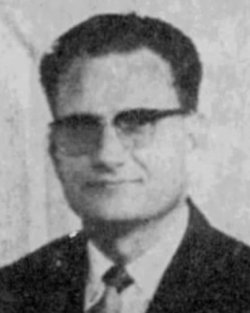
Wilbern Elias Best (1919-2007) was a preacher and writer of Gospel material. He wrote 25 books and pamphlets comprised of sermons he preached to his congregation. These books were distributed in English and Spanish around the world from 1970 to 2018 at no cost via the W.E. Best Book Missionary Trust.

Comments

0 / 2000 characters
Comments are moderated before appearing.

Be the first to comment!

Joshua

Joshua

Shall we play a game? Ask me about articles, sermons, or theology from our library. I can also help you navigate the site.