Bootstrap
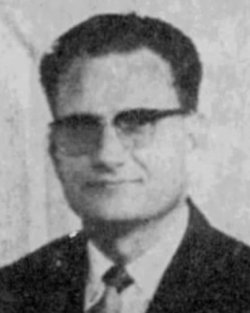
W.E. Best

Jacob, The Supplanter

Genesis 27
W.E. Best December, 29 1985 Audio
0 Comments
Best's Corner

Sermon Transcript

Auto-generated transcript • May contain errors

100%
27th chapter of Genesis. Now
we're not going to read the entire chapter. This is a long chapter
and that's why I'm asking you to read and study chapters 25
through 35 in preparation, not only for our lessons today, but
also the subsequent lessons to be given from this section of
Scripture concerning the subject of Jacob. I consider the 27th
chapter of Genesis one of the saddest chapters in all of Scripture. Notice I said one of the saddest. We might add that it is not maybe
the saddest, but it is one of the saddest chapters in all of
Scripture. I'm going to skip around a little bit in the reading
of this chapter. because it is a rather long chapter,
but I want us to become acquainted with some of the things that
we'll be discussing with you this morning and tonight. Our
subject this morning is entitled, Jacob the Supplanter. Jacob the
Supplanter. There are three things that we'll
be looking at in the 27th chapter this morning. First of all, the
deception of Isaac, and secondly, Rebecca who deceived Isaac, And
thirdly, Jacob the supplanter. So Isaac the deceived, Rebekah
the deceiver, and Jacob the supplanter. Let us begin with verse 1. And
it came to pass that when Isaac was old, and his eyes were dim,
So that he could not see, he called Esau, his eldest son,
and said unto him, My son. And he said unto him, Behold,
here am I. And he said, Behold now, I am
old. I know not the day of my death. Now therefore take, I pray thee,
thy weapons, thy quiver, and thy bow, and go out to the field,
and take me some venison, and make me savory meat such as I
love, and bring it to me that I may eat, that my soul may bless
thee before I die." Now that to me is a very sad statement. I don't know what conclusion
you've come to in the reading and the study of this portion
of Scripture. Words of dying men are considered oracles Either for good or bad Now, how
would you determine this one? look now at verse 5 and Rebecca
heard when Isaac spake to Esau his son and Esau went to the
field to hunt for venison and to bring it and Now, before we
begin the next division of the 27th chapter, turn back for just
a moment to the 25th chapter, and I want to call your attention,
beginning with verse 23. And the Lord said unto her, Two nations are in thy womb,
and two manner of people shall be separated from thy bowels.
And the one people shall be stronger than the other people. And the
elder shall serve the younger. Now there is the prediction.
A prediction that has been fulfilled. And when her days to be delivered
were fulfilled, behold, there were twins in her womb. And the
first came out red, all over like a hairy garment, and they
called his name Esau. After that came his brother out
and his hand took hold on Esau's heel and you remember last Sunday
we gave you Hosea chapter 12 to read in connection with this and His name was called Jacob
and Isaac was three score years old when she bared them and the
boys grew and Esau was a cunning hunter and a man of the field,
and Jacob was a plain man dwelling in tents." Now here's the verse
to remember because it is connected with our study today. I want
you to know that the home of Isaac and Rebekah was not without
sin. Not sin for you and me to emulate,
but a warning to be given to you and to me and to all Christians
for all time. Look at the 28th verse. Isaac
loved Esau because he did eat of his venison. But Rebekah loved Jacob. Do you see anything wrong in
that statement? The Lord reveals the condition of every home.
Partiality existed in this home. Isaac was partial to Esau. Esau was a man's man. He was
a huntsman. He was a man's man, so to speak. And really, in reality, he was
the better of the two. Does that surprise you? I'm talking
about from the standpoint of a man. He did things that Jacob
did not do. So you could consider that he
did some good works that Jacob never performed. But don't forget,
election is not based on works. I said God's election is not
based on works. So don't forget that. So when
you look at verse 28 of chapter 25, you can see the connection
that it has with this sad chapter, chapter 27. Now let us continue
reading from chapter 27, verse 6, And Rebekah spake unto Jacob
her son, saying, Behold, I heard thy father speak unto Esau thy
brother, saying, Bring me venison, and make me savory meat that
I may eat, and bless thee before the Lord before my death. And therefore, my son, obey my
voice. Jacob was a mama's boy. He was a mama's boy. No doubt
about it. He probably had a hard time turning
loose of her coattail. Let's see it for what it is.
Verse 9. Go now to the flock and fetch
me from thence two good kids of the goats. We're looking now
at Rebecca's deception. And I will make them savory meat
for thy father such as he loveth. and thou shalt bring it to thy
father, that he may eat, and that he may bless thee before
his death.' And Jacob said to Rebekah his mother, Behold Esau,
my brother, is a hairy man, and I am a smooth man. My father,
peradventure, will feel me, and I shall seem to him as a deceiver,
and I shall bring a curse upon me, and not a blessing. And his
mother said unto him, Upon me be thy curse, my son. Only obey
my voice, and go fetch me them. Wasn't much conversation between
the two. I'm talking about the man and
his wife. You can see the problem that existed in the home. Do
any of you know anything like this, or have you ever encountered
anything like this? I hope that such as this doesn't
exist, but I have known of people where such did exist and where
such does exist. Look at verse 15, And Rebekah
took goodly raiment of her eldest son Esau, which were with her
in the house, and put them upon Jacob her younger son. Had the
smell, no doubt, of the huntsman. And she put the skins of the
kids of the goats upon his hands and upon the smooth of his neck. And she gave the savory meat
and the bread which she had prepared into the hand of her son Jacob.
And he came unto his father and said, My father, and he said,
Here am I. Who art thou, my son? And Jacob said unto his father,
I am Esau, thy firstborn. He was not only a supplanter,
he was a liar, wasn't he? I have done according as thou
bad'st me. Arise, I pray thee, sit and eat
of my venison, that thy soul may bless me. And Isaac said
unto his son, How is it that thou hast found it so quickly,
my son? And he said, Because the Lord
thy God brought it to me. He even brought the Lord in on
it. Have you ever seen even Christian
people who will do things they shouldn't do and then bring the
Lord in on it? Verse 21, And Isaac said unto
Jacob, Come near, I pray thee, that I may feel thee my son,
whether thou be my very son Esau or not. And Jacob went near unto
Isaac his father, and he felt him, and said, The voice is Jacob's
voice, but the hands are the hands of Esau. Tremendous statement there isn't
it and he discerned him not that is he didn't recognize him Drop
down now to verse 30 and it came to pass as soon as Isaac had
made an end of blessing Jacob and Jacob was yet scarce gone
out from the presence of Isaac his father that he saw his brother
came in from his hunting And he also had made savory meat
his works were better now than those of Jacob's you can't argue
with that and Brought it unto his father and said unto his
father Let my father arise and eat of his son's venison that
thy soul may bless me and Isaac his father said unto him who
art thou and he said I am thy son thy firstborn Esau and Isaac
trembled very exceedingly he knew then he had been deceived
did he not verse 34 and And when Esau heard the words of his father,
that is how that he had already blessed Jacob, thinking that
Jacob was Esau, he cried with a great and exceeding bitter
cry, and said unto his father, Bless me, even me also, O my
father. And he said, Thy brother came
with subtlety, and hath taken away thy blessing. And he said,
now don't forget, Esau had already sold his birthright to Jacob
from Mesopotamia. You have to go back to chapter
25 to see that. So that had already taken place. Verse 36. And he said, Is not he rightly
named Jacob? For he hath supplanted me these
two times. He took away my birthright. Notice
how he stated that. And behold, now he hath taken
away my blessing, and he said, Hast thou not reserved a blessing
for me? And Isaac answered and said unto
Esau, Behold, I have made him thy lord. Spell with a little
l, verse 38. And Esau said unto his father,
Hast thou but one blessing? Hast thou but one blessing? My
father, bless me. Even me also, O my father. And
Esau lifted up his voice and wept. Now, it isn't stated in
this portion of Scripture, but in Hebrews chapter 12 and verse
17, it is stated that he found no place for repentance. We'll
get into that too this morning briefly. Verse 40, And by thy
sword shalt thou live. This is what Isaac is telling
his son Esau. and shall serve thy brother.
And it shall come to pass, when thou shalt have the dominion,
that thou shalt break his yoke from off thy neck. Verse 41,
And Esau hated Jacob, because of the blessing wherewith
his father blessed him. Esau was not concerned about
the blesser, He was concerned only about the blessing. There
are a lot of religionists like that today. Religious institutions
are full of them. And Esau said in his heart, the
days of mourning from my father at hand, then will I slay my
brother Jacob. Here is the threat that he would
kill him. And these words of Esau, her elder son were told
to Rebekah, And she sent and called Jacob her son, her younger
son, and said unto him, Behold, thy brother Esau, as touching
thee, doth comfort himself, purposing to kill thee. Now therefore,
my son, obey my voice, and arise, flee thou to Laban, my brother
to Haran. Notice verse 46. And Rebekah
said to Isaac, I am weary of my life because of the daughters
of Heth. Let's stand as we sing. Jacob
the Supplanter. The life of Jacob is a great
source of spiritual instruction for all of God's people. Although Jacob was the most unlovely
member of the family, God chose him for a reason that lies within
himself. God is not required to give to
you or to me the reasons for either his choices or any of
his actions. Jacob revealed to every Christian
God's electing grace and also man's total depravity. The life of Jacob depicts grace
banishing all human pretensions. and asserting God's prerogative
to do what He pleases, when He pleases, and to whomever He pleases. That must be recognized at the
very outset in our study of this important subject. I would like
to call your attention to two divine titles which are brought
together in the life of Jacob. You do not see these two divine
titles in the 27th chapter of the book of Genesis. But if you
will turn with me to Psalm 46, verses 7 and 11, I would like
to call attention to these two divine titles brought together
in the life of Jacob, the patriarch. The psalmist said, the Lord of
hosts. with us the Lord of hosts is
with us then he goes on to say the God of Jacob is our refuge
Sila two things here first of all the Lord of hosts and secondly
the God of Jacob the Lord of hosts represents the Sovereign
as the God of innumerable host of sinless angels. And we're
not getting into a study of angels this morning. You and I have
no difficulty in understanding this. That is that God could be associated
and is associated with an innumerable host of sinless angels. However, when we look at the
second title, we're amazed. We're amazed. And how thankful
that all of us are that the God of Jacob, the electing God, is
our God. And the God of everyone in a
special sense. who has been chosen by the Father
in His Son, Jesus Christ, to become the recipients of His
marvelous grace, grace given to the elect, even before the
world began. 2 Timothy 1, verse 9. So we are humbled by the very
fact that the God of Jacob is our God. and the God of Jacob
is our refuge. The inspired penman, if you will
notice, was led to speak of Jacob because he represents the covenant
of grace relationship between the electing God and the elect. What a refuge we have in the
electing God. Selah. Selah is an appropriate
word to be used here. Hence the poet said concerning
the word Selah, and in giving to us this brief poem, he also
gives to us the meaning of Selah. I could give several different
meanings that have been suggested by Hebrew scholars down through
the ages, and all of them that I have considered have some merit
in them. But there is one, if not there
are two, that would have really special significance. And here
is one of those. The poet said, Selah bids the
music rest. A musical rest note. Pause in
silence, soft and blessed. Selah bids uplift the strain. harps and voices tune again. Selah ends the vocal praise. Still your hearts to God upraise. That's a good explanation of
Selah. A musical rest note. Or just stop and consider what
has been said. Stop and consider what has been
said. the Lord of hosts, the God of
Jacob, who is our refuge. So the Lord of hosts, the host,
the innumerable host of sinless angels, and at the same time,
our refuge as being the chosen ones of God. We must see that
with all of Jacob's faults, and he had plenty of them, no one
can deny that he valued the blessing. From the very outset, he valued
the blessing. And we'll even see this in conclusion
this morning as we give a survey of his life and how he desired
the blessing. And, beloved, that's indicative
of the grace of the sovereign God. Furthermore, one should
not become so occupied with Jacob's faults that he fails to observe
the qualities that manifest divine election. The elect's greatest
problem is self. That's your greatest problem
as a recipient of God's grace, or one of God's elect. It is
self. Hence, circumstances, disabilities, All of these things are to be
considered as hindrances. But, beloved, they're not the
real issue. The real issue is self, and self
is the biggest problem. It's not our disabilities. That's not our greatest problem.
But it's self. And Jacob had plenty of it. And not only did Jacob have plenty
of it, but so do we. Now we're going to get right
down for the next few services into the practical application.
I said last Sunday of what value is it to study doctrine unless
we go on from doctrine to see the application of doctrine in
our practical living, our practical Christian living. Every believer
must learn that even though he has a genuine desire for the
things of God, he has an old nature with which he has to contend.
Jacob had that nature, and we're going to see what God does about
that nature. The Lord did to Jacob just exactly
what He will do to you and to me. Beloved, there are many things
in your life and in mine that have to be burned off as dross
before the Lord can really use us. So we're going to kind of
trace the history of Jacob, not only after he leaves, having
been sent out from the presence of his father and mother, and
sent to Laban, the brother of Rebekah. And we'll find out what
happened while he was with Laban in Haran. We're also going to
see what happened at Bethel, even before he reached Laban.
He had a real conversion experience, and that experience is recorded
in the 28th chapter. And then his experience with
Laban, and after Laban, his other experiences, like at Succoth,
at Penaio, and then finally back to Bethel. And during all of
these experiences at these different places, the Lord was trying him,
testing him, and there we find different things concerning the
flesh being burned off that Jacob might be used in a mighty way
for God. After all, he became the prince
of Israel. His name was changed from Jacob
the supplanter to Israel the prince of God. So you can see
what all is involved in our study of this subject. So that old
nature which we all have, just as Jacob had it, has to be mortified. Has to be mortified. It is not
mortified by self-suppression. It is not mortified by self-expression. It is mortified only by Christ's
expression. Hide the Word of God away in
our hearts, and let this mind be in you which was also in Christ
Jesus. So we do not mortify the flesh
by either suppression, self-expression, but only by Christ's expression,
by hiding His Word in our hearts, lest we sin against the Lord.
Jacob was a schemer. There isn't any doubt about it.
But his mother's example made a profound impression upon him. He was a schemer by nature. And
I want you to know, every person who comes into this world is
a schemer by nature. It's just part of his depravity.
As soon as a child is able to speak, the old scheming comes
out. How can I con my mother? How
can I con my father? How can I get what I want? Will
anyone argue with that? You won't argue with it if you
know anything about the Scriptures, and if you know anything about
yourself. So by nature, Jacob was a schemer. But his mother
didn't add anything to it. She too was a schemer. She was
a deceiver. And so he was well schooled by
his mother, which made him a skillful supplanter. I said he became a skillful supplanter,
following his own natural instincts plus what his mother taught him. You say, well, it seems that
Rebecca failed. She surely did. She made some
terrible mistakes, but so did his father Isaac. And we'll see
that in the study of the subject this morning. So both Jacob and
his mother, if you will notice, refused to wait upon God for
the blessing, but they sought to force the providence of God.
Now we're going to get into a little doctrine for a few minutes. We're
going to try to answer some problems that have risen through the years
with which many Christians have had real difficulty in solving. Now, I want you to go back for
a moment to the 25th chapter. Rebecca had already learned to
trust the sovereign God to a certain extent. She had learned the meaning
of God's sovereignty. When did she learn the meaning
of God's sovereignty? The record states that she was
barren, that is, she could not conceive. Yet God promised her
a son, and through her the promised son would come. And even though
she was barren, she could not conceive, yet God's promise was
fulfilled. by the very fact she did conceive
and gave birth to twins, proves that she learned something about
God's sovereign promise, and that God, whenever He promised
something, would surely bring it to fruition. Why? Because God is unchangeable.
Every good and perfect gift comes down from the Father of life,
with whom there is no variableness, neither shadow of turning. I
am God, I change not. He's the same yesterday, today,
and forever. He is the immutable God. She
had learned something about God's sovereignty, but she had not
learned to trust God in His providential dealings. Therefore, she, along
with her son, notice what I'm saying, sought to force God's
providence. Now what do you mean, preacher,
by forcing God's providence? Do you believe that you or I
can force God's providence? No, we cannot. What I'm saying
must be viewed only from Rebecca and Jacob's viewpoint and not
from God's. So stay with me. They were trying
to force the providence of God. In other words, God had promised
that I'm going to give to you a son and that the elder shall
serve the younger. That was God's promise. In other
words, Esau is going to become the servant of Jacob. But yet
she wasn't willing to wait until God, in His own time from her
point of view, chose to accomplish that fact. She was going to try
to force His providence. So that raises a problem, doesn't
it? Is it a serious problem? Can it be solved? It surely can.
Let me give an illustration of it from the New Testament. The
time came in the life of our Lord while He walked among the
sons of men. John 6 verse 15. The Jews wanted
to take Him and make Him a king. You remember that? I'm giving
you a New Testament analogy now. The Jews wanted to take Him and
make Him a king. Jesus Christ did not come the
first time to establish His kingdom irrespective of what many religions
say. The kingdom will be established
at His second advent. He came the first time to suffer, to give His life a ransom for
many, to lay down His life for the elect, to shed His precious
blood for those whom the Father had given to Him in the covenant
of redemption. But here are the Jews. They were
to take Him, the religious Jews, and make Him a king. He was born king. The kingdom
was near in the person of Christ. No one can make Him king. They
didn't force Him, get this, to establish the kingdom. They did
not make Him king. He departed from them. But we
see in this the Jews desiring to force the kingdom to come
into existence. But it was not accomplished.
Now there is an analogy of trying to force the providence of God
from man's point of view. But now we must look at this
subject from God's viewpoint. So we know that Jacob's home
was not without sin. So let's look at something now
and answer that according to the scriptures Go back to the
25th chapter and you'll find Isaac loved Esau Because he did
eat of his venison and Rebecca loved Jacob the relationship
between husband and wife must never be competitive must never be competitive. Whenever
there is competition between husband and wife, you're going
to have problems in that home. In fact, they've already risen.
So we see the problem that existed. Partiality was shown by Isaac
for Esau and by Rebecca for Jacob. Have you ever seen homes where
one of the parents showed partiality toward one of the children, and
the other parent showed partiality toward another. This gets right
down where we all live, so we're looking at some very practical
things in connection with this great historical, doctrinal,
and also prophetical portion of Scripture. But let's go a
little further. Isaac's love for savory meat,
That's chapter 27 and verse 4. Caused him to show more affection
for Esau than he did for Jacob. He loved what Esau could do for
him. Now here's a Christian father.
Here's a man of God. But here is the flesh manifesting
itself in this patriarch of God. So Esau was a man of the field.
Do you know what the word feel is typical of? The word feel
is typical of the world according to Matthew 13, 38. Christ interpreted the word feel.
The feel is the world. So Esau was a worldly man. And this is manifested first
of all by selling his birthright. He said, after all, I'm going
to die. Of what benefit will my birthright
be to me? I'm going to get what I can out
of it while I'm alive. And so he sold his birthright
for a mess of pottage. Why did he sell his birthright?
Because he was a reprobate. Jacob have I loved, but Esau
have I hated. Because he was a reprobate, even
though he didn't recognize it, he was willing to sell his birthright
for a mess of potage. He was a man of the world. The
man of the world lives for self-gratification. Self-gratification. I can't stress
it too much. It is sad indeed to see Isaac
on his deathbed, get this, craving one more morsel of savory meat. That would be just like an alcoholic
on his deathbed craving for one more drink of liquor. That would
be just like a person addicted to cigarettes on his deathbed,
knowing that he's going to die, wanting one more cigarette before
I die. Now, believe me, this has a practical
lesson for us. And I'm not sure how many people
there are today who can take it. And no one can take it unless
he has grace. If he has grace, he sees within
himself, apart from the grace of God, the same characteristics. And no Christian will deny that.
But here is Isaac, on his deathbed, knowing that he's going to die
soon, desiring, craving one more morsel of savory meat from his
son, Esau. Let me give you two illustrations,
two biblical illustrations. Venison was to Esau what strong
drink was or wine was to Noah. Do you remember Noah? After he
came out of the ark and started all over again? You know the
shame that came to Noah because he got drunk? So venison was to Isaac what
wine was to Noah. Let me give another illustration.
Venison was to Isaac what wealth, W-E-A-L-T-H, was to Lot. Genesis 17 through 19. Abraham was the pilgrim. He lived a pilgrim life. He lived as a stranger and a
pilgrim. He was a tent dweller. But when
Lot saw the well-watered plains of Sodom, he wanted to stop there. He wanted to dwell there. He
was not willing to continue his life as a pilgrim and a stranger
in a strange country. And you know what it cost him.
Surely you know what it cost him. So you see the illustrations
from God's Word. The man who has never learned
to deny his natural tastes is sure to be influenced by what
he likes even at the time of his death. What a lesson that is to us. Isaac never learned to say with
Paul. Now I'm going to make a comparison
that will actually become a contrast. Would you turn to 1 Corinthians
6.12? Paul said, all things are lawful unto me, but all things
are not expedient. But all things are not expedient.
Now look at the last part of the verse. He went on to say,
All things are lawful for me, but I will not be brought under
the power of any. What a tremendous statement.
Notice the difference now between Isaac and Paul. Isaac facing
imminent death. In other words, he knew he would
soon die, wanted one more morsel of venison because he loved venison. He had a taste for venison. He
couldn't say no to venison. Paul said, all things are lawful
unto me, but I will not be brought under the power of any. Notice the growth of grace, the
growth of grace. in the life of Paul in contrast
to Isaac. And then I'd like you to do this.
I want you to see the applications. This is the way to study the
Scripture. We see the doctrinal, we see the practical, and we
will also see the prophetical. Think about what Isaac said on
his deathbed. And then contrast, don't compare,
but contrast his statement with that of Paul in 2 Timothy chapter
4 when Paul said, I have fought a good fight, I have kept the
faith, I have finished my course, henceforth there is laid up for
me a crown of righteousness, and not only for me, but for
everyone who loves his appearing. Paul had enough grace that he
would not be allowed or not allow himself to be brought under the
power of anything, even though it might be lawful. There wasn't
anything unlawful about eating venison. But there's more to
it than what you see on the surface. This was the wish of a dying
man. He didn't have the proper control
over himself. Beloved, if I'm in my right mind,
I can think of a lot of things that I would want to be thinking
about rather than food in my last moments. Can't you? There'd be a lot of things that
I would want to be thinking about rather than food. On the other hand, notice this.
Rebecca loved Jacob, and she loved him because he was a simple
man. and therefore had simple affections. She had learned the
meaning of divine sovereignty through her ability to conceive
in her barrenness, but she had not learned to trust God's providence. Due to her competition with Isaac,
lack of reverence for her husband, notice what I'm saying, going
back to Genesis 3, The wife's desire is to be toward her husband. See what I'm saying? Her lack
of reverence for her husband and inability to guide her husband
by counsel, she made the last days of their married life more
miserable by resorting to deceit. She added to the grief. That's
why I said last Sunday that this is a sad chapter. Isaac, dying, wanted to satisfy
his physical appetite without any reference to the
spiritual desire. And Rebecca, also a Christian,
also a follower of the Lord, added insult to injury by manifesting
deceit even at the time of Isaac's death. Now I want to ask you
a question. Many of you are like me. You're
getting older. How do you want the last days
of your life here to be? You wouldn't want the last days
of your life on earth to be reflected in this manner, would you? I
hope not. And by God's grace, we can keep
it from happening. I said by God's grace. Now let's
go a little further. Rebecca's distrusting God must
be exposed. Notice what I said. Rebecca's
distrusting God must be exposed. There is unbelief even in the
strongest Christian. You remember what our Lord said
to the two on the road to Emmaus? O foolish ones and slow of heart
to believe all that I've spoken unto you. There's unbelief in
all of us, and there will remain unbelief in all of us. Don't
be too hard on Rebecca. But her distrusting God must
be exposed. Although she had learned the
meaning of divine sovereignty in her conception, of Esau and
Jacob, she had not learned the marvelousness of trusting God's
providence. Actually her scheme, but a manifestation of her own
scheming heart. Trusting God to bring things
about in his own way is always better than scheming and supposing,
get this, supposing we can make sure that God's purpose will
not fail. When you look beneath all that
is said here in the 27th chapter, she was trying to make sure that
God's purpose would not fail in Jacob being served by Esau. the eldest son serving the youngest.
God had promised that. Is God capable of fulfilling
his promise? He surely is. So Rebekah's sin
was heinous because God had already informed the parents that the
elder shall serve the younger. Verse 23 of chapter 25. Jacob
was destined before he was even born and he was divinely appointed
to receive the blessing. Therefore, Rebecca had no right
to distrust God's providence, any more than you and I have
a right to distrust God's providence. Now let's see if we can answer
what appears to be a problem. The blessing Jacob received teaches
great historical and doctrinal truth. Furthermore, a practical
lesson for the elect of God is portrayed in the method employed
by Rebecca and Jacob in order to secure the blessing. What about the method used? Was
it an honorable method? I can remember as a young Christian
many years ago, when I read this, I was confused. How could God
Grant the blessing through deceitful means. That was a question that
came to my mind as an infant in Christ. Has that question
ever come to your mind? Well, let's see if we can answer
it. Crooked measures should never
be used in seeking to obtain a worthy goal. Crooked measures should never
be used in seeking to obtain a worthy goal. There are certain
things for Christians to do for which there are no direct words,
but divine principles always serve as a guide or guides. We must not mistake revenge,
for instance, for a good work. We must not preach Christ out
of envy. I'm giving some biblical statements
without telling you where these statements are found. We must
not build a church out of spite. That would be building upon the
devil's foundation. I wonder how many so-called churches
have been built out of spite, have been a split, not over doctrine,
not over principles, but over the fact that somebody didn't
like somebody else, and so they went out and organized another
church out of spite. That's building on the wrong
foundation. That's building on the devil's foundation. Neither
beloved should anyone ever promote a revival by using the world's
methods. How many of you heard Bob Shuler
this morning? That man will do anything to
get a crowd, period. He will do anything. He would even speak
well of the devil himself if it get him a crowd. He interviewed
Tommy LaSorda this morning, the manager of the Los Angeles
Dodgers, a Roman Catholic. You should have heard it. I never
heard so much garbage in my life flowing out of the mouth of a
man like Tommy LaSorda, and he can certainly spit it out. And
Bob Shuler and the congregation just thought it was wonderful,
they applauded him. What did he talk about? Worldly
and secular things. Nothing, absolutely nothing that
would honor the Lord. Think about all the secular and
worldly methods that are being used today, being employed, and
they believe they're doing God's work by using these means. I'm comparing those things with
what Rebecca did in deceiving Isaac in order that he might
bestow the blessing upon Jacob. Let's go a little further. I'm
going to explain it. Stay with me. So worldly means should never
be used. Under the appearance of serving
God today, there are many who are serving only their selfish
interests and desires. Only their selfish interests
and desires. While they can speak of worldly
entertainments. And listen to this, I'm giving
you part of a quotation that I gave from an article recently.
They can speak of worldly entertainment as a voice that can be used to
speak the utterances of Christ to a marketplace dying for the
wont of news about Christ. That sounds good to the religionist,
but the Christian abhors such language. The sad fact is they
do not know that God gave us the truth and the means also
for its propagation. I've had some interesting phone
conversations with preachers throughout the country recently,
and they're all so appreciative of what we're doing as a missionary
effort. Several have said, preacher, we've not heard of any church
doing this. It's unheard of. One of the men in our church
said just this last week, it's wonderful that God has provided
the financial means whereby we can do it. And do you know why
we have the financial means whereby we can do it? We're not building
gymnasiums. We're not building educational
buildings. You see, the average church today is right up to here
all the time in debt and building more buildings and things to
satisfy the fleshly desires of religionists. I'm being practical now. There is nothing in scripture
to substantiate the concept of using secular means to attract
people to spiritual things. You cannot show me one place
in the scriptures where a Christian is justified in using worldly
or secular means to try to attract the attention of unsaved people. Let's listen closely. Properly
taught Christians know from personal experience as well as scripture
itself that salvation is of God. Let me explain that. Therefore they do not try to
convert persons whom the Holy Spirit has not regenerated. An element of deception in any
realm is sure to bear sorrowful fruit. Spirits of decline in churches
today is the result of using unscrupulous means to increase
church membership. Now let's go a little further.
Incorrect methods must not be used to promote God's work. incorrect
methods. The time came in the life of
national Israel when the ark of God was out of its rightful
place. This is found in 1 Chronicles chapter 13. There's another passage
in 1 Samuel 7, but we're looking at the one in 1 Chronicles 13.
The desire for the ark's return was good on the part of David,
but David's consultation with the wrong people instead of God
for its return was not commendable. The ark must be returned by God's
appointed servants, the Kohithites, according to Numbers 3, verses
27 through 32. David's second mistake was his
imitation of the Philistines' manner of carrying the ark by
new cart, and put new cart in quotation marks. David was pleased
when Dagon was smitten before the ark in 1 Samuel 5, 2-7, but
he was displeased that Uzzah was smitten in 1 Chronicles 13,
7-11. Now what is the lesson we learn
from this? Listen to me now. David must
learn that there is no difference in the flesh of a Jewish person
and the flesh of a Philistine. The flesh is still the same,
whether it is the flesh of a Jewish person or the flesh of a Philistine. And what I'm saying to you is
the flesh is no different in the Christian than the flesh
in an unsaved person. That which is born of the flesh
is flesh. It'll never be anything but flesh.
You and I better thank God that we have the grace of God that
is able to subdue the flesh. What happened to Uzzah? He ignored
the law that appointed the Kohithites to carry, not on a new cart,
but to carry the altar by hand, the ark by hand. It was not to
be carried by any other means. And then I'd like you to see
something in the 15th chapter of 1 Chronicles and the 13th
verse, and this is in context with what we're talking about.
There is a due order concerning the subject of salvation.
In other words, there is a due order in salvation. You see,
the Arminian says you believe and then you're regenerated.
The order's wrong and the results are terrible. Those who believe
in baptismal regeneration say you gotta be baptized. and they
put water before the blood. The order is wrong. Now I could
illustrate this in many ways, but that'll suffice for the time
being. But let me also go so far as to say God not only has
order in salvation, but He has order in service. Now turn to
1 Chronicles 15, 13 and listen to it. For because ye did it not at
the first, the Lord our God made a breach upon us, for that we
sought him not after the due order. What about a person who approaches
God in the wrong order? Do you think that the person
who says, I'm sincere in believing that it is my faith that regenerates
me or enables God to look favorably upon me and regenerate me. Beloved, no one is regenerated
in that manner. Regeneration is a sovereign work
of the Holy Spirit. And regeneration produces faith.
What about the person who says, well I believe if I just sprinkle
my children, that they're going to be saved by my obeying and
strengthening them and dedicating them to God. That's going at
it the wrong way. There's also an order in service. And beloved, if we do not approach
God properly in service, we're not blessed. We're not blessed. So what is the problem? Two serious
mistakes are made today by churches. general. Number one, new methods
are employed by them just like the new method of preparing a
new cart to transport the ark. It wasn't transported in that
matter and when Uzzah touched it, what happened to him? He
died. God's judgment came upon him. And secondly, unauthorized persons
are preaching and teaching the Word of God. Now Isaac gave the birthright
to Jacob through the deceptive means of Rebekah and Joseph. Isn't that interesting? He did. He permitted it. Stay with me
now. God permitted Isaac to be deceived and give the blessing
to Jacob. I said God permitted it. Now let me give you one to think
about. What does this remind you of? Can you think of a biblical
analogy of this? Where God did bless even by the
disobedience of someone? Some of you are smiling and you
already know where I'm going. In the 20th chapter of Numbers,
what did God say to Moses? He had already struck the rock.
The rock did not need striking the second time. He said, speak
to the rock and I'll provide water for the Israelites. What
did Moses do? He did not speak to the rock,
he smoked the rock. Even in the smiting of the rock,
God gave water to the Israelites, but not at the expense of judgment
coming upon Moses. The same thing is true with Rebekah,
Isaac, and Jacob. Do you see the biblical analogy?
And I'll explain it more. So God gave the Israelites water,
but not without a price to be paid for his disobedience. And I'm talking about Moses.
Jacob paid for his deception. Rebecca paid for her deception.
Isaac paid for his being deceived. And beloved, you and I will pay
for our deception. Where will we pay in this life? I believe in governmental forgiveness. Yes, God will forgive us, but
even though He forgives us, we're still going to pay for our sins
in this life. Do you recall my preaching years
ago on governmental forgiveness? Now let's go a little further. God has his own way of dealing
with the flesh in his people. He does not bring his people
into what is love purpose to give them without teaching all
of us how evil the flesh is that resides in us. Now God permitted, think about
the word permitted now, God permitted the blessing to pass from Esau
to Jacob through the deceptive means of Rebekah and Jacob. Do you think this needs to be
exegeted? You better believe it does. If someone were to ask
you a question about this, what would you say? somehow sought to solve the problem
of God's cooperation, that is the doctrine of concurrence,
by using the term permission. Permission. Permission, beloved,
alone will not explain it. Permission suggests that God
allows one to decide in freedom against His command. that only pushes the problem
back one step. Will you think about that for a moment?
Still doesn't solve the problem. The average believer today thinks
if he makes the statement that God permitted it, that that solves
the problem. No, it doesn't solve the problem.
It only pushes the problem back one step. The problem is still
there. In fact, it is even greater. Will anyone suggest that it was
not God's will for Adam to sin? Stay with me. Will anyone suggest that it was
not God's will for Jesus Christ to be crucified by the hands
of wicked men? You remember that in Acts 2,
21, 23? God suffered and he permitted
it. God permitted Adam to fall. God
permitted Christ to be crucified by the hands of sinful men. But
whatever God permits, stay with me now, He decreed to permit. If He didn't decree for it to
be permitted, then it would never have happened. It would have
never been permitted. God's decree controls the permission. So you
still have to deal with God. Now let me show you the simplicity
of it. Stay with me now, please. We're going to explain it. How
that God cooperated in it without being involved in the acts of
sin themselves. God permitted Adam to fall, but
he was not guilty of his sin. Adam was the author of his own
sin. God permitted Jesus Christ to die at the hands of wicked
men, but he was not guilty of the wickedness that the men committed. It came from their own depraved
hearts. And God is not the author of
depravity. Man is the author of his own
depravity. Likewise, Rebekah deceived Isaac and God permitted
the blessing to be passed from Esau to Jacob without being guilty
of the sin itself of deception no way in the world you can explain
it you can't explain it any other way now let me Put a capstone on
it. Providence cannot be separated
from sinful acts. Providence cannot be separated
from sinful acts. But that does not make God the
author of the sinful acts. I'd like you to turn to Psalm
7610. Since God makes the wrath of
man to praise Him, Listen to this. Since God makes the wrath
of man to praise Him, He decreed the fall, the crucifixion, and
Jacob's blessing by deception to magnify His grace apart from
originating the sins themselves. The fact that Esau, rather than
Jacob, was censured is interesting. Notice who was really censured.
Not Jacob, but Esau. Esau returned from hunting, bringing
savory meat for his father. He learned that Isaac had finished
blessing Jacob and cried for his father to bless him also.
He desired the blessing, not the blesser, the blessing. I'm afraid that churches today
are literally filled with people who want the blessings, but they
don't want the blesser. They don't want to serve the
Lord. So the cry of Esau, according
to the 27th chapter, was not for his sin of despising or selling
his birthright, as found in verses 29 through 34, but for his loss
of the blessing. And yet he had previously said,
I'm going to die. And what am I going to do with
my birthright? I don't have any use for it.
I'm going to get what I can out of it while I'm alive. That's
just like the person who said, I'm going to get all the gusto
I can because it only goes around once. That was his philosophy. He was
a man of the world. You'll notice that Esau did not
mention a word about his profaneness. Furthermore, he blamed everyone
but himself. Get that, he blamed everybody
but himself. Prisons today are filled with
people and they're all blaming somebody else but themselves. Furthermore, God does not grant
repentance to reprobates. Only God himself can grant repentance
according to Acts 11, 18, 2 Timothy 2, 25, and Romans 9, 13. So the
reflection here is against the actions of depraved and reprobated
Esau and not against God's righteousness or justice. Beloved, don't ever
forget that. Esau hated Jacob. That's verse
41. Why do you think Esau hated Jacob?
Esau hated Jacob in the same sense that the world hates the
people of God. John 15 and verse 18. Christ
said to his disciples, don't forget, the world hated me before
it hated you. Jacob, unlike Esau, lived a life
filled with struggling. I'm bringing it to a conclusion
now. I said, Jacob, unlike Esau, lived a life filled with struggling. It began in his mother's womb,
chapter 25, verses 24 through 26. It began in his mother's
womb. And then Hosea, chapter 12, verses
2 and 3 will give you a lot of light on this. Continued with
his encounter with Laban. Genesis 28, became more intense
when he wrestled with the Son of God at Panaia and continued
with his victory over Esau. The patriarch was not at once
promoted to his highest station in life. I said he was not at once promoted
to his highest station in life as the Prince of God. Hence he
must not be made a hero at the time he deceived his father.
He was no hero then. His desire for the birthright
was his only indication of the grace of God. Now what about you? What's the indication of the
grace of God in you? Is it the desire for the things
of God? So Jacob, like every Christian,
must be tried and disciplined before he is given a new name. From the outset, Jacob is representative
of God's elect, Romans 9, 13. Therefore his heart was set on
the blessing. I would say to every new convert, The best indication that you
are one of God's elect is your desire. And if your desire is
genuine, nothing can ever stop it for what God begins. He never,
He never fails to bring it to a completion. Philippians 1 and verse 6. You say, but preacher, I've known
people who show and who manifest the desire for a while and then
for a while there is no longer that desire. It wasn't genuine
to begin with. I've seen people become desirous
and we can't read their hearts, you know, we can't read their
minds. We don't know whether it's genuine or not. It is not,
it is not how a person starts out. It's how he concludes at
the finish of the race. It's not how high one jumps for
a while, but how straight he walks over a long period of time,
the course of his life. You see, the same Bible that
teaches divine election also teaches perseverance of the saints. So when God has begun a good
work in the elect, He continues it unto the day of redemption.
That's what we find in Jacob. What He began in Jacob, He brought
it to a completion. But let us see all the things
that go on between the time that the blessing was transferred
from Esau to Jacob until he became Israel, the Prince of God. Much training went on in between
those two periods of time. Much happened in the life of
Jacob between the time of his experience, great conversion
experience at Bethel, when he took the pillar and it became
his pillow, and he named that place Bethel, the house of God. And then going on to Padon Aram,
going on to Peniel, going on to Sokkoth, and then coming back
to the land of Canaan and back to Bethel. More than 30 years passed. After all, what happened to the
nation of Israel? It took them 40 years to travel the distance
they could have made in 11 days. But it took them 40 years. How
long has it taken you? to come to the place where you
are, when if you had followed the will of God, you could have
made it in a shorter period of time. Thank God for His chastening,
His disciplining, His preparing us that we might be useful in
His service. What's the song, Joe?
W.E. Best
About W.E. Best
Wilbern Elias Best (1919-2007) was a preacher and writer of Gospel material. He wrote 25 books and pamphlets comprised of sermons he preached to his congregation. These books were distributed in English and Spanish around the world from 1970 to 2018 at no cost via the W.E. Best Book Missionary Trust.

Comments

0 / 2000 characters
Comments are moderated before appearing.

Be the first to comment!

Joshua

Joshua

Shall we play a game? Ask me about articles, sermons, or theology from our library. I can also help you navigate the site.