Bootstrap
W.E. Best

The Subject of Illumination

Luke 24:27-48
W.E. Best December, 18 1985 Audio
0 Comments
Best on Hermeneutics

Sermon Transcript

Auto-generated transcript • May contain errors

100%
Our subject tonight is illumination. And I'm not sure that we'll go
on in the subject of interpretation since we've spent so much time
on that in the last several weeks. And since we'll be leaving interpretation
this coming Sunday, I think I asked you last Sunday, if I'm not mistaken,
to read chapters 28 through 32 of Genesis, study those chapters.
Well, I would like you to go back three more chapters. I'd
like for you this week and also next week to study chapters 25
through 32 because we're going to be taking some very important
points from those chapters in our messages now for the next,
I would say, at least two or three weeks. Going back to Jacob,
I first thought that I would just take the subject, Jacob
became Israel. You know, his name was changed
to Israel. But since we're getting into a study of Israel and the
prophecies. But we're going to have to go
back even further than that. So we'll go back and take some
things beginning with chapter 25 through 32. And we'll be discussing
some highlights of those chapters in the next services on the subject
of Jacob and Israel, or Jacob who became Israel. And having
mentioned that, let me mention four things that we must keep
in mind for the next, I would say, probably three weeks. We
must look at Jacob not only historically. We must study these chapters
not only from a historical point of view, but also from a doctrinal
point of view. Thirdly, from a practical point
of view, and fourthly, from a prophetical point of view. Now to be heavy on one or two
of these and light on the others will make us very unbalanced,
very unbalanced. So we'll be looking historically,
doctrinally, practically, and prophetically. in these chapters
25 through 32 of Genesis. I'd like for us to read, let's
begin, I'm assuming now that you're familiar with the context
of Luke chapter 24, Christ's discourse with the two on the
road to Emmaus. In order to conserve time, let's
begin with verse 27. And beginning at Moses and all
the prophets, he expounded unto them in all the scriptures the
things concerning himself. And they drew nigh unto the village,
whither they went. And he made as though he would
have gone further. That's a unique statement. He
made as though he would have gone further. But they constrained
him, saying, Abide with us, for it is toward evening. and the
day is far spent. And he went in to tarry with
them. And it came to pass, as he sat at meat with them, he
took bread, and blessed it, and break, and gave to them. And
their eyes were opened, and they knew him, and he vanished out
of their sight. And they said one to another,
Did not our heart burn within us while he talked with us by
the way? and while he opened to us the
Scriptures. Now you'll notice in verse 31,
their eyes were opened, and then he opened unto them the Scriptures
in verse 32, reading further. And they rose up the same hour,
and returned to Jerusalem, and found the eleven gathered together,
and them that were with them, saying, The Lord is risen indeed,
and hath appeared to Simon. And they told what things were
done in the way, and how he was known of them in breaking of
bread. And as they thus spake, Jesus
himself stood in the midst of them, and saith unto them, Peace
be unto you. But they were terrified, and
affrighted, and supposed that they had seen a spirit. And he
said unto them, Why are you troubled, and why do thoughts arise in
your hearts? Behold my hands and my feet,
that it is I myself. Handle me and see, for a spirit
hath not flesh and bones, as ye see me have. And when he had
thus spoken, he showed them his hands and his feet. And while
they yet believed not for joy, and wondered, he said unto them,
Have ye here any meat? And they gave him a piece of
a braw fish and honeycomb, and he took it and did eat before
them. And he said unto them, These are the words which I speak
unto you while I was yet with you, that all things must be
fulfilled which were written in the law of Moses, and in the
prophets, and in the Psalms concerning me. Then open he their understanding,
that they might understand the Scriptures, and saith unto them,
Thus it is written, and thus it behoove Christ to suffer,
and to rise from the dead the third day, and that repentance
and remission of sins should be preached in his name among
all nations, beginning at Jerusalem. And ye are witnesses of these
things. Tonight I'd like to discuss illumination,
go a little further into the study of this subject than we
have made in our messages on interpretation and revelation
and so forth. So we're taking actually verse
45 as our text. The crucial problem in understanding
the written revelation of Scripture is basically spiritual in nature.
Spiritual blindness is something inherent in human nature. That's why we find the statement
made by Paul in 1 Corinthians 2 and verse 14. But the natural
man receiveth not the things of the Spirit of God, for they
are foolishness unto him, neither can he know them, because they
are spiritually discerned. The natural man moves not in
the sphere of divine light, but of spiritual darkness. His mental
activity is attracted by worldly philosophies that are incapable
of leading the mind to the elevation of God's spiritual truths. The Greek word for natural in
1 Corinthians 2 and verse 14 is psychikos, which means physical,
means non-spiritual, not possessing the Spirit of God. And such a
person is described by Jude as being natural, having not the
spirit. Natural, having not the spirit. And Jude uses the same word,
only it's the plural form rather than the singular, pesukekoi.
Thus, the natural man is psychic, but he is not pneumatic. Therefore,
he cannot entertain truth that is purely spiritual. He just
can't do it. He has no appetite for it. There
is always a correlation, an agreement between the one who perceives
and that which is perceived. Now if we would just simply keep
that thought in mind, it will help us a great deal. I repeat
it, there is always a correlation or agreement between the one
who perceives and that which is perceived. This is the reason
that spiritual truths are foolishness unto the natural man. They are
foolishest because they cannot discern the things that be of
God. Now there is a great amount of
controversy over the word natural, Pesuchikos. However, it must
be understood that the word has no direct material signification. Man is not a mere piece of clay. Hence, the aspect of materialism
relates to the word body and not to the word natural in 1
Corinthians 15, 4-4 and 4-6. And you remember we got into
the study of that when we were studying eternity and time. Therefore,
the word natural in 1 Corinthians 2-14 is used to indicate the
unrenewed nature of man. And I'd like to give two of the
verses that will help amplify this, and they are James 3.15
and Jude verse 19. And I gave a quotation a moment
ago, natural having not the spirit, and that's the meaning of Jude
19. The word may be best interpreted by regarding man as an animated
being who lost the ability to function in a spiritual manner
in the fall. The natural man has no faculty
by which he can grasp and appraise the things of the Spirit of God.
The human heart is closed to spiritual things by depravity.
It has a natural disposition and has a natural indisposition
to the things of God. Therefore, inclinations of the
unregenerate vary. Pleasure to one may be pain to
another. One sinner may be given to levity
while another may be ever learning and ever able to come to the
knowledge of the truth. But they're both in the same category. They
both lack a spiritual mind. So like Saul of Tarsus, Lydia's
heart was pious according to her light, her light, Acts 16,
but it was closed against the truth of the gospel. Therefore,
her heart had to be open by the Spirit of God in regeneration
before she could listen and appreciate the things that Paul gave as
he spoke. So, this is true of every person
outside the Lord Jesus Christ. Lydia's heart was opened by the
Lord, we're told, in Acts 16 and verse 14. So regeneration
is above the power of education. It's above the power of example. It is above the power of moral
suasion. And yet, almost every Arminian,
in fact, I would say all of them if they're ranked Arminians,
they believe that a person can be reached by moral suasion,
by example, and some even go so far as to believe that a person
can be reached by mere education. God is the sole agent in the
work of regeneration. His first work is regeneration.
So neither Lydia nor her prayers opened her heart. Ministers may
knock at one's heart door by preaching or by witnessing, but
God alone can open that door. So opening of the heart is the
effect of efficacious grace It is the beginning of life in the
soul which previously was dead in trespasses and in sins. So
the heart is opened like the gates of a canal lock. I'll use
this as an illustration. Notice what I'm saying. The heart
is opened like the gates of a canal lock. Let me explain it. Water comes in secretly from
within until the folding door, so to speak. allow themselves
to be open in the locks, like the Panama Canal. So as long as the water presses
from without, what happens? It's shut tight. But it has to
come from within. And coming from within, the locks
are opened. And that's the way a person's
heart is opened. The Holy Spirit of regeneration
works from within, and therefore the heart is open. All the pressure
and the influence from without cannot open that door. It comes
from within. And I don't know of a better
way to illustrate it than the locks of a canal. So opening
the heart is an instantaneous work performed by God putting,
and I'll use a biblical example here. It is found in Song of
Solomon 5 and verse 4, by God putting His hand by the hole
of the door. You remember putting his hand
through by the hole of the door. And so then what happened? The
bowels of her were moved for him who put his hand in through
the hole of the door. God works from within. Works
from within. Thus you can see the importance
of having the proper understanding of the work of grace in a person's
heart. Now the Greek word for opened in Acts 16 and verse 14,
is an arius active indicative of dion oigo, which means to
open the heart so as to receive. So what happened to Lydia's heart?
And notice it's an arius active indicative. Point action, past
time, completed action. This verb is used eight times
in the New Testament. I'd like to give you the eight
references where this verb is used. because it's interesting
to study this verb. Mark 7, 34 and 35, Luke 2 and
verse 23, Luke 24, 31 and 32 and 35, you see we just read
some of those verses a few minutes ago in Luke 24. And Acts 6, 14
and Acts 17, verse 3. So the verb used to denote the
open heart and regeneration is in the arius tense, which means
a completed action in time past. Now let's go a step further in
developing this about the opening of Lydia's heart. This is necessary
before we get to God giving the understanding. We'll get to illumination
in just a minute. This is in preparation for the
illumination. So after the opening of Lydia's
heart, she gave attendance to Paul's preaching, we're told.
And the Word and the Lord opened her heart to respond to the things
spoken by Paul. That's the New American Standard
Bible's translation. Lydia's change was attributed,
therefore, not to Paul's preaching, not to his preaching, but to
the Holy Spirit in regeneration. Her change was evidenced by a
conversion. So where the heart is changed,
the conduct will be changed. New duties will result from new
principles. Then let's go a step further.
Now I'd like you to go to Luke's Gospel. And look at verse 45. Not only is the heart open for
the receiving of the message of God, as in the case of Lydia,
that's Arius' active indicative, but the mind is open for understanding. Now, you see, this brings us
to the second point. We have to understand the first point
first. A person has to be regenerated before his mind is opened in
the sense of Luke 24, 45. And this is interesting, the
same inflected form of the verb, by the way. Aorius' active indicative
is used. Here, that is used in Acts 16
and verse 14. So as the Lord opened her heart
in regeneration, He opened the heart. That's also Aorius' active
indicative. The understanding of the two
men on the road to Emmaus. In order that they might understand
what He was saying. Now the Greek word for understanding
here is nous, which means mind, intellect, understanding, or
intelligent faculty. The Holy Spirit used this word
to show us that the divine message is received through the ordinary
processes of human intellect. That's important. I'll repeat
that. I said the Holy Spirit used this
word nous to show us that the divine message is received through
the ordinary processes of the human intellect. The mind as well as the other
parts of man's being certainly has been affected by sin and
therefore there must be a work of grace. There must be a work
of grace. When Jesus Christ conversed with
the two men on the road to Emmaus, they said to one another, verse
32, Did not our heart burn within us while he talked to us by the
way and while he opened to us the scriptures? The Greek word
for opened here is that same verb, however it's a different
inflected form. that we've been talking about
in Acts 16, 14 and in Luke 24, 45. In the 32nd verse of Luke
24, the word for opened is an imperfect active indicative. Now look at this for a moment.
Now think about this. I want to show you the beauty
of this. Now let's go back for a moment so we can get the proper
sequence of the order of things as they happen. First, there
is regeneration, the opening of the heart. Secondly, there
is the opening of the understanding. Both are arious, active, indicative. One action, time past, or completed
action in past time. But now look at this. When it
comes to opening to us the scriptures, in verse 32, we have a different
inflected form of the same verb, the anoigo, And here it is used
metaphorically to open the sense of a thing to explain or expound
as it is used in Acts chapter 17 and verse 3 when Paul opened
and expounded the scriptures to the Thessalonian believers
or to the Thessalonians. So this was the beginning of
an interest in Christ Jesus which took all their afterlife. Now here's the importance of
the imperfect active indicative. So this was the beginning of
an interest in the Lord Jesus Christ which will take all their
afterlife to express. It is imperfect. Imperfect. Not perfect, but imperfect. And then let's go a little further.
They not only had their eyes opened, and this is an Arius
passive indicative. Arius passive indicative. God
opened their eyes. They didn't open their own eyes.
God opened their eyes. He opened their eyes to see.
But the scriptures were explained to them. The result was that
their hearts were aflame with holy fire. What did they do?
They rose up the same hour and returned to Jerusalem. Their
burning hearts motivated them to tell others without delay.
Beloved, there is a real practical lesson in this for us. When our hearts have been opened
by the Sovereign Spirit, when our minds have been illuminated
by the Spirit of God, When the Scriptures are open for us, and
this is imperfect, it takes all the rest of our lives in the
study of the Scriptures. This is a lifetime job. This
is imperfect. But then their hearts burn within
them. So the disciples who had been
perplexed with doubts, they had been perplexed with doubts. found
their doubts cleared away. How are we going to have our
doubts cleared away? By the study of Scripture. By
the study of Scripture. Therefore they must tell others
who were in their same condition what they had seen, what they
had heard, and what they felt. So they got light and heat at
the same time. Like the sun, the Word of God
expounded, gives both light and heat to the regenerate. And I
want you to know from the light comes the heat, and when we think
about heat, we think about energy. Energy. We just can't keep it
to ourselves. We've got to tell somebody about
it. And there is somebody out there who will listen. We may
have to look a long time to find him. One individual may not find it
a way. After all, poor old Noah preached for 120 years and didn't
find a person outside of his family. That's why I rejoice so when
I talk to some of these men who are pastors of very small congregations,
but they're faithfully carrying on. And beloved, they need encouragement. They need encouragement. Talking
to one man last night, I had a hard time turning him loose.
He wanted to talk. Bless his heart. And I can understand. He was being encouraged. I was telling one of the members
of the church before the service tonight, when I was going through
some very difficult times after having left the convention, I
didn't know anybody to call, nobody called me, but I didn't
give up. I went through several years
of pretty rough sledding. I had wonderful fellowship with
the Lord, but I believe if someone had sent me some books or someone
had called me, Man, I tell you, I would have really eaten it
up. I would have rejoiced in that fellowship and so would
you. When Jesus Christ made His first
appearance to the eleven after His resurrection, He found their
minds closed by prejudice. I'm talking about the two on
the road to Emmaus. And their hearts were slow to believe.
Remember what he says within the context? Oh foolish ones
and slow of heart to believe all that the prophets have spoken.
So these two men were filled with prejudice and their hearts were slow to
believe. They had had a glimmering of light before Christ appeared
to them but now he fully opened He fully opened, and here we
have that Arius active indicative, their minds to the truth of the
Old Testament, that all that was said of Him concerning His
person and work was absolutely fulfilled in Him. Beginning at
Moses and all the prophets, He expounded of them in all the
scriptures, the things concerning Himself. There is a need to remove
from Christians many obstacles. from minds if they are to understand. And God alone can remove those
obstacles. The Corinthians labored under
the handicap of a lack of spiritual growth, according to the third
chapter of 1 Corinthians. The mind of a babe, and they
were referred to as babes in Christ, is unable to correctly
judge the comparative value of the importance of things. We'll be having more to say about
that later. It is susceptible to attraction by things which
are near and can be seen, rather than by the things less spectacular
and near, such as the spirit of partisanship, as you find
in 1 Corinthians 3, verses 4 and 5. Our Savior designed to put a
special honor on the Scriptures. And I conclude with this tonight.
I said He designed to put a special honor on the Scriptures. He could
have taught the two men on the road to Emmaus without using
the Scriptures, but He didn't. Have you noticed that? He didn't. Someone might think, well, why
even use the Scriptures? After all he was the author of
the scriptures why use the scriptures he wanted to put a Special honor
upon the scriptures and beloved we'd better not remove that honor
We'd better not remove the honor that our Lord put on the scriptures The holy scriptures are a complete
revelation of the mind and will of God and our duty is to search
the scriptures But the Lord alone can enable us to understand them
So the opening of the mind breaks down all the barriers of pride,
prejudice, and sin which presents the cordial reception and understanding
of divine truths. Learning from scripture is both
progressive and practical. Progressive, number one, and
secondly, practical. In conclusion, the nature of
the opened mind is spiritual. It is related to God who is spirit,
to the soul and its spiritual concerns, and to heaven and its
society, employments, and pleasures which are spiritual. Therefore,
the open mind is divine in its origin. It is given to us by
God. All good things come down from
Him with whom there is no variableness, neither shadow of turning. Thus
the open mind produces fruit. The value of knowledge is determined
by its influence and effects. So we have illumination really
set forth, but notice the progress. First the open heart, the open
mind, the opening of the scriptures, and please observe the tenses
and the importance of the tenses used here. So we see the progress
the order and the progress in one's life who is passed out
of death into everlasting life.
W.E. Best
About W.E. Best
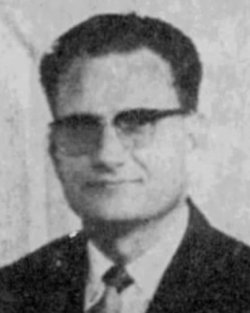
Wilbern Elias Best (1919-2007) was a preacher and writer of Gospel material. He wrote 25 books and pamphlets comprised of sermons he preached to his congregation. These books were distributed in English and Spanish around the world from 1970 to 2018 at no cost via the W.E. Best Book Missionary Trust.

Comments

0 / 2000 characters
Comments are moderated before appearing.

Be the first to comment!

Joshua

Joshua

Shall we play a game? Ask me about articles, sermons, or theology from our library. I can also help you navigate the site.