Bootstrap
W.E. Best

Inspiration

2 Timothy 3:14-17
W.E. Best December, 11 1985 Audio
0 Comments
Best on Hermeneutics

Sermon Transcript

Auto-generated transcript • May contain errors

100%
2 Timothy, chapter 3. I'm going
to try to keep my voice down. I'm still having some problems,
so I want to be able to preach Sunday. I seem to have a difficult time
getting over a sore throat. I've had it for about a month.
I guess it's the weather and what have you. Let's read verses
14 through 17, 2 Timothy, chapter 3. But continue thou in the things
which thou hast learned, and hast heard, and hast been assured
of, knowing of whom thou hast learned them. And that from a
child thou hast known the Holy Scriptures, which are able to
make thee wise unto salvation through faith which is in Christ
Jesus. All Scripture is given by inspiration
of God. and is profitable for doctrine,
for reproof, for correction, for instruction in righteousness,
that the man of God may be perfect, or fitted, or equipped." Notice this word, this next word,
it's not in the original text. I'll give you the word in a moment.
Actually, you pronounce it throughly we always say thoroughly and
that's right because throughly is an archaic word But if you
want to read the King James, it is actually throughly throughly
furnished unto all good works The word perfect in verse 17.
I'll just call attention to these two things in verse 17. I comes
from the word which I've already mentioned previously, in fact
last Sunday's week ago, means to be fitted, and then throughly
actually is a perfect passive participle of the verb exartizo,
which means to equip or to furnish completely. So you could say
the man of God may be fitted, are fully furnished, furnished
completely unto all good works. We want to talk to you tonight
for a few minutes about inspiration. We spent last Wednesday evening
in going into a little further into the study of revelation
pointing out two very, I think, important things. Revelation
attributed mostly to God the Son and inspiration now tonight
attributed to the work of the Holy Spirit. Jesus Christ always
appealed to Scripture and never to human tradition to support
his claims. Paul referred to the quality
of God's message by using the term inspiration that is mentioned
here in the 16th verse of 2 Timothy chapter 3. Tradition is not inspired,
and yet so many folk today seem to think that tradition is inspired. They rely more on tradition than
they do the Scriptures. The Apostle showed that the Holy
Scripture contains all things necessary to a salvation experience
and also for the edification of those who have had such an
experience. So it will thoroughly equip us
for every good work. There is enough information in
God's Word to thoroughly equip every child of God. I'm not going
to go into the papacy again because that's useless. We know that
they rely more on tradition than they do on scripture. And that's
the reason that they get as far as they do with the 900 or maybe
a little less million people throughout the world. You and
I know that the Bible alone is our only rule of faith. Scripture is often misused. But
that does not hinder the absolute perfection of the rule that has
been given us. I'll use this example. I have
some scales in our bathroom and I try to use them on a regular
basis. I don't like to go over two days
without stepping on the scale. If I'm a pound over, I like to
get rid of it before it gets any further. I can gain two pounds
and I assure you that I don't have to step on a scale to know
it. It's all right here. I can tell it when I put on my
trousers and I try to use my belt. So I have to get rid of
it. I don't feel good. I mentioned
the scales. Now the scales can be abused. And if the scales are abused,
I have to reset them every once in a while, just moving them
around or kicking them around from one side of the bathroom
to the other on the towel floor sometimes to do something like
to mop or, well, I point in this direction, one of us anyway. You move it around and it'll
get out of focus a little bit and you have to adjust it. Well,
if that's true with the scales, and after all, if you don't adjust
it properly, then, of course, you do not see yourself as you
really are when you step on the scales. When the Word of God
is not correctly handled, and we've been talking about this,
any time the Word of God is not correctly handled, we do not
see ourselves for what we really are. It's just that simple. I
don't know of a better way to illustrate it. I'm saying that
the scriptures can be abused. They can be misrepresented. They
can be misinterpreted. They can be misapplied. And any
time the Scriptures are abused, misapplied, or misrepresented,
we do not see ourselves as we should. And that's why we have
to be very, very careful in handling the Scriptures that God has given
to us. Let me give an illustration of
such mishandling of the Scriptures. We've been talking about handling
the Scriptures correctly. Let's think for a few moments
tonight about mishandling the Scriptures. Such mishandling
of Scripture certainly becomes a detriment not only to the person
who is giving an interpretation. It's a detriment to him. But
it is also a detriment to the person who is listening to the
interpretation that is given. So both the interpreter and the
person who is listening to the interpreter, both are hindered
by the Word of God not being handled correctly. If you turn
to 2 Corinthians chapter 4 and verse 2, we have a statement,
I think, that will really help us to better understand what
I've just said. Paul said he did not adulterate
the Word of God. Now, I'm giving a different translation
of the Greek word that is used. He said he did not adulterate
the Word of God. When anyone tries to fit scripture
into some system of human philosophy, regardless of what it is, he
adulterates it. I said he adulterates it. The
Greek word for deceitfully, and this is the word in your King
James Version, of 2nd Corinthians chapter 4 and verse 2 is a present
active participle of doloo, d-o-l-o-o, doloo, which means to entrap,
it means to beguile, it means to adulterate, that's why I use
that translation. Paul said, I do not, I'm not
guilty of adulterating the Word of God. because Dalao means to
adulterate. It means to corrupt. It also
means to falsify. No one is to tamper with the
Word of God. It must not be tampered with
because that would deface or impair its value. Paul exhorted
Timothy, if you'll notice, within the context of verses 14 through
17, to continue in the things he had learned going back up
to verse fourteen in reading and firmly believed timothy had
been taught the scriptures and what he had been taught he firmly
believe notice he firmly believe what he had been taught he'd
been taught the truth i want to pause just long enough
to ask you If you have seen an advertisement on Channel 2 this
week for the show, and that's what it's called, it's called
a show. Have you seen the show that is being advertised from
7 until 10 o'clock by the First Baptist Church? Have you seen
a little preview of it? If you haven't, beloved, I want
you to listen to Channel 2 for the next two or three days. I
want you to see the preview and what they say about what's going
to be shown from 7 o'clock next Saturday until 10 o'clock with
Ron Stone being the emcee for the show. It's called a show.
Now when you see the dancing and all of that, you see the
world. You see the world. Now when anybody Resorts to that. I want you to know even when
they say anything from the scripture It's in the wrong place It's
in the wrong place how that any person I'm gonna go so far as
to say anyone who is a Christian. I'm not saying that they're not
some Christians at First Baptist Church. I But I want to go one
step further. Any Christian who has had any
instruction would not tolerate that junk for one second. That's
how strong I am. Not for one second. May not make you angry, but it
makes me angry. Makes me angry. So while false
teachers, and I think there are plenty of them out there, are
satisfied with what has been committed to their trust. It
has been said that the character of teachers, and I like this,
reflects the character of what is taught. The character of a teacher or
preacher is reflected by what he teaches and what he preaches. In other words, if you want to
know anything about the character of a person, listen to what he
teaches, or listen to what he preaches. You can find out real
soon. And you can judge his character
by what comes out of his mouth. Timothy knew the integrity of
not only his mother and grandmother, as you'll find within the context
of these verses that we have read, but his father in the faith. And what do I mean when I make
reference to his father in the faith? I'm not talking about
his father in the flesh. I'm talking about his father
in the faith, and I'm talking about the Apostle Paul. Paul was his
father in the faith because Paul referred to Timothy as being
his son in the ministry. My son in the faith. Proof of
this is 2 Timothy 1.5, 3.15, and chapter 2, verse 1. Therefore,
Paul's son in the faith possessed more than just a Bible. Every person must have his or
her Bible. What do you mean by that statement?
What is meant by his or her Bible is that it must contain the markings
of one's own experience. I hope we let those two things
soak in. I've just preceded this statement
with one very important. About the character of a preacher
can be reflected in his preaching. So everyone is to have his own
Bible. And what do we mean by that?
It must contain the markings of his own experience. His own
experience. And you can tell about what kind
of experience a person has had by the person having his own
Bible. The Bible that lays hold on a
person is the Bible upon which the person has laid hold. I like
that statement. That's not original, but it surely
is a good one. I will run it by again. The Bible
that lays hold of a person is the Bible upon which the person
has laid hold. They go together. Life is more
than truth contained in the Bible, and experience is more than mere
human philosophy. Persons who read the Bible or
hear it read for the mere fact of reading or hearing it do so
with no submission of heart whatsoever. On the other hand, the godly
person reads submissively, reads submissively, he listens submissively
to the Word of God as he hides away the Word of God in his own
heart. Psalm 119 verse 11. Now I want
to pause with that statement for a moment because I think
that needs to be constantly brought to our attention in these days
in which we live. And I'm talking about to the
attention of this church. I'm not eliminating this church.
And what did I say? I said persons who read or hear
the Bible, read the Bible or hear it read or taught, they're
to do it with a submissive heart. And the reason is, that such
a person who listens submissively and reads submissively, he is
doing it for the purpose of hiding that which he hears and receives
in his own heart. And this is exactly what David
was talking about in the 119th Psalm, verse 11. To hide the
Word of God away in our hearts, lest we sin against God, has to be hidden. Timothy had
not only learned, but he was convinced of what he had learned.
It isn't enough to just learn something, we have to be convinced
of what we have learned. And Timothy saw himself fully
described in the Word. We won't spend any time on the
inspiration because we've already dealt with that part of verse
16. We will make a few statements
about it. The literal translation, of course, would be sacred writings.
Notice verse 16, all scriptures given by inspiration of God.
And actually, Paul is saying all the sacred writings. And
if I were to translate the literal Greek words, that's the meaning,
sacred writings. And beloved, these are sacred
writings. They're sacred writings because
they're God-breathed. You'll notice too that Paul's
distinction was between Old Testament and
whatever has a right to be called all Scripture inspired of God. So Timothy had known the Scriptures
from his childhood. Let's look at this for a moment.
Back up a little bit. Verse 15. From a child thou hast
known the Holy Scriptures. I must say that there is no indication
within the context at what age he was taught. Nothing would
indicate exactly. The word that is used here for
child or childhood is breifus and it means a child but it doesn't
say whether we don't gather from this particular word whether
it's one that's just born, an infant, or one that is partly
grown, but that's not the important thing. So it does not indicate
Timothy's age when he was taught, when he was first instructed.
However, a definite part of Jewish life was to train and educate
the children. So that we know for sure, that's
the responsibility of parents today, train the children. You
say, well, what am I to do? We'll touch on this. I find today
a lot of people don't know just how to train their children or
what to teach them. A lot of times people will, young
couples, for instance, have asked me, what books should I buy to
give my children proper instruction or proper training? It's a good
question, but really, Now, there shouldn't be any problem as to
what we should teach our children. Now, the Jews taught their children
because God commanded them to do so, and I'll give you the
verses. Deuteronomy 4, 9 and 10. Deuteronomy 6, 7 through
9. And Deuteronomy 11 and verse
19. And since Timothy was a Jew,
he was taught the Scriptures. Although unregenerate children
do not understand the spiritual significance of scriptures, that
doesn't mean that we're not to teach them. They can learn the
historical events. Well, what historical events
should we teach our children? We'll look at a few important
things. I think that children should be informed of the fact
of God's existence. I think we should begin there.
I think we can go from God's existence to God's sovereignty.
I think that children should realize that God is control of
everything. Everything is under His control.
I think we can go from His existence to His sovereignty and from His
sovereignty to His holiness. And we can explain the meaning
of holiness. So we have His existence, we
have His sovereignty, we have His holiness. And we should let
our children know He is also a God of judgment. God is a just God and God is
going to judge. He does judge and He's going
to judge. And He's even judging even people today. And there
are various ways in which God judges. And we need to teach
our children such a truth as God's eternal wrath. His eternal
wrath. I think furthermore they should
be taught the fundamentals of salvation. What do you mean about
the fundamentals of salvation? The fundamentals of salvation
certainly consist of Christ's incarnation, His sinless life,
His death, His burial, His resurrection, His coming again. He's the one
who stood in our place. We're all sinners. These are
fundamental things. We don't have to go down and
buy a book. It tells us how to instruct our children. We've
got all these things in the Word of God. These are just fundamental
historical things that we can teach the children. They will
not grasp the spiritual significance of these things, but they will
know them, and then when God does, if God so pleases to touch
their hearts in grace, they'll already have these things in
their minds. Then they'll be able to see and understand the
spiritual significance of these historical events These biblical
facts now we could go a lot further than that, but let's notice this
Such teaching does not regenerate I Said such teaching does not
regenerate But its purpose is to make the elect whom the Holy
Spirit regenerates here. It is wise unto salvation and
Now look at the text again. And that from a child thou hast
known the holy scriptures. In other words, giving them the
fundamental historical facts. Not only of God, his existence
and sovereignty and so forth. Grace and justice and judgment
and wrath. We could go on and on, the major
things. But notice he goes on to say which are able to make
thee wise unto salvation. Not wise unto regeneration, wise
unto salvation. Through faith, which is in Jesus
Christ, or Christ Jesus. And then he says, in verse 16,
all scripture is given by inspiration of God. You and I know that the
gift of faith in regeneration grasps the spiritual significance
of the gospel and the glorious salvation experience. We all
know that. We've experienced that. And there
was a time in each of our lives before the grace of God wrought
a work of grace in our hearts. We knew some of the historical
facts. Some of us might have known more
than others. But one thing for sure, when
God by grace did something for each one of us, Then, at that
point in time, we were able, with a spiritual mind, to have
some spiritual understanding of the historical facts to which
we had been subjected. So the law, Paul says in Galatians
3.24, was our schoolmaster to bring us, where? To Christ. So
the law, the word of God, just as the law was a schoolmaster
to bring the Jews to Christ, the word of God is the schoolmaster
to bring us to Christ. And therefore he saw by faith
that Jesus Christ is the end of the law for righteousness
to everyone who believes. Romans 10 and verse 4. Now inspiration
is the infallible record of an infallible revelation. Let's
discuss inspiration a little more. Inspiration is the infallible
record of an infallible revelation. Revelation is infallible and
inspiration is infallible. It records the infallible revelation. Therefore the clause, all scripture
is given by inspiration of God, is the translation of the words
that we have already studied. emphasizing, of course, theopneustos,
which means God breathed. Now, there is nothing to indicate
the precise place of the unexpressed verb that
is used here, so we won't go into that. There is no suggestion
of degrees of inspiration. No such suggestion as degrees
of inspiration. You know, many tell us today
that the Bible contains the Word of God. No, the Bible is the
Word of God. And when we say the Bible is the Word of God,
we're not saying that this translation is the pure Word of God, but
the original text is the Word of God. And I'm sure that we
all understand that. It is a definite assertion that
every part of the divine writing, and this is what we have, has
a unique character as to its source. Therefore, the word theopneustos
means inspired of God, God breathed. Compound word made up of theos
and neo, to breathe. The manner of inspiration is
important. It's beyond human knowledge.
Man lives, he moves, and he has his being in God. But God's manner
of causing this is too wonderful for any man to comprehend. God's
influence is recognized in the mental power and wisdom of men.
But the way God comes into contact with the mind of man is impossible
for you and me to explain. I can't explain it, you cannot
either. God breathed into the minds of
the prophets and apostles and ended them with supernatural
power to see and teach spiritual truth without making one mistake. But man cannot comprehend this. He cannot pass beyond this point. I can't pass beyond it, neither
can you. It must be understood, however,
that the men of God used in communicating the scriptures did not cease
being themselves. Peter was still Peter, Paul was
Paul, John was John, James was James, et cetera, et cetera. So the writers were so many different
instruments, but they were not mechanical instruments. because
the style of each one was preserved. Peter's style was preserved,
Paul's was preserved. That's just like any six writers
today. They all have different styles.
Their styles are a little different. Just like the styles of preaching.
Some like Paul, some like Cephas, and some like others. So the same thing is
true today. Now, higher critics believe the
Bible contains the Word of God. I want to give you a quotation
from a man by the name of Fuller. Listen closer to this quotation.
What did I say to precede this? Higher critics believe the Bible
contains the Word of God. A man by the name of R.H. Fuller
said, and I quote, all the way through, he's talking about the
Scriptures, We have to discern the treasure in earthen vessels,
the divinity in Christ's humanity." End of quote. Now notice what
he said. He's talking not only about the
incarnate word but also the written word. Now notice how he stated
it. It could not be stated any worse
than this man stated it. All the way through he's talking
about the Bible. We have to discern the treasure
in earthen vessels. And then he concluded by saying
the divinity in Christ's humanity. But he went on to add a little
later. The Word of God in the fallible
words of men. How do you like that statement? Now that's some of the fanciful
teaching of our day. The last part says, The Word
of God in the fallible, not infallible, but fallible words of men. He didn't believe in inspiration. as Paul set forth inspiration
here in this passage. So this is an incorrect view
not only of Christology but also of the written word of God itself. The scriptural approach in either
Christology or in the study of the scriptures must begin with
God who is infallible. God breathed scripture is profitable. Notice what he says now. He goes
on in verse 16, all scriptures given by inspiration of God are
God breathed and is profitable. All scripture is profitable.
If all scripture is profitable, why do so many Christian people
have their favorite verses that they always quote or their favorite
passages and they hardly ever go beyond those favorite passages. All Scripture is profitable.
If all Scripture is profitable, then we all need all Scripture. It does not seem logical that
Paul was trying to assure Timothy of Scripture's inspiration. I
want us to notice this because we're going to look at something
a little bit different here. Do you think that when Paul made
this statement in verse 16 that he was trying to assure Timothy
of all Scripture being given by inspiration of God? Now think with me for a moment.
Go back and look at this. Paul was not trying to assure
Timothy concerning the inspiration of the Scriptures. Don't believe that for a second. He did not need to be assured
of the inspiration of Scripture because he knew the Scriptures
from his youth. Now we're going to see the purpose
of this, which we haven't discussed with you, I don't think, in detail.
The distinct object of the Scripture is to equip the man of God for
his work. So the reason that Paul was discussing
this is because he wants you and he wants me to realize that
scripture will fully prepare us for our work on knowledge
of the Word. So there are the doctrinal and
practical aspects of the ministry. The doctrinal has both the positive
and negative aspects. Hence the positive is doctrine.
Notice what it says. All scriptures give of inspiration
of God and is profitable and number one is doctrine. That's number one. This heads
the list. So the positive is doctrine and
that means teaching by the way. Same Greek word means teaching.
And the negative, notice this, is reproof. We not only all need
teaching, but we all need reproof. Now it's a lot easier to be positive
and you have a lot less conflicts in the church by being positive. And that's why that Mr. Bob Schuller is so positive.
It's the power of positive thinking. You're not going to hear him
be negative on anything. He's positive. And notice all
these fellas. Jim Baker, it's all positive.
And I can't wait until Sunday morning to preach what I've got
to preach along this line. It's all positive. But notice,
he begins with positive, teaching, doctrine, then comes the negative,
and reproof. Then let's go a little further.
In the practical aspect of the ministry, there are two things. Notice what he gives. Correction
and instruction. You give instruction, and that
would certainly emphasize the positive. But correction, you're
going to emphasize the negative. So you have the doctrinal, the
teaching side, and you have the practical side. Now do you see why he says this
will fully equip the man of God unto his life's work, or the
Christian for his or her life's work, as well as the journey through
life? So correction is a negative,
instruction is a positive again. The first rectifies the incorrect
principles of practical ethics and the second gives the proper
training for the ethical life. You know there's very little
real spiritual Christian ethics today. We don't manifest enough of it
in our own church. I'm talking about Christian ethics.
I'm talking about spiritual ethics. Now let's run back through this
again because I think this is so important, I may preach on
it sometime in the future, but I'll
drop these things tonight. So let's go back. First of all,
there are the doctrinal and the practical aspects of the ministry. Now Timothy is being addressed,
therefore this is what is known as a pastoral epistle. Even though
this is a pastoral epistle, that doesn't mean that they're not
practical lessons for all Christians. But this is a message primarily
to me. But all can benefit from it.
So what does he say? We have, first of all, the doctrinal
and the practical aspects of the ministry. If you're heavy
on one and light on the other, there's unbalanced ministry. To be heavy on the positive and hardly anything given on
the negative, you're going to have a lot of Norman Vincent
Peale's in the congregation, and Bob Shuler's, and Jim Baker's,
even though you might be referred to as being something else. If you're heavy on the negative
and very light on the teaching, what are you going to have? You're
going to have an unbalanced congregation again. Now let's go a step further. So the positive, first of all,
emphasizing the positive, is doctrine, which is teaching,
and the negative, which is reproof. Then in the practical aspect,
what do you have? Two things, correction and instruction. Correction is the negative, and instruction is the positive.
So the first, that is, what? The correction rectifies the
incorrect principles of practical ethics. And the second, which
is instruction, gives the proper training for an ethical life. I'm talking about Christian ethics. Now let's go a little further.
God-breathed scripture fully equips the man of God for every
good work. Every good work. Someone has
said, as a spacecraft is fitted out for a voyage, and we know
something about spacecrafts today, all that is required for the
voyage is placed inside the spacecraft before it moves toward space. This is the analogy. Thus the
man of God, well-versed in scripture, is equipped for, and even before,
his work actually begins. It would be ill-advised, would
it not, for the astronauts to get in the spacecraft without
any provisions? being placed in a spacecraft?
What about someone running off on a tangent trying to do the
work of the Lord and he's not prepared to do it? In conclusion, man is represented
in Scripture as a man in nature, man in Christ, and man of God. We have mentioned in this text
that the man of God, see this refers to the ministry, that
the man of God. You'll notice he's called a man of God. I use
the other two to build up to this. First, there is man in
nature. Then secondly, there's man in Christ. And thirdly, there's
the man of God. What do you have? You have an
unsaved man who becomes a saved man. And before the saved man
is fully equipped and prepared to do the work that God has called
him to do, he must be prepared. And when
he's prepared, he's a man of God. You remember me telling you,
this came to my mind as I was going over this today. Here several
weeks ago, I mentioned that a certain fellow on TV said, people talk
about a man of God, I'm not a man of God. I'm talking about Jim
Baker. He said, I'm not a man of God.
I thought to myself, fella, you just don't know how much truth
you're saying. You're not a man of God. And you act like a man of nature,
who is in nature, just a man of nature. You don't even act
like a man in Christ. So you have a man in nature,
a man in Christ, and a man of God. And the man of God is the
person who is in Christ that's been fully equipped for his work. So the last two are not synonymous. Man in Christ and man of God.
They're not synonymous. Even though you might think they're
synonymous, they're not. A man must be in Christ before
he can be a man of God, but he may be a man in Christ without
being a man of God. Do you know what the desire of
every God-called preacher should be? To be a man of God. And to
be a man of God, look at the verse, that the man of God may
be fitted, fitted, there's the man of God, truly furnished,
or equipped, or furnished completely unto all good works. That person is the man of God. The gift of God is connected
with the man of God. Not only in 1st, but also 2nd
Timothy. Thus we see the man of God standing
for the Lord against the hopeless apostasy that is set forth in
2nd Timothy. Go back for a moment to the 2nd
chapter. Let me demonstrate what I'm talking about. 2nd Timothy
chapter 2. Let's read beginning with verse
15. And go down through verse 18. And verses 17 and 18 will
illustrate what I'm talking about. Paul says, Study to show thyself
approved unto God a workman that needeth not to be ashamed, handling correctly the word of
truth. But shun profane and vain babblings. You know there are some things
you just have to shun. I've learned there are some things you have
to shun even in a local church. for they will increase unto more
ungodliness. And the word will eat as doth
a canker, of whom is Hymenaeus and Philetus, who concerning
the truth have erred, saying that the resurrection is past
already, and overthrow the faith of some. Now verse 19 gives you the turning
point. Nevertheless, the foundation of God standeth sure, having
this seal, the Lord knoweth them that are his. Then turn to the third chapter,
begin with verse 1, and you'll see what we're studying in the
light of the context. Beginning with the very first
verse of chapter 3, and you'll see why now Paul is saying what
he is in the last verses. He is not assuring Timothy that
all scriptures God breathed, Timothy didn't need to be assured.
That was not the purpose of it. This know also that in the last
days perilous times shall come for men shall be lovers of their
own selves. I need not read any further. He's talking about in
the midst of these apostate days in which we live, the man of
God must be thoroughly equipped for all good works. So here we see the man of God
standing for the Lord against the hopeless apostasy that was
already in existence. The man of God is furnished with
everything he needs to stand against the unusual circumstances
he faced. And believe me, I know how badly
I need to be equipped The man of
God has a threefold responsibility, and I mention these in conclusion.
We're emphasizing the man of God. Number one, resist the temptations
of those who try to steal the message committed to his trust.
That's why we find such expressions in both, especially in this last
epistle that Paul wrote to Timothy, keep, keep thy trust. Secondly,
avoid the discussion of those who argue, because he says, avoiding
profane and vain babblings. And thirdly, in 1st Timothy 6
and 20, ignore the opposition of those who think oppositions of science, falsely so-called. I thought if I had not discussed
that with you, you might see this last part in a different
light than maybe you've seen it before. But yet isn't that
what Paul is talking about? He's showing Timothy, a man of
God. He's not trying to assure him
of the inspiration of the scriptures, but that the scriptures that
have been God-breathed will thoroughly equip him for the job he has
to do as he faces the opposition in his ministry. Stand for the benediction.
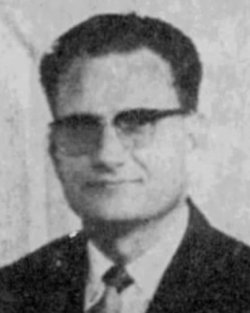
W.E. Best
About W.E. Best
Wilbern Elias Best (1919-2007) was a preacher and writer of Gospel material. He wrote 25 books and pamphlets comprised of sermons he preached to his congregation. These books were distributed in English and Spanish around the world from 1970 to 2018 at no cost via the W.E. Best Book Missionary Trust.

Comments

0 / 2000 characters
Comments are moderated before appearing.

Be the first to comment!

Joshua

Joshua

Shall we play a game? Ask me about articles, sermons, or theology from our library. I can also help you navigate the site.