Bootstrap
W.E. Best

Preparation for Interpretation

W.E. Best December, 8 1985 Audio
0 Comments
Best on Hermeneutics

Sermon Transcript

Auto-generated transcript • May contain errors

100%
Our subject is entitled Preparation
for Interpretation, based on James chapter 1, verses 18 through
25. Having read this passage of scripture
for our scripture lesson this morning, I'd like to point out
a few things from this passage before we begin our discussion. You will notice in verse 18,
James said, of his own will, that is, God's will, begat he
us with a word of truth. Begat he us is a very misunderstood
part of this text, as we will show this morning in our study
of this portion of Scripture. Following this you will notice
in verse 19. He says wherefore my beloved
brethren James is addressing brethren Proof of that is found
from several verses notice first of all in chapter 1 verse 2 my
brethren Counted all joy when you fall into divers temptations
Verse 16 Do not err, my beloved brethren. In verse 19, wherefore,
my beloved brethren. Notice chapter 2 verse 1, my
brethren. In chapter 3 verse 1, my brethren. There should not be any doubt
about the persons to whom James was writing. He was addressing
the brethren in Christ. Then notice, if you will, verse
21, there are some things to be done in preparation for the
hearing of the word. Lay apart or lay aside all filthiness
and superfluity of naughtiness. That has to be done before an
individual can receive, look at the latter part of the text,
with meekness the engrafted word which is able to save your souls." James is not talking about regeneration. He's talking about salvation
in this text. And I'm assuming that most of
you, and I'm hopeful that all of you know the difference between
regeneration and conversion. And then you will notice in verse
22, He says, be ye doers of the word and not hearers only. Now I would like to call attention
to two imperatives. We have an ariest middle imperative
in verse 21 when James said, receive with meekness the engrafted
word which is able to save your souls. However, in verse 22,
it is not an ariest middle imperative, but it is a present middle imperative. But be ye doers of the Word,
or to put it literally, keep on becoming doers of the Word. In other words, there is a once-for-all
receiving or embracing the Word, and then after having once-for-all
received it or embraced it, to keep on coming to Him or keep
on doing the Word which we have embraced. And that's the present
tense. Both of them are commands. Both
of them are imperatives. Now for a few introductory statements
about interpretation. I've been preaching to myself
for several weeks in the study of this subject of interpretation. The awesomeness of the responsibility
of standing before people and to give an interpretation of
scripture must be consciously realized. However, it is not just for the
preachers. You are an interpreter. You are
just as responsible to interpret what you hear as it is for me
to interpret to you what I hear and what I study. It is just as important for you
to properly interpret what you hear me say this morning as it
is for me to give an interpretation of the scriptures which I read. So don't put all the responsibility
on me. Furthermore, I am not in any
position to interpret the Scriptures unless I have met the prerequisites
to interpretation as set forth in this portion of Scripture. Neither are you who are sitting
in the pew in any position to interpret what I'm saying to
you this morning unless you have applied the same principles either
before you came to the church house, or do it quickly before
I begin to give an exposition of the Scriptures. You have to
meet the prerequisites to interpretation
as much as I do. So the responsibility, first
of all, is upon me as I speak to you, and secondly, the responsibility
is upon you to hear what I say and to give the proper interpretation
of the Scriptures in order that you might know whether I am properly
interpreting the Scriptures or not. Now for the beginning of our
study, one that could not be any more important when it comes
to listening to the Word of God and interpreting what we hear. The accepted rule for interpretation is very simple. There is, first of all, to be
a two-fold preparation. Number one, the interpreter must
be a person who is illuminated by the Holy Spirit. natural reason will not do. The interpreter must be illuminated
by the Holy Spirit. And second, the material used
must be that which has been provided by the Holy Spirit. So the person
who interprets must be illuminated And the material used in the
interpretation must be that which the Holy Spirit has already prepared,
and here it is in my hands, the Word of the living God. A true interpretation of Scripture
cannot operate apart from the interpreter being illuminated
by the Spirit of God. Listen to what Paul said. in
1 Corinthians chapter 2 verses 11 and 14. We studied this section
of scripture last Sunday evening. But I'm calling attention to
two statements. He says in verse 11, the things
of God knoweth no man. Let's pause for a moment. The
things of God knoweth no man, naturally. But then he goes on to say, But
the Spirit of God, the Spirit of God alone knows the mind of
God. We said last Wednesday evening
that revelation is attributed to the Son. It is the Son who
declares the Father. And it is the Holy Spirit who makes known to us the Son. Therefore, the Holy Spirit's
work is attributable to inspiration. Revelation, inspiration. And
there is a difference between them. In the 14th verse of 1
Corinthians 2, we're told that the things of God are spiritually
discerned. Spiritually discerned. That means
one who understands the things of God must have a spiritual
mind and it cannot have such apart from regeneration. How many people do you know?
How many people have you come in contact with in your witnessing
for the Lord? who demonstrate they have never
passed from death into life and they can tell you what they think
about the Bible. You're wasting your time listening
to them if they're unregenerate persons. There is an order and
the order is a person must be regenerated. He must have the
spirit of regeneration plus he must have the spirit of illumination. in order to understand spiritual
things and be able to interpret spiritual things. The interpreter
is obligated to receive, to receive the engrafted Word. Secondly,
he is to continuously do the Word that he has received. And
thirdly, He is to set forth in a clear form what he has comprehended
from the Word. There are three vital things
that I've just related to you. Biblical material has already
been provided us. Therefore, we're told, if any
man speak, let him speak as the oracles of God. 1 Peter chapter
4, verse 11. That means we're not to listen
to the opinions of people. If a man speak, let him speak
as the oracles of God. There's one other verse we must
consider, and it is Isaiah 8 and verse 20. If anyone speaks not
according to this word, the word of God, it is because there is
no l-i-g-h-t, light in him. In other words, he is living
in darkness. I would like to give a simple
outline this morning to begin with. First of all, we know that
Scripture is the revealed mind of God. That's why we find such
an expression as that given us by Paul in 1 Corinthians 2.16
when he spoke of having the mind of Christ. We have the mind of
God in the Holy Scriptures. Now here's the outline. The engrafted word must be received. And we'll see who it is this
morning who can receive the engrafted word. Secondly, the faithful
word must be held fast And thirdly, the word of truth
must be handled correctly. I'll give you the scriptures
for those three statements. First of all, the engrafted word
must first be received. That's James 1 and verse 21. Secondly, the faithful word must
be held fast. That's Titus 1 verse 9. And thirdly, the word of truth
must be handled correctly, and that is 2 Timothy chapter 2 and
verse 15. Now notice James 1 and verse
21. James tells us that the engrafted
word is to be received for what purpose? For regeneration? No. For the salvation of our
souls. The word engrafted comes from
the Greek word which is emphoutos, and it means implanted, engrafted,
or infixed. Very strong word. Then notice in verse 21, this
word is to be received. We are to receive the engrafted
word. Let's look at this word, this
verb, receive, for a moment. Here we have a first, arius,
middle imperative. And we'll explain that. It is
of the Greek verb dekamai. Dekamai means to receive, to
receive and retain, are to receive by acquiring knowledge. That's the meaning of the verb
dekamai. Please notice it is an arius
middle imperative. In other words, it is to be once
for all received. It is to be once for all embraced. The arius tense in the Greek
is a completed action. And here we have the middle voice.
And we'll go into that more in just a moment. It is not passive
voice. It is not active voice. It is
middle voice. That means the person is to participate
in the action. And since the persons James addressed,
brethren if you please, they were to participate in this action. And it is a command. It's in
the imperative mood. God's command through James to
you and to me. This word, this engrafted word
is to be received. It is to be once for all embraced. Once for all embraced. Keep that
thought in mind. And it is the brethren who are
to once for all embrace this word of truth. Since regeneration is exclusively
the work of the sovereign spirit, John 3 verse 8, the middle voice
of the arius imperative verb proves the receiver has already
been made alive by the grace of the sovereign God. And we'll
be going back in a few minutes to get the foundation for that
in the 18th verse. But let's notice something. James
did not command, and that's the imperative mood, on regenerate
persons who are non-creative to cooperate with the Creator
in the creative act of regeneration. That would be foolish. That would
be a waste of time. I want to repeat that statement
because of its importance. I said, James did not command
the brethren, and he was commanding the brethren. He did not command,
therefore, unregenerate persons who are non-creative to cooperate
with the creator in the creative act of regeneration, and regeneration
is the creative act of God. And man cannot cooperate in that
act. And that is exactly what the
Arminians tell us today. But they tell us that to their
own peril. To their own peril. However, you notice this. James was inspired to command
the brethren to receive with meekness. Notice now with meekness. And please observe that the meekness
follows putting off all filthiness and the superfluity of naughtiness. I want you to see the order of
God's Word. Now, beloved, sometimes when
you wonder why you don't understand what is being taught or being
interpreted, it might be because you have not, even as a Christian, put off evil. Your mind may be filled with
evil even while you sit listening to the exposition of the Scriptures.
And this word evil covers a large territory. It covers many things. Many things, evil thoughts, evil
motives, things that you formulate in your mind that you intend
to do next week that are contrary to the revealed will of God. So whatever is opposed to the
revealed holy will and purpose of God is evil. and then put
off the superabundance of naughtiness. And the word literally means
superabundance. So these are things that have
to be put off before one can receive the engrafted Word that
is able to save the soul. Stay with it because we'll give
an interpretation of all of the statements connected with this.
So you'll notice that James was inspired by the Spirit of God
to issue this command from God as to what the brethren should
do before they receive and then do what they have received before
the interpretation or the understanding of what is being given. In other words, I'm making it
practical. I am making it as practical as possible. Let's
look at the word save for a moment. The verb save is a first arius
active infinitive of sozo, which means to save. Now we're not thinking about
time. Here we have an infinitive. And any time you have an infinitive
form of the arius, Forget about time itself with the exception
of certain specific instances. So time is not really the important
thing here. It's the receiving and what is
to be done to save so we have a completed action. So we have
an infinitive form of the aorist verb here. Now let us see how
that this verb is used in other places in the scripture so that
one will not get an incorrect understanding to begin with of
the meaning of the verb sozo, which means to save. For example, the context will
always reveal the meaning and how it is to be understood. In
Matthew 1 and 21, God saves. Is there any doubt about the
meaning there? God saves. That means salvation
is of the Lord. That means that no human being
can participate in this deliverance. In Acts 2 and verse 40, we are
told to save ourselves. That doesn't contradict God saving
us. There are some things that you
and I can do to save ourselves from certain things. So follow
me and I'll show you. Thirdly, we're told in 1 Timothy
chapter 2 and verse 15 that the woman is saved in childbearing. I don't know how many times during
my ministry I've heard people give an incorrect interpretation
of that. They think because a woman gives
birth to a child that she is saved in childbearing. Well,
there is a sense in which she is saved in childbearing, but
not in the sense in which many have applied it. There is no
reference to the salvation of the soul here. Then if you'll turn to 1 Corinthians
chapter 3 and verse 15, We're told that the Christian
whose work is burned up, that he himself shall be saved so
as before. Listen to this one in 1 Corinthians
7 and 16. The wife shall save her husband. In other words,
here is a Christian wife who has a non-Christian husband.
She shall save her husband. I hope that you don't think that
that means that she's able to save his soul from the pit of
hell. It doesn't mean that. And finally, we're told in 1
Timothy 4 and verse 16, Timothy was to give heed to the doctrine,
to the word of truth, in order that he might save himself and
those who heard him. That's my responsibility as I
stand before you. I am to give heed to the Word
of God. I am to understand it. I am to give a spiritual interpretation,
a correct interpretation, in order that I might save not only
myself, but you from false doctrine. That's the meaning in the light
of the context. The qualification of the interpreter,
therefore, is given in James 1, 18 through 25. James began his subject in verse
18. Now I'd like for you to go back
to verse 18. He said, of his own will begat
he us with the word of truth. Of his own will begat he us with
the word of truth. The begetting is not by God's
will, if you'll notice, plus man's, but by God's will. Man's will has absolutely nothing
to do with his being brought forth. That is all wrapped up in the
sovereign will, the sovereign decree, the sovereign purpose
of Almighty God. Of His own will begat He us,
or brought us forth. Having purposed us, having will
that we shall be brought forth, then God brought us forth by
the word of truth. Look at the 18th verse. Don't
take your eyes off of it. Make some notes here because
this is important. This is a debatable statement
here. Here we have the Greek verb apakuao. Apakuao means to bring forth. This verb is used only two times
in the New Testament. During the last few weeks, I
have made a new study of this. I have checked many different
works, and you find different interpretations of this verb. How can we arrive at the true
meaning of the verb? Apoc, U-A-O. It is used only
twice, and let's see where the first time it is used. Go back
to the 15th verse. I wanna show you the simplicity
of the verb that is used here. In order to get the connection,
I'd like for us to go back to verse 14. Let us read verses
14 and 15 together. Then I'll call attention to the
verb that is used in verse 15. But every man is tempted, when
he is drawn away by his own lust and enticed. And when lust hath
conceived, stop there for a moment. When lust hath conceived, that
is the beginning of sin. I said that is the beginning
of sin. Then notice what he says. It
bringeth forth sin. It bringeth forth sin. Now bringeth forth is the same
verb that is used in the 18th verse. Of his own will brought
he forth us, or brought us forth. Same verb. And beloved, this
is the only reference. The only place where this verb
is used, it is used only by James, and it is used only twice, and
in verse 15 as well as verse 18. Now, there are many who say
that this verb means to beget, and they make it paternal, P-A,
P-A, not M-A, but P-A. There are others who say that
it is maternal, M-A, not P-A. Maternal, bringing forth. And I'll show you what I mean
by it in just a moment. In other words, James is not
talking about the beginning of life. He is talking about bringing
forth that life that was begun in inception, in conception. Now make the comparison and you
have it. You don't have to go outside the context. So when
you look at verse 15, when lust hath conceived it, bring it forth
what? Sin. Sin. And then notice, and
when it is finished, what happens? Bringeth forth death. Bringeth
forth death. Now drop down to verse 18 again.
Of his own will, God's own will, brought us forth by the word
of truth. This is bringing forth life. It is not the conception or the
beginning of life. Now, when you read the works
of the Puritans, you're going to find out that most of them
take this and they refer to this as gospel regeneration. But it isn't there. So I'm asking you, when you read
lexicons, be sure that you know enough about the subject to know what you're talking about.
This is not talking about the beginning of life, but life that
has already begun in conception, brought forth by the Word of
Truth. It is bringing forth. So the
verb means the same. And since we have only two references,
there isn't any doubt about its meaning. It does not mean the
beginning of life. It means to bring forth that
life that has already begun. And how is this life brought
forth? By the Word of Truth. By the Word of Truth. Although man is the author of
his own sin and death, according to verse 15, God is the author
of man's deliverance from sin and death by grace and life. And this is what we have in verse
18. God's will is the efficient cause of sinners being brought
forth by the word of truth. Therefore, the sovereign God
can be neither coerced nor made to feel the necessity to save
anyone man might desire to be saved. I don't know how many people
that I've come in contact with through the years who have a
false concept of salvation. Many mothers say, oh, I prayed
for my children that they might be saved, and God saved them,
and God saved them in answer to my prayer. And beloved, I will explain that
in detail, not this morning, but one week from tonight. One
week from tonight. So I'll not go into it any further,
except to repeat, the sovereign God cannot be coerced to save anyone that you might
desire to be saved. If you and I pray intelligently,
we will pray that God's will be done, not our will. How many people are there out
there filling the pews today who seem to think that God is
at their beck and call. That they can manipulate God
to do what they please, instead of them being in the position
to say, not my will, but your will be done, oh God. You see how important this subject
is? So life begins before birth. Birth is not the cause of life.
but it is the bringing forth of life already existing. Now I want to make an application
of this and use a very simple illustration. It is at this very
point pro-abortionists fail in the realm of physical life. and
religionists fail in the biblical understanding of spiritual life. I want you to make that application.
I said it is at this very point that pro-abortionists fail when
it comes to the understanding of when life begins. And it is at this very point
that religionists fail to understand when spiritual life begins. James is not talking about the
beginning of life. He's talking about bringing forth
the life that is already in existence. Of His own will brought us forth
by the Word of Truth. by the Word of Truth. Now let
me prove my point. I've given you what I believe
according to the two places where this verb is used, and it means
to bring forth, and that's all it means. Now if I were talking
about the beginning of life, or if James were talking about
the beginning of life, he would not have used the verb apotueo. What would he have used? He would
have used the verb genao, which means to beget. Let me give you
three other verbs that are used that denotes the beginning of
life. Genao is one, it means to beget. John 1.13, 1 John 3.9,
1 John 5.1 and verse 18. The second word that could be
used and is used is katidzo and it means to create. Ephesians
2 and verse 10. What about the verb to quicken. It is the verb zoapoieo and it
means to quicken or to make alive. John 5, 21 and John 6, 63. Then there is a compound form
of this Greek verb soosoapoieo and it is made up of soos which
is with and then which means to quicken or to
quicken with. And this verb is used in Ephesians
2, 5 and Colossians 2 and verse 13. So you wouldn't use the verb
that is used in James chapter 1 verse 18 for the beginning
of life. There are four other verbs that
are used for the beginning of life. Immediate regeneration does not
refute the truth that the new life is brought forth by means
of objective truth. Objective truth. The Holy Spirit
may perform His work of regeneration before, during, or after the
proclamation of truth. In other words, the Holy Spirit
can regenerate someone before he hears the gospel, he can regenerate
someone while he's listening to the gospel, or he may regenerate
someone even after he has heard the gospel. But one thing for sure, the hearing
ear, the hearing ear is of God. That we know for sure. Now having said that, notice
verse 19. Notice what James says in verse
19. Wherefore, my beloved brethren,
are you looking at your Bibles? Let every man be swift to hear. I'm not teaching every part,
every aspect of this verse. I'm only emphasizing the points
that are related to our subject this morning. So now what does
he say? after He has made the statement
of His own will, brought us forth by the Word of Truth, then He
says in verse 19, He told the brethren, Let every man be swift
to hear. Beloved, it means just what it
says. Be swift to hear. So James told the brethren, What
preparation must be made to receive the engrafted word which is able
to save their souls? Verse 21. So attention must first
be pointed to the opening words of verse 19. Now look at verse
19 for a moment. There is some controversy about
this, and so I will share with you what the controversy is,
and then I'll give to you what I believe to be the simple answer. We have four Greek words here,
and I'll read it to you in the Greek text, and then we'll explain
each one. Iste, Adolfoi, Mu, Agapitoi. Those are the words. Now let's look at the first word.
Here's the word about which there's so much controversy even among
Greek scholars. Iste, I-S-T-E. It can be either
a perfect active indicative or it can be a perfect active imperative. Now there's a vast difference
between the two. You see the indicative refers to something
that has happened. It refers to that which is a
fact. And the imperative is a command. Now I want to ask you a question.
Is he talking about the factuality of what they have heard or is
he giving a command? In verse 19. You have to make
up your minds here. You have to come to some conclusion.
I personally believe, and of course this can be as I've said,
either a perfect active indicative or a perfect active imperative
of oida, and oida is the stronger word for no, to know. The stronger
verb to know. Now let's look at it again. Wherefore
my beloved brethren, you see you don't see any of this in
the King James translation. So what is he saying? Knowing
brethren. Now what's he referring to? He's
not giving, I don't believe, a command, but he's referring
back to what has been stated in verse 18. In other words,
since you know that it was by God's will that you have been
brought forth, see, on that basis, what are you to do? You are to
be swift to hear, swift to hear. That makes more sense to me than
for James to be giving a command here in the 19th verse. So in
view of the knowledge of their deliverance by the will of God,
James instructed the brethren what they should do before, notice
this, before, during, and after the proclamation of the truth. So preparation must be made by
those who have been brought forth by God's will before they can
hear and receive the engrafted word which is able to save their
souls. Now let's look at something else.
He goes on to say, wherefore lay apart all filthiness and
superfluity of naughtiness. And is the responsibility of
all. This is your responsibility. This is my responsibility. And
all of these things must precede a true understanding interpretation
of what we hear. So it applies not only to the
preacher, but to every child of God. After all, James was
writing to brethren. He wasn't writing to preachers.
He was writing to beloved brethren. But we need to go back for a
moment. Back to verse 18, after having said and knowing this,
they knew it, oida is used, of his own will begat he us with
a word of truth that we might be a kind, underscore the word
kind, a kind of first fruits of his creatures. Now here's where our responsibility
really lies. The word kind is used because
the parallel is not identical with Jesus Christ who is the
first fruits of the church. And the word that is used here
is tina, t-i-n-a in the English. And so it's used, I said, because
the parallel is not identical with Jesus Christ, who is the
firstfruits of the church. And this is found, by the way,
in 1 Corinthians 15 and verse 23. So Jesus Christ is the firstfruits,
and you and I, the recipients of God's grace, who have been
brought forth by the word of truth, are a kind of firstfruits
of His creatures. Just a kind of firstfruits. Now
let me illustrate that. under the Levitical system. No
part of the harvest should be used for food until after the
first sheaf, accompanied by sacrifice, was presented in the temple.
I'm using the Old Testament to prove the point. Thus, the purpose
of God in bringing forth the elect is that we might yield
to the life he has given and has been manifested. Fruits. It is aparchy, which
means the first act of consecration, hence the first portion. Hence
the first portion. We're a kind of first fruits,
our first portion. Jesus Christ was that. So it denotes what to you and
me? It denotes the dignity of our position in Christ and also
our responsibility to others. We are a kind of first fruits
of His creatures. How can I illustrate that? No
better way than to use Paul's statement. In 2 Timothy 2, verse
10, we must first of all recognize our position in Christ, and if
we recognize our position, then there's going to be a change
in our condition of life. We have responsibility to others
as well as to ourselves. And this is what Paul meant when
he said in 2 Timothy 2.10, Therefore I endure all things for the elect's
sake, that they may also obtain the salvation which is in Jesus
Christ with eternal glory. I endure all things. all things. Moreover, the purpose of the
engrafted word is to decentralize the ones brought forth. I hope you don't miss that last
statement. I said decentralize. Beloved, no person lives unto
himself and he can't die unto himself. We have a responsibility.
So this life, having been brought forth by the Word of Truth, is
to decentralize everyone brought forth. I'm getting right down
where we all live, am I not? Now let's go further. James mentioned
two things required to be laid aside before receiving the engrafted
Word. The Greek verb for lay apart
is a second ariest middle participle. So notice it's a once for all
thing, you're to lay it aside. You're to lay aside evil. It
is to be laid aside once for all. Notice this, it's ariest. And
it's middle, you're to participate in laying aside evil. And you
can do it because you have the grace of God. And it means to lay aside, put
off our renounce. So what are we to do before we
receive the engrafted word which is able to save our souls? We
are to lay aside, we are to renounce. Let me show you some other places
where this verb is used. We have here Apathy is the verb
and it means to lay aside, put off our renounce. Paul used this
verb in Romans 13, 12. Listen to it. The night is far
spent. The day is at hand. Let us therefore
cast off. There it is. There's the verb. Cast off the works of darkness
and let us put on the armor of light. This is what we're to
do. He also used the same verb in
Colossians 3, 8, listen to it. But now ye also put off, there
it is, all these, anger, wrath, malice, blasphemy, filthy communication,
out of your mouth. Beloved, as long as any of these
things are in our minds and hearts, we are in no position to receive
the engrafted Word which is able to save our souls. And all this
comes before interpretation. I'm trying to deal with interpretation
more from a practical standpoint as well as from a theological
standpoint. I feel that's my responsibility.
I want to know what the scriptures teach on the subject, and I'm
sure you do. Now, what does James say must
be put off before one receives the engrafted word? The word
for filthiness simply means moral uncleanness. And the word that is used here
is hupahia. and it means moral uncleanness. Can you imagine someone trying
to teach a Sunday school class, and this goes on all the time
in churches today, that are morally unclean? Can you imagine a preacher
trying to preach when he's morally unclean? I want you to know, I know of
some preachers I know of one in particular, we gave him some
support many years ago. Married a man with three kids
and he was living and having affairs with a woman and preaching
to her every Sunday. Don't you know that was great? He was finally caught up with
and where did he land? Right back in the first Baptist
church of a town in the state of Texas. I won't call his name, but if
you want to know in private, I can sure give it to you. Put
off evil. Renounce it. You cannot receive
the engrafted word. This precedes the reception of
the word. Then notice secondly, he mentioned
superfluity of naughtiness. And this literally means superabundance
of evil, malice, ill will, or desire to injure. And I don't
have time to give you a whole list of references where it's
used. Without a work of mortification,
before we are exposed to the Word of God, the wickedness of
our hearts can prevent us from receiving the Word which we hear. Now that applies to everyone
of us. Now let me show you the beauty
of all of this. Following the receiving of the
engrafted word, verse 21, James commanded This is another imperative,
but it's a present middle imperative this time, not an arias middle
imperative. He says, but be ye doers, verse
22, be ye doers of the word and not hearers only. I'm not through yet. You see,
one step leads to another step. But before we get through stepping,
we'll know what the mind of God is on the subject and the preparation
that must be made for the interpretation of scripture. So we have the present middle
imperative of Genemiah, which means to keep on becoming doers
of the word and refrain from being hearers only. Present imperative. Let us now follow the steps from
verses 18 through 22. Now if you've missed some of
the things that I've given, let me give you the steps. They're
very simple. Number one, going back to verse
18. God's will, God's decree, God's
purpose brought us forth by the word of truth. That's verse 18. And there we have a first Arius
active indicative. You see, that's a fact. That's
the indicative mood, that's a fact. That has happened, that's a fact.
Arius tense, a completed action, and it's a fact. We have been
brought forth by the Word of Truth. Step number two. Now notice verse
21. Preparation was made for the
receiving of the Word. Here we have a second arius middle
participle. We're to put off. This is a second
step. Number three, also in verse 21,
the last part of the text. The engrafted word was received. Here we have a first arius middle
imperative. It's a command. It's arius tense. It's middle voice. We are to
participate in it just as much as in laying aside or renouncing
the evil or the superabundance of evil. So here is the receive. We've
received the Word. So we have a second arius middle
participle. I mean imperative. Then notice
number four. That's the last part of verse
21. Number four in verse 22. Keep on becoming doers of the
Word. Here's a present middle imperative.
So we go from the areas to the present. Now let me run them
back by again. I want you to see them. In verse
18, we have God having brought us forth. This is a fact. This
is a fact. Number two, in verse 21, preparation
was made for the receiving of the word. That's the second arius,
middle participle. So he's not discussing so much
the time, it's just when you lay aside, when you do it. And
then thirdly, the engrafted word was received. Here we have an
arius, middle imperative, a command of God. It is middle boys, we
participate. And since we participate in receiving
this world which is able to save our souls, it is not regeneration. It's a glorious conversion experience
in preparation for the proper interpretation of the Word of
God. And then number four, verse 22,
we have the present middle imperative, keep on becoming doers of the
word. In other words, since you have
received it once for all, then keep on doing that which you've
received. That too is an imperative. Now let's explain this. especially
the difference between an ariest middle imperative and a present
middle imperative. I want to make it as simple as
I can. The difference between the ariest middle and the present
middle imperatives is important for us to understand. The ariest
tense is a completed action, whereas the present tense is
a continuous action. Hence, once we have received
the engrafted Word, that's completed action, we are obligated to continue
to be doers of the Word, that's continuous action. Now you can't say that I'm not
explaining it. You say, well, I don't know anything about the
Greek. Well, I'm explaining it. Now let's go a little further.
I'll use a very simple illustration. Does the husband who lovingly
and willingly said to the bride, I take you to be my lawful wedded
wife. Does he get up every morning
after having said that and say, honey, I take you to be my lawful
wedded wife? That would be foolish, wouldn't
it? I'm illustrating it if you're listening. When he said, I now take you
to be my lawful wedded wife, that was a once for all statement. Well, it's supposed to be. It
isn't today, I admit, but it's supposed to be. And regardless
of what people say today, it is biblical. I now take you to be my lawful
wedded wife. That's a once for all statement. He has entered into a marriage
contract for life. He doesn't get up every morning
and say, Honey, I take you today to be my lawful wedded wife.
No, he doesn't do that. You know what it is? if he's
the lovingly and willingly husband that he's supposed to be when
he said, I now take you to be my lawful wedded wife. He just
continues to act out what he said once for all when he said,
I take you to be my lawful wedded wife. Beloved, once the child of God
has embraced the Scriptures, the engrafted Word, then he is
to act out that Word which he has received, and it is to be
done every day of his life. It would be foolish to get up
every morning and say, I now receive the engrafted Word. Beloved,
I want you to know there came a time in my life after the Lord
quickened me by His Spirit, I received, I embraced the Word of God. and having embraced the Word
of God and believing that all Scripture is given by inspiration
of God and is profitable for doctrine, for reproof, for correction,
and will thoroughly furnish the man of God and do every good
work. I'm to put it into practice every day of my life. Now let's go a little further. That's the first point. We can't
spend as much time on the next two. So first of all, the engrafted
word is to be received. It is once for all received.
And then it is acted out continuously. That's in preparation for interpretation. Now turn with me please to Titus
1 verse 9. Titus 1 verse 9. The faithful
word is to be held fast. Paul said in writing to Titus,
holding fast the faithful word as he hath been taught, that
he may be able by sound doctrine both to exhort and to convince
the gainsayers. Holding fast. Let's look at this. Here we have a present middle
participle. Here we are to participate once
again in holding fast. And it's a present middle participle
of Antechami. Antechammi means to hold firmly
or cling to, to be devoted to, or to exercise a zealous care
for. I have absolutely no confidence
in anyone who professes to be a Christian who doesn't have
great respect and care for this word. Yet I've come in contact with
so-called Christians. I remember one person in particular,
back years ago in my ministry, he said, I haven't been in church.
I'm a Christian, but I haven't been in church in 25 years. I've been in homes, and the only
Bible was a big old family Bible, and the only time it's ever opened,
and you could tell that, was when someone either put the insurance
policy in it, or a lock of hair from the baby, or a flower from
a funeral, and then press it back together. Some of you know
what I'm talking about. They talk about being Christians,
but there is no care, zealous care, for the Word of God is
to be held fast. And what does it mean to be devoted
to it? Beloved, if a person is devoted
to the Word, he's going to read instead of the Word. You cannot
be devoted to something without giving attention to it. So this word is to be held fast. It is God's sure word of prophecy. And it gives light to believers
in their pilgrimage in this dark world in which we live, 2 Peter
chapter 1 and verse 19. Furthermore, it completely equips
every one of us for our work as well as our journey through
life. Now coming lastly, here's where
interpretation is involved. The Word must be correctly expounded. Turn to 2 Timothy 2, verse 15. Study to show thyself approved
unto God, a workman that needeth not to be ashamed. Here it is,
rightly dividing the Word of truth. There's a lot of misunderstanding
about the last part of this verse. When the Word of God is correctly
handled by the preacher or by the Christian in general, it
will expose all the false methods and doctrines of the enemies
of truth. I said when it is correctly handled.
Let me give you the meaning of the words rightly dividing. Here we have a present active
participle. of the verb ortho tau meo, which means to
cut straight, to cut straight, to direct a right, or to set
forth truthfully without distortion. Isn't that a tremendous word?
I don't believe that right of dividing is a good translation
of that word in the King James. Let me illustrate it. The truth
set forth without distortion by men of God cuts through every
false interpretation. For the verb means to direct
a right, to cut straight, or to set forth without distortion. Persons whose lives are incorrect
according to the perfect law of liberty, back in James 1 25,
must be shown their sin by exposing them to the mirror of God's truth
correctly handled. Verses 22 through 25 of James
1. This involves the principle of
interpretation. Let me use an illustration. I
don't like snakes, do you? We're all familiar with the expression,
crooked as a snake. You ever heard that expression?
That's an old expression, crooked as a snake. And that's right.
I don't like snakes for several reasons. I've been bitten by
one when I was a kid. So I don't like snakes. But you ever notice
how crooked they are? Now when the Word of God is correctly
handled, And I'll use this illustration. And I'll compare all the false
interpretations to the different crooks in the snake. And after
all, every crook in the snake and every false interpretation
comes not from the Lord, but comes from the devil. You know, if I had an ax with
a head wide enough, I could take a pretty long snake and I could
catch him in his crooked, Position and I could come down and I came
down straight I could cut through every crook in that snake Now do you know what it means
it talks about handling the Word of God correctly It means when
the Word of God is handled correctly it cuts a straight line through
every false interpretation And that's my responsibility,
but it's also yours. And you cannot shun your responsibility. But now there are some preparations
that precede your hearing and interpreting what you hear. Having been brought forth by
the will of God, You are to receive the engrafted
Word, but before you receive the engrafted Word, you're to
lay aside all filthiness, all immorality, and the superabundance
of evil, and receive the engrafted Word that is able to save your
soul, and then you're to hold it fast before you're in a position
to use it correctly. That's it. That's what the word
teaches. So we are to receive the engrafted
word. We're to hold it fast. We're
to manifest a real zealous attitude toward it. And we are to handle it correctly. Let's stand as we sing. What's
the song?
W.E. Best
About W.E. Best
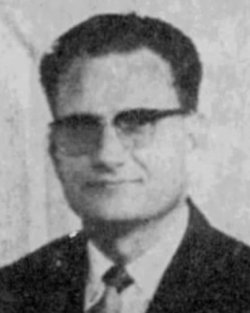
Wilbern Elias Best (1919-2007) was a preacher and writer of Gospel material. He wrote 25 books and pamphlets comprised of sermons he preached to his congregation. These books were distributed in English and Spanish around the world from 1970 to 2018 at no cost via the W.E. Best Book Missionary Trust.

Comments

0 / 2000 characters
Comments are moderated before appearing.

Be the first to comment!

Joshua

Joshua

Shall we play a game? Ask me about articles, sermons, or theology from our library. I can also help you navigate the site.