Bootstrap
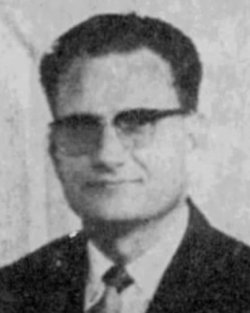
W.E. Best

The Subject of Revelation

Galatians 1:10-12
W.E. Best December, 4 1985 Audio
0 Comments
Best on Hermeneutics

Sermon Transcript

Auto-generated transcript • May contain errors

100%
going to do for the next few
Wednesday evenings. Since there is so much on the
subject of interpretation, and since we have been dealing with
revelation, inspiration, illumination, and interpretation, I want to
spend more time on each one of those because we've given about
all we'll be giving on those subjects in relation to our series,
brief series, in connection with the interpretation of the kingdom.
But I'd like to discuss with you tonight revelation, go into
that a little deeper. And then the Lord willing, we'll
look at inspiration, then illumination, and finally interpretation, giving
additional information on those four subjects that we have only
mentioned briefly. in connection with our study
on interpretation. I'd like for us to read verses
10 through 12 of Galatians chapter 1. I'm not going to read the verses
that precede. I'm assuming that you are well
acquainted with what has gone on before in the first chapter
of Galatians. Last Wednesday night, we made
reference to verses 6 through 9. Now tonight, let's begin with
verse 10. For do I now persuade men, our
God? Or do I seek to please men? For if I yet please men, I should
not be the servant of Christ. But I certify you, of course
that means to make known, brethren, that the gospel which was preached
of me is not after man. For I neither received it of
man, neither was I taught it, but by the revelation of Jesus
Christ. When he stated in verse 10, for
do I now persuade men Persuade would mean to win over, to win
over men, or God, or do I seek to please men? The message preached by Paul
did not come to him by instruction from others or by human tradition. He received it according to verse
12 by divine revelation. The Greek word for received is
a compound verb, paralobano, and it means to receive as a
matter of divine instruction. It is used, in fact this compound
verb is used in the 11th chapter of 1 Corinthians in verse 23.
It is used again by Paul, in the 15th chapter of 1 Corinthians
and verse 3. This same verb is used when the
apostle spoke of the reception of the message of truth by those
who heard him preach. 1 Thessalonians 2 verse 13 and
2 Thessalonians chapter 3 and verse 6. But with one important
difference. Now I'd like for us to Note that
difference. I said the same verb is used
with reference to those who heard Paul preach and received the
message as he preached it, but with one main difference. Paul
received the message by revelation, but his hearers received it by
transmission and illumination. I thought this was rather interesting
in the study of Revelation. Revelation seems to be ascribed
to the Son of God in consistency with his character
as the divine Logos, the one who declared the Father,
John chapter 1 and verse 18, and also in connection with the
Father's will In 1 Corinthians 11, 23, Revelation
1, verse 1, and Revelation 5, and verse 9. Where Revelation
seems to be ascribed to the Son of God, inspiration seems to
be connected with the Holy Spirit. See, God breathed. And I think
this is an interesting study within itself. We dealt with
this to a great extent in our study of 2 Peter chapter 1 and
verse 21 a week ago this last Sunday evening. Now there is
one verse that I have found that seems to contradict this, and
I'd like for us to look at that verse. Luke chapter 2 and verse
26. Let's see if we can find out
the true meaning in the light of what I've just said, having
said that Revelation seems to be ascribed to the Son of God,
an inspiration connected with the Holy Spirit. But in Luke
2.26, here's what it says, and it was revealed unto him by the
Holy Ghost that he should not see death before he had seen
the Lord's Christ. Notice this, the Spirit proceeds
from the Son, as we know. He not only proceeds from the
Father, but also from the Son. And without the Spirit opening
anyone's eyes, there can be no outward communication. Thus,
illumination is the opening of the understanding. And the Greek word is nous, N-O-U-S,
which means mind, thought, reason, or discernment. This teaches
us that divine truth given by revelation is received through
ordinary processes or processes of the intellect. And the proof
of this is found in Luke 24 and verse 45 when the Lord Jesus
opened the understanding of the two men on the road to Emmaus.
So I think it's quite interesting to notice that revelation seems
to be ascribed to the Son and inspiration connected with the
Holy Spirit. Divine revelation, as we've already
stated, is the discovery of truth. It occupies a higher region than
that which is physical. Human nature, we know, is below
revelation. Great discoveries may be made
from preceding ages of thought and research. For example, let's
illustrate it. One mind may develop an idea,
but it is the fruit of years of study and development. On
the other hand, revelation is the discovery of something apart
from thought and research. You see the difference. It calls
the wisdom of this world foolishness and introduces a new starting
point around which it gathers what is valuable to the soul
of man. It is called the wisdom of God.
The word revelation in Galatians 1 and verse 12, which we're studying,
is a noun. It's apocalypsis. And it means a disclosure or
a revelation. We know that the verb form is
apocalyptic, which means to uncover or to reveal, or to be disclosed,
or also to be distinctly declared. And it's also used in a sense
to be set forth, or to be manifested, or to appear. The word is used
several ways in the scriptures, and it would take a long time
to look at the various verses showing the different ways in
which the verb form, apocalypto, is used. Now let's go back to
verse 11 of chapter 1. We're talking about Paul's revelation.
Paul's message did not originate with man. He said, the gospel
which was preached of me is not after man, not after man. Human schemes of salvation are
not only imperfect in theory, but they are worthless in practice.
There are many human schemes of salvation being propagated
today, but they are not only vain But of course, anyone who
seeks to follow such teaching, it is, of course, heretical. But then when we go a little
further, we know that the essential difference between the gospel
of divine revelation and that of human invention,
and what is the main difference? Here it is, in simple words. It's the difference between a
sovereign God choosing the sinner and a depraved sinner choosing
God. That's the difference between
the gospel of divine revelation and the gospel of human invention.
One is the sovereign God choosing the sinner and the other is the
sinner choosing God. A favorite verse of mine from
a standpoint of election in the Old Testament is the Psalms 65,
65th division of the Psalms in verse 4. I'd like to read this
verse, a part of it especially, from the New American Standard
Bible. Blessed is the man whom thou
choosest, and causest to approach unto thee. The latter part, how
blessed is the one, I'm reading now from the New American Standard
Bible, how blessed is the one whom thou dost choose and bring
near to thee. We know that Abraham did not
choose to become Abram, in other words, didn't choose to become
Abraham, and Saul did not choose to become Paul the apostle. They
were both chosen by God, so Abram was chosen to become Abraham,
and Saul of Tarsus was chosen to become Paul the Apostle. Proof of this is found, of course,
in Acts 9.15, concerning Saul of Tarsus, and the Christian,
Ephesians 1 and verse 4. God is not waiting for some depraved
sinner. to make up his mind whether or
not to choose for or against God. We find in Acts 13, 48,
those who have been ordained to eternal life believe the gospel
of divine revelation rather than the gospel of human invention. Just that simple. Then coming
to verse 12, here's where we'll spend most of our time tonight.
When Paul said, I neither received it of man, neither was I taught
it, of course, it is italicide, neither was I taught it, but
by the revelation of Jesus Christ. Let's look at three things in
verse 12. Number one, Paul's message was
not communicated by men. I neither received it of man, The message was not transmitted
to the apostle by men. Now this has been a problem to
some for the simple reason that the historical facts to which
Paul had been subjected are to be taken into consideration. Were not Christ's birth, death,
burial, and resurrection the foundational facts of the gospel?
Yes, but Saul of Tarsus did not know their spiritual significance until he was struck down by the
light that shone from heaven on the road to Damascus as he
journeyed near that city. He failed to see any of these
historical facts in their true perspective. Therefore, he had
to receive this message from God himself. Even though he sat
at the feet of Gamaliel, he was not taught the gospel by Gamaliel. And so he did not receive this
message which he gave from man. What did he understand about
the hypothetical union until the Lord did something for him? Was the death of Jesus that of
a victim or the victor? Did he really rise from the dead,
or was his resurrection the imagination of some emotionally disturbed
person? So Paul received his message by divine revelation. And here we have the noun form,
apocalypsis. Saul of Tarsus was blinded by
light from heaven, Acts 9 verse 3. Here's the revelation. The
heavenly light blinded him to all earthly things, thus enabling
him to see the truth concerning Jesus Christ and all of the historical
things relating thereto from a divine perspective. In the
light of heaven, saw for the first time the light of the world. He never had seen the light of
the world before, and I'm talking about John 8, 12, Jesus Christ
when He said, I am the light of the world. There is a verse of Scripture
in the Psalms that we all ought to know by memory. It is 36, verse 9. It's been a favorite of mine
for many, many years. For with thee, the psalmist said,
is the fountain of life. And here's the part that's exceptionally
full of biblical doctrine. In thy light shall we see light. It takes light to see light.
We'll illustrate that in a moment. In other words, God alone can
reveal God. God alone can reveal himself
to man. Man cannot reveal God to man.
Only God can reveal God to man in a true salvation experience. So light is not only the vehicle
by which man sees, but it is that which is born by the vehicle. When you put those two together,
you really have something. So it is both a revelation and
it's channel. And that's what the psalmist
meant when he said, in thy light shall we see light. This twofold property is true
with the revelation of God. God has revealed himself by means
of the prophets, Hebrews 1.1. But this revelation was incomplete
as far as individual salvation is concerned. He has revealed
Himself through the prophets, but then He has to reveal Himself
to your heart and to mine in a genuine experience. So in thy light shall we see
light. The Son of God is the revealer
of the Father, John 1.18, and the Holy Spirit
is the revealer of the Son. So you have the Son revealing
the Father and the Spirit revealing the Son. It's all of God. We see historical facts in the
light of divine scripture. But we see the spiritual significance
of those facts only in the light of the Spirit of regeneration. Thus God is not only the light
of life, But he is the light by which one beholds the true
light. And that puts it together. Going a little further concerning
Paul, who made the statement, For I neither received it of
man. Saul's experience near Damascus is not a model for all the elect
of God. I said it's not a model. And
yet there are many who take it as a model. There are some things
about his experience that were extraordinary. And you and I
do not have those extraordinary experiences that were experienced
by the Apostle. Let's look first of all. First,
Saul was struck to the ground by a light from heaven. Were
you stricken to the ground by some light from heaven? I'm afraid
that some teaching and preaching today will leave the impression
with people who hear that they've got to wait until they have been
struck down by a light from heaven before they can have any assurance
of salvation. This was something extraordinary
in the life of the apostle. He was an extraordinary servant. So he was struck down. It has
been suggested that this light might have been the Shekinah
glory, good suggestion, in which Jesus Christ clothed Himself. Nothing wrong with a suggestion.
Secondly, Jesus Christ spoke audibly to the persecutor. Now,
did the Lord speak audibly to you when you were made to see
the Lord Jesus Christ by the light of His Word, by the illumination
of the Holy Spirit? He didn't speak to you audibly.
You were not stricken to the ground as Saul was, and you did
not hear a voice audibly from heaven. And this voice that came audibly
from heaven said, Saul, Saul, why persecutest thou me? Two
examples of the Lord's use of such repetitions for the purpose
of fixing attention are Martha, Martha. Simon, Simon. You see, those denote emphasis. There were both light and words
in Saul's confrontation with grace. Light and words, audible
words. And if you want to call it the
Shekinah glory, that's okay. Although there is light in our
confrontation with grace, there are no audible words, as in the
case of Saul of Tarsus. In fact, the light that we had
could not be classified as the Shekinah glory of God. The effect is the same, but the
manner is different. It is true that the new birth
into God's family is a miraculous conception. but the manner of
its accomplishment is not extraordinary as in the case of Saul of Tarsus."
I don't mean that it's not miraculous, but I said not in the sense of
Saul of Tarsus. Notice the next statement he
makes. Paul's message was not explained to him by man. He said,
neither was I taught it. Neither was I taught it. He learned
it, neither from his parents, nor Gamaliel at whose feet he
sat. Furthermore, he did not get it
from the other apostles. That too is interesting. Proof
of that is found really in the sixth verse of the second chapter. Notice the sixth verse. But of
these who seem to be somewhat You know, he had to rebuke Peter
to his face, and that is recorded in the second chapter. We'll
not get into that, but notice the sixth verse. But of these
who seemed to be somewhat, he was talking about the apostles,
whatsoever they were, it maketh no matter to me. For they who seemed to be somewhat
in conference added nothing to me. Added nothing to me. So that's interesting to observe.
Paul was not indebted to the other apostles. He wished to show that his apostleship
was independent of the twelve apostles. He was not one of the
twelve. And it derived no authority from
Jerusalem. In other words, since it didn't
come from the apostles, it was not by the authority of Jerusalem.
As so many today might talk about the authority of Rome, or the
authority of Nashville, or the authority of some other place,
Paul's message didn't come by the authority of Jerusalem. It
came from the Lord Himself. Their rank or standing did not
affect Paul's authority as an apostle. He was one born out
of due season. as we find in 1 Corinthians 15,
and that for a purpose. He was God's messenger primarily
to the Gentiles. That doesn't mean that he did
not preach to the Jews, but his message was primarily for the
benefit of the Gentiles. Peter's ministry was primarily
to the Jews. He was not inferior to the Twelve, because he had received his message
directly from the Lord Jesus himself. Paul and the other apostles
preached what they had revealed to them. Hence, there cannot
be, in the true sense, any successors to the apostles. I don't know
how many of you had time to read the National Geographic magazine. I read all I could take. of the
one that was handed me, son, and then I just quit. The pictures
are tremendous. If you want to see what the Basilica
looks like and all the other things of St. Peter's, well,
that in quotation marks, St. Peter's Square, you need to look
at the December issue of the National Geographic magazine.
But I'll tell you something else. No honest and sincere person
can read the December issue of National Geographic
magazine and believe that Catholicism is a true religion He can't do
it. There is enough in there to condemn
anybody and it's for the public to view The fellow who wrote the article
tells about being guided down into all those places where they
have buried different Popes and I think there have been a total
of a hundred and 164, I believe. I think my memory is correct. 164 Popes going back to Peter. And they believe, of course,
in the succession. But if you haven't read it, it might be
well if there's... Can you buy the National Geographic
magazine off of the shelf? It might be well to get a copy
and a few copies and maybe you read it and pass it around. It'll
give you an eye-opener from a different perspective rather than a religious
perspective of the Roman Catholic Church. And the political machinery
of the Roman Catholic, well, I can't call it a church. I'd
have to call it a church in the sense of the word ecclesia in
the 19th chapter of the Acts of the Apostles, and I'll let
you figure out what that's talking about. Not talking about the
called out by grace. But one time the word ecclesia
is used not in a good sense. So I have to use it in that sense.
But it is an interesting subject. So there are no successors to
the apostles, period. Then notice next, Paul's message
was by the revelation of Jesus Christ. If there is no revelation
of truth, there can be neither hope nor assurance. If there is no hope or assurance,
we are at sea without a star or compass. But thank God we do have a revelation
of divine truth. No new revelation is needed today. We have in Jude verse 3, the
truth has been once delivered to the saints. Once delivered.
I like that. Let's look at the word once for
a moment. Once delivered. I'm talking about in the light
of Jude verse 3. There are three important things
about the objective revelation of God's mind to man. First, the faith was given. Now this is all based on Jude
3. The faith was given. Secondly,
it is once given. R, it was once given. Once given. It is not only given, but it
is given once for all. once for all. Or better still,
once for ever. God speaks and it is done. God
once gave the law. Talking about the law of Moses. And God once gave Himself for
the elect. And God once gave the revelation
of truth concerning the mind of God. So we have the once given
revelation, the once giving of the Son, and the once giving,
of course, of the mind of God to His people. Unlike man, there
is no variableness with God, neither shadow of turning. Man
changes like the moon and alters like a chameleon. God, on the
other hand, is constant. Thirdly, this once-given faith,
looking at Jude 3 again, is given to the saints. Now, these are
three tremendous statements. First, faith was given. And faith
here is not talking about the faith by which we accept or embrace
the objective truth of God. This is talking about the faith
or the system of truth once delivered to the saints. What is set forth here in Jude
verse 3 is the same thing that Paul talks about in Philippians
1 and 27, striving together for the faith of the gospel. That's
the system of truth. We don't strive together for
personal faith that is given us by which the faculty by which
we embrace the Word of God of the Lord Jesus Christ. So this
faith or this system of truth has been once given, or has been
given. Secondly, it has been once given
or given once forever. And thirdly, it is given to the
saints. To whom is the faith given? To
saints. The Word is not committed to
apostates. The Word is not committed to reprobates. The Word is given
to saints. That's what it says. So we learn from this that revelation
is not given either to hogs or dogs. I'm using biblical terms. Thus pearls are not to be cast
to hogs. Give not that which is holy unto
the dogs, Matthew 7, 6. Neither cast ye your pearls before
swine, lest they trample them under their feet and turn again
and rend you. Holy things belong where saints
assemble. Spiritual dogs and swine need
to hear only one message, and that's repent or perish. That's
the only message to give either to a dog or to a swine or to
a hawk. Then notice next, whether one
speaks from truth received by direct revelation or by transmission,
he cannot water it down. to please men without stabbing
the very heart of truth itself. Notice what he says when he begins
here. For do I now persuade, do I seek to win over men? Verse 10. Or God, or do I seek
to please men? For if I please men, I should
not be the servant of Christ. I believe there are a lot of
people today in churches, many churches are filled with people
who are men pleasers. men-pleasers. A lot of fellows
behind the pulpits today who are men-pleasers. I'm going to
give you a classic example of that in just a moment from church
history. So Paul said, For do I now persuade
men of God, or do I seek to please men? For if I yet please men,
I should not be the servant of Christ. If the truth is watered
down to please men, It will be indistinguishable from the principles
of the world. In other words, you can't tell
any difference between that which has been watered down and the
principles of the world, yes, even the religious world. People whose lives are incorrect
are not to be made comfortable in the presence of truth. I read a statement not long ago.
Someone said he thought a person should not go to church to be
made uncomfortable. I wonder if there's anyone in
this church family who feels like that. If so, I tell you
what, you'll have to put cotton in your ears. I'm made uncomfortable
every day I sit in my study. And no person can sit under the
mind of God without feeling discomfort. And the reason is because we
sin daily. There's always something that
condemns us. We're condemned constantly. The
very idea of someone saying that a person shouldn't go to church
and feel uncomfortable for having gone. Well, let me give you an
illustration of this. There's a man by the name of
Dodds, D-O-D-D-S. By the way, realized millennialism
began with this man more than a hundred years ago. Dr. Dodds was known as a person
who wanted to please everybody regardless of his doctrinal belief. The story is told, and this is
a true story. He was speaking in England in a small town one
Sunday, and there were only two churches. One was an Arminian
and the other was a Calvinistic. And so he prepared two messages.
He was to speak at one in the morning and at the other in the
afternoon. And in a small town, the people
would go, the Arminians would go over to the Calvinistic church,
many of them would, and then in the afternoon, many of the
Calvinistic people would go over to the Arminian to hear the preacher
preach. So he prepared two messages and
he had them all folded up, typed out or written out or whatever,
had them in his coat pocket. So when he got up to speak to
the first in the morning service, the Calvinistic group, he pulled
out and he didn't notice the wrong outline. And he had been
going for some several minutes and he noticed as he got a little
further into his message that this was the wrong outline for
the wrong people. But he'd gone so far he couldn't
stop. I really laughed when I read this. This is true account. So
he continued and before he got through, of course, he made the
Calvinists mad because he had been giving to them an Arminian
lesson. And so what anything left for
him to do then? He only had the two with him.
And so he knew that many who were in that service would go
over to the other church building that afternoon to hear him speak
to the second group. So then he had to pull out the
other one and give the other in the other church. So here
he was, he was preaching an Arminian message in a Calvinistic church
and preaching a Calvinistic message in an Arminian church building. And he made all of them mad. Rightly so. I say rightly so. You know, I would rather make
people mad than to make God mad. It doesn't bother me too much
to make people mad if I'm preaching the truth. I don't like to see
people get angry. But I'd rather for people to
be angry at me than for the Lord to be angry. Now what do you
think Paul meant? For do I now seek to win over
men? Someone said to me just a few
days ago, He said, Brother Best, you're
talking about the men up at Moody, and they have received your books
and giving them out to the students. Didn't Moody one time preach
for Charles Haddon Spurgeon? I said, he surely did. He even
held a meeting. Well, he said, what about that? Well, that doesn't surprise me
a great deal. I said, if you read all of Spurgeon's
works, and I've read many of his messages, in fact, I almost
stopped reading them years ago. One Sunday, his message would
be very strong, it seemed like. Most of it would be dealing with
great biblical truths concerning free grace. But before you get
through, He'd kind of have a little Arminian wang to it. And then maybe the very next
week, his message would be very strong in the other direction.
I said, it's really no surprise to me. Now, I want to ask you a question.
How could a person who really believes in free grace ask a
person who believes in free will to hold a meeting in his church? There are a lot of things that
people need to read and study and don't just become so enamored
with a person's name that is blazing across so many works
today. I have tried to attribute many
of his Arminian messages. And by the way, the first volume
that I got by him is back here in the library in case you want
to read some of it. It's called the Memorial Library. I was so
disappointed as an young preacher back 35 plus years ago. I read a great number of them,
and finally I quit reading them, and so the entire memorial library
is back there. We also have his other. And now
there's some great messages in the other. I understand that
the Metropolitan Tabernacle really has the better messages preached
by him. I've tried to attribute it to
one thing. I said, I've tried to. Maybe
those that kind of bordered on too much on Arminianism. Maybe they were priests in the
early days of his life, before he became a greater student of
the Word. And maybe the others were priests in the later years.
Now you'll have to make up your own mind as to what you believe
about that. But you'll find some very weak, very weak messages,
and you'll find some that are unusually strong. That's a paradox. That is a paradox. So Dr. Dodds really made enemies
out of both the Calvinists and the Armenians in one Sunday by
preaching the wrong message to the wrong people. Paul said,
now read the verses and conclude. For do I now persuade or seek
to win over men? Our God. Or do I seek to please
men? For if I yet please men, I should
not be the servant of Christ. That's plain language. A person
who seeks to please men is not the servant of the Lord. But
I certify you are to make known, brethren, that the gospel which
was preached of me is not after man, for I neither received it
of man, neither was I taught it, here it is, but by the revelation
of Jesus Christ. Paul's message came by direct
revelation from God himself. He was not taught by the apostles. He was not taught by Gamaliel,
at whose feet he sat, but he was taught directly by revelation,
by the light and the voice that came from God. Next Wednesday night, the Lord
willing, we'll go into inspiration a little deeper and what we've
been giving. We've given enough in our series,
but we'll go into that, then discuss illumination, and finally,
some more on interpretation. The Lord willing, this Sunday
morning, we'll speak on preparation for interpretation from James
1. I gave you the verses last Sunday
night, I think, when I was talking. Verses 18 through 25, actually. We'll not be teaching all those
verses, but there are some major things within the context of
those verses we'll be pointing out. Preparation for interpretation,
and then Sunday night, principle. Principle of interpretation.
W.E. Best
About W.E. Best
Wilbern Elias Best (1919-2007) was a preacher and writer of Gospel material. He wrote 25 books and pamphlets comprised of sermons he preached to his congregation. These books were distributed in English and Spanish around the world from 1970 to 2018 at no cost via the W.E. Best Book Missionary Trust.

Comments

0 / 2000 characters
Comments are moderated before appearing.

Be the first to comment!

Joshua

Joshua

Shall we play a game? Ask me about articles, sermons, or theology from our library. I can also help you navigate the site.