Bootstrap
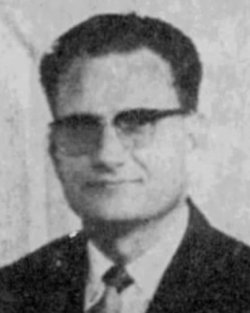
W.E. Best

Combining Spiritual Views with Spiritual Words

1 Corinthians 2:9-16
W.E. Best December, 1 1985 Audio
0 Comments
Best's Corner

Sermon Transcript

Auto-generated transcript • May contain errors

100%
I hope that you had the opportunity
this afternoon to read maybe some material that you have in
your home library on this portion of scripture. Let's read tonight
verses 9 through 16. We read the entire chapter this
morning, but tonight we'll just read verses 9 through 16. I hath
not seen nor ear heard neither have entered into the
heart of man the things which God hath prepared for them that
love him. But God hath revealed them unto
us by his Spirit. For the Spirit searcheth all
things, yea, the deep things of God. For what man knoweth
the things of a man, save the spirit of man which is in him,
even so the things of God knoweth no man but the Spirit of God.
Now we have received not the Spirit of the world, but the
Spirit which is of God, that we might know the things that
are freely given to us of God. Which things also we speak, not
in the words which man's wisdom teacheth, but which the Holy
Ghost teacheth, comparing spiritual things with spiritual." Please
underscore the last part of the 13th verse. Pneumatikos, pneumatika,
synchronatis. Those are the three Greek words
used in that statement. But the natural man receiveth
not the things of the Spirit of God, For their foolishness
unto him, neither can he know them, because they are spiritually
discerned. But he that is spiritual judgeth
all things, yet he himself is judged of no man. For who hath
known the mind of the Lord, that he may instruct him? But we have
the mind of Christ. Brother Pennington, will you
lead us as we pray? We have entitled our lesson tonight,
Combining Spiritual Views with Spiritual Words. I have given
you the clue to the last part of verse 13, but I want a title
that harmonizes with the passage that we are discussing, combining
spiritual views with spiritual words. We will review briefly
the four major points that we discussed with you this morning.
The facts of revelation, inspiration, illumination, and interpretation
have been briefly considered in our previous study today. Now, an interesting observation
is Paul's discussion of spiritual revelation, knowledge, propagation,
and discernment. 1 Corinthians 2, 9 through 16. Notice the four things that I've
mentioned. Spiritual revelation, knowledge, propagation and discernment. According to this passage of
Scripture, a person must be spiritual to arrive at spiritual conclusions. That's very important for us
to understand. No one can ascertain what is
truth by merely looking up texts bearing upon a certain subject. That may take some of you by
surprise. I don't think so, but it may. If you think that most
anyone can just sit down, pick up the Bible, or take a concordance
and correlate verses of Scripture pertaining to a certain subject
and arrive at a spiritual conclusion, you're wrong. You're dead wrong. That possibility would require
only an acquaintance with scripture and good reasoning powers. It takes more than that. I'm
not eliminating reasoning powers, but it takes more than that.
It takes illumination. by the Spirit of God, and we're
going to see this proved beyond a shadow of a doubt within the
context of the passage that we're studying tonight. God has not
provided divine mysteries that can be entered with a human key. It takes more than a human key. to enter into the divine mysteries
that God has committed to his people. Go back to verse 7 for
a moment of 1 Corinthians 2. Paul tells us that God has ordained
his secret wisdom for the glory of his people. Verse 7, but we
speak the wisdom of God in a mystery, even the hidden wisdom which
God ordained before the world unto our glory. That's humbling,
isn't it? The Greek word mustarion translated
mystery in the King James Bible does not refer to a puzzle difficult
to solve but to a secret that can never be known apart from
the Spirit of God. That's how important the subject
is. There must be divine revelation.
This secret is God's hidden wisdom, we're told. Let me illustrate
this. As the Father is a mystery revealed
to the Son, and the Son is a mystery revealed only to God-given faith,
Matthew 11, 25-27. The hidden wisdom of God, of
1 Corinthians chapter 2, is revealed to His own by the Holy Spirit. Paul spoke of the hidden wisdom
ordained. Look at the word ordained. Ordained
before the ages. That's a plural word and really
should be translated ages. Before the ages for our glory. Let's look at the word ordained
for a moment. This is a word that a lot of folk don't like.
Like all who have been ordained to eternal life will believe. The word ordained is a tremendous
word. The word ordained in this text of scripture is the first
arius active indicative of the Greek verb proarizo, which means
to design definitely beforehand, ordain beforehand, or to predestine. The things God has prepared,
now look at the word prepared. Here we have another First Aries
active indicative, and this time it is of the verb hetoimadzo,
which means to make ready or prepare. So he says, the things
God has prepared, prepared for the ones loving, and the word
loving is a present active participle of agapao, Loving him of verse
9 adds to the truth of verse 7 So don't just read verse 7 without
taking into consideration what Paul says in verse 9 That brings us to verse 10 Spiritual
things are revealed to the elect In the Greek It reads a little
different from what it does in your King James Version. You'll
notice in verse 10, but God hath revealed them unto us by his
Spirit. Now the first words in the Greek
text are, hamen gar, for to us. To translate those two words,
for to us, comes first in the Greek text of verse 10. I'm calling
attention now to the emphatic, emphatic to us, is immediately
followed by God revealed, and God revealed is a first arius
active indicative of the word apokalupto, apokalupto, to reveal
or to make known. And he reveals them to us through
the Spirit. Hence the things God prepared
for his people were revealed first to the apostles. Listen
closely. Then to his people through the
inspiration of the apostles. I'm putting together what we
discussed this morning. And finally, through the illumination
of the Holy Spirit within the believer. That is, the one to
whom God has regenerated. Are these things important? They
are absolutely important. So let me say it again. The things
God prepared for his people, even before the ages, unto our
glory, were first presented or revealed to the apostles, or
the prophets of the Old Testament. In studying 1 Corinthians 2,
we're talking about the apostles. Then through them by inspiration,
and finally to you and to me by illumination. So we have revelation,
we have inspiration, we have illumination. Now you can see
the importance of the things that I gave this morning. We have revelation, which is
the discovery of truth. We have inspiration, which is
the communication of truth. And we have illumination, which
is the understanding of truth. Discovering truth, communication
of truth, and the understanding of that which has been revealed
and communicated. The elect of God know the truth.
because God is pleased to reveal it. Listen to Matthew 16, 17. Christ speaking to Peter said,
Blessed art thou, Simon Barjona, for flesh and blood hath not
revealed it unto thee, but my Father which is in heaven. Jesus
Christ, who was first conceived in the womb of Mary, was also
conceived in a spiritual experience about 30 years later in the mind
of Peter. Christ's conception in the mind
is as necessary to salvation as his conception in the womb
was necessary for the provision of that salvation. They're both
absolutely necessary for salvation. Neither academic training nor
miracles can teach this truth to the elect of God. It takes
more than that. It takes the Spirit of God. This is what Paul is stressing
within the context of 1 Corinthians chapter 2. Revelation of spiritual
things is by the Holy Spirit. Now listen to verse 10. But God
hath revealed them unto us. Them. The antecedent goes back
to verse 9. I have not seen, ear has not
heard, neither have entered into the heart of man the things that
God has prepared for them who love him. For them loving him. The wisdom
of God involves an important element of intellectual understanding. but it must be distinguished
from merely intellectual discoveries. Reason suffices in other matters. However, spiritual matters can
be revealed only, according to this text of Scripture, by the
Holy Spirit of God. Hence, the wisdom of God is far
more than a system of thought attained by mere intellectual
power. It has been said that the senses
cannot discover this wisdom, and I like this, nor can thought
evolve it. It's a profound statement. I
used part of what someone else said and made it my own. Therefore,
the highest wisdom is not man's intellect, but the spirit of
God. I don't care what kind of academic
training a person has, that alone will not suffice. For example, in the days of Christ's
first advent, the spiritual beauty of his person was not beheld
by the masses, even the religious masses. And I'm thinking about
the Pharisees in particular. In Song of Solomon chapter 2
and verse 1, we're told that he was the rose of Sharon and
the lily of the valleys, but few beheld his beauty or smell
his fragrance while he was here walking among the sons of men.
The people of his age esteemed him, according to Isaiah 53 too,
as a root out of a dry ground, having no form nor comeliness,
and they saw no beauty in him that they should desire him. God reveals love to love. Therefore, we love him because
he first loved us. 1 John 4, 19. You notice something else that
Paul says in the 10th verse. The Spirit searcheth all things,
yea, the deep things of God. I've never been able to understand,
I'm not even going to try to understand, why so many church
members do not want to study the deep things of God. It doesn't
make sense to me. It just doesn't make sense. I'm constrained to believe that
people who do not want to study the deep things of God, they
need something they don't have. And my opinion is they need regeneration. I do not believe for one second
that God gives me the desire to search the scriptures, the
things that God has revealed in his word, and he doesn't give
other Christians the same desire. It just doesn't make sense. Peter
says, as newborn babes, we desire the sincere milk of his word
that we might grow thereby. It is natural for a newborn baby
to desire the milk from the mother's breast. And just as it is natural
for a newborn baby to desire its mother's milk, it is the
desire of every born-again person to desire the sincere milk, unadulterated,
unmixed Word of God, in order that he might grow thereby. That's
scripture. And that's my, that's been my
experience. Is it yours? I trust it is. Notice what Paul
says in the last part of verse 10. The Holy Spirit searches. Here we have a present active
indicative of the verb eryenao, which means to search, to investigate,
or to explore. Isn't that a beautiful word?
To explore. Let me illustrate it very simply.
Last Saturday morning, I sat down. I had a thought on my message
for next Sunday morning. I want some things to be practical
as well as doctrinal when it comes to the subject of interpretation.
I don't know why, but a verse of scripture came to my mind
that would be relative to the subject. I turned to that passage,
which I'll not tell you about now, because I'll be preaching
from it the Lord willing next Sunday morning. I began studying. I've studied the passage before.
I'm familiar with the passage. I've even done an in-depth study
of the passage before. But since I was thinking along
the lines of interpretation and preparation for interpretation,
I got my Greek text down and started, and you know what? I
kept exploring and I found a goldmine. I found a goldmine that I hadn't
seen before. And this is what the Apostle
Paul is talking about here. So let's look at this word. Searches. The Holy Spirit searches. We
have a present, active, indicative. And notice it's present. The
Holy Spirit in you and in me will enable us to explore the
book. You know, there is a man who
has written, he has several books, and the title of all of his books
is Explore the Book. It's a good title. I'm talking
about Sid Lowe Baxter. I'm not asking you to agree with
everything he says, but that is a tremendous title for some
books. Explore the book. So here we
have a present active indicative of the verb eryonao, to search,
to investigate, to explore. And beloved, the more one explores,
it doesn't make any time, it make any difference how many
times you have searched that passage before. There is something
there that you haven't found. And every time you explore it,
there is a new vein of gold. Have you found that to be true?
And I rejoiced. I said, I rejoiced, and I'm still
rejoicing. in what I found, but I don't intend to preach it tonight.
I think I can refrain from that tonight and stay with the subject
that we are discussing. Now, this word is used a number
of times. I'd like to give you a few references where this word
is used. It's used in John 5, 39. Search
the Scriptures, for in them you think you have eternal life,
and there they which testify of me. It's used in Romans 8,
27 in reference to prayer. It's used here in the text which
we are now studying. It's used in 1 Peter 1 and verse
11 when the angels desired to look into the scriptures, the
mysteries of God. You see, the angels couldn't
understand why that Jesus Christ, the eternal Son of God, would
come into the world and take upon himself human nature in
order that he might die for the elect. So even the angels explored,
searched, looked diligently into. That's 1 Peter 1 11. Then notice another word here
in the last part of verse 10. Not only does the Holy Spirit
search, present active indicative, But it says, all things, even
the depths, I'm going to use that expression, the depths.
Here we have the plural word of bathos, which means depth,
fullness, abundance, immensity, immensity, look at that. An extreme degree, deep laid
plans. And there are some uses of this
word, like Matthew 13, 5. Romans 8.39, and beloved, you
should remember that passage. Romans 11.33, you should remember
that one. Here in the text that we're studying,
2 Corinthians 8.2, Ephesians 3.18, knowing the love of God,
get this, that passes, passes knowledge. What a word. The Holy Spirit does not search
with the idea of gaining knowledge because He is the Spirit of Wisdom. This is Paul's way of saying
something to you and me. And what is he saying? He is
saying that the Spirit penetrates into all things, including the
hearts of mankind. Furthermore, he is the instrument
of understanding between God and man. I said he's the instrument
of understanding between God and man. And I'm talking about
spiritual things. So this is true in salvation.
Matthew 16, 17. It is true in understanding the
scriptures here in 1 Corinthians 2, 10 through 16. And it is true
in relation to prayer, Romans 8, 26 and 27. We don't have time
to turn and discuss all of those things. Let me illustrate it. When the telescope directs our
attention to some distant object, it enables us to see what we
could otherwise not have seen. Have you ever looked through
a telescope? It's interesting. You can see things through the
telescope that otherwise you could never have seen. It does not present to the eye
some elusive image or add one feature to what actually exists. Now listen to my point. Listen
to my application. When the Holy Spirit enables
you and me to see something in the Scriptures, if it is the
Holy Spirit that is illuminating us, we see only, only what the
Holy Spirit inspired the apostles to put there, and nothing more
or less. Nothing more or less. He reveals only the mind of God,
which was ordained for our edification. Now look at verse 11. Paul showed
that as the Spirit of man alone knows what takes place within,
the Spirit of God alone knows what is within the Godhead. That's why the Father was revealed
to the Son, and that's why the Son is revealed to you and me
by the Holy Spirit. It takes God to reveal God. God revealed Himself to His Son. And the Son has been revealed
to you and to me by God the Holy Spirit. It takes God to reveal
God. There could not be a truth any
more clear than that. Now here's what Paul says in
the 11th verse. For what man knoweth the things of a man,
save the spirit of man which is in him? Even so the things
of God knoweth no man but the Spirit of God. Furthermore, as man must reveal
what he wants others to know, God the Holy Spirit alone reveals
to the elect what he wants us to know. Men may know the externalities
of things and of others, but they're totally ignorant of things
within human beings. Now, you can tell me some things
about yourself, but I don't really know you. I'm sure there are
some things you won't tell me. And I can tell you some things
about myself, but you don't really know me. You see the point? So the consciousness of a person
is impenetrable. We cannot know the things of
a man except the spirit of man reveal them. So whatever the
visible appearance, true character comes from within. True character
comes from within. Now let's apply that in the last
part of the text. God the Holy Spirit reveals the
truth of God to the elect. Look now at verse 12. Paul said, Now we have received
not the Spirit of the world, but the Spirit which is of God.
Or I would say it like this, rather than the King James way
of saying it, but the Spirit who is of God. that we might
know the things that are freely given to us of God. Notice in this text there are
two spirits. Number one, the spirit of the world. Every unsaved
person is possessed with the spirit of the world. That's the
only spirit he knows anything about. He has to be regenerated
before he can know anything about the spirit of God. So there are two spirits, the
spirit of the world and the spirit of God. The spirit of any man
is that principle which sets it going, keeps it in motion,
and gives it its distinguishing qualities. The spirit of the
world is that principle which gives determination to the character,
to the life of the man of the world. On the other hand, the
Spirit of God is that principle which gives determination of
character to the elect. Hence, the man of the world makes
himself the object of all his actions, but the Spirit of God
makes Jesus Christ the object of the Christian's actions. What
a difference. What a difference. The spirit
of the world is the spirit of falsehood, dissimulation, and
hypocrisy. Conversely, the spirit of God
is the spirit of truth, sincerity, and openness. I like those three statements.
The spirit of God is the spirit of truth, sincerity, and openness. The spirit of the world gives
the knowledge of the things of the world, but the spirit of
God gives knowledge of the things from God. The Christian's knowledge is
personal, scriptural, accompanied with faith, and produces fruit.
Furthermore, notice this, the giver is God, The gifts are things
and the manner is freely. They were given to us. Gratuitously given. The elect receives spiritual
truths not to be hoarded but passed on to others. Now this
gets down to the nitty-gritty of the Christian life. I said
we have to be practical. Where is this found in verse
13, the first part of the text? What did I say? I said the elect
receive spiritual truths, or spiritual things, not to be hoarded,
but passed on to others. Let's look at verse 13. Which
things also we speak not in the words which man's wisdom teacheth,
but which the Holy Ghost teacheth. I'm not going any further right
now. Let me amplify that statement.
Paul said in 2 Timothy 2 and verse 2, and I'm reading from
the New American Standard Bible, Paul speaking to Timothy, his
son and a minister said, and the things you have heard from
me in the presence of many witnesses, these entrust to faithful men. For what purpose? Who will be
able to teach others also. That's why I appreciated what
one of those men said, and that's why I read the letter this morning,
because it applies to what I'm talking about today. Truth is not to be monopolized.
It is not to be hoarded. It is to be passed on by you
and me. You say, well, that's okay for
the preacher. Beloved, that's the responsibility of every Christian,
of every Christian. The teaching of spiritual things
is not in the words devised by human wisdom, we're told. Now
we're looking at the last part of verse 13, and we're going
to spend a little time here. I'm asking you to follow me.
We're going to have to get into the Greek. I hope it won't be
boresome to you. If it is, it'll just have to
be. Comparing spiritual things with spiritual is the King James
Statement. I'm going to give to you at the
very beginning seven different views of this. I said seven different views
of this statement. I'm going to go slow as I'm giving
them. I want you to think it through
as we're giving them and see if you can pick out the one you
believe to be the truth of the statement. The King James Version
is not a good translation at all, I warn you there to begin
with. And you can accuse me, and I'm not worried about you
accusing me, but you can accuse me of whatever you want to accuse
me of, but it's not a good translation and I'll prove it before I get
through. I'm going to start now 1 through
7. Listen closely. The various meanings that have
been given of this statement. Number one, Spiritual words are
adapted to spiritual things. Some of them are going to be
similar, but there'll be a little difference. Number one, again,
spiritual words are adapted to spiritual things. Number two,
spiritual things are adapted to spiritual men. Now we go from
things to things, and we go from things to men. Notice what the
translator has done in this instance. Number three, spiritual things
are interpreted to spiritual men. Spiritual men. So we're going from things to
men again. Number four, Spiritual things
are interpreted by spiritual words. Here we're going from
things to things. And notice what I'm emphasizing,
and I'll show you why I'm doing this in a minute. Number five,
comparing spiritual things with spiritual is satisfactory. It's another view. Number six, comparing is not
suitable here. Comparing is not suitable here. It should be combining spiritual
things, and then in parenthesis, the word spoken, with spiritual
things, in parenthesis again, the truths expressed, and then
the conclusion. You listening? You see some of
the kind of lifting eyebrows and you're attracted by that.
That's good, you're thinking. And then we'll have to come to
a conclusion and why we think that, if that's the correct view. And number seven, in the light
of the context, Paul was explaining that Christian teachers use words
taught by the Spirit. Now did you know there are that
many views of this last statement? I found all of those in five
minutes while I was just browsing around one day. No, you find
these statements over a long period of time by reading a lot
of different works and you make a note of it. After a while you
put them all together and just make a chain of those statements. Now, are you ready to study this
statement with me before we draw our conclusion tonight? And I
think it will be as helpful to you as what we had to say last
week about private interpretation of 2 Peter 1.20. I stated that the Greek text
reads like this. I'll go slow for you. Pneumatic
OS Pneumatic ah Now both of those are adjectives Isn't that strange
you see word order doesn't mean a lot in the Greek and some of
you some of you know You have to be able to interpret it. And
then the last word is soon Crenatus Would you like me to spell these
words for you? I'll spell them in the English
P-n-e-u-m-a-t-i-k-o-i-s for pneumaticus And we'll discuss each one in
just a minute now that's from the adjective pneumaticus It's
an inflect an inflected form now the next adjective in the
inflected form is pneumatica P-n-e-u-m-a-t-i-k-a and we will
give you the inflected form in a few minutes. And then the last
word, suncrenontes, is the participle. And we'll tell you about it,
we'll give the inflected form in a few minutes. That's S-U-G-K-R-I-N-O-N-T-E-S. Suncrenontes. Now it has been
pointed out that each of these words is in dispute. I want you
to know how difficult this statement is. The first word for spiritual
is pneumatikos. And this word can be either masculine
or neuter. Now, you might ask the question,
some of you who haven't studied Greek, how can it be either one?
Well, you can determine that by its ending. And the ending, the same ending,
is used both for neuter and masculine. So it can be either one. Now let's go further and say
what the inflected form is. So it can be either neuter or
masculine. Well, how can you determine which
it is? By the context. And here's where interpretation
comes in. What case is this inflected form in? It is in the instrumental
case, which is the means case. Either with or by. Now let's
look at the second word. That's pneumatikos. Now look at the next. It's another
adjective. Two adjectives rise together
in the Greek text. Pneumatikos. This is neuter. It cannot be masculine. I said it cannot be masculine. Its inflected form will not let
it be masculine. It's only neuter. What case is
it in? It's in the accusative case,
which is the object or limitation case. Now, having said that,
Let's look at these for just a minute before we look at the
participle. So the first word for spiritual
is pneumatikos, which I've already said can be either masculine
or neuter. It is in the instrumental case,
which is the means, with or by case. Now the second word is
pneumatikos, which is in the accusative case, object or limitation,
and it is neuter and can never be masculine. Thus we have declined the two
adjectives coming from pneumatikos. And now what does pneumatikos
mean? The adjective. Here's what it
means. Important to get this. You have to know the meaning
of the words to interpret it properly. It means gifted with
a spiritual mind or spiritually affected. See? Common sense would tell us that.
And if it is neuter, then what would we say? Well, it talks
about things being spiritually affected. Things being spiritually
affected. Not the masculine, but things.
Now let's go a little further. By the way, this is used in the
sense of being affected according to verses 13 and 15. So look
at this within the context. Verses 13 and 15 will prove this. Now let's look at the word comparing.
Here is really the difficult word. I said this is really the
difficult word, according to many who have talked about it. So let's look at it. Let's see
how difficult it is. The word comparing, which is
synchronontes, is present, a present active participle of the verb
synchrino. I'll spell it for you, s-u-g-k-r-i-n-o,
synchrino. The accent is on k-r-i. Now some
say it originally meant to combine, but in later Greek they say it
can mean to compare. Now, beloved, I've done a lot
of searching on this. I'm told my Greek works. So I'm sharing with you what
I found out. Now let's go a little further. And they use 2 Corinthians 10-12
to prove what they have said. Will you turn with me now to
2 Corinthians 10-12? And by the way, this is the only
place, other than the verse that we're studying, where this The
verb is used. So turn to 2 Corinthians 10-12. Let's look at verse 12. Paul
said, For we dare not make ourselves of the number. Now this is interesting. I won't go into this one right
now. Of the number. Or compare. There it is. Here
you have a first arias active infinitive of suncrino. compare ourselves with some that
commend themselves but they measuring themselves by themselves and
I get this and comparing that is the same inflected form of
the verb that you have in 1st Corinthians chapter 2 and verse
13 same inflected form Synchronous which is a present active participle
and Many say it means to combine, to judge, or to decide. Now I'd
like to call attention to another verb used in verse 12 of chapter
10 of Paul's second letter to the Corinthians. For we dare
not make ourselves of the number. I have just given you the verb
synchrino that is used twice. Once it is used as an infinitive,
and then once as a participle. Now, of the number comes from
another verb, and it is not soon-cre-no, but it is ing-cre-no. It's e-n rather than s-u-n. Soon means with. It is a preposition
meaning with. And e-n means in. So both are
compound verbs. But in this instance, of the
number, what does it mean? It means to judge or reckon among,
and here is the best, to place in the same rank. To place in
the same rank. Now let's read the verse. For
we dare not make ourselves of the number. In other words, we're
not going to put ourselves in the same rank. See? In the same
rank. En, not soon with, but en. It's a compound verb made up
of en, crino, rather than soon, crino, with. Now, having said
that, let's go back to 1 Corinthians chapter 2 and verse 13. Let's
continue our discussion. Now, how can we come to any determination
as to the true meaning? of this verb synchrino. I have already told you that
some Greek scholars call attention to its meaning. Some say it originally
meant to combine, but in later Greek it may mean to compare. It may mean. However, some Greek scholars
call attention to its meaning of to interpret. To interpret. And I had to do
a lot of searching. I had to go beyond some works
that I have because I was interested in the subject. I'm talking about
works that I had that I usually use all the time. I had to go
deeper into my library. And I came up with an old Irish
book, English-Irish book. And I won't go into that, but
listen to this now. And it put me to thinking. So some Greek scholars call attention
to its meaning of to interpret because they say in apostolic
days it meant, quote, to judge or to decide. Now, what do you have? I've given
you to combine, to compare, and to the judge. What does it really mean? Since
this verb is used only here and in 2 Corinthians 10 and 12, we
ought to be able to come to some conclusion. We don't have a lot
of places to go to try to find out what this verb means. And
I'm sure that most of you realize that when you take a Greek lexicon
and you have the different shades of meaning of a verb or whatever,
they have gotten these various shades of meaning from the context,
from the places where that particular word is used. Now since we don't have very
many references where this verb is found, can we come to any
conclusion real quick? Let's see if we can. Let's see
if we can. One must observe that the verb
sunquino is a compound verb which is made up of the preposition
sun, S-U-N, which means with or together by association. And the verb quino, and here's
what it means. Quino means to judge, to make
a distinction between, to determine or resolve, to pronounce an opinion
concerning right or wrong, or to distinguish or decide mentally
or judicially. In other words, the shortest
definition of krino means to judge, and to judge with, since we have
the preposition soon. What did I say this morning about
being grammatically correct? in giving an interpretation.
Now let's go a little further. When these two words are combined,
the preposition, soon, and the verb, crino, what do we have? Soon, crino, means to judge one
thing in connection with another, or to combine spiritual ideas
with appropriate expressions. Think it through now. Now let me show you something
that really did put me to thinking. And beloved, you can't make this
kind of a study by just sitting down and casually reading. You
cannot do it. Now let me show you. If the adjective,
you see the first adjective that I gave, pneumaticus, pneumaticus,
If it is masculine plural, I said, if it is masculine plural, Paul
was saying, we are speaking spiritual things to spiritual men. See, one of them is neuter, and
one of them is, if it is masculine, then Paul was speaking spiritual
things to spiritual men. I said, if pneumaticus is masculine. Paul would be saying, we're speaking
spiritual things to spiritual men. Now I want to show you something
interesting about that interpretation. The Levite, if that is true,
it will harmonize with the 14th verse. I want to show you something. Look at verse 14. But the natural
man receiveth not the things of the Spirit of God. For their
foolishness unto him, neither can he know them, because they
are spiritually discerning. If the first adjective is masculine,
Paul was saying we are speaking spiritual things, neuter, pneumatica,
to spiritual men if it's masculine. And that would harmonize with
verse 14. However, if pneumaticus is neuter, it
harmonizes with verse 13. Now look at verse 13, Paul said,
Which things also we speak, not in the words which man's wisdom
teacheth, but which the Holy Spirit teacheth. What? Combining, combining, and I think
that's a better translation, spiritual ideas with spiritual
expressions. Now this is a matter of interpretation.
It can be either one that I said. It can be either one because
pneumaticus can be either masculine or neuter. Now my question is
this. Is it referring to verse 14 what
follows? Or does it refer to the immediate
context of verse 13? Here's where interpretation comes
in. Now I'd like you to read with
me verses 13 and 14. And after having read these two
verses together, what do you think? Sure you're going to have
to come to some conclusion. Does it refer to verse 13 or
does it refer to verse 14? Which things also we speak, not
in the words which man's wisdom teacheth, but which the Holy
Ghost teacheth. Now let's just leave out that
last part of verse for the time being. Now look at verse 14.
But the natural man receiveth not the things of the Spirit
of God, for they are foolishness unto him, neither can he know
them because they are spiritually discerned. What do you think? Beloved, my
conclusion is that it refers to verse 13, the immediate context. The immediate context. So Paul, I believe, was saying,
we are combining, combining spiritual ideas with spiritual expressions. Now let's look at verse 13. Which
things also we speak, not in the words which man's wisdom
teacheth, but which the Holy Spirit teacheth. Doing what?
Combining, combining spiritual ideas with spiritual expressions. My personal opinion is it is
associated with verse 13, the immediate context of verse 13,
rather than referring to what he's going to say in verse 14.
Verse 14 stands on its own. Now, two extremes must be avoided. You say, well, now, is this important? Well, stay with me for a minute.
Stay with me for a minute. I appreciate what one member
of the church said to me this morning. He said, Brother Best,
there are two things that we are battling today. One is Arminianism, and the other
is a false philosophy of eschatology. Did you know it comes in right
here? I want to show you something. Two extremes must be avoided
in the interpretation of the participle, sunquenatus. I said two extremes must be avoided. Stay with me, please. This is
teaching. This is teaching. Some who interpret
it combining, combining, have a spiritual hermeneutic that
combines spiritual or scripture with scripture into one hermeneutical
identity. I want to say that again. I realize
that I am probably treading some territory that you haven't been
over, so please stay with me and think it through. Take notes,
think it through. I said two extremes must be avoided
in the interpretation of the participle sunquenatus. Some who interpret it combining
have a spiritual hermeneutic that combines scripture with
scripture into one hermeneutical identity. Now, I want to illustrate
that. Thus, there is a notable identification
between Israel and the Church. You see what I'm doing? Physical
circumcision and water baptism. I'm not through yet. The seventh
day or the Sabbath and the first day of the week. And the Passover and the Lord's
Supper. Now the thing you have to be
so careful about, beloved, first of all, the Amillennialists
use this. They combine scripture with scripture
and come up with what? A false hermeneutic by comparing
or combining Israel with the Church. Those who believe in
paedo-baptism, covenant theology, combine circumcision of the Old
Testament with baptism in the New Testament. Now that's one extreme that has
to be avoided. Now let's look at the other. Let's look at the other extreme.
On the other hand, those who interpret the participle to mean
interpreting, interpreting fall into the trap of dividing Scripture
from Scripture, thus carrying diversity too far. There is the era of dispensationalism,
carried too far, to extremes. Now, beloved, that
necessitates an awful lot of study on your part. Do you realize
what we have said tonight? Do you realize how much territory
we have covered? Do you realize what all is involved? If you say, I just don't care
about that kind of study, then you're not interested in handling
the Scriptures correctly. Now listen in closing. Although
truth is a revelation from God, it is spoken by combining spiritual
ideas with spiritual words. It is received only by those
who have spiritual discernment. Now we're looking at discernment.
Verses 14 through 16. We don't have time to go into
each one of these verses, so I'm lumping these three verses
together. The Greek verb translated discerned
in verse 14, and this is interesting, is the same verb translated judgeth
and judged in verse 15. Did you know that? Same verb.
You don't detect that now in reading your King James Version.
Listen to me closely. I said the same that the Greek
verb translated discerned in verse 14, look at it in your
Bible, is the same verb translated judgeth and judged in verse 15. What is the verb? It is anacrino,
anacrino, which means to sift, to examine closely, or to scrutinize. Now, the inflected forms are
present, passive, indicative, in verse 14, because they are
spiritually discerned, Present active indicative in
verse 15a, but he that is spiritual judge it there it is present
active indicative of all things and Lastly present passive indicative
and you can see why in verse 15b Yet he himself is judged
of no man passive there same verb Now Listen closer to this
This will be a tremendous help to every person in this auditorium
tonight to know the real meaning of what we're going to go into
now in verse 14. The natural man has not the spirit of regeneration
by which he can duly appraise the things of the Spirit of God.
And that's why we find Paul saying, the natural man, that means the
unregenerate person. receives not the things of the
Spirit of God, their foolishness unto Him. You and I should not
get angry with our children, or our friends, or our loved
ones. If they don't have a spiritual mind, when we talk about spiritual
things, they don't understand them. They don't have any taste
for them. And you can't cram those things
down them. Now, all of us have been guilty.
of just becoming exasperated at times. When we just expect
our children or people with whom we're talking to receive what
we're saying. But look at the text. And I want
to show you something that really stands out here. Notice what
it says in verse 14, the natural man receiving. Look at the verb
receiving. In other words, he does not welcome. We have here the inflected form
of decami. It is decati, present active
indicative. Notice this, present active indicative
of decami, which means to receive into and retain, welcome or approve
the things of the Spirit of God because He has no affinity for
them. Now let's go a step further.
Notice what else he says in verse 14. He goes on to say, "...the
natural man receiveth not the things of the Spirit of God,
for they are foolishness unto him, neither can he know them." Underscore
the word know. He can't receive them, and he
cannot know them. Now let's look at the word know. He cannot know. Here we have
an ingressive, and I'll explain that for you. We have an ingressive,
second, ariest, active, infinitive of the verb ginosko, to know.
You say, you're boring me to death with all of these terms.
Wait just a minute. If you're bored when I get through,
then I'll rock you. I'll finish rocking you to sleep. Ingressive, it's the Ingressive
Aorist of Gnosko. And what does it mean
when you translate it properly? Here it is. He cannot know them
because he has no ability to understand. But let's go further
than that. The Ingressive use of the Aorist verb means he cannot
even begin to know. Now think that through for a
moment. He cannot know, he cannot even begin to know, apart from the Holy Spirit of
regeneration. Thus we see why the passive use
of the verb And acrino is used with reference to the spiritual
inability of the natural man in verse 14. And although the
spiritual man judges, that's active, all things, he is scrutinized,
and that's passive, by no one. And that's the last
part of verse 15. Now in conclusion, The spiritual
man can form judgment on all things. This ability is not a
question of natural endowment, but the working of the Holy Spirit
within the believer. Therefore, the present active
indicative of Anacrino is used in the statement, but he that
is spiritual judges or discerns all things. That's 15a. There are three stages of the
Spirit's working in the elect. Three stages of the Holy Spirit's
working in the elect. Listen. Number one, we're born
of the Spirit. That's John 3. Number two, we're indwelt with
the Spirit. That's Romans 8 and 9. And oh,
get this one. And thirdly, we overflow by the
Spirit. That's John 7, 37 through 39.
Now let's put it all together. As the Holy Spirit was needed
to quicken us, together with Christ, and we need the Spirit's
indwelling to produce likeness to Christ, we also need the fullness
of the Holy Spirit to be used by Christ. Now, what is the simplicity,
really, of that difficult statement? Pneumatikois, pneumatika, synchronitis. Combining spiritual ideas, I
believe, with spiritual expressions. And I believe, personally, it
applies, since I think pneumatikois is neuter rather than masculine.
And that fits verse 13. However, if you believe it's
masculine, then it would fit verse 14. We won't argue too
much. But beloved, this is a study that I hope that you will continue
to pursue until you get a real clear understanding where you
can express it to others if you have the opportunity. What are
we talking about? Revelation, inspiration, illumination,
But all of these are necessary for interpretation. Now, where are we going next
Lord's Day morning? Shall I tell you? I'll tell you. Hoping that
you have some time to study James 1, verses 18-25. James 1, verses
18-25. Oh, what a passage. Great doctrinal
teaching. But there is much, much in that
portion that is practical. And we need it all. We need it
all. Let's stand and watch the song,
Joe.
W.E. Best
About W.E. Best
Wilbern Elias Best (1919-2007) was a preacher and writer of Gospel material. He wrote 25 books and pamphlets comprised of sermons he preached to his congregation. These books were distributed in English and Spanish around the world from 1970 to 2018 at no cost via the W.E. Best Book Missionary Trust.

Comments

0 / 2000 characters
Comments are moderated before appearing.

Be the first to comment!

Joshua

Joshua

Shall we play a game? Ask me about articles, sermons, or theology from our library. I can also help you navigate the site.