Bootstrap
W.E. Best

An Exhoration to Holy Living

1 Peter 4:1-6
W.E. Best November, 20 1985 Audio
0 Comments
Best's Corner

Sermon Transcript

Auto-generated transcript • May contain errors

100%
Let us read the first six verses
of 1 Peter chapter 4. We'll bring a practical lesson
from this portion of scripture tonight on exhortation. For as much then as Christ has
suffered for us in the flesh, arm yourselves likewise with
the same mind, for he that hath suffered in the flesh hath ceased
from sin, that he no longer should live the rest of his time in
the flesh to the lust of men, but to the will of God. For the
time past of our life may suffice us to have wrought the will of
the Gentiles when we walked in lasciviousness, lust, excess
of wine, revelings, banquetings, and abominable idolatries, wherein
they think it strange that ye run not with them to the same
excess of wrought, speaking evil of you, who shall give account
to him that is ready to judge the quick and the dead. For for
this cause was the gospel preached also to them that are dead, that
they might be judged according to men and the flesh, but live
according to God and the Spirit." There's quite a bit of controversy
over not only verse 1, but especially verse 6. However, there is a
real practical lesson in this that we'd like to look at tonight
on exhortation to holy living. Several exhortations are included
in Peter's epistles, especially the first epistle. Of course,
there are some in the second. I'll give you some exhortations
in the first epistle. First of all, in verse 1 of chapter
4, arm yourselves likewise with the same mind. Secondly, in verse
7, Be ye therefore sober, and watch unto prayer. Verse 9, use
hospitality. In verse 12, verse 11 rather,
speak as the oracles of God. Another exhortation. Number 5,
in verse 12, be prepared for trial. And then in verse 18,
consider the fact that you are saved with difficulty. You can
see there are some real practical lessons in this fourth chapter
of Peter's first epistle. Tonight, however, we will confine
our remarks to the first six verses, especially verses one
and six, but we'll look at all six of them together in our study.
The Apostle Peter continued the subject of suffering. Suffering
really is the key. to this first epistle that he
wrote. So he continued the subject of suffering because of the name
of Jesus Christ in the first part of chapter 4. The added
argument in this passage is that suffering is better than sinning. Suffering is better than sinning.
To be exempted from suffering is desirable. However, to be
saved from sinning, and that means living in sin according
to the context, is far more desirable. As Christians, we cannot expect
in this life, here in this world, to be exempted from suffering.
We're going to suffer to some degree. Some suffer in a greater
degree than others, but all Christians suffer to some degree. And if
we suffer with Him, we know that we shall reign with Him, is the
statement that Paul made in his letter to his son Timothy. Son in the faith, of course.
The great truth of the first six verses of 1 Timothy chapter
4 is that death with Jesus Christ is the effective breach with
sin. I said the effective breach with
sin. There is a vital connection,
I think, between the first six verses of chapter 4 and the 18th
verse of chapter 3. I'd like for you to go back and
read with me the 18th verse of chapter 3 and then I'll give
you some statements from the verse. For Christ also hath once
suffered for sins, the just for the unjust. that he might bring
us to God, being put to death in the flesh, but quickened by
the Spirit. We have, first of all, propitiation. Jesus Christ is our mercy seat.
We have substitution, the just one dying for the unjust. We
also have reconciliation in the 18th verse. He brings us to God,
and then resurrection are also taught, beginning with The last
part of the 18th verse and on through the 22nd. Jesus Christ
is the captain of our salvation. Hebrews 2.10, leading us to glory. The person for whom Christ has done all this is dead, of
course, to sin. Each of us who has passed from
death into life, we know that what Jesus Christ has already
done for us. So the person for whom Christ
has done all this is dead to sin and cannot continue to live
any longer therein, according to Romans chapter 6, verses 1
and 2, and that passage should be very familiar to us due to
our recent study of the first verses of Romans 6 in connection
with the subject of baptism. Our relationship with Jesus Christ
renders us dead to sin. We can say with the Apostle Paul,
I am crucified with Christ, nevertheless I live, yet not I, but Christ
liveth in me, and the life which I now live in the flesh, I live
with the faith of the Son of God who loved me and gave himself
for me. The dead man cannot practice
sinful passions, but the living man who has been raised where
Jesus Christ lives to perform the will of the sovereign God. And we'll now notice some contrasts
in these first six verses. There are three major contrasts
in these verses. The first one is the contrast
between the flesh of Christ and the flesh of the Christian. The
second is the contrast between the will of God and the will
of the Gentiles or the will of the nations. The word that is
translated Gentiles here could just simply be translated nations.
And really that makes more sense. And thirdly, the contrast being
judged as men according to the flesh, but living according to
God in the Spirit. We'll look at these for just
a moment. First, there is the contrast between the flesh of
Christ and the flesh of the Christian. Christ's flesh refers to his
human nature. in which He suffered. And that's
why I ask you to read with me the 18th verse of the 3rd chapter. For as much then as Christ hath
suffered for us in the flesh, this refers of course to His
human nature. God absolutely considered, cannot die, He cannot
suffer in the flesh. He died in His human nature.
He died in His flesh. So the first part of verse 4,
I'm talking about chapter 4 verse 4, means the same as the first
part of chapter 3 verse 18. The Lord Jesus suffered corporally.
He was mistreated. He was crowned with a crown of
thorns. Nails were driven through his hands and his feet, a spear
thrust through his side. He was beaten, abused, spat upon,
etc. He suffered socially. And not
only did he suffer socially, but of course, he suffered vicariously
for the elect, for you and for me. We know that people during
his personal ministry here on the earth called him a gluttonous
person, called him a wine-bibber. So he suffered socially. we can
expect to be accused of all kinds of things because we will not
run with the people of the world to the same excess of riot. And
so we can expect to have awful things said about us. I had one
of the members of the church tell me recently about working
with an individual, and this person, I'll tell you, he must
be some kind of a character. I don't know how long I could
restrain myself, but I appreciate the fact that This person in
our church restrained himself as well as he did. So this person
just used awful language, make terrible accusations, and come
over and just even stick his finger right in his face and
even on his temple. Boy, I tell you, a fellow like
that, I'm afraid he's a little touched in the head. But you
never know about an individual sometime with whom you work.
and you may have some unusual experiences. I appreciate the
fact that he restrained himself, and as a result of it, it has
paid off, makes his supervisor, his boss, think even more of
him. And I'm sure that a person who conducts himself in that
manner, he will be advanced much faster than an individual who
will act like that on a job. You see, I don't come in contact
with those kinds of things. My suffering is from a little
different point of view. I might not be abused, maybe.
I might receive such abuse as, well, and it's not really abuse,
sometimes from within the church. I get so tired of hearing about
millennialism and amillennialism and Arminianism. Well, I want
you to know, I was told that just recently. I want you to
know if you get tired of those things, my recommendation is,
and I may say this Sunday too, along with some other things,
you can stay home and listen to Bob Shuler and never hear
any of them. You know, people don't realize, even Christian
people don't realize what you have to do. You have to lay a
foundation. You have to build upon that foundation. But there
are some people so foolish, they think when they hear a term one
time, they've arrived. Isn't that awful? Well, of course,
that's not really suffering, but sometimes it kind of gets
you stirred up, makes you want to just say, well, what are you
getting out of the service anyway? So you have all kinds of individuals
with whom you have to do. The possession of Christ's Spirit
is the power to deliver the Christian from moral evil, and that's what
we're thinking about in this portion of Scripture. Living
not like the people do in the world people among the nations
of the world But people who have passed from death into life So
the flesh of the believer refers not only to his sinful nature
But to the time of his life on the earth So we're in the flesh
So the word flesh can be used two ways, not only to our sinful
nature, and it's used in that sense. Sarx is used in that sense.
But also, as long as we're here, walking among the sons of men,
living in the flesh, it's also used in that sense. Christ's
suffering was never more than an example to the believer in
one sense. And that's found in 1 Peter chapter
2 and verse 21. For even hereunto were ye called,
because Christ also suffered for us, leaving us an example,
that ye should follow his steps." There is also another sense in
which we should consider Christ's suffering. His substitutional
suffering is not exemplary. His suffering was a ransom for
you and me, for all of the elect, So on the other hand, our sufferings
in the flesh are more than just enduring afflictions. As we suffer, we die to corruption. So our sufferings are for the
mortification of the corruptions in our flesh. That's why we have
in 2 Corinthians 4, 10, and 11, a statement made by Paul, always
a bearing about in the body, the dying of the Lord Jesus,
that the life also of Jesus might be made manifest in our body,
or in our flesh. For we which live are always
delivered unto death for Jesus' sake, that the life also of Jesus
might be made manifest in our mortal flesh. So the death of
Christ's sinless flesh works in the believer the death of
his sinful flesh. There is a continual dying to
the deeds of the body or the deeds of the flesh. Jesus Christ
and His suffering is represented as the Christian's example. Therefore,
you and I as Christians should arm ourselves with the mind of
Christ, and this is the exhortation found in verse 1. Those who share
in the benefits of Christ's death and resurrection recognize that
having the consequences of His death and glorious resurrection
reckoned as ours should cause us to cease from sin. I'm talking about practicing
sin. Now, some believe ceasing from sin, now this is a very
debatable statement here, Some believe, in the last part of
verse 1, ceasing from sin refers to Jesus Christ. Now look at
that in a lot of context and see what you think about it.
We're going to discuss it. Others believe it refers to the
believer. Now what do you believe about it? Let's read the verse
again. For as much then as Christ has
suffered for us in the flesh, arm yourselves likewise with
the same mind. For he that has suffered in the
flesh has ceased from sin. And there are two different views
on this particular statement, the last part of verse 1 of chapter
4. So I said some believe it refers
to Christ, some believe it refers to believers. Now if it refers
to Jesus Christ, we know that He ceased to have anything to
do with sin because He has already accomplished His redemptive work
on Calvary. If it refers to the believer,
because of the substitutionary suffering of Jesus Christ to
his account, then he ceases to live in sin. In sin. So this is the effect of regeneration
and conversion. When the application of the death
of Jesus Christ has been made to the heart of an individual,
He does cease from habitual living in sin. Now the Greek word for
cease here is a perfect passive indicative of the Greek verb
pau, which means to cause to cease, to stop, to leave off,
or to refrain. Now when you see how the word
is used, I don't think there's any problem as to who it refers. Now believers are exhorted, go
back a moment, back up in the verse. Believers are exhorted
to arm themselves. Arm themselves. Now the word
for arm here is an arius middle imperative. So this is an agitation,
this is a command of the verb Hablidzo, which means to arm
or to equip. So arm yourself. Equip yourself. And since it is the middle voice,
and this is important, it is the responsibility of the one
to whom the death of Christ has been applied by the Holy Spirit
in regeneration to arm himself. He is to participate in the arming
himself. Middle voice, see? So he is to
participate. He participates in arming himself. That shows what our responsibility
is. It's in the imperative mood. It is a command. So every believer
is responsible to arm himself, to equip himself. If he fails
to arm himself, then who are you going to blame?
You blame the individual. He has a responsibility. The
command has been given. Christians who fail to grow and
develop have not armed themselves with the Word of God. They fail
to witness for fear they will be overcome by the enemy. Let
me ask you a question. Have you ever been afraid to
witness because you're afraid somebody would put you down?
We've all been there. I can remember immediately after
I was saved, and I came back to Houston making preparation
to go off to school to study for the ministry. And I called
my boss. I was going to be here for a
little while. I'm trying to get things together to go off to
school. And I called my old boss, and when I left in good standing,
and I called him and asked him if he had an opening. He said,
I sure do. Come on back. Your same job. We'll put you
on your same job that you were on before you left. So I went
back and worked for a while. There was a man working there
who was over me was a Pentecostal preacher And I'll tell you every day at
noon when we would sit down with our brown bag to eat our lunch
He would try to chew me up and spit me out because here. I was
a babe in Christ and He had been a preacher in the Assembly of
God movement for some time, so he did know a few verses of Scripture.
He had a little pig trail. It's kind of like the Church
of Christ. He had a pig trail down through the Scriptures. And he
had asked me a question. Well, I couldn't answer him because
I was not equipped. I was not armed. And after a
while, I became almost fearful of saying anything to him for
fear that he would put me down, see? So we've all been there. We've all been there, let's just
confess it. And I'm afraid that there are many who have been
Christians for a long period of time who are fearful of witnessing
to certain persons because they feel like they're not armed,
they're not properly equipped with the mind of Christ. So we
can see the responsibility that we have to be ready always to
give a reason for the hope that is within us. And by the way,
that's found in 1 Peter 3.15. You see how it all ties in together?
We're to be ready. And no one can be ready to give
a reason for the hope that he has unless he is equipped or
armed. So this command, this imperative,
is very important. when you look at it in the light
of not only the immediate context, but the overall context of Peter's
first epistle. Thus the believer who arms himself
with the meaning of Christ's death will not need the discipline
of physical suffering or death to wean him away from sin or
to bring its continuance to an end. The more we arm ourselves
or equip ourselves with the meaning of Christ's death and the meaning
of who we are and what our responsibilities are, those are sufficient. Those who have been regenerated
by the Holy Spirit and converted by embracing the gospel of the
Lord Jesus Christ have the principle of sin residing in them. We all
have that. But the death of Jesus Christ
applied to the believer results in a practical death, a practical
death of the believer unto sin. We're talking about holy living,
not sinless perfection, but Christian holiness. And there is a difference
between the two. Although sin is wounded to death,
we might say, in the believer, it will continue molesting us
just as long as we are in the flesh. If you don't believe that,
let somebody attack you and you're going to have to beat down the
flesh sometimes. Put him where he belongs. So
the flesh will assault the graces that are within us. It's a constant
battle. Now there is a contrast between
the will of God and the will of the Gentiles. We've seen the
contrast between the flesh of Christ and the flesh of the believer.
Now there's a contrast between the will of God and the will
of the Gentiles or the will of the nations. This is in verse
2, that he no longer should live the rest of his time in the flesh
to the lust of men, but to the will of God. The word for live here, let's
look at this word for a moment. The word for live is not the
word that is ordinarily used. It is not zao, but it is bio,
that's B-I-O-O, and the long O for, which is omega. So here
we have an arius active indicative here. As long as we're living
in the flesh, We are not to live our lives to the lust of the
flesh, but to the will of God. Notice living the rest of one's
time in the flesh to the will of God. Beloved, that's an awesome
responsibility. We must live to redeem the time
because the days are evil. No one knows just how long, of
course, that he's going to live. God's will for the believer is
holy, it is just, it's supreme, it is practical, and it is obligatory. Now those are important things.
Holy, first of all, God's will is holy. It is just, it's supreme,
it's practical, and it's obligatory upon every one of us. There was
no will of the flesh contrary to the will of God in Jesus Christ,
so we shouldn't have any problem in knowing to whom this speaks. The will of the Christian, which
originates, of course, in the source of grace, is good, but
as it travels through the channel, it becomes contaminated. I said, as it travels through
the channel, it becomes contaminated. Hence, following the will of
God means, as we've been talking about, self-denial. No, denial
of self. Denial of self. Here it comes
again. When the believer does not want
to crucify the flesh with all of its affections and lusts,
the will begins to rebel. The steep upward path of doing
God's will from the heart is far better than the easy road
of the lust of men. Man doing his own will is described
in the will of the Gentiles here, or the will of the nations. The
will of the nations. It is a course of sensuality.
It is a course of lust. He describes them here. It's
a course of drunkenness. It's a course of carousals. It's
a course of drinking parties. And I'm giving a little different
translation of all these words. And also abominable idolatries. These things are mentioned in
verse 3. Man doing his own will is the history of the world's
ills and woe. Notice it says the time past
of our life. The time past of our life. That's what we were. That's what
we were interested in. That's the things that we were
doing before the grace of God came into our hearts and lives. So the time past of our lives
refers to the pre-salvation days of the Christians to whom Peter
wrote. And when you think of this, your
mind immediately goes to the first three verses of Ephesians
2 when Paul describes what we were before we come to verse
4. But God, but God, who is rich
in mercy for His great love wherewith He loved us. Those days were spent not in
doing the will of God, but executing the will of the Gentiles. And
the Greek word used here for will is boulema, which means
the deliberate purpose of the heathen. The deliberate purpose
of the heathen, that is the nations. Ungodly men think it strange,
you notice this in verse 4, they think it strange when one no
longer runs with them to the same excess of riot, And the
word for riot here comes from the Greek word asateia. And it means the disposition
and life of one abandoned, reckless debauchery, or an overflow of
prodigality. Now that's quite descriptive,
isn't it? Asateia. That's the word for riot. And
what does asateia mean? It means the disposition and
life of one abandoned. Reckless debauchery or an overflow
of prodigality. Think first of all of an overflow
of the prodigal son's lifestyle. So if you want a classical example
of this, think about the prodigal son in Luke chapter 15. There you have it. A Christian cannot live a consistent,
dedicated, separated life without men speaking evil of him. And I'll tell you what, the more
godly one is, the more enemies you're going to have. I'll go
a step further. The more you know about the Scriptures,
and the more you stand for what you know, you're going to find
yourself in a greater degree of isolation. Now, think back in your own lives
for a few minutes. Let's face reality. Let's face
the facts. All of us can remember when we
did not know too much about the scriptures. We were Christians,
and we would do some witnessing, and as we witnessed We could
get along with a lot of people. But the more you grow, the more
you learn, and the more you contend for what you know to be true,
the more enemies you'll have. That makes sense, doesn't it?
Because you cut across the grain of more people. That's a hard pill for a lot
of folk to take. They haven't learned that lesson
as yet. The Lord's separated life caused
people to condemn Him. The dedicated Christian's manner
of life condemns the ungodly. Listen to Hebrews 11, 7. Nor
a righteous man And a preacher of righteousness
condemned the world by building an ark. Every nail he drove into that
ark, or whatever it was he drove into it, anyway he got it together,
and it would hold up. But every effort he put forth
in building the ark was a condemnation to the world of his day. I'm
sure they thought he was a fool. Here he was building that large
boat or whatever. They didn't really know what
to call it, I imagine. Called an ark. They couldn't imagine anything
like that ever having to be used. But you know, when God gets ready
to exercise His judgment, no Power can resist it. You know,
we've had some unusual things in our lifetime to happen in
the last few weeks. That awful earthquake in Mexico. More than 8,000 people killed.
And then in Colombia last week. And all of you have seen that
on the news. And now they're saying 25,000 people. Can you imagine a wall of mud
several feet high rushing down a mountainside and completely
while the people are sleeping just covering a little old city
up of 25 or 30,000 people? Reminds you of Pompeii, doesn't it? Only that
was a wall of fire. This was more mud than lava. And now we have a hurricane this
time of the year out in the Gulf. And I heard on the news, where
some fellow down, I think it was in New Orleans, he said,
somebody's picking on us. Oh, that makes you shiver when
people talk like that. Somebody's picking on us. No sense whatsoever of God's
right to judge. Noah, a righteous man, preacher
of righteousness, condemned the world by building an ark. He condemned the world by his
preparation of the ark as well as by his message of preaching.
And I'll tell you what, we condemn the world by the manner in which
we live as much as by what we say. The unsaved are enemies of the
saved while they live. They're our enemies. And I want
you to know, even our loved ones who are unsaved, they're our
enemies. But you know, we don't want to accept that, but we are,
and they're our enemies. They don't like what we're doing.
They don't like our lifestyle. And if you even try to say anything
to uphold the Lord, they think you're preaching to them. They
think you're trying to instruct them. Now there are reasons why
Christians must not mingle in the sense of associating with the evil of the world. Number
one, love to Christ requires it according to 1 Peter 4 verse
1. Number two, painful remembrance
of the past prompts it. And look at that in verse 2. Verse 3 it is. And thirdly, Christian
sanctification requires it, 2 Timothy 2.19. Nevertheless, the foundation
of God standeth sure, the Lord knoweth them that are His, and
let every one that nameth the name of Christ do what? Depart
from iniquity. So three things, love to Christ
requires it, Painful remembrance of our own past lives prompts
it, and Christian sanctification requires it, we are to depart
from it. And lastly, there is a contrast,
we'll come in now to verse 6 in conclusion. There is a contrast
between being judged according to men in the flesh, and living
according to God in the Spirit. This verse cannot be equated
with 1 Peter 3.19. Here we have a first arius passive
subjunctive of the verb krino, which means to exercise judgment
upon. The dead were judged unworthy
of earth's society. but they were judged by God as
being worthy of heaven's society. There are those who believe Peter
was talking about the gospel being preached to those who were
spiritually dead, and they equate this with the 19th verse of the
3rd chapter. I don't think that that equation
should be made at all. I don't believe that is the teaching
at all. The gospel was preached to those who are now dead. And the word preached comes from
the Greek word, and it's an Arius passive indicative, and notice
this, it's an Arius passive indicative of euangelizo, which means to
evangelize. Now that's in verse 6. They were saved, but they are
now dead. Whereas the Greek for preached,
when Christ preached to the spirits in prison, is an entirely different
Greek word. It is not euangelizo. It is keruso, a different verb. And it's the first area's active
indicative. Notice one of them is passive
indicative and the other is active indicative. So Christ proclaimed
victory and doom to those who were disobedient in the days
of Noah. Whereas those in 1 Peter 4, 6 had the gospel preached
to them. They were saved, but they are
now dead. I'm giving you what I believe
to be the correct interpretation of this. But they live according
to God in the Spirit. Now let's run through that again
because there's so much controversy over the last part of verse 6.
Now, you want to see the difference between the two words used, euangelizo,
in chapter 3, verse 19, which means, I mean, in chapter 4 and
verse 6, which means to evangelize, whereas in chapter 3 and verse
19, the word is keruso, which means to just announce, make
an announcement. So Christ proclaimed victory
and doom to those who were disobedient in the days of Noah. He announced
doom, see? That's in harmony with the context. Whereas those of 1 Peter 4, 6
had the gospel preached to them, they were saved, but they're
now dead, but they live according to God in the Spirit. I'd like
to ask a question. Were those of 1 Peter 4, 6 spiritually
or physically dead? were they spiritually or physically
dead? Some say they were spiritually dead and the gospel is preached
to them. This is true in one sense. The
gospel is preached to people who are spiritually dead. But the word for dead here is
used in the sense of physical death. I believe it is used in
the sense of physical death. They were evangelized while they
were living. But they are now dead And they
were judged to be worthy of heaven society, but unworthy
of earth society by the people of the world. So the heathen
spoke evil of them and persecuted them. Look at this in the light
of the context. In other words, some even became
martyrs for Christ. Peter was dealing with the subject
of suffering. Suffering. Suffering for the cause of Christ.
Now, when were they preached to? That's the question. Here
we have the Arius passive, indicative, and this proves that they were
evangelized in the past. Let's put it all together now.
Arius tense. Passive, you see. Indicative
proves they were evangelized in the past, but now they are
dead, but they are now dead physically. So although they
are dead physically, they are living under God in the Spirit. So we have the Greek word, now
notice two things here. First, we have the Greek word
m-e-n, men, which means on one hand, and then when you read
a little further, on one hand they were judged as men in the
flesh, And then notice, then we have the Greek word Dei, which
means on the other hand, on one hand, and now on the other hand,
these two words. So on the other hand, they lived,
they lived, see, unto God in the Spirit. Thus we have a significant contrast
between the arius tense of judge, which is past, and the present
continuous live in the Spirit. past tense, judged, and living
in the Spirit. So Peter is stressing holy living.
Once we have passed from death into life and arm ourselves with
the meaning of Christ's death as the recipients of the finished
work of Christ and His death, then we cease to practice sin.
and seek to live according to the will of God and not according
to the will of the Gentiles. So if there were some who were
dead physically, they live in the Spirit. But I think the real
emphasis here is on having died to sin and now living by the
power of the Holy Spirit and thus we are to arm ourselves,
arm ourselves, in order that we can live according to God
and to please Him. So the subject is holy living,
not sinless perfection, but holy Christian living. Stand for the benediction.
W.E. Best
About W.E. Best
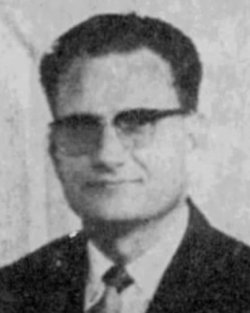
Wilbern Elias Best (1919-2007) was a preacher and writer of Gospel material. He wrote 25 books and pamphlets comprised of sermons he preached to his congregation. These books were distributed in English and Spanish around the world from 1970 to 2018 at no cost via the W.E. Best Book Missionary Trust.

Comments

0 / 2000 characters
Comments are moderated before appearing.

Be the first to comment!

Joshua

Joshua

Shall we play a game? Ask me about articles, sermons, or theology from our library. I can also help you navigate the site.