Bootstrap
W.E. Best

God Is Sovereign in His Will

Ephesians 1:1-11; Romans 12:1-2
W.E. Best August, 22 1982 Audio
0 Comments
Best's Corner

Sermon Transcript

Auto-generated transcript • May contain errors

100%
Open your Bibles to Ephesians
chapter 1, reading verses 1 through 11, observing four times in these
verses where the will of God is mentioned. We're not giving
an exposition of this passage of scripture this morning. Our
text is not going to be found in Ephesians chapter 1. Our text
is going to be found in Romans chapter 12, verse 2. Let us read
Ephesians 1, beginning with verse 1. Paul, an apostle of Jesus Christ,
by the will of God, by the will of God, to the saints
which are at Ephesus, and to the faithful in Christ Jesus. Grace be to you and peace from
God our Father and from the Lord Jesus Christ. Blessed be the
God and Father of our Lord Jesus Christ, who hath blessed us with
all spiritual blessings in heavenly places in Christ. According as
he hath chosen us in him before the foundation of the world,
that we should be holy and without blame before him in love, having
predestinated us unto the adoption of children by Jesus Christ to
himself, number two, according to the good pleasure of his will,
to the praise of the glory of his grace, wherein he hath made
us accepted in the beloved. in whom we have redemption through
his blood, the forgiveness of sins, according to the riches
of his grace, wherein he hath abounded toward us in all wisdom
and prudence. Number three, having made known
unto us the mystery of his will, according to his good pleasure
which he hath purposed in himself. that in the dispensation of the
fullness of times he might gather together in one all things in
Christ, both which are in heaven and which are on earth, even
in him. In whom also we have obtained
an inheritance, being predestinated according to the purpose of him,
number four, who worketh all things after the counsel of his
own will. Four times in these verses, the
will of God, Thelema, is used. We have the genitive form of
Thelema. What does Thelema mean? It means
will, purpose, design, sovereign pleasure. Listen carefully. What
one has determined shall be done, or finally, choice, that is,
purpose or decree. That covers a lot of territory,
does it not? I'm going to be able to tell this morning if
you have a spiritual mind or not. I will observe very carefully
as I'm preaching. You can tell if a person is interested
in spiritual truth or whether he is a religionist. If a person
is a religionist, he doesn't care for a Bible exposition.
He's already made up his mind what he believes, whether he
knows anything about the Word of God or not. and therefore
he is not going to be persuaded by what he hears and the reason
is there is no grace within for him to listen and to pay attention
to what is being said and to weigh the evidence of what is
being said. First of all, notice before we
read from Romans 12, 1 and 2, Paul lived and acted under the
control of a power. which had its origin above himself. Thus he said that he was an apostle
of Jesus Christ by the will, by the choice, by the very purpose
of the sovereign God. Nothing could alter that purpose.
I said nothing could alter that purpose. God's will was above
Paul's will. God's will is above the will
of man. The will of man does not control
the will of God. What is the will of God? The
will of God is that will which is beyond the power of man to
control. That's why I said God is sovereign
in His will. and control God's will, then
you need a dose of salvation. Not a thing in the world wrong
with you, but what a dose of salvation would not cure. Beloved, I'm speaking as though
this were the last time that I'll have an opportunity to speak.
And I want every time that I speak to be in that manner. Now turn with me please to Romans
chapter 12. We'll read verses 1 and 2, but
we're looking only at the last part of verse 2. If I have a
subtitle to our subject this morning, God is sovereign in
His will, it would be approving the will of God. I want to stress
that point this morning. It is your responsibility. not
to prove the will of God. This is not a good translation
personally, I think. And I'll give you the reasons
for it during the study this morning. But to approve the will
of God. There is a difference between
proving or testing the will of God to see if it is good or bad,
and approving the will of God. Now what do you think it means
here in Romans 12 verse 2? Let's read. I beseech you therefore,
brethren, by the mercies of God, that you present your bodies
a living sacrifice, holy, acceptable unto God, which is your reasonable
service. And be not conformed to this
world, but be transformed by the renewing of your mind. That's
your responsibility. You can renew your mind this
morning by listening to an exposition of Scripture. that ye may prove. Now the Greek word for prove
here comes from the Greek verb dokimazo. And dokimazo means to prove,
to test, and so forth. And here we have a present, active,
infinitive of the verb dokimazo, to prove or to test. Now the
verb also means to approve, to approve. Let me ask you the question,
and it's a very important one. Is Paul actually saying to the
Roman believers that by not being conformed to the world, that's
negative, and being transformed, that's positive, that ye may
test to prove whether the will of God is good or bad? I don't
believe that and yet that is what many believe and you can
read commentaries and come to that conclusion as a result of
many commentaries. But there are also others who
disapprove of that viewpoint and they believe it means to
approve by one's redeemed life experientially. Experientially he approves the
will of God. We'll have more to say on that.
in our study this morning. So he says, that ye may prove,
I'd rather say approve, what is that good and acceptable and
perfect will of God. In other words, we in our Christian
experience approve of the fact that God's will is good, it is
well-pleasing, it is perfect. It is perfect. Now for an exposition,
and quite an exposition before we get to our three-point outline.
The will of God is good, well-pleasing, and perfect. Do you approve of
that statement? If you're a Christian, you do.
If you're a religionist, you might have a question mark. God's
will is like a sphere. is like a sphere. A sphere is
a round body whose surface is at all points equidistant from
the center. That's a sphere. Listen to my
analogy. It's not a good analogy, it's
not a perfect analogy, but for the want of one better, I'm going
to use it. The will of God is like a sphere,
and a sphere is a round body whose surface is at all points
equal distance from the center. Now, anyone in school can understand
that language. Thus, God's will is like a giant
globe with two aspects. Beloved, please listen this morning,
this is important. We'll get to a very important practical
question before we get through. I said God's will is like a giant
globe with two aspects. Man does not see or understand
the sphere of God's will. I don't see, furthermore I do
not understand the sphere of God's will. But I can't understand
in a measure the hemisphere aspect of God's will. Do you follow me on that point?
So I see only the hemisphere, that is its revealed aspect. A hemisphere is half of the terrestrial
globe or celestial sphere. I've already stated that this
analogy is inadequate to illustrate the point, but for the want of
a better one, it will at least give us some idea of the difference
between the revealed and unrevealed aspects of God's will. Secret things belong unto the
Lord. Reveal things belong to you and
to me the Bible says in Proverbs 29 29 The secret things belong
unto the Lord our God But those things which are revealed belong
to us and to our children forever That ye may do all the words
of this law I'm not responsible for for the unrevealed aspect
of God's law. But I am responsible for the
revealed aspect of God's law. It is for my profit. It is for
me while I am sojourning here in time. One would be foolish, however,
to say that the revealed aspect of God's will consists of one
half of God's infinite mind. You wouldn't be that foolish to say
that the reveal is one half of the infinite mind of God. However,
it is all that is deemed necessary for the pilgrimage of God's people
on earth. Hence, man is to be concerned
not with the concealed but with the revealed aspect of God's
will. I want you to follow me carefully. Every step of this message is
very important and leads into one that will simply expand on
the one just discussed. Man has always quarreled with
God over secret things. Have you ever been guilty of
it? The one prohibition in the Garden of Eden started man's
quarrel with God. When God said, don't you eat
of the forbidden fruit, that prohibition started man's quarrel
with God. Man associates secrecy with selfishness. Think that one through for a
moment. Man associates secrecy with selfishness. However, nature
itself proves in all divine administrations, secrecy and benevolence coexist. Now, can I prove that? I surely
can. God conceals germination. I said God conceals germination. but he gives the revelation of
a harvest. Spring conceals germination,
but autumn fills the barns with plenty. God conceals conception,
but pregnancy produces the fruit of the womb. Therefore we must
not look at God's mystery and forget His benevolence. Mystery is the seal of the infinite
God. I said mystery is the seal of
the infinite God. Yet His benevolence is revealed
in Providence. Now, I can't discuss providence.
I'm assuming that you understand some of these terms, and if you
do not, do like Juanita and I did when we first became Christians.
Things you don't understand, take notes, and then you can
add to them later. I cannot stop and define every
word. Ignorance of many things does
not indicate that man can be sure of none. Not any one of us. has a great
knowledge about any one particular thing for that matter. But that
does not mean that we cannot be sure about some things. Although
the origin of life is inexplicable, one can know that there is such
a thing as birth and life. A person may have a working knowledge
of a subject without knowing much about it. For example, one
may avail himself of the electric light without being able to explain
its chemistry. I avail myself every day of the
electric light, but I'm not capable of explaining its chemistry. Man therefore may be a bad theologian,
listen carefully, while at the same time he's a Christian. Beloved, if that were not true,
I'll tell you, I was a bad theologian and I'm still a bad theologian.
And don't come to me with the air that you are a better theologian.
You may be, but don't brag about it. One who is, is not going
to brag about it. A person may be a bad theologian,
and yet at the same time be a Christian. I look back at my early Christian
life, and not only my early Christian life, but even just a few days
ago, when there was some bad theology. But that didn't hinder
me in being a Christian. So a believer, is one in spirit
and yet he may ask many questions about biblical problems to which
he has no answers. Isn't that true with every one
of you? However, the wise questioner, listen carefully, expresses humility
of mind rather than stubborn pride of reason. I say I'm not
going to waste any time with a person who just stubbornly
resists revealed truth when I know he is relying only on his human
reason. And he indicates by his stubbornness
that there is no grace. I'm not going to cast pearls
before swine. There is an audacity of speculation
which will acknowledge no mystery But no Christian will profess
a universal acquaintance with the revealed aspect of God's
will. Beloved, I spent a few years
studying this book, but there are a lot of things about this
book that I do not know. There are more things that I
do not know that I know. And the same is true with you. Furthermore, the Christian will
not be ambitious to know the secret aspect of God's will, because he knows the condition
of his nature makes it impossible for him to obtain it. On the
other hand, listen to this, everything not unknown is not to be considered
as belonging to the secret things of God and therefore unfathomable. This would destroy the biblical
teaching of growth in grace and knowledge of Jesus Christ. 2
Peter 3, verse 18. The proper understanding of the
two aspects of God's will eliminates two extremes so prevalent among
professing Christians. Now here's something practical
for us. Here's something for each one of us in this auditorium
this morning. First, there are those who are
too lazy or preoccupied to study the revealed aspect of God's
will. They excuse themselves by trying
to shift the revealed over to the secret aspect of God's will. They say something like this,
quote, if God had wanted us to know more about that, He would
have explained it in clear terms, end of quote. I've heard that
so many times over 40 years until it makes me sick in my stomach. Hence, they speculate on what
they think about the unrevealed aspect. Finally, there are those whose curiosity
carries them too far into the secret aspect of God's will. And they speculate on something
they know absolutely nothing about and they cannot know anything
about it until they step out of time into eternity. Now here's
where we're going to be able to combine some things we have
studied recently even with the subject of God's will. That's
the beauty of the study of Scripture. The more you know, the easier
it is to study in one sense, and the more difficult it is
in another sense. You say, will you explain that? I'll do that
later. The more you know, the more it fits together. The more
it fits together. Every aspect of truth fits with
every other aspect of truth. Therefore, there is a perfect
harmony. when one handles the truth of God's Word properly.
So don't speculate, please, about something that God has never
intended for you and me to know. This side of eternity. Finally, and this is a warning,
we must avoid speaking of God's secret will and God's revealed
will. Did you notice the conjunction
and that I used? That's dualism. Do you know what
I mean by dualism? God doesn't have two wills. One
of them revealed and the other concealed. That's dualism. And that's heresy. God has one
will. He has one mind. He has one purpose. He doesn't have two wills. He
doesn't have two purposes. He doesn't have two minds. There are two aspects of the
one will. Yes, there are two aspects, like
the two aspects of the church. Number one, invisible, and number
two, visible. His will is like a sphere. Get the picture. But while we
are in time, we see and understand only the hemisphere, and that
to some degree. However, when we step out of
time into eternity, we will then see and understand the sphere
of God's will. You can go out when the moon
is full and you look at it, you do not see the sphere of the
moon, you see the hemisphere. You only see half of it. When the astronauts traveled
from earth to the moon and they took those beautiful pictures
that we see of the earth, they did not see the sphere of the
earth, they only saw the hemisphere. I can only see and understand
to some extent the visible, the revealed aspect of God's will. And that's because I'm in time.
But when I step out of time into eternity, then I'll see and understand,
as God reveals to me, the sphere of His will, not just the hemisphere. I have a lot of questions now.
Those questions will be resolved then. Some of the questions can
be resolved now if we're not too lazy to study the revealed
aspect of God's will. God's secret and revealed aspects
of His will, another way to illustrate it, like His essence and evidence. Essence and evidence. are invisible
and visible. Listen to this. God's essence
is invisible. You've never seen God. His essence is invisible. No
man has seen God, saith the scriptures, but his evidence is visible.
The evidence of God is visible even in nature. The evidence
of God is visible in Holy Scripture special revelation. So there's
a difference between the essence of God which is invisible and
the evidence of God which is visible. And the evidence of
God is made manifest not only in natural revelation but also
in special revelation. And furthermore, when one passes
out of death into life, when he is quickened by the Spirit
of God, the evidence of God surely is revealed in a precious way
to his heart and life. Certain secrets to be left to
God are those which lie in the secret aspect of his will. I'd
like to illustrate that. A wise parent often shows his
wisdom by his reservations. I don't think that a parent would
be very wise in telling a child a lot of things before the child
matures enough to be able to handle those things. You know what I mean without
going into detail? So a child must grow and develop,
must mature before the child is able to handle certain things. And the reason we have so many
wanton children today is because they're instructed in things
before they're able to handle them. They get a lot of their
knowledge on the school grounds. They get a lot of the knowledge
they get from the school teachers who are not Christians. They get a lot of such knowledge
from their peers. Yes, they get a lot of such knowledge
from TV. But a wise father will manifest
his wisdom by reserving certain things until the child is able
to handle them. Beloved, think about our Heavenly
Father. Isn't He concerned about you and me? He is revealing to
you and me all that He wants us to know during our pilgrimage
here on earth. All that you and I can handle.
But when we step out of time into eternity, then He's going
to reveal to us that which we can handle because we'll be like
Him for we shall see Him as He is. Does that make sense? Three areas of secrecy and revelation
are of special interest to us in our present study. Here's
my outline. Number one, man's fall. Number two, man's salvation. And number three, saved man's
responsibility. In the fall of man there was
not only the revealed prohibition to eat of the forbidden fruit,
but there was also the secret aspect of God's will that he
should eat. Can you handle that? Now, beloved, please follow me.
I'll repeat it. In the fall of man, there was
not only the revealed prohibition to eat of the forbidden fruit. But there was also the secret
aspect of God's will that he should eat. Can you handle that? Let me explain it. To attempt
to vindicate providence and justify the ways of God to men is no
easy task. It's not even an easy task to
do it with people who have a spiritual mind. Criticism is much easier than
construction. I'd like to illustrate that point.
It has been said that God alone can produce the exquisite texture
and color of a rose. But any wanton child can pick
it to pieces. You and I have seen on television,
it takes months and sometimes years carpenters and brick masons
and steel workers and plumbers and what have you, electricians
and so forth, etc., etc., to build a building. But it takes the demolition crew
just a short period of time to stick a few pieces of dynamite
in it and mash a button and it all comes crumbling down. Yes,
it's easier to criticize than it is to construct. There are many religionists who
spend more time criticizing scripture that they know nothing about
than being constructive and studying to show themselves approved under
God, handling the truths of God's word correctly. Truth always involves more than
what appears on the surface. Hence the idea that God permitted
Adam to fall does not fully explain the fall. There are some today who say
God's will should be divided between His decretive will and
His permissive will. What do you think about that? Even
the Arminian acknowledges that God permitted the fall. But I'd
like to raise a question. not people, and I'm talking about
Arminians now. Why are not Arminians consistent
and admit that God willed to permit the fall? You haven't answered the question
at all just to say that God permitted Adam to fall. That doesn't answer
the question. God had the will to permit the
fall. Or the fall would not have taken
place. Can you handle that one? Let me give you a statement by
Jonathan Edwards. He said, and I quote, God wills to permit
sin. It is evident because he does
permit it. None will say that God himself
does what he does not will to do, end of quote. That's logical
thinking. That's scriptural thinking. No
one can honestly say that God permits sin when it is against
His will to permit it. God does not permit something
that is against His will to permit. God permitted the fall, but God
willed to permit the fall. And there's no way in the world
you can get around it. And I'm not afraid of it. God willing in action, so that
it shall be sinful, is not the same as his willing in action
as sinful. Do you see the difference? Do
you know the difference? Should I repeat that? God's willing
in action, so that it shall be sinful, is not the same as God
willing in action as sinful. If you accepted the latter statement,
you'd be making God the author of sin, and God is not the author
of sin. Man is the author of sin, not God. God-willed actions shall be sinful
for the sake of the good that he shall cause to arise from
the sinfulness thereof. You say, this is too deep for
me. Well, beloved, you don't understand the first principle
of salvation if you don't understand this. And I'm going to show you that's
true. Two indisputable examples of what I've just said are the
brothers of Joseph who sold him and the wicked men who crucified
Jesus Christ. Listen to the scriptures. Turn
with me first of all to Genesis chapter 45, verses 7 and 8. And
God sent me before you to preserve you a posterity in the earth,
and to save your lives by a great deliverance. So now it was not
you that sent me hither, but God." Notice what he said. You didn't
send me, God sent me. You think you did it, God did
it. And he hath sent me a father of Pharaoh, and Lord of all his
house, and a ruler throughout all the land of Egypt. Now do
you want the key verse that explains that? Listen to Genesis 50 and
verse 20. But as for you, ye thought evil
against me, when the brothers of Joseph sold him, Joseph said,
you thought evil against me. But God meant it unto good to
bring to pass as it is this day to save much people alive. Isn't
that wonderful? There'd be no hope for you and
me if this were not true. Now let's go to the New Testament
for the second example. Peter's message on the day of
Pentecost. He said in verses 22 and 23 of Acts chapter 2,
Ye men of Israel, hear these words, Jesus of Nazareth, a man
approved of God among you by miracles and wonders and signs,
which God did by him in the midst of you, as ye yourselves also
know, Him being delivered by the determinate counsel and foreknowledge
of God, ye have taken and by wicked hands have crucified and
slain. But they did it according to
the determinate counsel of God. It was God's will that they do
it. It was God's purpose that they do it. Willing sin and originating sin
are two different things. God did not originate sin, but
He did purpose sin. Sin originated with man, not
with God. Now you're going to have to admit
that we have, first of all, the reveal aspect of God's will when
He prohibited Adam to eat of the forbidden fruit. But there
is the concealed aspect of God's will in that it was His will
that He partake of that fruit. Now if you want to argue with
me, you can do that later. But beloved, there is no argument.
I'll tell you now. Not when you accept Scripture at face value.
When you have the mind of the Lord, there is no argument. Now
let's look at the second point. We have discussed thus far in
the fall of man. Now what about the salvation
of man? In the salvation of man, we also see the revealed aspect
and the unrevealed aspect of God's will. So in man's salvation, the revealed
aspect of God's will is that all men must repent and believe. Acts chapter 17 and verse 30. And Acts chapter 20 and verse
21. But the secret aspect of his will is that he grants repentance
and gives faith to the elect. Acts 11 verse 18 and Titus 1,
1 and 2. All who are ordained to eternal
life believe, and no one will believe except those whom God
ordained to believe. Acts 13, 48. Unregenerate men are unable to
either repent or believe. Some say, quote, for God to command
men who are unable to respond is to only mock them. Such an idea destroys the nature
of the commandment, end of quote. That's a statement by an Arminian. God's commands are in order to
convince men of their weakness and inability to either repent
or believe. It didn't take me long to understand
that when God commanded me to do something, I didn't have the
ability within me to do it. I did not have the ability within
me either to repent or believe. God must grant repentance and
give me faith before I could believe. And that is something the average
religionist fights today. He hates it. The reason he hates
it is because he's unregenerate. I'm going to tell it like it
is. If inability cancels obligation,
Satan would be under no obligation to do right. Such teaching would lift sinners
above the moral law. Think about that for a moment.
Arminians say that a coextensive provision is necessary or the
offer is insincere, end of quote. The fact is that scripture states
that the gospel is to be proclaimed, not offered. The gospel is the
power of God unto salvation. Oh, forget what it says in Romans
1 16, to everyone to believe. Therefore it does not come to
inform man of some new objective state of affairs. It invades
the heart of the regenerated person, thus calling him to faith
and obedience. Does that make sense? You better
believe it does. That's the truth of Holy Scripture.
Finally, and we want to spend quite a bit of time on this one
this morning, because this one is more practical for you as
Christians, of course. And finally, in the life of a
Christian, there is not only the revealed aspect of God's
will, of His responsibility to follow the Lord's teaching, but
there is the secret aspect of God's will that works in Him
to make Him willing to follow. Would you like me to repeat that?
It's rather long, but it is pactful. in the life
of the Christian. I'm talking to all of us now
who are saved. There is not only the revealed aspect of God's
will, of His responsibility to follow the Lord's leading, but
there is the secret aspect of God's will that works in the
Christian, thus making Him willing to follow. That's Philippians
2, 12 and 13. In other words, there is a will
within a will. Think about that for a moment.
There is a will within a will. If you are willing to do the
will of God, you're willing because God's will has become your will. Therefore, there is a will in
your will. In your will, you're selfish.
You have a selfish will. You think about only self, number
one. You're not concerned in the least
about God or anyone else. It's me. It's me. It's selfishness. I'd like for us to look at two
or three scriptures. First of all, it is God's will, the revealed
aspect of His will that you and I as Christians follow Jesus
Christ. Listen to what our Lord said
to Peter After his great conversion experience, and the Lord announced
the beginning of the church, and the foundation of that church,
listen to verse 24 of Matthew chapter 16. Then said Jesus unto his disciples,
If any man will come after me, let him deny himself. That means you deny your will. your will, and take up his cross,
and follow, follow me, and follow me." Now there are many passages
on following Christ, admonitions for God's people or God's sheep
to follow the Lord Jesus, the chief shepherd. We find the same
thing in John chapter 10 verses 4 and 5, the great shepherd chapter. Christ said, I know my sheep.
And they know me, and they follow me in the voice of a stranger.
They will not follow. One cannot deny that Jesus Christ
leads His sheep. Do you believe that Christ leads
His sheep? He's the chief shepherd. He leads His sheep, and we follow
Jesus Christ. Whenever a person claims to be
a Christian and is not willing to follow the plain declaration
of truth, he's not a sheep. I don't care what he professes. I don't care how religious he
is. My sheep hear my voice and they follow me. That's what he
said. I believe it. I know it experientially. So Christ does lead His sheep. We're all familiar with the 23rd
division of the Psalms. Quoted more and probably understood
less than any other passage. Lord is my shepherd, I shall
not want. But what about the 4th verse?
He leadeth me beside the still waters. He leads His sheep. That's the 2nd verse I believe
instead of the 4th. He leads me beside the still
waters. Now comes an important question. We all admit that Christ leads
the sheep. We all admit that. No question
in the mind of any Christian that God leads His people. Yet,
beloved, there are areas in the Christian life for which there
are No do's and don'ts. Now what do you do in a case
like that? How can you know the will of God then? Now this is something that ought
to attract the attention of every one of us. Here is something
that will be a blessing to you if you listen. I'm talking about
as a Christian, it will be a blessing to you. How can you know what
to do? There are principles that we
learn as Christians, and those principles are uppermost in our minds as
a result of our formative years of training, even as babes in Christ. Now,
many people live under a cloud of doubt because they cannot
find in Scripture where it says you must not do this or you must
do that. How do you handle that? You've
got to be able to handle it. Those who follow the Scriptural
admonitions and shun the prohibitions learn the great principles of
Holy Scripture. having learned the principles
of the Christian life, they do not need a ceremonial law to
regulate every act of the Christian life. Now this has been a great blessing
to me. I hope it will be to you. It
will help you to solve a lot of problems that you haven't
been able to cope with before. We need to go back a moment.
I said, having learned the principles of the Christian life, you and
I as Christians do not need a ceremonial mold to regulate every act in
our Christian lives. Do you know why we do not need
a ceremonial mold? to regulate every act, it is
because of the inward principle. And what is the inward principle?
Do you know what it is? I'll give it to you. Turn to
1 Corinthians 10, verse 31. Here's the inward principle. Whatsoever ye do, Paul said,
whatsoever ye do, do all to the glory of God. Now I'm going to
illustrate this in several ways. That's the inward principle.
Whatever the Christian does, he is to do it for the glory
of God. Therefore, the Christian does
not need for scripture to tell him, thou shalt not smoke. Anyone with common sense knows
that smoking is bad for his health and how in the world can a Christian,
I'm making it practical, beloved, light a cigarette or a cigar
and waste that money that is a detriment to his physical health
and say, this is for the glory of God. He knows he's lying through
his stinking teeth. Do you see what I'm talking about?
Can you take it? I don't know that's your problem.
I'm just giving it to you as it is. And I know it's truth
and I'm not backing up, see. I have the authority of Scripture
to back me up. What I'm showing you is that
Christian does not need a ceremonial mold to regulate every act in
his life. Whatever he does, he is to do
it for the glory of God. Let me give you some other examples.
Once in a while someone says, now preacher, there is no scripture
which says thou shall not drink a beer. Show me the individual
who can open a can of beer and say, I'm doing this for the glory
of God. If he does it, he's as blind
as a bat. What about the woman who dresses
as scantily as possible? And if she does, she says, I'm
doing this for the glory of God. We've got a lady down the street
and when she mows the grass, it's not in a bikini, it's in
a screen. And when I said a screen, I mean
a screen. You know what she's doing? She's flaunting it. She's flaunting it, and yeah,
I've got people all around me who profess to be Christians,
members of Baptist churches, and the way they dress and carry
on, I'm sure when they do that, They're saying, I'm doing this
for the glory of God. When you sit down and look at
a pornographic movie, can you consciously say, I'm doing this
for the glory of God? I'm talking about an inward principle,
beloved. What about when the time comes
for you to choose a job? Now there may be several choices. and all of them are alright,
they're honorable, but you as a Christian are to
choose the one that you have more time to glorify the Lord
in your life. So the question is this, why
am I taking this particular job? Is it because my eyes are on
money and making money rather than making a living and glorifying
God? Brother, I'm getting right down
where we all live. I'm getting right down where
we all live. And I'll tell you what, if it's applied, we're
going to see a tremendous difference in this church, and in your life
as a professing Christian. You see, there are many choices
that one can make as a Christian, and they're all good. None of
them are out of the will of God, maybe. But the question is, what
do I put first? What have I got first in my mind?
I can even come to the buying of a home or an automobile or
whatever. Someone buys a home. Am I buying
a house? Do I want one that will show
up all my neighbors and one that will just really lift me up?
Or am I anxious just to have a place to live and take care
of my family and yet at the same time honor the Lord? Am I spending
money excessively that I could be spending to honor the Lord? Do you follow me? You see, such a person has an
inward principle and he is to be guided by that inward principle.
He doesn't have to have a thou shalt not for everything in life. For everything in life. Now this
is going to get down to something real good, so follow me. You see, as Christians, we're
not compelled, compelled by outward do's and don'ts, but we're impelled
to do whatever we do for the glory of God. There's a difference
between compelled and impelled. In developing this, I could see
so many avenues to study. You and I, therefore, beloved,
do not need an outward law to direct every step that we take
in life because we have an inward impulse, an inward impulse. Objective standards have been
translated into subjective desires. Don't ever forget that. I said objective standards I desire to glorify and honor
God in my life. I want to prove to you that Christ
does lead His sheep, but yet He does not tell the sheep that
He leads every blade of grass that it is to eat. Does that help you? He leads
us into green pastures. But He does not say to each sheep,
you eat that blade of grass and you don't eat that blade of grass.
In other words, the Christian comes to the place and there
is an area in his life when he has the liberty, listen to this
carefully, he has the liberty of making choices. I didn't say
license, I said liberty of making choices. But every choice is
in the will of God. But some will honor the Lord
more than others. He doesn't tell me every day
of my life exactly what I'm to do. I can illustrate it even
clearer. Recently this church made a decision.
Brother Bell and his family made a decision. God didn't speak
to Brother Bell and say, you go to Houston. He didn't say to me or he didn't
say to this church, you call Brother Bell. I'm saying there is a liberty,
the Christian has liberty to make choices within the will
of God. But some of those choices honor
God more than others, more than others. You see, those
choices are the result of objective standards. being translated into
subjective desires. What was our desire in calling
Him? What was His desire in coming? What is your desire in life? As a young Christian man thinks
about his future, his profession, what he wants to do, he has a
choice to make. It is honorable, it is the will
of God that he provides for his family. 1 Timothy 5.8. But in the provision that he
makes for his family, he is not to neglect the Lord. Objective standards have been
translated into, what, subjective desires. Now in conclusion, sin, first
of all, is objectively atoned for. Romans 10 verse 4. But the
sin which is crucified for the elect is crucified in the elect
when they are regenerated. The sin that was crucified for
you on the cross of Jesus Christ has been crucified in you in
regeneration. Thus the objective cross becomes
a subjective experience to every regenerated person. And this
is opposite to legalism. I'd like you to turn with me
to Proverbs 3, 5, and 6. I want to point out two things in conclusion. There are marks of wisdom's children. There are marks of Christ's children,
of His sheep. And here are two of them. We
only look at two of them in these two verses. Proverbs 3, verses
5 and 6. Number one, they are dependent. Trust in the Lord with all thine
heart, Solomon said. Unbelief walks on natural crutches. Then he says, lean not unto thine
own understanding. Christians live on another principle. Then secondly, in verse 6, they
are directed. First of all, Christ's sheep
are dependent. Secondly, they're directed. In
all thy ways acknowledge him. That's the key. And he shall
direct thy paths. Here we have both duty and promise. Where there is acknowledgment
of God, there is guidance. All things going well does not necessarily mean that
one is in the will of God. And when all things are not going
well with him, that does not necessarily mean that he's not
in the will of God. Some people think, oh, I know
I'm in the will of God because I have a good job, my family's
well, everything's just going fine. I must be in the very center
of God's will is their expression. They're bragging. When the truth's
known, they're probably not even Christians, many of them. Just
because things are going well with an individual is no indication
that the individual is in the will of God. Just because it
seems that all things are going against him, does not necessarily
mean that he's not in the will of God. Go through the scriptures. God's choices, vessels, all suffered,
had tribulations, trials, when they were in the will of God. But those objective standards
are always translated into subjective desires. If I know my heart, I want to
please God. I want what I do to please God. I want the way I live to please
God. Now in conclusion, look at Paul's
statement in Romans 12 to that ye may prove, be not conformed
to this world, negative, be transformed by the doing of your mind, that's
positive. that ye may prove, I don't like that, that ye may
approve. What is that good and acceptable perfect will of God?
I do not believe that Paul was talking about testing the will
of God to find out if it's good or bad. That will not stand up
in the light of the context. It is true that documadso means
to test, but it also means to approve. And I know of one verse of Scripture
where it cannot be translated in any other way than approved.
In Philippians 1 and verse 10, Paul said that ye may, and it
is translated that way, that ye may approve things that are
excellent, that ye may be sincere and without offense till the
day of Jesus Christ, that ye may approve. Now how do I explain
this? I read some commentaries through
the years. I read the works of men. I'll not call their names. And they say it means to prove,
to prove. One is to find out what God requires
and what He forbids. Others say it means to approve.
I accept the latter. It means to discover by experience,
by experience, in progressive sanctification, what the approved
will of God is. Thus through experience the believer
looks through the cloud, listen to this, the believer looks through
the cloud of self-will to the good, well-pleasing, and perfect
will of God. Now I ask you a question this
morning. Can you this morning look through the cloud of self-will
in your Christian experience and approve that God's will is
good, is well-pleasing, and it is perfect? This is only the introduction
to the will of God. I don't know when I'll continue,
but oh, what a subject. Do you have a little insight
into it? The revealed and unrevealed aspects
of God's will. God's will is like a sphere.
I cannot see or understand the sphere of His will. But I can
see and understand and amaze you the hemisphere of His will. And that which has been revealed
is for my good and God's glory. And God's objective standards
have been translated by grace into subjective desires. Whatever you do, do all. to the glory of God. Let's stand
and sing.
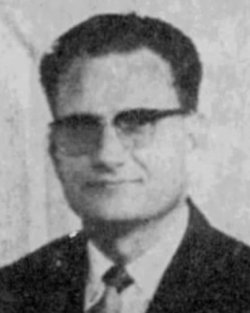
W.E. Best
About W.E. Best
Wilbern Elias Best (1919-2007) was a preacher and writer of Gospel material. He wrote 25 books and pamphlets comprised of sermons he preached to his congregation. These books were distributed in English and Spanish around the world from 1970 to 2018 at no cost via the W.E. Best Book Missionary Trust.

Comments

0 / 2000 characters
Comments are moderated before appearing.

Be the first to comment!

Joshua

Joshua

Shall we play a game? Ask me about articles, sermons, or theology from our library. I can also help you navigate the site.