Bootstrap
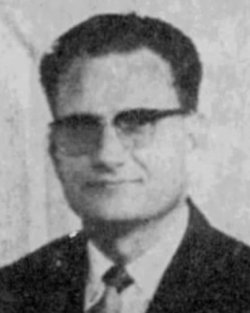
W.E. Best

The Great Tribulation, Part 2

Matthew 24:4-8
W.E. Best May, 9 1982 Audio
0 Comments
Best on Eschatology

Sermon Transcript

Auto-generated transcript • May contain errors

100%
Bibles to Matthew chapter 24. We will read together verses
4 through 8, and then open your Bibles to Revelation chapter
6, and we will read verses 1 through 8. The first half of the Tribulation is our subject for study tonight. And Jesus answered and said unto
them, that is the disciples, take heed that no man deceive
you. For many shall come in my name
saying, I am Christ, and shall deceive many. And ye shall hear
of wars and rumors of wars, see that ye be not troubled, For
all these things must come to pass, but the end is not yet. For nations shall rise against
nation, and kingdom against kingdom, and there shall be famines, and
pestilences, and earthquakes in diverse places. All these
are the beginning of sorrows. I believe that this passage is
parallel to the first four seals that are broken in Revelation
chapter 6 verses 1 through 8. Let us read this passage together. John speaking said, And I saw
when the Lamb opened one of the seals, and I heard as it were
the noise of thunder, one of the four bees saying, come and
see. And I saw, and behold, a white
horse. And he that sat on him had a
bow, and a crown was given unto him, and he went forth conquering
and to conquer. And when he had opened the second
seal, I heard the second bee say, come and see. And there
went out another horse that was red, power was given to him that
sat there on to take peace from the earth and that they should
kill one another and There was given unto him a great sword
and When he had opened the third seal I heard the third be say
come and see and I beheld and lo a black horse and And he that
sat on him had a pair of balances in his hand. And I heard a voice
in the midst of the four bees say, a measure of wheat for a
penny, and three measures of barley for a penny, and see thou
hurt not the oil and the wine. And when he had opened the fourth
seal, I heard the voice of the fourth bee say, come and see. And I looked, and behold, a pale
horse, or an ashen horse, and his name that sat on him was
Death. And Hell, or Hades, is the better
translation here, Hades is the Greek word, followed with him.
And power was given unto them over the fourth part of the earth,
to kill with sword, and with hunger, and with death, and with
the beasts of the earth." Not a very pleasant picture. The
first half of the Tribulation. We're entering in now to the
discussion of a very controversial subject. I've already tried to
acquaint you with what the Amillennialists have to say about this portion
of Scripture, and I am not in agreement at all with what they
have to say. I'll make that clear at the very
beginning. And I hope that I'll be able to give sufficient argument
based on scripture tonight to convince you that the rider of
the white horse in verse 2 cannot refer to Jesus Christ who is
going forth today conquering and to conquer. That is the theory
of the all-millennialist. But I object to it There is no
biblical foundation for it, and I believe that I can convince
you by the authority of God's Word that it is an erroneous
view. At least I hope I can. I'm convinced. And just because I'm convinced
doesn't mean that I have all the truth on the subject. But
I think that the arguments are so self-evident in the light
of Scripture that really there shouldn't be any disagreement
unless a person has a prejudiced mind. But you and I are not completely
immune from being prejudiced, so let us not forget that as
we continue our investigation of these verses of Scripture,
not only from Matthew 24, but also from Revelation chapter
6. The first half of the tribulation
period is described by our Lord in the Olivet Discourse, I believe,
in verses 4 through 8. I also believe that there is
great harmony between these verses and the verses which we have
read from Revelation chapter 6, which is, by the way, the
beginning of the prophetical portion of the revelation of
Jesus Christ. Revelation chapter 1 and verse
1. Israel as a nation will begin
to experience the beginning of sorrows that our Lord describes
here in verses 4 through 8 in the first half of the week of
the tribulation. Even though there will be a degree
of safety under the false covenant that has been made by the Antichrist.
And of course, we'll not get into this tonight, but we'll
have to go back to Daniel chapter 9 and make a study of verses
24 through 27 to prove that point. That will be done in a subsequent
lesson. We'll not get into that this evening. There are so many
different views on the subject of eschatology, the science of
last things. How can one really know the truth?
I'm as concerned about that as you are, and I believe that every
person born of the Spirit of God is vitally concerned about
what the truth is concerning the subject of eschatology. It
seems that there is more disagreement on this particular biblical science
than any of the other five major sciences in God's Word. I'm going
to try to work in, in the next two or three lessons in our Sunday
evening studies, something on the subject of interpretation.
I am at the present even making further investigation of the
subject of interpretation. And really, that is a subject
that I don't believe any of us know as much about as we should
know. Yet, I believe if we're going to interpret the Scriptures
properly, we must know the basic fundamental principles of the
of the subject of interpretation, hermeneutics, which is the subject
of interpretation. I'd like to begin tonight by
looking at a few views of interpretation. Some depend on scholarship completely. Well, scholarship has its place.
No one can doubt that, especially those who have spent many years
in the study and research of Scripture. But I must warn you,
that years of research and study alone does not guarantee the
person that he has the truth when it comes to the subject
of interpretation. I don't care who the man is.
I don't care what his academic training has been. I don't care
how conversant he might be either in the Greek or the Hebrew. It
takes more than that to properly interpret Scripture. Scholarship
alone will not get the job done. Now there is a key, one particular
key, to the interpretation of Scripture. And I'm going to keep
this for a subsequent lesson, and we'll major on that later,
but not tonight. There are many who depend strictly
on scholarship. They think because an individual
has spent many years in the study of Greek and Hebrew, because
he has spent many years in the study of the Scriptures researching
the Word of God, Surely this should be a criterion by which
we should judge whether a person is capable of properly interpreting
the scriptures or not, but it isn't. That alone will not suffice. Does that surprise you? Well,
now how do I know that's true? I'll tell you why I know that's
true. I know it first of all from experience.
And I not only know it from experience, but all the works that I have
read that have been written by men through the years, they continue
to change their minds as they continue to study. And that proves
that there was a point in time when they did not know what they
thought they knew on a given subject. That's true with me,
that's true with you. So let us never come to the place
where we assume the air, that we have reached the place that
this is the final word as far as interpretation of a particular
passage or point is concerned. So years of study and research
do not guarantee an arrival, I said an arrival, at the truth.
Others depend on the number of people who believe a particular
thing. Now all of us have heard this. Ever since I've been preaching
more than 40 years, I've heard people say, well now, surely
all these people can't be wrong. So they depend on the arrival
at truth, the number of people who believe that particular point.
But is that a criterion by which one is to judge whether the interpretation
of a particular subject is correct or not? It is not. If that were
the criterion by which we would judge, then Roman Catholicism
would be truth because there are more Catholics than any other
religious group in the world. You can't deny that. That's a
fact. And yet I have no part or time with Catholicism. Absolutely
none. Have nothing in common with their
basic fundamental principles. So that's no criterion. But yet
they say, well, surely all that number of people just could not
be wrong. I remember when I was affiliated
with a Baptist, and the only thing that the average member
of the church wanted to hear was what Baptists have to say
about something. Well, I never have been one,
and I am not tonight. I wasn't like that when I was
with the Baptist. I didn't believe that the Baptist
had all the truth. And I was always considering what others
had to say, because I did not believe that any denominational
group has a Well, a corner on the truth. I don't believe you
believe that either if you do. Well, I hope you don't, but if
you do, you do. I'll say that, but I'll have
to disagree with you vehemently. Then there are others who have
a different idea. We know there are certain persons
who are affiliated with a particular denomination. And they don't
care about listening to what anybody else has to say on a
subject. I was reading this past week
the life of a certain person who's well known. If I were to
call his name, you'd be acquainted with him. And they were talking
about how a great, what a great scholar he had been and the contribution
he had made to scholarship and to the interpretation of scripture.
Told about his conversion experience in that particular denomination.
He went to their particular schools. He graduated from their schools.
He spent all of his life interpreting things in the light of the denomination
into which he became affiliated when the Lord saved him. I'm
not saying the man was not saved. And yet, beloved, I must tell
you, I do not believe in pedo-baptism. I don't care how great a man
he was in many respects. I just cannot accept because
the Bible does not teach pedo-baptism. But whenever a person has been
converted and he's been brought up in a particular denomination
that believes and practices pedo-baptism, then he just studies everything
that is related to pedo-baptism when it comes to that subject.
And he tries to interpret everything. He'll twist the scriptures. He'll
take a verse out of context. in order to try to substantiate
his view. So it all boils down to this. Denominationalists are prejudiced
people. It doesn't make any difference
whether they're Baptists, Presbyterians, Lutherans, Pentecostals, or whatever. They're prejudiced against other
denominations. Now, non-denominationalist, and
I'm a non-denominationalist, but we have to be careful because
we can be prejudiced against denominationalists. So let's face it. So when we consider these things,
we have to admit these are naked facts which cannot be denied. Which cannot be denied. Now the
true interpretation of any subject, we won't talk about interpretation
for a few minutes tonight, and I've already stated we'll continue
to work things in on the subject of the interpretation of Scripture.
I'm afraid that the average church member does not know what he
should know concerning the subject of hermeneutics. The true interpretation
of any subject consists, first of all, in gathering all the
data on any given subject. Then putting it together in an
order in an order without contradictions Now that is a meaningful statement
In other words as he gathers all the data on any given subject
now that takes work and That takes a lot of work. You cannot
be a good interpreter of scripture unless you spend some time studying. Now the tragedy today is, the
average church member depends on the preacher to interpret
the scriptures. I said he depends on the preacher
to interpret the scriptures. But beloved, you're responsible.
When I make a mistake, And you depend on me to be the interpreter
of that passage of scripture. And I want you to have confidence
in me as a Christian, but don't have confidence to the point
of view that you believe everything I say is true without searching
the scriptures for yourself. You too are responsible to gather
all the data on any given subject and then put that information
together in an order where there are no contradictions. We're
going to look at a few biblical examples of this in a moment.
There is one verse of scripture in 1 Chronicles that I like very
much. It is 1 Chronicles 15 and verse
13. Now I may be lifting out of this
context to some extent, but there is a principle that I want to
establish here. I said a principle. So God is the God of order. I
said God is the God of order. We know there was a lot of disorder
in the church at Corinth, according to the 14th chapter, 1 Corinthians.
All one has to do today is just look at some of the television
programs and he can see nothing but disorder and confusion in
many of the so-called religious services that are being held.
Listen to this. For because, God speaking, for
because ye did it not at the first, the Lord our God made
a breach upon us, for that we sought him not after the due
order. That has always been a favorite
verse of mine. Now I'm not going back and make a study of the
entire 15th chapter, 1st Chronicles with you tonight. You can do
that. And you'll see wherein the children of Israel erred.
But I like the statement, we sought Him not after the due
order. When God is not sought after
the due order, then God is not worshipped in spirit and in truth.
I don't care how sincere one is, sincerity alone will not suffice. God must be sought after the
due order. So we gather all the material,
on any given subject, and then we start putting it together,
and when we come out, if we have the truth, it will be put together
in such an orderly fashion that there will be no contradictions
between one passage with another passage. I don't know of any better way
to express it than that. Now I want to give a biblical
example of this. We're all familiar, I'm sure, with the sixth chapter
of 1 Kings. You remember that David, after
the sin that he had committed, was not allowed to build a temple. I said he was not allowed to
build a temple. So keep in mind, when you and I sin as Christians,
even though God forgives us, we're going to pay for our sins
in this life as Christians. And if we sin to such an extent,
God may never use us in a particular way, as God did not use David.
God did not use David in building the temple. He used Solomon.
Now you'll find in the seventh verse of the sixth chapter, I
want to read the verse before we make a comment. And the house,
when it was in building, was built of stone made ready before
it was brought thither. So that there was neither hammer
nor axe nor any tool of iron heard in the house while it was
in building. Now this has no reference to
the Masonic order. So let me just insert that before
I go any further. This is one of their so-called
proof texts, but it does not apply to the Masonic order. Now
you notice the thing that I want to emphasize here is this. All
the stones had been cut to certain sizes apart from the actual bringing
them together and building the temple. When they were brought
together, there was a place for each stone that had been cut.
And in order for the building to be properly built, each stone
had to be in its proper place. That's interesting, very interesting. Let me illustrate it in another
manner. Here several weeks ago, I was driving down Hughes Road,
and I saw a lot of steel piled out. I don't have to tell you
what kind of building was being built. Some of you have seen it under
construction, and the exterior of it is just about finished.
And it's quite a monstrosity, I might add. But anyway, there
was a lot of steel, all different lengths. There were the trusses,
and the standards, and beams, and so forth and so on. They
were just piled out. Now when the men started erecting
the steel for that building, they had a blueprint to go by. And each piece had been made
according to the blueprint in the steel mill or in the steel
factory or shop or wherever that they were made. So every piece,
every piece was made according to the plan that had been submitted
to the persons in charge of providing the steel for the building. When
they got through, I don't believe there was one piece left over.
And I don't believe there was one piece short. But every piece
fit in its proper place. Thus, you see, there are some
interesting things about building. Building has always been fascinating
to me. I like the book of Nehemiah because it's a book that stresses
building. So every stone that had been
cut out by the Jews, each stone was brought to the site where
the temple was to be erected, and when each stone had been
put or placed in its proper position, the temple was erected. I don't
know of a better illustration. When you and I as Christians
consider all the data on any subject, and we're now studying
eschatology, When we seek to bring these different scriptures
together from different portions of God's word, if the word of
God is properly interpreted, all the passages will be put
together in an orderly fashion without any contradiction to
other passages of scripture. That makes sense to me. I hope
it does to you. So wise men follow God's blueprint
in the interpretation of Scripture. Now let's go back to verses 4
through 8 and start investigating what our Lord had to say to the
disciples who had raised two questions in verse 3. And they
were confused. You remember the Lord had also
made the prediction that the stones of the temple would be
broken down, would be destroyed, not one stone would be left upon
another. I believe that the disciples thought and associated the coming
of Jesus Christ with the destruction of the temple. So the Lord Jesus
was going to correct them. When you look into two questions
that are asked in verse 3 of Matthew chapter 24, When shall
this be? They were associating the destruction
of the temple. And they were confused in that
they thought the end of the age would be associated with the
destruction of the temple. Therefore, the Lord Jesus had
to correct their thinking. Now, I don't believe you can
miss that if you study the whole context. And so our Lord went on to say,
now, when you hear of these things coming to pass, These are only
the beginning of sorrows. Only the beginning of sorrows.
The end is not yet. The end is not yet. So Christ
began his discourse on the subject of the tribulation by warning
the disciples concerning deception. That's verse 4. Because they
were concerned, the disciples were, about the destruction of
the temple, And without a doubt, they connected the destruction
of Jerusalem in 70 A.D. with the Great Tribulation and
the consummation of the age. I don't see how a person can
come to any other conclusion if he considers all the evidence
within the light of the context. So the disciples must not confuse
the events of the Tribulation with the destruction of Jerusalem.
Furthermore, the events during the dispensation of grace, that
means in the age in which you and I live, must not be interpreted
as the signs, notice now I'm using a plural word, as the signs
of Christ's coming and the consummation of the end of the age of grace. Christians are not immune from
deception. Have you ever been deceived as a Christian? I have.
So we're going to spend a little time now in discussing deception. Deception. Our Lord used the
word four times in Matthew 24. Four times. Verses 4, 5, 11, and 24. So there
are four references to the subject of deception. Now let's get a
little technical. The Greek verb, plenao, Plenao
means to cause to lead astray, lead aside from the right way,
to deceive or to wander about. It's important that you know
the meaning of the word translated deceived. Coming from the verb
plenao. It is used 38 times in the New
Testament. Now, we can't look at all of
them, but we'll look at a few of them and give you the basic
principles involved. The noun form, which is plenae,
plenae, is used 10 times, and the adjective, planus, is used
five times. Deceivers are individuals about
whom that you and I should be concerned. I said deceivers, and there are
a lot of deceivers today. Do you know how a deceiver approaches
a person? It is well for us to know his
method of approach. A deceiver labors to win the
affections of a person, and when the affections have been won,
then his judgment is corrupted. Please don't forget that. You
want me to explain a little further? Let me go into that a little
further. For instance, if I wanted to deceive you, How would I go
about it? First of all, I'd seek to win
you and to win your confidence to myself. I would seek to win your affections. How would I do it? Oh, maybe
by bragging on you. Maybe by doing something for
you in a monetary way. Or making great promises to you. And when I have won you and won
your affections, then I've corrupted your judgment. It would be because
of your affection toward me, your confidence toward me, and
what I promised to do for you or what I have been doing for
you, you will say, oh, I just can't believe that he would do
a thing like that. Surely he wouldn't deceive me. Think about all the good he's
been doing. Now I want you to let that soak
in. The world today is filled with religious deceivers who
are deceiving the people by great promises and by doing things
for them, they win their affections and after having done so, their
judgment is corrupted. Now how does a person go about
establishing the truth? It is quite different from a
person who wants to be a deceiver. So there is a difference between
being knowingly and unknowingly deceived. I don't believe that
any Christian will be knowingly deceived. I said I don't believe that any
Christian will be knowingly deceived. When he's deceived, he's unknowingly
deceived. He's caught unawares. The Christian
is not knowingly led astray. He is not knowingly led into
wandering away from the truth. It's unknowingly to him. Although
the believer can be led astray, he cannot become an apostate.
There is so much confusion on this point today. I said though
he can be led astray, he may wander, he cannot and he will
not be an apostate. A believer can never become an
apostate. So don't worry about it. If you
are a child of God, you'll never become an apostate. Now that
means I'm going to have to describe briefly what an apostate is.
An apostate is not one who has been saved by the grace of God,
but he is one who has given mental assent to biblical principles
without grace, and having given a mental assent to great biblical
principles apart from grace, he comes to the place when he's
led astray, he becomes an apostate for the simple reason that he
does not have grace. In other words, he is simply
apostatized from the principles to which he has been subjected
to the principles to which he has given mental assent. A Christian, however, can never
apostatize. So you don't have to worry about
that. You can never be deceived as
a Christian to the point of becoming a reprobate or becoming an apostate. But persons who have been subjected
to great biblical principles and persons who have given mental
assent to great biblical principles can surely be deceived to the
point of becoming apostates apart from grace. And the worst people
with whom you and I will ever have to deal are apostates. Did you know that? They are the
worst. Now keep this in mind. A person
who has been subjected to truth Yet by grace never submits to
truth and becomes an apostate He is the worst individual with
whom you will ever have to deal That's what our Lord had to deal
with with the Pharisees the Sadducees and the others So don't forget
that please let me give an illustration one biblical example of an apostate
a I'll give you a biblical example now of an apostate. Turn, if
you will, to Acts, the 8th chapter. 8th chapter of the Acts of the
Apostles. I know there's a lot of controversy about Simon Magus,
but I personally believe that he was an apostate. And we'll
begin reading chapter 8 and verse 12. Now, we know that Philip
went into Samaria preaching Jesus Christ to the Samaritans. as
he proclaimed the glorious gospel of the Son of God. Many of the
Samaritans believed because there had been a work of grace in their
hearts. Now then, verse 12. But when they believed Philip
preaching, the things concerning the kingdom of God and the name
of Jesus Christ, they were baptized, both men and women. Then Simon
himself believed also. You say, well, the record says
he believed. Well, does such a commitment
mean that one is saved? No, it does not. We're going
to prove it from the context. So Simon believed. Also, and when he was baptized,
he not only believed, but he was baptized. What else? Then it says, he continued with
Philip. Now notice these three things.
He believed what Philip was preaching, he was baptized, and he even
continued with Philip. Now my heart has been broken
a great number of times in my years of preaching. I've had
people who have given lip service to the truths of God. They have
been baptized, and they have followed along with me for a
while. You see what I'm talking about? But because of persecution, And
that persecution that arose because of the Word of God, they were soon found among the
missing. That's Simon Magus. Let's read on a little further
now. Look at verse 14. Now when the apostles which were at Jerusalem
heard that Samaria had received the Word of God, they sent unto
them Peter and John. Peter and John. Now drop down
to verse 18. It's Simon Magus that we're concerned
about. When Simon saw that through laying on of the Apostles hands
keep in mind that Peter and John were sent to Philip and When
Simon saw the power demonstrated by Peter What did you say? And when Simon saw that through
laying on of the Apostles hands the Holy Ghost was given he offered
them money He offered them money He wanted
what he saw demonstrated. After all, he had been bewitching
the people. He had been a seducer. And now
he wanted additional power. He wanted to seduce, even in
a greater way. Verse 19, saying, Give me also
this power, that on whomsoever I lay hands, he may receive the
Holy Ghost. A lot of charismatics would like
that, wouldn't they? Read a little further. But Peter said unto
him, Thy money perish with thee, because thou hast thought that
the gift of God may be purchased with money. Let's read on. Thou hast neither part nor lot
in this matter, for thy heart is not right in the sight of
God. Repent therefore of this thy
wickedness and pray God if perhaps the thought of thine heart may
be forgiven thee For I perceive that thou art in the gall of
bitterness and in the bond of iniquity Then answered Simon
and said pray ye to the Lord for me That none of these things
which he has spoken come upon me Simon is a classic example of
one who gave lip service or mental ascent to biblical principles,
went so far as to be baptized, that is, he was immersed, not
scriptural baptism, but he was immersed, and then even followed
along with Philip for a time. But when he saw the power demonstrated
by Peter, he wanted it, he was willing to buy it, And that proves that his heart
was not right in the sight of God. Therefore, the record says
he was in the gall of bitterness and in the bond of iniquity.
He was an apostate. From what did he apostatize?
He apostatized from the principles to which he had given mental
assent. He never did have grace. Never
did possess grace. The Christian, on the other hand,
may wander away There is not a Christian who has not wandered
to some extent. No Christian has ever lived who
has not strayed to some extent from the truth. He may stray
through forgetfulness or neglect, maybe both, but he can be converted. And beloved, he will be converted.
Let me prove that. To you, so turn with me to James
5, 19 and 20. We're still looking at the same
verb. Pena'o. James chapter 5, verses 19 and
20. Even though these two verses
are controversial, among some theologians, they're not controversial
to me. Brethren, that proves to me that James was right in
the Christians. If any of you do err from the truth, and one
convert him. Let him know that he which converted
the sinner from the error of his way shall save a soul from
death, and that is not the second death, that's physical death,
which is the penalty of one who strays from the truth and dies
unrepentant. shall save his soul from death
and hide a multitude of sin. You and I as Christians can surely
stray away by forgetfulness or by neglect of our duty, but when
we are led astray, when we are deceived, we are converted No person ever reaches a place
in his Christian life of what he does not need, additional
conversion experiences, plural. Regeneration is a one-time thing,
never repeated. But we may have and we may experience
and do experience many conversions. Every time that we're led astray
or we're deceived and we come back to the truth, there is a
conversion experience. Now the events of Matthew chapter
24 verses 5 through 7 are to be considered after our Lord
had warned the disciples about deception. And we know why that
he warned them. They were confused. They were
connecting the destruction of Jerusalem with the second advent
of Christ and the consummation of the age of grace. So the events
of Matthew 24, 5 through 7 will not mean the end of the age has
arrived. That's what he was saying. So
when he gives these signs in verses 5 through 7, he was simply
telling the disciples that these will not mean the end of the
consummation of the age has arrived. They're only the beginning of
sorrows. And that's why we see the parallel between this passage
and that given us in Revelation chapter 6 verses 1 through 8.
Now let me just call attention to the basic things that are
mentioned here in verses 5 through 7. And then we want to go to
Revelation tonight and make a study of the first four seals to some
extent. The first four seals of Revelation
6 describe a world conqueror That's number one. War, that's
the second seal that is broken. Famine, that's the third seal.
And finally, we have the pestilence and with the pestilences and
so forth also. And you'll see the parallel between
these two passages. Matthew 24, 5 through 7, and
Revelation 6, 1 through 8. Now we want to zero in for a
few minutes on the breaking of the first seal. So turn to Revelation,
and let's see if the all-millennialist is right. Let's see if his interpretation
of this passage will hold water. Let's begin with verse 1. And
I saw when the Lamb opened one of the seals. Now I want to raise
a question. Where was the Lamb? Where was
the Lamb at this time? Are you familiar enough with
the first chapter's revelation to know where the Lamb was? He
was in heaven. The Lamb has reference to none other than Jesus Christ.
He was in heaven. And so the Lamb, or Christ in heaven, opens
the seals. He's the only one who was worthy
to open the seals and to make known the interpretation when
you go back to chapter 5. The only one. You remember John
was so disturbed? Who's worthy to open the book
and to make known the interpretation? Only one person was worthy, and
that person, of course, being the Lord Jesus Himself. So it
is the Lamb, the Lord Jesus, who opened one of the seals.
As He opened the seal, the noise of thunder was heard, and one
of the four beasts said, Come and see. Now here's what he saw. Behold a white horse Behold a
white horse and he that sat on him had a bowl notice now he
had an instrument of warfare and A crown was given to him
by whom was a given Have you thought about? The persons by whom it was given
or the person by whom it was given I Used the plural persons
by whom it was given not person singular So when a crown was
given unto him and he went forth conquering and to conquer The
all-millennial is says That the rider of the white horse in verse
2 is Jesus Christ He is now riding He is conquering He has the sword
of the Spirit the Word of God and is going forth conquering
and conch and to conquer That's their interpretation. I was so
amused, I wanted to read a few new works that I have in my library.
Both of them being all millennialists that I recently consulted. And
both of them relied on Josephus and what Josephus had to say
about many false Christs that appeared before the destruction
of Jerusalem in 70 A.D. And so everything applied to
the destruction of Jerusalem in 70 A.D. that our Lord mentions
here in verses 5 through 7. Beloved, I'm not going to rely
on Josephus, the secular historian, the sacred historian if you want
to call him that, who gives much information that is valuable in many areas, but I'm not going
to rely on Josephus and what he has to say as to be the true
interpretation of this passage of Scripture. Now, personally,
I believe I can annihilate the view that the rider of the white
horse refers to Jesus Christ. The all-millennialist equates
the rider of the white horse here in Revelation 6 with the
rider of the white horse in Revelation 1911. Will you turn to Revelation
1911 for a moment? I want to show you the difference
tonight between the two. Revelation 19 11 and I saw heaven
opened and behold a white horse and he that sat upon him was
called the faithful and the true and In righteousness he doth
judge and make war You notice in verse 13 is called the Word
of God in verse 16 is called the King of Kings and Lord of
Lords That's interesting, isn't it? So look at verse 11. The ride of the white horse is
called, first of all, the faithful and true. Secondly, he's called
the Word of God in verse 13. And that harmonizes with John
chapter one, verse one and verse 14. In the beginning was the
Word, and the Word was with God, and the Word was God. And the
Word became flesh and dwelt among us, and we beheld his glory.
The glory is of the only begotten of the Father, full of grace
and truth. And then in verse 16, he's called
the King of Kings and Lord of Lords. Now go back to Revelation
6-2. In Revelation 6-2, such titles
are not given the rider of the white horse in Revelation 6-2. Now let's analyze this, if you
will. The rider of the white horse
can never represent Jesus Christ. I'm talking about the rider of
the white horse in Revelation 6 too. Because Jesus Christ appears
as the Lamb of God in heaven, who alone was worthy to break
the seals, thus releasing the rider of the white horse on earth. Now there it is, you can't get
around it. The Lord Jesus, the Lamb in heaven,
broke the seal releasing the rider who rides the white horse
on earth. Jesus Christ is not on earth
at that time. Where is he? He's in heaven.
Now how in the world can they make the ride of the white horse
Jesus Christ when Jesus Christ is in heaven? releasing the rider
of the white horse who shall ride the white horse on earth.
Beloved, let's be sensible. Let's be reasonable. But that
isn't all. Let's go a little further. Also,
we've already called attention to this, the coming of Christ
as described in Revelation 19 portrays the Son of God as faithful
and true, the Word of God and the King of kings and Lord of
lords. No such titles are given to the rider of the white horse
of Revelation 6 in verse 2. But I'm not through yet. The
more I got to thinking about this, the larger it got. And
really, the more meaningful. When Christ Jesus comes to earth,
He will first wield the sword, get this, and then establish
the kingdom. I want you to get this contrast,
please. I said when Jesus Christ comes to the earth, he will first
wield the sword and then establish the kingdom of peace. Keep in
mind the battle of Armageddon will be brought to a conclusion
by the coming of Jesus Christ. Antichrist will be destroyed
by the brightness of his appearing, as we've already seen from 2
Thessalonians 2 verse 8. So when the Lord Jesus Christ
comes, He comes to put a stop to all war. The battle of Armageddon
will be brought to a consummation as the Lord Jesus wields the
sword. And after the wielding of the
sword and bringing warfare to a conclusion, then and not until
then will He establish the kingdom of peace. So there's first of all the exercise
of judgment the exercise of judgment, and don't forget that, and then
the establishment of a kingdom of peace. Now look at Revelation
6-2. Is there anything like that here?
Let's read the verse again in case you haven't observed it. I saw and behold a white horse,
and he that sat on him had a bow. He had a bow. He had a crown
that was given unto him. He went forth conquering and
to conquer without ever, ever having to use the instrument
of warfare to begin with. When the Antichrist comes on
the scene, according to Daniel 9, 24 through 27, as we'll be
studying later, he makes a covenant with the Jews. He comes in peaceably. And as soon as he establishes
his covenant of so-called peace, he doesn't last long. And then
comes the bloody warfare. And we're going to see that in
the second seal that is broken. Notice the difference. I hadn't
really observed that difference until recently. As I just kept
investigating it. and making a contrast between
Revelation 19, the ride of the white horse there, and the ride
of the white horse here in Revelation chapter six. This is the Antichrist,
not the Christ. The Antichrist. He comes in peaceably. He'll be saying, peace, peace,
when there is no peace. And then, war breaks out. Jesus Christ comes to end war
and then the establishment of a universal peace Quite a difference
isn't there? Now how in the world can they
interpret this to mean the Lord Jesus Christ going forth with
a gospel conquering and to conquer? No justification for it whatsoever Now you may haven't observed
this I Do not believe that you can prove there were four horsemen
Had you thought about this? Not four horsemen, four horses.
I personally believe there was one horseman and he rides four
horses. And the one horseman is the Antichrist. He not only rides the white horse,
a symbol of peace, with his peaceful coexistence. We hear a lot about
that today, don't we? And then he rides the red horse
that denotes war. Then he rides the black horse
that speaks of famine. And then he rides the ashen pale
horse that is named death. So one horseman riding four different
horses. Someone has likened that by way
of illustration or analogy We have one Lord Jesus Christ described
by four gospel writers. Matthew, Mark, Luke, and John.
There will be one Antichrist, but he'll ride the white horse,
the red horse, the black horse, and the ashen horse. The Antichrist. But let's look at his crown now
for a moment. It says that the crown was given him. A crown
was given unto him. Was this crown given to the beast? He's called the beast, the antichrist,
the son of perdition, the man of sin. He's called by a number
of names in scripture. A crown was given unto him. Was
this crown given to him by God? No. This crown will be given to him
by the peoples of the world. They will crown him. They will
crown him. So the word crown here is Stephanus.
Stephanus is not the diadem of the Lord. It is rather the Stephanus of the
pretender which glistens from his own brow. After all, What we said about
Nebuchadnezzar this morning, before the Lord humbled him,
is a good illustration, biblical example, of the Antichrist. So
he will seek to win the world, I'm talking about the Antichrist,
by counterfeiting the known glories of Jesus Christ. After all, he's
the great deceiver. He is the liar. He is the great
deceiver. Now let's look at the word Stephanus
for a few minutes. That's the Greek word for crown. The Greek
noun, Stephanos, is used 18 times in the New Testament. The verb,
Stephano, is used three times. Now let's look at these two words
just briefly. The crown of thorns, the Stephanos
of thorns, was placed on Jesus Christ on his brow to show what
the world thought of him. I'll give you the scriptures.
Matthew 27, 29, Mark 15, 17, and John 19, 2 and 5. Luke does
not mention the Stephanus of Thorns. Now through Christians
are given, we're also given a Stephanus. Christians are given a crown
of rejoicing. First Thessalonians 2, 19. The
Thessalonian saints constituted the crown of rejoicing for the
Apostle Paul. Christians are also given a crown
of righteousness, 2 Timothy 4, verse 8. The people of God are
given a crown of life in James 1, 12. And they're also given
a crown of glory, 1 Peter 5, verse 4. Paul talks about a perishable
crown. We preached from this passage
a couple of weeks ago in our Sunday morning service. A perishable
crown. What an athlete will do to win
a perishable crown. And then Paul used that analogy
by saying, what we should do as Christians to win an imperishable
crown. An imperishable crown. Now, let's
look at the crown that the world conqueror will wear for a few
minutes. Who will give him this crown?
Who will give him this honor? It will be the peoples of the
world. He will be crowned by the peoples of the world for
the following reasons, and these are important. Because he will
be, first of all, an intellectual genius. Don't discount, please
don't discount his wisdom. The devil, you can't compete
with the devil, and he's going to be the liar, he's going to
be the personification of the mystery of iniquity, we're told.
So don't discount his intellectual capabilities. So he will be an
intellectual genius, number two. He will be an rhetorical genius. People today want a person who
has great rhetorical ability. And he will be one who will be
capable of persuading the millions of people. Thirdly, he will be
a commercial genius. I said a commercial genius. Fourthly,
he will be a military genius. Number five, he'll be a governmental
genius. After all, he's going to be head
of the world government. Number six, he'll be a political
genius. And finally, he'll be a religious
genius. Some person the Antichrist will
be. Now that's what he'll be. That's
why the peoples of the world will crown him with a Stephanus. Now let's look at Jesus Christ
for a moment. And it's interesting, you don't
find that particular word used in connection with Jesus Christ,
Stephanus, except the crown of thorns. The crown of thorns. Yet we do have The verb form
in Hebrews 2, 7 and 9, Christ on the other hand has been crowned
with glory and honor. The verb form is used. He has
been crowned with glory and honor by whom? Not by the peoples of
the world, but by God the Father. I said He has been crowned with
glory and honor, that by the grace of God He should taste
death for everyone whom the Father has given to Him. But He will be given a name which
is above every name, that at the name of Jesus Christ every
knee must bow and every tongue must confess that He is Lord
to the glory of God the Father. That's Philippians 2, 9 through
11. So before the authority of the
Lord Jesus, every knee shall bow and every tongue shall confess.
God the Father has not only honored His Son, but He will honor Him
in the future by giving Him a name which is above every name, that
at His name every knee must bow, every tongue must confess. Now
let's look at the Antichrist, this genius, this commercial
genius, this political genius, this religious genius, and I've
given you seven things concerning him. The Antichrist will offer
hope to the discouraged peoples of the world. I want to ask you
a question tonight. You're a Christian, and therefore
you're not as discouraged as a person who's not a Christian.
But put yourself tonight in the shoes of a non-Christian for
a few minutes. What hope is there? Now just
be frank about it. What hope is there in this world? Everywhere you look there's chaos,
confusion, turmoil, warfare. Everywhere you look. What hope
is there? And many people are beginning
to realize it. They don't have grace. But what hope is there? Well, things are going to get
worse. But when things get to the place that they're so bad,
there's universal confusion, universal chaos, universal turmoil,
universal warfare. When the Antichrist steps on
the scene, being the genius that he shall be, with his rhetorical
ability, people will recognize his wisdom, and he will appeal to the masses. And the people say, if we're
going to ever have any hope in this world, here's the man who
will bring order out of chaos. Here's the individual who offers
the world hope. Beloved, we may not be too far
from that time, and it doesn't look like we are. I'll be frank
with you. Thus, when the time is right,
it isn't right yet, but when it is right, the man of sin,
the son of perdition, the Antichrist, the rider of the white horse
will appear with a bow in his hand, but he doesn't have to
use any warfare at all. He's such a genius. He's such
a great speaker. He just woos the people. He wins
their confidence. He makes a treaty with the Jews
for seven years. And there is a little time of
peace, not long, but a little time of peace and prosperity
under his reign. But he doesn't like what he sees,
even though he's a religious genius. After all, he's going
to be the head of world religion. I said of world religion. But
he will not like what he sees because there are going to be
some people really saved by the grace of God. And they will recognize
him for what he is. And they'll be able to recognize
what he's doing. And they will not bow down to
him. And because they refuse to bow down to him, they're going
to become martyrs for Christ that we'll see a little later
on. And he will seek to do to them what the king sought to
do, not only to Daniel, by throwing him in the den of lions, but
Shadrach and Meshach and Abednego, when they were thrown into the
burning fiery furnace. The time is not yet right. Now, I want to show you that
there are precursors for this. We see precursors everywhere
today. Let's see if we can illustrate this. Precursors are evident
everywhere Everywhere for example when there is a trouble spot
in the world today as we have now in South America with Argentina I Don't know why we're always
getting ourselves in such a mess I Heard a man say the other day
and I think he is 100% right who's going to benefit from this
and Not England, he said. Not Argentina. Not even the United States. Who's
going to benefit? He said Russia. He's exactly
100% correct. So Russia goes in. Oh, she just
loves people. She's just going to help people.
But I want you to know, whenever there's a trouble spot, And Russia
rushes in to offer aid. Russia is not concerned in the
least about the people of that particular country. Russia's
concerned only in Russia and her world domination. Wake up. But let's make it a little more
practical, will you? I'm talking about precursors.
I'm talking about people being brainwashed being made ready
for the embracing of the Antichrist when he comes on the scene. That's
what I'm talking about. I want you to turn to a great biblical
example of this. Turn with me, please, to the
15th chapter of 2 Samuel. 2 Samuel. My, I'm going way over
time here, so we'll have to kind of hurry. Well, let me just paraphrase
it. I was going to read several verses
from the 15th chapter of 2 Samuel. We don't have time to do that,
so let me just kind of paraphrase it. Do you remember when David
was reigning? You remember the problems that
he had with Absalom? Remember that story? If not, you'll read
the 15th chapter when you get home tonight. Absalom knew exactly
what to do to win the hearts of the men of Israel. So he stood
in the gateway to the entrance And so as people would pass by,
he knew what their troubles were. And Absalom said, if I were judge,
remember this? Oh, he won their hearts. If I
were judge, I do thus and so. He was a demagogue. It's exactly
what he was. But he used his political ability. He used not only politics, but
religion. If I were judge, I would see
to it that you got this or you got that. And what did he do?
He stole the hearts of the men of Israel. That's exactly, exactly
what the Antichrist is going to do. Now let's look at some
illustrations that are even closer home. So Absalom used perverted politics
and religion to accomplish his purpose. He is a recorded specimen
of a finished demagogue. But let's consider the subtle
arts by which he courted popularity and won the favor of the men
of Israel. I came across this statement. I want to share it
with you. A demagogic person forever arraigns those in power
for neglect of duty and malfeasance in office and promises a complete
reformation when he takes the office. That's what you hear
today when a politician gives a speech. Isn't that true? Listen to it again. A demagogic
person forever arraigns those that are in office or in power
for a neglect of duty. That's like the fellows who are
accusing now the present governor of the state of Texas for his
failures. Well, I don't care who the fellow
is running for some office, he's always magnifying those failures. Well, there never has been a
person who hasn't failed in some respect. So a demagogic person forever
arraigns those in power for neglected duty and malfeasance in office, and promises a complete
reformation when he takes the office. And I like this very
much. Thus, when the outs are in and
the ins are out, I like this, all wrongs shall be righted and
a millennium will be experienced. Doesn't that sound like modern
day politicians? These are the kinds of things
that I really enjoy when I'm studying, when I come across.
But you don't find a great number of things like this that are
so packed with meaningful and up-to-date things. So when the
outs are in and the ins are out, All wrongs will be made right
and a millennium will be experienced. So when the Antichrist comes
on the scene, what will happen? He will win his bloodless victory
by covenant of peace. By covenant of peace. Well, I'm
just going to rush through the next things because we've already
gone way over an hour. It has been said that a world
which will not accept the rule of peace by Jesus Christ brings
upon itself the curse of war. That's true. Whenever a person
will not embrace the reign of peace by Jesus Christ, he brings
upon himself the curse of war. So the promise of peace, when
there is no true basis for peace, will soon result in war and bloodshed. That's what you have in the second
seal, the red horse. blood. Religionists offer people
peace of mind and heart when their minds and hearts are in
a state of war. Politicians offer people peace
and they talk about peace when wars continue to increase. There's no true basis of peace.
even by what the religionist has to say or the politician
either. So peace doesn't last very long.
There's a false peace. So the little bit of peace that
was experienced or shall be experienced at the beginning of the tribulation
period won't last long. It will soon give way to war
and bloodshed because there's no true basis for peace apart
from Jesus Christ who is the Prince of Peace. Then notice
this. Notice they shall kill one another. They shall kill one another.
They're killing one another today. Human life is not worth very
much today, is it? Not even here in America. But the killing that is going
on now will be nothing to compare with killing one another during
the time of the tribulation. And here's the reason for it.
Notice what it says in the second seal. Peace shall be taken from
the earth. Now, believe me, that ought to
do something to us. There are a few spots in the
world today where there is some experience of peace. I said there are a few spots
in the world. Switzerland. Sweden, some of these places
have always played the part of neutrality. So there are some
spots in the world today where there is peace. In other words,
there's no war. But you'll notice here, the time
will come when peace shall be taken from the earth. There'll
be no spot anywhere in the world where there will be peace. That's an awful time, isn't it?
But I don't want to be living then on the earth and by God's
grace I won't be. I will escape that. Don't you
feel sorry for the people who will go through that terrible
time of trial? Then notice something else. Power
was given. Power is given to the Antichrist.
Power is given to the Antichrist by whom? That's the question.
By the peoples of the world? No. Listen carefully to this. Not by the peoples of the world.
I want you to turn, if you will, to John 19, verse 10, first of
all. You remember what Pilate said
to the Lord Jesus? He said, knowest not thou that I have power to
crucify thee? I have power to crucify you.
I have power to release you. Pilate thought a lot of himself,
didn't he? Now listen to what Christ said in reply. Thou couldest
have no power at all against me, here it is, except it were
given thee from above. Even the power that the Antichrist
shall wield during the tribulation period will be given him by God. You say, I don't understand that.
The devil can't do anything except God gives him the power or the
ability to do it. God uses evil persons to bring judgment upon
evil persons That's what we see described
in the tribulation Can you visualize can you visualize
a World without any peace Not a spot anywhere on the globe
That's experiencing peace now what's going to follow this terrible
time of war a black horse a And the black horse, of course, describes
famine, and famine is always the result of war. Jeremiah describes
famine in a very vivid manner. First of all, in Jeremiah 4,
19 through 31, and we'll not read that passage, it's too long,
but Lamentations 5.10. We're in the study of Lamentations
now in our Wednesday evening services. Listen to this statement.
Jeremiah said in describing famine, our skin was black like an oven
because of a terrible famine. The balance is found here, and
the balance adds confirmation to the scarcity of food. Whenever
there's war, there's always a scarcity of food. The penny was the daily wage.
Something else that is interesting here, the rich are spared under
the judgments which are providential. The first five seals are providential. Coming to the sixth seal, when
it is open, it will no longer be providential. God's mighty
hand will intervene in a direct manner. But they will not be spared.
I said the rich will not be spared when the sixth seal is opened.
They'll be spared, the rich will, during the opening of the third,
the fourth, the fifth, but not when the sixth is opened. Who
is it that controls providence? I conclude with this tonight.
Who is it that controls providence? We talked about that this morning.
It is God. What about persons who say, I
will put this into the hands of God? Have you ever been guilty of
making a statement like that? If you have, analyze it for a minute,
please. And when I get through, you'll
never make it again unless it just slips out. How can you put
anything into the hands of God who controls everything? Kind of a foodie statement, isn't
it? It's a ridiculous statement. God is in control. He controls
providence. Following the black horse of
famine is the pale horse, the ashen horse of death. So the pale horse speaks of death.
You'll notice too that the word Hades is used and power is given
to death and Hades for what purpose? To kill one-fourth of the Earth's
population. One-fourth of the Earth's population. So Hades stands ready to receive
the victims of death. Awful picture. I conclude by saying that, beloved,
with all of my heart, I believe that the rider of the white horse
is the Antichrist, not Jesus Christ. And for any person to interpret
it in any other manner, according to the text, the context, and
all the data from Genesis to Revelation, will not stand the
test. It is Jesus Christ who is in
heaven, and He's in heaven when the seal is open. He does not
come to the earth. Now, persons who say that Jesus
Christ is on earth today, conquering and to conquer, Puts him here
now that'll put him at the end of the tribulation period Jesus
Christ is in heaven and he opens the seals To release the rider
who rides the white horse on earth in the tribulation I Don't
believe that you can answer that I Don't believe that anyone can
contradict that statement
W.E. Best
About W.E. Best
Wilbern Elias Best (1919-2007) was a preacher and writer of Gospel material. He wrote 25 books and pamphlets comprised of sermons he preached to his congregation. These books were distributed in English and Spanish around the world from 1970 to 2018 at no cost via the W.E. Best Book Missionary Trust.

Comments

0 / 2000 characters
Comments are moderated before appearing.

Be the first to comment!

Joshua

Joshua

Shall we play a game? Ask me about articles, sermons, or theology from our library. I can also help you navigate the site.