Bootstrap
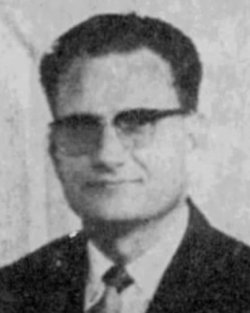
W.E. Best

Prayer - Psalm 90

Psalm 90
W.E. Best December, 23 1981 Audio
0 Comments
Best on Prayer

Sermon Transcript

Auto-generated transcript • May contain errors

100%
We're going to read some scriptures
tonight that we read last Sunday in connection with our message. But we're bringing a message
from a different point of view this evening. You'll notice in
your Bible that there is a statement in connection with the 90th division
of the Psalm that this is a Psalm of Moses, the man of God. It was a prayer of Moses. So keep in mind that this was
a prayer of Moses, and there are three things about his prayer
that I will develop this evening in the study of this subject
that we're going to discuss with you on prayer. Lord, thou hast
been our dwelling place in all generations. Before the mountains
were brought forth, or ever thou hadst formed the earth and the
world, Even from everlasting to everlasting, thou art God. Thou turnest man to destruction,
and sayest, Return, ye children of men. For a thousand years
in thy sight are but as yesterday when it is past, and as a watch
in the night. Thou carriest them away as with
a flood, They are as asleep in the morning. They are as asleep in the morning.
They are like grass which groweth up. In the morning it flourisheth
and groweth up. In the evening it is cut down
and withereth. For we are consumed by thine
anger, and by thy wrath are we troubled. Thou hast set our iniquities
before thee. our secret sins in the light
of thy countenance. For all our days are passed away
in thy wrath, we spend our years as a tale that is told. The days
of our years are threescore years and ten, and if by reason of
strength they be fourscore years, yet is their strength labor and
sorrow, for it is soon cut off and we fly away. Who knoweth
the power of thine anger? Even according to thy fear, so
is thy wrath. So teach us to number our days,
that we may apply our hearts unto wisdom. Now notice beginning with verse
13, we have the petition. There are two things that we'll
mention in the first part of this chapter that deal with two
subjects that must be considered in connection with true prayer. It is the last part of this prayer
that the petition is actually made. And this petition takes
in verses 13 through 17. Return, O Lord, how long? And let it repent thee concerning
thy servants. O, satisfy us early with thy
mercy, that we may rejoice and be glad in all our days, or all
our days. Make us glad according to the
days wherein thou hast afflicted us, and the years wherein we
have seen evil. Let thy work appear unto thy
servants, and thy glory unto their children. and let the beauty
of the Lord our God be upon us, and establish thou the work of
our hands upon us. Yea, the work of our hands establish
thou it. Now what are the three things
that are mentioned in this prayer of Moses? They are, first of
all, thanksgiving. Do we, when we pray, really thank
the Lord for what He's done for us? Or is the main idea, when
we approach God in prayer, to ask Him for something? Thanksgiving
is a part of true prayer. Secondly, praise is the second
part of true prayer. And finally, supplication or
the petition in the latter part of this psalm. The popular view
of prayer reduces God to a mere servant, man's servant. Thus he does man's bidding, performs
man's will, and grants man's desire. That's the average person's
concept of prayer, which is erroneous. The biblical truth is that prayer
without praise and thanksgiving is not prayer. In this psalm, Moses poured out
his heart unto the Lord. It was a true prayer because
it consisted of the three things I've already mentioned. Thanksgiving,
praise, and then petition. Now let me call attention to
just two or three verses where these great points are brought
out. In verse 1, we have thanksgiving. Lord, thou hast been our dwelling
place in all generations. Following is praise in verse
2. Before the mountains were brought
forth, or ever thou hast formed the earth and the world, even
from everlasting to everlasting, thou art God. Then comes the
petition. The major part or point of this petition is
in verse 13. Return, O Lord, how long? And let it repent thee concerning
thy servants. So there are three parts to true
prayer. I'd like to preface our discussion
of this psalm, or a portion of it, tonight, by being as practical
as I possibly can. I sometimes wonder, and I know that I lack the ability
many times to express myself as well as Maybe the subject
should be expressed. Then I also wonder sometimes
about the attention that is given to what is being expressed. It takes two things to bring
about a good service of worship. The man who is representing the
Lord must first of all be in a position and capable of expressing
himself in a way that can be understood, of course, only by
those who have the spirit of grace. It can't be understood
if a person doesn't have grace, regardless of how he might express
himself or how plain he is in expressing himself. Then there's another side of
that coin. Persons who sit in the pew must give undivided attention
to what is being said. We must learn to be good listeners. good listeners. A good listener
in school is one who makes better grades. A good listener when the man
of God is giving an exposition of scripture is the one who really
grows in grace and knowledge of the Lord. So one has to be a good listener.
That which is being stated must be stated plainly. In other words,
when the word is read, It must be read distinctly, then the
sense must be given, and finally there must be the understanding
of the sense of what has been given. So that's very important. I have a good illustration I'll
just share with you to illustrate my point. Brother Hank Huber
came in today, since we did have to be gone part of the day to
go to the funeral of Juanita's aunt. And they had some things
to deliver that Brother Huber had bought on Monday from two
different places for the library. Some shells and then a table.
They came from two different places. And I know how it is
when somebody says he's going to deliver something in the morning.
If he says in the morning, you can expect it at least before
six o'clock in the afternoon. And so he sat in front of our
house all the time we were gone and we came back and he was still
sitting there and they had not arrived. Hank came in and sat with us
a few minutes before he went home. The phone rang. The fellow
called and on Monday both places called and I gave directions
as to how to get here. And so while Brother Huber was
in the living room of our house, the phone rang and I went to
the phone and the fellow said, I wants to know how to get out
there. And so I sought to tell him how to get here. And after
I had given the directions, then I asked him to read back the
directions that I had given. And when he read them back, if
he had written them down, he had them all messed up and I
said, let's go through it again. So we went through it the second
time. And I said, now will you relate
to me the information that you have? Well, he had it, I thought,
straight enough that time in order to be able to find the
place. And of course, I wanted him to come to the house. I wanted
to study, do some reading. I didn't want to come down here
and sit for three hours and just waiting for somebody. And so
about 45 minutes, I suppose, passed and the phone rang. He
said, somebody gave me the wrong direction. I said, is that right? So I said,
where are you? He said, I'm over by, I think
it's, I said, Sagemont Baptist? Sagemont Baptist. I said, on
Hughes Road? Hughes Road. I said, well, you're
not anywhere real close. And he said, I went out and I
went clear to Ellington Air Force Base Turnoff. I couldn't imagine
how he did that. But anyway, I'll try to make
it as short as possible, but I have a point I want to illustrate.
So, people like that, they don't take, you know, what you say.
So when they did get here, and I came down to the church, they
wouldn't argue with me. And I walked up to them and said, whoever
gave me those directions, gave me the wrong direction. I said,
you're looking at the fellow who gave you the directions. And
I didn't give you wrong directions. So I went back over it again.
Beloved, you can understand now why things are so costly. Believe
me, to get efficient help today is almost a thing of the past. Now, not only had the same problem
with him, but the other driver of the other company had the
same problem. So, I want to say this to you
tonight. I felt like Sunday morning that
you didn't really follow me as well as you should. So I'll take
part of the blame myself. Maybe I did not express myself
as well as I should have on this most important subject. Or let's
turn it around. Maybe you didn't give to me the
undivided attention that you should have given. So it could
have been some of my fault and it could have been some of your
fault. But I felt like that you didn't really follow me as well
as you should have followed me. So I beg you tonight, read and
study all the information that you can get on the subject. But
after you have read the works that are available for you, and
I give something that you haven't read, please keep this in mind.
There are quite a few books that you haven't read yet. And there are a whole lot of
books that I haven't read yet. So please keep in mind When you
come to the house of the Lord, we come for the purpose of listening
to the exposition of the word, and then we try to analyze what
is being said in the light of the scripture which we know.
If you do not follow me, and I warn you ahead of time, in
the next four or five Sundays, you're going to be making some
accusations against me that I'd rather you wouldn't make. So
I just want to set the records straight ahead of time. This
is a very vital subject. It can be a great blessing to
you, one of the greatest blessings that you have received since
you learned the truth of God's absolute sovereignty. I'll put
it like that. So I hope that you'll give us your undivided
attention. Now the reason I've chosen this psalm tonight is
because we began discussing the subject of God's eternity or
eternality, and we used the first part of this psalm last Sunday
morning. And we can see the thanksgiving in the first part, the praise
on the part of Moses, and finally the petition. That's a good approach
for us today. Now we want to discuss some very
important things about prayer tonight. I think they're important. I believe that most people today
are guided not by biblical truth, but by human sentiment. In the
matter of prayer, or in the matter of anything else. As far as that's
concerned, it has to do, and I'll use this term, which I do
not like, but you'll understand why I'm using it, that which
is of a religious nature. Sentiment rules the thinking
of people to a great extent, and sentiment even rules too
much in the hearts of God's people. And I'm talking about people
who understand truth as far as the important biblical truths
are concerned as to one's relationship to God. So sentimental feelings,
to a great extent, rule where Scripture ought, where Scripture
should govern. I hope we please keep this in
mind in our studies. We know that the depraved heart
reverses the established order of scripture. I said the depraved
heart reverses the established order of scripture. And that's
true especially in the matter of prayer. And then we come along
as Christians and we'll reverse the order in the same way that
even a depraved mind will reverse the order. And that's a tragedy.
That's a tragedy. We know that the deceived person
offers his petition really in his name. according to his own
will, and then he adds the petition for certain things, and he usually
will quote, for instance, the model prayer that our Lord gave
through the disciples. So in reality, he prays for things
for himself, and he adds forgiveness from the motive that what he
is asking for in a personal way might not be denied him. Now
think about that statement for a moment. He'll ask for things
and then after he has asked for things then he will say, now
Lord forgive me of my sins. And it isn't the forgiveness
of sins that is the uppermost thing in his mind. It's that
which he wants for himself and he adds, Lord forgive me of my
sins. When in reality, all he's concerned
about is gimme, gimme, gimme. That isn't prayer. That isn't
true prayer. So you see, I'm giving some practical
things and we're all guilty of this to some extent. And these
things, they come out in our prayers. I appreciated what one
of our men said today. He said, what you had to say
Sunday night about hypocrisy and what our Lord said to the
Pharisees. He said, there are things for
all of us and every one of us was hit. You better believe it. Beloved, I just hit you and you're
hit just once in a while because You have your jobs to do, and
you do not spend the time, you do not have the time to spend
the time that I do in the study of the Scriptures. And so you
just get hit occasionally. Believe it, when you sit reading
and studying the Word of God for several hours, sometimes
a day, you're hit constantly by Scripture. You're ripped apart. And so we can see how guilty
we are of many of these things that I'm mentioning. many of these things. Now here's
what the average person thinks about when he prays. This will
show you how that scriptures are twisted and scriptures are
taken out of context. I heard just this last Sunday
a man who is well known to the religious world, well known to
the religious world, while he was talking about the para-organization
of which he is affiliated. He said, Lord, I know that you'll
give us what we desire. That's all he said. I know that
you'll give us what we desire. Now they'll use scriptures like
this, John 14, 13. Whatsoever ye shall ask in my
name, that will I do. That is scripture. But don't
lift it out of the context. They'll take another passage
like Matthew 18, 19. If two of you shall agree on
earth as touching anything, that they shall ask, it shall be done
for them. And then in 1 John chapter 5
verse 14, which is a favorite verse of many and they lift it
out of its context. Turn to this passage. 1 John
5, 14. And this is the confidence that
we have in Him that if we ask anything according to His will,
He heareth us. Now they quote the verse, but
they don't consider the will of God. Just like individuals
will ask for things and they do not consider that they must
thank the Lord for His blessings, that even precedes And we see
how that preceded everything in the prayer that Moses prayed.
He began by thanking the Lord. And then secondly, praising the
Lord. And then the petition. The things
for himself, and not only for himself, but for the people whom
he represented. So they take these scriptures,
take them out of context, they use them, they abuse them, misconstrue
them, And that's sad, but it's a fact. It's a fact. True prayer, you and I know,
is restricted to the will of God. I said it is restricted
to the will of God. Now, it doesn't mean that you
and I have to know the will of God in order to pray, but we
have to, what? Pray in the will of God for the
prayer to be heard. Do you see the difference? Every young Christian doesn't
know the will of God as he should know it. That's why that we are
to yield ourselves and our minds are to be renewed. We're to be
transformed and our minds are to be renewed. We're not to be
conformed to this world but to be transformed by the renewing
of our minds that we might know what the will of God is. That's
Romans 12 too. So a person doesn't have to know
the will of God to pray, but he has to pray in the will of
God in order for his prayer to be heard. Now that says a whole lot. Do
you see now why your prayers and my prayers are not answered
many times? We prayed, but we did not pray in the will of God.
And since we did not pray in the will of God, the prayer was
not heard. God answers the prayer that is prayed in harmony with
His will. Now we want to pray intelligently,
don't we? If we want to pray intelligently, then we need to
know the will of God. That's how simple it is. So the subjects of the sovereign
God can no more alter God's will than the priest of Baal could make God subservient to
their desire in 1 Kings 18. Are we foolish enough? I'm sure
we're not, yet we pray in the manner that would manifest it
sometimes, I'm afraid. Are we really foolish enough
to think that we can make God subservient to us and to our
desires? We're to be subservient to His
will, His desire. But listen to the average prayer
you hear today on the radio or TV. Just consider them. And there's a lot about prayer
I don't know, a lot about prayer you don't know. The more I study,
the less I feel about these people who just, they talk about praying
three and four hours. You know, I've never been able
to understand some of these Puritans who claim that they pray three
and four and five and six hours, sometimes pray all day. I'm going
to tell you something. After about 30 minutes, it's
vain repetition. It's vain repetition. When the
Bible talks about praying always, it means to be in the spirit
of prayer. While I'm in my study, I'm not praying, but if I'm really
studying the Scripture with a desire to know the mind and will of
God, there is a spirit of prayer. even while I'm studying. And I'm not foolish enough to
think that I can get down on my knees and spend five hours
on my knees and thirty minutes studying the scriptures and really
come before you on the Lord's Day with something that will
really be a blessing to you. I think we could pray less and
study more. But while I'm studying, to have
the spirit of prayer. Through the years I've heard
preachers talk about, and really when they talk like this, they're
doing it for a demonstration, how long they have prayed on
occasions. I prayed so many hours. That
reminds me of these churches when they have a revival and
they'll pray around the clock, you know. Have this one to come for 30
minutes or that one to follow him for 30 minutes and all of
this. Now I believe in prayer, but
the spirit of prayer is the important thing. Now I'm sure that if I were to
make the statement that I'm making to you tonight before a lot of
congregations, they'd say, boy, he's way off base. Have the spirit of prayer, but
don't spend all your time praying. Do you think that you can get
on your knees and pray for six hours and then come up and God
will give you a message without studying the scriptures? He will
not. The Bible says study to show
yourself approved unto God. Consider what he said and the
Lord will give you understanding. Meditate upon these things. The prayer of a Christian is
pleasing to the Lord because, first of all, he has the mind
of Christ. That is, the mind of Christ is
the light of his own mind. Secondly, His love seeks, His
love adores, His love longs for God's favor. Beloved, I seek,
I long for God's favor. Thirdly, the will of Christ motivates
His will from within. And lastly, He offers a spiritual
sacrifice unto God. Now consider those four things
for a moment. So the prayer of a Christian is pleasing to the
Lord, first of all, because he has the mind of Christ, and the
mind of Christ is the light of his own mind. Secondly, his love
seeks, adores, and longs for God's favor. Thirdly, the will
of Christ motivates his will from within. And fourthly, he
offers a spiritual sacrifice unto God. Thus the prayer of a Christian
is, I should say, a cycle. It begins with God. I said it
begins with God. Comes and it goes back to God. I believe there are a lot of
people today making merchandise of prayer. At least they think they are.
And they are, before a lot of people, making a merchandise
of prayer. That's why these fellas on TV
and on radio send in your prayer requests. The main thing they
want is not the prayer request, they want that greenback. And
don't make a mistake about it. Why do you think they're appealing
to write in your request? They feel that if you send a
request, surely you're going to put a little greenback in
an envelope. What are they doing? They're making a merchandise.
Prayer. And I'll show you why I believe
that in a moment. That's true with fellows like Rex Humbug
and many others. Or Roberts. That is Rex Humbard,
isn't it? Let me read you a statement by
a man that'll really shock you. What he has to say about prayer.
There are many today who believe that prayer is a means of being
born again. Will you pray this prayer after
me? You hear it all the time. Now think it through for a moment.
Pray this simple prayer after me. They put the words in the
mouths of people. They repeat what they hear the
preacher say. And they think after they get
through praying that prayer that has been put into their own minds
that the individual believes then after having said that He
is a recipient of regeneration of the new birth, the new life. Now here's a statement made by
a man by the name of Ian Bounds in his work on prayer. Quote,
for the change from badness to goodness is not wrought by works
of righteousness which we have done, but according to God's
mercy, which saves us by the washing of regeneration, And
this marvelous change is brought to pass through earnest, persistent,
faithful prayer. He destroyed the whole thing.
Made good statements to begin with, but he destroyed the whole
thing. This whole thing is brought about
by persistent prayer. Beloved, a person is not born
again by prayer. Prayer is the fruit of having
been born again. God hears not sinners, but if
a man be a worshipper of God, and doeth his will, him he heareth.
That's what the book says. They cry, Abba, Father, Romans
8 and verse 15. So crying Abba Father is the
fruit of having been born again. A person is not born again. The
new birth doesn't come about or doesn't come to pass by fervent,
persistent prayer. That's why I believe we do not
have altars in this church. And I'll tell you something else,
we'll never have one in the place that I pastor. Even today, a
lot of Baptist churches are building their altars and when the preacher
gives the invitation, they do something to try to get people
to come forward. And so they'll come and they'll kneel. You can
see it on the program every Sunday night at First Church, First
Baptist. They'll come and they'll kneel. And you hear many people talk
about praying through. Now this fellow has some other things
to say. After having made the statement that this marvelous
change, which he says is the new birth, is brought to pass
through earnest, persistent, faithful prayer, then he adds
this comment. Any alleged form of Christianity
which does not affect this change in the hearts of men is a delusion
and a snare, end of quote. Making a merchandise of prayer,
really, in more ways than one. Let's go a little further. Listen
to another statement he makes about prayer. The same writer
said, and I quote, it is simply to say that man has it in his
power by prayer to move God to work. Boy, I tell you, I laughed
when I read that. I believe in making fun of anything
like that. Do you believe you can move God
by your prayer? So he says, prayer is what puts
God to work. That was the title to that chapter. Prayer is what puts God to work.
And then the quotation, it is simply to say that man has it
in his power, man has it in his power, boy, to move God to work
in his own way among men, in which way he would not work if
prayer was not made. Then I'll read you another statement
before I make a comment. In another place it says, quote,
if prayer puts God to work on earth, then by the same token
prayerlessness, then prayerlessness rules God out of the world's
affairs and prevents him from working. End of quote. Now I'll
read it again without even stopping. If prayer puts God to work on
earth, then, by the same token, prayerlessness rules God out
of the world's affairs and prevents Him from working. Now, do you
believe, and of course I don't, I'm not going to even assume
that you believe such rot. You don't believe that you can
put God to work by your prayer, do you? You know, my Bible teaches
me that God puts the prayer to work. The prayer doesn't put
God to work. God puts the prayer to work. Isn't that what happens? You see, we have access to God
through Jesus Christ by the Holy Spirit, so the entire Godhead,
all three persons of the Godhead are involved in true biblical
prayer. We have access to the Father.
That access is through Jesus Christ. And that access is by
the indwelling Holy Spirit within. Now what happens? God, through
the agency of the Holy Spirit, puts the desire in the heart
of the believer. And if he knows the mind of God,
he prays according to the will of God, and praying according
to the will of God, he makes himself available to bring about
the accomplishment of the very thing for which he prays. You know, the average person
wants to pray, and then when he gets through praying, he wants
to sit down, And say, give it to me. Give it to me. When you study the first chapter
of the book of Romans, Paul was a man of prayer. But the interesting
thing about the first chapter of Romans, he knew he was going
to Rome, and he prayed. He prayed for the Romans. And
even though Paul prayed for the Romans, And he prayed for the
will of God to be done in his own life. He made himself available
for the accomplishment of the very thing for which he prayed.
Therefore, he said, I'm a debtor both to the Greeks and to the
barbarians, both to the wise and to the unwise. So as much
as in me is, I'm ready to preach the gospel to you that are at
Rome also. I'm ready. Made himself available. So it is God who puts the believer
to work in true prayer, and not the believer putting God to work. The biblical teaching is the
very reverse of what the average person believes and teaches today. You know, we hear this expression
so much, oh, I'm excited. I want you to know the truth
of God's Word excites me. It excites me. Now let's notice
one thing in the petition that I want to stress quite a bit. Notice beginning with verse 13,
and we'll have time to develop this thought. So there's thanksgiving,
there is praise, then comes the petition. That should always
be the order in the life of a Christian. You
have much to be thankful for. I tell you what, when we left
Park Place Methodist Church today, Juanita was raised up in that
church. She said, I'm so grateful to be delivered from that. She said, oh, how things have
changed. Did you know that their building
over there, and I hadn't been in, I guess, that particular.
No, when her father died, they didn't have the auditorium that
they have there now, the large one. Looked just like a Catholic
auditorium. Divided pulpit right in front.
Here was the communion table up on top of the rostrum between
the pulpits. Cannel, big cannel, obra on this
communion table. I'm not through yet. And then
a bunch of little statues all the way around. Wanting to nudge me, she said,
do you see that? I said, yes, I see that. And then my Catholic
sister-in-law was sitting right next to me, so we were talking
kind of quiet, you know. One of you said, looking more
like the Catholic Church every day, inside. I mean a bunch of
little statues about that high, all around that communion table. So she said, I have something
to be thankful for. There isn't one of us who doesn't have something
to be thankful for. And we have much to praise God for. Now,
verse 13, but verse 14 is where we want to spend a little time
in closing. Return, O Lord, how long, and let it repent thee
concerning thy servants. Keep in mind that Moses was the
mediator of communication. Mediator of communication between
God and the Israelites. Jesus Christ is the mediator
of reconciliation between God and His people. So Moses not
only prayed for himself, but prayed for the servants. Now
in verse 14, O satisfy us early with thy mercy. Satisfy us early
with thy mercy. When I think of this, I'm reminded
of Josiah, the last good king of Judah. who sought the Lord early in
his life. In fact, he started seeking the
Lord at the age of 16. Age of 16. Now, we're not going
to go back into Kings and study the life of Josiah, but he was
the last good king in Judah, and he began seeking the Lord
at the age of 16. That's interesting. And his purifying
began at the age of 20. His purifying. So, O, satisfy us early with
thy mercy, that we may rejoice and be glad all our days. Josiah turned from the way of
the world. He turned from the carnal desires
of youth. There are certain desires of
youth. That's why Paul warned Timothy, and Timothy must flee
youthful lusts. That's a statement found in Paul's
first letter to Timothy. Josiah turned from the vanities
of imagination. Vanities of imagination. He turned
from false friends and evil counselors. So He turned to a fixation of
heart. Beloved, if there's anything
I want, it is the fixation of heart. Don't you? Stability of
heart, fixation of heart. So He turned to fixation of heart
upon God as His Father. upon God as his friend and upon
God as his guide. So he started seeking the Lord
at a very early age and then he began his purging at the age
of 20. Now this statement, in order
for Josiah to be strong and in order for you and me to be strong,
we must seek the Lord, we must purge ourselves. Beloved, we are to be the salt
of the earth. And I want to close with this
one. Salt is not sugar. Do you get
my point? God didn't say that we are the
sugar of the earth. And to hear most religionists
today, it's all sugar, sugar, sugar. We are to be the salt
of the earth. So Christians are salt. We're
not the sugar of society, we're the salt of society. Notice that that which was petitioned,
in other words, Moses when he requested some things from God,
notice the kind of mercy salt, thy mercy, thy mercy. Secondly, You'll also notice
it's the mercy, it's God's mercy says, satisfy me, satisfy me. There has never been a scholar
who did not desire more knowledge. There has never been a wealthy
person, spiritually speaking, who did not desire more spiritual
wisdom. Notice the time of his request,
the time of the desire, early, early. Fourthly, notice the purpose
of the desire, that we may rejoice and be glad all our days. So there are four things that
I'm emphasizing in his petition, and they are the kind of mercy
sought by mercy. Secondly, the measure of God's
mercy satisfies. That's the major, satisfies.
I'm satisfied with the Lord. I want to be satisfied with the
Lord, not satisfied with myself, satisfied with the Lord. So satisfies,
and there has never been, as I said, a scholar who did not
desire more knowledge, never been a wealthy person, spiritually
speaking, who did not desire more spiritual wisdom. Thirdly,
the time of the desire, early, early. I want to pause a moment there. Whenever a person becomes a Christian,
he should not waste a great number of years and then later on have
the idea, well, I don't have the time that I would like to
take now to do certain things, but I hope that later on down
the line I'll have more time to read and study. You better
start taking it now, early. Better start taking it now. The Lord may take you before
you ever get to that place where you'll have more time. And I'm
of the opinion that if we keep putting it off, we'll never have
that time. You've heard it said, if you
want something done in a church, find the busiest man in the church
and give him a job and it'll get done. How true. I've found
that true all my life as a Christian. If I want something done and
I want it done promptly, give it to someone who is busy and
you don't see how he has time to do it, he'll do it. Usually
he does it efficiently, effectively. Don't give it to somebody who
just has plenty of time and does nothing. Don't give it to him because he'll take a long time
in doing nothing. So we're going to have to make
time as we go along. Make time. You don't want to wait later
down the line to learn some things about which and that you can
rejoice, do you? You want to learn those things now so you
can start rejoicing now and rejoice all the days of your life. You know, I could see some things
and I have such a desire to bring them and how for several weeks. You remember I made the statement
the other Sunday that there are some things about death, there
are some things about stepping out of time into eternity that
I want to understand now. Even if the Lord lets me live
another 20 years, I want to rejoice every step of the way now before
I take that final step. You know, I thought about an
introduction to one of my messages. And I'm not sure, and so some
of you can help me tonight. I don't know where I'd go to
get the information unless I call NASA. Hank probably knows this.
What was the date that Armstrong landed on the moon? July what,
20th? Well, I did have that right.
Now, the second thing, what was the so-called famous statement
he made? Let's see if I get this straight. He made the statement
as he stepped out of the spacecraft onto the moon. One... Let's see. I had it down today. That's not
exactly... Let's see. One short step or
something. What? One small step for man
and one giant step for mankind. Okay. I think that's just about
what I had written down. Now, I couldn't help but think
about that. It's a good introduction. Now, that made history, you see.
One small step for man and one giant step for mankind. So it
was quite a step, all right, to leave Earth and go to the
moon and step out of the spacecraft onto the moon. But, beloved,
I know a step is going to be greater than that. When I step
out of time into eternity, You see, I like to think about things
like that. That kind of gives you an approach. That was a great
step to step from the earth to the moon. But you and I are going
to step out of time into eternity. You know what I'd like to do
now, but I'm not going to do it. I'd like to ask you about a half
a dozen questions to really get you stirred up. Don't you want to start rejoicing
now? And not wait until the time you take that final step? I want
to rejoice every step I take from now until I take that final
step. Don't you? When I was talking to Brother
Pennington the other night, I called him to tell him about something I'd heard
on KGOL that we're to go on that station the 4th of January. So
I started talking to him and Of course, D.E. now is giving
all of his time to making tapes and listening to tapes and his
mind, he won't mind me saying this, more spiritual now than
when you were working and having to just take a little time now
and a little time then. So I mentioned something to him
and he grabbed it and ran with it. I thought he was going to
just keep running with it. Did you get enough last Sunday
morning to start running? Let's stand for the benediction.
W.E. Best
About W.E. Best
Wilbern Elias Best (1919-2007) was a preacher and writer of Gospel material. He wrote 25 books and pamphlets comprised of sermons he preached to his congregation. These books were distributed in English and Spanish around the world from 1970 to 2018 at no cost via the W.E. Best Book Missionary Trust.

Comments

0 / 2000 characters
Comments are moderated before appearing.

Be the first to comment!

Joshua

Joshua

Shall we play a game? Ask me about articles, sermons, or theology from our library. I can also help you navigate the site.